100 francs 1961
“Senegal”
About This Note
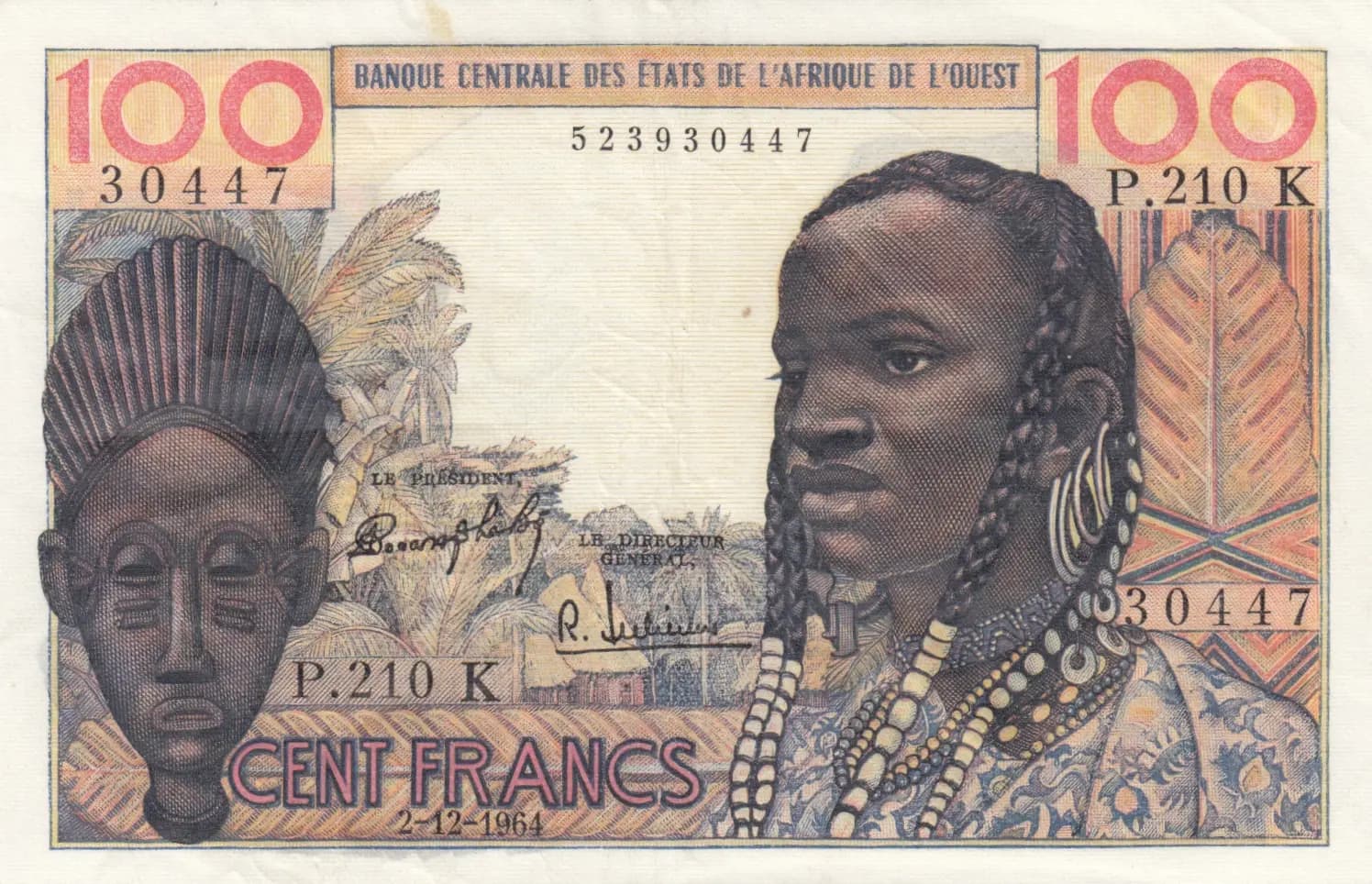
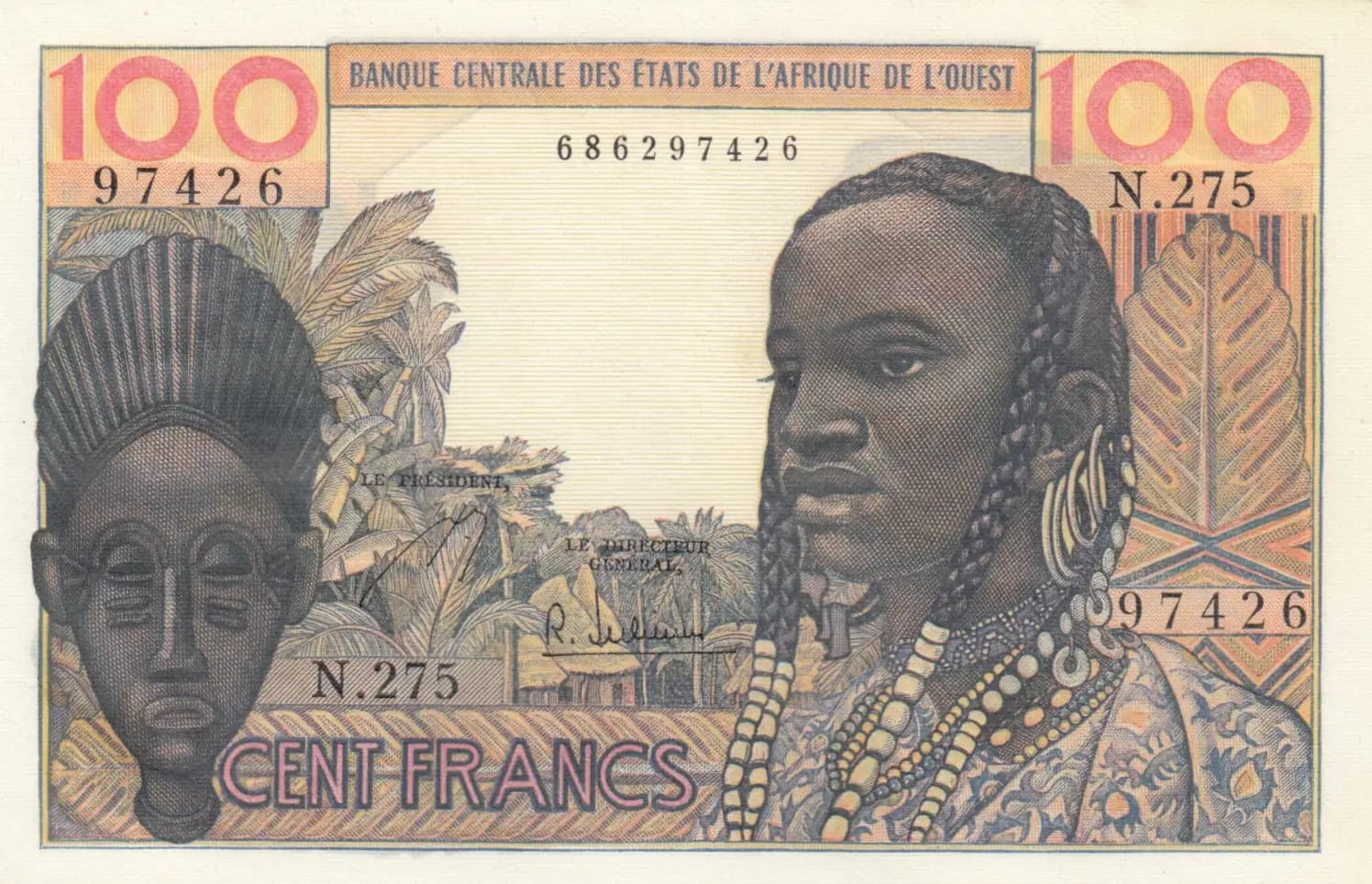
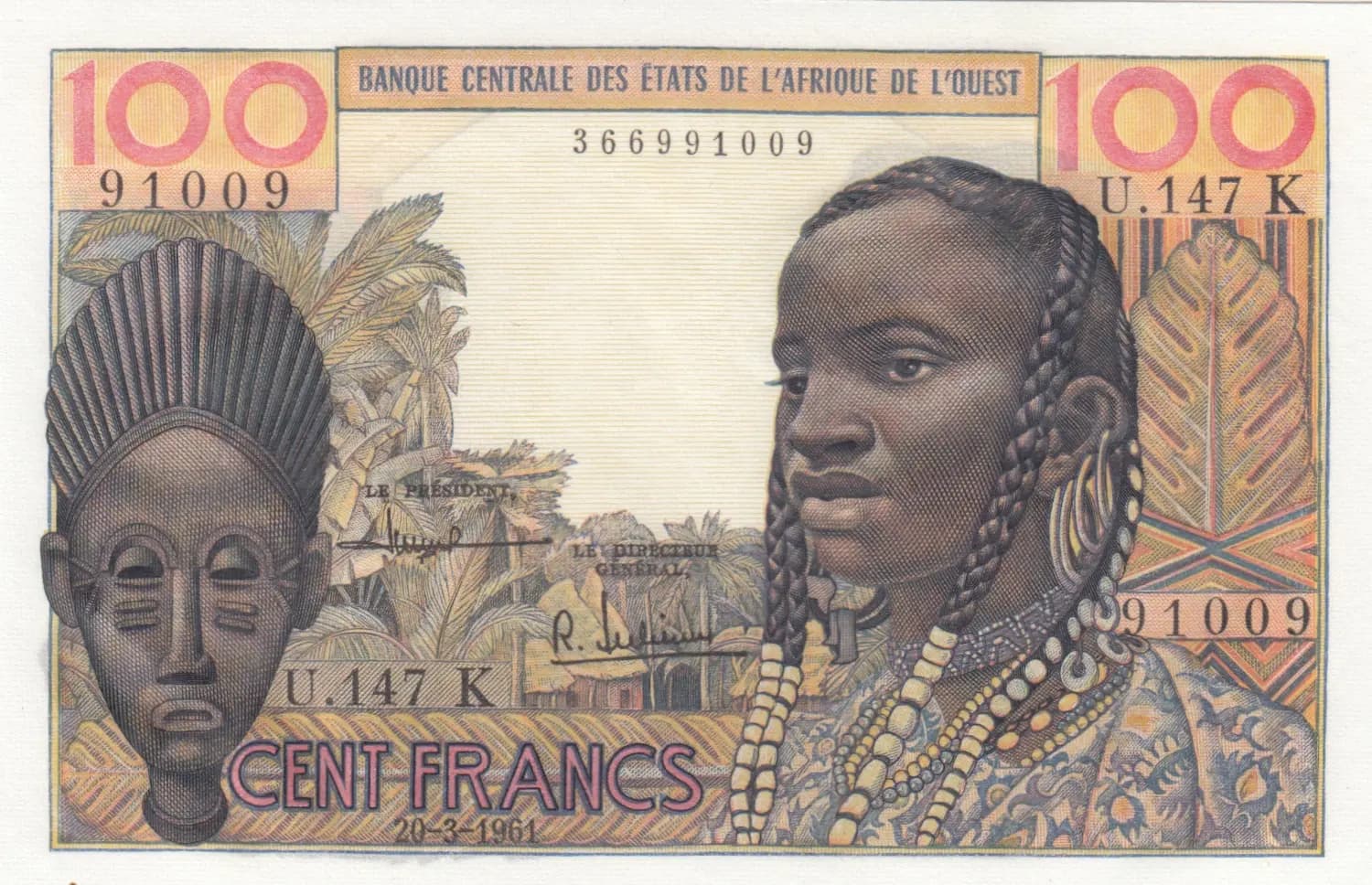
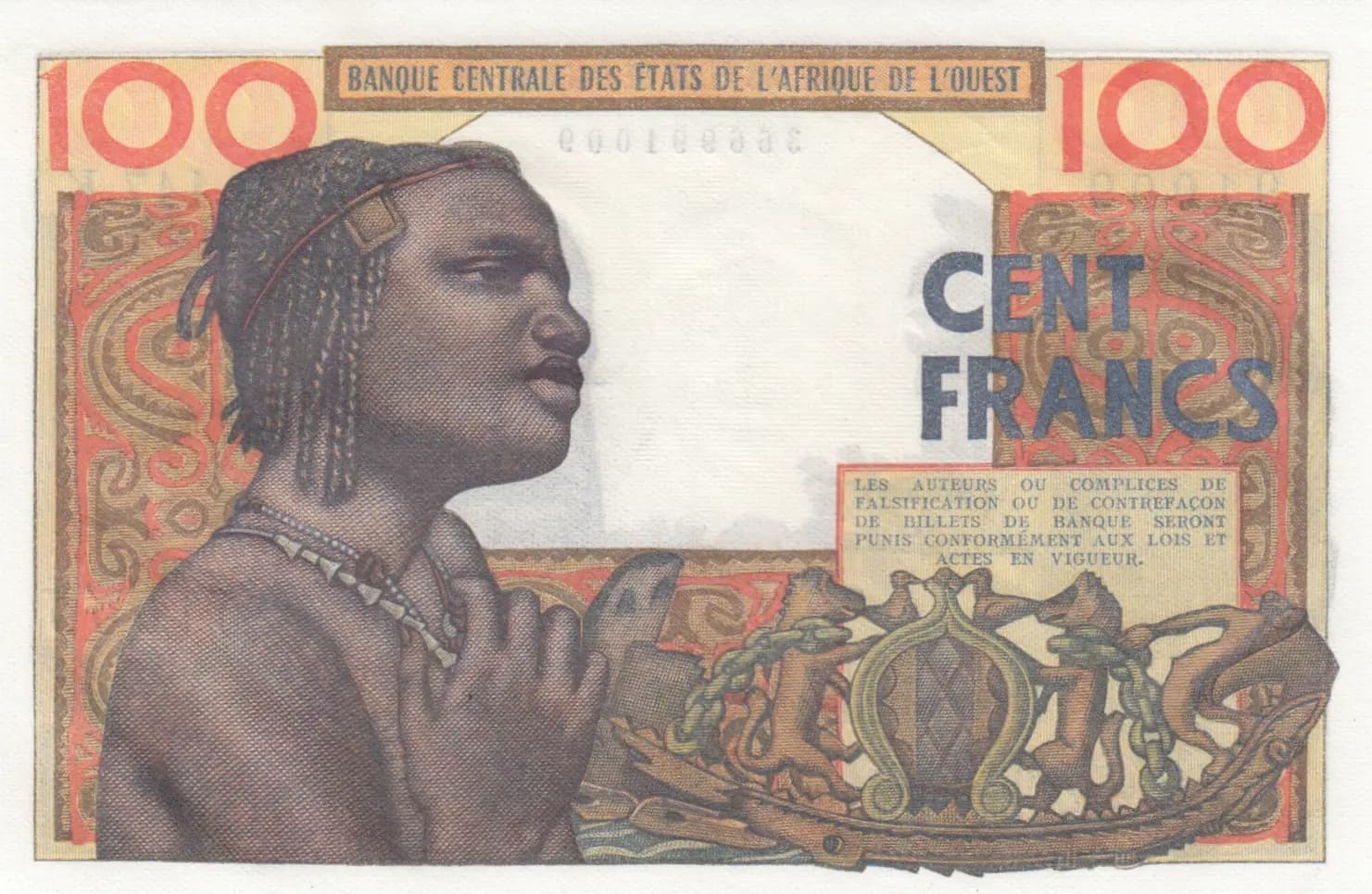
This is an exceptional example of a West African States 100 Francs banknote from 1961, graded UNC, representing the early currency of the newly independent WAEMU region. The note features beautifully rendered portraits depicting West African cultural elements—including elaborate headdresses, geometric facial markings, braided hair, and beaded necklaces—executed in fine engraving with warm tan, yellow, and brown tones. The pristine condition with sharp detail throughout and complete absence of wear, tears, or foxing makes this an outstanding example of early Central Bank of West African States currency, highly desirable for collectors of African numismatics and post-colonial currency.
Common. The 100 Francs denomination from the 1961 WAEMU issue represents a standard circulating denomination from the early period of the Central Bank of West African States. While individual notes from 1961 are now over 60 years old, the print runs for this denomination were substantial. The catalog listings show at least two documented varieties (P-701Kc and P-701Kg), indicating multiple printings. Unless there is specific evidence of a restricted print run for the 'Kb' code letter variant or significant recall, this note should be considered common in the numismatic market, though its age and historical significance as an early post-independence issue provide collector appeal.
This 100 Francs note was issued on March 20, 1961, during a pivotal moment in West African history when newly independent nations were establishing their own monetary systems under the Banque Centrale des États de l'Afrique de l'Ouest. The imagery—featuring detailed portraits with traditional African cultural symbols such as elaborate headdresses, geometric facial markings, and beaded ornaments—reflects the pan-African identity and cultural pride that characterized the post-independence period. The denomination and issuing date place this note at the very beginning of the WAEMU currency system, making it historically significant for understanding the monetary transition in francophone West Africa.
This note exemplifies the early design philosophy of the WAEMU, emphasizing cultural representation and Pan-African identity. The obverse features two prominent portrait busts representing West African peoples: the left portrait displays an individual wearing an elaborate headdress with distinctive geometric facial markings characteristic of traditional African body art and ceremonial dress, while the right portrait presents a profile view of a person with intricately braided hair adorned with beaded necklaces, reflecting the aesthetic traditions of the region. Between and around these portraits are naturalistic vegetation and landscape elements rendered in fine detail. The reverse maintains focus on a single profile portrait (matching the right obverse portrait) with the same cultural adornments, surrounded by ornamental decorative patterns in red and gold tones, and heraldic or symbolic imagery positioned in the lower right section. The overall composition uses classical engraving techniques with intricate cross-hatching and geometric border designs to create depth and security.
FRONT SIDE: 'Banque Centrale des États de l'Afrique de l'Ouest' (Central Bank of West African States); '100' and 'Cent Francs' (One Hundred Francs); '20-3-1961' (Issue date: March 20, 1961); 'U.147 K' (Bank code designation); Serial number '36699100'; Signature lines for 'Le Président' (The President) and 'Le Directeur Général' (The General Director). BACK SIDE: 'Banque Centrale des États de l'Afrique de l'Ouest' (Central Bank of West African States); 'Cent Francs' (One Hundred Francs); Legal warning: 'Les auteurs ou complices de falsification ou de contrefaçon de billets de banque seront punis conformément aux lois et actes en vigueur' (The authors or accomplices of falsification or counterfeiting of banknotes will be punished in accordance with the laws and acts in force).
Intaglio engraving (line engraving and cross-hatching), characteristic of high-security currency production from this period. The fine line work, geometric patterns, and intricate detail visible throughout both sides indicate traditional steel plate engraving methods. The WAEMU notes from this series were typically produced by Banque de France's printing facilities or affiliated European security printers specializing in colonial and post-colonial African currency.
This note is identified as P-701Kb, bearing code letter 'K' designation. The visual analysis confirms the presence of 'U.147 K' bank code marking and serial number 36699100. The Pick catalog identifies at least two other variants of this base number (P-701Kc and P-701Kg), suggesting different printings or sub-varieties within the code letter 'K' series. The specific code letter 'b' designation may relate to printing sub-batches or security features. Collectors should note the issue date of March 20, 1961, and verify code letter designations when comparing examples, as these may represent intentional varieties by the issuing authority.