50 centesimos 1887
Market Prices
About This Note
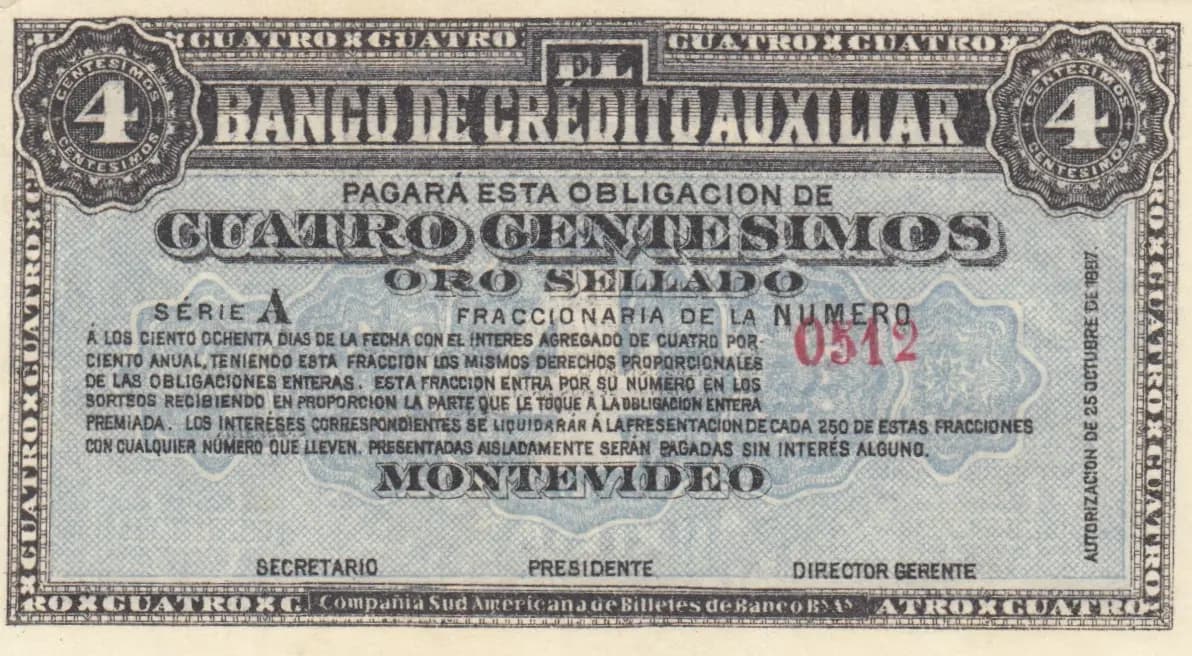
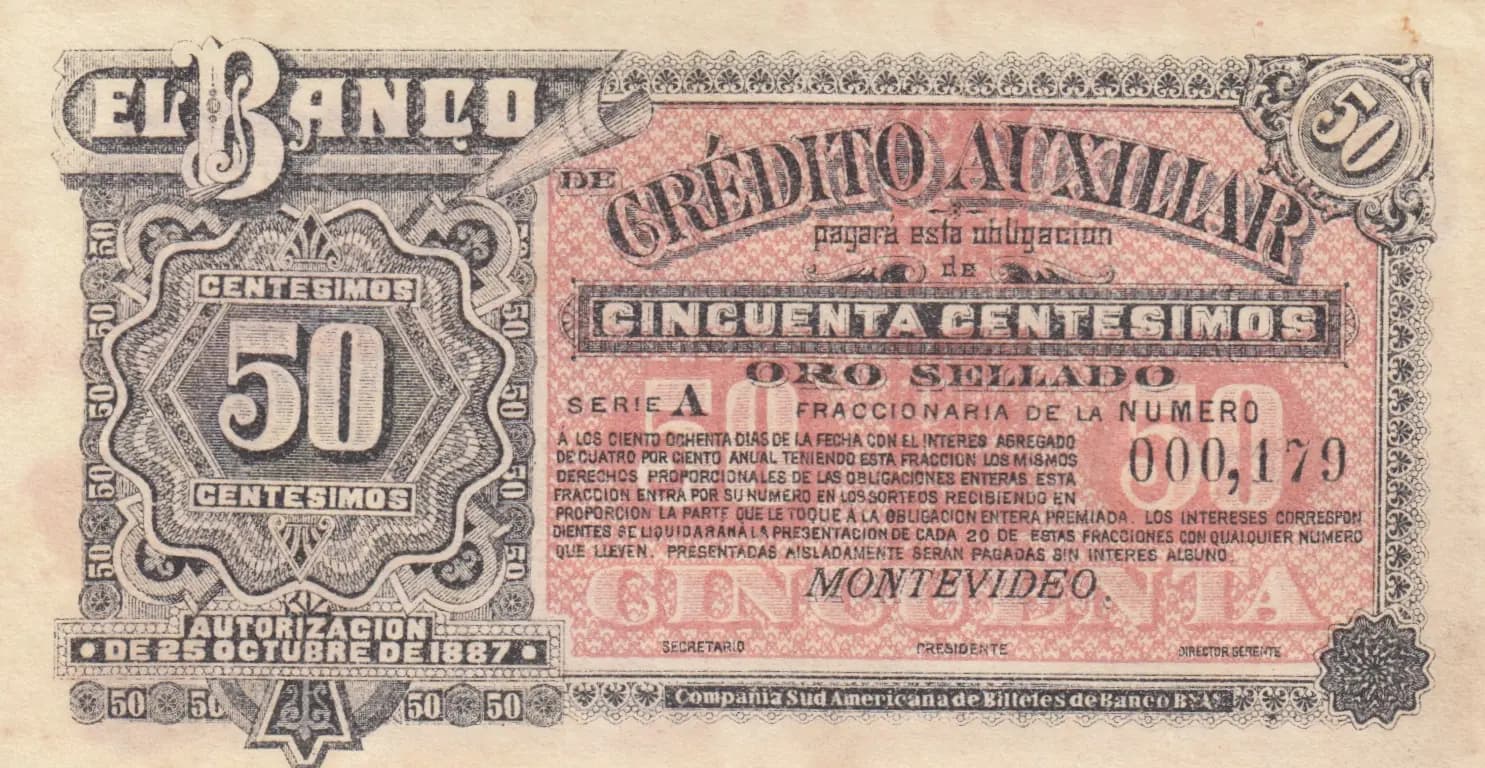
This 1887 Banco de Credito Auxiliar 50 centesimos note (Pick S162) represents a remarkable example of late 19th-century Uruguayan fractional currency in AU condition. The note displays the characteristic ornate design of the period with black and rose/burgundy engraving on cream stock, featuring intricate scrollwork, decorative frames, and sophisticated security design elements typical of South American bank note production. The serial number 000.129 in Series A, combined with the excellent preservation showing minimal foxing and no circulation wear, makes this a desirable example for collectors of South American numismatic history.
Common. While this Pick number (S162) represents a specific variety of Uruguayan fractional currency, the eBay market data shows a wide range of sales from $4.00 to $439.99 USD, with numerous examples in AU condition selling between $100-$440 USD. The existence of multiple AU-condition sales at moderate price points, combined with the fact that fractional currency from this era was produced in substantial quantities to meet daily commercial needs, indicates this is a readily available note in the collector market. Series A examples and the specific serial number 000.129 may have minor collector appeal, but the note is not scarce.
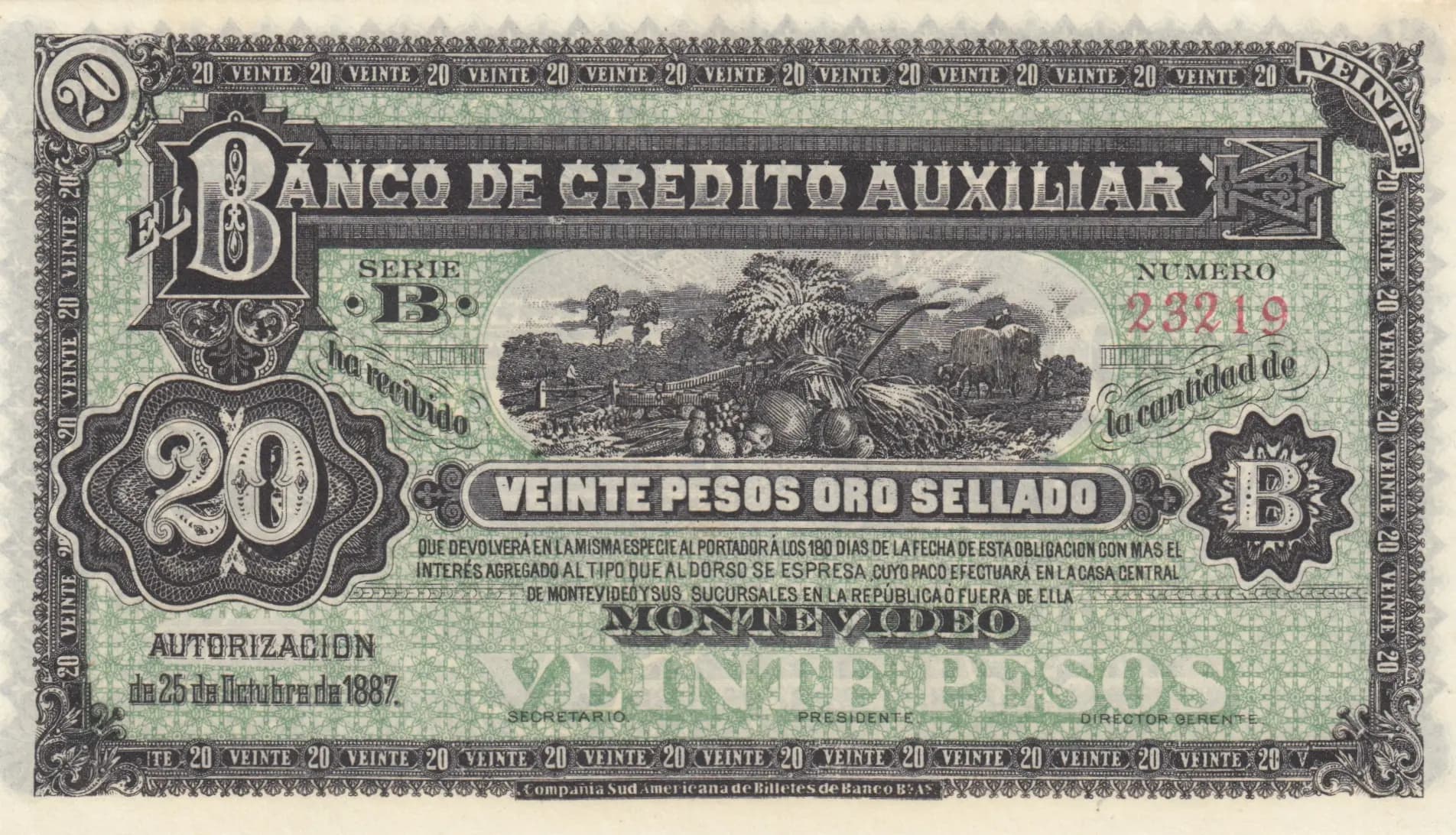
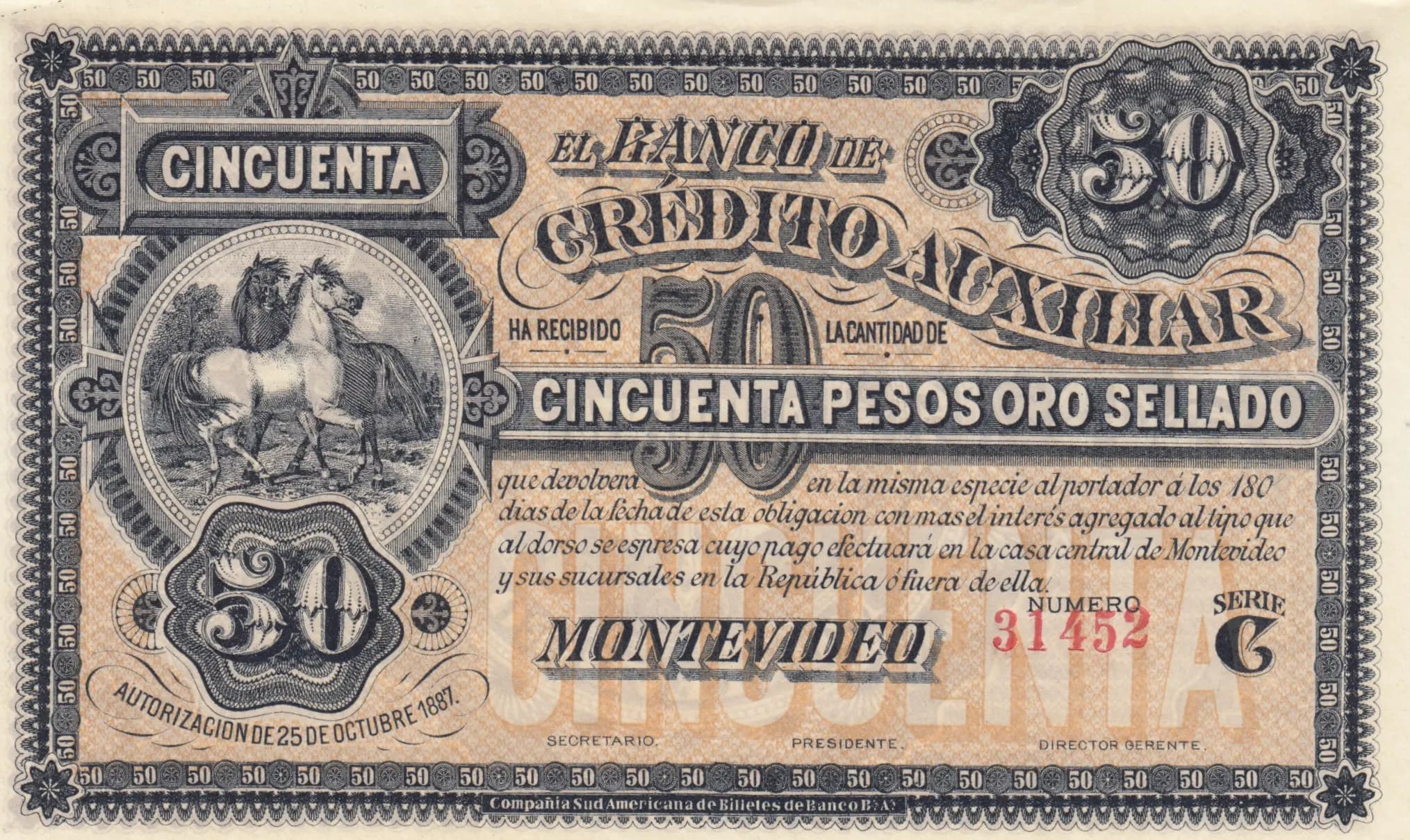
The Banco de Credito Auxiliar was an important private financial institution in Uruguay during the late 19th century, with this 50 centesimos denomination representing the fractional currency needs of the Uruguayan economy in 1887. The note's authorization date of October 25, 1887, combined with its 1888 issue date, reflects the transitional period of Uruguayan banking when private banks supplemented the national monetary system with supplementary currency. The 'ORO SELLADO' (sealed gold) designation and the payment obligation clause on the reverse indicate this was a credit instrument backed by the bank's reserves, serving as a crucial medium of exchange in daily commerce during this economically formative period for Uruguay.
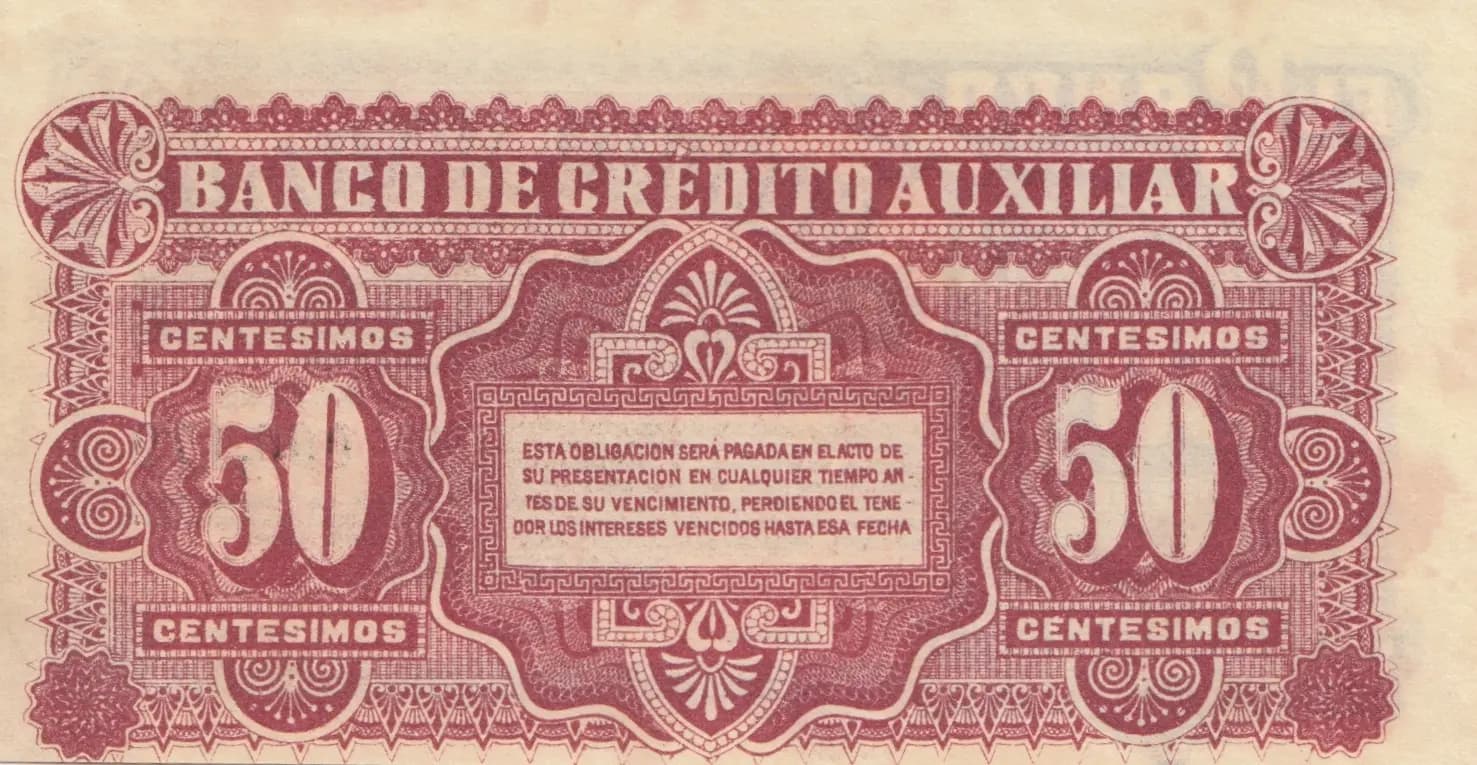
This fractional currency note exemplifies the classical financial document aesthetic of the 1880s, with no portraits depicted but rather relying entirely on allegorical and ornamental design elements. The obverse features a bold left-side denomination frame containing the '50 CENTESIMOS' text in a shield-like cartouche, flanked by extensive patterned background in the rose and brown tones characteristic of the era. The reverse showcases a more symmetrical composition with a prominent central shield-shaped cartouche topped by a radiating sunburst motif—a common symbol of financial authority and stability. All four corners display elaborate decorative ovals with spiraling scrollwork, while Greek key pattern borders and floral rosette designs frame the entire composition. The location reference to Montevideo anchors the note geographically, and the extensive engraved fine-line work throughout demonstrates the high-security printing standards employed by the Compañía Sud Americana de Billetes de Banco (CSABB), the renowned Buenos Aires printer responsible for production.
FRONT SIDE: 'BANCO DE CREDITO AUXILIAR' (Auxiliary Credit Bank); '50 CENTESIMOS' and 'CINCUENTA CENTESIMOS' (50 centesimos and Fifty centesimos); 'ORO SELLADO' (Sealed gold); 'SERIE A' (Series A); '000.129' (serial number); 'FRACCIONARIA DE LA NUMERO' (Fractional of the number); 'AUTORIZACIÓN DE 25 OCTUBRE DE 1887' (Authorization of October 25, 1887); 'MONTEVIDEO'; 'SECRETARIO' (Secretary), 'PRESIDENTE' (President), 'DIRECTOR GERENTE' (General Director); 'Compañía Sud Americana de Billetes de Banco' (South American Bank Notes Company). BACK SIDE: 'BANCO DE CREDITO AUXILIAR' (Auxiliary Credit Bank); '50' and 'CENTESIMOS'; 'ESTA OBLIGACION SERA PAGADA EN EL ACTO DE SU PRESENTACION EN CUALQUIER TIEMPO ANTES DE SU VENCIMIENTO, PERDIENDO EL TENOR POR LOS INTERESES VENCIDOS HASTA ESA FECHA' (This obligation will be paid upon its presentation at any time before its maturity, losing its validity for accrued interest up to that date).
This note was produced using traditional intaglio (engraving) and letterpress printing methods, as evidenced by the fine line work, intricate shading variations, and dimensional quality visible in the decorative elements. The Compañía Sud Americana de Billetes de Banco (CSABB), based in Buenos Aires, was one of South America's premier security printers, and their work on this issue demonstrates the sophisticated multi-color engraving capability required to produce the black primary design on rose and brown underprinted backgrounds. The complex scrollwork, geometric patterns, and ornamental security elements required separate engraved plates and careful register alignment—standard practice for high-security fractional currency of this period.
This specific example is identified as Series A with serial number 000.129, representing an early issue from the authorized print run. The authorization date of October 25, 1887, with issue date of 1888, places this within the initial issuance period. No overprints or date variations are evident from the visual analysis. The signed and dated nature (as noted in catalog data) is standard for this issue, and signature varieties may exist depending on which bank officials signed the note, though specific signature identification would require expert examination of multiple examples. The low serial number 000.129 may indicate printing sequence position, potentially of minor interest to sequence-focused collectors.