50 centesimos 1875
Market Prices
About This Note
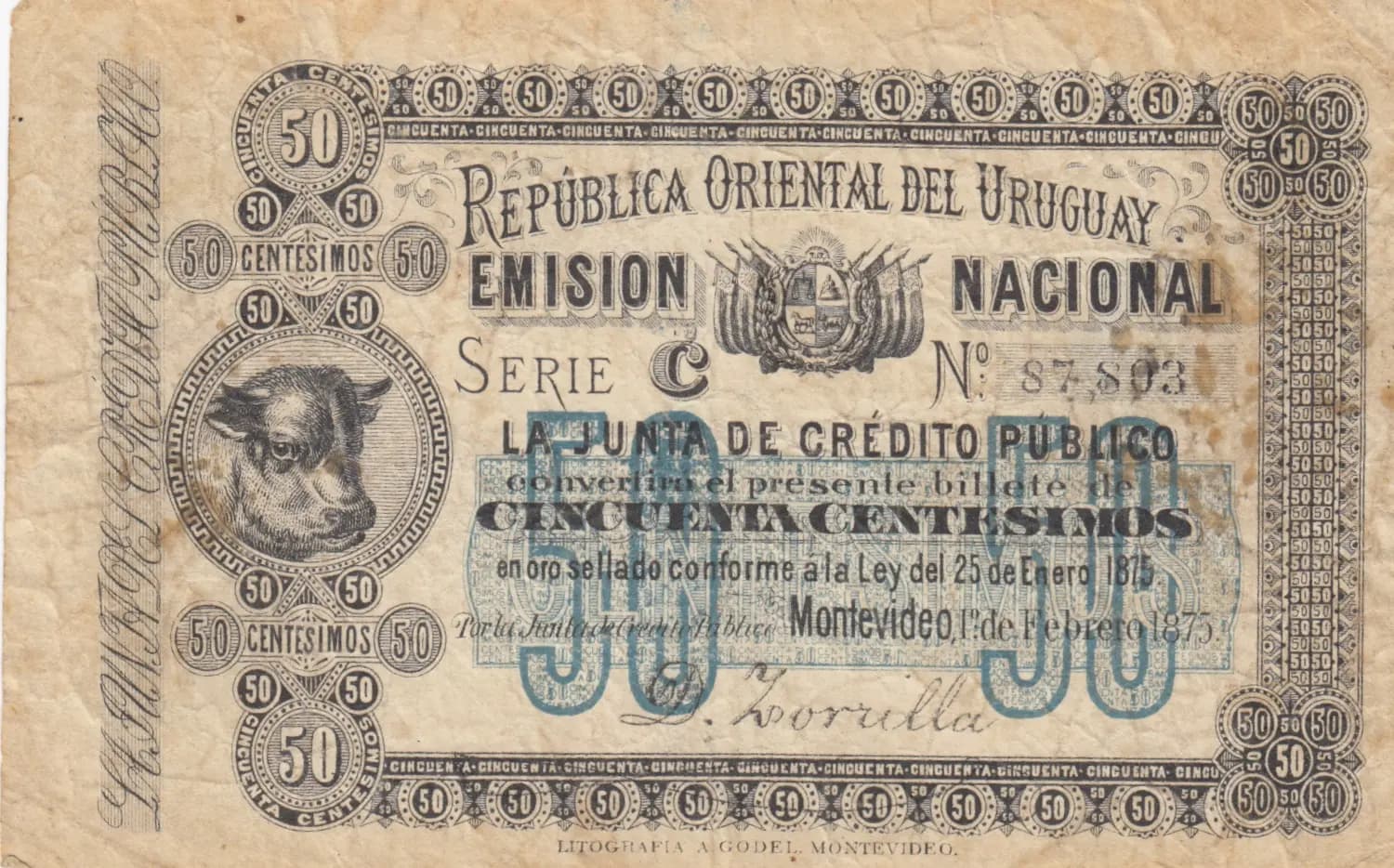
This 50 Centésimos note from Uruguay's 1875 National Emission represents an early example of the nation's currency during its transition to a modern banking system. The note displays the characteristic ornate Victorian-era design with a bearded male portrait in a circular medallion and the national coat of arms, printed by Litografía A. Gödel in Montevideo. In Fair condition with visible creasing, foxing, and age-related deterioration typical of a 150-year-old circulated note, this example shows the historical wear expected of period currency while remaining identifiable and collectible.
Common. The eBay price tracking data shows this note in Fair condition trading between $29.00 and $99.99 USD, with a 2016 catalogue value of $45 for the F grade. Multiple sales at varying price points and the availability of examples in multiple grades (from unknown condition at $8-$9 to AU/UNC examples at $100-$439) indicate this is a regularly traded note with reasonable availability in the collector market. The PMG population report shows only 1 catalogued variant, but the consistency of prices and multiple sales suggest adequate supply for collectors interested in early Uruguayan currency.
This note was issued on February 1, 1875, by the Junta de Crédito Público (Public Credit Board) under the Law of January 25, 1875, establishing Uruguay's convertible currency backed by sealed gold. The bearded male portrait and coat of arms with twin flags reflect the nation's identity during a formative period of the Oriental Republic of Uruguay, emphasizing national sovereignty and fiscal stability through gold convertibility. The lithographic production by A. Gödel represents the technological advancement in currency printing available to South American nations during the 1870s.
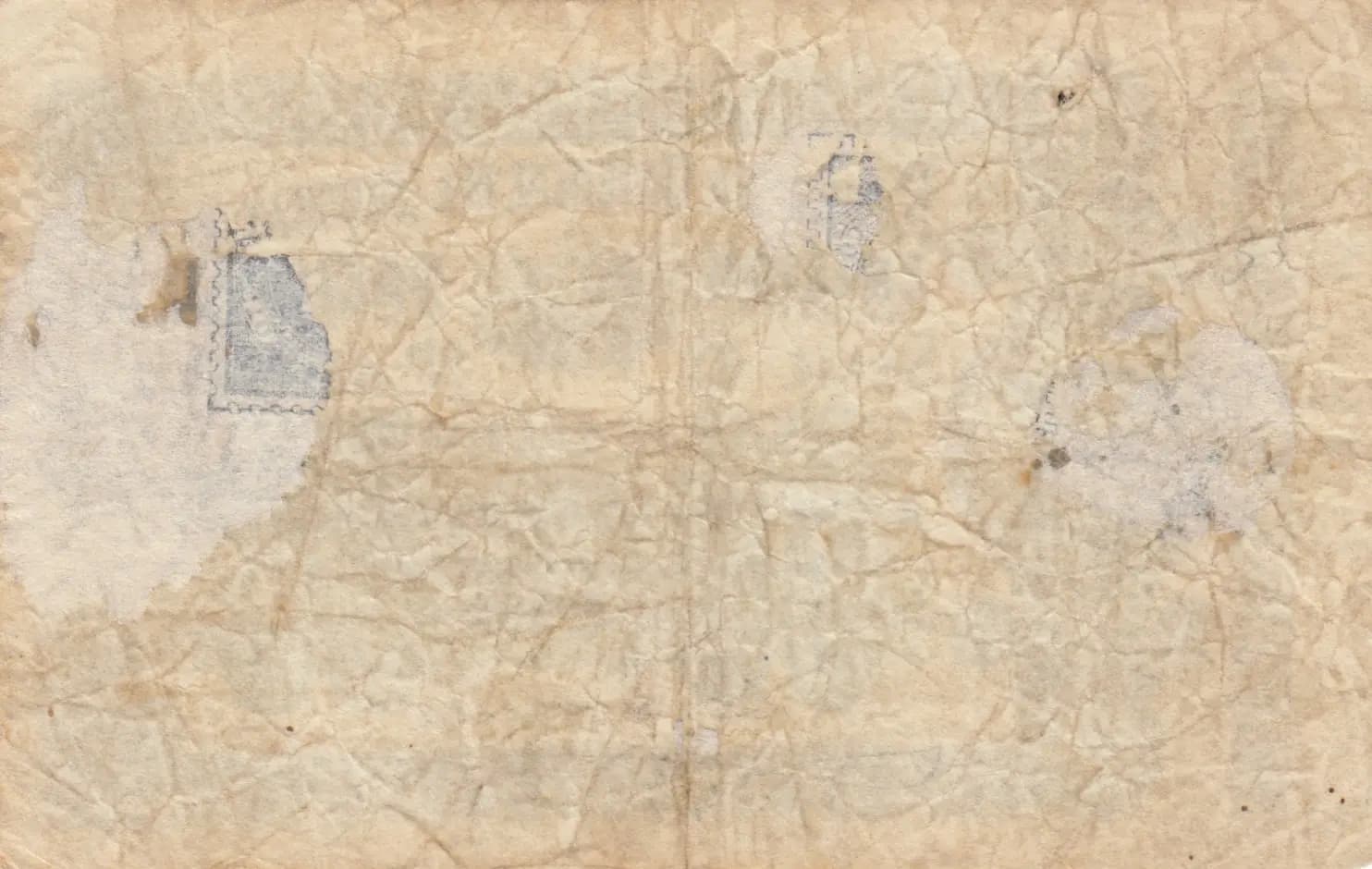
The obverse features a classic 19th-century design with an ornate decorative border composed of repeating circular medallions containing the denomination '50'. The left side displays a portrait medallion of an unidentified bearded gentleman in left-facing profile, enclosed within an elaborate circular frame with fine line work typical of period lithography. The center presents the national coat of arms of Uruguay featuring a shield with the sun motif and twin flags (the flags of the Oriental Republic), symbolizing national unity and sovereignty. The denomination 'Cincuenta Centésimos' appears prominently in blue text in the lower center portion. Fine geometric and floral ornamental elements frame the design throughout. The reverse is essentially blank, suggesting this was printed as a uniface note as catalogued. The note's Series C designation and serial number 87,503 indicate its position within the emission sequence.
FRONT: 'República Oriental del Uruguay' (Oriental Republic of Uruguay) / 'Emisión Nacional' (National Emission) / 'Cincuenta Centésimos' (Fifty Centesimos) / 'Serie C' (Series C) / 'N° 87,503' (Number 87,503) / 'Junta de Crédito Público' (Public Credit Board) / 'convertible el presente billete de... en oro sellado conforme a la Ley del 25 de Enero 1875' (this present banknote is convertible into sealed gold in accordance with the Law of January 25, 1875) / 'Por la Junta de Crédito Público' (By the Public Credit Board) / 'Montevideo 1º de Febrero 1875' (Montevideo, February 1st, 1875) / 'Litografía A. Gödel, Montevideo' (Lithography by A. Gödel, Montevideo) / Repeated denomination markers '50' and 'Centésimos' throughout design / BACK: Blank or unprinted cream paper with faint impression marks and stamps visible from handling.
Lithography, specifically credited to Litografía A. Gödel of Montevideo. The visual characteristics—including the fine line engraving, ornate borders with repeating circular elements, detailed portrait medallion framing, and complex geometric designs—are consistent with the hand-drawn stone lithography process standard for high-denomination currency of the 1870s. The blue underprint noted in the catalogue data would have been applied as a separate lithographic pass to the cream paper substrate.
This example is identified as Series C, Number 87,503, indicating its specific position within the emission. The Pick catalogue number P-A117 represents the base note type for the 50 Centésimos 1875 issue. The visual analysis indicates this is a uniface design (printed front only), and the note features the standard design with portrait, coat of arms, and full gold convertibility clause dated February 1, 1875. No overprints or significant printing varieties are visible on this example. The blue stamp or mark overlaid across the center appears to be a handling mark or cancellation from circulation rather than an issued variety marking.