10 pesos 1887
Market Prices
About This Note
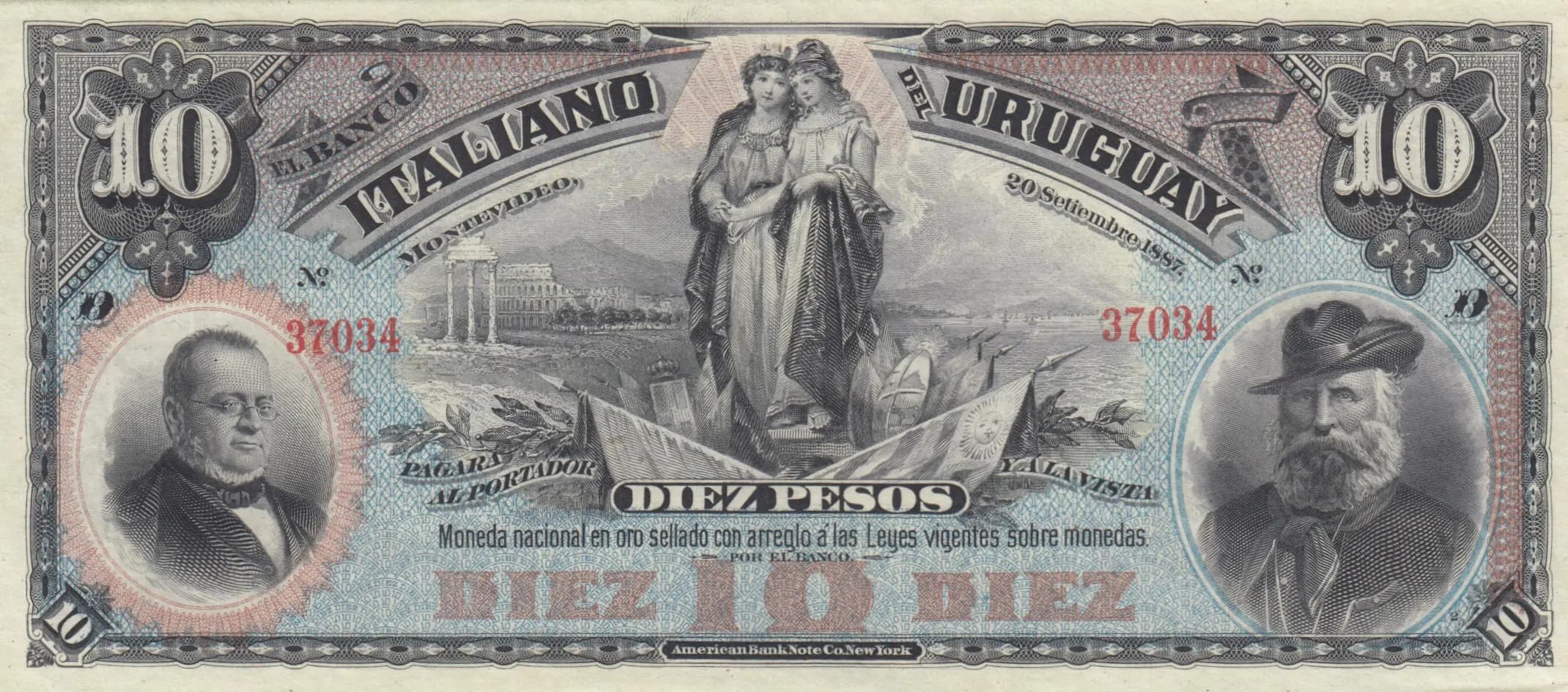
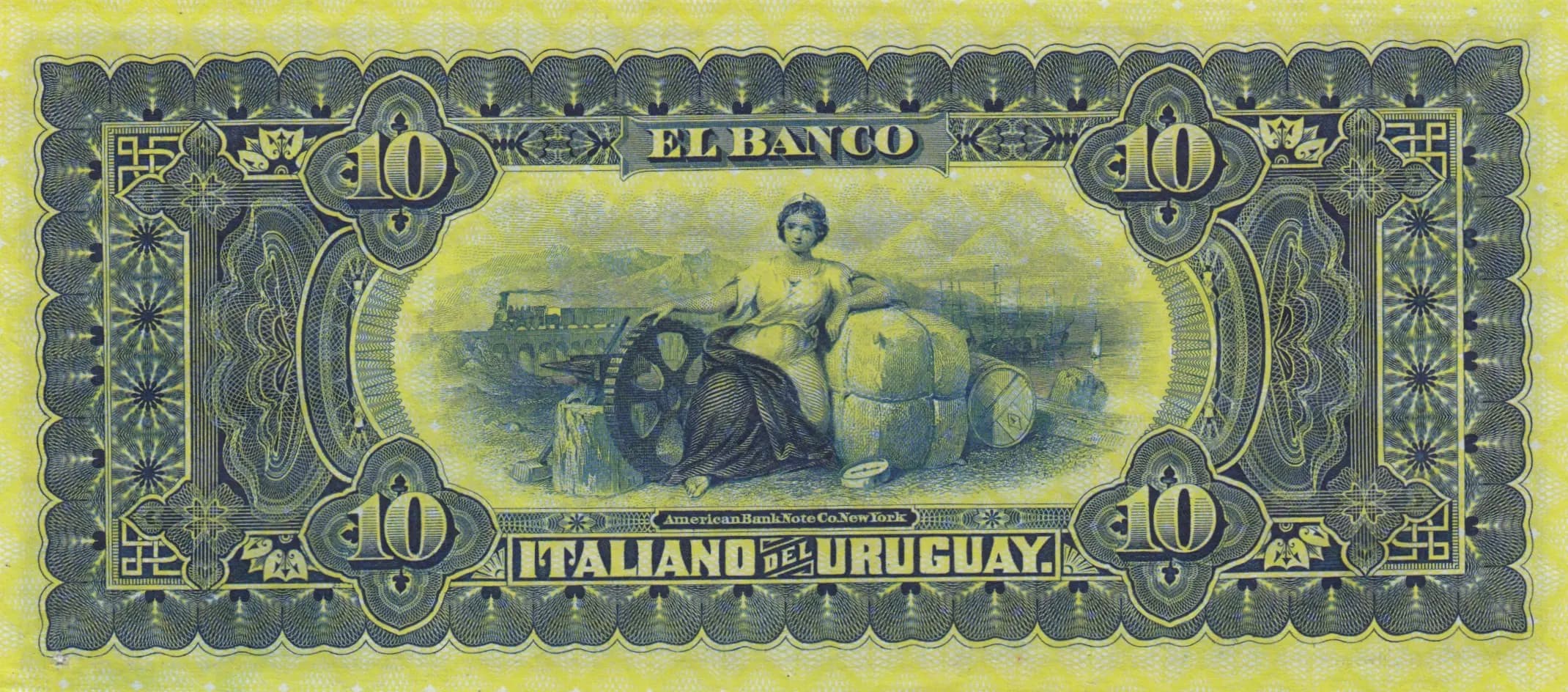
This is an uncirculated example of the Banco Italiano del Uruguay's 10 pesos note from 1887, printed by the American Bank Note Company. The note features exceptional engraving quality with a striking dual-portrait design on the obverse (Miguel Almiranda and Juan Lavalleja) flanking an allegorical central vignette, while the reverse showcases a seated female figure holding a globe in a classical industrial landscape. The pristine condition and complete absence of wear, combined with the historical significance of this early Uruguayan banknote, make it a desirable example for collectors of South American currency.
Uncommon to Scarce. While the catalog data from realbanknotes.com shows eBay prices ranging from $79.99 to $1,200 USD, with most UNC examples trading in the $95–$349 range, the reference source explicitly identifies this note as 'Rare' without branch overprint. The pick catalog designation (P-S212, with 'S' indicating a special or subsidiary issue) and the historical nature of early Banco Italiano banknotes support a scarce classification. The variation in realized prices suggests condition premiums and market volatility typical of scarcer 19th-century South American notes. In UNC condition, this represents an above-average price point relative to common circulating banknotes.
The Banco Italiano del Uruguay issued this note in 1887, during a period of significant Italian immigration and economic development in Uruguay. The portraits of Miguel Almiranda and Juan Lavalleja reference key figures in Uruguayan independence and national formation, while the allegorical female figures represent national virtues and industrial progress. The reverse's depiction of a woman with a globe and industrial elements reflects the late 19th-century emphasis on commerce, maritime trade, and the modernization of Uruguay's economy.
The obverse features a sophisticated classical design with two male portrait medallions in the lower corners identifying Miguel Almiranda (left) and Juan Lavalleja (right), both prominent figures in Uruguayan national history. The upper center contains an allegorical scene with two draped female figures in classical dress representing national virtues, flanking heraldic eagles and architectural elements that suggest governmental authority and institutional stability. The denomination '10' appears in ornamental circles at all four corners. The reverse displays a single seated allegorical female figure holding a globe, positioned within a landscape vignette that includes industrial or port structures in the background, symbolizing commerce and national prosperity. Intricate geometric borders, filigree work, and fine-line engraving surround all design elements, creating a dense, secure appearance characteristic of high-quality currency design.
FRONT SIDE: 'REPUBLICA ORIENTAL DEL URUGUAY' (Eastern Republic of Uruguay); '20 Setiembre 1887' (September 20, 1887); 'DIEZ PESOS' (Ten Pesos); 'Moneda nacional en oro sellado con arreglo á las Leyes vigentes sobre monedas' (National currency in gold sealed in accordance with current laws on coinage); 'POR EL BANCO' (By the Bank); Serial number: 37034; Portrait labels: 'MIGUAL ALMIRANDA' (Miguel Almiranda) and 'JUAN LAVALLEJA' (Juan Lavalleja); 'American Bank Note Co. New York' (printer attribution). BACK SIDE: 'EL BANCO' (The Bank); 'ITALIANO DEL URUGUAY' (Italian of Uruguay); Denomination marker: '10'; 'American Bank Note Co. New York' (printer attribution).
Steel engraving and intaglio printing, executed by the American Bank Note Company of New York. The complexity of the geometric patterns, fine-line work, filigree borders, and detailed allegorical vignettes are consistent with the intaglio process, which was the industry standard for security printing in the 1880s. The use of multiple color layers (black, red/pink, and blue with yellow-green underprints) indicates sequential color printing typical of the period.
This is the regular issue without branch overprint, as noted in the reference data. The specific variety is identifiable by: Issue date of September 20, 1887; Printer attribution to American Bank Note Co., New York; Serial number format (37034 visible on the example); and issuer designation as 'Banco Italiano del Uruguay' without regional overprints. The Pick catalog number P-S212 establishes this as the standard variety for this denominations and issuer combination. No signature varieties or overprint variations are noted for this pick number.