50 kurus 1877
Market Prices
4 salesAbout This Note
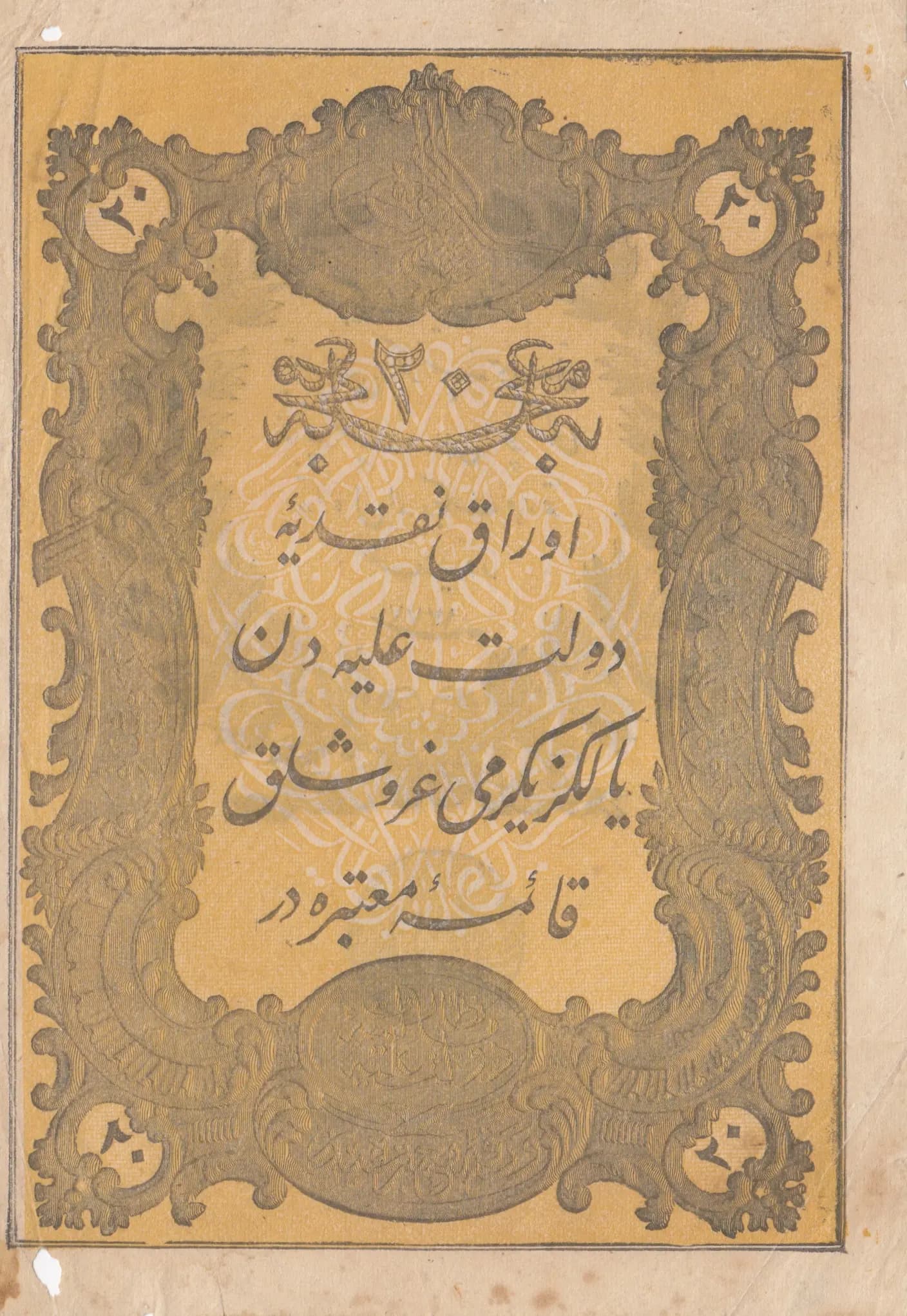
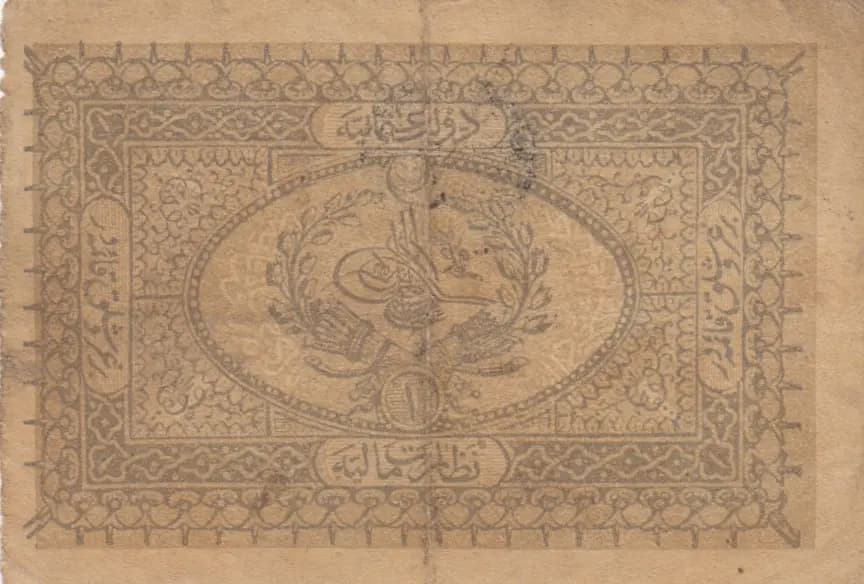
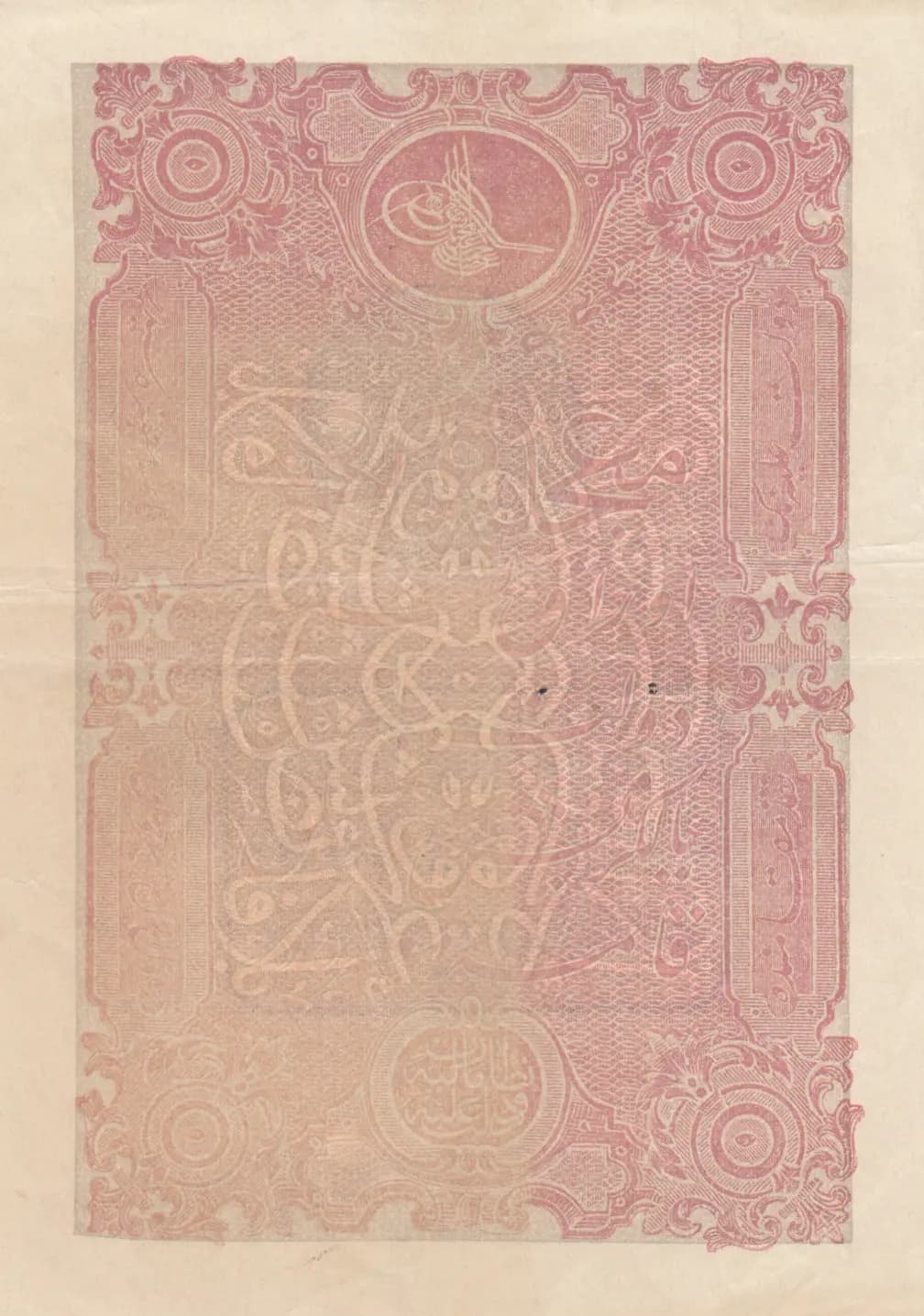
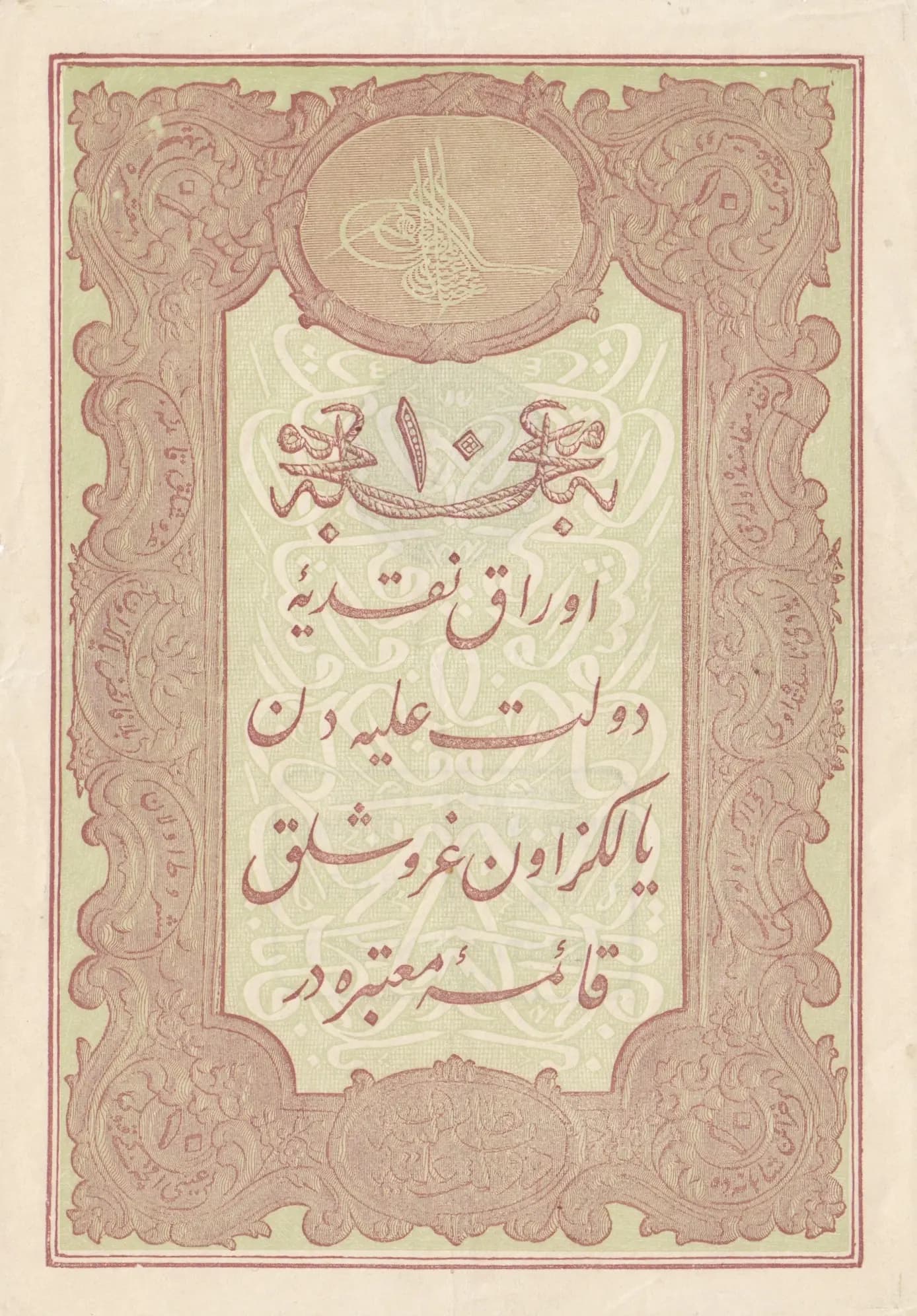
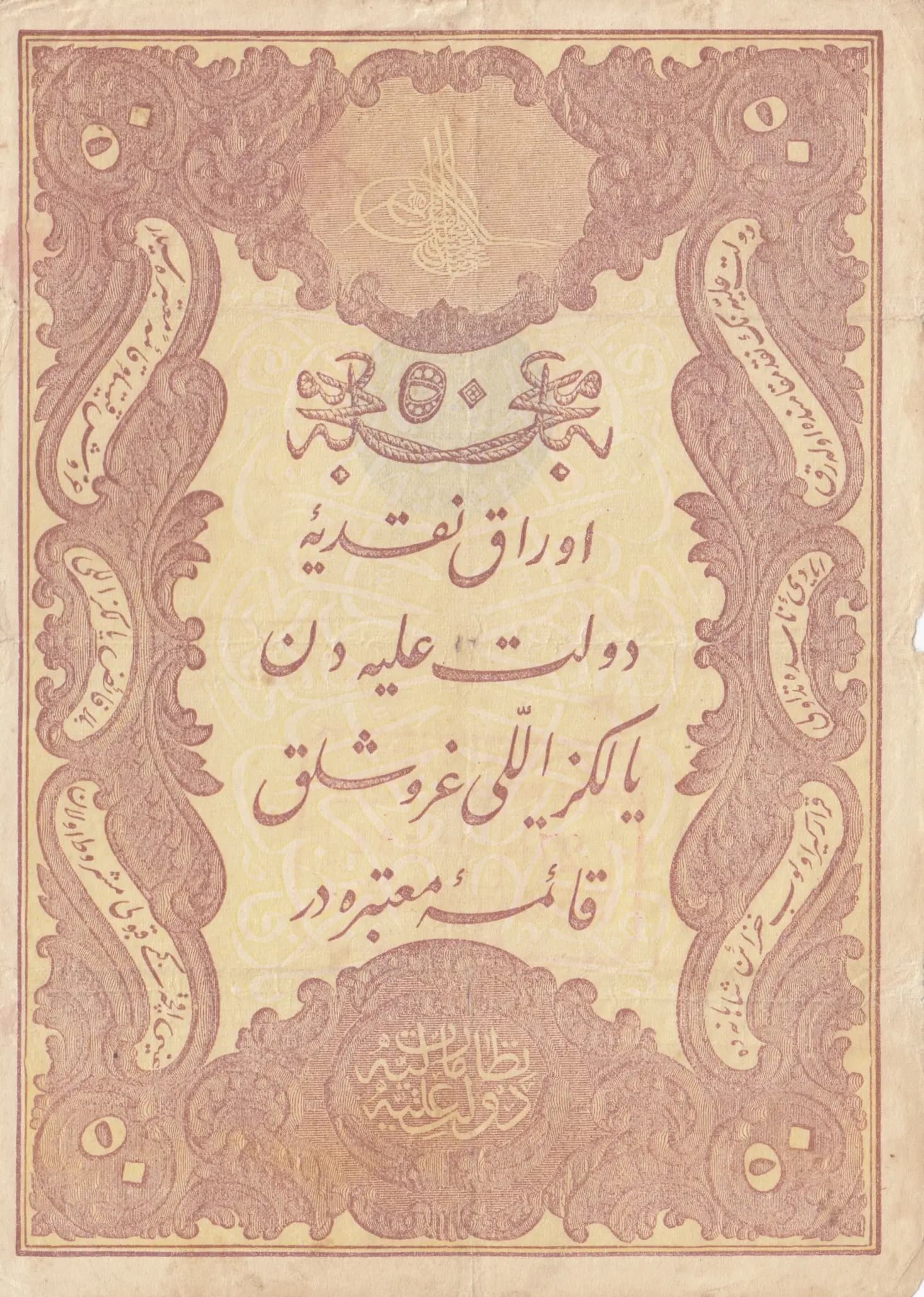
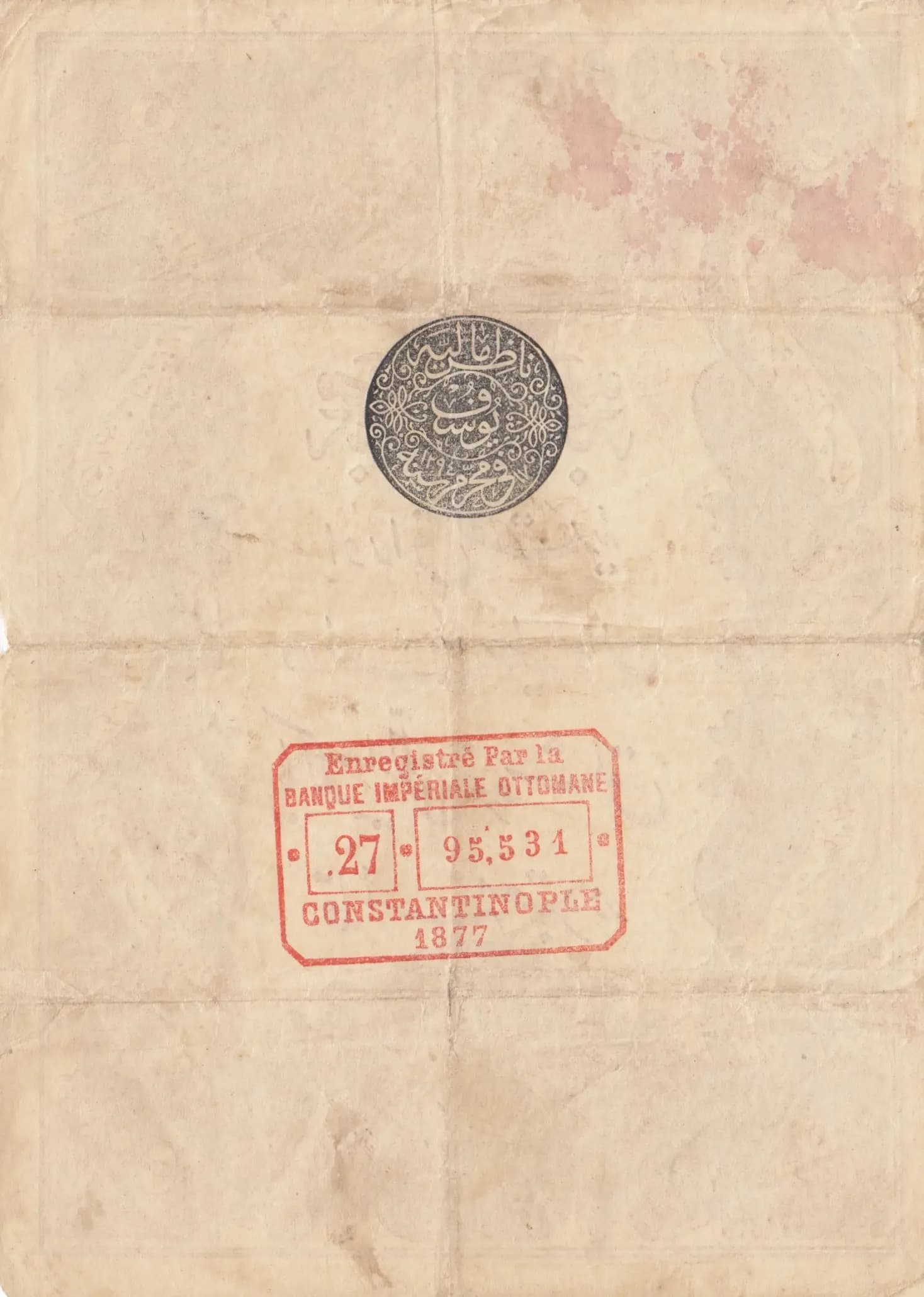
This is a handsome example of an Ottoman 50 Kuruş note from 1877 (AH 1293-1295), issued by the Banque Impériale Ottomane under the reign of Abdul Hamid II. The note displays the characteristic mauve/rose and cream color scheme typical of this series, featuring an ornate engraved border with an imperial tughra and cherub motifs on the obverse, while the reverse bears the official bank registration stamp dated Constantinople 4877 (Ottoman calendar). In Fine condition, the note shows age-appropriate foxing and discoloration consistent with a 140+ year old document, with no major tears or significant damage.
Common. EBay market data shows multiple sales of this note in F condition ranging from $22.86 to $34.69 in recent years, with catalog valuations at $15 for Fine grade (2016). These price points and the availability of multiple market sales confirm this is a regularly encountered note in collector circulation. The 1877 (AH 1293-1295) date represents the main issue period for this design, and no evidence of limited print runs or recalls exists in the catalog data.
This note was issued during a critical period of Ottoman monetary reform and European influence, as evidenced by the bilingual inscriptions (Ottoman Turkish/Arabic on obverse, French on reverse bank stamp) reflecting the Banque Impériale Ottomane's Franco-British partnership. The tughra of Abdul Hamid II shown prominently on the obverse legitimized the note under the Sultan's authority, while the Imperial seal and elaborate calligraphic design on the reverse demonstrated Ottoman commitment to sophisticated currency security. The Constantinople registration mark underscores this was a centrally-controlled issue during the late Tanzimat period, when the Ottoman state sought to modernize its financial institutions.
The obverse features a symmetrical, ornately engraved design centered around the tughra (imperial monogram) of Sultan Abdul Hamid II, rendered in a circular ornamental frame at the top. Below the tughra are two classical cherub or angel figures flanking a diamond-shaped decorative element, reflecting European artistic influence common in late Ottoman currency design. The entire composition is framed by an intricate mauve/rose-colored border with floral scrollwork and geometric patterns in the Rococo-influenced style typical of 1870s Ottoman banknotes. The reverse is predominantly blank cream-colored paper, with only the official oval seal at top center and a red rectangular registration stamp from the Banque Impériale Ottomane in the lower portion, both bearing Constantinople as the place of issue.
OBVERSE: The four vertical lines of Ottoman Turkish/Arabic text translate to: 'اوراق نقتشيه' (Banknote/Paper Money), 'دولت عليدون' (State/Government), with additional text referencing the Ottoman monetary denomination. REVERSE: 'Enregistré Par la BANQUE IMPERIALE OTTOMANE' (Registered by the Imperial Ottoman Bank), followed by reference numbers '.27' and '95.5 34', the location 'CONSTANTINOPLE', and the Ottoman calendar date '4877' (corresponding to 1876-1878 CE). The circular Ottoman seal contains calligraphic text identifying the issuing authority.
Steel plate engraving, the standard security printing method for high-denomination Ottoman banknotes of this period. The fine detail in the border ornamentation, tughra rendering, and cherub figures demonstrates the precision of 19th-century intaglio printing technology. The registration stamp on the reverse was applied separately in red ink, a common post-printing authentication method used by the Imperial Ottoman Bank. This note was produced by European security printers working for or under contract with the Banque Impériale Ottomane, consistent with the bank's Franco-British management structure.
This note is cataloged as Pick P-50b, indicating it is the 'b' variety of the 50 Kuruş denomination from this series. The visual analysis confirms the identifying characteristics: presence of the tughra of Abdul Hamid II (distinguishing it from similar notes with the tughra of Murad V, cataloged as P-44), the AH 1293-1295 date range, and the brown-lilac on yellow underprint coloration. The reverse shows a round AH 1294 handstamp and a boxed '1877' handstamp, consistent with documented variety features. No signature variants or additional overprints beyond the standard bank registration marks are visible on this example.