10 kurus 1877
Market Prices
1 saleAbout This Note
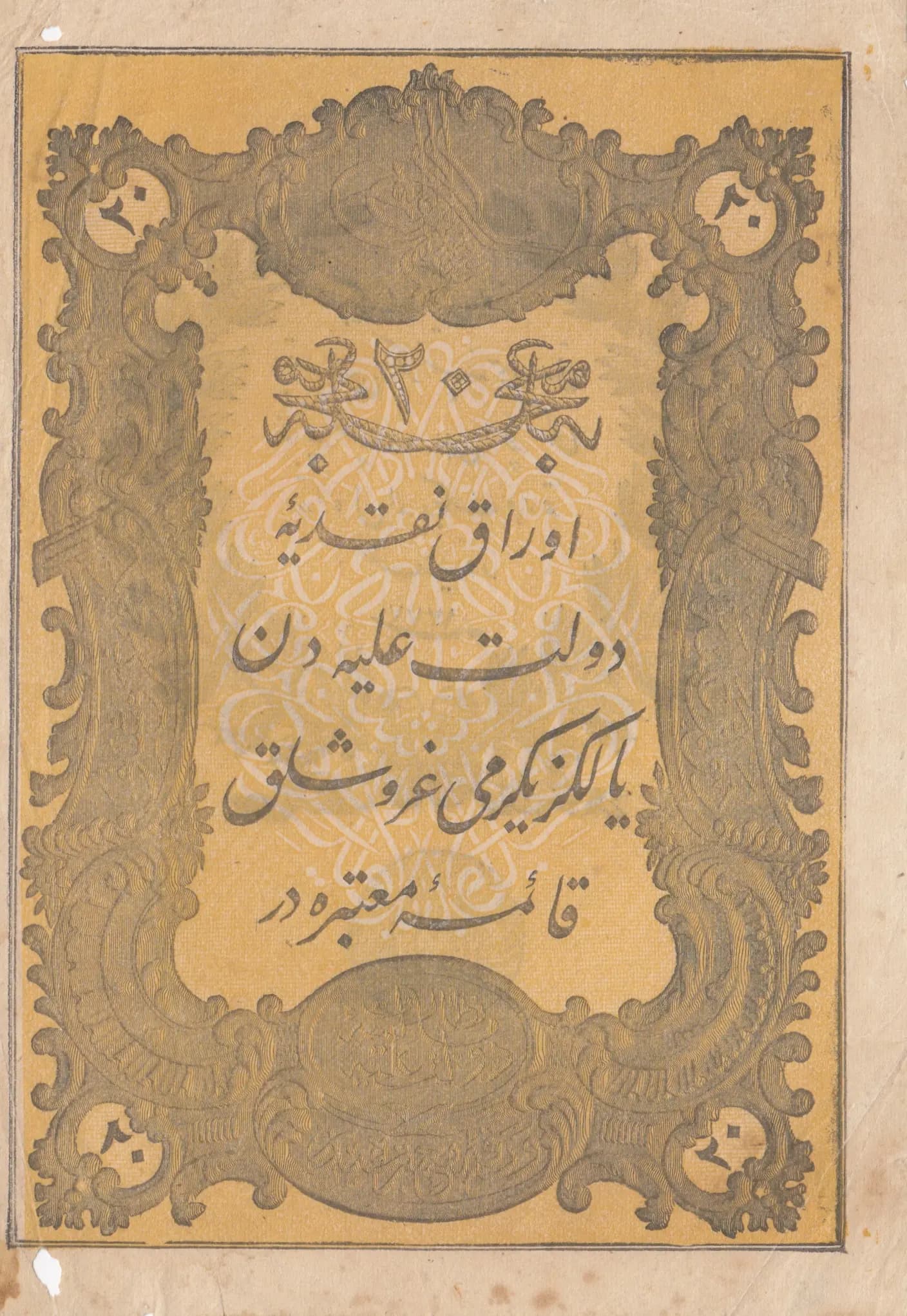
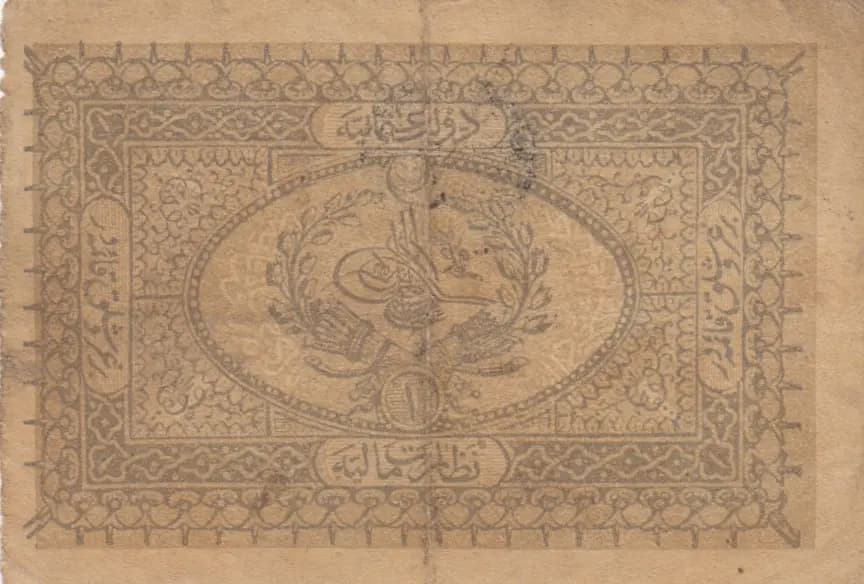
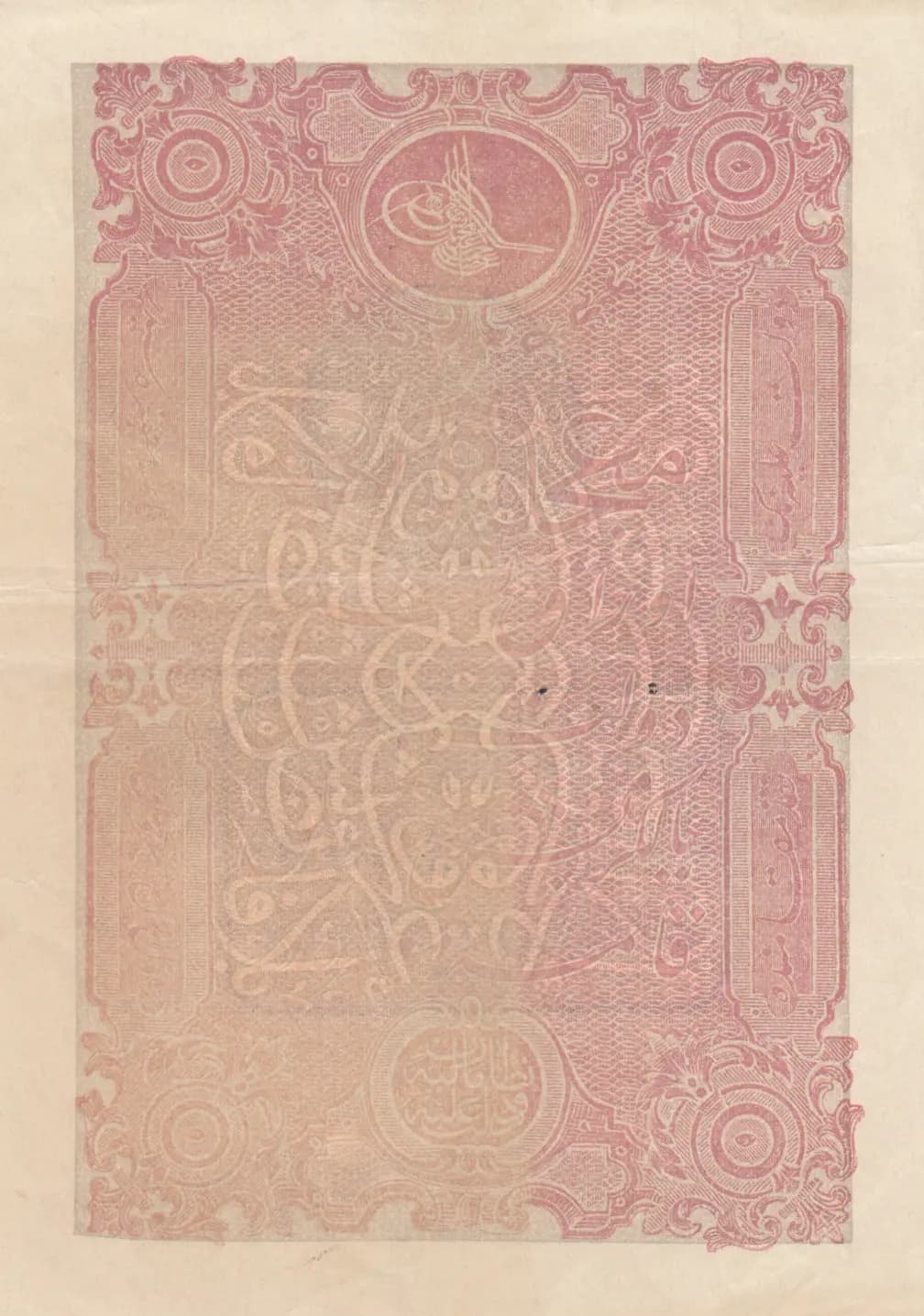
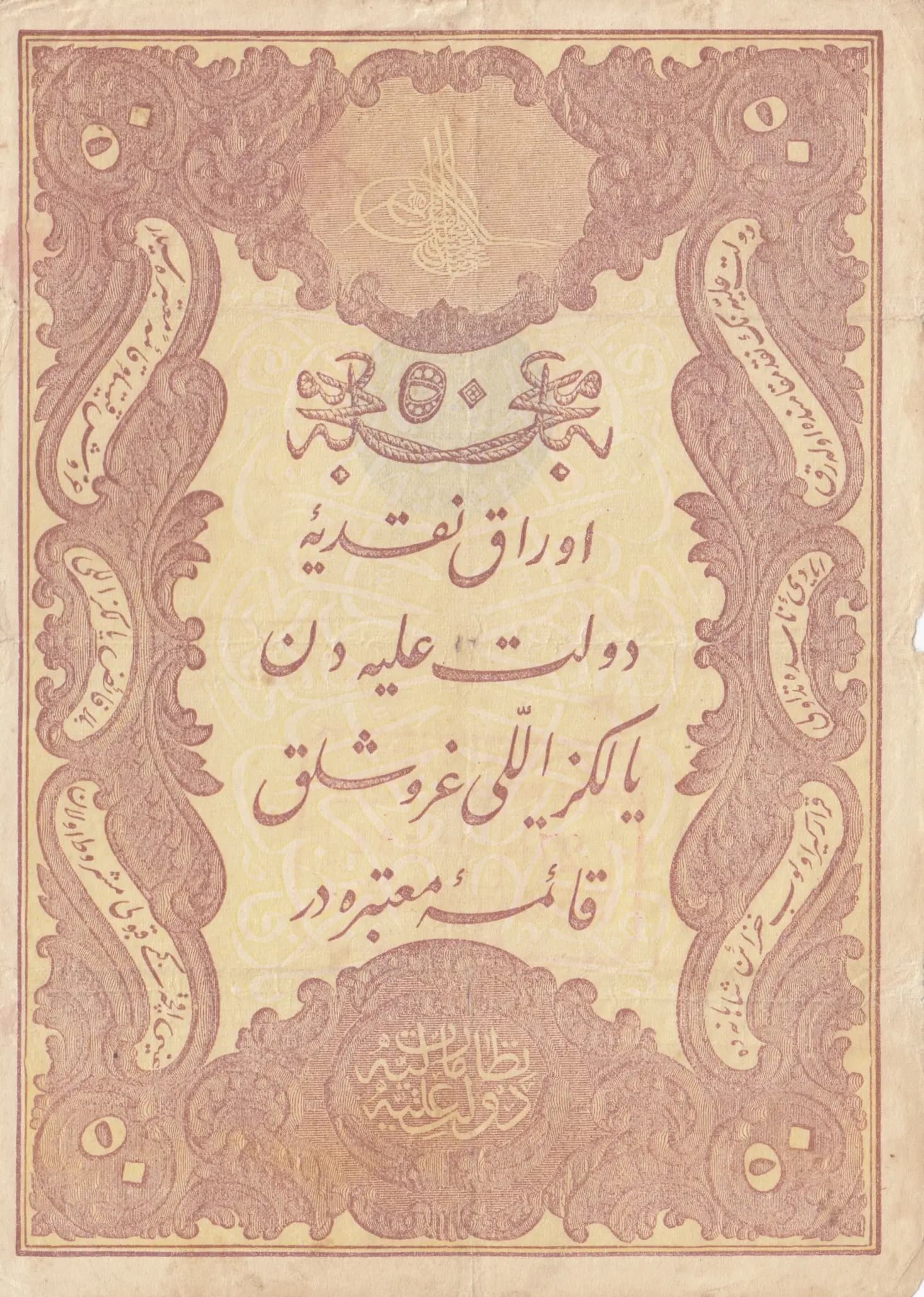
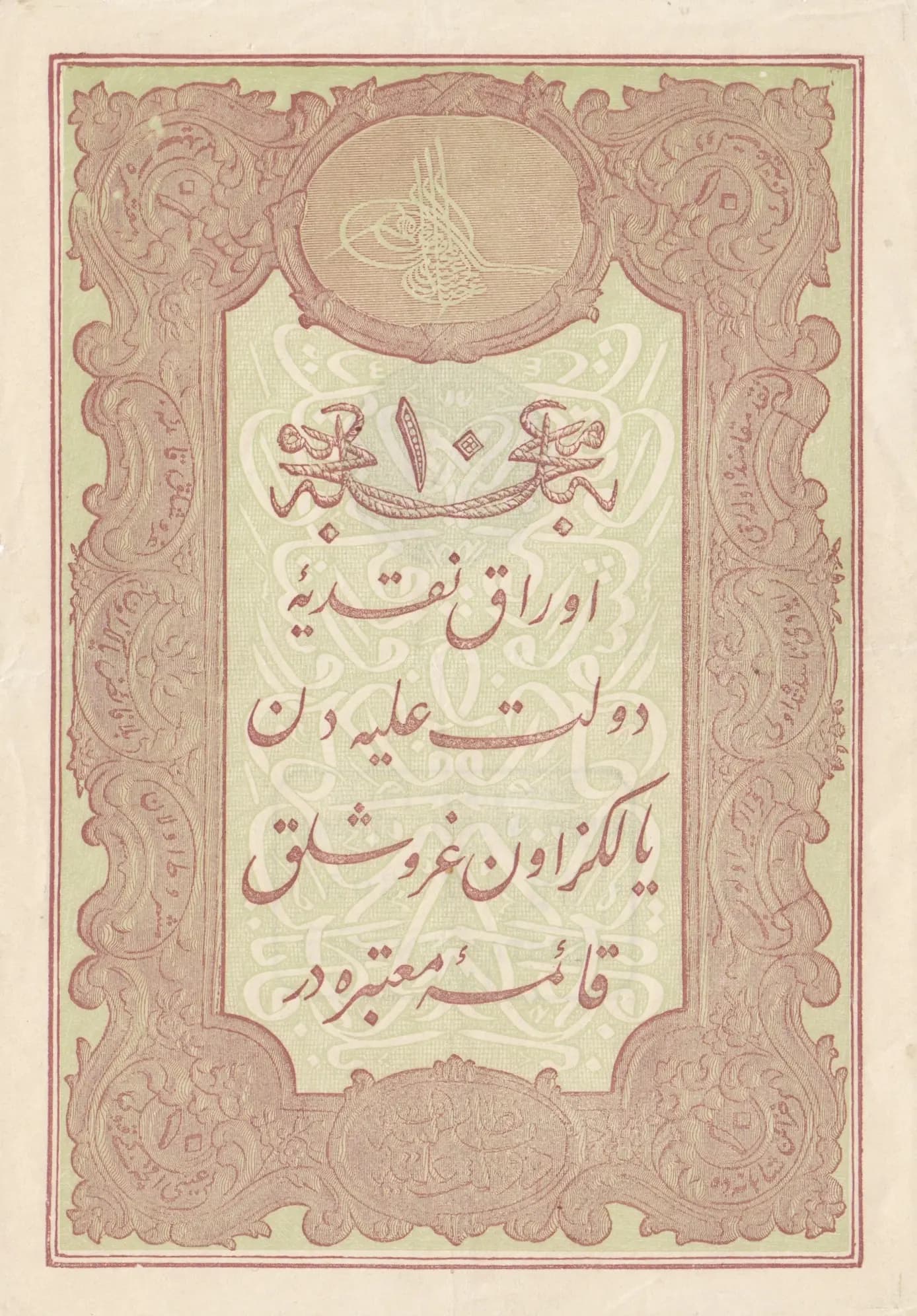
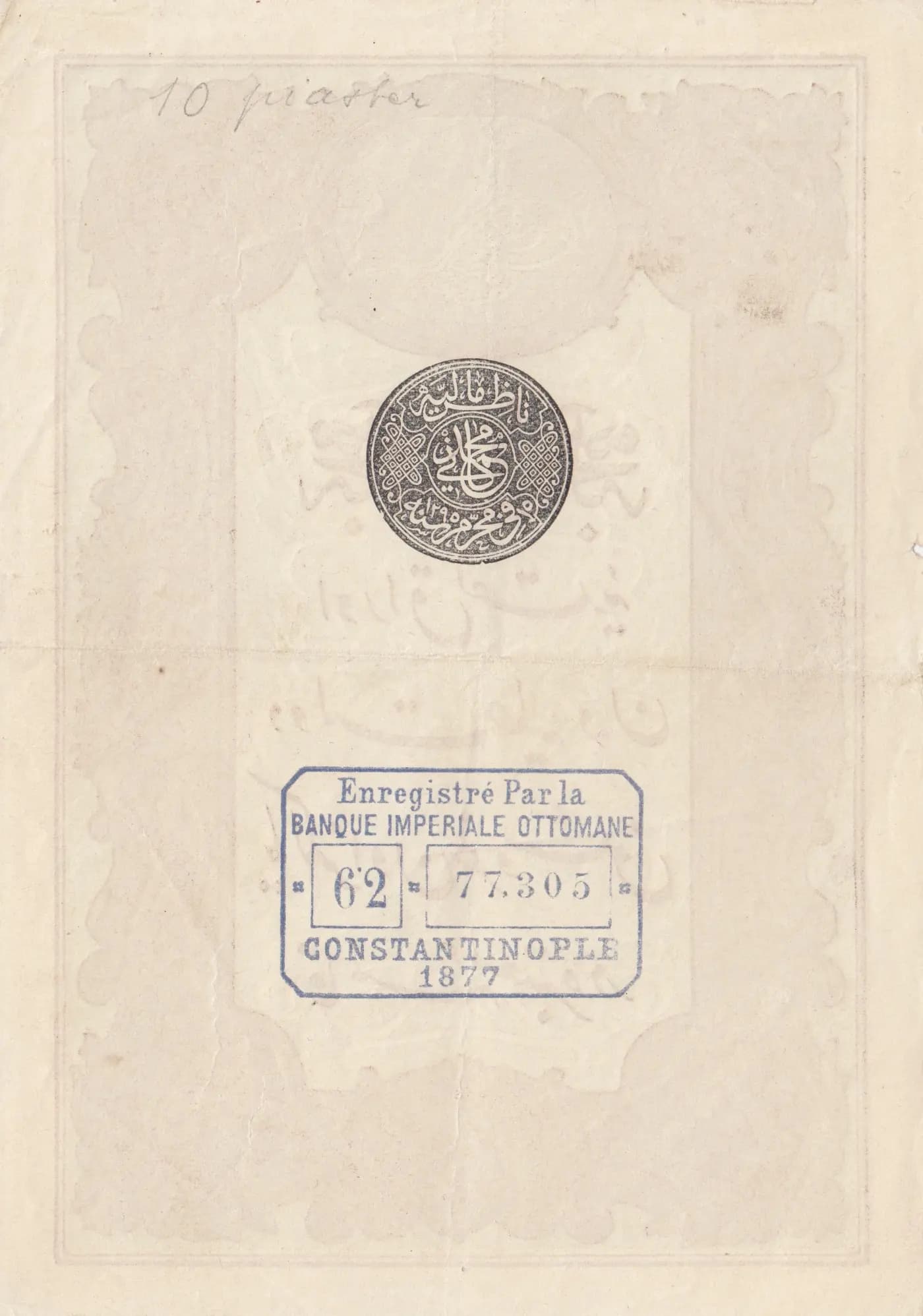
This is an exceptional example of an Ottoman Imperial Bank 10 Kuruş note from 1877, featuring the characteristic pink/mauve ornate border design with the elegant tughra of Abdul Hamid II prominently displayed in the central oval cartouche. The note appears to be in uncirculated or near-uncirculated condition with crisp printing, no visible creases or tears, and only light aging appropriate for a note of this antiquity. The reverse displays the ornate circular seal of Galip with official Banque Imperiale Ottomane registry marks in blue ink, making this a complete and well-preserved example of late Ottoman currency design.
Common. While Ottoman banknotes from this period have become less common in circulation due to the passage of time and historical disruptions, the 10 Kuruş denomination from P-48c appears in regular supply in the collector market. eBay price tracking shows EF examples selling for $66-125 range, indicating steady but not exceptional demand. Catalogue values (2016) range from $12-125 depending on grade, consistent with a widely-printed regular-issue note from a major issuing authority. The availability of examples in high grades and the relatively modest market prices indicate this was part of a substantial print run that has survived in reasonable quantities.
This note was issued during the reign of Sultan Abdul Hamid II (r. 1876-1909), whose tughra is featured prominently on the obverse—a symbolic assertion of imperial authority during a period of Ottoman institutional modernization. The Banque Imperiale Ottomane, established in 1863 as the Ottoman Empire's primary issuing bank, produced this currency to support the empire's economy during the latter quarter of the 19th century. The French-language registry markings and Constantinople location reference reflect the cosmopolitan nature of Ottoman financial administration in this era, when Western banking practices and French served as the lingua franca of Ottoman high finance.
The obverse features an elaborate rococo-style ornamental border in pink/mauve with intricate scrollwork and floral patterns framing a central composition. The tughra of Sultan Abdul Hamid II—the elaborate calligraphic imperial monogram representing the sultan's personal seal and authority—is positioned at the apex within an oval cartouche. Below the tughra is a rectangular text panel with a cream/pale yellow background containing four lines of Ottoman Turkish inscriptions in Arabic script. Two classical winged figures (cherubs or allegorical angels) flank a horizontal ornamental element within the upper portion of the text panel, adding to the note's classical European influence blended with Islamic artistic tradition. The reverse displays the Seal of Galip—an ornate circular emblem with concentric rings of Ottoman calligraphic text and geometric patterns—centered in the upper portion, with an official blue-ink rectangular registry stamp from the Banque Imperiale Ottomane positioned below, including identification numbers and location.
FRONT: The central text panel contains Ottoman Turkish/Arabic script describing this as a currency note of the Ottoman state and the Bank's authority to issue it (exact Ottoman Turkish translation requires specialist expertise, but the context indicates standard issue language). BACK: 'Enregistré Par la BANQUE IMPERIALE OTTOMANE' (Registered by the Ottoman Imperial Bank) / '62' (registry/series number) / '77.305' (serial or reference number) / 'CONSTANTINOPLE' (place of issue) / '1877' (year of issue) / Handwritten notation: '10 piasther' (denomination, in English/French transliteration)
Engraved intaglio printing, evidenced by the crisp, fine-line detail visible in the ornamental borders, tughra design, and circular seal on the reverse. The multi-color printing (pink/mauve, cream, light green, and blue) suggests separate engraved plates for each color layer. The quality and precision of line work is consistent with security printing standards of the 1870s-1880s. The Banque Imperiale Ottomane contracted with European security printers (likely French or British firms given the French inscriptions and technical sophistication), though the specific printer for this particular Pick number variant is not definitively identified in available records.
This note is catalogued as P-48c, specifically noting the tughra of Abdul Hamid II (distinguishing it from P-42, which features the tughra of Murad V). The date range AH 1293-1295 (1877-1878) encompasses the Islamic calendar equivalent of 1876-1878. Visual examination shows this example carries a circular AH1295 handstamp and rectangular box handstamp on the reverse with registry number '62' and serial number '77.305', suggesting it may belong to a specific series or printing batch. The handwritten '10 piasther' notation appears to be period-contemporary designation. No other significant varieties (signature changes, overprints, or color variants) are noted for this specific Pick variant.