20 kurus 1861
Market Prices
6 salesAbout This Note
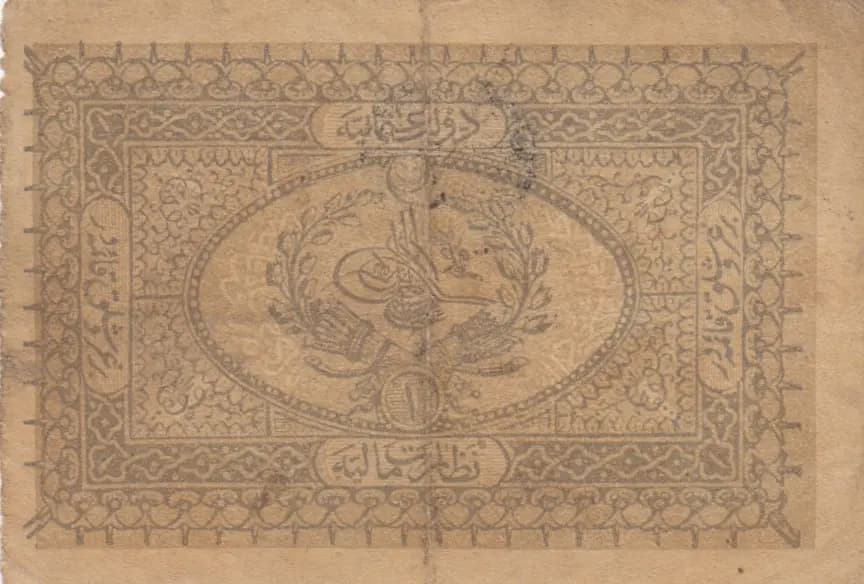
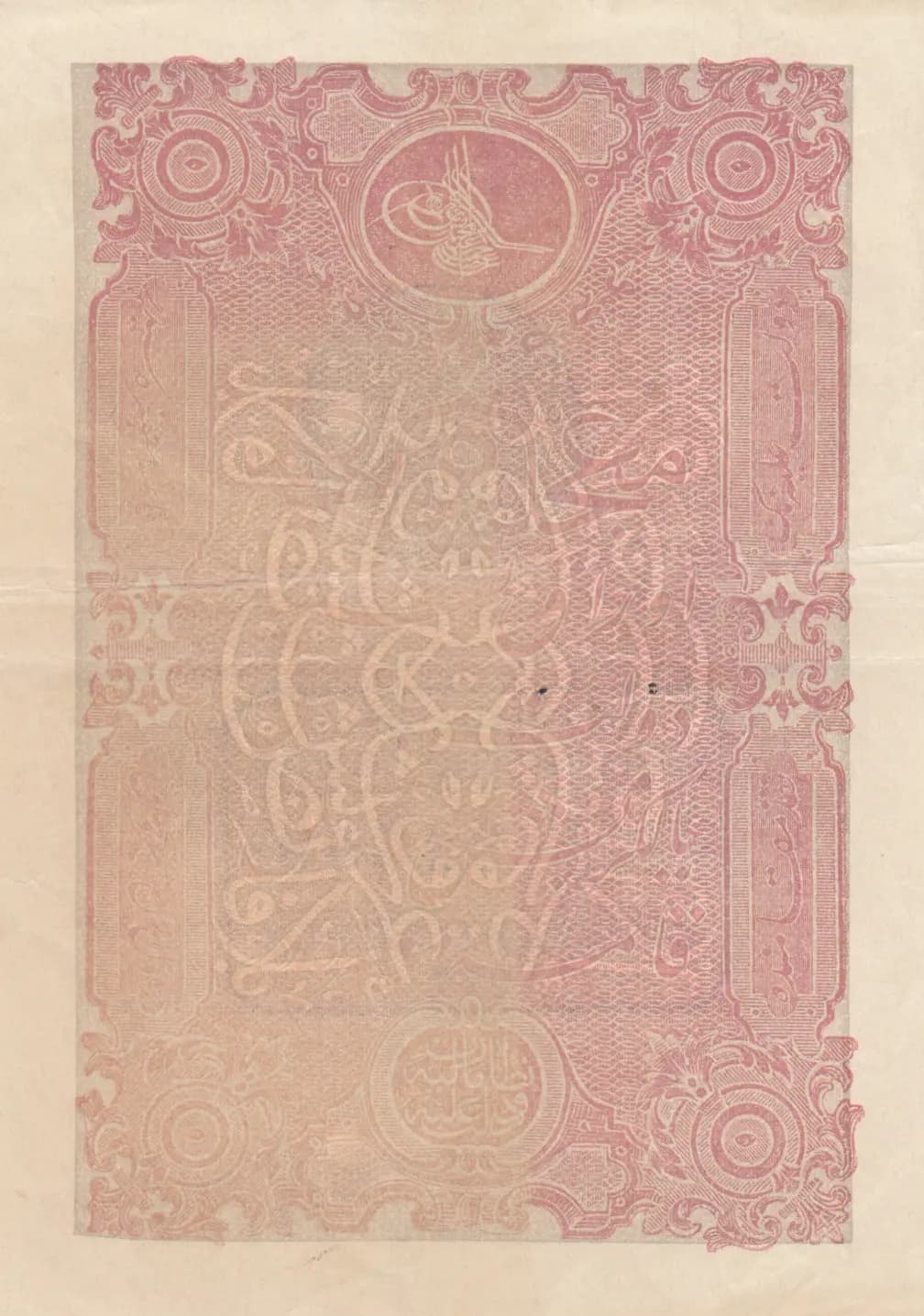
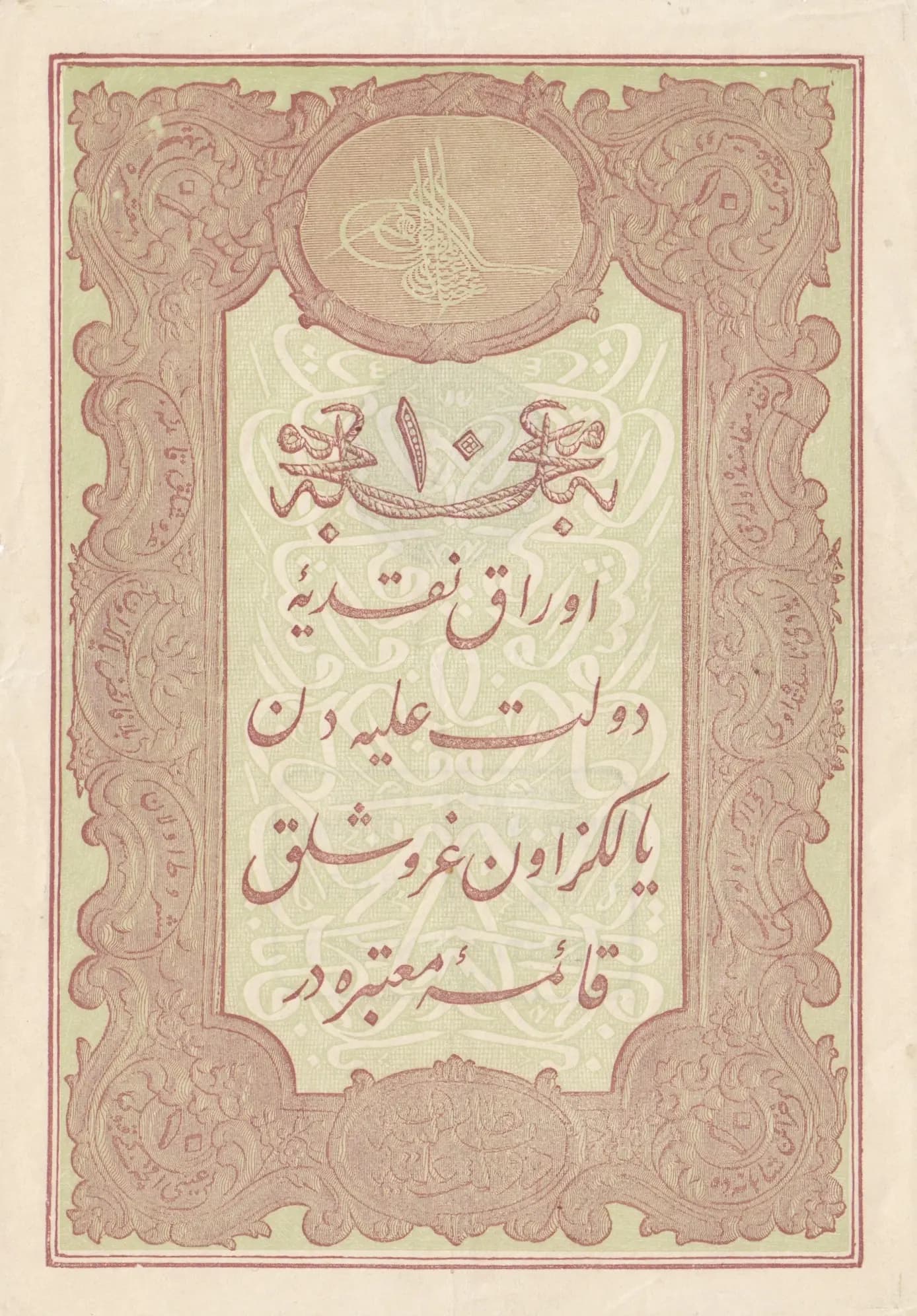
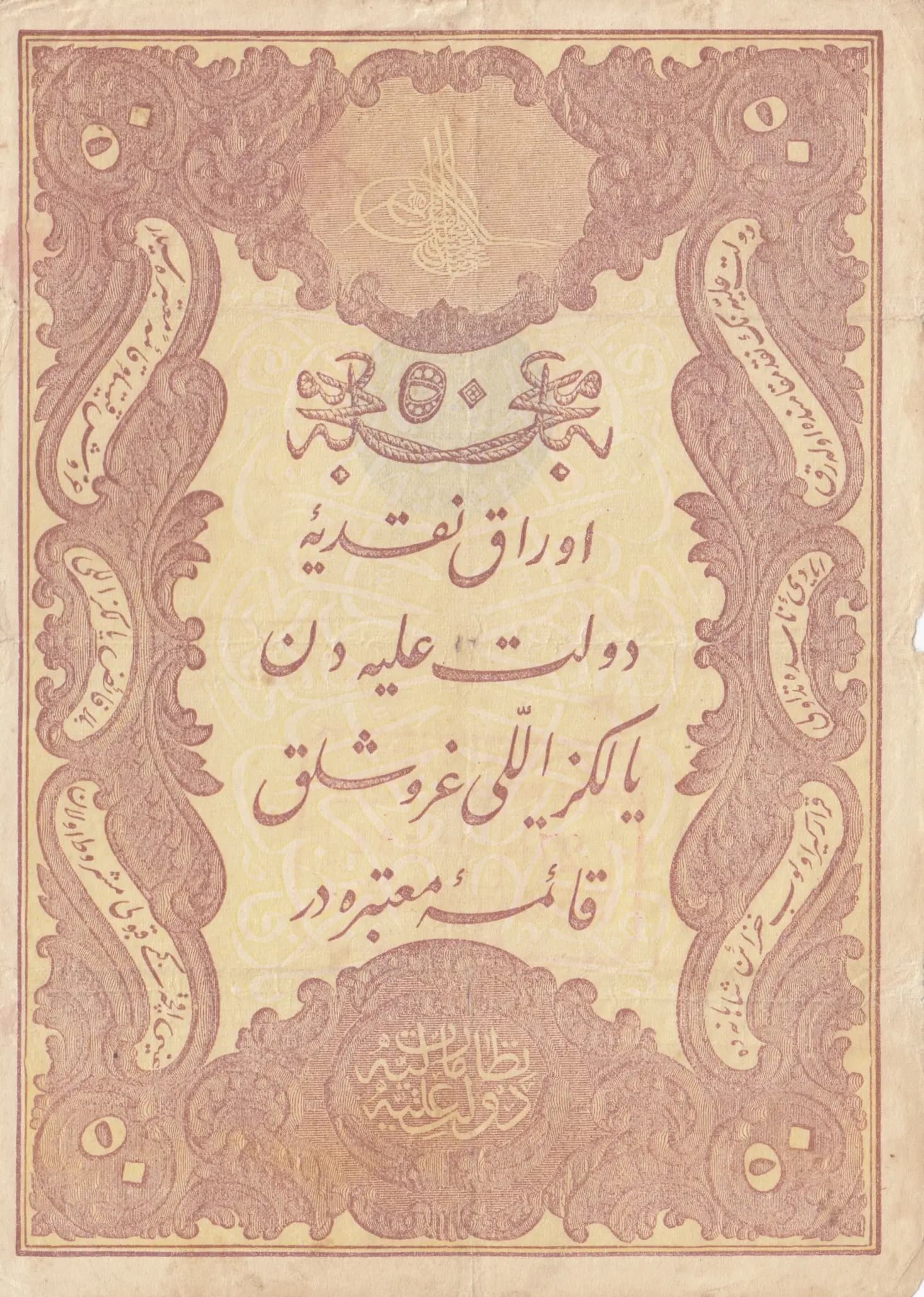
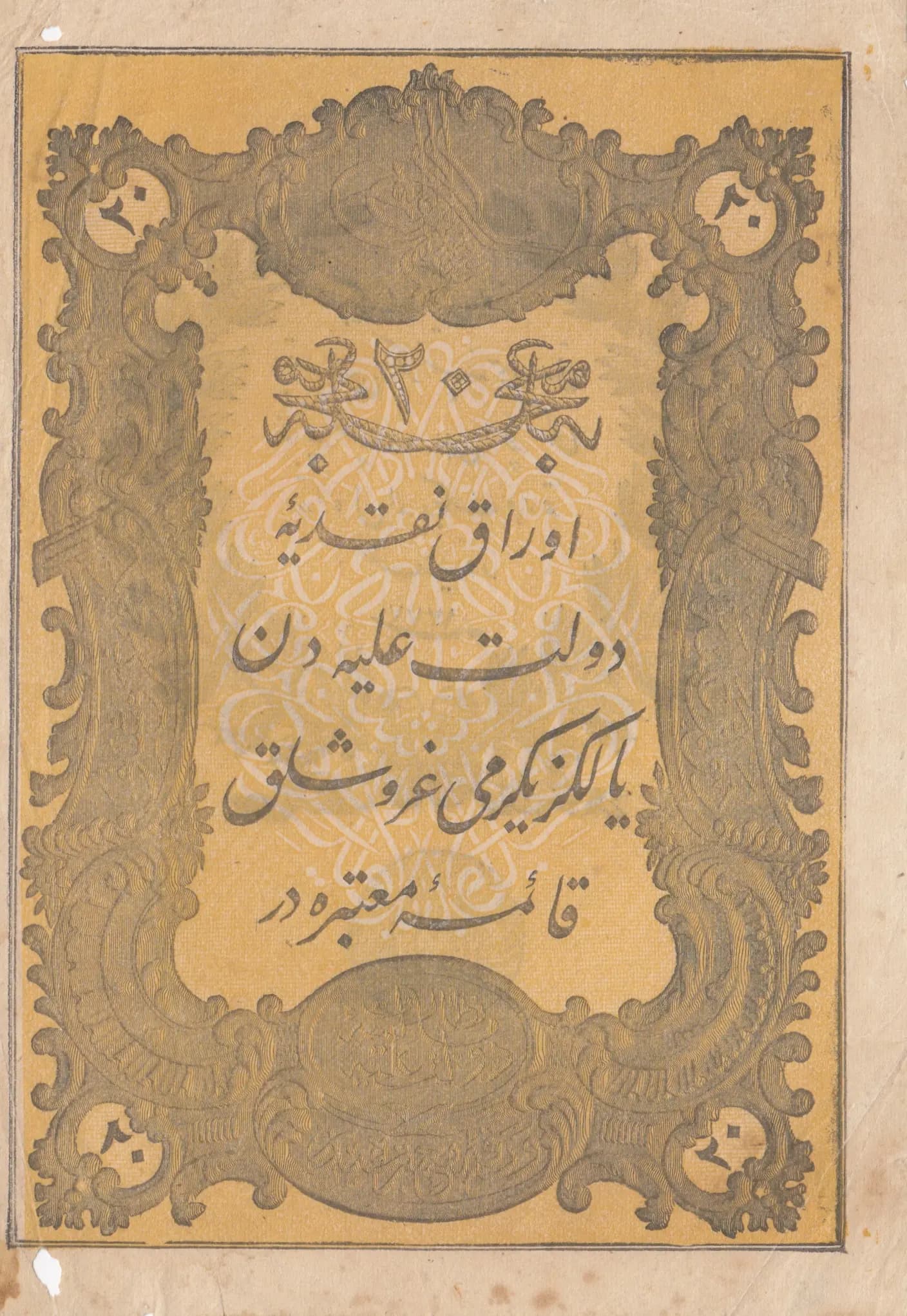
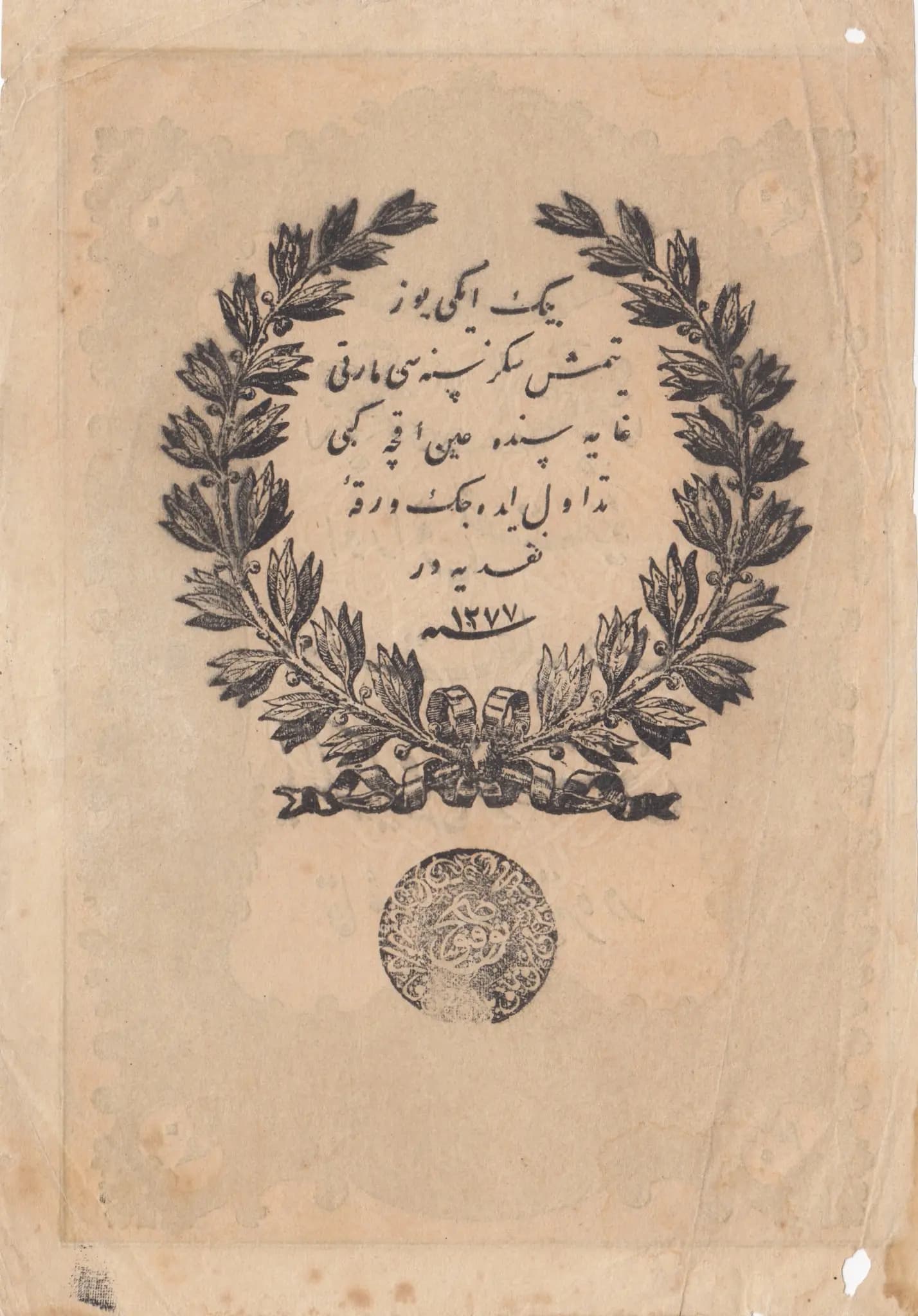
This is a Fine condition example of Turkey's 20 kurus note from 1861 (AH 1277), featuring an exceptionally ornate baroque/rococo design with a distinctive gold underprint and intricate engraved borders. The obverse displays elaborate calligraphic Ottoman Turkish text framed by symmetrical scrollwork and cherub face cartouches, while the reverse presents a classical laurel wreath enclosing text with the impressive Seal of Tevfik at the base. The note exhibits expected aging characteristics including foxing and yellowing consistent with its 160+ year age, yet the fine engraving and ink definition remain well-preserved, making it a notable example of mid-19th century Ottoman currency design.
Common. eBay market data shows regular sales in the $40-70 range for F-VF condition examples, with catalog valuations listing F condition at $25 (2016 pricing). The consistent availability across multiple sales from 2016-2022 and straightforward Pick classification with no variant notation indicates this was a standard issue with adequate print run for the period. No evidence of rarity or short print run exists in the available data.
Issued during the late Ottoman Empire's financial reforms under the Treasury (Divan-i Humayun), this 20 kurus note represents the period following the Tanzimat reforms when the Ottoman state was modernizing its monetary system. The presence of the Seal of Tevfik on the reverse indicates official Treasury authorization, reflecting the Ottoman government's attempt to establish confidence in paper currency through classical symbols of authority and legitimacy. The dual-language calligraphic design and baroque ornamentation exemplify the transitional aesthetic of mid-19th century Ottoman administration, blending traditional Islamic calligraphy with European engraving techniques.
The obverse features an elaborate rococo-baroque border frame with symmetrical acanthus leaf scrollwork and floral motifs executed in brown/gray engraving on a gold/yellow underprint. The central field contains five vertical lines of Ottoman Turkish calligraphy in dark brown ink. The upper ornamental cartouche displays two cherub or putti faces flanking a central decorative element, a common motif in 19th-century Ottoman currency design symbolizing protection and imperial authority. The lower cartouche provides additional framing for the inscribed text. The reverse presents a classical laurel wreath (symbol of honor and victory in European heraldic tradition, adopted by Ottoman reformers) with a decorative bow at the base, enclosing four lines of text and the date AH 1277. At the bottom center is the circular Seal of Tevfik, an ornate emblem representing official Treasury validation. The overall composition reflects a deliberate synthesis of Ottoman Islamic calligraphic tradition with European neoclassical and rococo design elements.
OBVERSE: The calligraphic text includes references to 'Orāq-ı Qasīrah' (Short Notes/Papers), 'Divan-i Hümayun' (In the State/Imperial Divan), and 'Qābil-i Masdariyya' (Valid for issuance/exchange), establishing the note's official status as circulating currency. REVERSE: The text within the laurel wreath contains four lines of Ottoman Turkish calligraphy with the Islamic calendar date 'AH 1277' (1860-1861 CE) prominently displayed in Arabic numerals. The wreath and seal configuration represents official Treasury authorization and the formal validation of the denomination. The specific calligraphic content affirms this as an official issue of the Ottoman Treasury (Hazine-i Hassa).
Intaglio/copperplate engraving, evidenced by the fine line work, detailed scrollwork, and precise calligraphic reproduction visible in the visual analysis. The multi-layered border construction and elaborate cartouches demonstrate skilled engraving craftsmanship. The gold underprint on the obverse was likely applied through a separate printing pass, a technique commonly employed by European security printers contracted by the Ottoman Treasury during this period. The note was likely produced by a European security printer such as De La Rue or Bradbury Wilkinson, though specific attribution for P-36 is not definitively documented in available references.
Pick catalog P-36 is listed as the base number with the catalog reference noting this variant has '5 lines of text above date on back,' distinguishing it from the similar P-34 which features '6 lines of text above date on back.' This represents the primary known variety for the 20 kurus 1861 issue. The visual analysis confirms the 5-line configuration. No additional varieties (such as signature variations, serial number prefixes, or overprints) are apparent from the images or standard references for this Pick number.