5 kurus 1877
Market Prices
1 saleAbout This Note
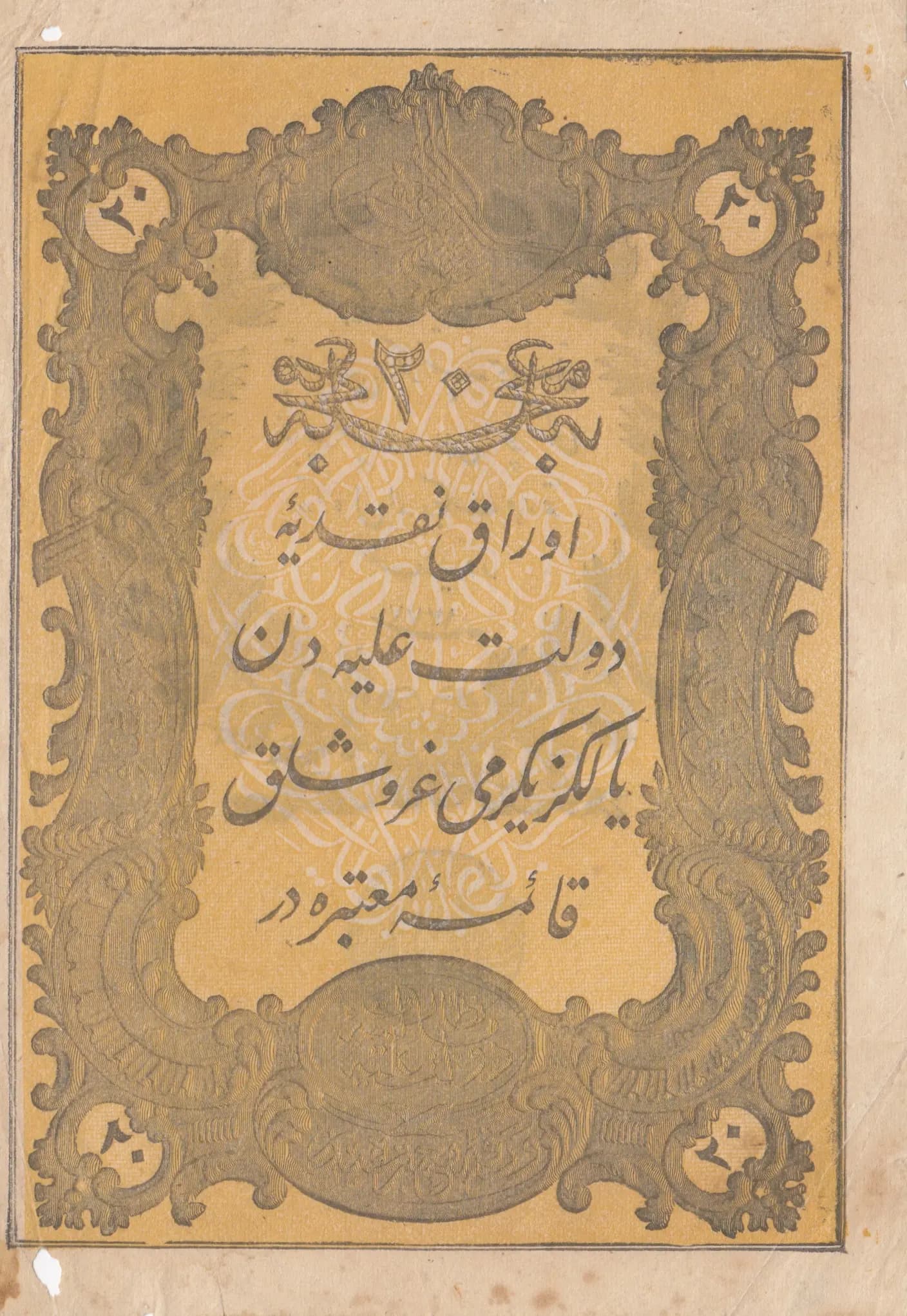
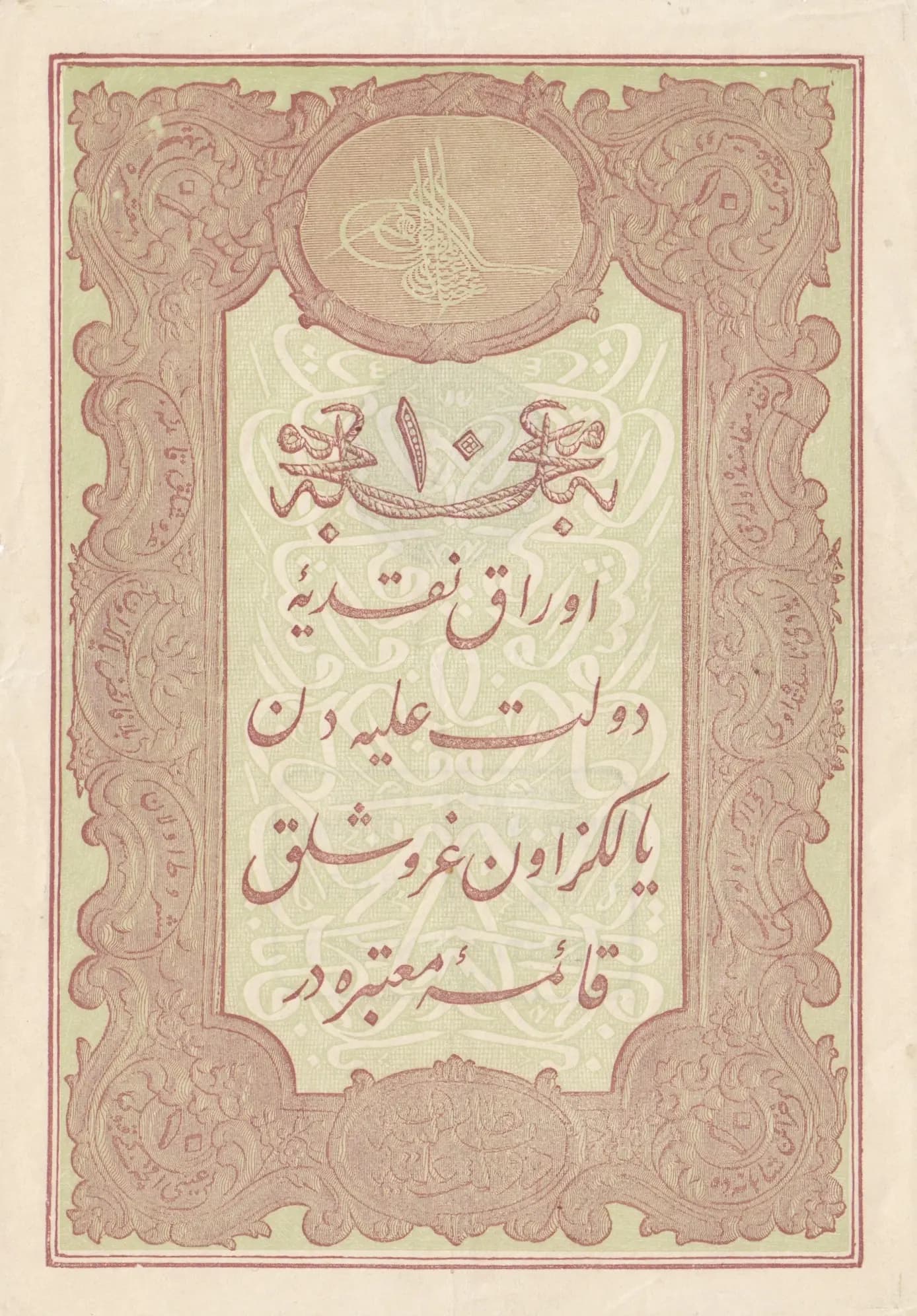
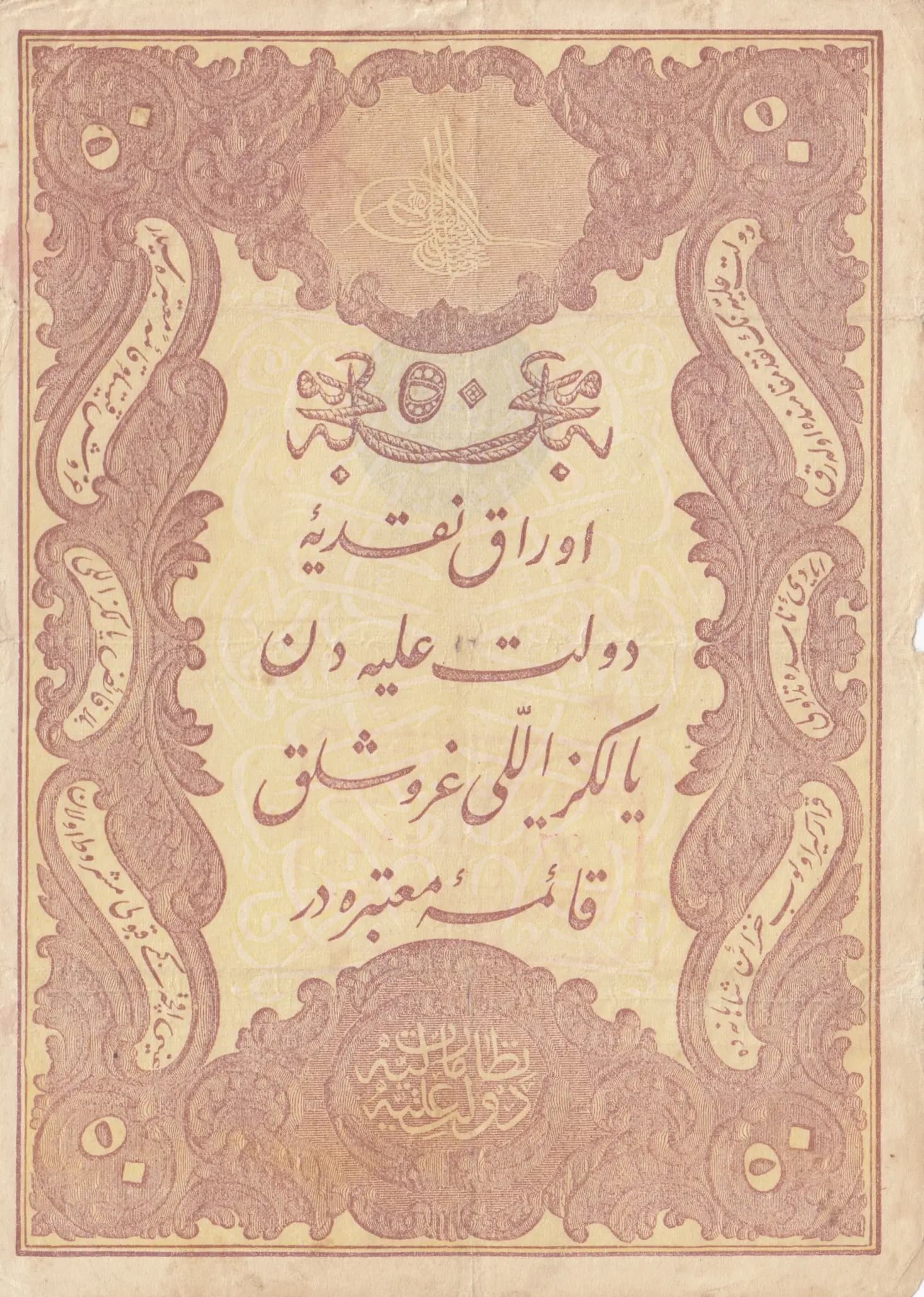
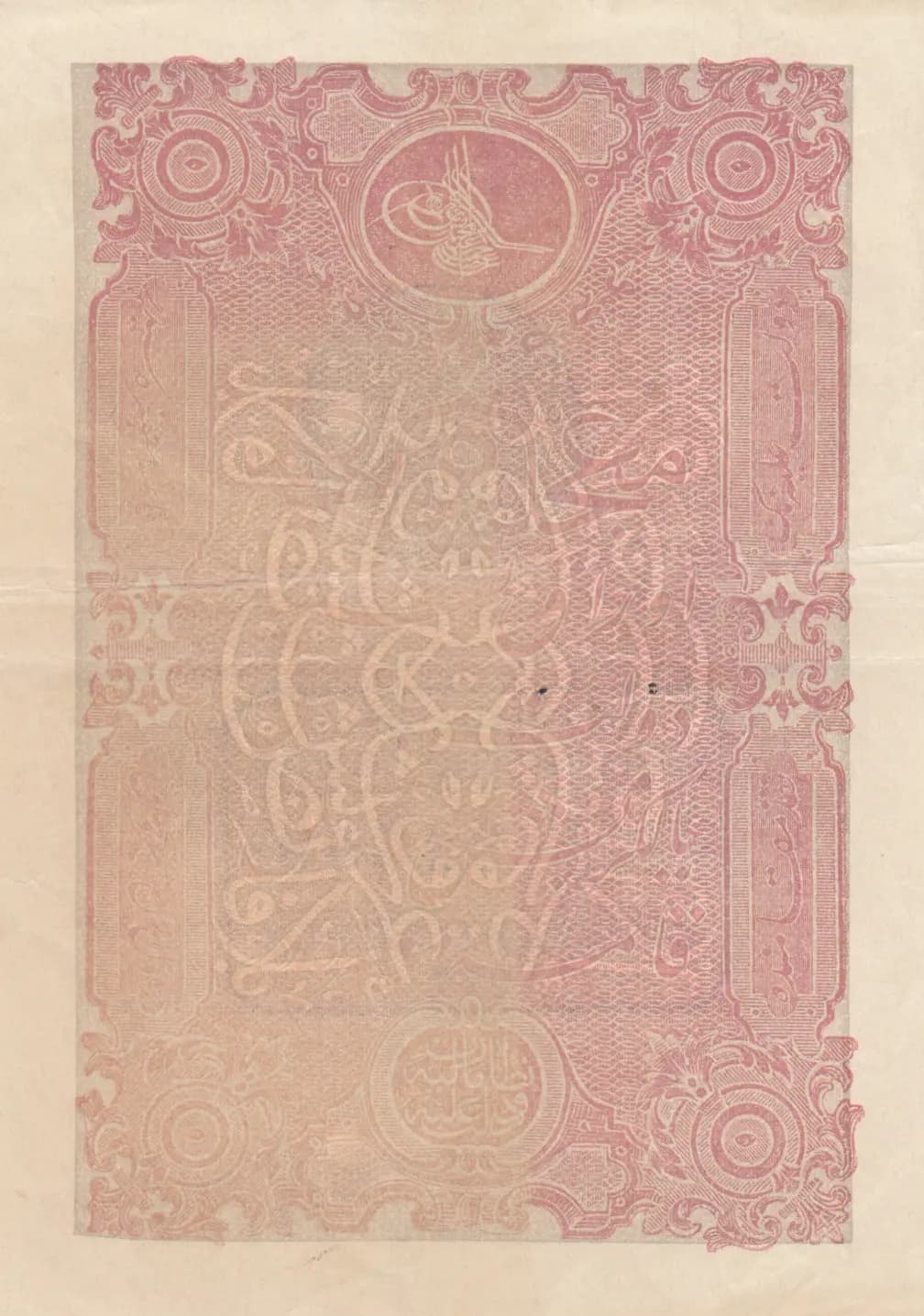
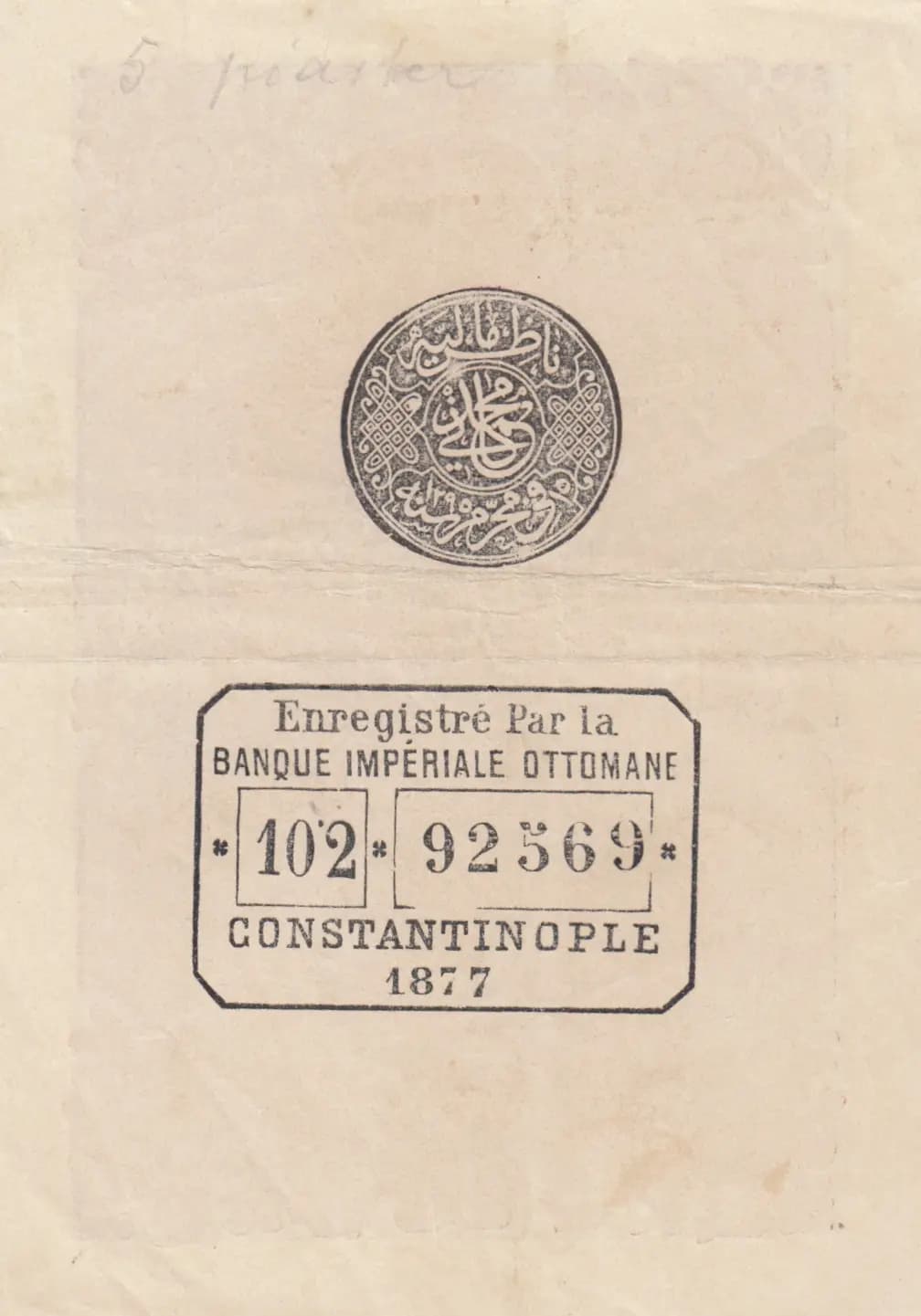
This is a scarce Ottoman Imperial Bank 5 Kuruş note from 1877 (AH 1293-1295), presented in excellent Very Fine condition with crisp intaglio printing and minimal wear visible. The obverse displays the magnificent tughra (imperial monogram) of Sultan Abdul Hamid II within an ornate circular medallion, rendered in rose-pink and mauve tones against a cream background, with elaborate baroque-style borders and arabesques throughout. The reverse features the official Ottoman Imperial Bank registry stamp from Constantinople and serial documentation, making this a significant example of early Turkish monetary history.
Common. Despite its age and historical significance, this Pick 47d denomination was issued in regular quantities by the Banque Impériale Ottomane during the 1876-1878 period. The eBay market data confirms affordability, with VG specimens selling for approximately $8 and catalog values (as of 2016) placing VF notes at modest levels. No evidence of restricted print runs, recalls, or short-term issuance suggests standard circulation production for this denomination.
This banknote was issued during the reign of Sultan Abdul Hamid II (1876-1909), a period marked by Ottoman financial modernization and the establishment of the Banque Impériale Ottomane as the empire's primary note-issuing institution. The prominent tughra of Abdul Hamid II, depicted in the circular medallion at top center, served as the imperial seal guaranteeing the note's authenticity and value. The French inscriptions and Constantinople registry mark reflect the Ottoman Empire's increasing integration with Western European financial systems during the late 19th century.
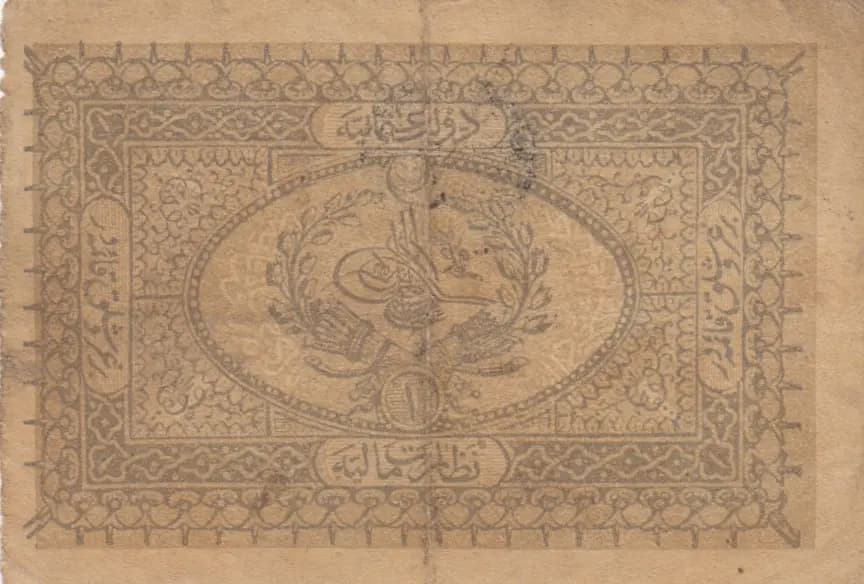
The obverse features a highly ornamental composition centered on the tughra (imperial monogram) of Sultan Abdul Hamid II, positioned in a prominent circular medallion at the top center of the note. This tughra, rendered in profile facing left, is the primary security device and symbol of imperial authority. The design employs elaborate Ottoman baroque-style architectural borders featuring scrollwork, geometric arabesques, and repeating calligraphic patterns characteristic of high-security banknote design of the period. The reverse displays the official circular seal of the Banque Impériale Ottomane containing Ottoman calligraphy, along with a rectangular registry stamp box bearing French text, serial numbers (102, 92569), and Constantinople as the issuing location. The 'Seal of Galip' mentioned in the catalog reference appears as part of the reverse authentication elements.
Reverse Side: 'Enregistré Par la BANQUE IMPERIALE OTTOMANE' (Registered by the Ottoman Imperial Bank) | Serial/Registry Numbers: 102, 92569 | Location: CONSTANTINOPLE | Year: 1877 | Front Side: The tughra of Abdul Hamid II appears as the primary inscription in Ottoman calligraphy within the circular medallion, along with decorative calligraphic elements arranged throughout the design.
Intaglio (steel engraving) printing method, as evidenced by the crisp, fine line work visible throughout the complex geometric patterns, calligraphic elements, and the detailed tughra. The elaborate repeating arabesques and security patterns demonstrate sophisticated anti-counterfeiting design typical of high-security banknote production by European security printers contracted to the Ottoman Imperial Bank during this period. The precision of the line work and the consistency of the impression indicate professional currency-grade intaglio printing.
This specimen represents the standard AH 1293-1295 (1877) issue as cataloged by Pick 47d. The visual analysis confirms the characteristic rose-brown coloring (described in catalog as red-brown, appearing as rose-pink/mauve in the images) and the presence of the round AH 1295 handstamp mentioned in the community catalog. The registry stamp box and serial numbers (102, 92569) on the reverse are consistent with known Constantinople-issued examples. Two small pin holes visible near the center suggest archival storage or collection mounting, a common characteristic of surviving specimens from institutional collections.