5 piastres 1917
Market Prices
11 salesAbout This Note
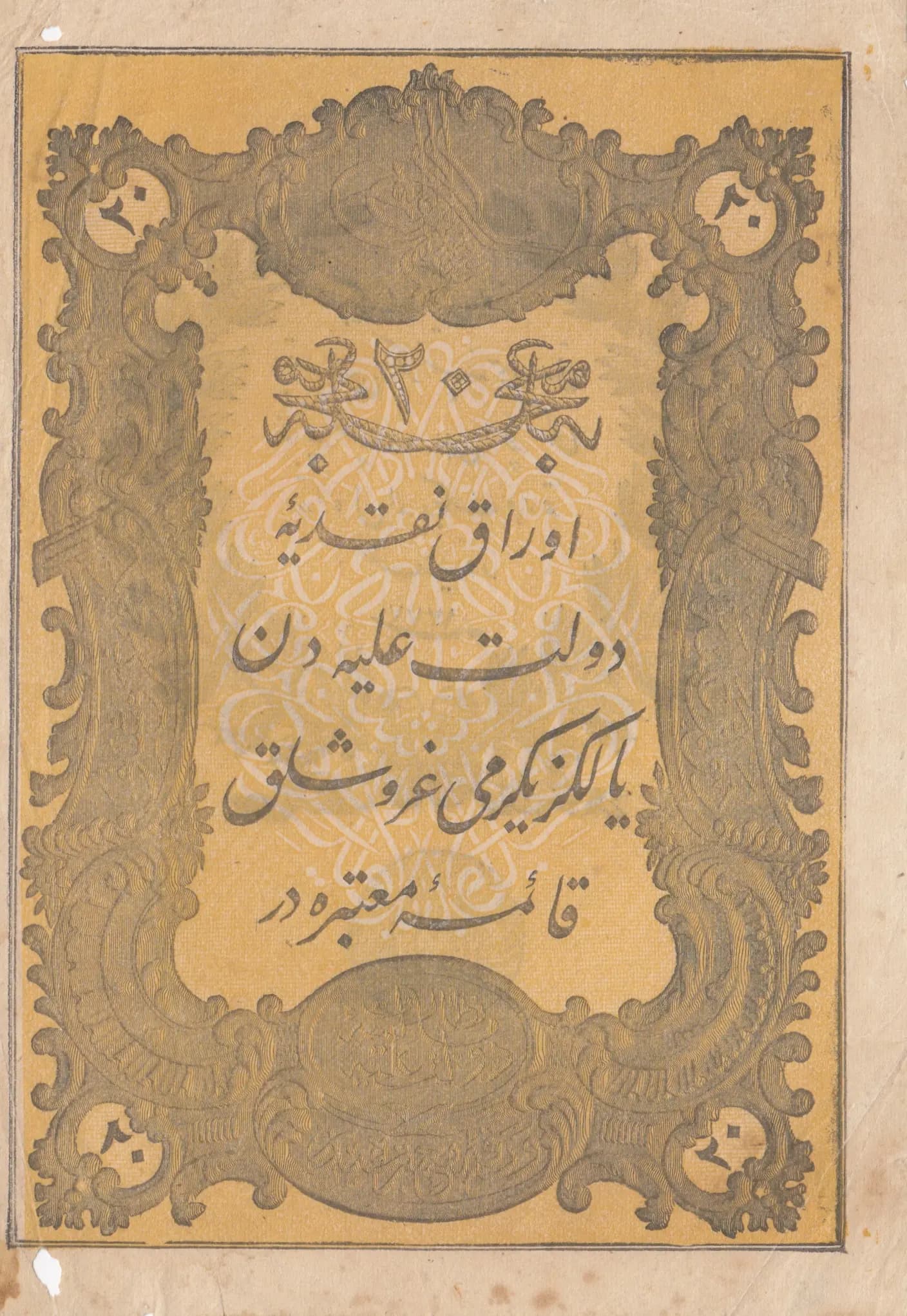
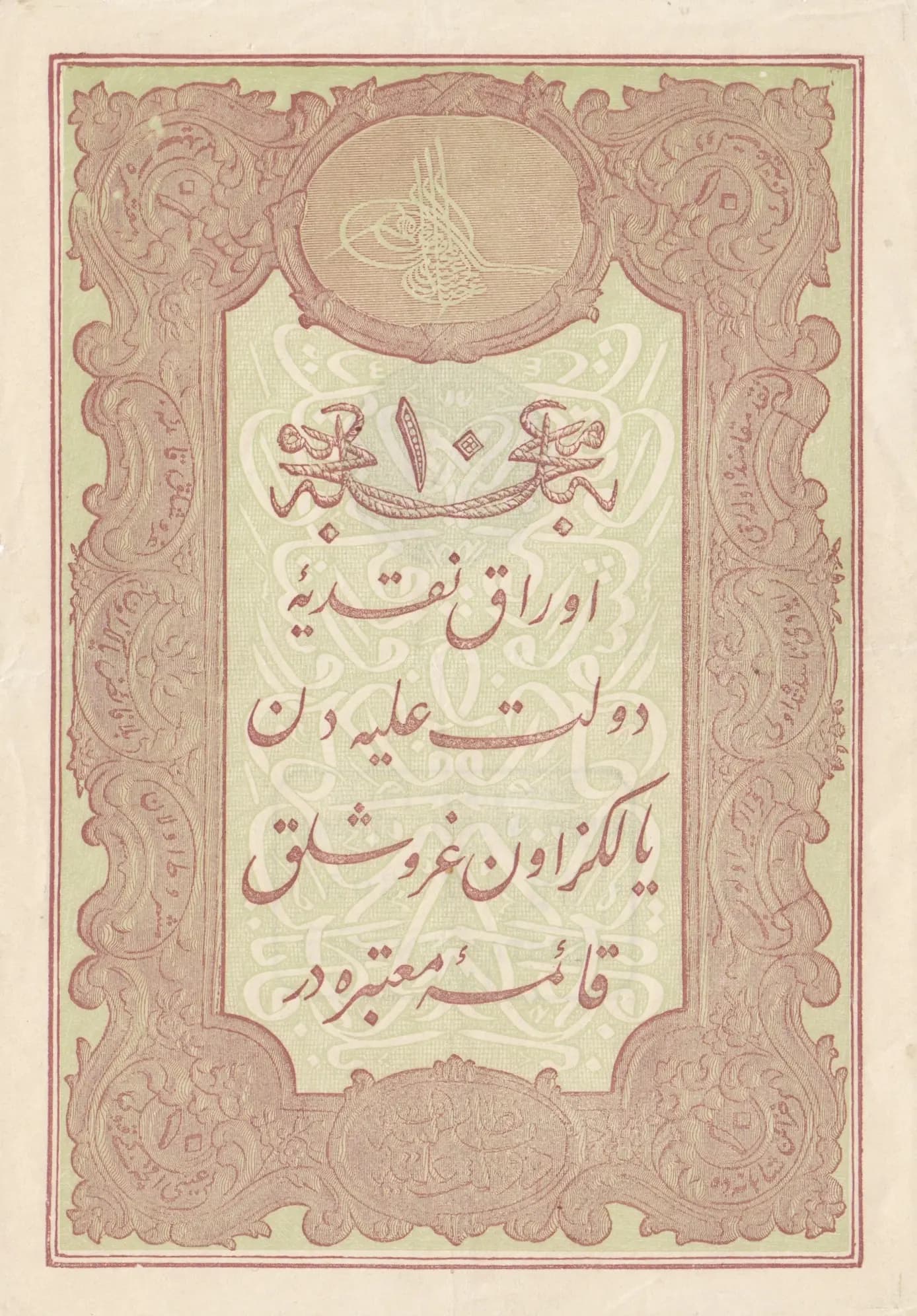
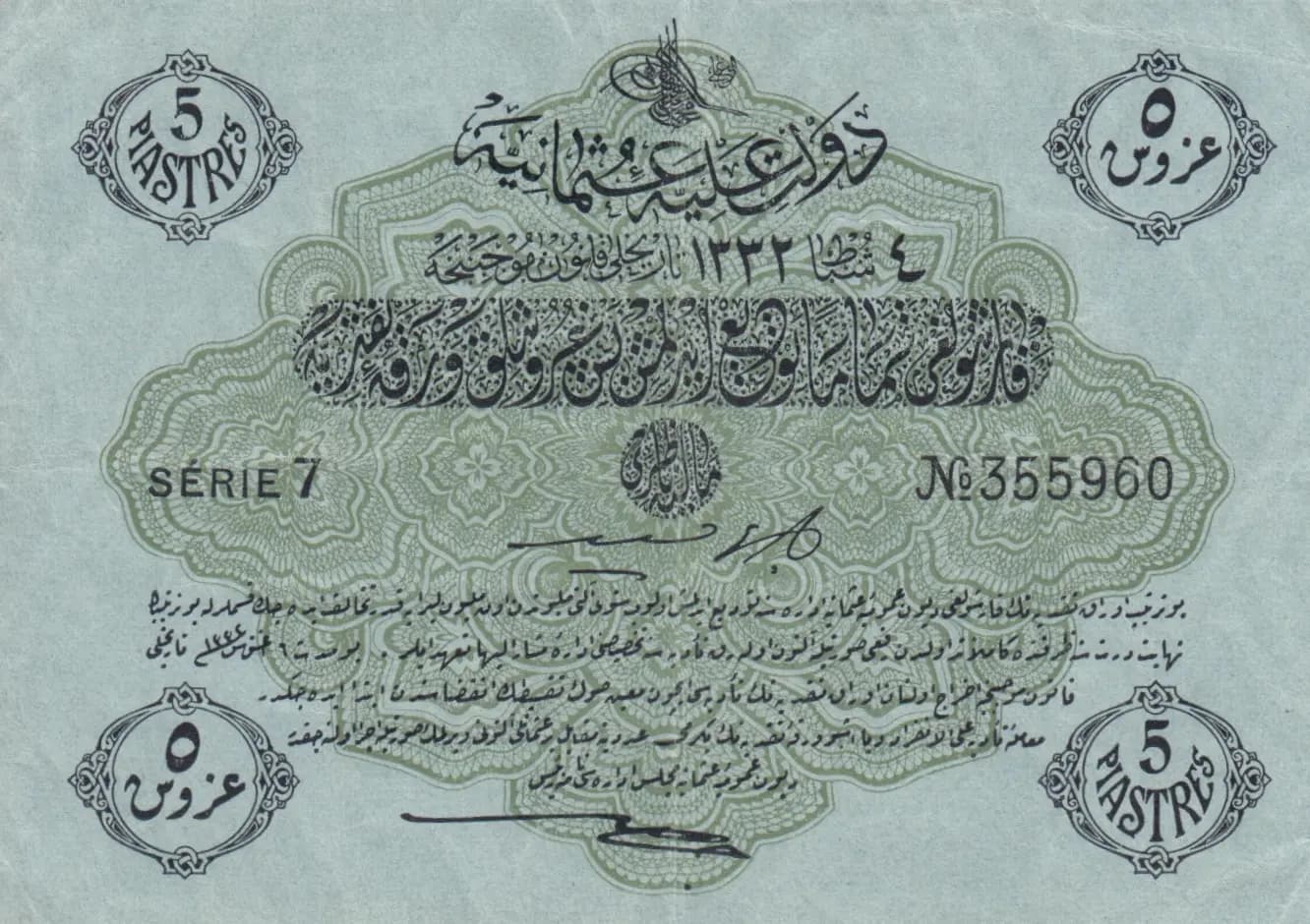
This is a VF-graded 5 Piastres note from the Ottoman Empire's Dette Publique Ottomane, issued in 1917 (L. 1332 RC). The note displays characteristic early 20th-century Ottoman design with intricate geometric and arabesque patterns in pale green and light blue-gray tones, featuring a central ornate cartouche and corner medallions. The note shows expected circulation wear including creases, foxing, and age-related discoloration, consistent with its VF grade and nearly 110-year age.
Common. This is a standard issue fractional denomination from a large print run by the Ottoman public debt administration. The eBay market data shows consistent modest trading prices ($10-$56 depending on condition), with VF examples regularly selling in the $35-$40 range as recently as 2016-2021. The catalog values listed ($3 for VG, $10 for VF, $25 for UNC) further confirm this is a commonly available note among collectors. Fractional denominations like 5 Piastres typically had much larger print runs than higher denominations.
This note was issued during the final years of the Ottoman Empire, a period of significant fiscal strain and calendar transition. The use of the RC (Rumi Takvim/Roman Calendar) date reflects the Ottoman Empire's adoption of the solar calendar for fiscal purposes during this era, distinct from the traditional Islamic lunar calendar. The Dette Publique Ottomane was the Ottoman public debt administration, and this denomination represents emergency or high-inflation period currency as the empire faced World War I financial pressures.
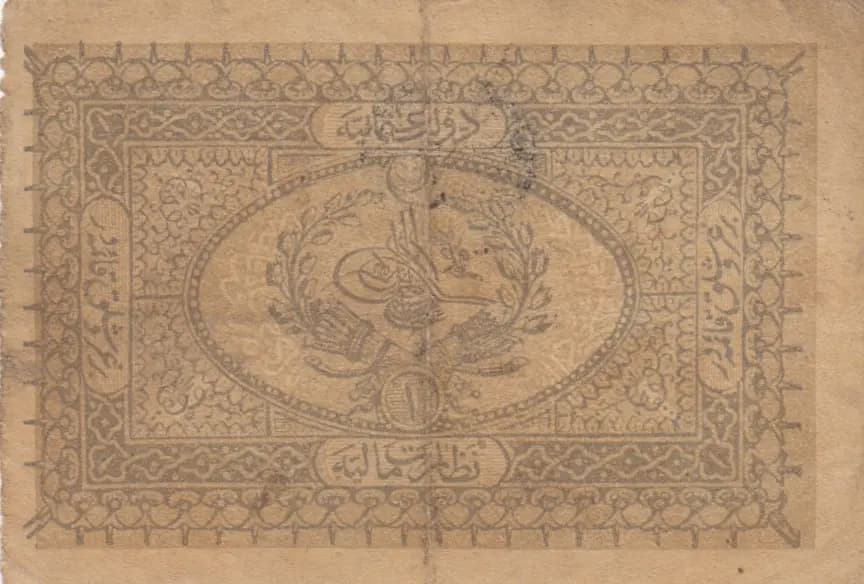
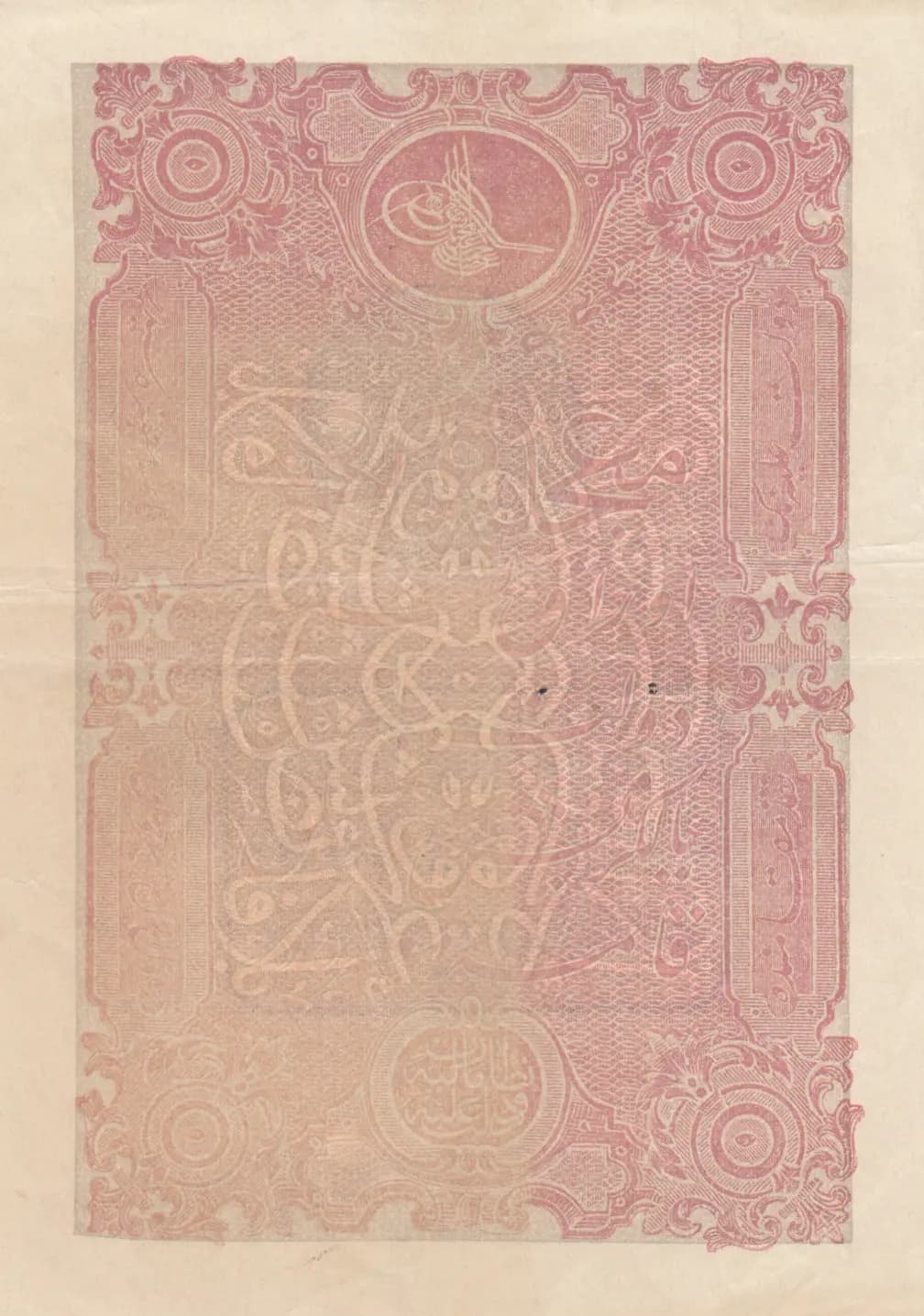
The obverse features a classical Ottoman administrative banknote design without portraits, instead emphasizing geometric and floral ornamentation typical of Islamic artistic conventions and Ottoman fiscal security practices. The central element is a large ornate cartouche with detailed arabesque patterns rendered in pale green underprint with black text overlay. Four circular medallion seals occupy the corners, each containing decorative borders and denomination markers. The tughra (the Sultan's imperial monogram/calligraphic seal) is prominently displayed at the top center, serving as the primary security feature and mark of official authority. The entire composition uses intricate geometric patterns as an anti-counterfeiting measure. The reverse is uniface (blank), which was standard for Ottoman small-denomination fractional currency of this period. The paper stock is cream-colored with a slight blue-gray cast, consistent with early 20th-century Ottoman banknote production.
Front side: '5 PIASTRI' (Latin/English inscription); '5' (numeral denomination); Arabic numeral equivalent for 5 Piastres; 'SERIE 7' (Series designation); 'No 355960' (serial number). The Ottoman Turkish calligraphy at top center contains the tughra (imperial monogram) and official denomination/issuing authority text (specific translation requires specialized Ottoman Turkish paleography expertise). Bottom fine print in Ottoman Turkish contains regulatory or issuer information (specific translation requires Ottoman Turkish expertise). Back side: Blank or nearly blank, with no significant inscriptions visible.
Intaglio printing with letterpress, evidenced by the sharp detail in the fine geometric patterns, crisp line work in the arabesque designs, and the precise registration visible in the overlaid text and denomination markers. The depth and quality of the ornamental details suggest professional security printing by an established European banknote printer (likely Bradbury, Wilkinson & Co. or similar firm commonly employed by the Ottoman government), though the specific printer attribution for Pick P-96 requires confirmation against Ottoman records.
This specimen is identified as Series 7, Serial No. 355960, dated L. 1332 (corresponding to 1916-1917, with the February 1917 Gregorian equivalent being 17.02.1917). The variety is cataloged as P-96 by Pick and represents the standard uniface obverse design with green underprint in the color variant documented in the visual analysis. No significant overprints or rare signatures are noted in the visible details. Variants for this Pick number may exist based on series designation and serial number ranges, though PMG population data indicates minimal documented variant distinction in professional grading records.