5 lirasi 1971
Market Prices
24 salesAbout This Note
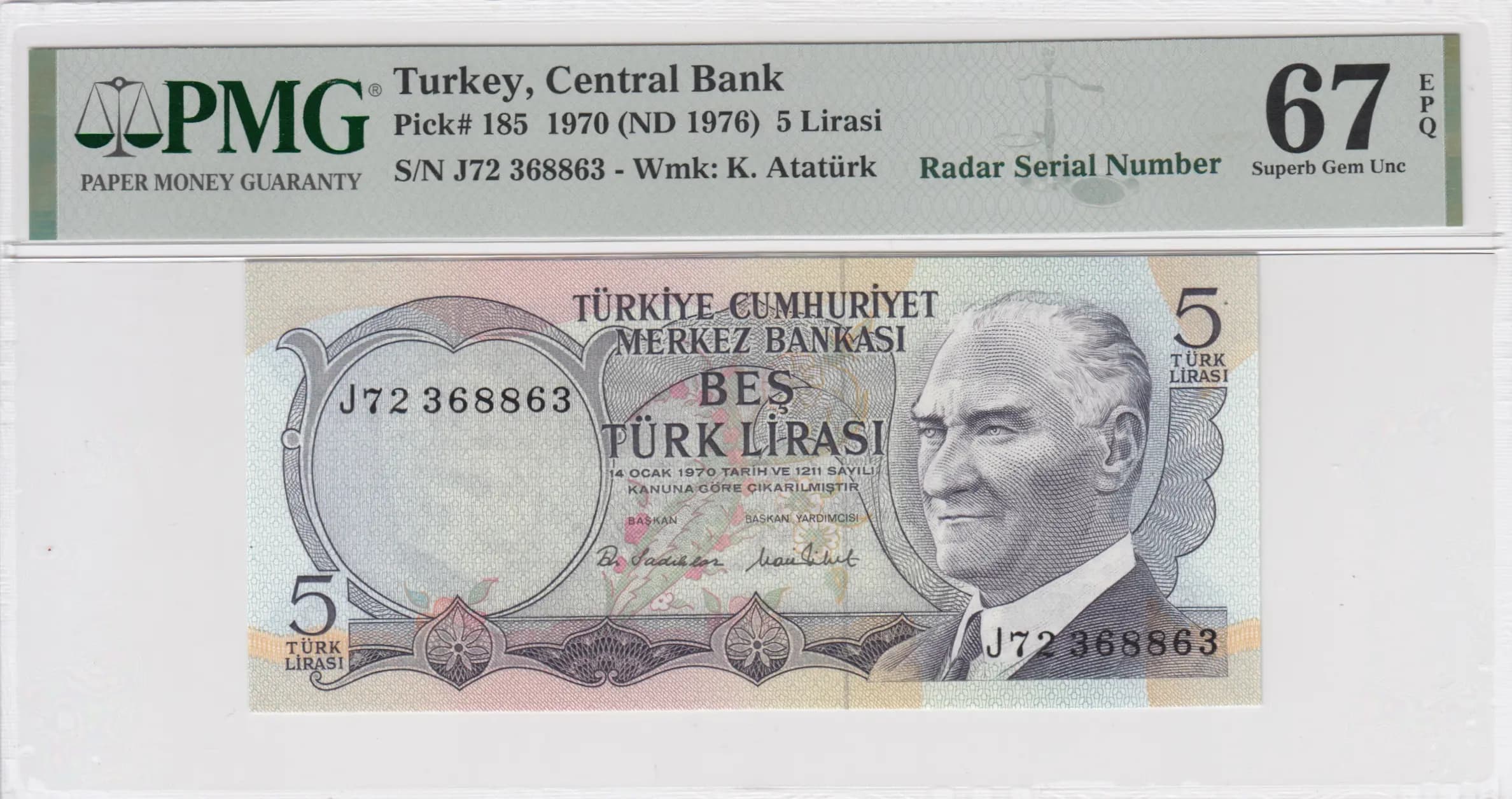
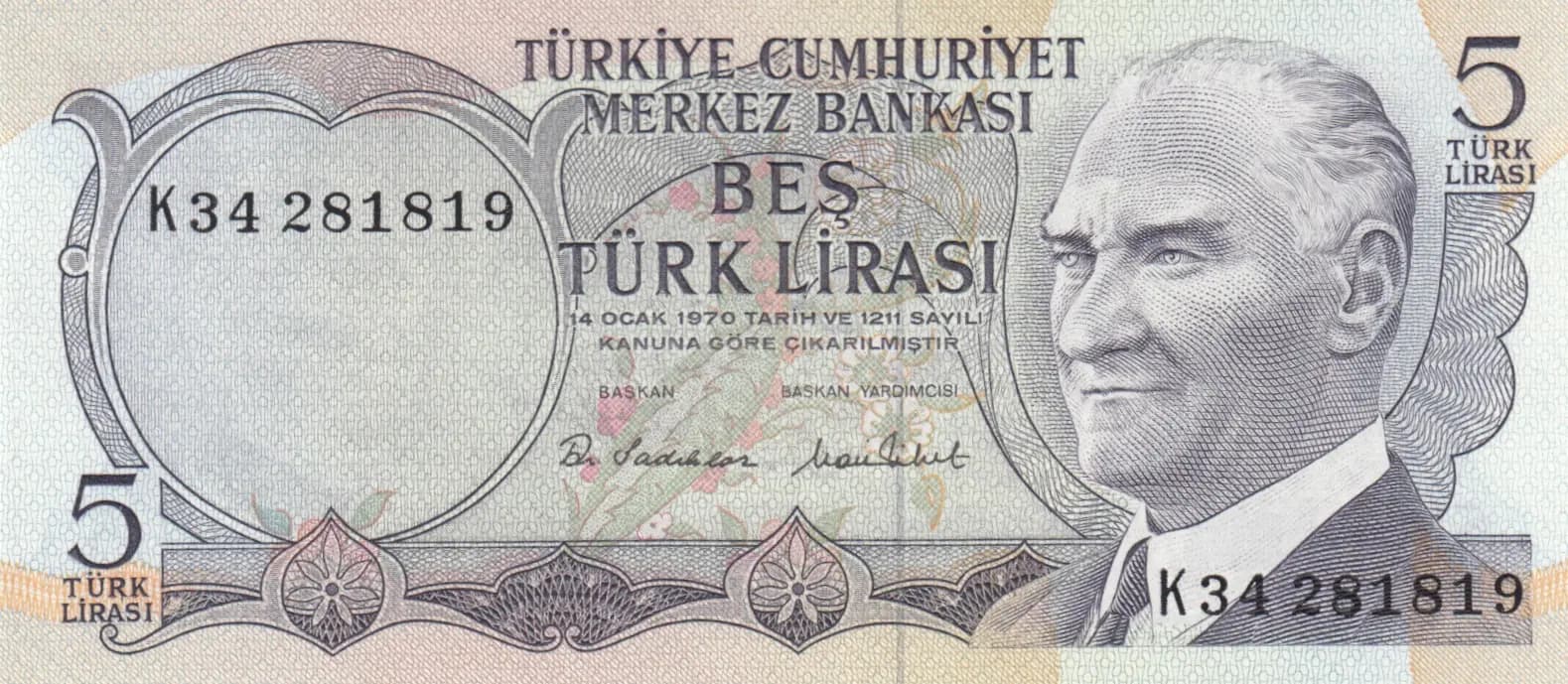
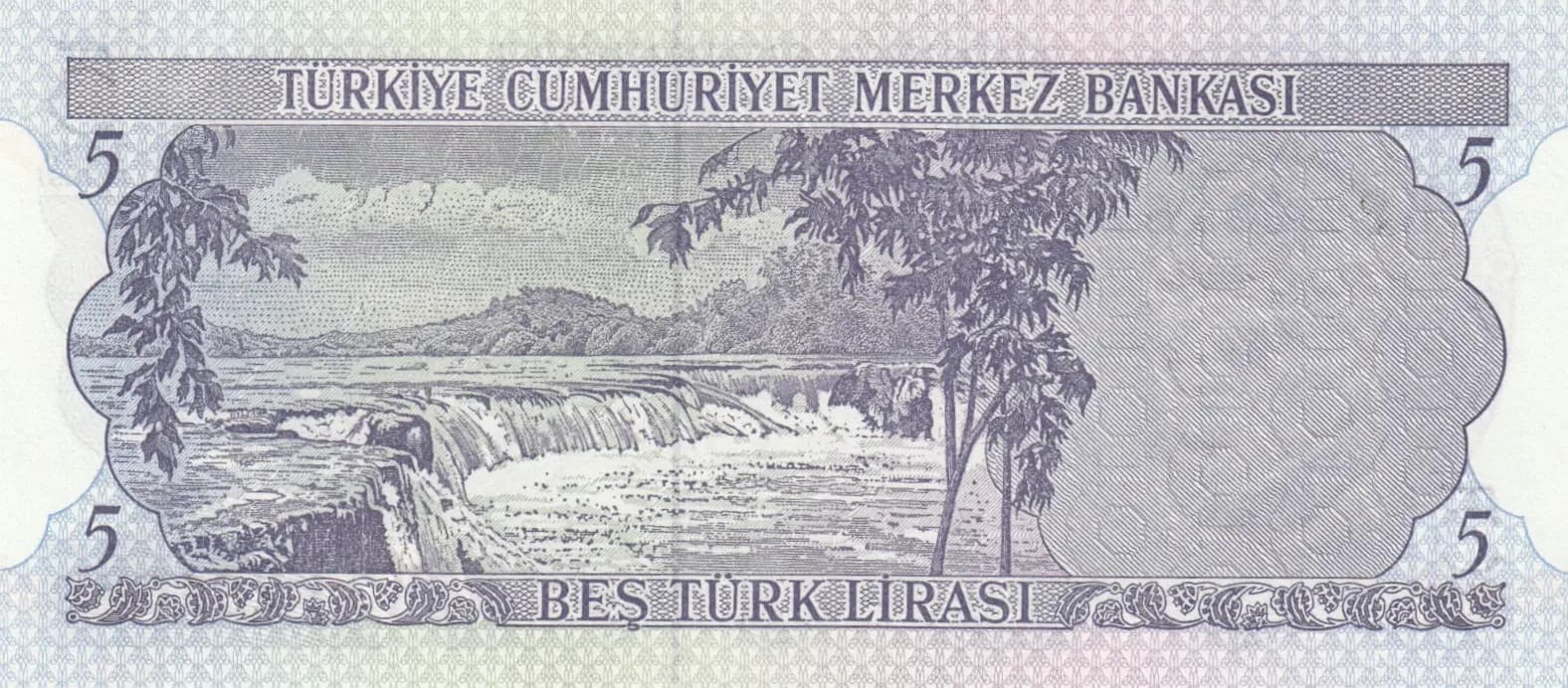
This is a Turkish 5 Lirasi banknote from 1971 (dated L.1970), presented in uncirculated condition with crisp, clear engraving throughout and no visible signs of wear or deterioration. The note features a striking portrait of President Mustafa Kemal Atatürk in formal profile on the obverse and the scenic Manavgat waterfall in Antalya on the reverse, both rendered in fine detail against a light cream background. This is a classic example of Turkish Republican-era currency design, with exceptional preservation and all security features intact.
Common. eBay market data shows consistent sales in the $1–$3 range for UNC examples, with even professionally graded PMG 66–67 specimens typically selling for $12–$22. This note was issued in regular circulation quantities and remains readily available in the collector market. The 1970 date version (as opposed to the earlier L.1930 variant referenced in catalog notes) is not scarce. Print runs were substantial and the note was not recalled or withdrawn from service abnormally.
Issued under Law No. 1211 of January 14, 1970, this banknote reflects Turkey's continued celebration of its founder, Mustafa Kemal Atatürk, whose portrait dominates the obverse—a ubiquitous motif in Turkish currency that reinforced national identity during the early 1970s. The reverse's depiction of the Manavgat waterfall showcases Turkey's natural heritage and geographic diversity, a common theme in mid-20th century banknote design across the Middle East and Mediterranean region. This series represents a period of Turkish currency stability before the significant lira devaluations that would occur in the following decades.
The obverse features a formal right-facing profile portrait of Mustafa Kemal Atatürk, the founding president of the Turkish Republic, rendered in classical engraving style with particular attention to his distinctive wavy hair and formal military collar. To the left of the portrait is an ornamental oval frame with scalloped borders and elaborate floral-geometric motifs, which serves as the watermark window. The design incorporates crescent and star symbols reflecting Turkish national imagery. The reverse depicts the Manavgat waterfall in Antalya, one of Turkey's most celebrated natural landmarks, with cascading water framed by gracefully drooping willow trees on either side and mountains visible in the background. The entire composition is rendered in fine cross-hatched engraving work against a cream-colored background, with the denomination '5' repeated in all four corners of the reverse.
FRONT SIDE: 'TÜRKİYE CUMHURİYET MERKEZ BANKASI' (Turkish Republic Central Bank) / 'BEŞ TÜRK LİRASI' (Five Turkish Lira) / 'TURK LIRASI' (Turkish Lira) / '14 OCAK 1970 TARİH VE 1211 SAYILI KANUNA GÖRE ÇIKARILMIŞTIR' (Issued according to law dated January 14, 1970 and numbered 1211) / 'BAŞKAN' (President) / 'BAŞKAN YARDIMCISI' (Vice President) / Serial number: K34 2818119 / Denomination: '5' (appearing top right and bottom left). BACK SIDE: 'TÜRKİYE CUMHURİYET MERKEZ BANKASI' (Turkish Republic Central Bank) / 'BEŞ TURK LİRASI' (Five Turkish Lira) / Denomination: '5' (appearing in all four corners).
Intaglio (engraved) printing, the standard security printing method for banknotes of this era. The visual analysis confirms fine line work, detailed cross-hatching, and complex pattern work characteristic of intaglio production. The printer is identified as DBM-A (without imprint), a Turkish security printer. The watermark features a portrait of Atatürk, produced during the papermaking process.
This specimen represents the standard L.1970 regular issue variety (Pick P-185). The visual analysis shows serial number K34 2818119 with the K prefix, consistent with standard circulation issue prefix conventions. Replacement notes (indicated in reference sources) carry serial number prefixes Z91–Z95, which would represent a distinct variety not applicable to this note. Two signature varieties are noted in the catalog reference ('Two signatures'), representing different issuer combinations for the President and Vice President positions during the issuing period, though specific signature identification would require closer examination of the signature box details.