20 piastres 1916
Market Prices
7 salesAbout This Note
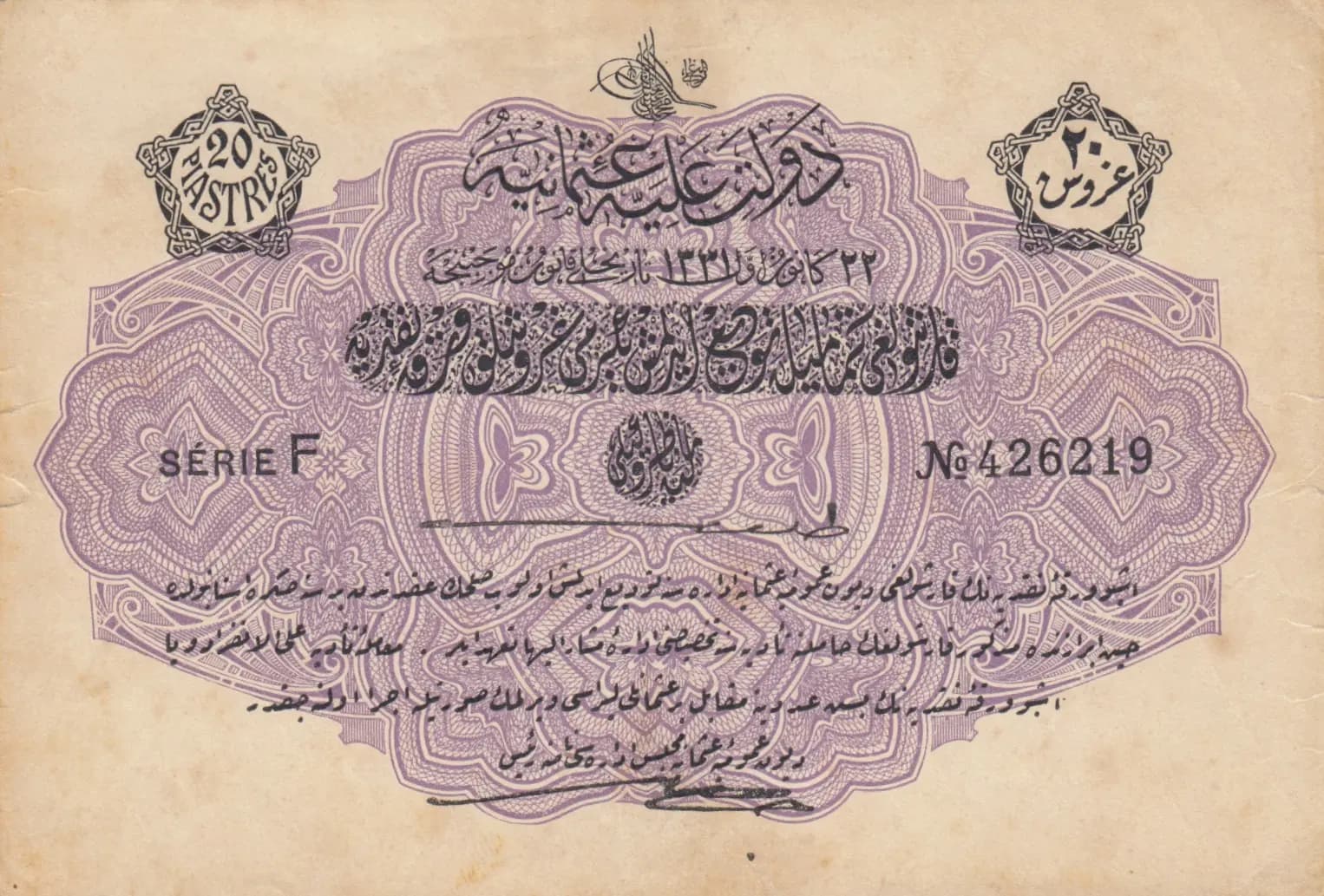
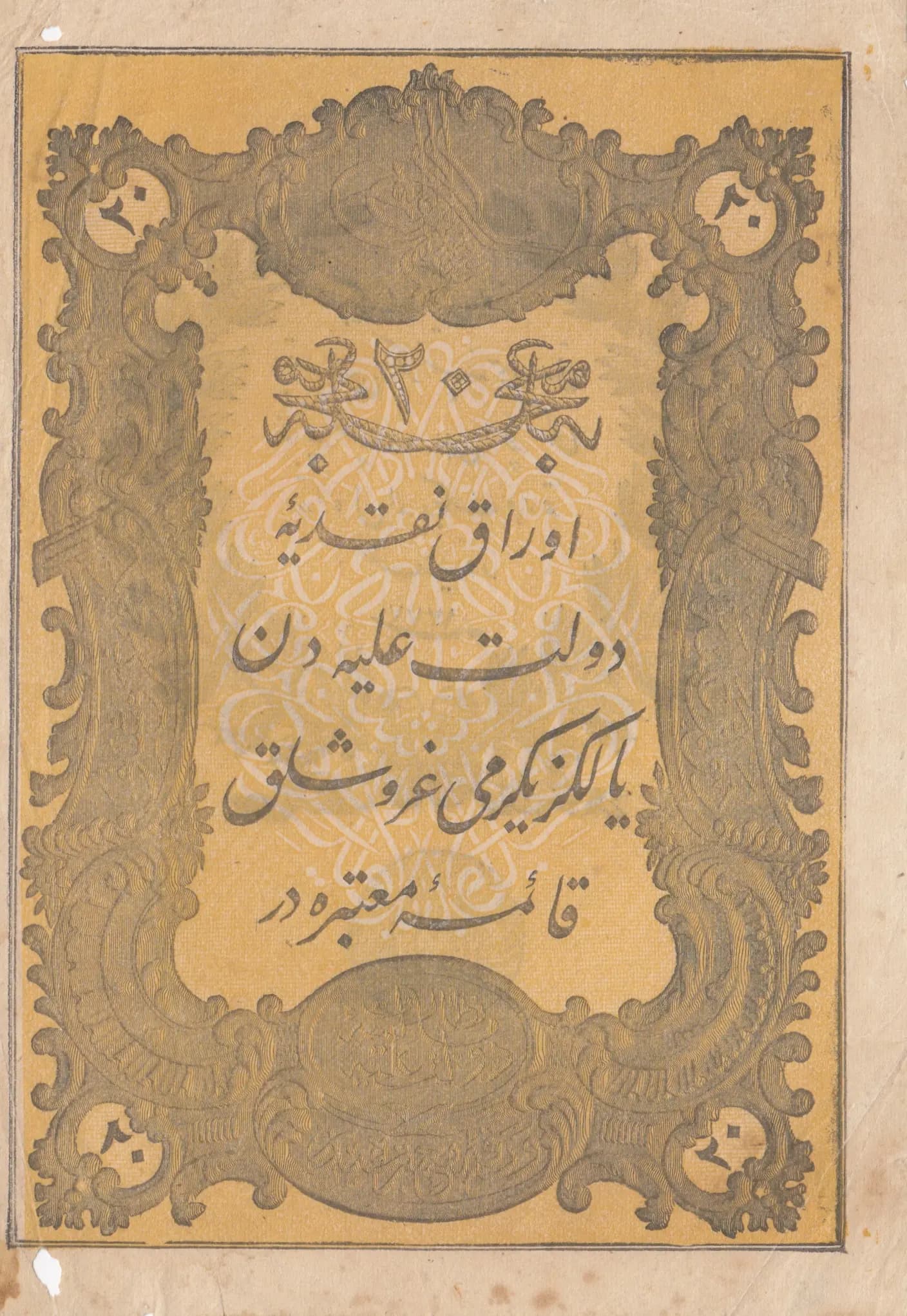
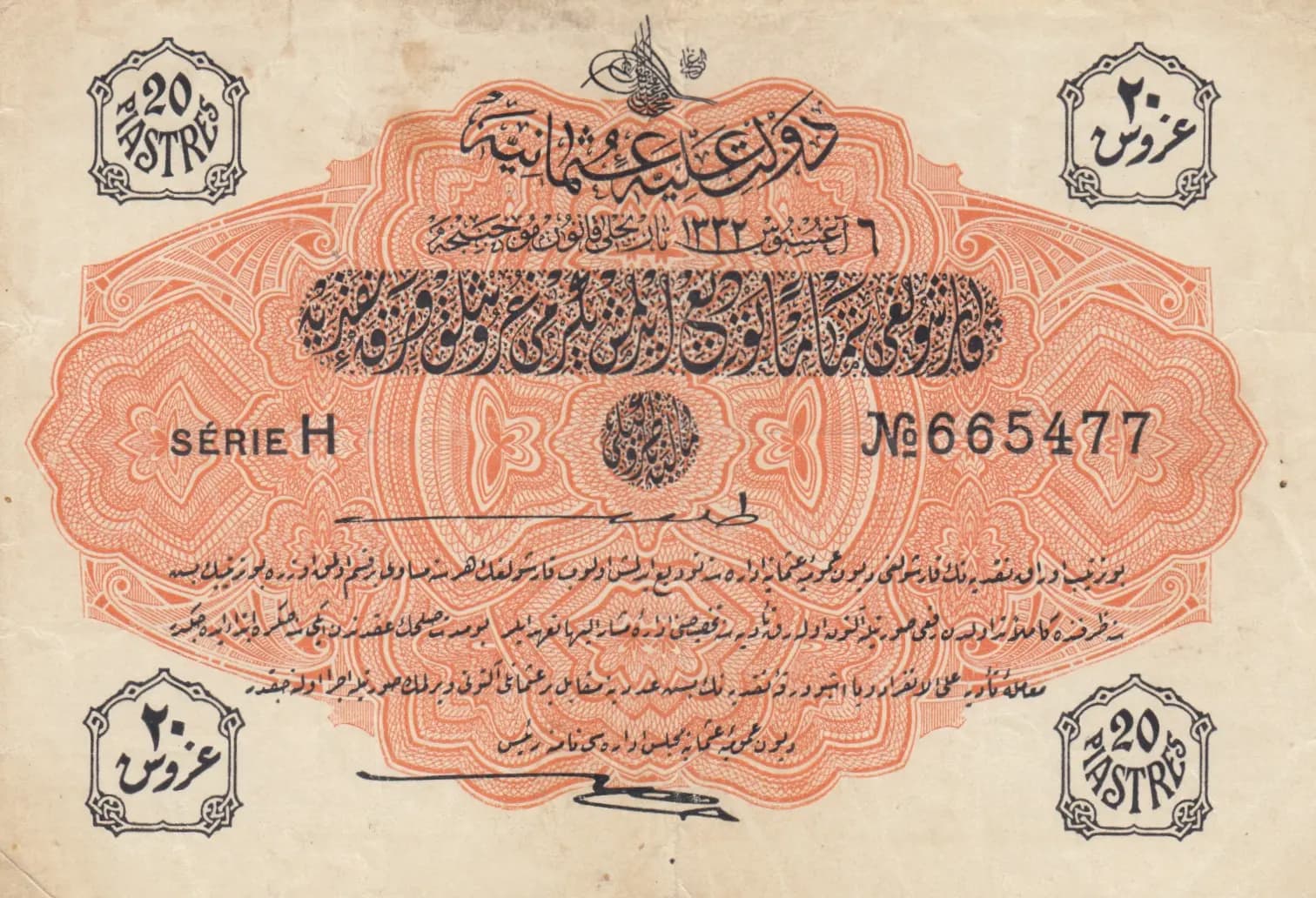
This is a 1916 Ottoman 20 Piastres note issued by the Dette Publique Ottomane, featuring an ornate uniface design dominated by an elaborate central cartouche with geometric and floral engraving in orange and black on cream paper. The note displays the characteristic tughra (imperial monogram) at top center and multi-lingual denomination markings in Arabic, French, and English. In VF condition, this example shows significant age-related wear including multiple creases, foxing, and brown staining throughout, typical of a century-old banknote that has seen modest circulation.
Common. This note remains readily available in numismatic markets at modest prices. eBay transaction data shows consistent sales in the $12–$32 range for VF specimens over more than a decade (2012–2021), with catalog valuations (2016) placing VF examples at $11. The regular issue status, broad circulation period (1916–1917 printing), and substantial survival rates across multiple series (this example being Series H) all indicate a common note. No documented scarcity or recall issues affect this Pick number. The modest pricing and consistent market availability confirm this is a collectible but not rare Ottoman issue.
This note was issued during the final years of the Ottoman Empire under the Dette Publique Ottomane (Ottoman Public Debt Administration), a European-controlled fiscal authority established in 1881. The use of the RC (Rumi Takvim/Roman Calendar) date system—L. 1332 corresponding to 1916—reflects the Ottoman Empire's solar fiscal calendar used during this period of modernization and administrative reform. The ornate tughra and trilingual inscriptions (Ottoman Turkish, Arabic, and French/English) exemplify the cosmopolitan administrative culture of late Ottoman governance.
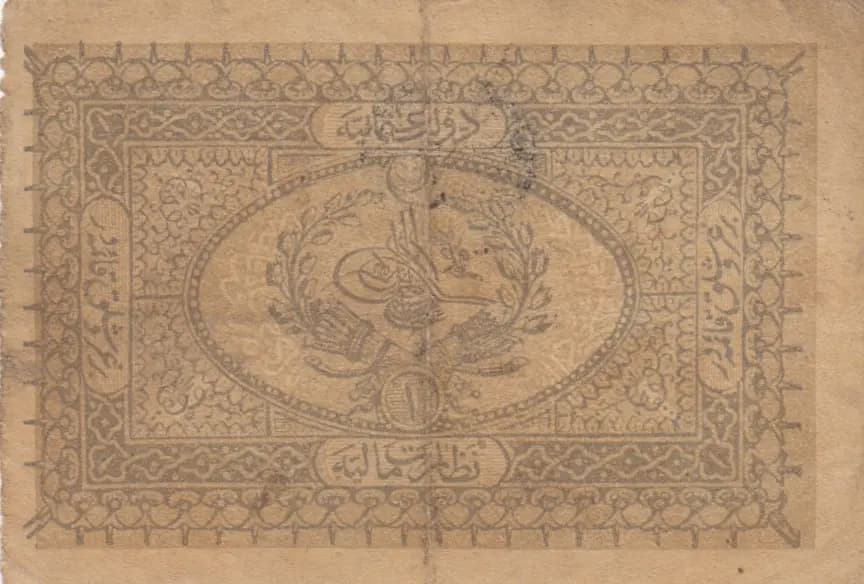
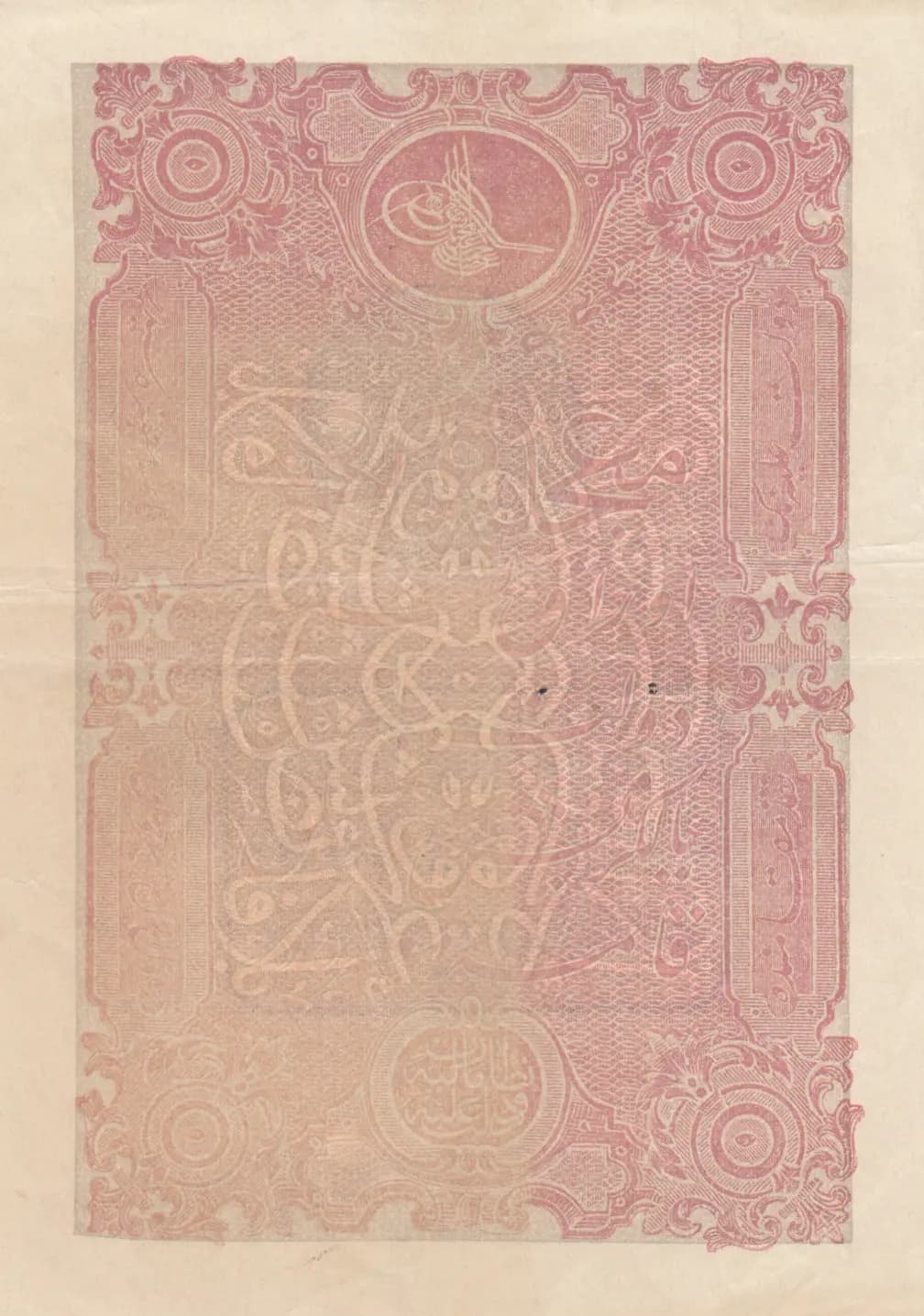
The obverse features a uniface design—printed on front only—centered around an ornate rectangular cartouche containing Ottoman administrative text within a framework of intricate geometric and floral engraved borders. The tughra (imperial monogram of the Sultan) appears at the top center, serving as an official imperial seal. This is not a portrait-based design but rather a formal administrative document aesthetic typical of Ottoman fiscal bonds and public debt instruments. The decorative corner emblems and denomination markers in four orientations (suitable for currency circulation from any direction) reflect Ottoman design conventions. The predominant orange underprint with black text creates strong contrast while the cream paper base provides subtle sophistication. The absence of a reverse design is typical of Ottoman debt certificates of this period.
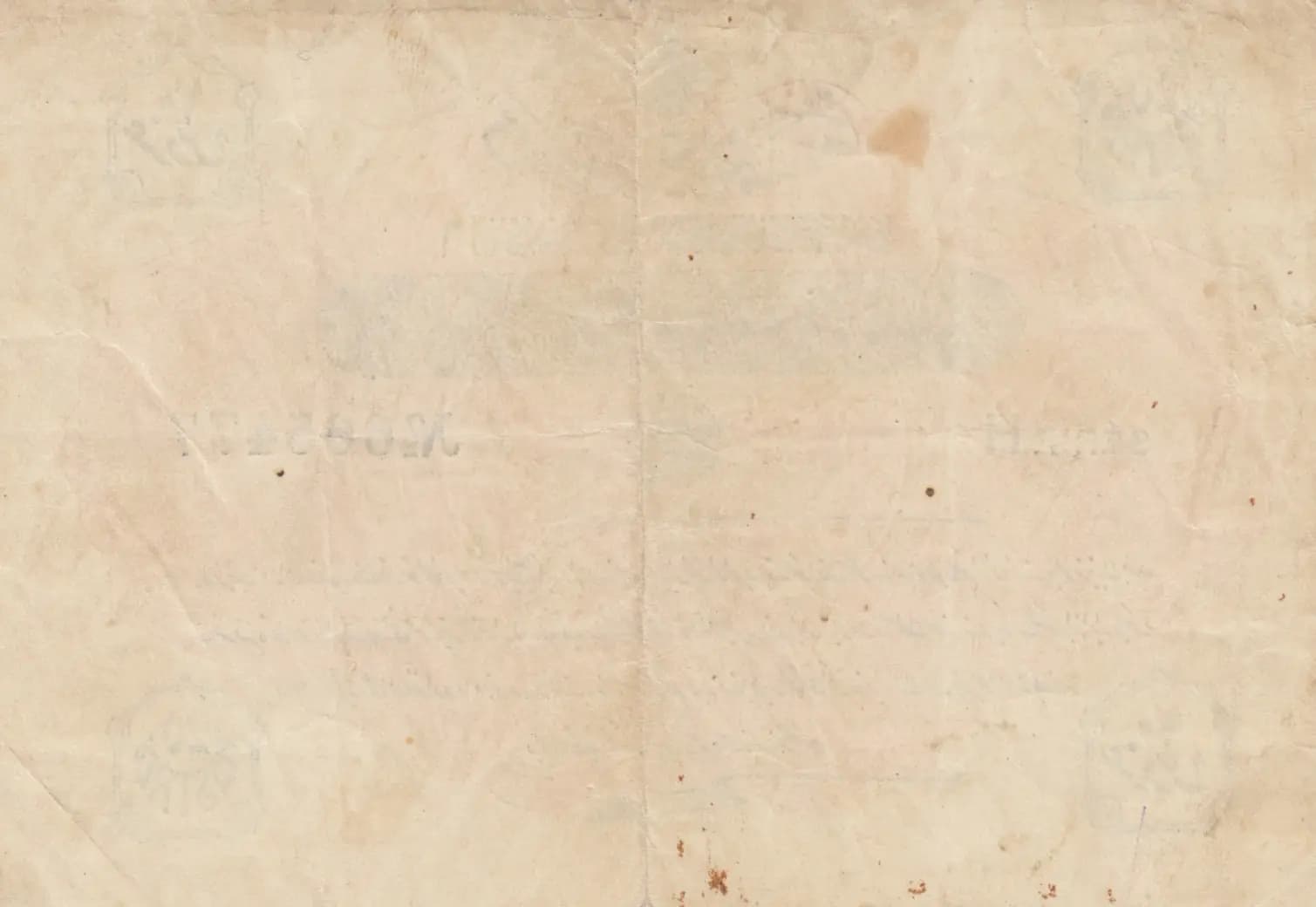
Front (Obverse): Denomination markers reading '20' (Arabic numerals: ۲۰) and 'PIASTRY' (English/Latin script) appear in upper and lower corners. Arabic text 'عشرون' (ishrun, meaning 'Twenty') appears symmetrically. Series designation 'SÉRIE H' in French indicates Series H. Serial number '№6654177' is printed in Latin script with Arabic numerals. Central cartouche contains Ottoman Turkish administrative or legal text regarding the banknote's validity and issuing authority, consistent with standard Ottoman financial instrument language. Back: Blank/no inscriptions present.
Intaglio (copperplate) engraving, evidenced by the fine, precise line work visible in the geometric and floral border patterns, the detailed tughra rendering, and the characteristic crisp black text on orange underprint. The complexity and precision of the ornamental cartouche design, with its interlocking geometric patterns and delicate florals, indicates professional security engraving typical of European security printers contracted by the Ottoman administration. The multicolor effect (orange underprint, black text, cream paper base) suggests a multi-pass printing process using separate engraved plates for color separations, a standard technique for high-security financial instruments of the early 20th century. The specific printer for Pick P-88 notes from this period was typically a major European security printer such as Waterlow & Sons or similar contracted firms, though specific attribution would require archival documentation.
This example is identified as Series H (SÉRIE H), which represents one of several series produced for this 20 Piastres denomination under the L. 1332 (1916–1917) issue. Serial number 6654177 places it within the documented range for this series. The visual characteristics—orange underprint, black text, uniface design—match the standard specification for P-88. No distinctive overprints, signature varieties, or printing anomalies are evident in this specimen. The RC dating of L. 06.08.RC1332 / 19.08.1916 (6 August RC 1332 / 19 August 1916) confirms proper attribution to the 1916 issue cycle. Series designation may vary across surviving specimens, making series identification a minor collecting point, though all appear to fall under the same Pick classification.