20 piastres 1916
Market Prices
2 salesAbout This Note
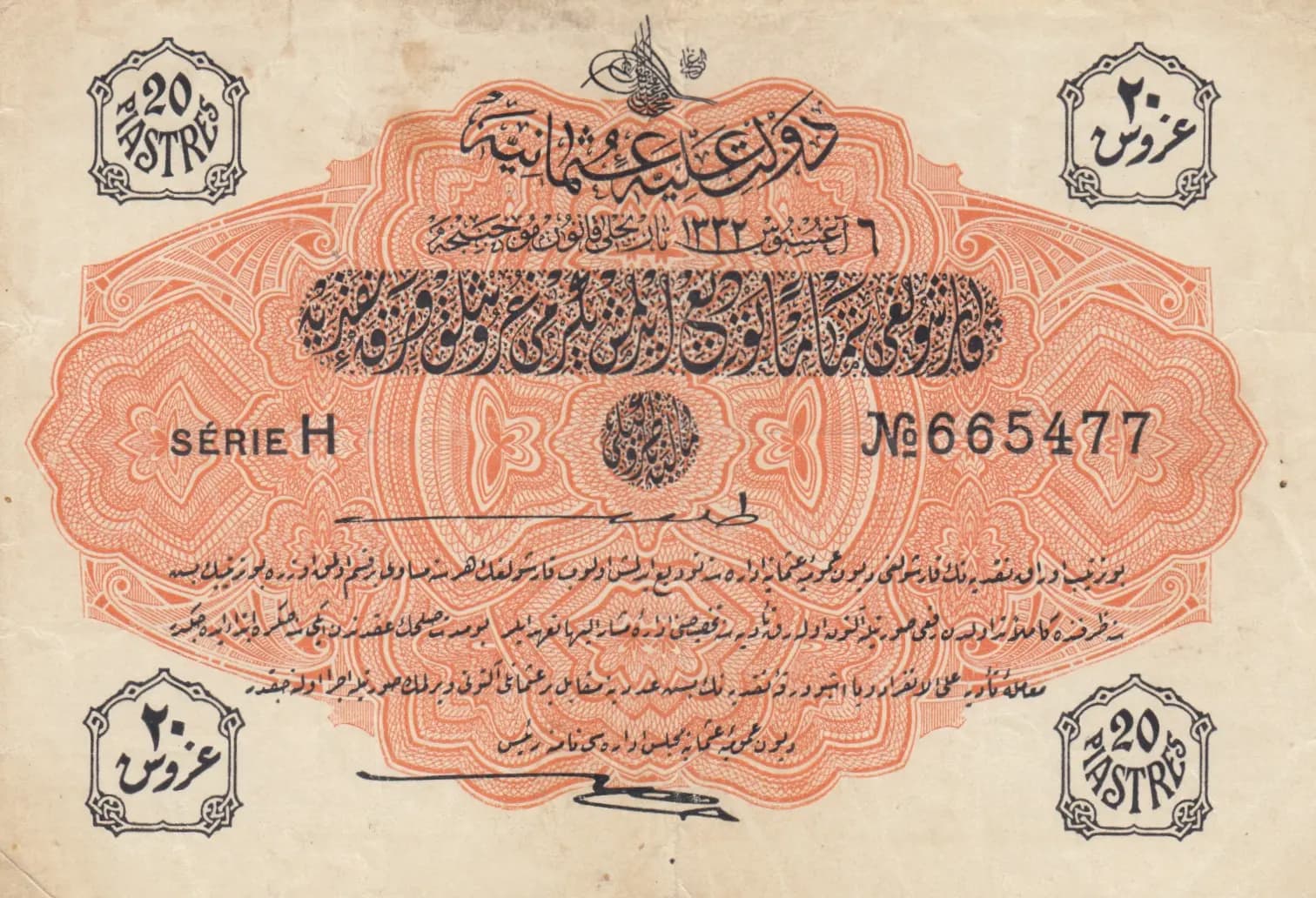
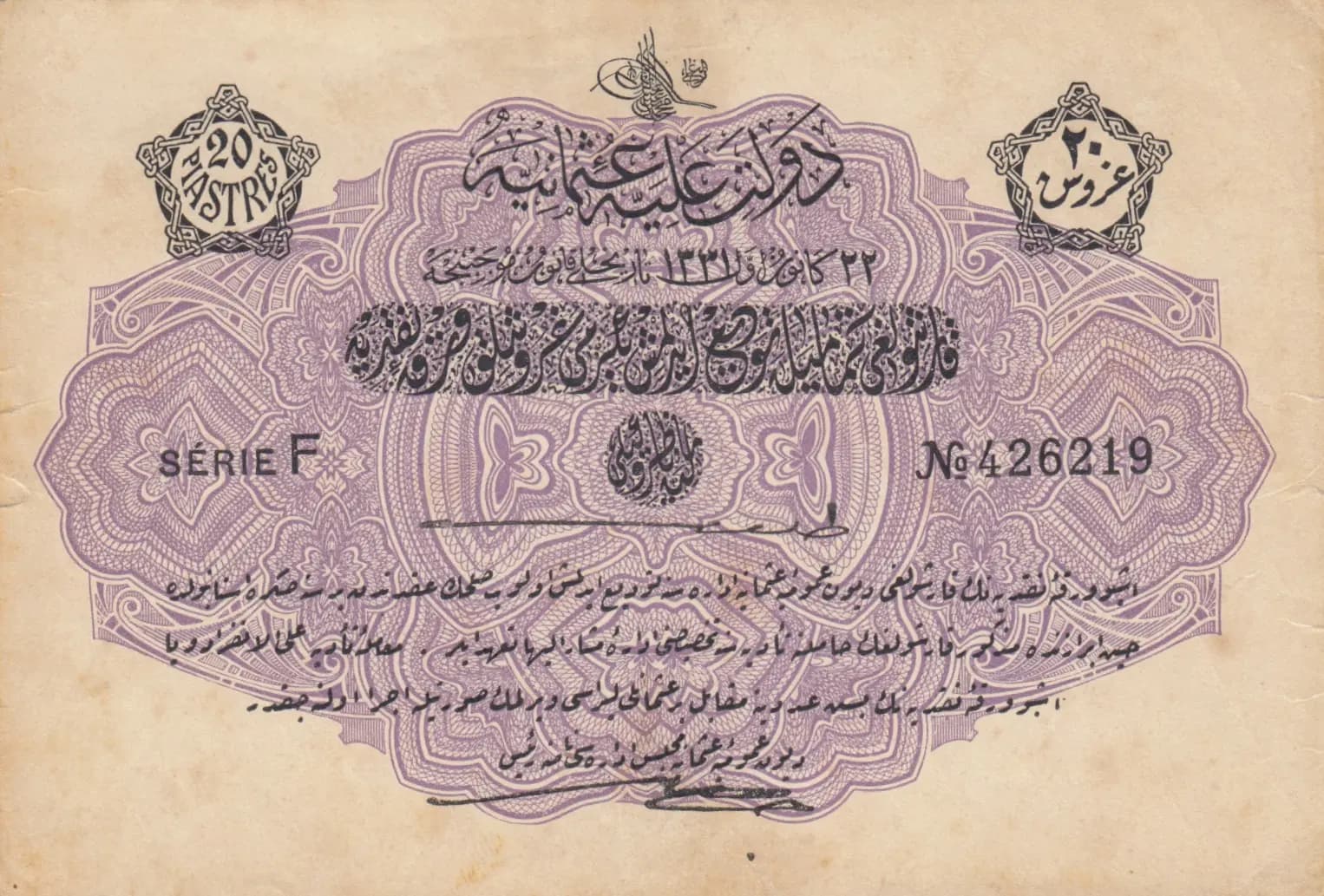
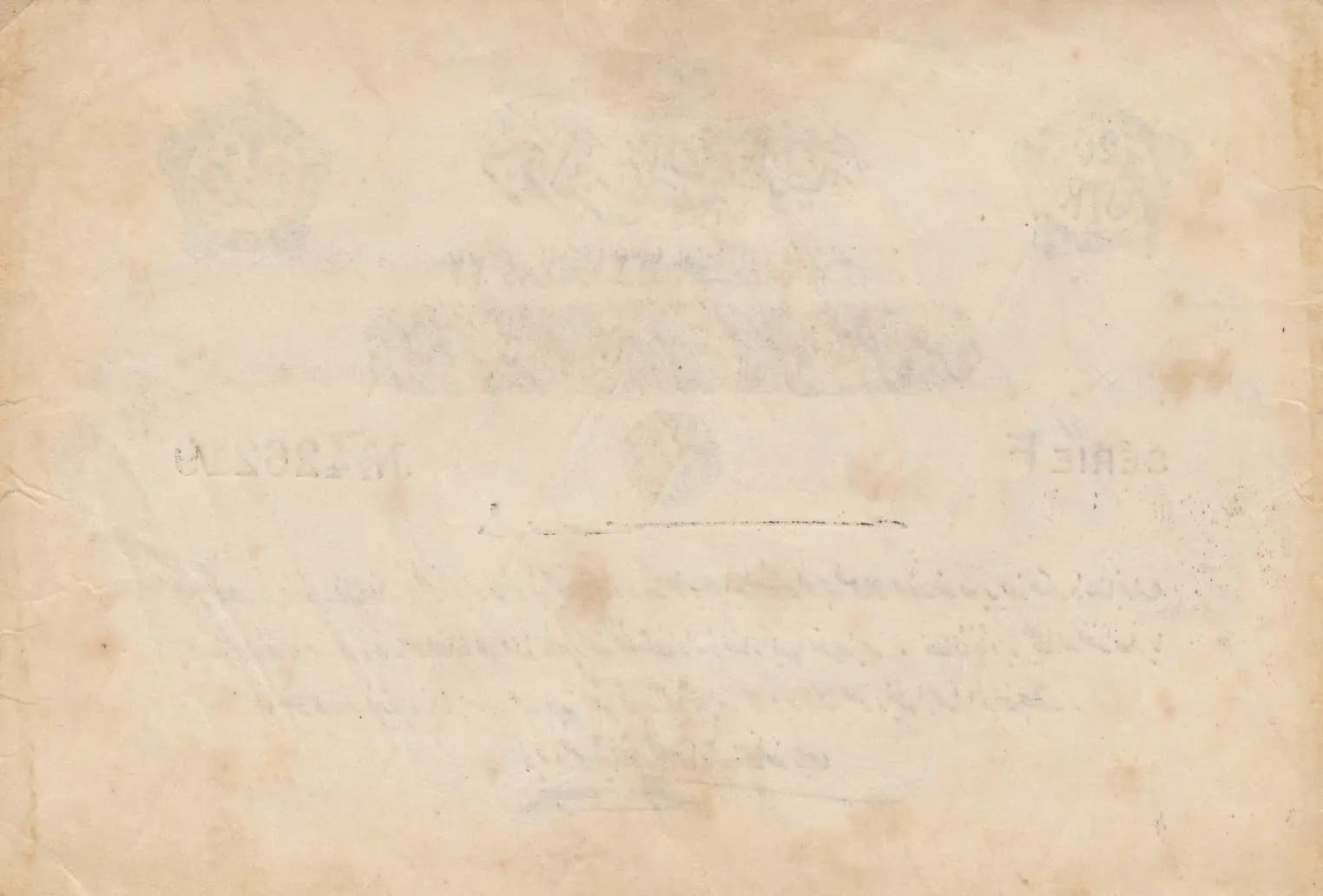
A handsome example of an Ottoman Empire 20 piastres note issued by the Dette Publique Ottomane in 1916, displaying the characteristic purple/lavender color scheme and intricate geometric filigree work typical of late Ottoman currency. The note features an elaborate scalloped border frame and central tughra (imperial monogram), with the reverse largely blank as issued. In VF condition with expected age-related foxing and discoloration, this note represents a scarcer denomination from the Ottoman fiscal administration's monetary system.
Common. Catalog valuations from 2016 list VF specimens at $17.50, and recent eBay sales data shows VF examples selling for approximately $34 (2020), well within the range of common circulating-type notes. The fact that multiple examples appear in private sales and the absence of any rarity notation in Pick or PMG catalogs indicates substantial original circulation. While not common in the sense of mass production like modern notes, this denomination from the Ottoman Public Debt Administration represents a regular issue from a multi-year series with no reported scarcities or special varieties.
This note was issued during the final years of the Ottoman Empire, specifically in 1916 during World War I when the empire was in severe financial and territorial decline. The issuer, Dette Publique Ottomane (Ottoman Public Debt), was the international body that managed Ottoman external debt following the 1881 establishment of the Ottoman Public Debt Administration. The use of the tughra (imperial seal) and Arabic script inscriptions reflects the empire's continued formal adherence to Islamic administrative traditions, even as its military and economic power collapsed.
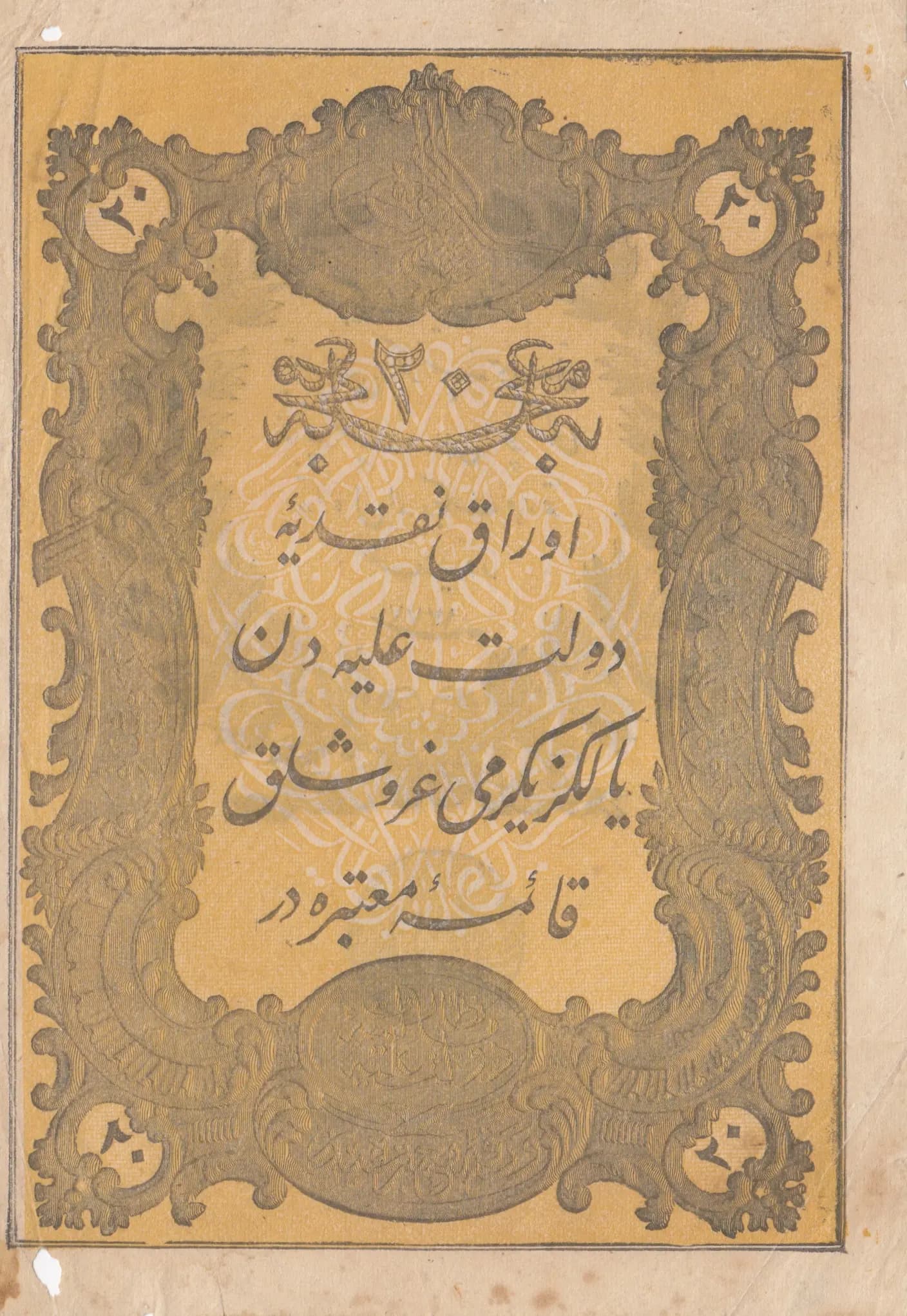
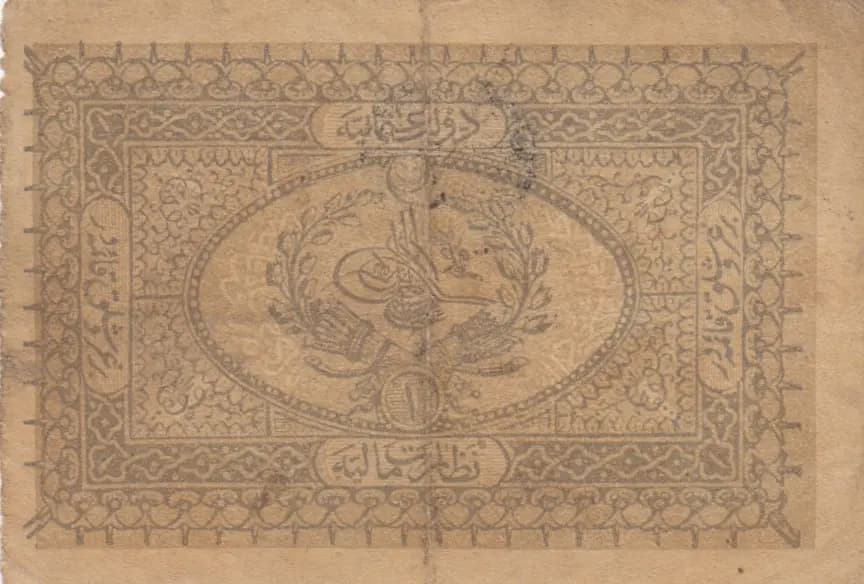
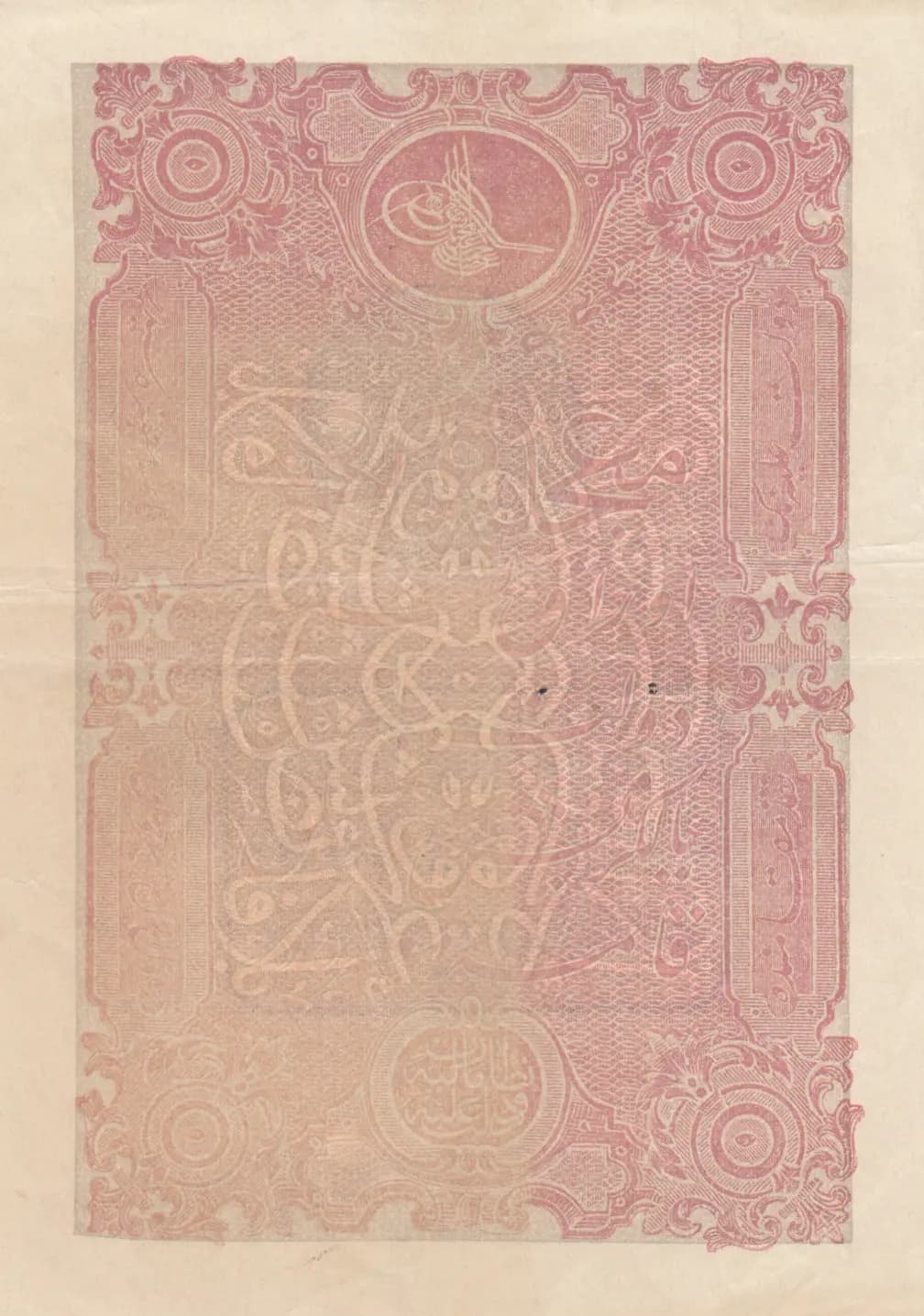
The obverse presents a highly symmetrical design centered on the Ottoman tughra (imperial monogram of the Sultan) at the top, flanked by decorative star and geometric emblems in the upper corners. The entire design is framed by an ornate scalloped border filled with intricate filigree work and repeating geometric and floral patterns characteristic of Ottoman decorative arts. The color scheme combines black ink with a purple/lavender underprint on cream/beige paper. Denomination indicators in both Arabic numerals and Ottoman script are positioned in opposing corners. The reverse is essentially blank, allowing the aged paper to show through with characteristic yellowing and foxing. This design reflects the haute couture of late 19th-century security printing, where complexity and artistic ornamentation served as primary anti-counterfeiting measures.
Front side: The denomination '٢٠' (20 in Arabic numerals) appears in upper left and lower right corners. 'SERIE F' identifies the series designation. Serial number 'No.426219' is printed on the right side. 'دولت عثمانيه' (Devlet-i Osmâniyye / Ottoman State) appears in the central cartouche. Various Ottoman Turkish legal inscriptions and denomination information appear in decorative cartouches throughout, though specific text clarity is compromised by age and printing quality. Back side: Faint markings present but not clearly legible; appears to have been left largely blank as issued.
Steel engraving (intaglio printing) with multicolor offset lithography for the underprint. The fine-line engraving is evident throughout the intricate geometric patterns, filigree borders, and detailed cartouches. The purple underprint was applied separately via lithography before the primary intaglio pass. This was standard practice for Ottoman currency during this period, combining the security properties of engraved plates with decorative color elements.
SERIE F, Serial No. 426219. The series letter 'F' indicates this note belongs to one of multiple series issued during the 1912-1916 period. The catalog reference date confusion (L. 22.12. RC1331 / 04.01.1916) reflects the Ottoman transition period between the Rumi Calendar (RC, Roman Calendar year 1331 ≈ 1912-1916 Gregorian) and Gregorian dating; this note should be dated January 4, 1916 Gregorian. No major varieties are recorded for Pick P-80, though signature varieties and series variations may exist across the full print run. PMG cataloging confirms only one primary variant for this Pick number.