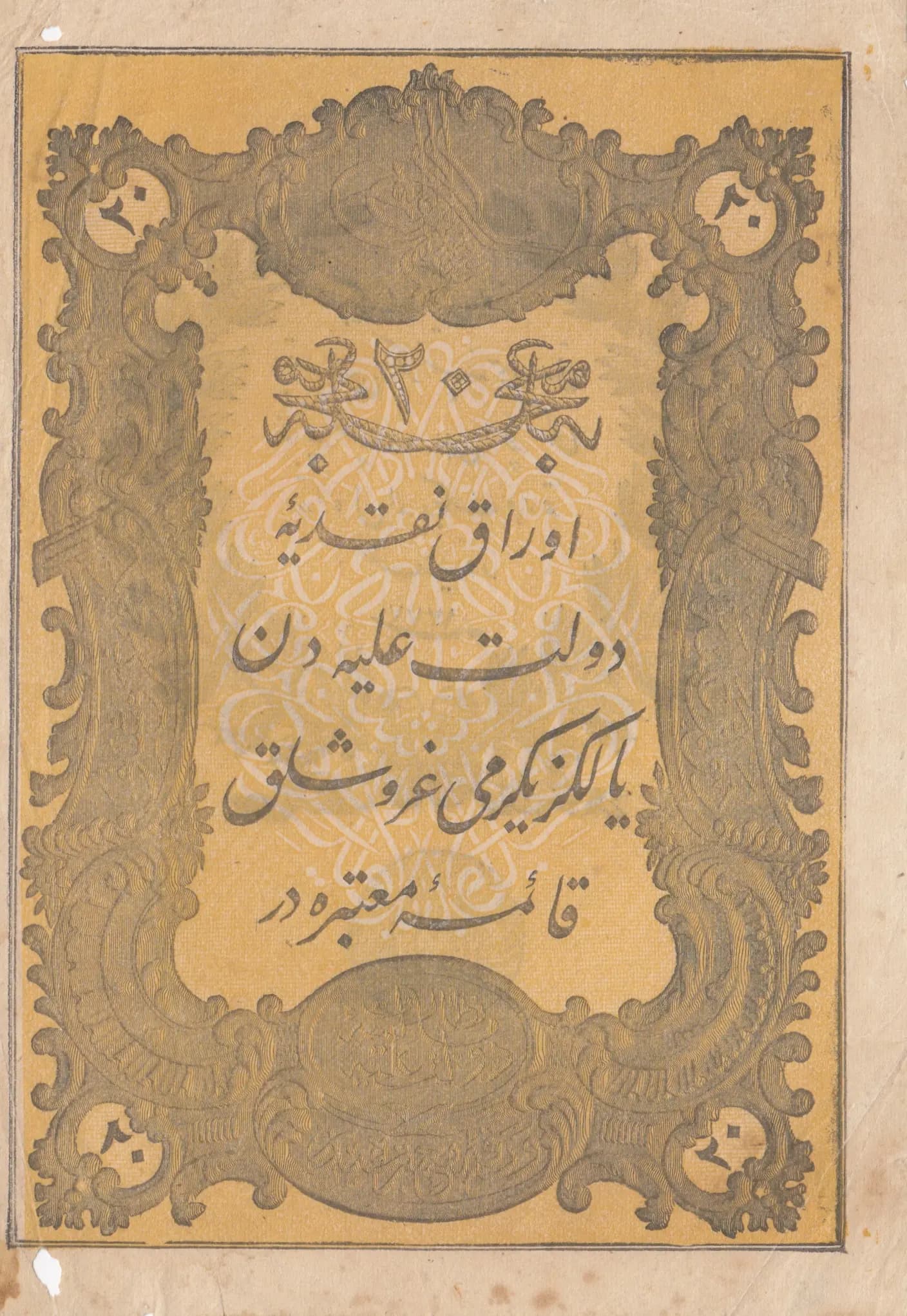
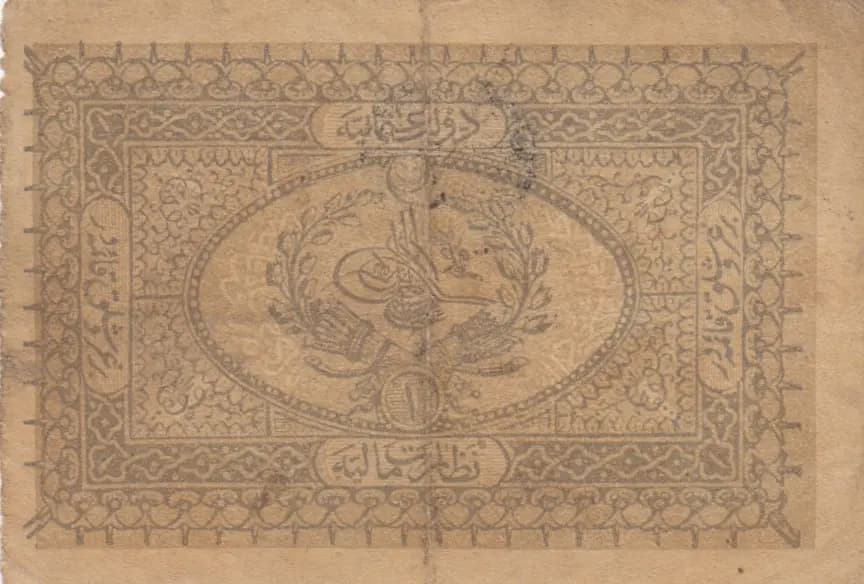
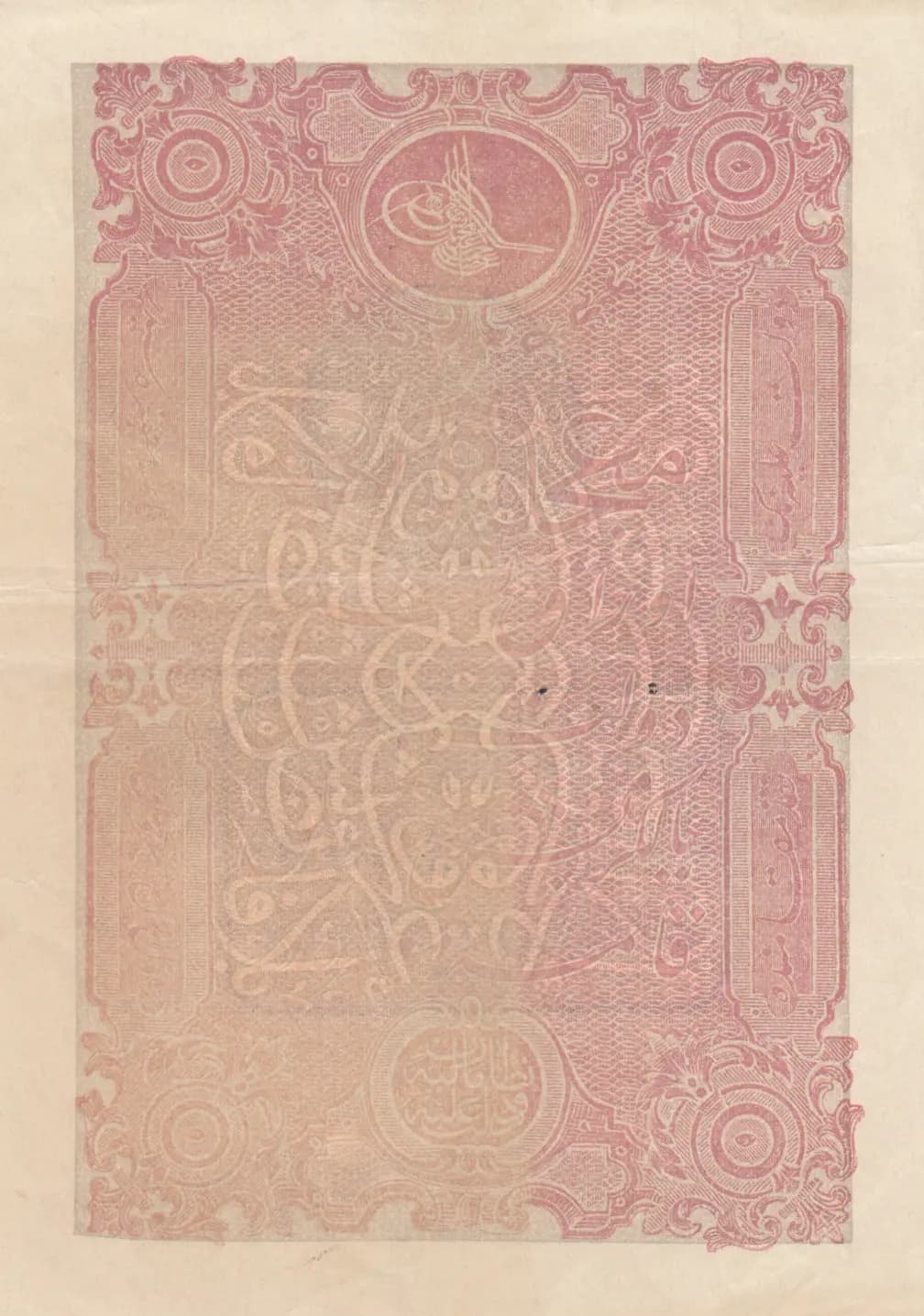
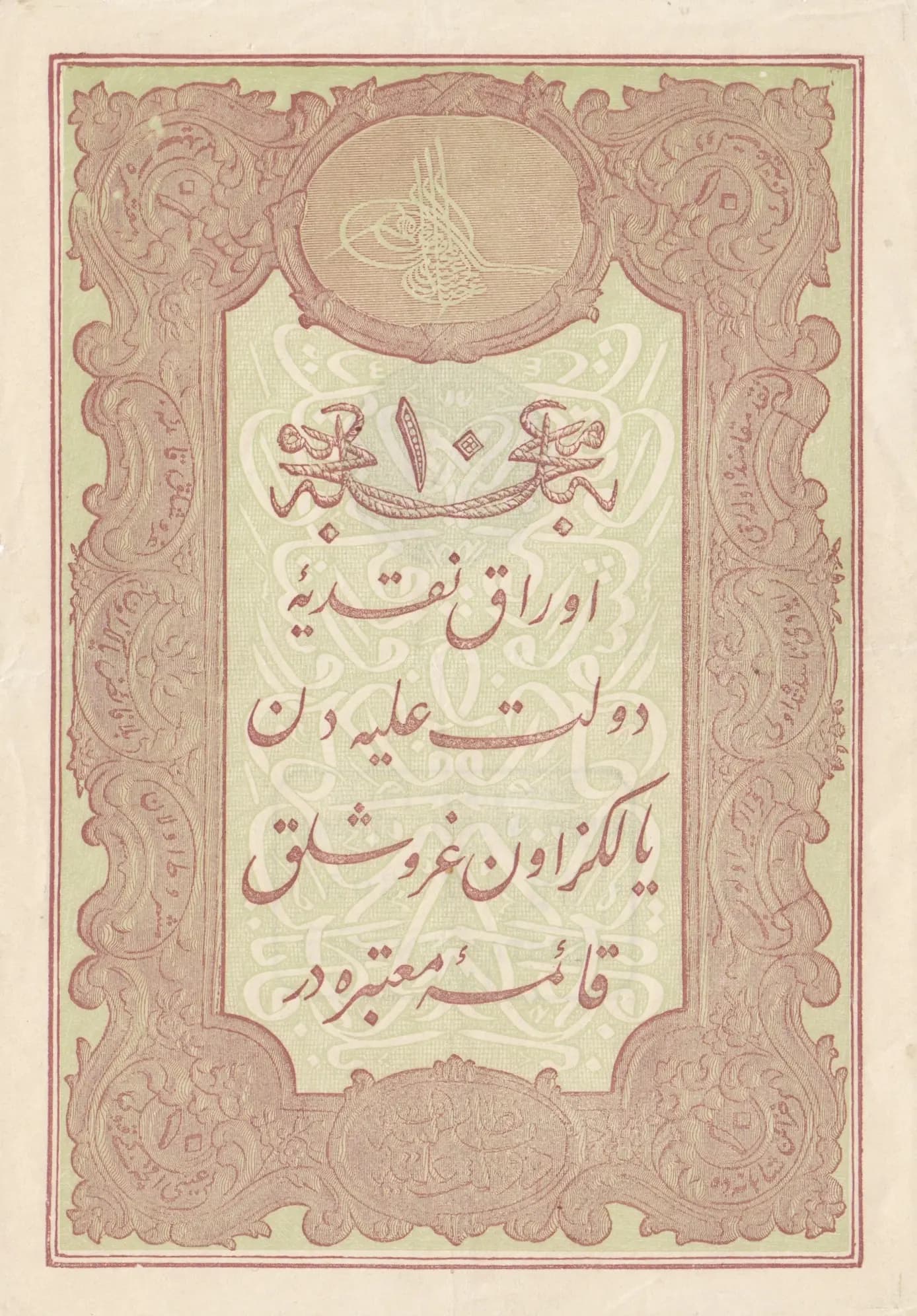
2 1/2 piastres 1916
Market Prices
37 salesAbout This Note
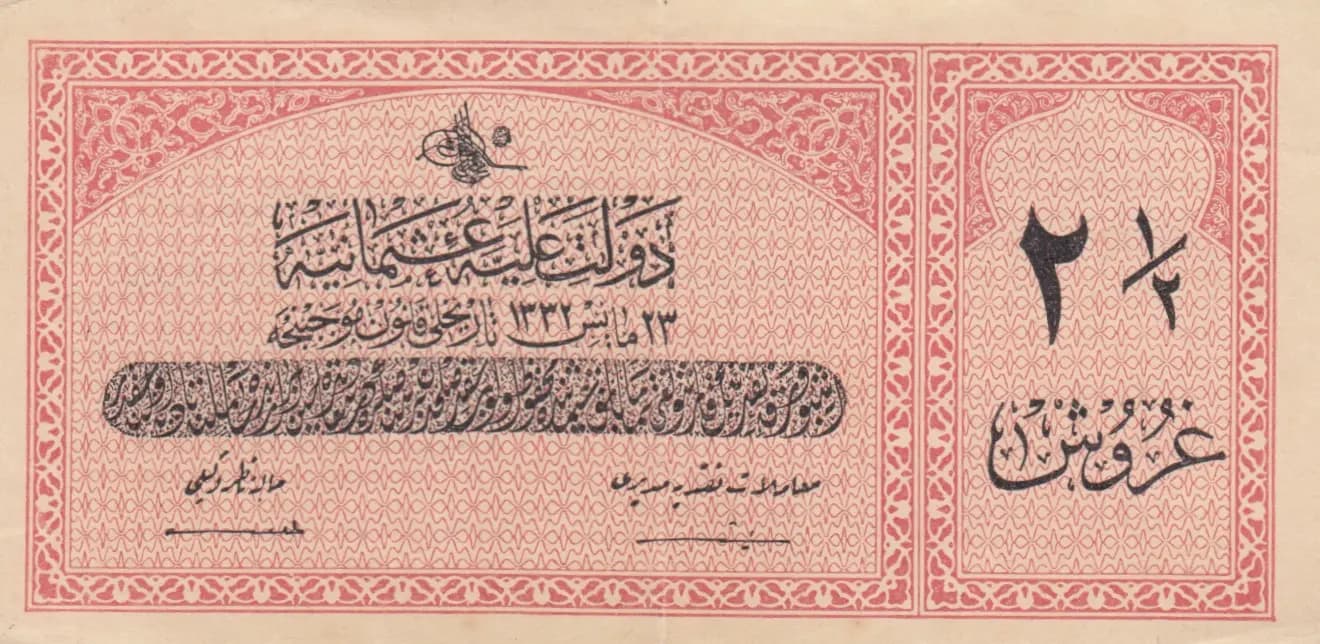
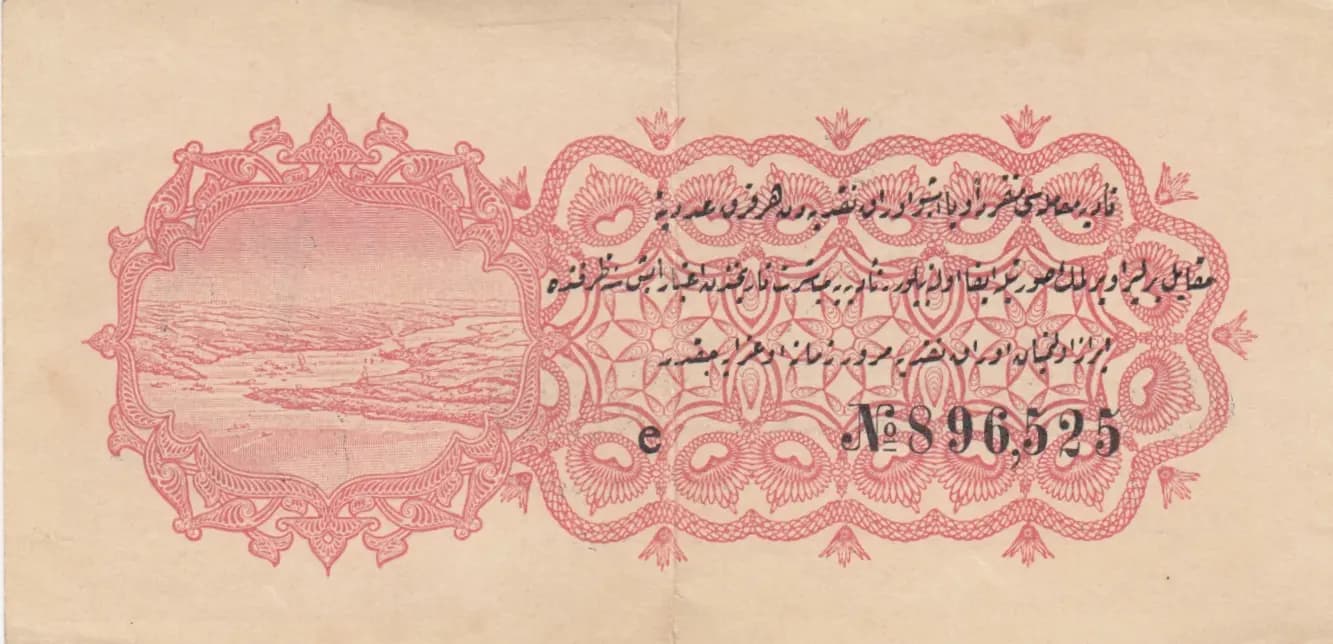
This is an excellent example of a 2½ Piastres note issued by the Dette Publique Ottomane in 1916, graded EF (Extremely Fine). The note displays the characteristic ornate Ottoman design with pink/red coloring, fine engraved patterns, and a detailed seascape on the reverse (identified as Cape Nara/Dardanelles). The printing is crisp and well-preserved with minimal aging, making this a desirable example for Ottoman currency collectors.
Common. Secondary market data from eBay auction results spanning 2012-2026 shows consistent sales volume with EF examples regularly achieving $13-$39 USD, indicating steady collector demand but no rarity premium. The 2016 catalogue value of $4 (VF) reflects common status. This is a regular issue from a major Ottoman fiscal administrator with presumably substantial print runs for circulation during 1916. The consistent availability across multiple condition grades supports common classification.
This note was issued during the final years of the Ottoman Empire, specifically dated 23 Mayıs 1332 (RC) / 5 June 1916, a period of significant territorial and financial stress during World War I. The Dette Publique Ottomane (Ottoman Public Debt Administration) was responsible for managing the empire's finances following the debt crisis of the 1870s. The reverse depicts Cape Nara at the Dardanelles Strait, symbolically significant as a strategic waterway that was actively contested during the Gallipoli Campaign (1915-1916), occurring just months before this note's issuance.
This banknote features a two-panel layout on both obverse and reverse. The front displays the Ottoman imperial tughra (monogram) at top center, with the left panel containing Ottoman state inscriptions in elaborate calligraphic script, and the right panel showing the denomination (2½) with corresponding Arabic text. The entire design is framed by ornate borders featuring floral and geometric Islamic patterns rendered in fine engraved line work. The reverse presents a landscape vignette on the left depicting Cape Nara (Çanakkale Boğazı/Dardanelles Strait), a strategic waterway of great historical importance, with Ottoman inscriptions and administrative text on the right panel. The color scheme throughout is pink/rose with cream backgrounds, typical of Ottoman-era currency design. The tughra serves as the empire's official seal, and the crown motifs in the border reflect imperial authority.
Front side: 'دولت عثمانيه' (Ottoman State); 'صادره سال 1332' (Issued in year 1332 [Rumi Calendar]); '2 1/2' (denomination in Arabic numerals); 'خمسة قروش' (Five piastres - note: discrepancy in denomination text). Back side: 'T.S 96,925' (Serial number); Multiple lines of Ottoman Turkish calligraphic text describing the note's authorization and issuer (Dette Publique Ottomane).
Engraved intaglio printing on paper. The fine line work visible in the decorative borders, geometric patterns, and landscape vignette are characteristic of hand-engraved steel plate intaglio production. This was the standard security printing method for Ottoman currency of this period. The crisp impression and fine detail preservation in this EF example demonstrates high-quality engraving and careful press work.
This specific example bears serial number T.S 96,925. The Pick catalog lists one variant for P-86. The date inscription shows 'L. 23.05.RC1332 / 05.06.1916,' reflecting the dual-calendar system used by the Ottoman fiscal administration (RC = Rumi Takvim/Roman Calendar for official Ottoman fiscal purposes, running on solar rather than lunar Hijri years). The note's denominal text contains a peculiarity: while cataloged as 2½ piastres, the Arabic inscription reads 'خمسة قروش' (five piastres/qurush), suggesting either a translation discrepancy between French and Ottoman administrative terminology, or a typographical variation in printing.