100 kurus 1877
Market Prices
2 salesAbout This Note
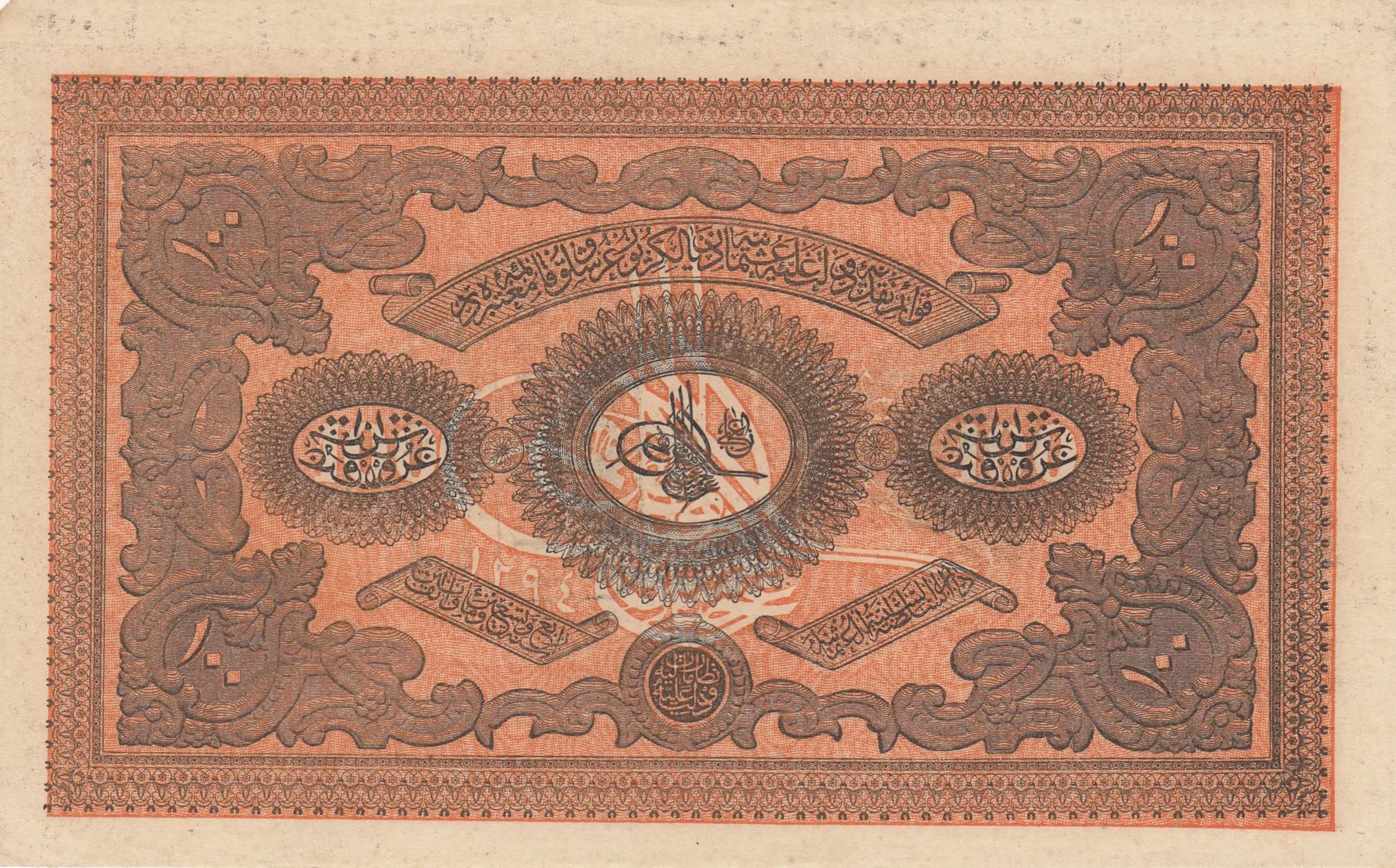
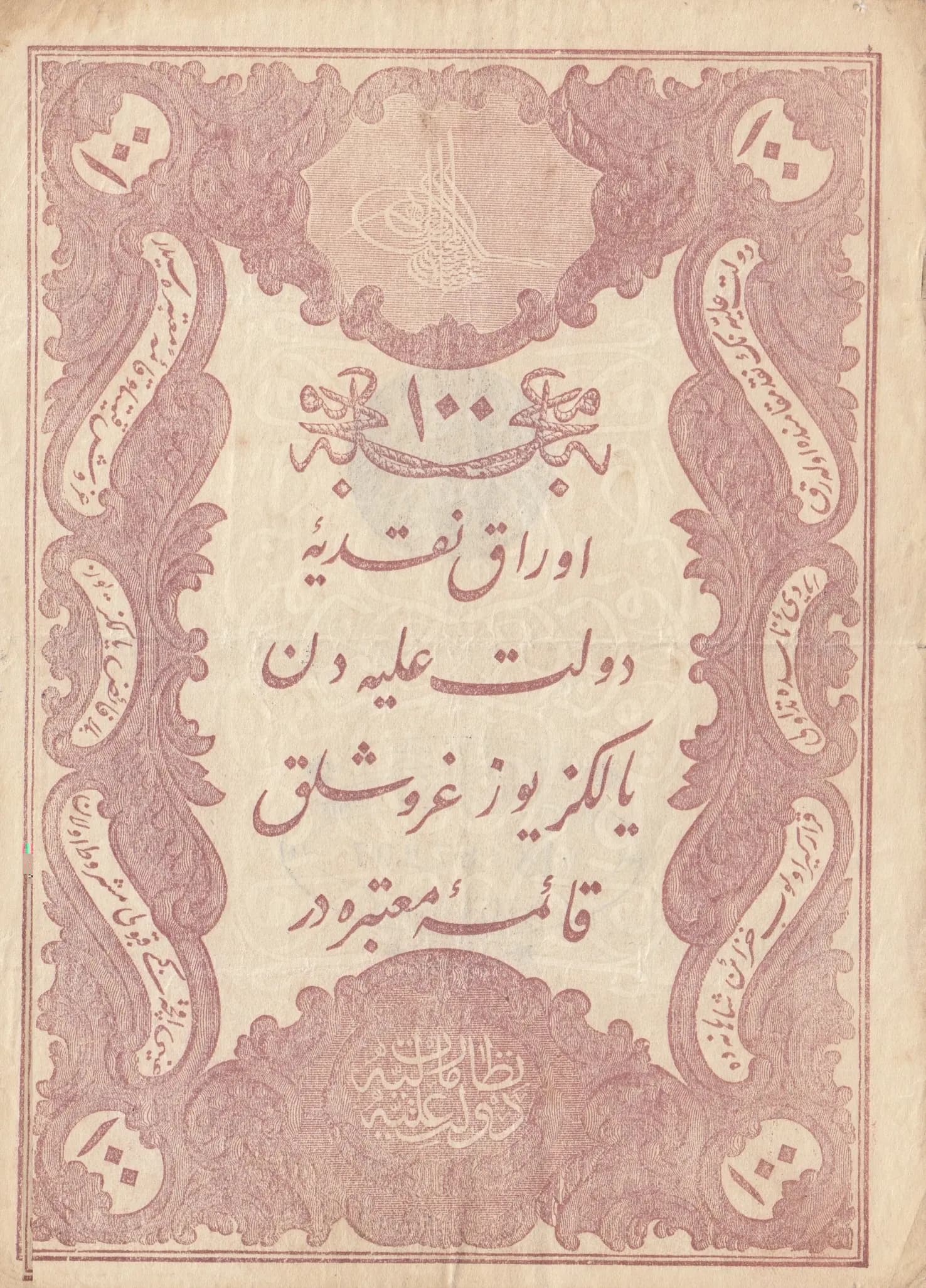
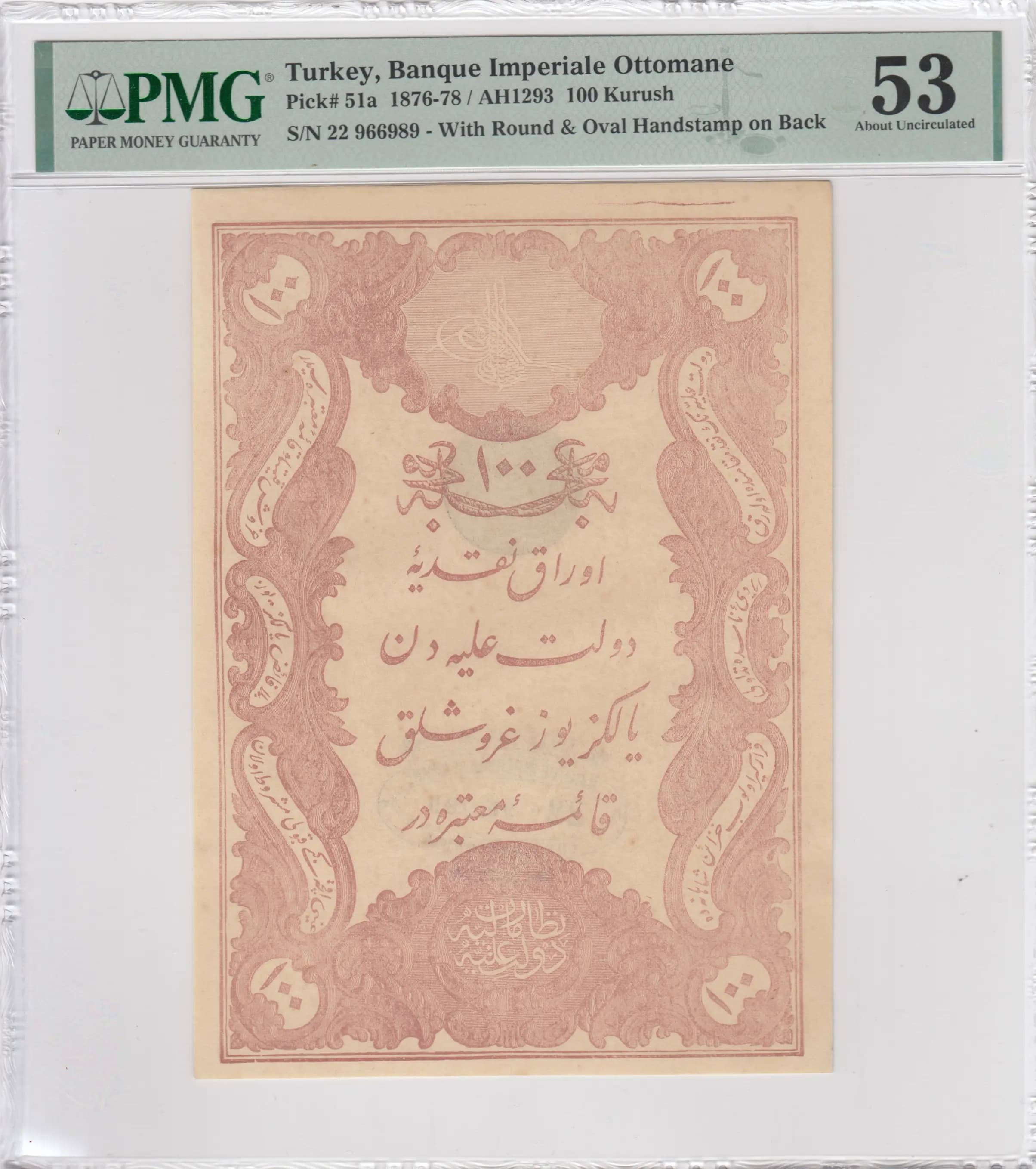
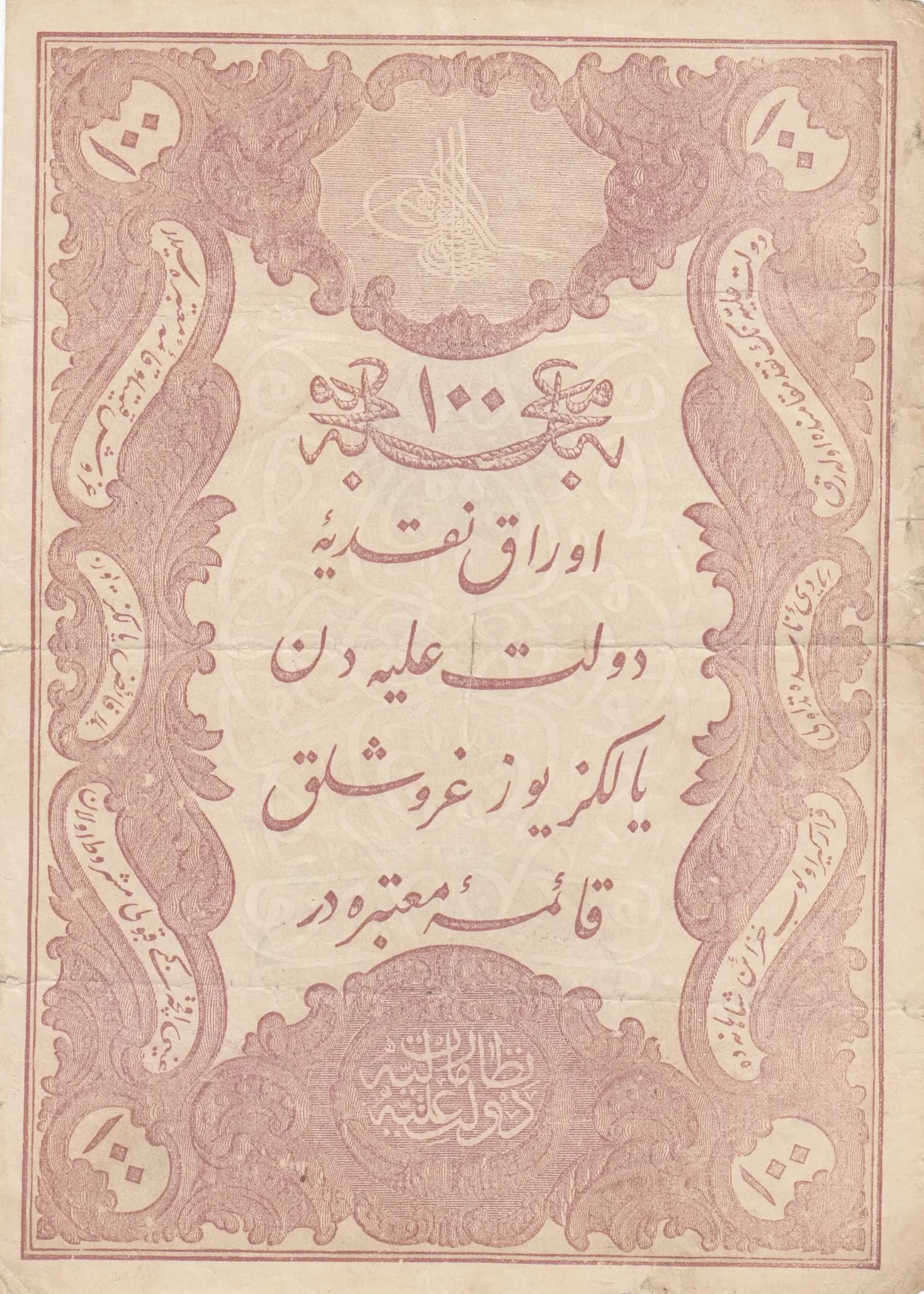
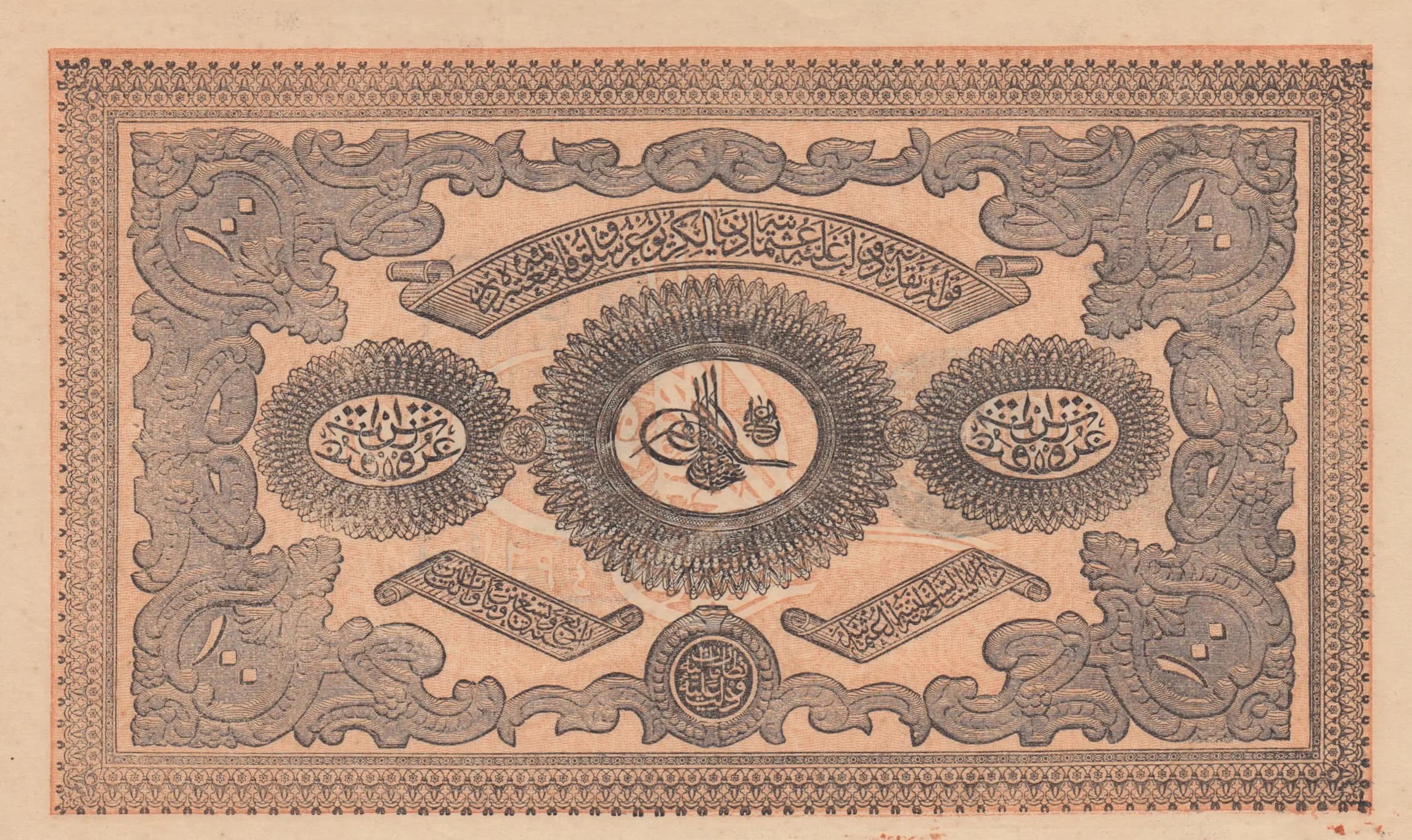
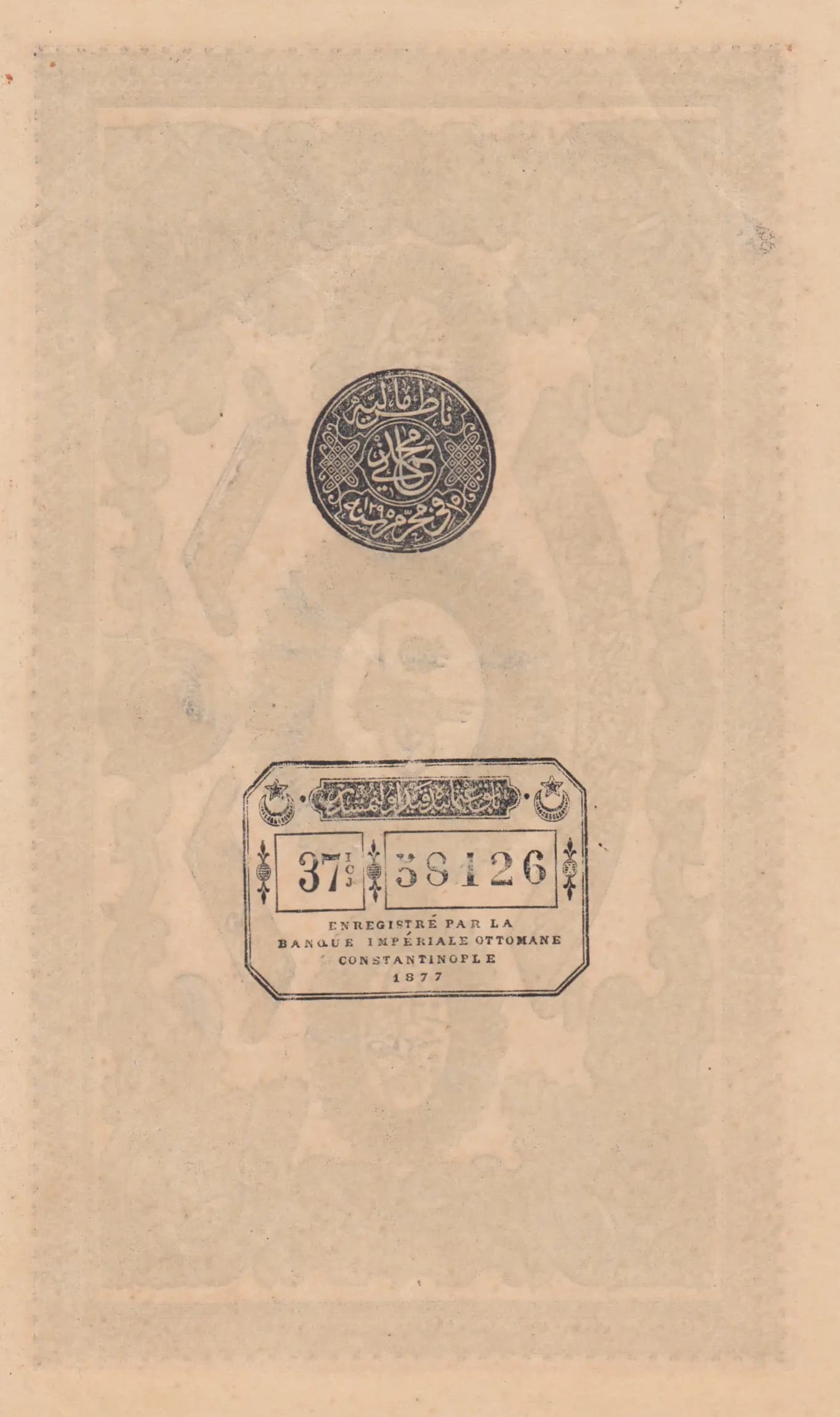
This is a stunning example of an Ottoman Imperial Bank 100 Kuruş note from 1877 (AH 1294-1295), graded AU. The obverse features an exquisite peachy-salmon colored design with elaborate ornamental borders, three sunburst medallions with the central tughra (imperial seal), and intricate calligraphic cartouches—characteristic of high-quality Ottoman financial engraving. The reverse presents a cream-colored design with minimal ornamentation, showing a rectangular cartouche containing the serial number (37 38126) and French registration text identifying the Banque Impériale Ottomane in Constantinople, with notable foxing consistent with 19th-century paper aging.
Common. While this is a desirable 19th-century Ottoman banknote, the catalog and market data indicate it is commonly encountered. eBay historical price data shows EF-graded examples selling for $131-$146 (2014-2015), with 2016 catalog values placing EF condition at $85. The AU condition of this example is slightly above typical market grades but does not command premium rarity pricing. The note was issued in quantity by a major financial institution and survives in moderate numbers, justifying a 'common' assessment despite its age and aesthetic appeal.
Issued by the Banque Impériale Ottomane (Ottoman Imperial Bank), this note represents a transitional period in Ottoman monetary policy during the late reign of Sultan Abdülaziz. The prominent use of the tughra (imperial seal) in the central medallion reflects the sultanate's authority over the banking enterprise, while the trilingual design (Ottoman Turkish/Arabic and French) demonstrates the cosmopolitan nature of Ottoman finance and the bank's role in modernizing the empire's monetary system. The 1877 date coincides with the Ottoman constitutional reforms and the Russo-Turkish War, a period of significant political and financial restructuring.
The obverse features an elaborate symmetrical composition dominated by three sunburst medallions arranged horizontally—a larger central medallion containing the tughra (Ottoman imperial seal/signature) flanked by two smaller oval medallions with calligraphic designs. The entire design is framed by an ornate border of repeated geometric and floral scrollwork patterns. Curved banner-like cartouches containing Arabic calligraphic inscriptions are positioned above and below the medallions, with additional ornamental designs featuring imperial motifs in the corners. The reverse presents a minimalist design with a circular seal at the top containing Arabic/Ottoman Turkish calligraphy and a rectangular ornamental frame cartouche in the lower portion containing the registration details and serial number. This layout reflects the typical European-influenced Ottoman banknote design conventions of the 1870s.
Front side: The ornate calligraphic cartouches contain Ottoman Turkish and Arabic inscriptions in the tughra (imperial monogram) within the central sunburst medallion and the flanking oval medallions; specific transliterations are not clearly legible due to ornate calligraphic styling. Back side: 'ENREGISTRÉ PAR LA / BANQUE IMPÉRIALE OTTOMANE / CONSTANTINOPLE' (Registered by the Ottoman Imperial Bank, Constantinople); Serial number components: '37' and '38126'; Date: '1877'.
This note was produced using intaglio (engraved) printing, evidenced by the crisp, fine-line engraving throughout the obverse with intricate geometric and floral patterns in the borders and the detailed calligraphic elements. The multi-color printing (black ink on peachy-salmon underprint for the obverse; dark brown/black on cream-beige for the reverse) suggests the use of a sophisticated multi-pass printing process typical of European security printers of the period. The Banque Impériale Ottomane contracted with established European engravers and printers for their currency production during this era, though the specific printer/security printer for this issue is not definitively identified in available catalogs.
Pick catalog identifies two variants for the 100 Kuruş 1877 issue: P-53a and P-53b. This example is catalogued as P-53b. The primary distinguishing features between variants include the presence or configuration of handstamps (noted in community references as 'round AH1295 handstamp, box handstamp on back'). The serial number 37 38126 and the specific handstamp configurations visible on this example are consistent with the P-53b variant classification. No signature varieties or overprint variants are evident in this example.