100 kurus 1877
Market Prices
2 salesAbout This Note
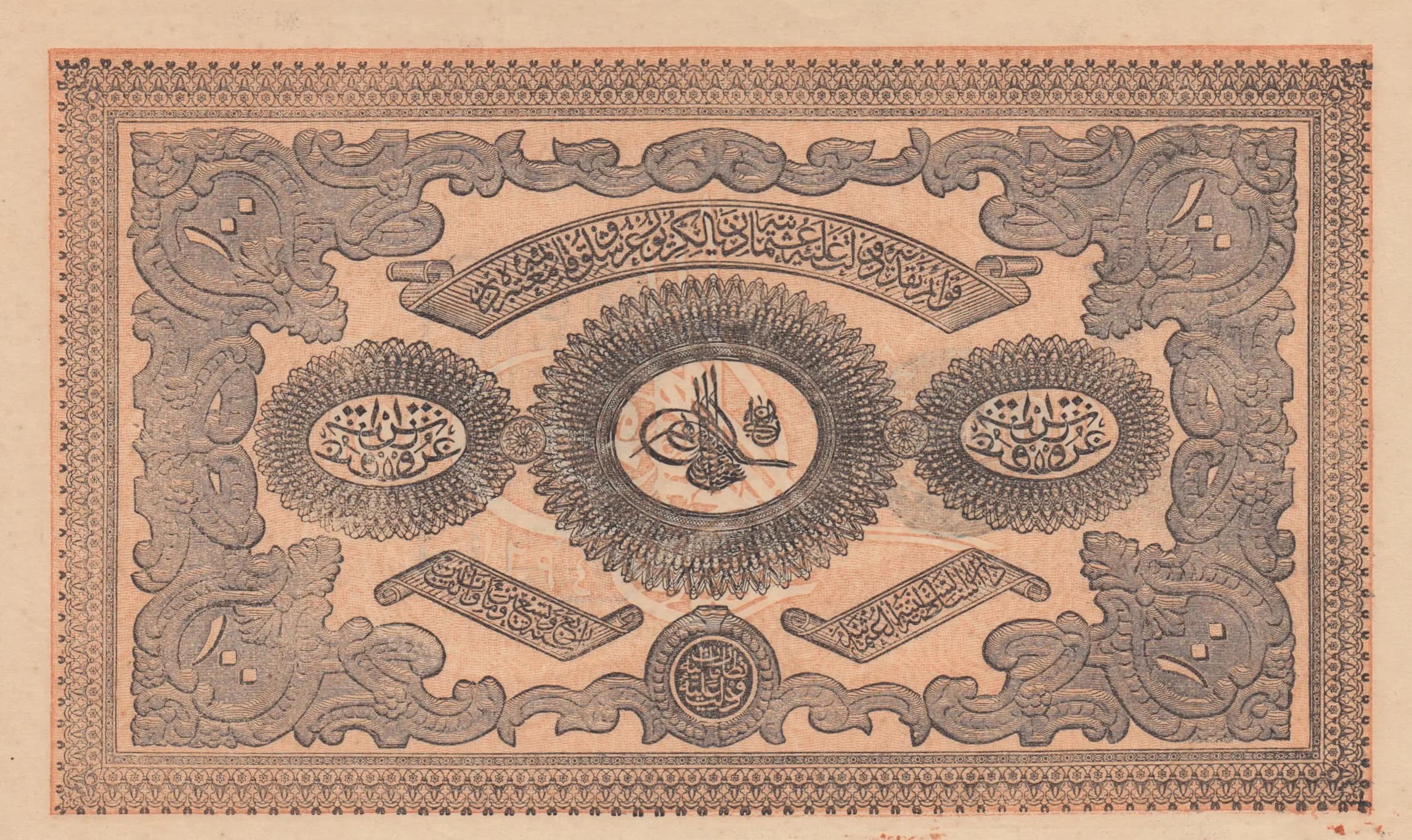
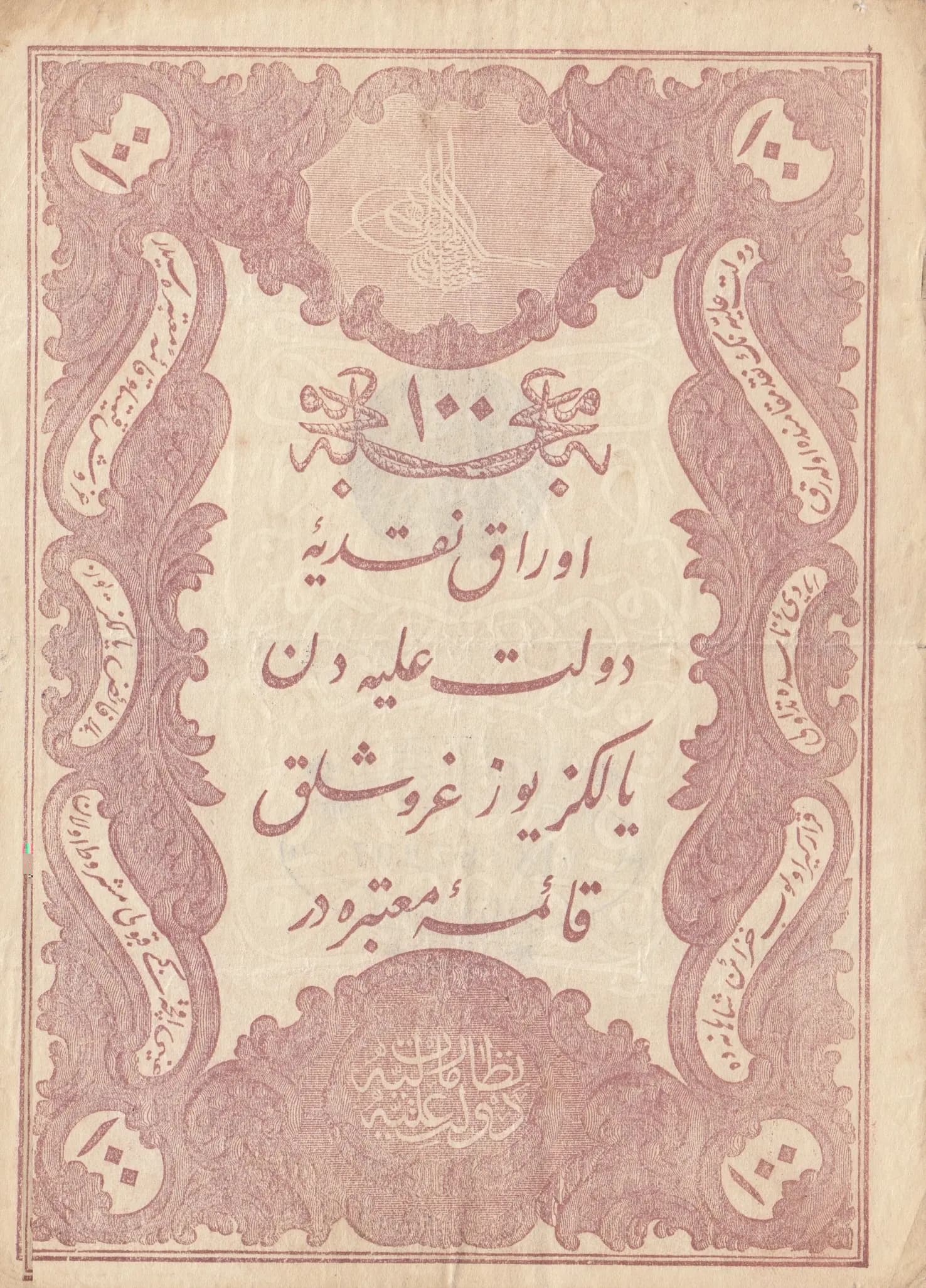
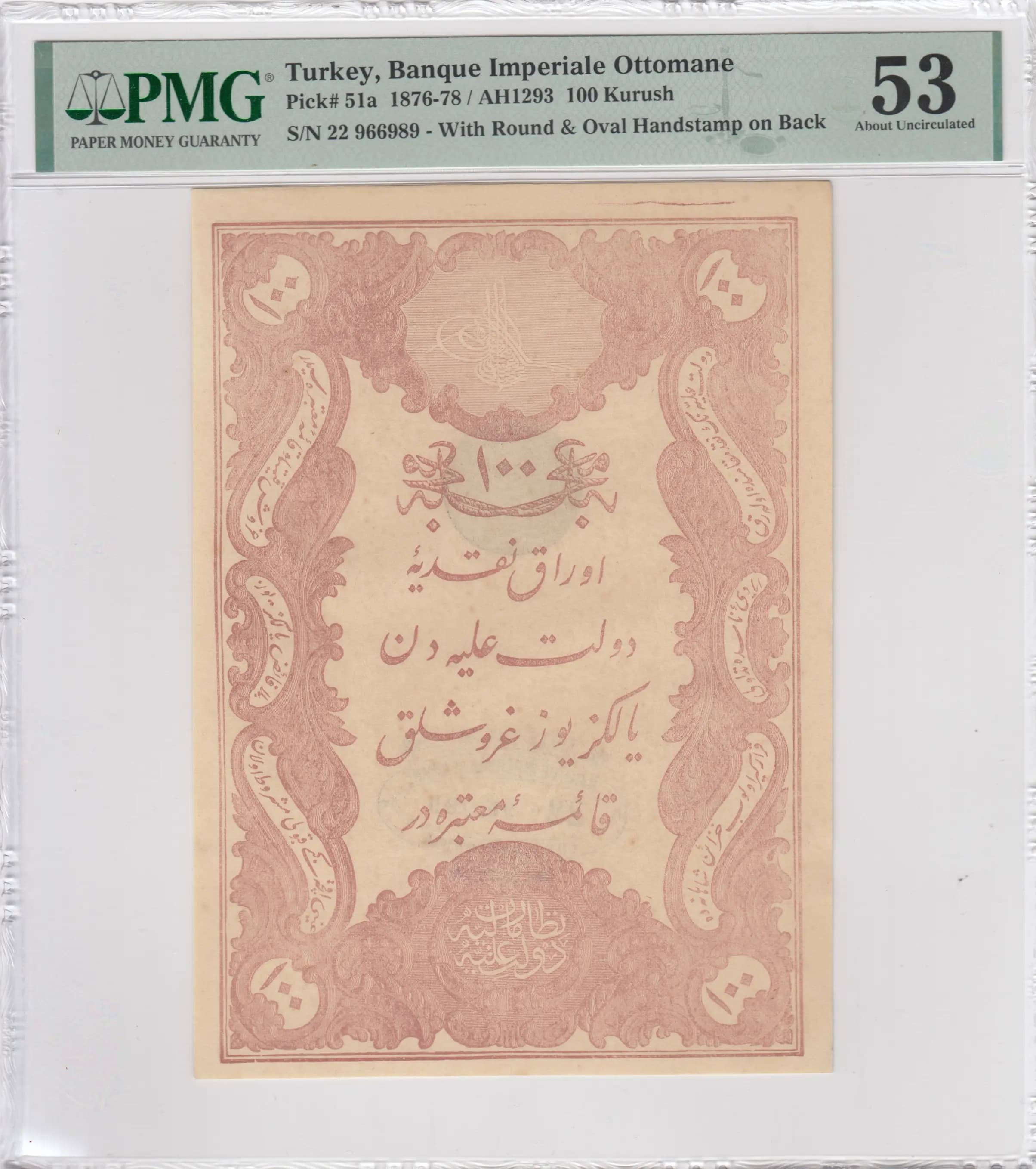
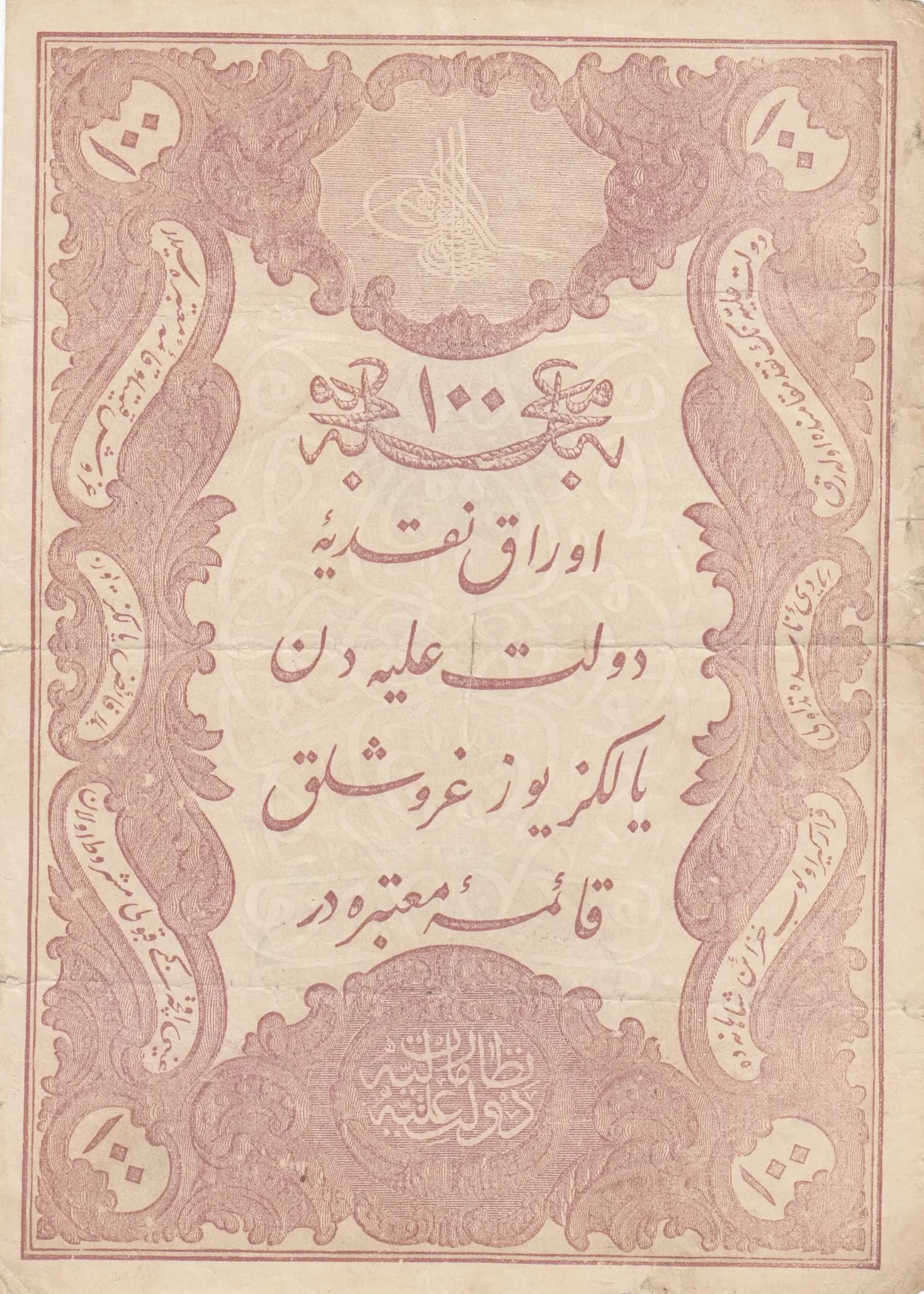
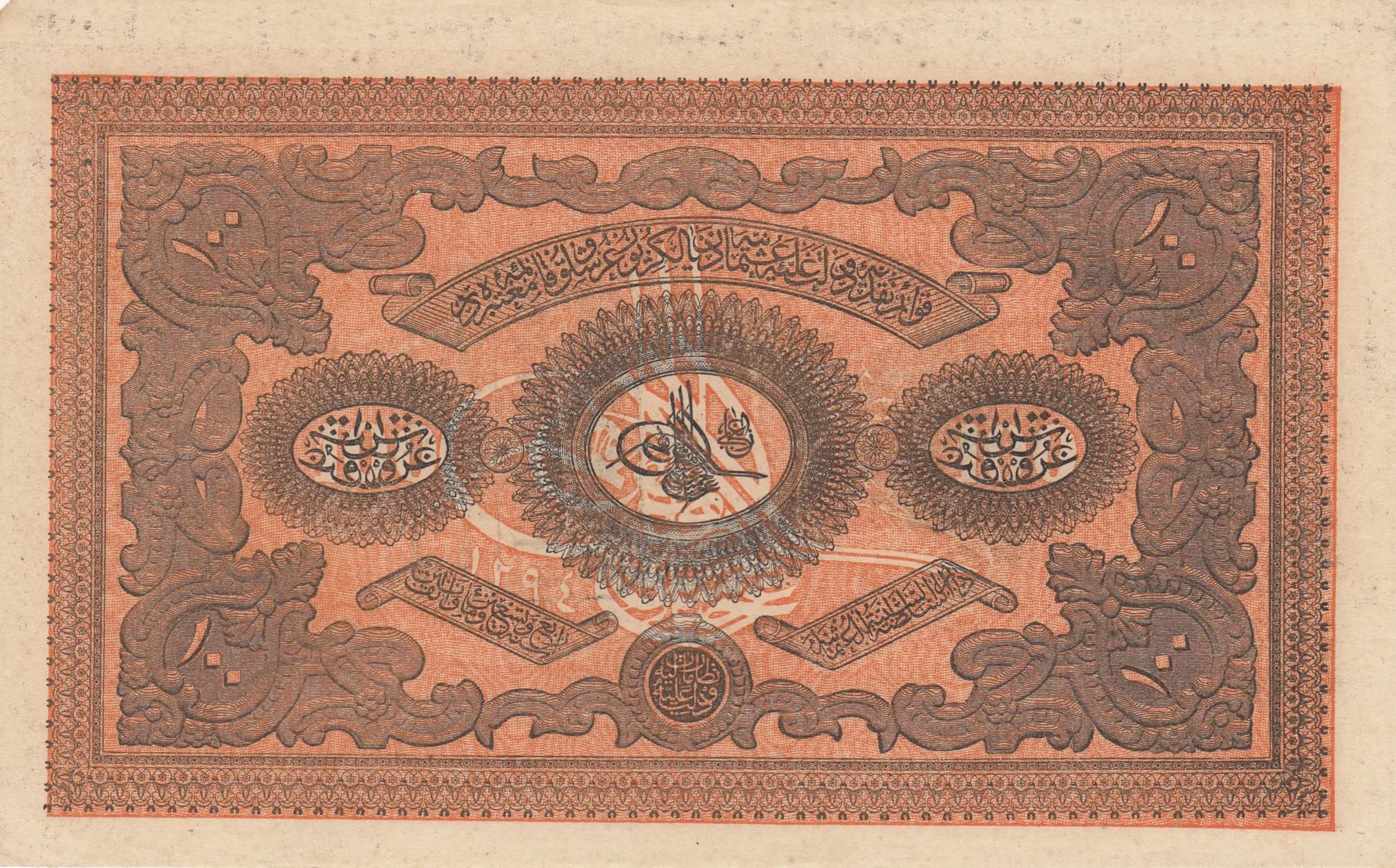
This is an AU-graded 100 Kuruş note from the Banque Impériale Ottomane issued in 1877 (AH 1294-1295), displaying the characteristic ornate Ottoman design aesthetic with a prominent central sunburst medallion and peachy-orange underprint. The note exhibits typical aging consistent with its 145+ year age, including foxing and discoloration throughout both sides, though the intricate engraved details remain well-preserved and legible. This particular example represents a significant piece of early Ottoman banking history and remains desirable to collectors of Ottoman-era currency.
common. eBay market data shows AUNC examples selling for approximately $172.50 and VF examples for $66, with catalogue values in the $10-75 range depending on condition. These price levels indicate this is a commonly available note in the secondary market. While 1877-dated Ottoman currency is historically significant, the Banque Impériale Ottomane issued these notes in substantial quantities during this period, and surviving examples remain relatively accessible to collectors. The P-53a variant (as distinguished from P-53b) represents one of at least two known varieties, but neither is exceptionally scarce.
This banknote was issued during the reign of Ottoman Sultan Abdülaziz, a period when the Ottoman Empire was modernizing its financial institutions through the establishment of the Banque Impériale Ottomane in 1863. The elaborate ornamental design with Arabic calligraphy and imperial symbols reflects the sophisticated engraving standards of 19th-century Ottoman banking, while the use of French inscriptions ('Banque Impériale Ottomane,' 'Constantinople,' 'Enregistré par la') demonstrates the influence of European banking practices on Ottoman financial administration. The dual dating system (AH 1294-1295 and 1877-1878) reflects the Ottoman Empire's transition between traditional Islamic calendars and the Gregorian calendar system.
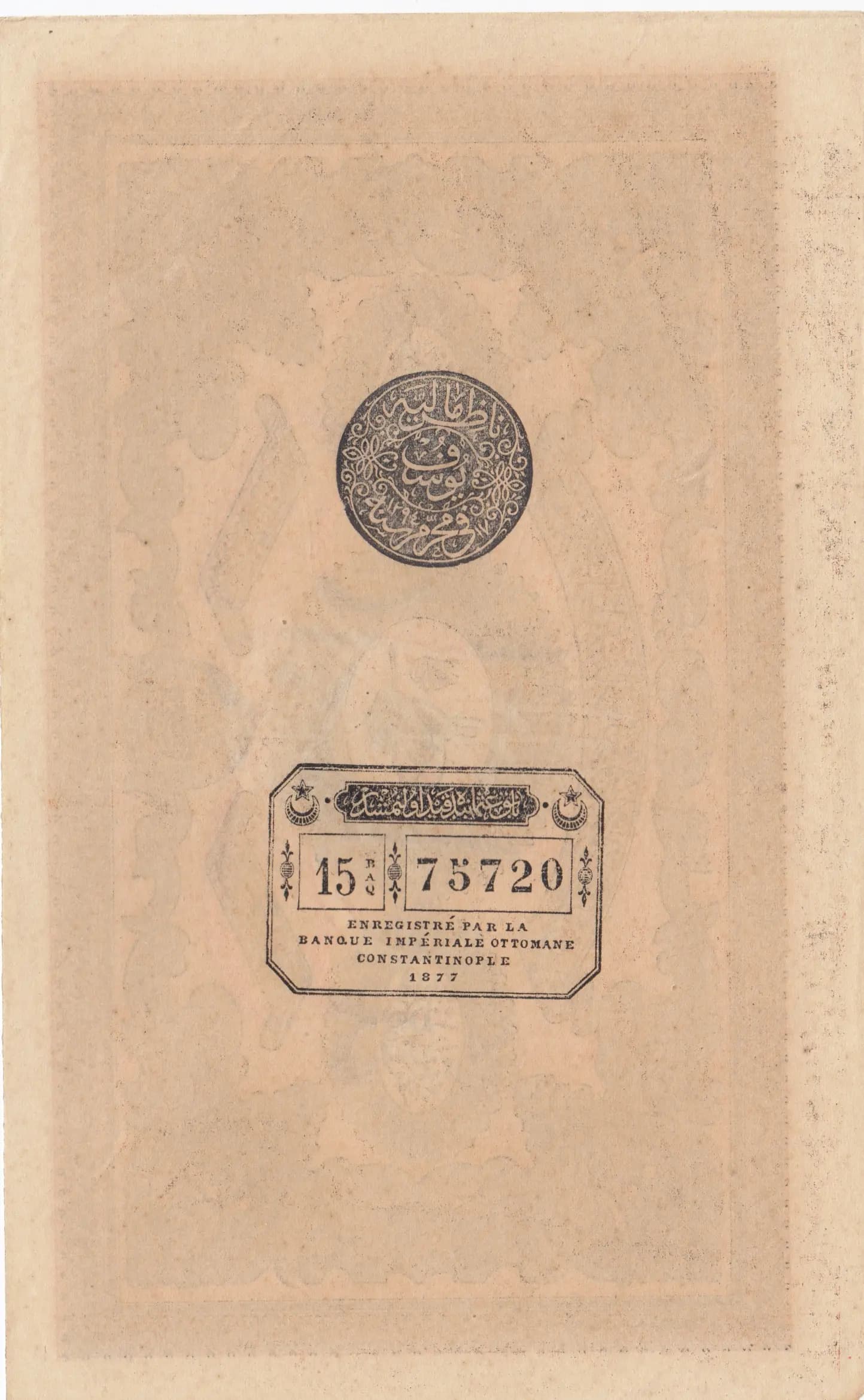
The obverse features an exceptional example of Ottoman decorative banknote design centered on a large circular medallion with a radiating sunburst fan design—a symbol of imperial authority and modernity. Within this central medallion is a circular tughra or official seal containing Ottoman calligraphy. Flanking the central design are two smaller symmetrical oval rosette medallions positioned left and right, creating a balanced tripartite composition. The entire design is surrounded by an intricate geometric border frame with elaborate floral and scrollwork patterns filling the corners and margins. The color scheme of peachy-orange with brown and tan accents is typical of 1870s Ottoman currency. The reverse is notably sparse, featuring only a centered circular seal with the bank's mark and a registration plate containing French text, denomination numerals, and serial information—a common format for Ottoman banknotes that preserved valuable paper real estate for official markings rather than elaborate design.
Front: Arabic/Ottoman Turkish calligraphy appears in curved banners at top and bottom; full transcription unclear from provided image resolution but typically contains denomination and issuer information in Ottoman Turkish script. Back: 'ENREGISTRÉ PAR LA' (Registered by the) / 'BANQUE IMPÉRIALE OTTOMANE' (Ottoman Imperial Bank) / 'CONSTANTINOPLE' (Constantinople) / '1877' (1877). Serial number components visible: '15' and '75720'. The circular seal contains Arabic/Ottoman calligraphy identifying the bank and denomination.
This note was produced using intaglio engraving, evidenced by the fine line work, intricate detail in the radiating sunburst pattern, and the depth of impression visible in the ornamental border designs. The multi-color printing (black ink on peachy-orange underprint with brown and tan tones) indicates a combination of engraved plate printing with colored paper stock or underprinting. The detailed scrollwork and geometric patterns characteristic of high-security banknote production of the era suggest professional security printing by a European bank note printer, likely one of the major European security printing houses contracted by the Banque Impériale Ottomane (commonly De La Rue or similar firms during this period).
This note is cataloged as Pick P-53a, with Pick P-53b representing a known variant for the same 100 Kuruş denomination and issuer. The PMG population report confirms two variants exist for this base Pick number. Distinguishing characteristics between varieties typically relate to subtle differences in inscription placement, ornamental details, or printer's marks rather than major design changes. The specific variety would be confirmed by comparison of the Arabic/Ottoman calligraphy and the exact configuration of the central medallion design against documented reference images.