100 kurus 1877
Market Prices
2 salesAbout This Note
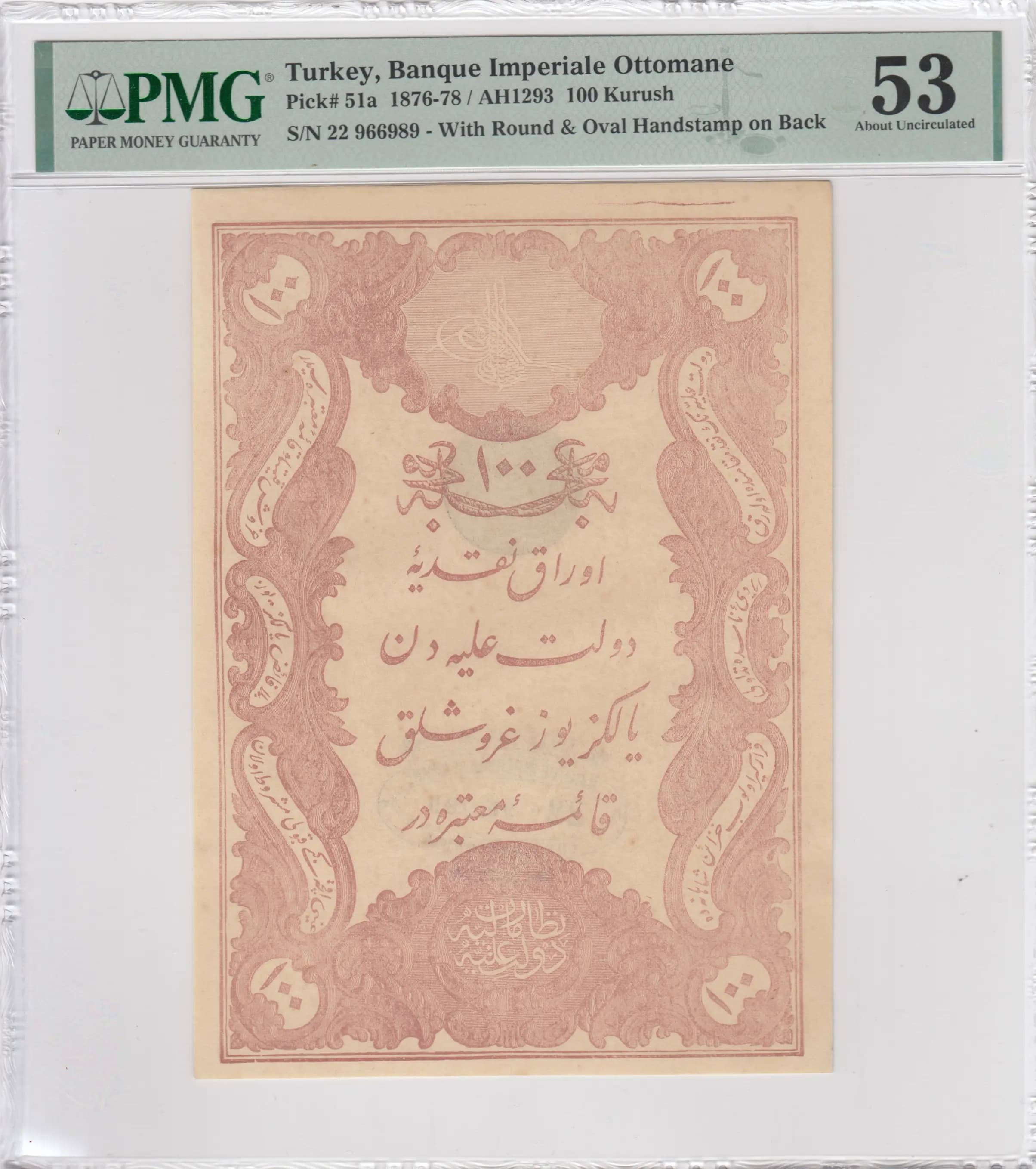
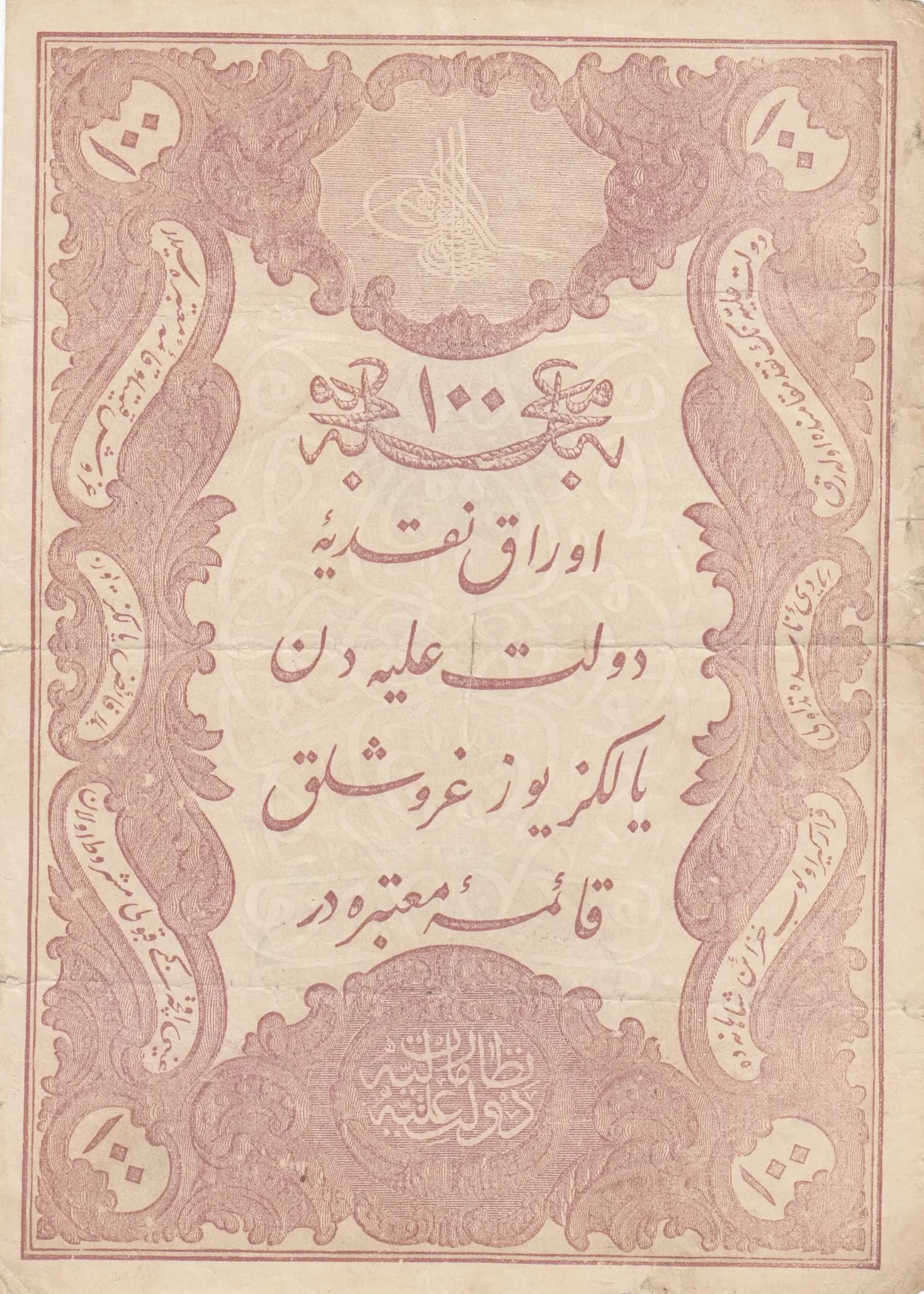
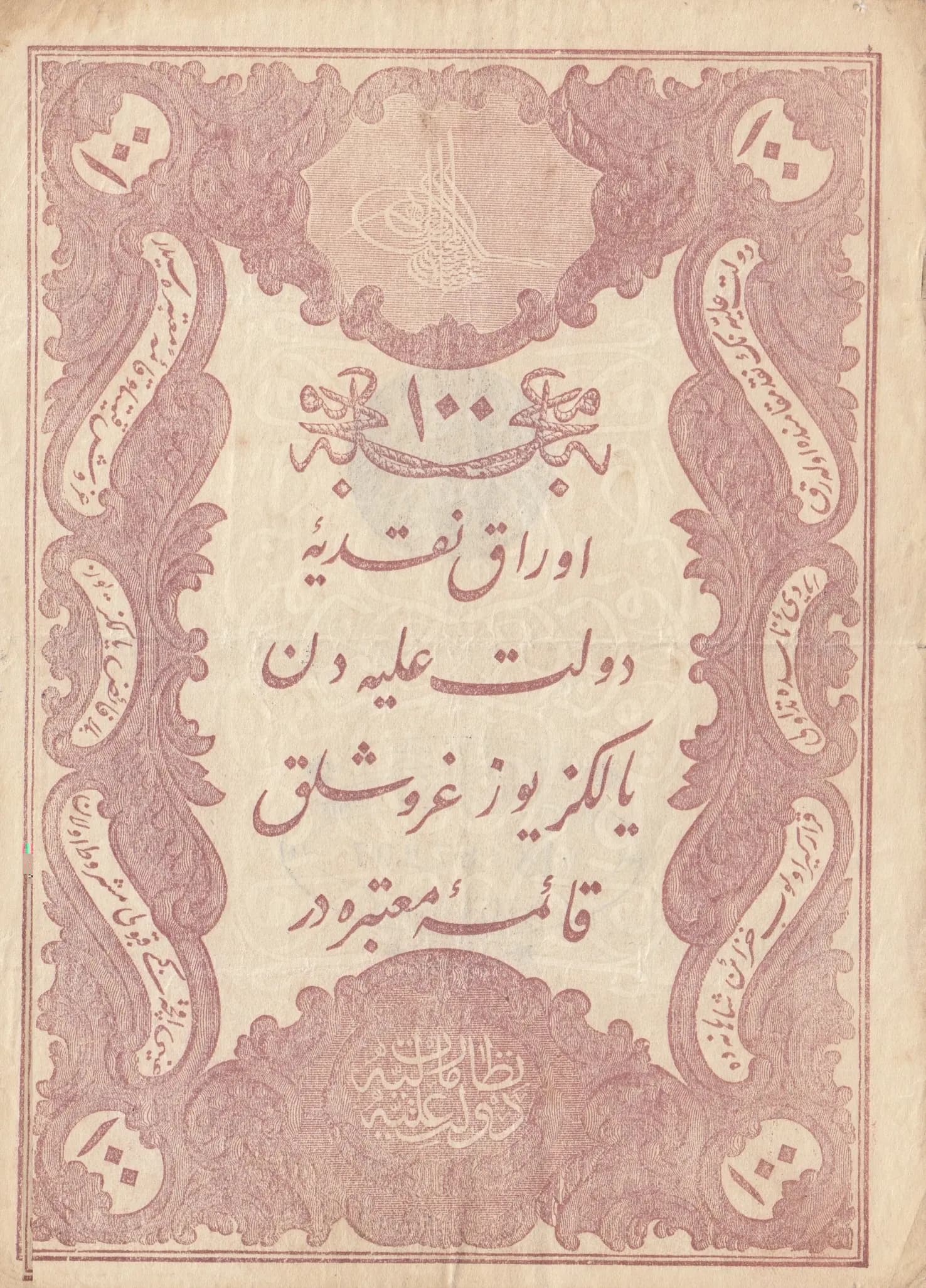
This is a VF-grade 100 Kuruş note from 1877, issued by the Banque Impériale Ottomane during the reign of Abdul Hamid II. The note displays the characteristic pink-mauve color scheme and ornate Ottoman design typical of this period, featuring the Sultan's tughra (imperial monogram) in the upper central medallion and winged figures flanking the crescent and star symbol. Despite age-related yellowing, foxing, and visible creasing, the intricate decorative borders and printed details remain relatively clear, making this an attractive example of late Ottoman currency design.
Common. This Pick 51a variety is a standard regular-issue note from the substantial 1876–1878 production run. Market data from realbanknotes.com indicates VF specimens have sold for $88 (2016), while EF examples reached only $82 (2019), with 2016 catalog values placing VF at $20–60 range. The readily available pricing data, moderate eBay transaction volume (20–32 bids per sale), and absence of any notation regarding limited printing or recall confirm this is a commonly encountered note among collectors. Variants exist (P-51b), but P-51a remains a standard issue with no scarcity premium.
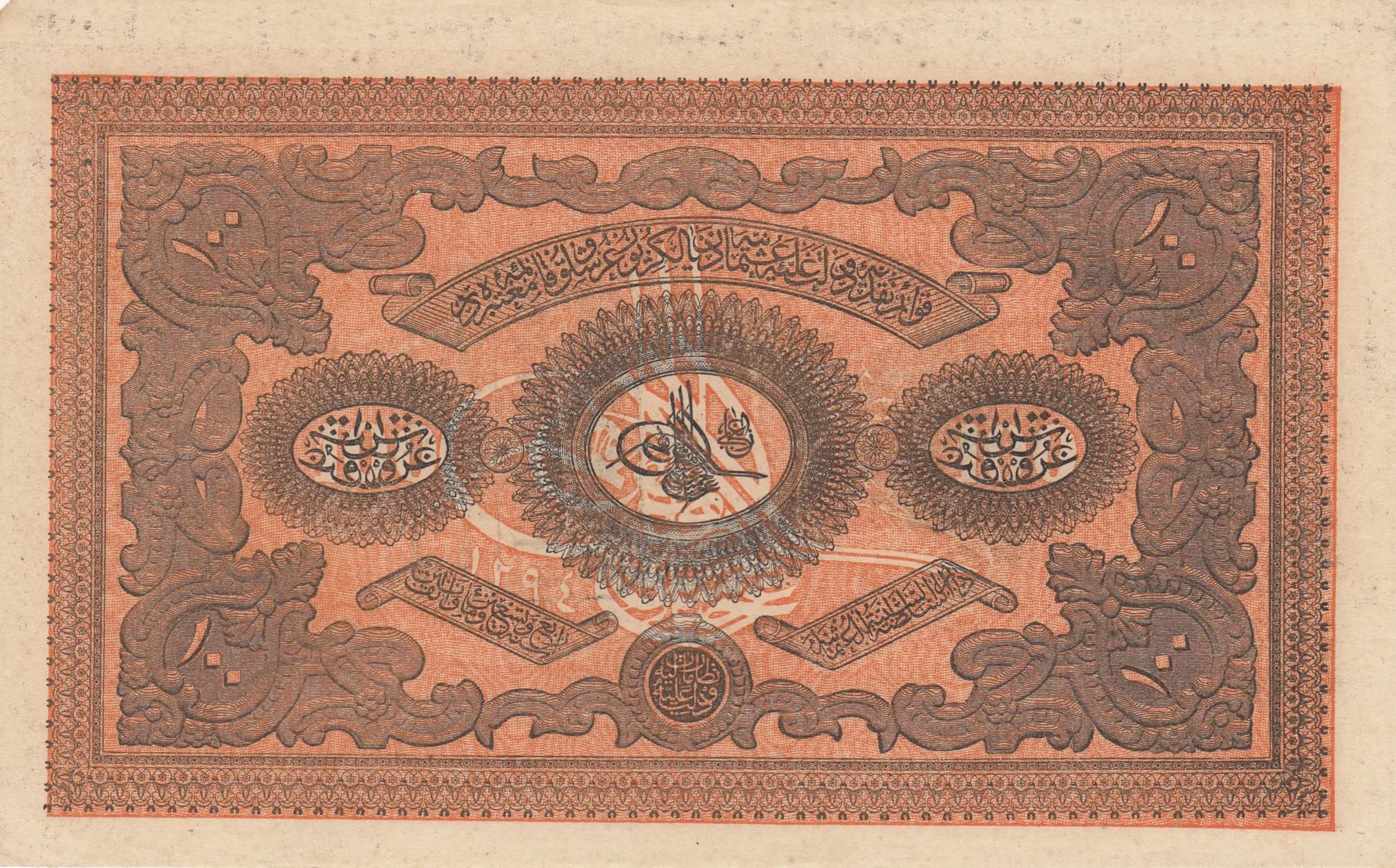
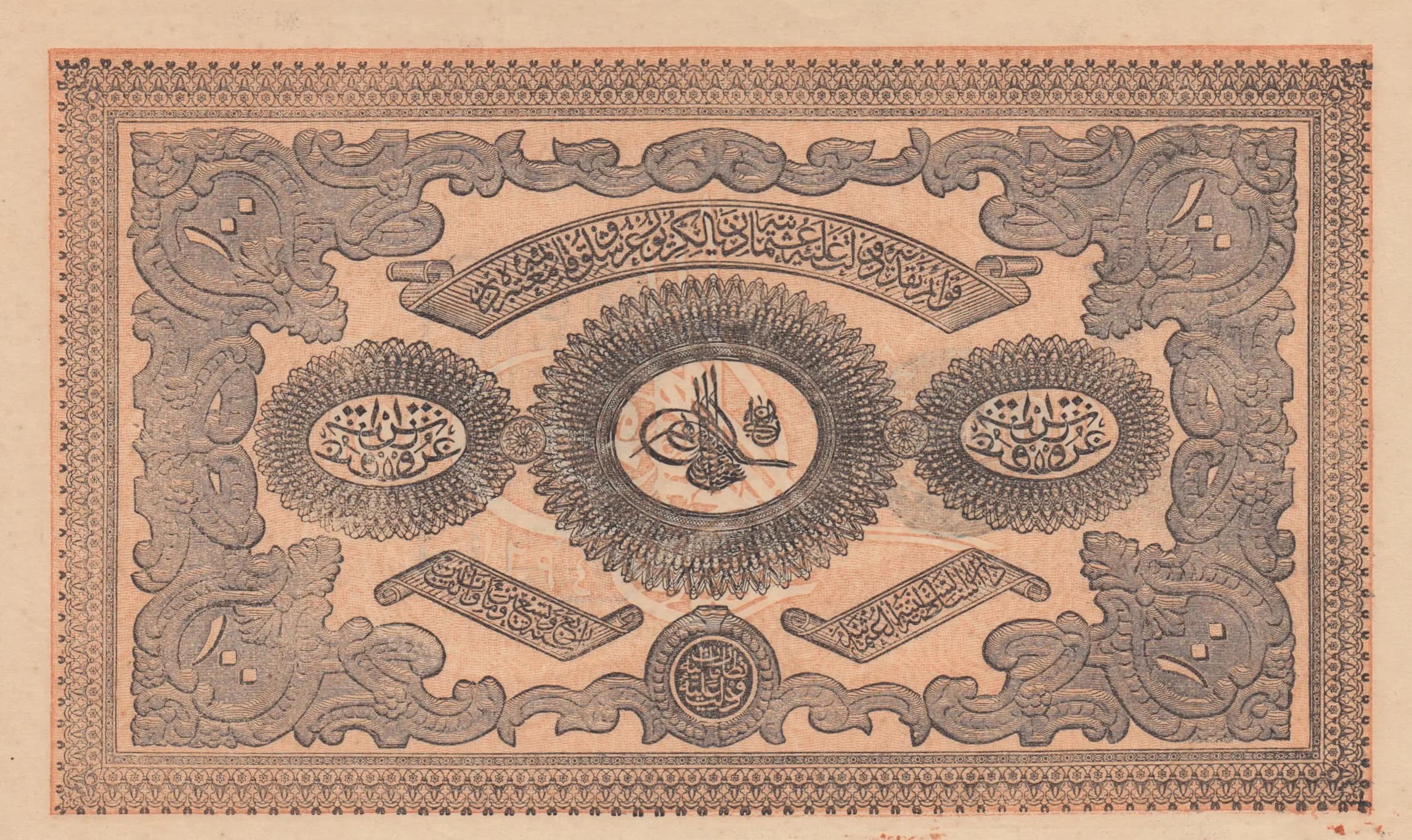
This note was issued during the reign of Sultan Abdul Hamid II (r. 1876–1909), a period of significant Ottoman financial reform and the establishment of modern banking institutions. The Banque Impériale Ottomane, founded in 1863, served as the primary currency issuer and central banking authority, as evidenced by the registration stamp on the reverse. The tughra of Abdul Hamid II prominently displayed on the obverse represents the Sultan's official seal and authority, while the crescent and star motifs underscore Ottoman Islamic sovereignty during a period of modernization and Western banking influence.
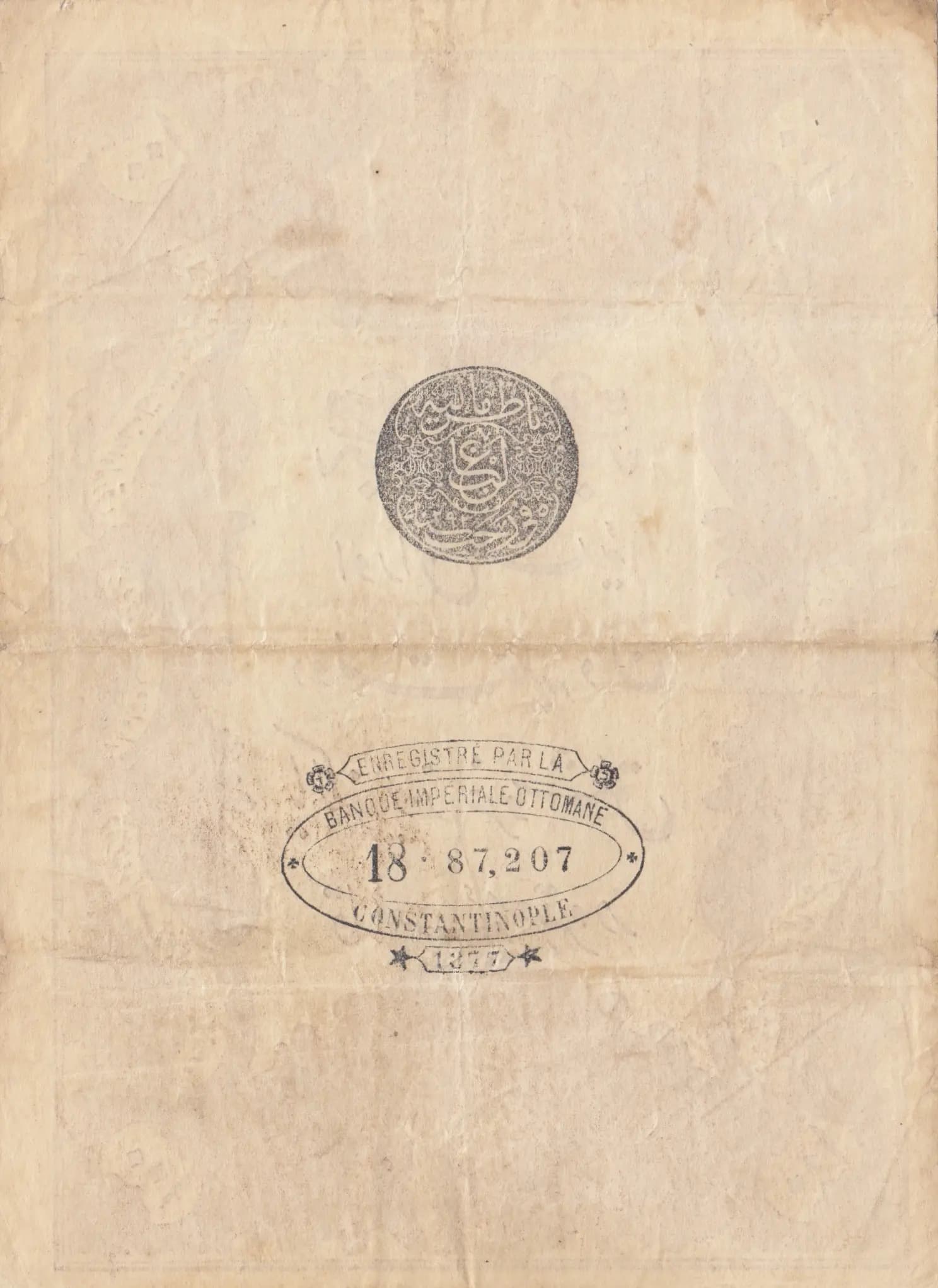
The obverse features an elaborate symmetrical design centered on the tughra (imperial monogram) of Sultan Abdul Hamid II, rendered in a circular medallion at the top. Below the tughra, two winged allegorical figures—representing cherubs or classical winged attendants—flank a central crescent and star symbol, which served as the emblem of Ottoman sovereignty. The entire design is framed by intricate scrollwork and floral patterns in a decorative border typical of mid-19th century Ottoman banknote production. The reverse is predominantly blank cream paper, allowing the official registration elements to stand out: a circular seal (Seal of Galip) in the upper center and an ornate oval registration stamp from the Banque Impériale Ottomane in the lower center. Denomination numerals (100) appear in all four corners of the obverse, and the vertical format is consistent with the P-51a variety.
OBVERSE (Front): The central Arabic/Ottoman Turkish inscriptions include: 'اوراق نقيه' (Evrak-ı Nakdiyye — Paper currency/banknote), 'دولت عليه دن' (Devlet-i Aliyye'den — From the Sublime State), 'الكويزيلباشي' (Hazine-yi Celil — Treasury/Exchequer), and 'قائم مقرور' (Kâim-i Makrûr — Valid/Current currency). Corner denominations read '100' in Arabic numerals. REVERSE (Back): French inscriptions frame the official registration: 'ENREGISTRE PAR LA BANQUE IMPERIALE OTTOMANE' (Registered by the Imperial Ottoman Bank), with the location 'CONSTANTINOPLE' and registration number '18·87,207' dated '1877'. The circular seal above contains Ottoman Turkish script representing the Seal of Galip (the bank's official seal).
This note was produced using engraved intaglio printing, characteristic of late 19th-century Ottoman banknotes. The fine line work, intricate scrollwork, ornamental borders, and detailed tughra indicate skilled engraving and copperplate printing techniques. The registration stamp on the reverse was applied separately, likely using a combination of letterpress and embossed methods. The Banque Impériale Ottomane contracted with European security printers for these notes; the high quality of execution suggests involvement of an established European banknote printer, though the specific printer name is not inscribed on this note.
This is cataloged as P-51a, featuring the tughra of Abdul Hamid II. The PMG population report confirms two variants exist for this base Pick number: P-51a and P-51b. According to the external catalog reference, similar notes from an earlier period (1876–1878) bear the tughra of Murad V (cataloged as TURKEY P-45), distinguishing those as a separate variety. The specific variety identification as P-51a is confirmed by the Abdul Hamid II tughra visible in the center medallion. The registration number '18·87,207' on the reverse and the AH1293 handstamp marks are consistent with the documented issue characteristics of P-51a.