100 kurus 1877
Market Prices
2 salesAbout This Note
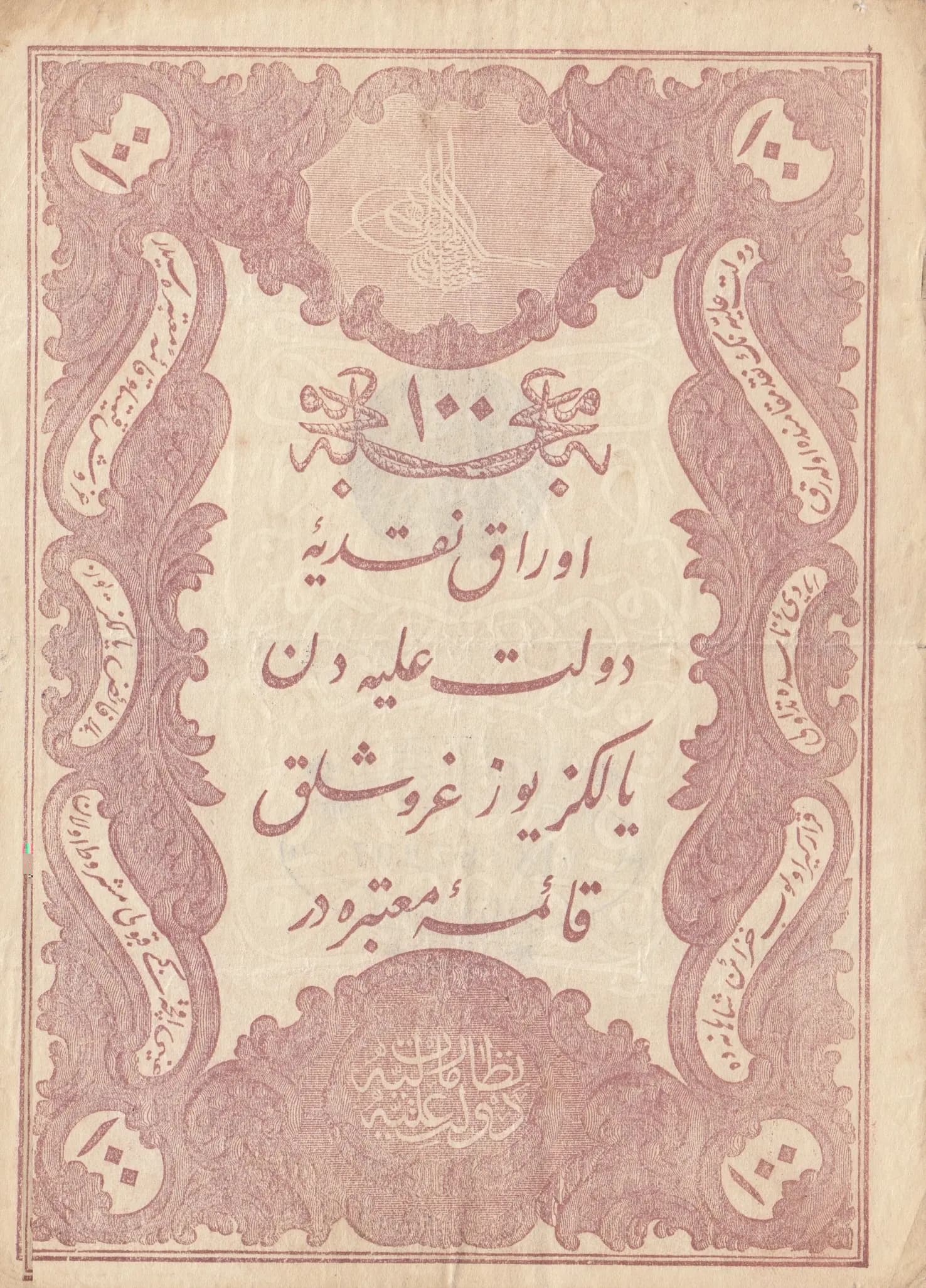
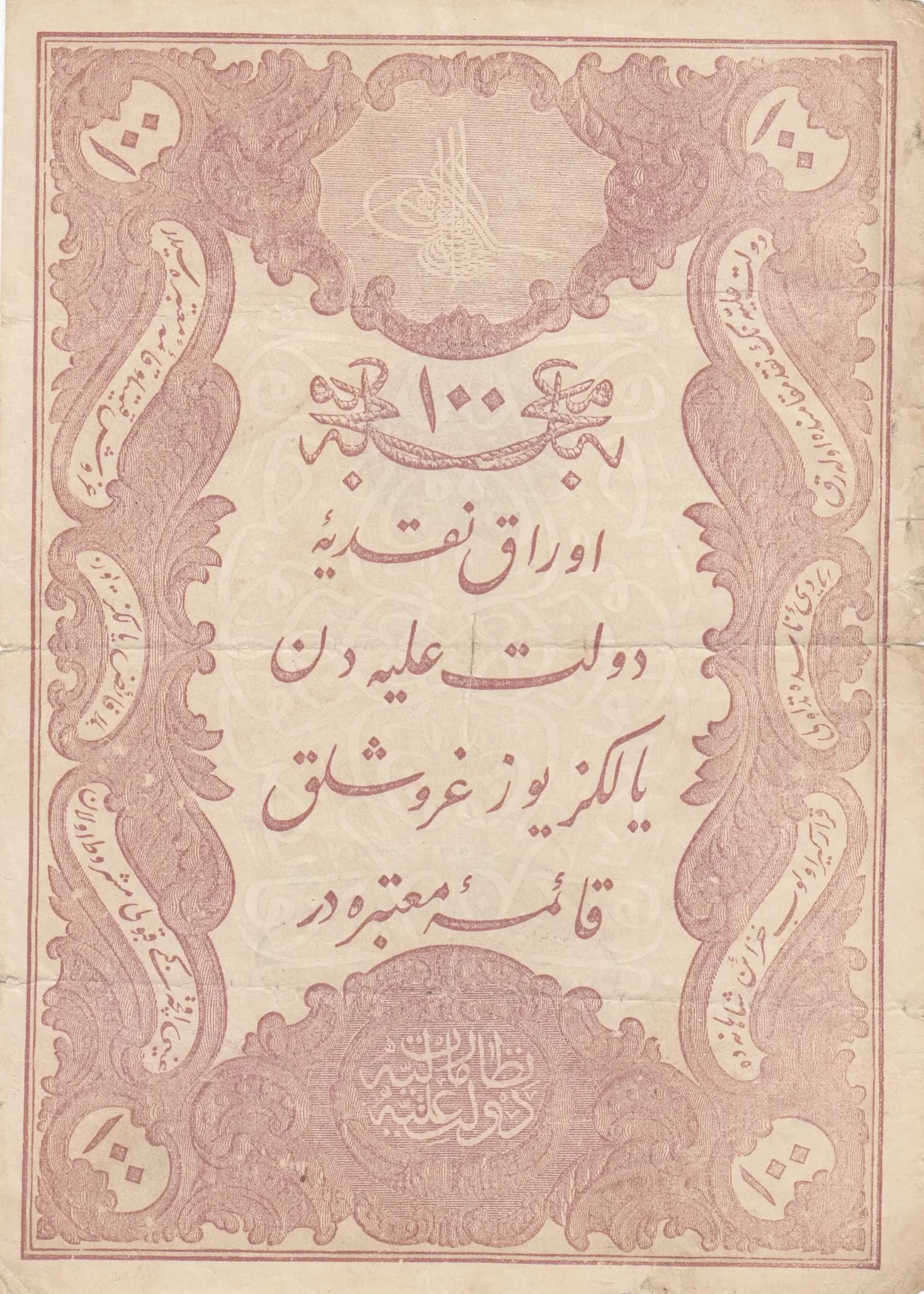
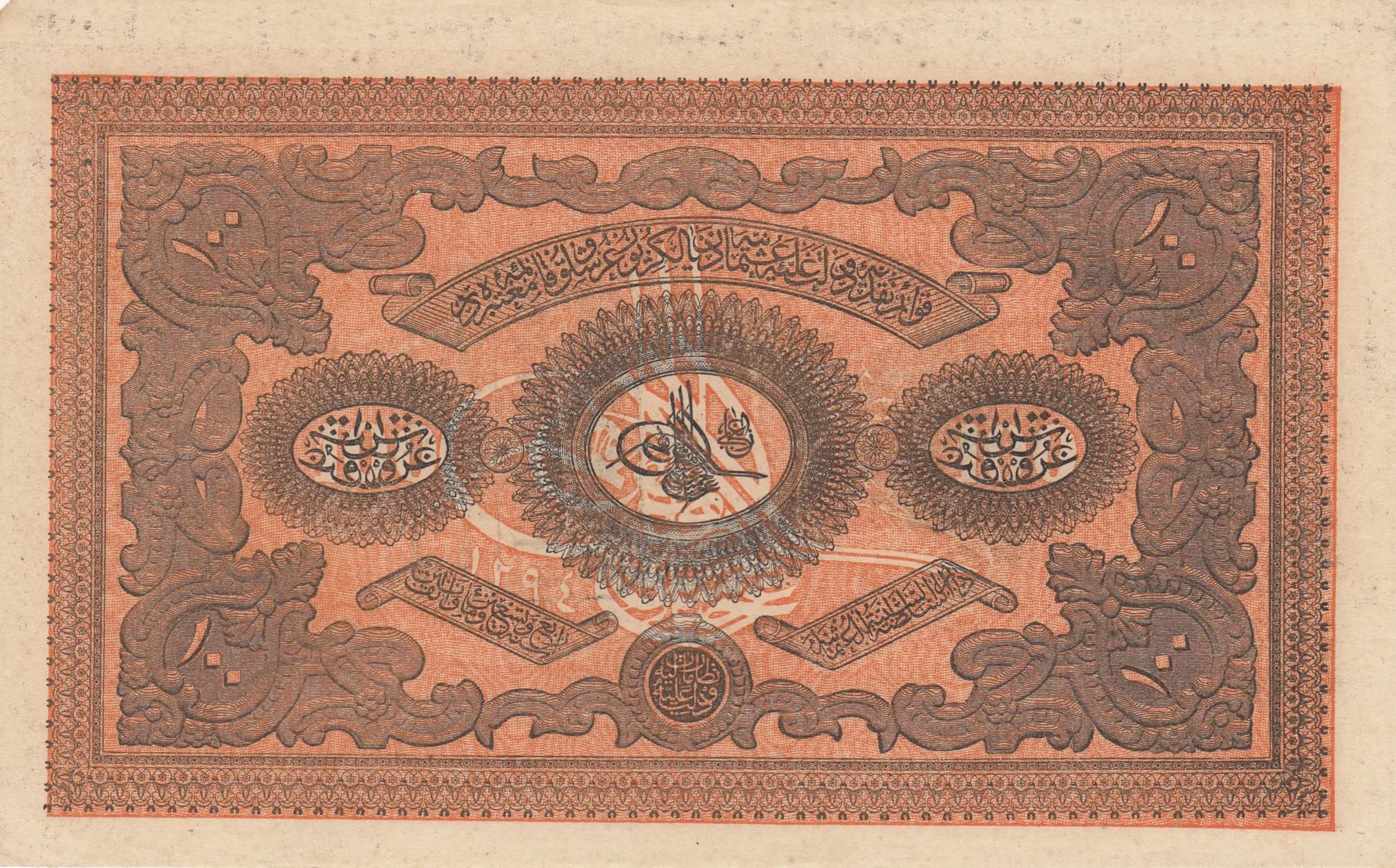
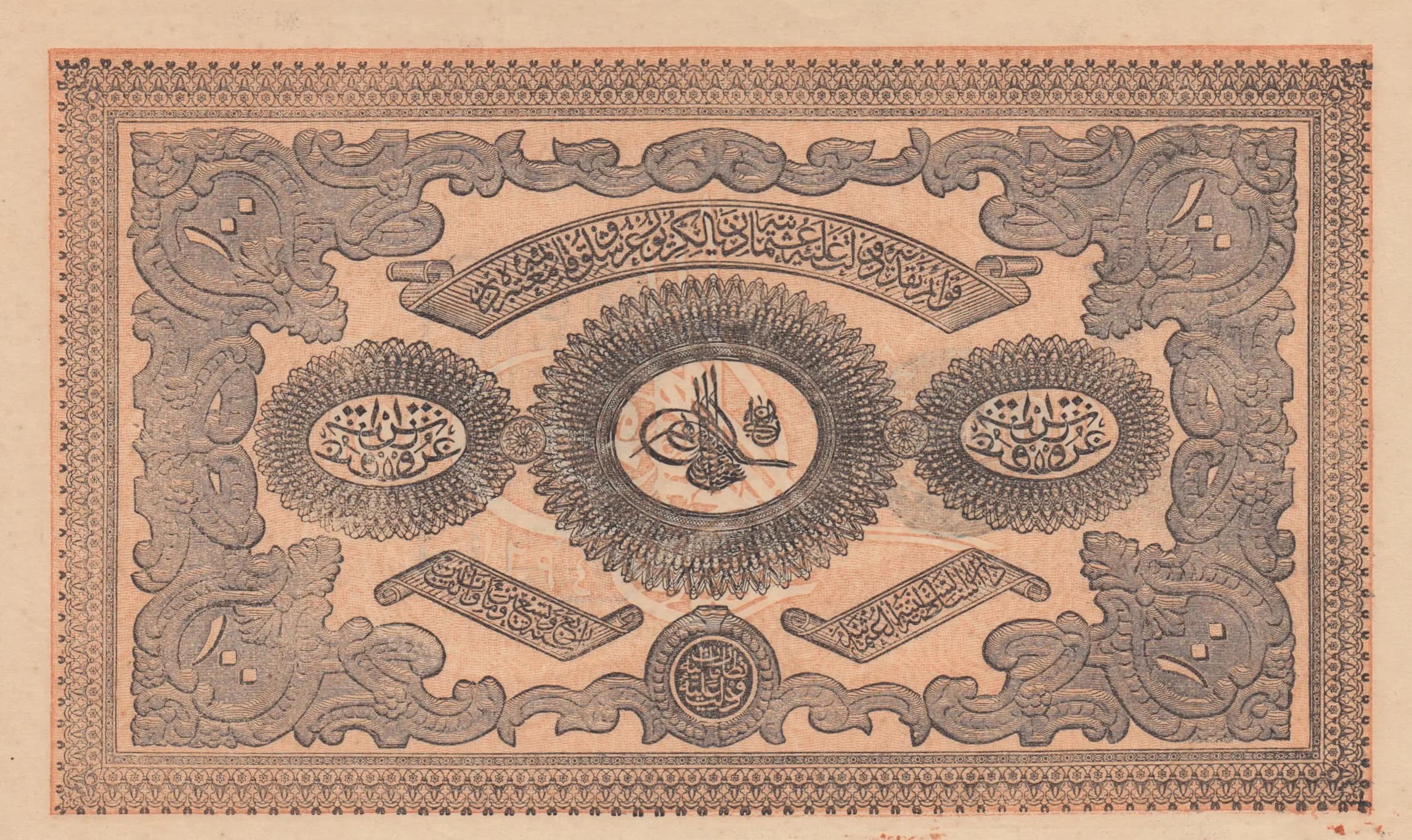
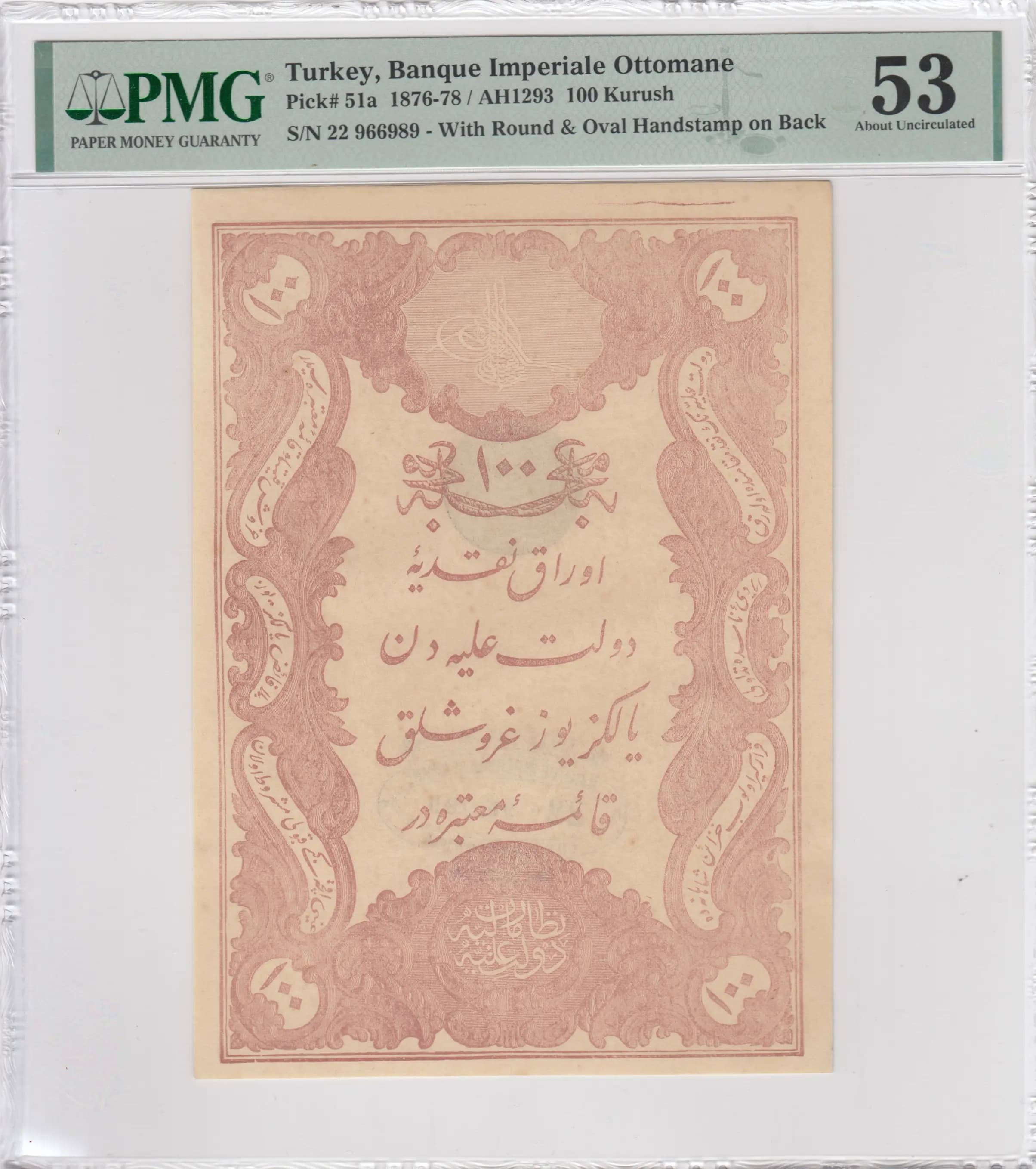
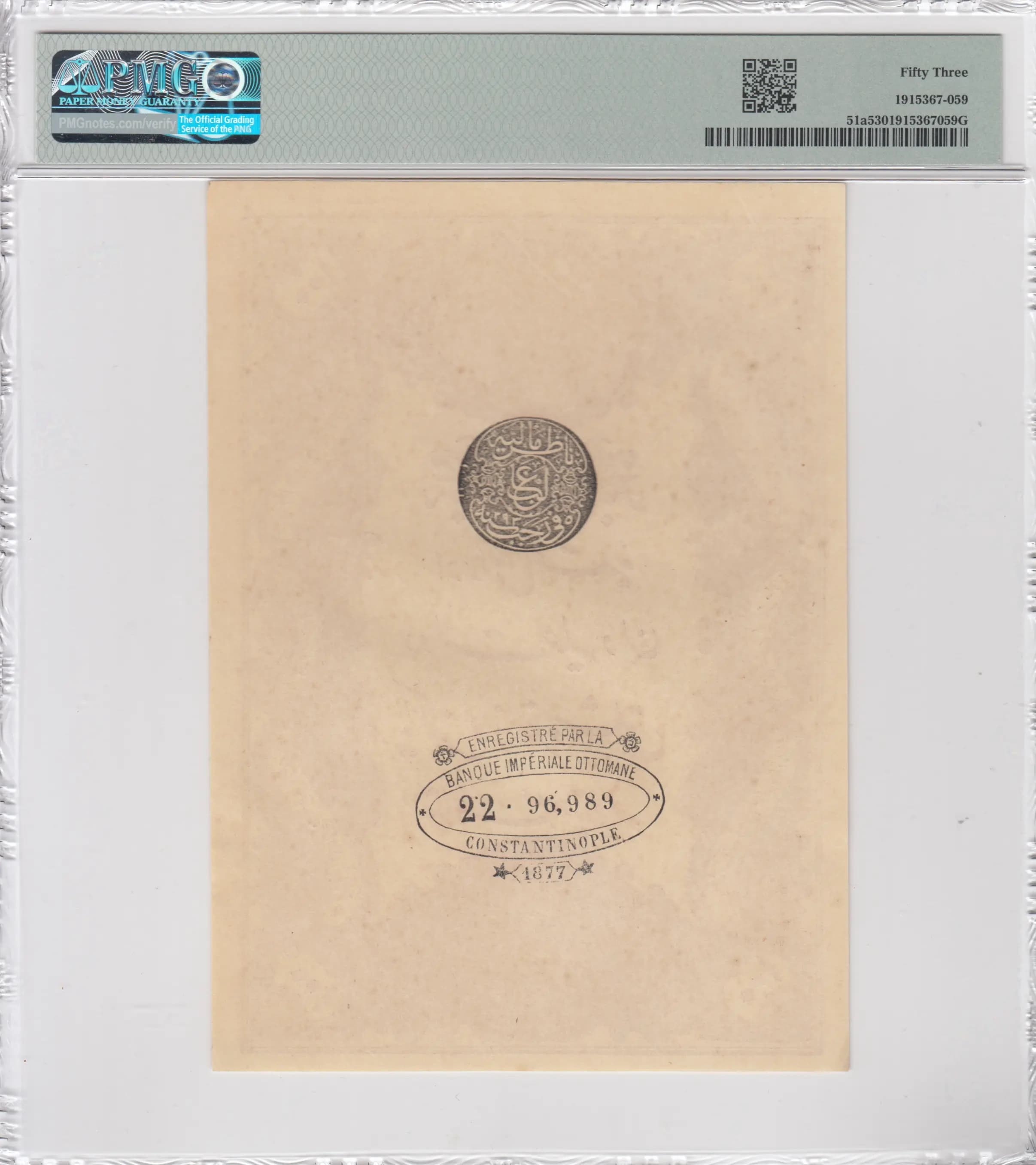
This is a striking example of an Ottoman Imperial Bank 100 Kuruş note from 1877, graded PMG 53. The obverse features elaborate rose-mauve floral and geometric ornamental borders on a cream background, with the denomination clearly marked in all four corners. The reverse displays a minimalist design with the Ottoman Imperial seal and a French-language registration stamp, reflecting the cosmopolitan nature of Ottoman banking during the late 19th century. The note exhibits remarkably clean surfaces with no visible circulation wear, though the PMG grade of 53 indicates minor imperfections consistent with handling during the grading process.
Common. This Pick 51a variety was part of the regular issue series (AH 1293-1295 / 1876-1878) and circulated widely during its period of issue. Comparative market data shows even EF-graded examples selling for $60-$82 on eBay, with lower grades trading for $6-$20, consistent with common banknotes. The PMG population report indicates multiple catalogued variants (P-51a and P-51b), suggesting reasonable availability across the variants. While early Ottoman Imperial Bank notes have collector appeal, this denomination and variety do not show the pricing patterns or scarcity indicators of rare issues.
This banknote was issued during the reign of Sultan Abdul Hamid II (r. 1876-1909), whose tughra (imperial seal) appears on the obverse as shown in the visual analysis. The Banque Impériale Ottomane, chartered in 1863, was the Ottoman Empire's central banking authority and sole issuer of banknotes during this period. The use of French inscriptions on the reverse ('ENREGISTRE PAR LA BANQUE IMPERIALE OTTOMANE') reflects the significant French financial influence in the Ottoman economy and the cosmopolitan nature of Constantinople's banking elite in the late 19th century.
The obverse features an elegant ornamental composition dominated by symmetrical floral scrollwork in rose-mauve ink, creating decorative borders on the left and right sides. Ornamental cartouches appear at top and bottom center, containing the Ottoman Turkish text identifying the note's origin and purpose. The corners display the denomination in Arabic numerals. The reverse presents a minimalist design with the Ottoman Imperial tughra (seal) centrally positioned in the upper portion, below which sits an oval registry stamp with decorative border containing the institutional marking and serial information in French. The overall design reflects late 19th-century European banknote aesthetics adapted to Ottoman institutional requirements, with the focus on ornamental security features rather than portraiture.
FRONT: Arabic/Ottoman Turkish inscription reading 'اوراق نقودیہ دولت علیہ دولت عثمانیہ قسطنطونیہ' translates to 'Banknote of the Ottoman State, Constantinople.' Denomination marked as '100' in Arabic numerals at corners. BACK: French inscription 'ENREGISTRE PAR LA BANQUE IMPERIALE OTTOMANE' translates to 'Registered by the Ottoman Imperial Bank.' Additional inscriptions include 'CONSTANTINOPLE,' the date '1877,' and serial/registry reference '22 . 96,989.'
The note was produced using multi-color lithography, a common technique for banknotes of this era. The two-color printing scheme (rose-mauve and black/dark gray inks on cream stock) is characteristic of Ottoman Imperial Bank issues from this period. The intricate geometric and floral patterns throughout, combined with fine line work in the center medallion and decorative borders, represent sophisticated lithographic work designed to deter counterfeiting. The precision of the ornamental borders and the quality of the color registration indicate production by a skilled security printer; Ottoman notes of this period were often printed by European firms such as Bradbury, Wilkinson & Company or De La Rue, though specific printer attribution would require archival research.
This note is catalogued as Pick 51a, with a known variant Pick 51b also catalogued by PMG. The external catalog reference notes that similar notes exist with the tughra of Murad V (Pick 45) versus Abdul Hamid II (this note, Pick 51a), representing the primary distinguishing variety for 100 Kuruş notes from this series. The visible AH1293 handstamp and oval handstamp on the back, as described in the visual analysis, are characteristic features of the P-51a variety. The date marking of 1877 and the specific registration oval with serial reference '22 . 96,989' are consistent with documented examples of this pick number.