10 lira 1953
Market Prices
4 salesAbout This Note
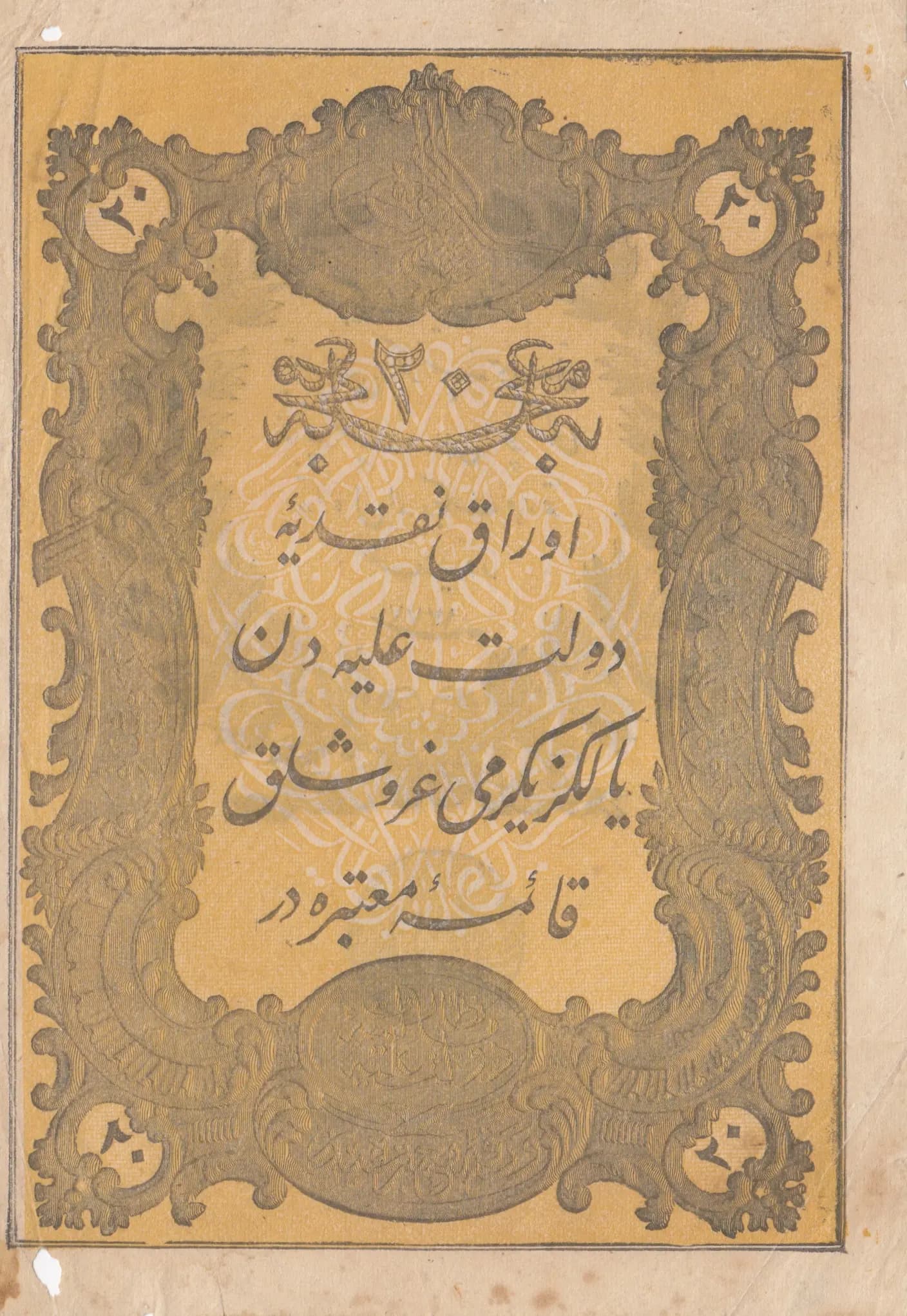
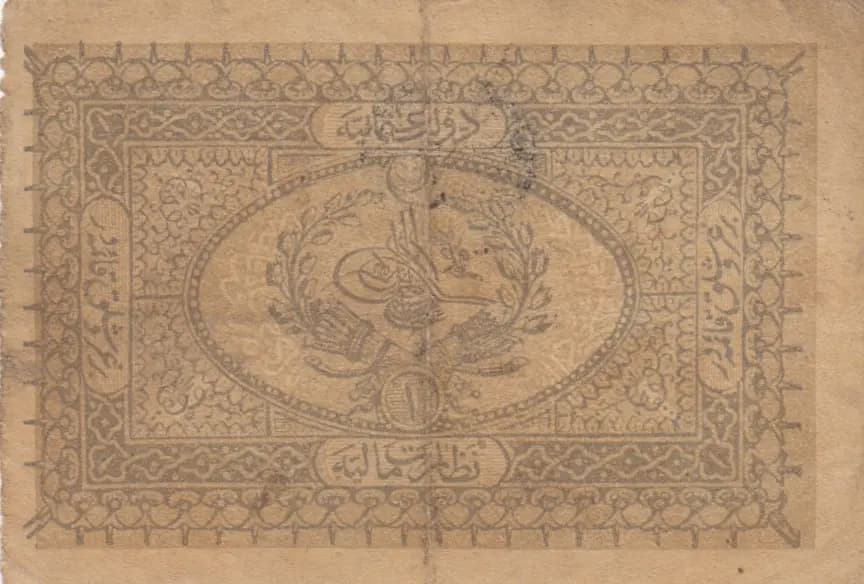
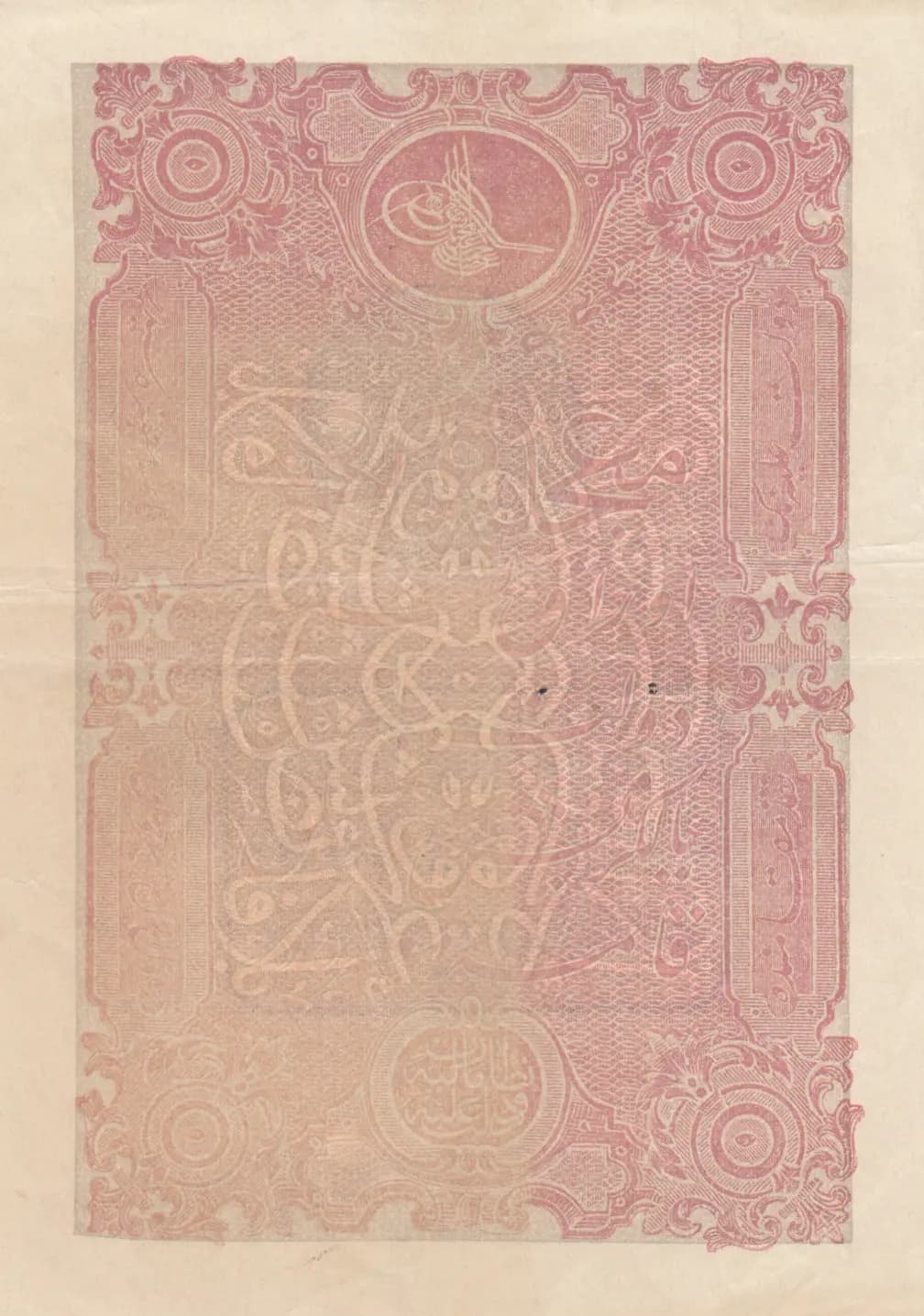
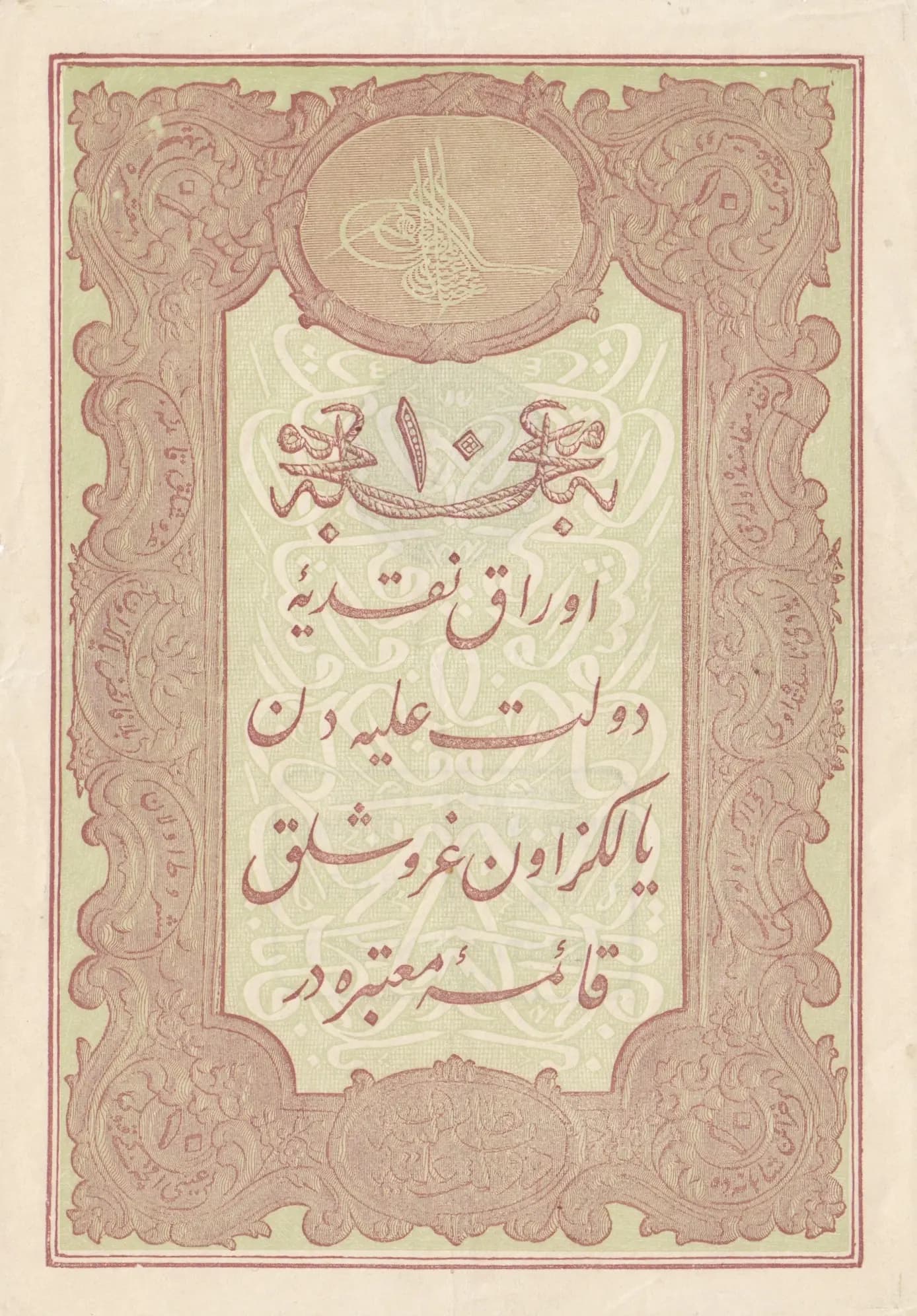
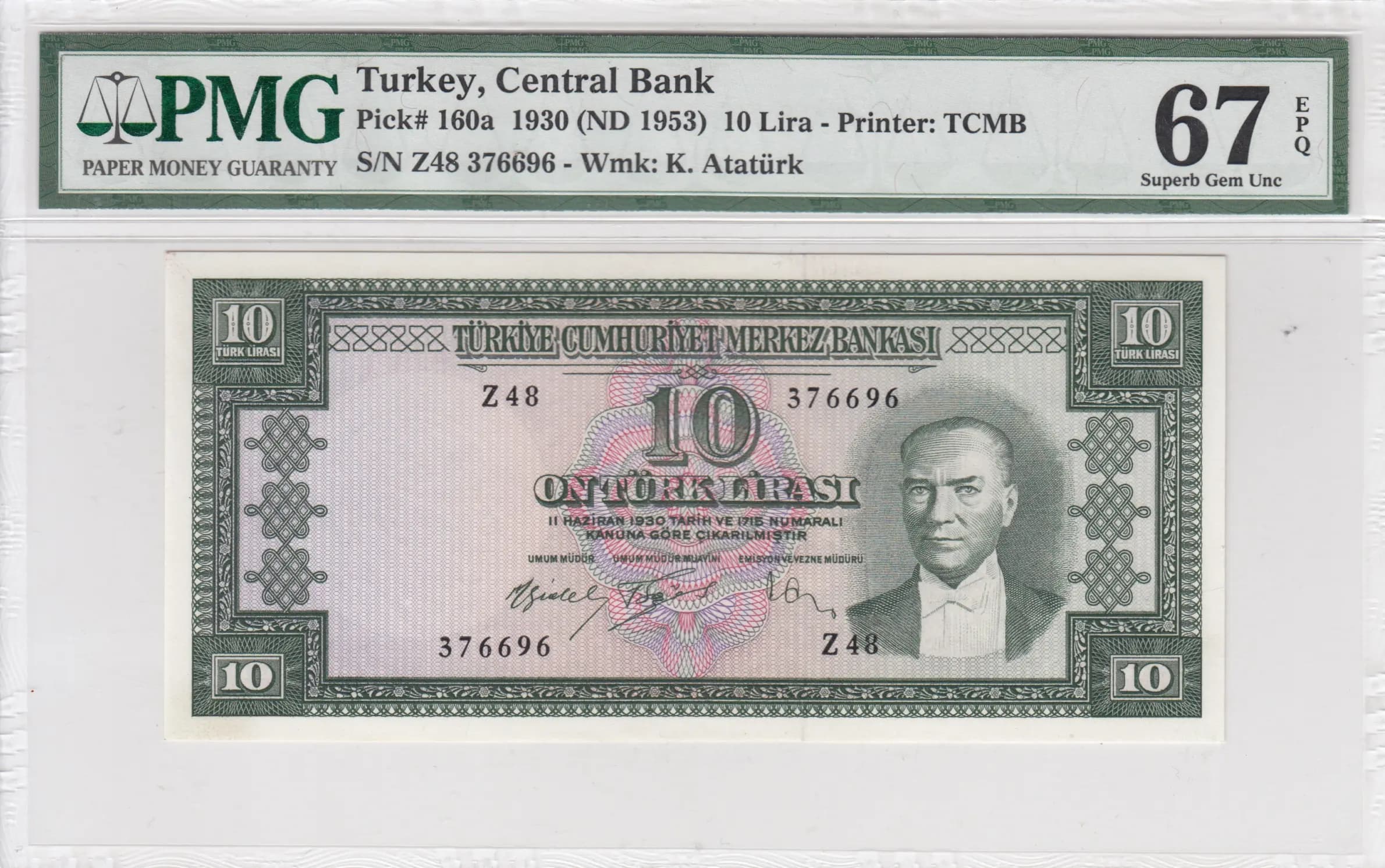
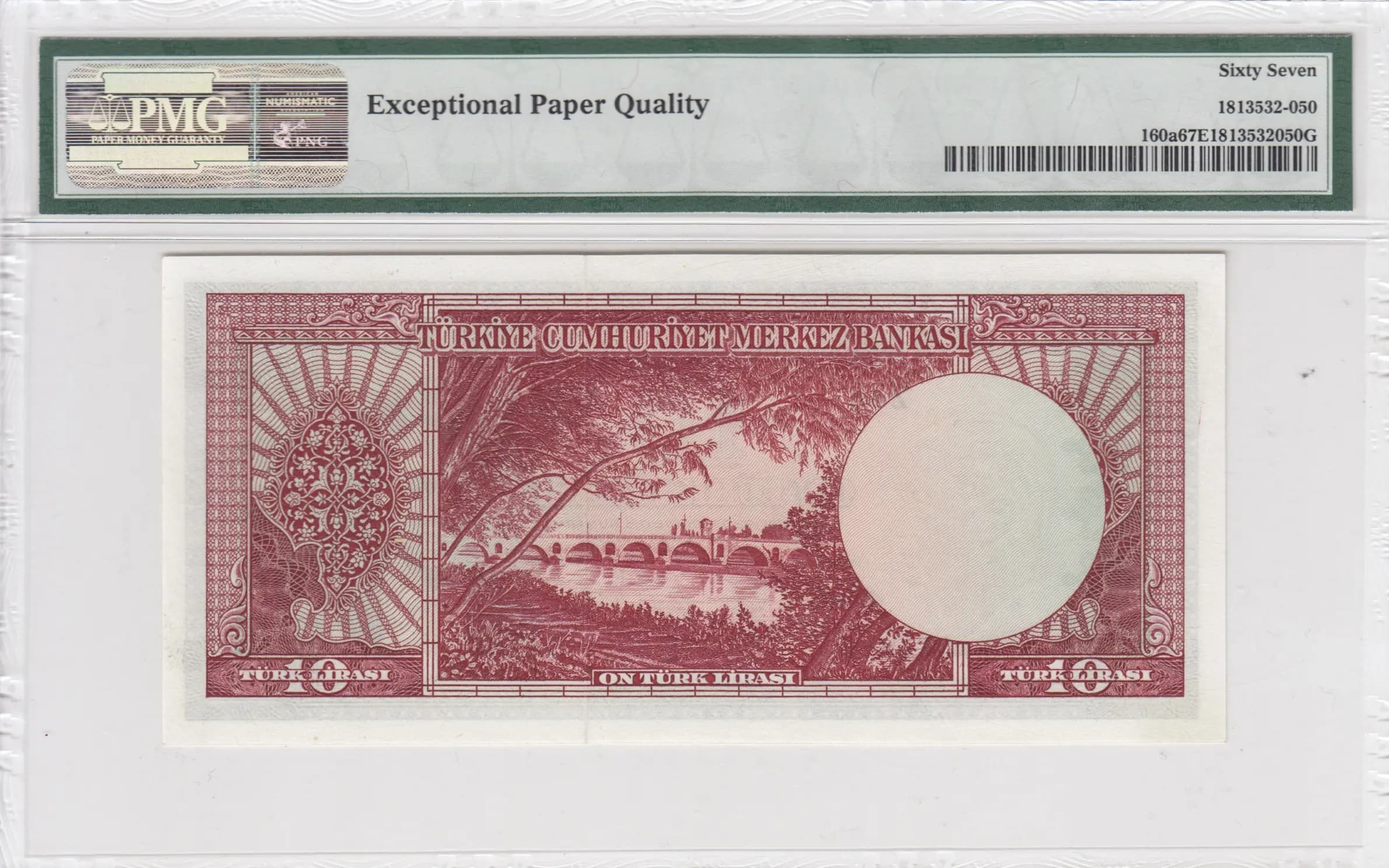
This is an exceptional example of the Turkish 10 Lira 1953 issue (Pick P-160a), graded PMG 67 EPQ (Superb Gem Uncirculated). The note features a striking portrait of President Mustafa Kemal Atatürk on the obverse in formal attire, complemented by an ornate green and pink color scheme with elaborate geometric borders typical of mid-20th century Turkish currency design. The reverse presents a picturesque landscape scene of a bridge spanning the Meriç River near Edirne in a rich maroon-red palette, representing the nation's infrastructure and geography.
Common. The eBay market data provided shows consistent availability with regular sales in the $10.50-$21.50 range for circulated examples (F-VF grades), with catalog values in the $25-$75 range for similar conditions. The note is not recalled or rare; it represents standard currency from a major issuing authority. The PMG 67 EPQ grade, while representing an exceptional specimen, does not indicate rarity of the note type itself—rather, this grade reflects superior preservation of an otherwise common issue.
This banknote was issued during the early years of the Turkish Republic's modern monetary system, authorized by Law No. 1715 dated June 11, 1930. The prominence of Atatürk's portrait reflects his status as the founding father and president of the Turkish Republic, while the bridge imagery celebrates the nation's development and the modernization projects undertaken during this period. The note's sophisticated design demonstrates Turkey's transition to contemporary banking practices in the post-war era.
The obverse features President Mustafa Kemal Atatürk portrayed in formal attire (white shirt and dark jacket) positioned prominently on the right side. The note's primary colors are green and pink/red with elaborate Islamic geometric border patterns and ornamental rosette designs in all four corners. Denomination numerals '10' appear in each corner. The reverse depicts the Meriç River Bridge near Edirne, a significant infrastructure landmark in European Turkey, rendered in a maroon-red color scheme. The landscape scene includes natural vegetation and water features, framed by matching ornate geometric borders. Both sides incorporate fine engraved details and radiating fan-like patterns characteristic of high-security currency design of the period.
FRONT: 'TÜRKIYE CUMHURİYET MERKEZ BANKASI' (Central Bank of the Turkish Republic) | 'ON TURK LİRASI' (Ten Turkish Lira) | 'TURK LİRASI' (Turkish Lira) | 'II HAZIRAN 1930 TARIH VE 1715 NUMARALI KANUNA GÖRE ÇIKARILMIŞTIR' (Issued according to the law dated June 11, 1930 and numbered 1715) | Series/Block number: Z 48 | Serial number: 376696. BACK: 'TÜRKIYE CUMHURİYET MERKEZ BANKASI' (Central Bank of the Turkish Republic) | 'ON TURK LİRASI' (Ten Turkish Lira) | 'TURK LİRASI' (Turkish Lira)
Intaglio engraving (recess printing), the standard security printing method for Turkish banknotes of this era. The fine line work, detailed landscape rendering, and ornate decorative patterns visible in the visual analysis are consistent with steel plate engraving. The printer was TCMB (Türkiye Cumhuriyet Merkez Bankasi), which maintained its own printing facilities for currency production.
This note is identified as Pick P-160a without the word 'SERİ' prefix on the block number, distinguishing it from related varieties P-156 and P-157 which include 'SERİ' designation. The series prefix 'Z' and block number '48' observed on this specimen are consistent with documented varieties for P-160a. The red color on the reverse is the characteristic marking for this Pick number (P-160a), with similar designs but different back colors found in P-159 and P-161.