1 livre 1917
Market Prices
10 salesAbout This Note
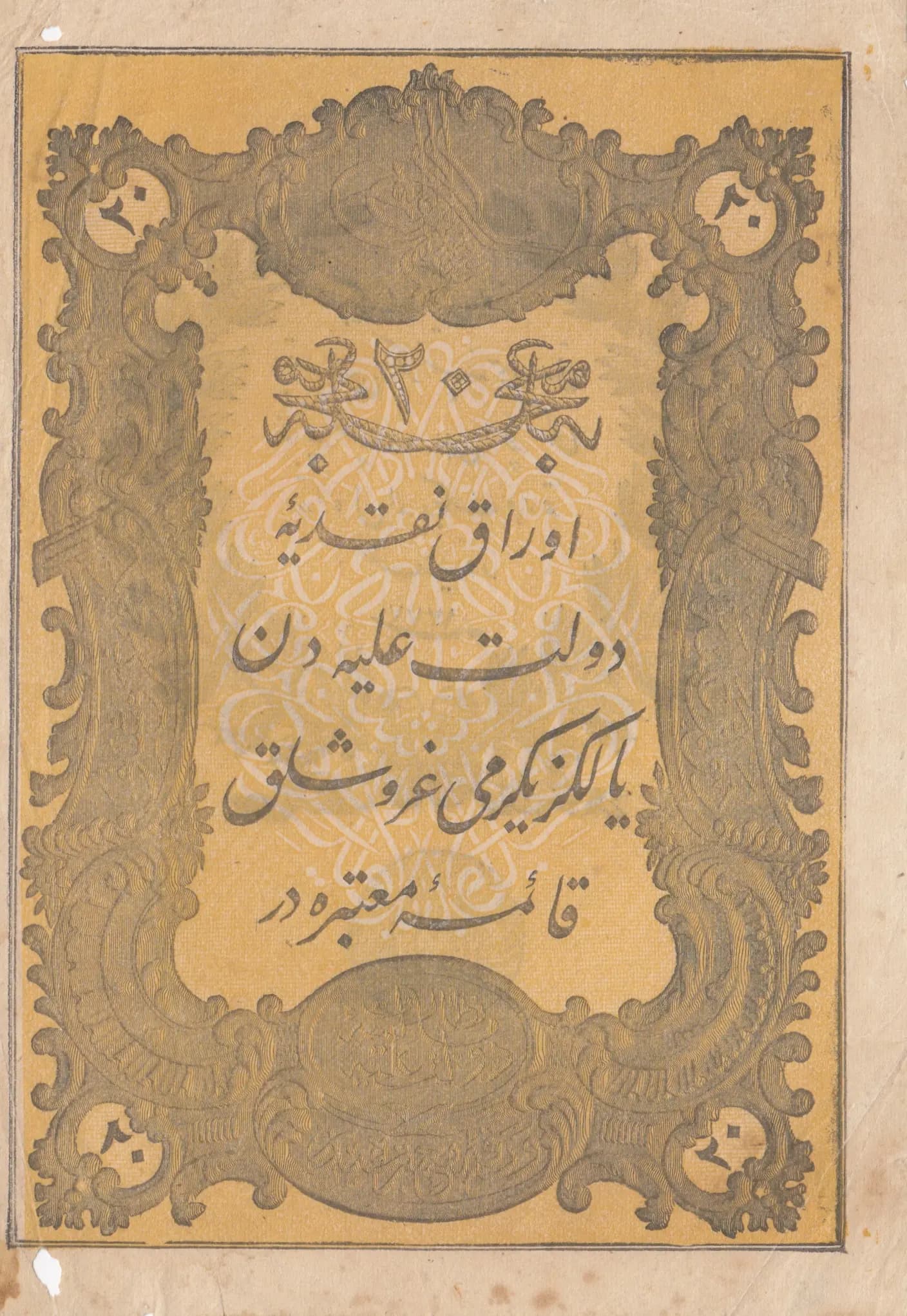
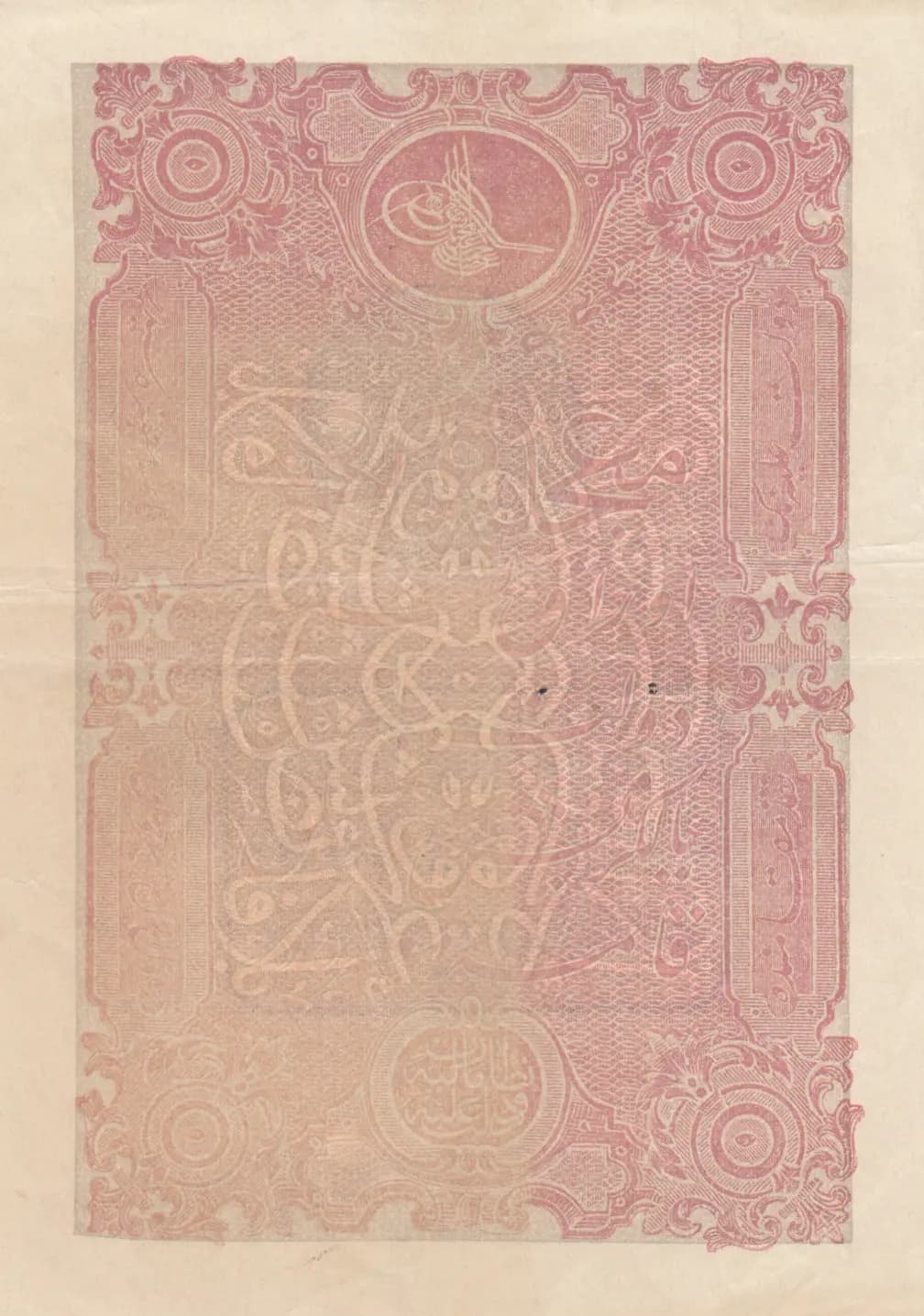
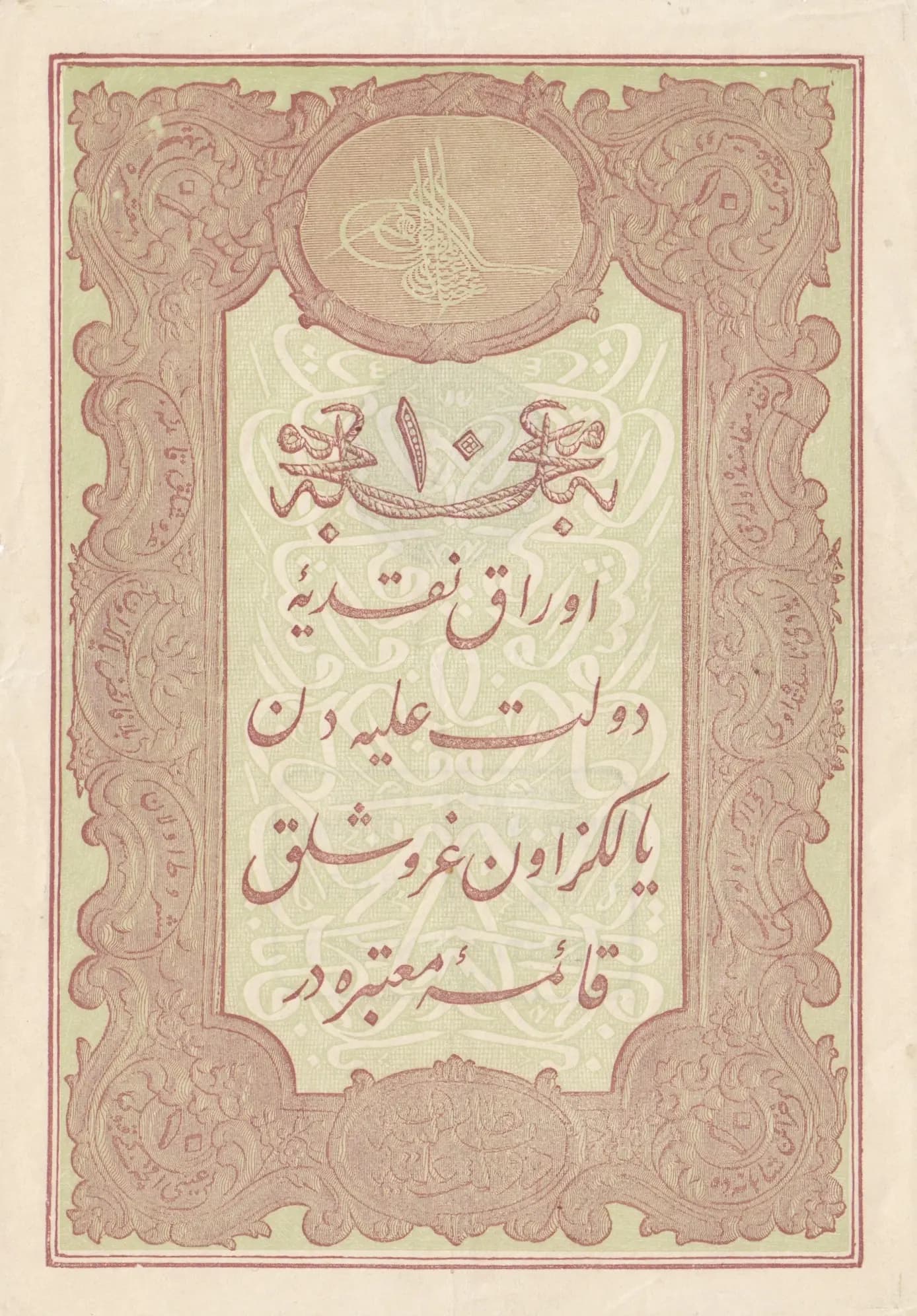
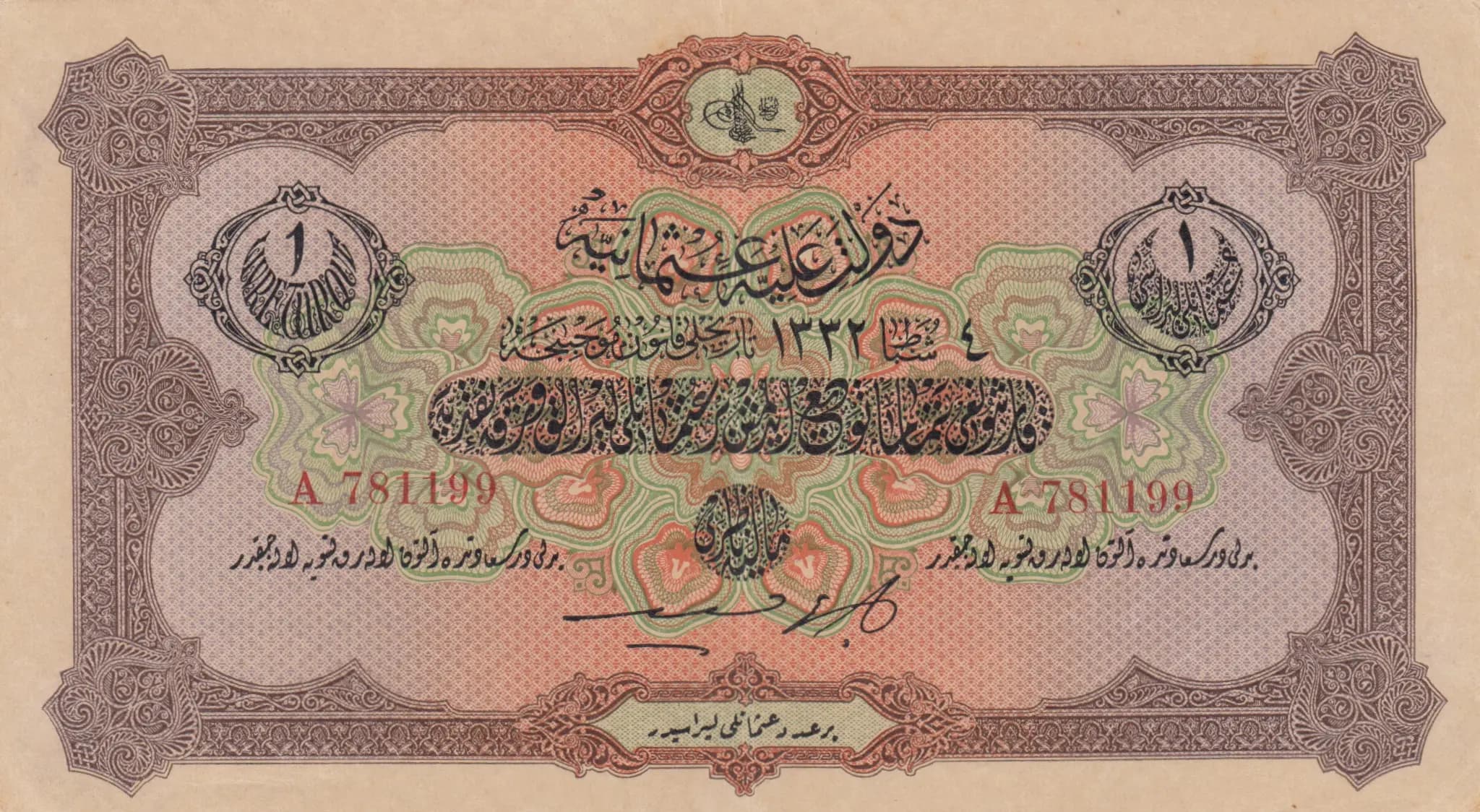
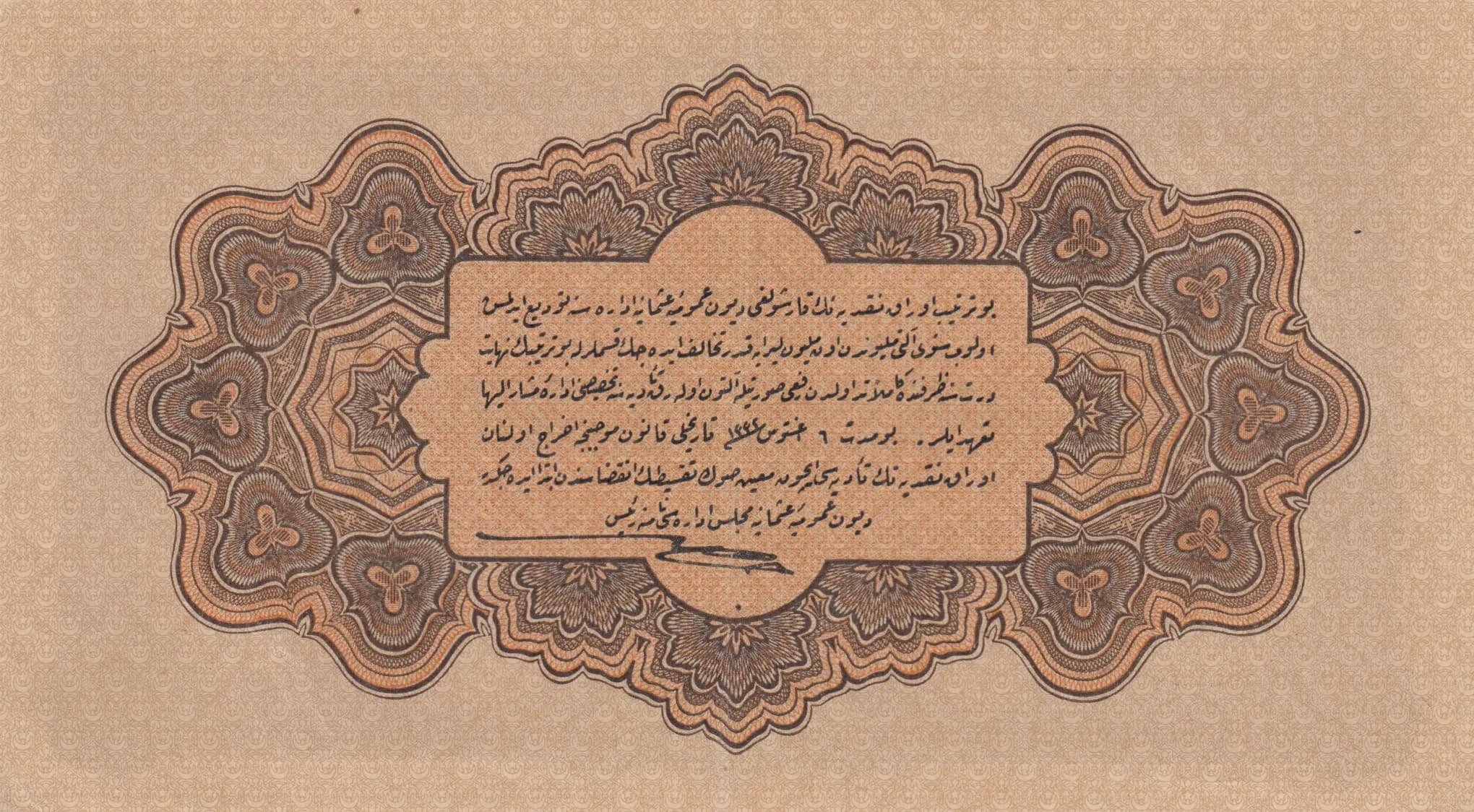
This is an EF-grade 1 Livre banknote from the Ottoman Empire's Dette Publique Ottomane, dated 1917 (L. 1332 RC). The note displays the characteristic ornate Islamic geometric and floral design typical of late Ottoman currency, with a pinkish-red obverse featuring circular Ottoman crescent and star emblems and an imperial tughra seal, complemented by a cream-colored reverse entirely devoted to legal text in Ottoman Turkish script. Despite over 100 years of age, the note shows excellent preservation with minimal creasing, clear legibility of all text and decorative elements, and only expected paper aging, making it a desirable example for collectors of Ottoman numismatic history.
Common. The eBay price history provided shows consistent market activity across multiple condition grades (VG at $2.25 to PMG 64 at $471.02), with EF examples selling in the $46-$77 range across different time periods, indicating steady but not exceptional collector demand. Regular issue status combined with apparent decent survival rates and recurring auction appearances suggest this is a commonly available note in the collector market. The relatively modest pricing even for higher grades compared to rarer Ottoman issues confirms common status.
This note was issued during the final decade of the Ottoman Empire, when the Dette Publique Ottomane (Ottoman Public Debt Administration) managed the empire's currency following fiscal reforms. The use of the RC (Rumi Takvim/Roman Calendar) dating system—visible as L. 1332—reflects the Ottoman fiscal calendar based on the solar year, which differed from the Islamic Hijri calendar and demonstrates the administrative modernization efforts of the late empire. The elaborate Ottoman crescent and star emblems and the imperial tughra depicted on the obverse represent the official authority of the Ottoman sultanate during a period of significant political and economic transition.
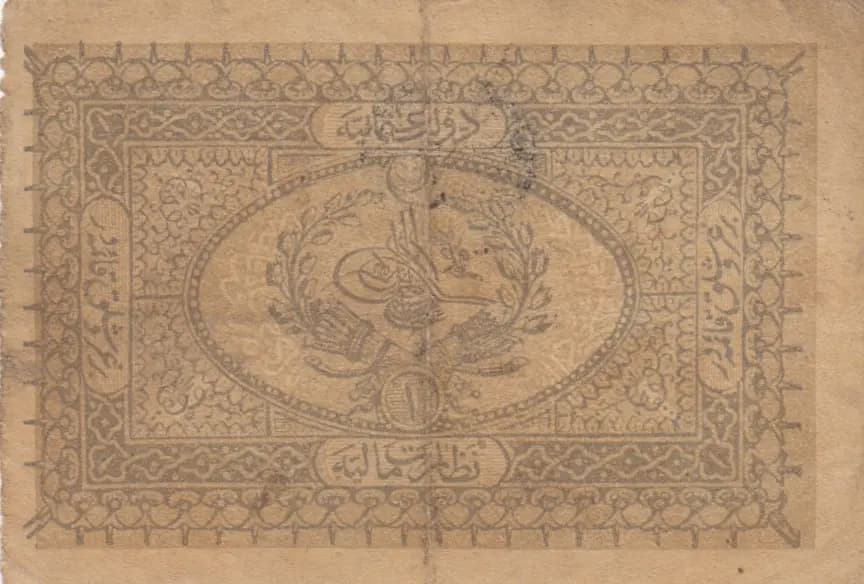
The obverse features an ornate rectangular frame composed of intricate Islamic geometric patterns and floral arabesques rendered in brown against a cream background, enclosing a central pinkish-red field with green accents. Two circular emblems flank the design—one on each side—containing the Ottoman crescent and star symbol with the numeral '1' indicating the denomination. At the top center sits an oval medallion containing the Ottoman imperial tughra (the sultan's official seal/signature), a crucial symbol of state authority. All text is rendered in black ink using Ottoman Turkish calligraphy in Arabic script. The reverse abandons decorative imagery entirely, instead presenting a large ornamental cartouche or tablet frame with elaborate brown Islamic geometric and star-pattern borders, within which is printed multiple lines of Ottoman Turkish legal text in black on cream background. The overall design philosophy emphasizes administrative authority and legal legitimacy through ornate typography and geometric design rather than portraiture.
OBVERSE: The primary inscription in Ottoman Turkish (Arabic script) reads approximately: 'One Livre certificate/note' (درواغ شاهتروسی وثیقہ). The date notation shows 'L. 1332' (تاریخ ۱۲۳۲), corresponding to 1916-1917 in the Gregorian calendar. The serial number 'A 781199' appears in Latin characters in both lower corners. REVERSE: The reverse contains extensive Ottoman Turkish legal text in Arabic script, constituting an official declaration of the note's validity and authority. The text appears to be a formal proclamation regarding the banknote's legal status and terms of use under Ottoman governmental authority, typical of official currency declarations of the period. The full reverse text is a multi-paragraph legal/administrative statement affirming the note's legitimacy and acceptance throughout the Ottoman realm.
This note was produced using multi-color letterpress or lithographic printing, evidenced by the distinct color separations visible in the obverse (brown frame, pink-red field, green accents, and black text) and the precise registration of the ornamental borders. The fine-line work in the geometric patterns and the clarity of the Ottoman calligraphy suggest skilled engraving and printing. The watermark (fork pattern, as noted in catalog data) was incorporated during the paper manufacturing stage. The specific printer for P-99 notes of this period was typically the Ottoman state printing works, though some issues from this era were produced by European security printers; the technical quality visible here is consistent with professional state-level production of the period.
This note is cataloged as P-99 (or P-99b variant designation in PMG records). The serial number visible on the example is 'A 781199', indicating the 'A' series prefix. The date notation 'L. 1332' (Rumi Calendar) with the specific reference date of 04.02.RC1332 / 17.02.1917 identifies this within the 1917 issuance window. No significant overprints, signature variations, or secondary varieties are apparent from the visual analysis of this particular specimen. The note represents a standard production example from the regular issue series of 1 Livre notes issued by the Dette Publique Ottomane during the final years of the Ottoman Empire.