1 lire 1914
Market Prices
3 salesAbout This Note
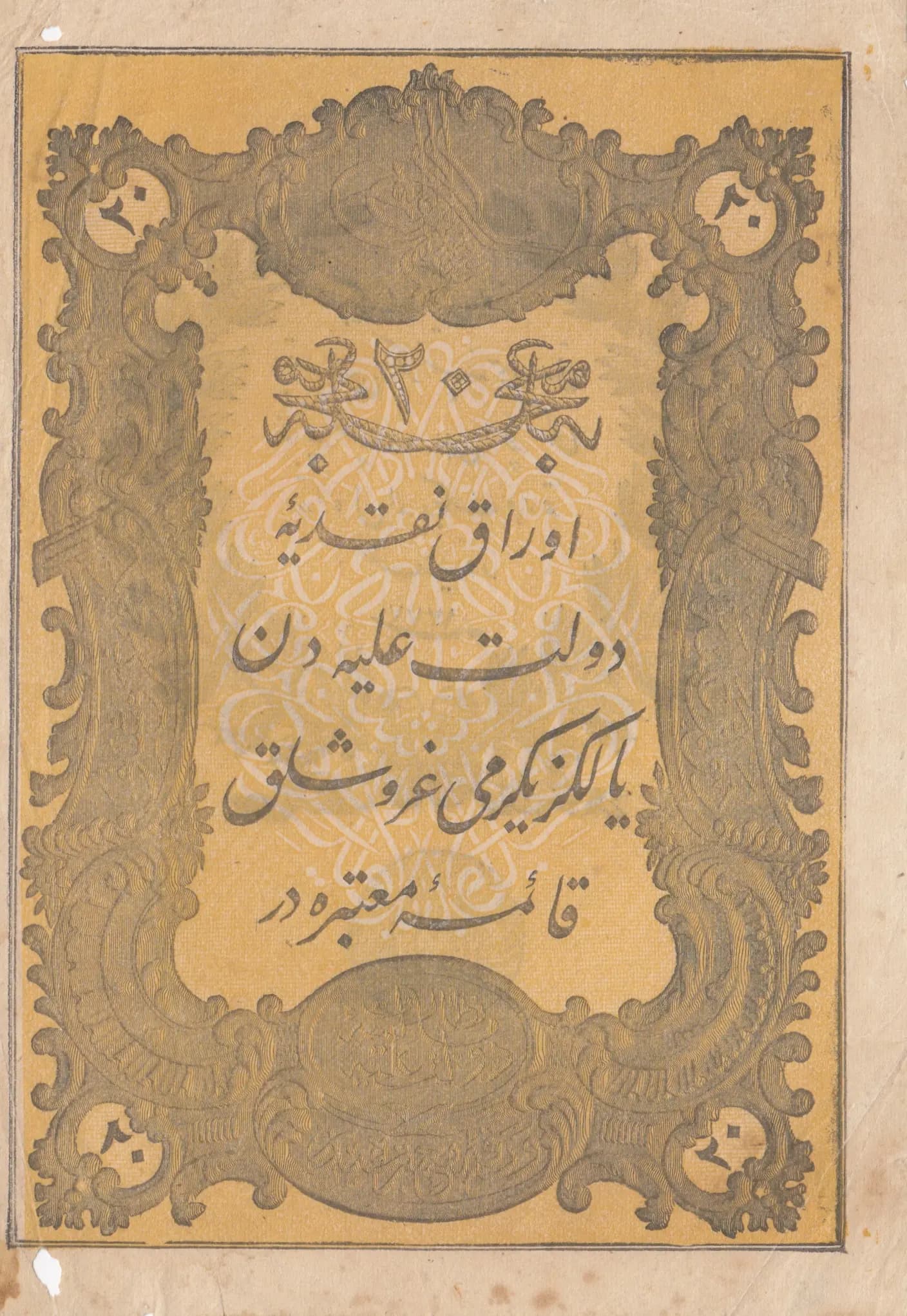
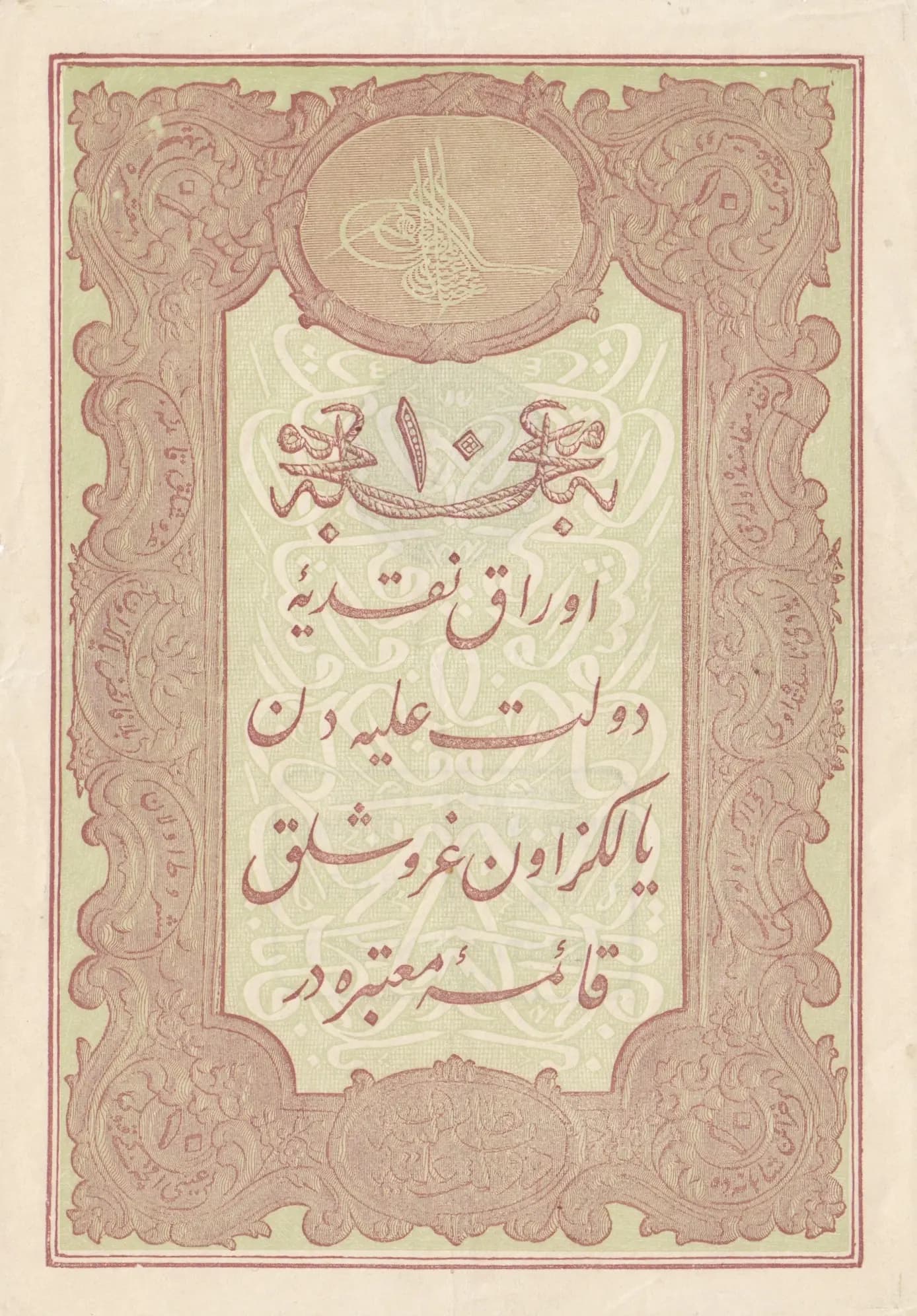
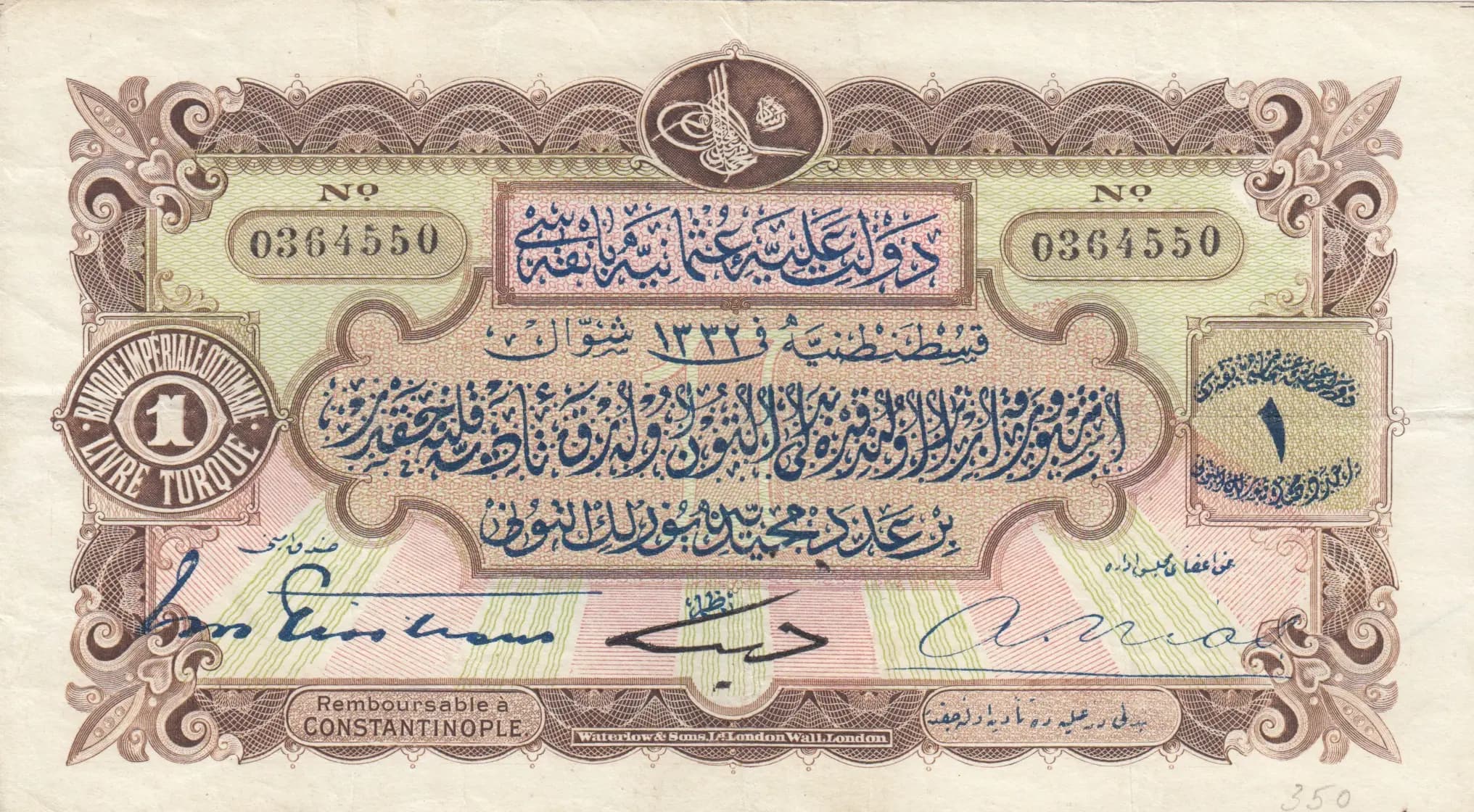
A well-preserved example of the Banque Impériale Ottomane's 1 Livre note from 1914 (AH 1332), displaying the characteristic brown, green, and cream color scheme typical of this issue. The note exhibits the ornate Ottoman aesthetic with fine geometric cross-hatching throughout and distinctive circular denomination markers, though visible creasing and foxing are consistent with its VF grade and historical age. This is a significant example of late Ottoman currency, printed by the prestigious Waterlow & Sons of London, representing a transitional period in Ottoman financial institutions.
Common. While the Ottoman Empire's financial institutions and currency are historically significant, this 1914 1 Livre note (Pick 68a) appears to have been issued in substantial quantities. The eBay price tracking data shows recent VF sales in the $54–71 range, and catalog values (2016) place VF at $100, indicating steady but modest collector demand without scarcity premiums. The regular issue designation and evidence of circulation support a common rating. Most Ottoman banknotes from established institutions like the Banque Impériale Ottomane were produced in adequate quantities for commercial use and remain available to collectors today.
Issued during the final years of the Ottoman Empire under the Banque Impériale Ottomane (Imperial Ottoman Bank), this 1914 note represents the empire's sophisticated banking infrastructure despite its contemporary political instability. The dual-language inscriptions in French and Ottoman Turkish, combined with the prominent Ottoman tugra (imperial monogram) at top center, reflect the Ottoman Empire's European financial connections and the bank's role in modernizing Ottoman currency. The redemption promise in Constantinople underscores the note's function within the empire's monetary system during the tumultuous period just before the empire's dissolution following World War I.
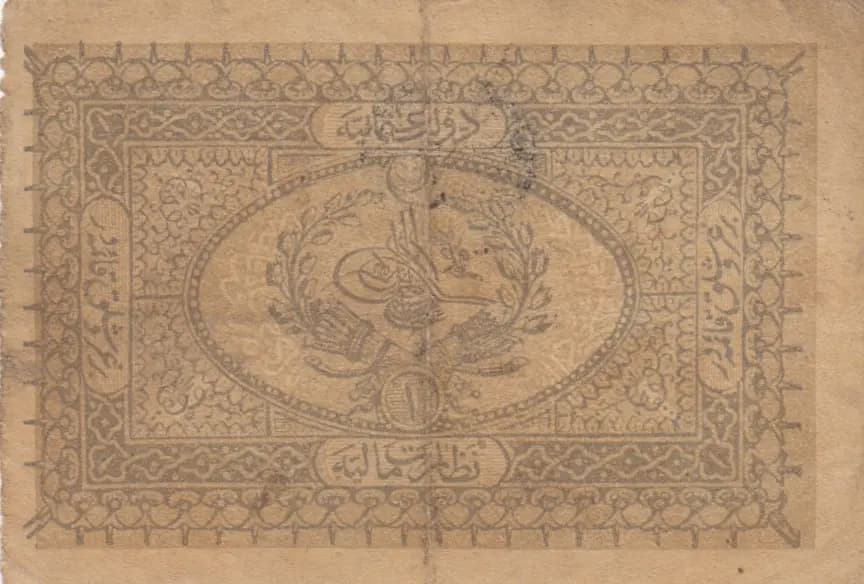
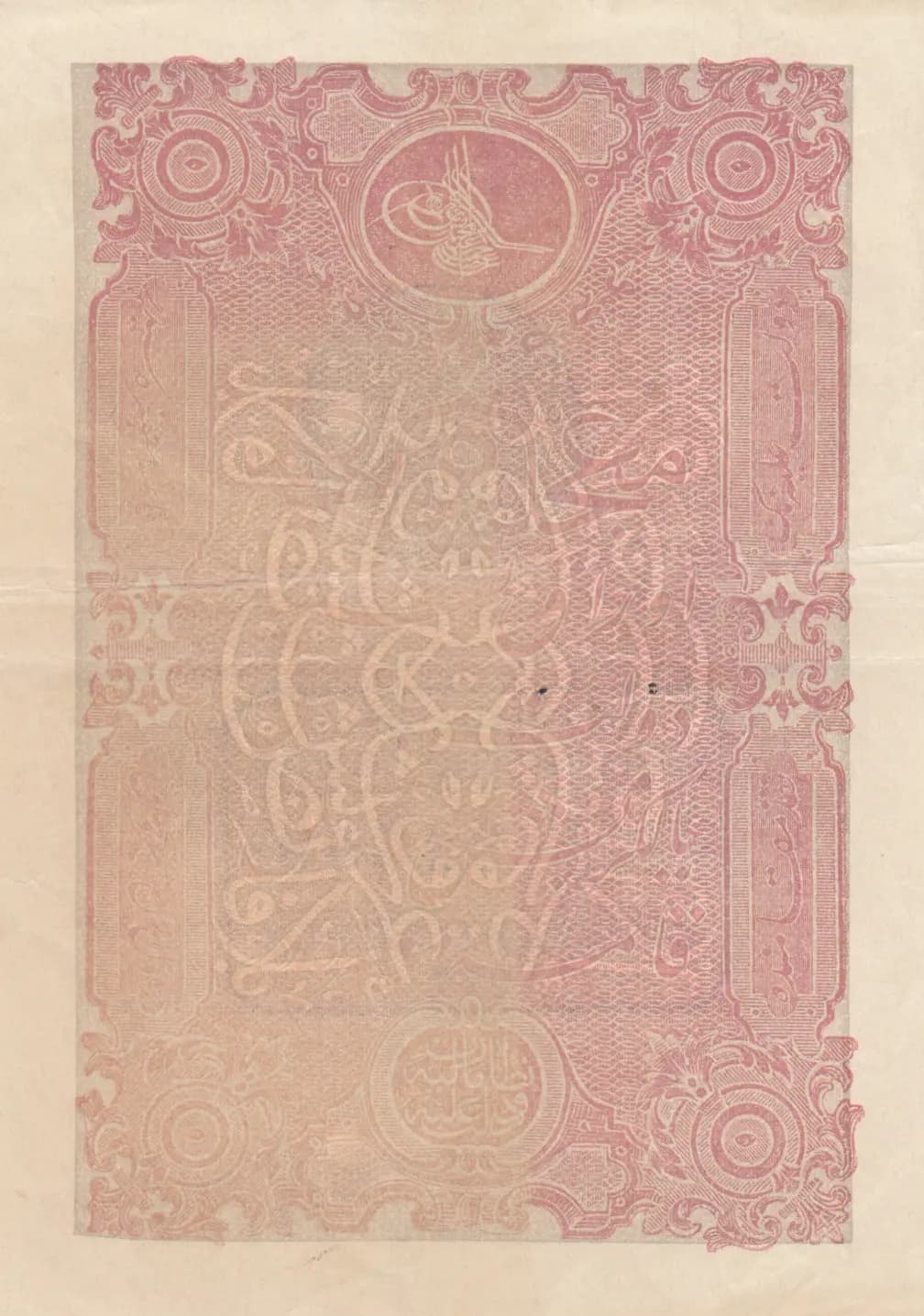
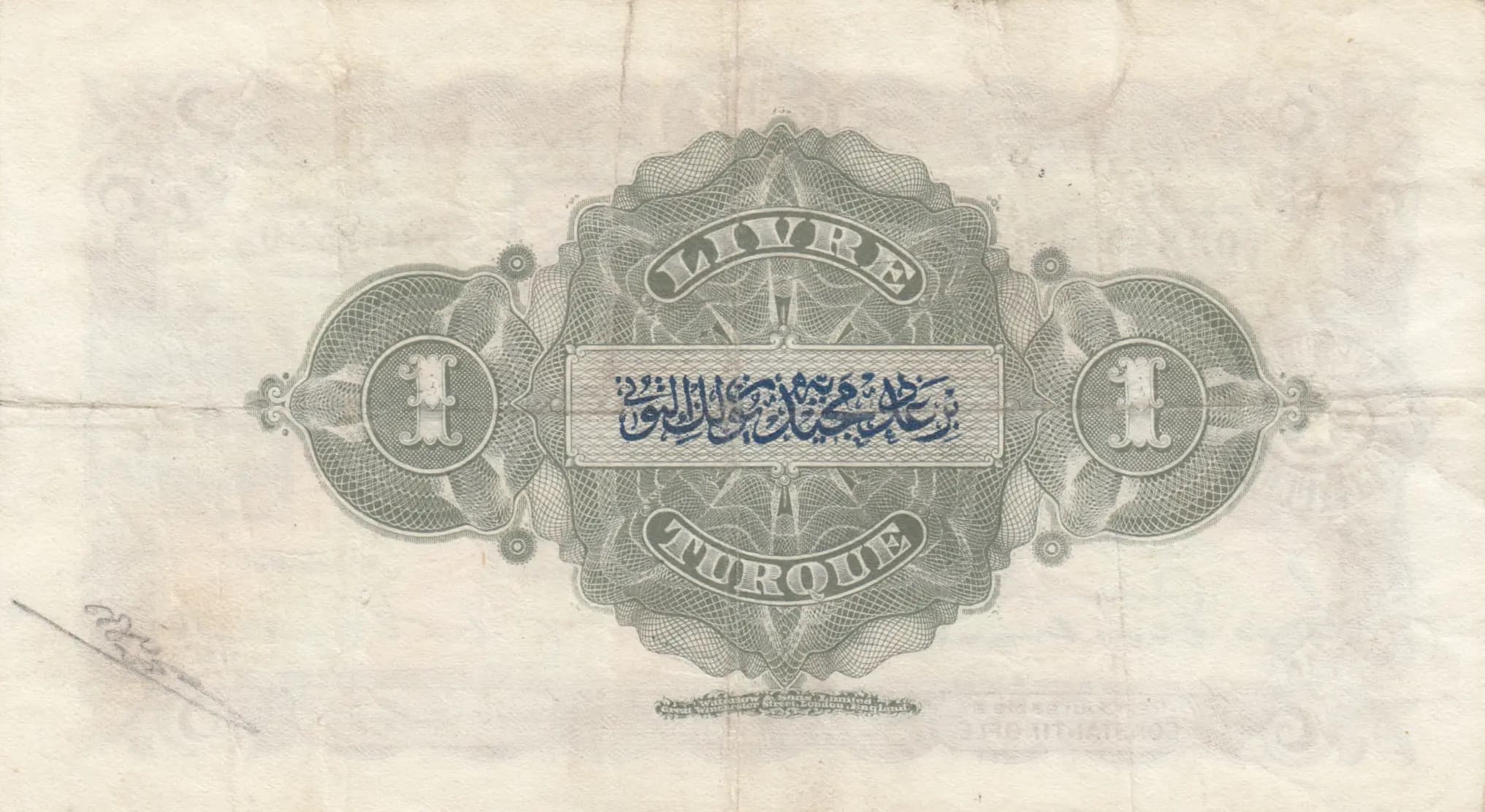
This banknote features a symmetrical, highly ornate design characteristic of early 20th-century Ottoman currency. The obverse is dominated by a large circular seal on the left bearing the numeral '1' and 'LIRE TURQUE' text, with a matching denomination marker on the right. The Ottoman tugra (the elaborate imperial monogram of the reigning sultan) is positioned prominently in an oval frame at the top center, serving as the primary authenticating symbol of imperial authority. The central area contains a decorative cartouche with Ottoman Turkish text. The reverse maintains the symmetrical design philosophy with two circular denomination seals flanking a central ornate cartouche, rendered in gray-green tones. Throughout both sides, fine geometric cross-hatching and intricate scrollwork with floral decorative elements fill the borders and background, creating visual complexity intended to deter counterfeiting. The color scheme of brown, green, cream, and blue on the obverse transitions to predominantly gray-green on the reverse.
Front Side: 'LIRE TURQUE' (Turkish Lire) — denomination identifier; 'NO 0364550' (Serial number) — appears in oval frames on both left and right margins; 'Rembursable à CONSTANTINOPLE' (Redeemable in Constantinople) — redemption location; 'Waterlow & Sons Ltd London Wall London' (Printer attribution) — security printer information; Central cartouche contains Ottoman Turkish text (content not fully legible in images). Back Side: 'AMOR' (Love) — decorative element at top; 'TURQUE' (Turkish) — at bottom; '1' — denomination numeral appears twice in circular seals; Central cartouche contains Ottoman Turkish text in decorative frame (content not fully legible in images).
This note was produced using multi-color intaglio printing, the standard security printing technique of the era. Waterlow & Sons Ltd, one of the premier security printers of London, employed fine line engraving to create the intricate geometric cross-hatching patterns, decorative borders, and denomination markers that are visible throughout the design. The precise registration of multiple colors (brown, green, red, and blue) demonstrates the sophisticated printing capabilities available at this prestigious London printer, whose attribution appears clearly on the note itself.
The Pick catalog notes variant P-68r (Waterlow & Sons printer variant), indicating that multiple printer varieties exist for this denomination. The visual analysis confirms this example as a Waterlow & Sons product based on the clear attribution visible in the lower inscription. Serial number 0364550 is unique to this specific note. No evidence of overprints, signatures variations, or other distinguishing marks that would indicate a sub-variety within the standard P-68a classification is apparent from the images.