1/4 livre 1915
Market Prices
4 salesAbout This Note
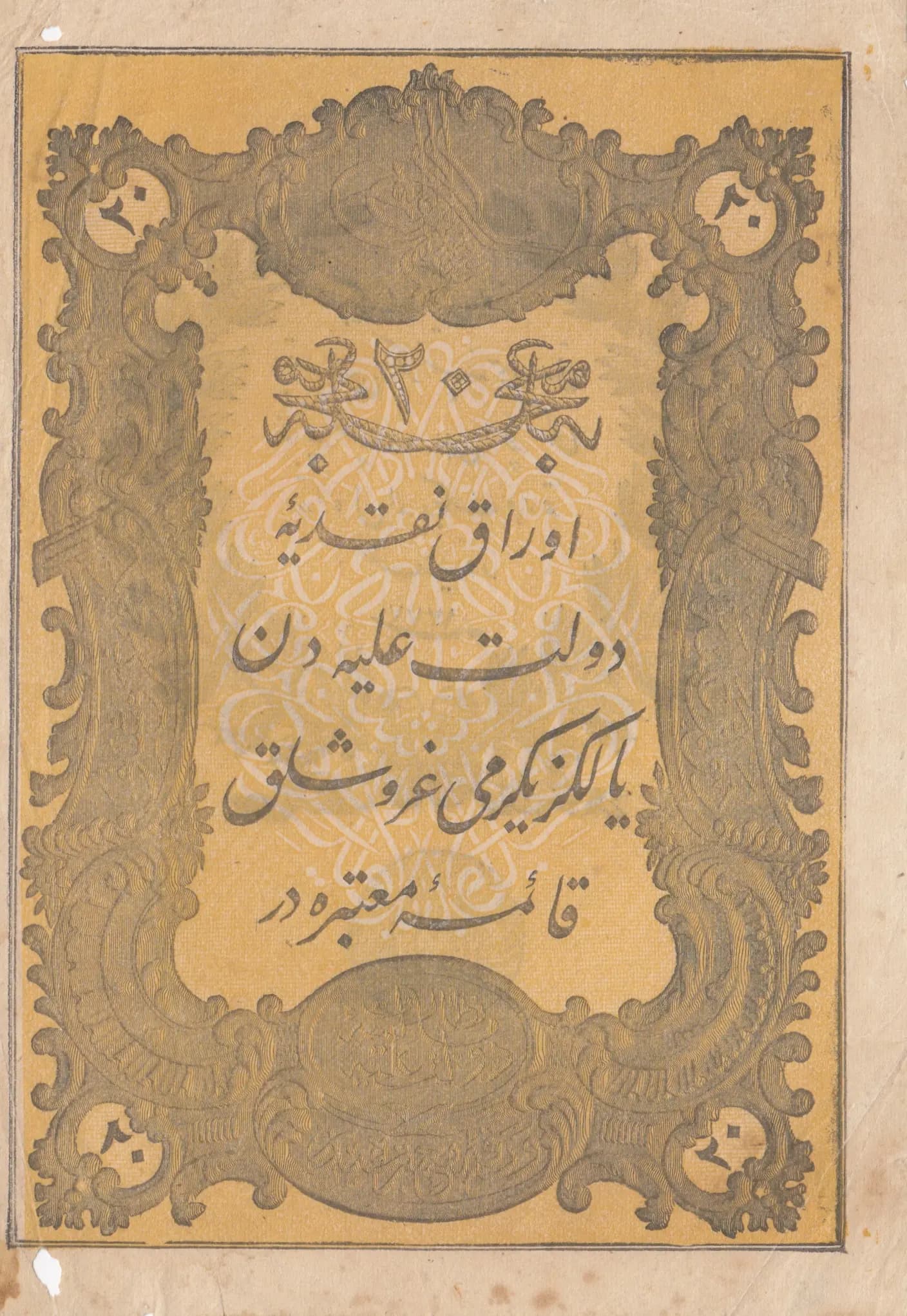
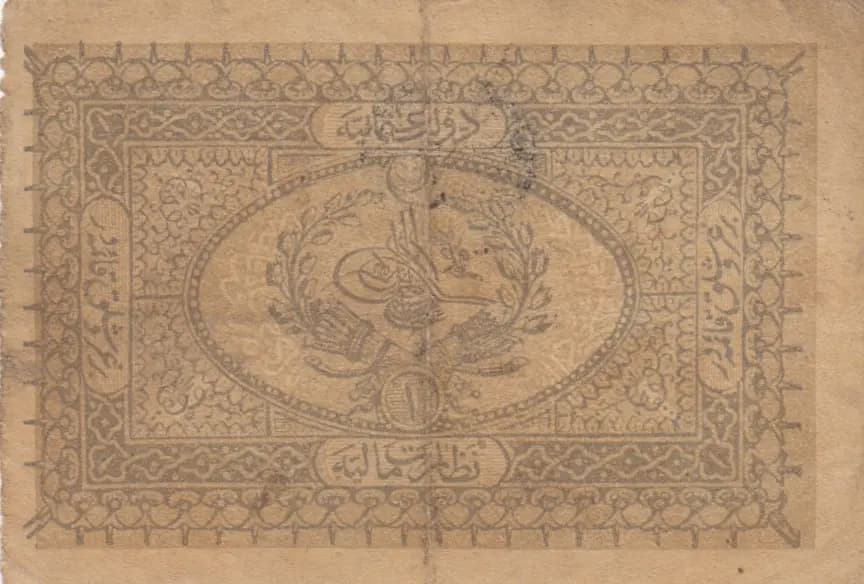
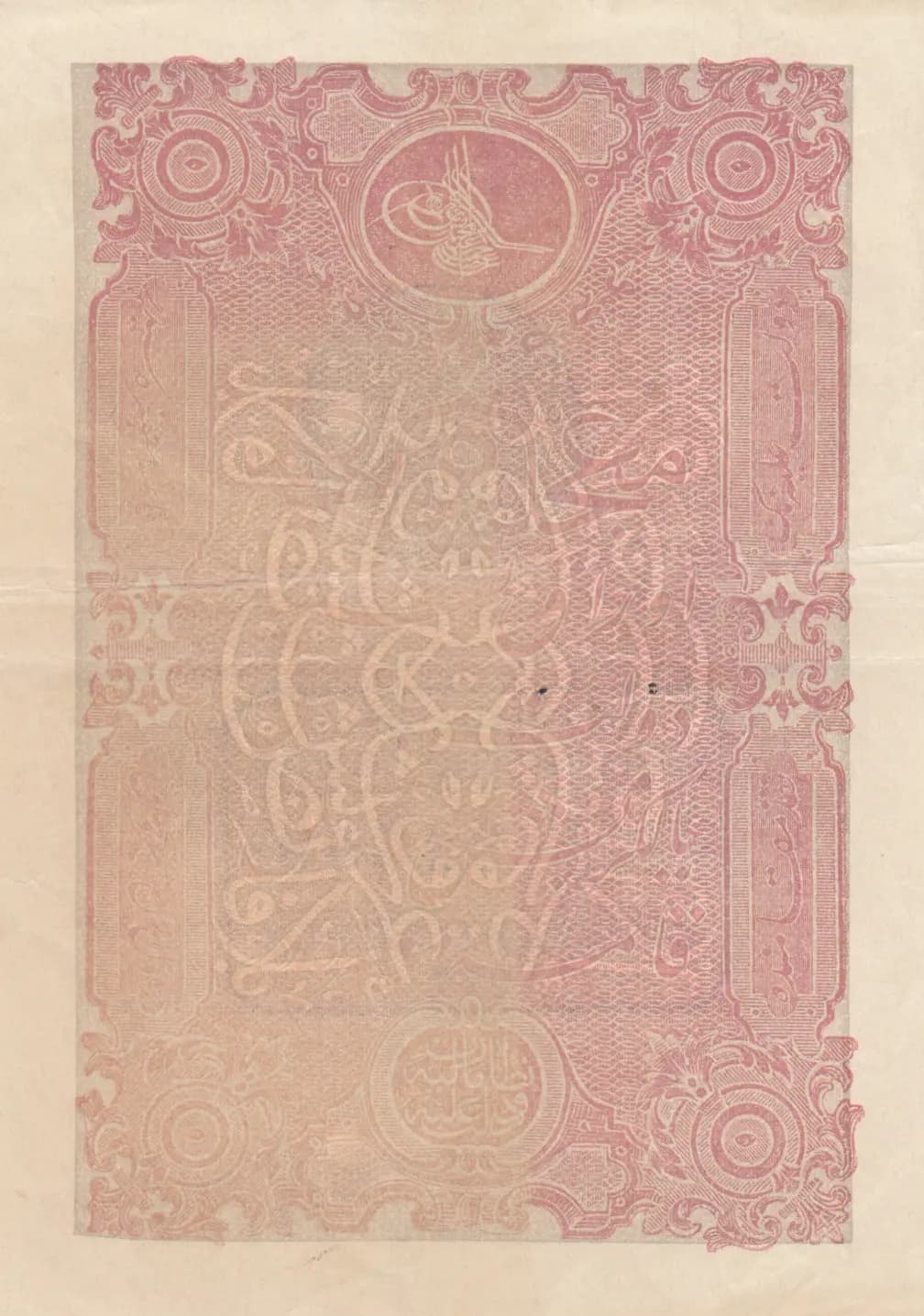
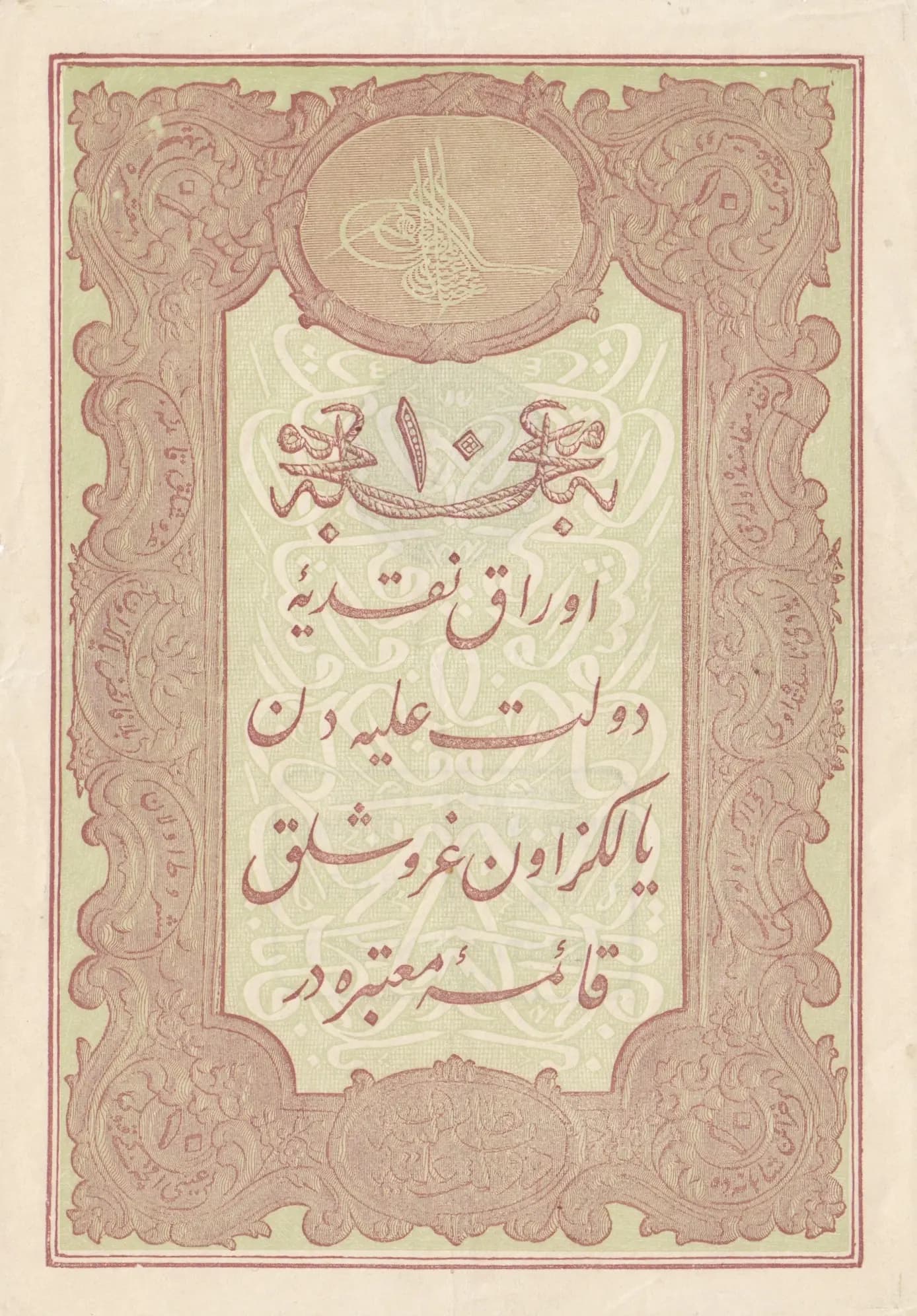
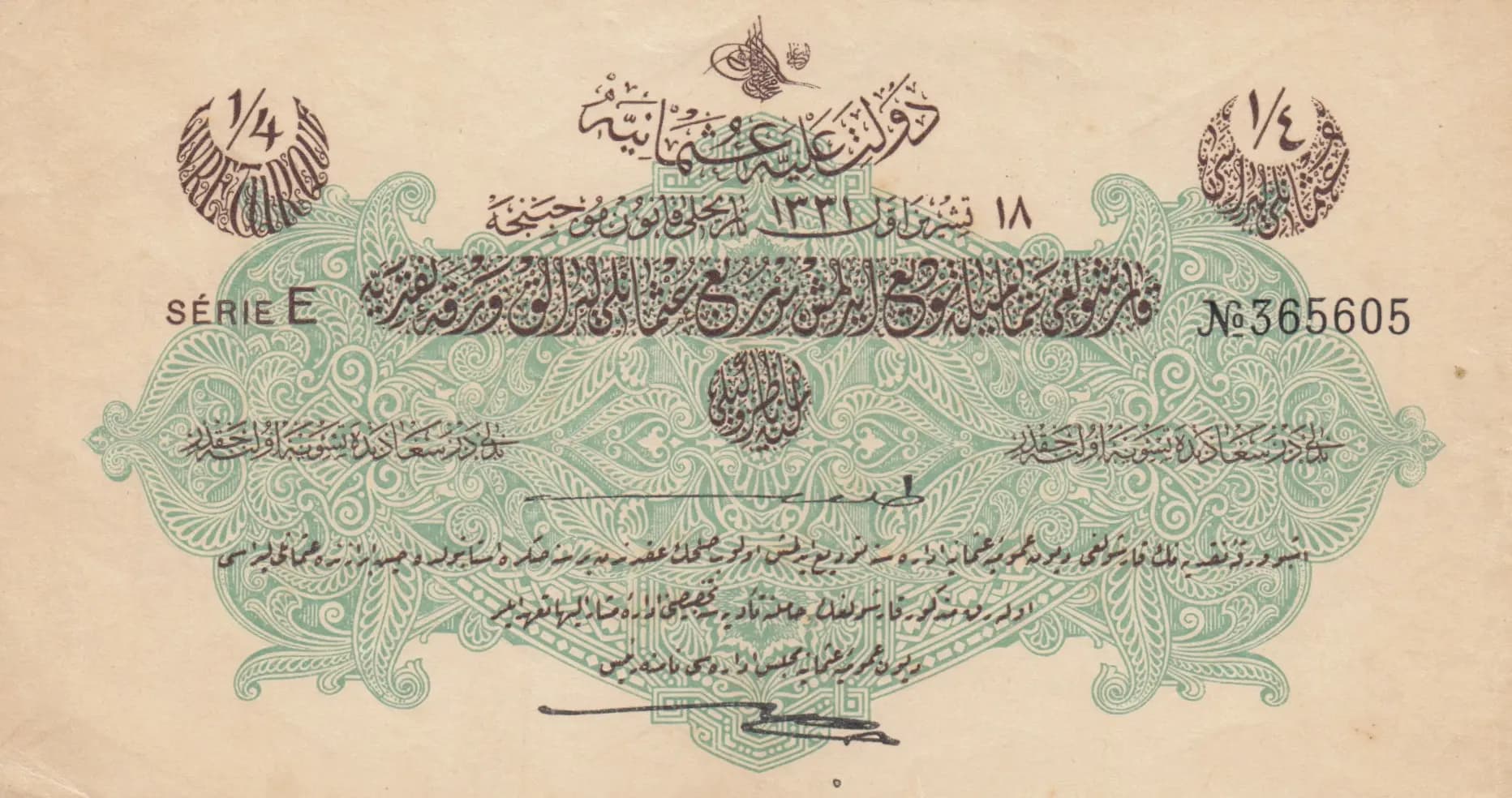
This is a magnificent 1/4 Livre Turque from 1915, issued by the Dette Publique Ottomane during the final years of the Ottoman Empire. The note exhibits AU (About Uncirculated) condition with only light age-related patina and minimal wear, featuring the obverse's stunning dark brown and green ornate design on a cream underprint. The reverse appears blank or extremely lightly printed, which is characteristic of this issue, and the note displays excellent preservation with no tears, creases, or significant damage—making it a desirable example for Ottoman currency collectors.
Common. While catalog values from 2016 list UNC at $110, recent eBay market data shows consistently modest selling prices ($16–$56 depending on condition), with AU/AUNC examples selling in the $50–$56 range. The existence of multiple sold examples and the presence of this note in standard catalogs indicates sufficient circulation in the collector market. The note was issued by an established international authority (Dette Publique Ottomane) rather than being a short-lived or emergency issue, and no specific print run scarcity is documented for this Pick number.
This fractional currency note was issued during a critical period of Ottoman fiscal decline, just as the Empire was engaged in World War I. The Dette Publique Ottomane (Ottoman Public Debt) was an international commission established following the Ottoman financial crisis, and this note represents the institution's attempt to manage currency circulation through fractional denominations. The ornate Islamic geometric patterns, Ottoman tughra (imperial monogram), and crescent-star motifs reflect the traditional symbols of Ottoman authority, even as the Empire's political and economic power was collapsing in 1915.
The obverse features a symmetrical, highly ornamental design centered around a shield-shaped cartouche filled with elaborate Islamic arabesques and floral interlacing patterns rendered in dark brown ink on a green underprint. At the top center is the Ottoman tughra—the elaborate imperial monogram and calligraphic seal representing state authority. Flanking the central design are crescent-and-star motifs within circular seals positioned at top left and top right, traditional symbols of Ottoman sovereignty. The fractional denomination '1/4' is displayed prominently in corner positions. The entire composition employs complex geometric borders and fine engraving work typical of high-security currency design. The reverse side is blank or nearly blank, a common feature of fractional notes from this period.
Front side: '1/4' (denomination, one quarter livre, appears in corners); 'SÉRIE E' (Series E, in French, indicating print series); 'No305605' (serial number 305605); '18' (likely date notation, 18th day); Ottoman Turkish calligraphic text (main denomination declaration and issuer information—specific translation of ornate Ottoman script requires specialized paleography expertise, but denotes '1/4 Livre' and 'Dette Publique Ottomane' authority). Back side: No clearly legible inscriptions; reverse appears blank or contains only extremely faint impressions.
Intaglio engraving (recess printing), identifiable by the fine line work, precise geometric patterns, and complex arabesques visible in the image. The multi-color printing (green underprint with dark brown overprint) suggests the use of multiple plates in succession. This note was likely produced by a European security printer contracted by the Ottoman authorities—standard practice for Ottoman currency of the period. The ornate calligraphic elements and geometric security patterns are characteristic of late-19th and early-20th century Ottoman state currency production.
Series E is noted on this specimen. The date notation follows the RC (Rumi Takvim/Roman Calendar) system used by the Ottoman Empire for fiscal purposes at this time: L. 1331 RC (corresponding to 1915-1916 in the Gregorian calendar). The serial number 305605 with Series E designation suggests this is from a standard production run. No major varieties (overprints, signatures, or date variants) are prominently documented for Pick 71, making this a standard circulation type from the 1915 issuance.