1/2 livre 1917
Market Prices
10 salesAbout This Note
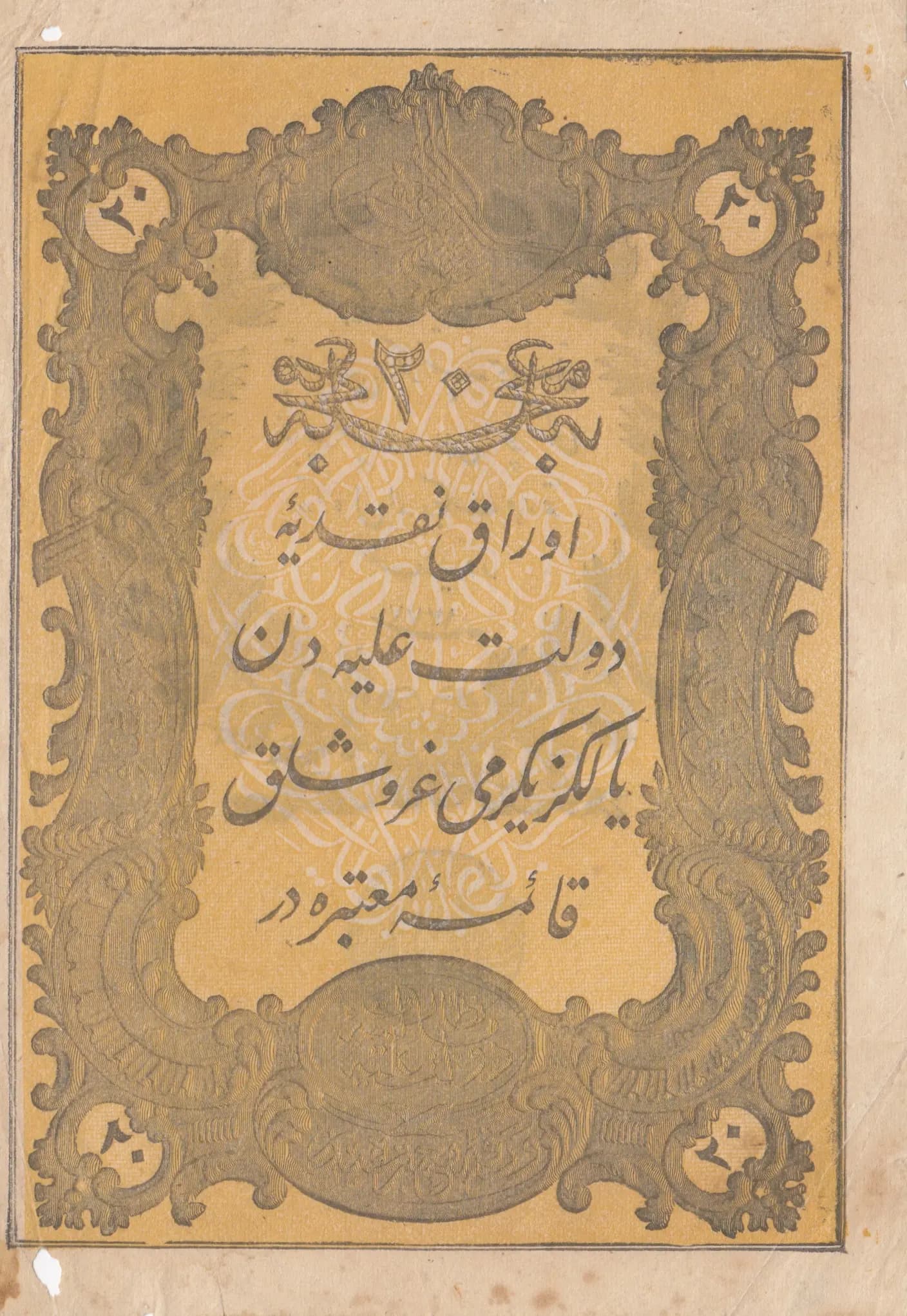
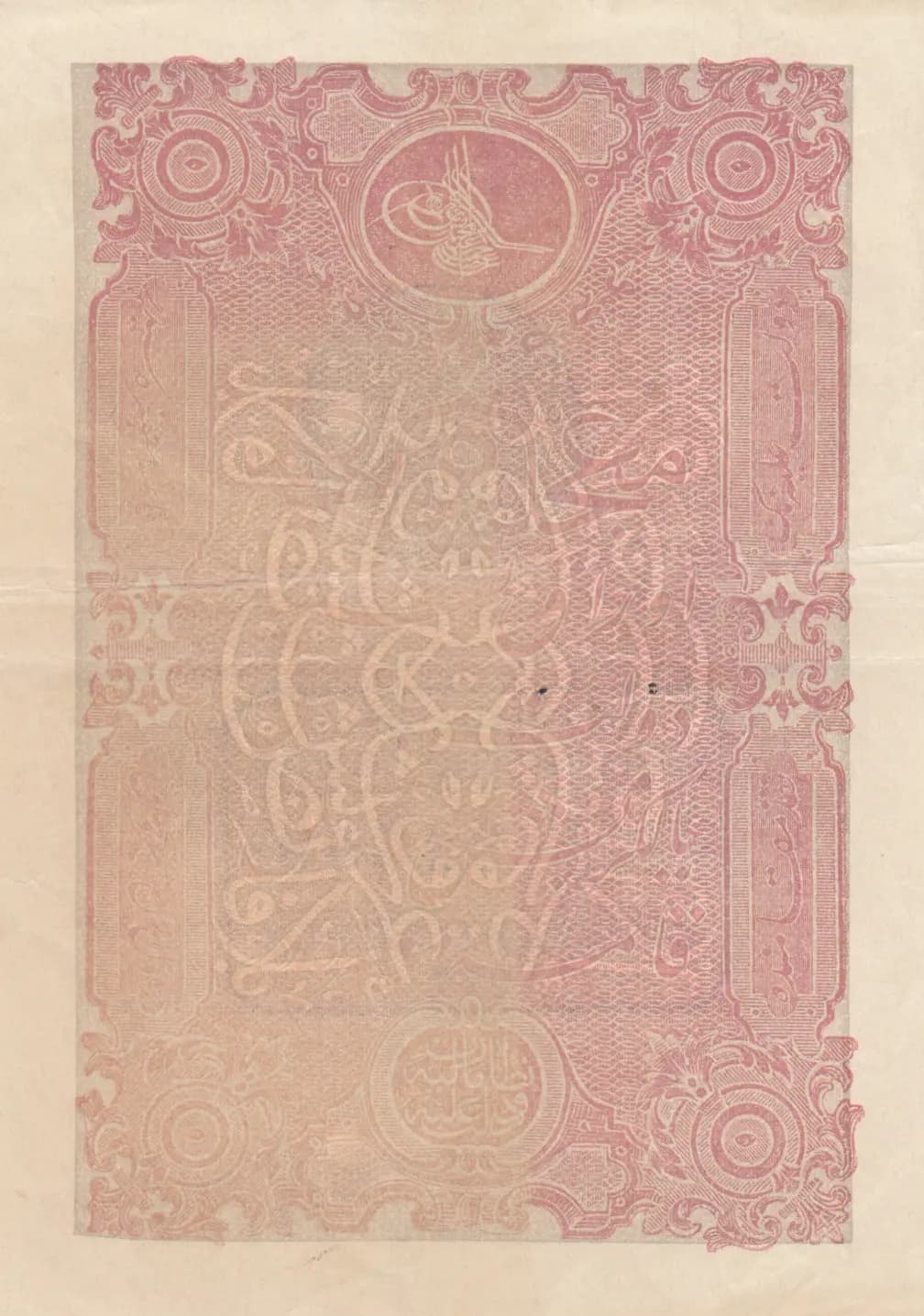
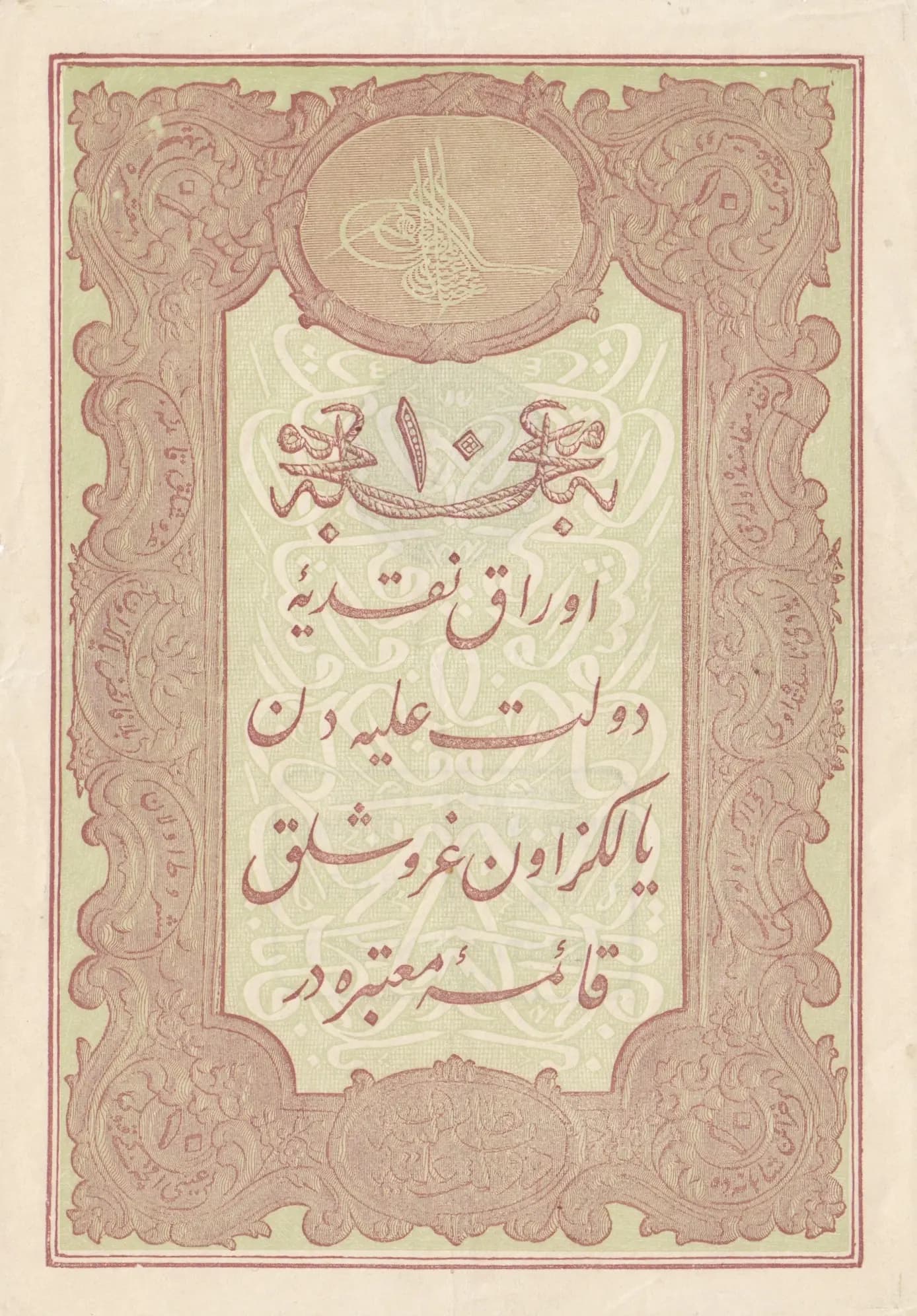
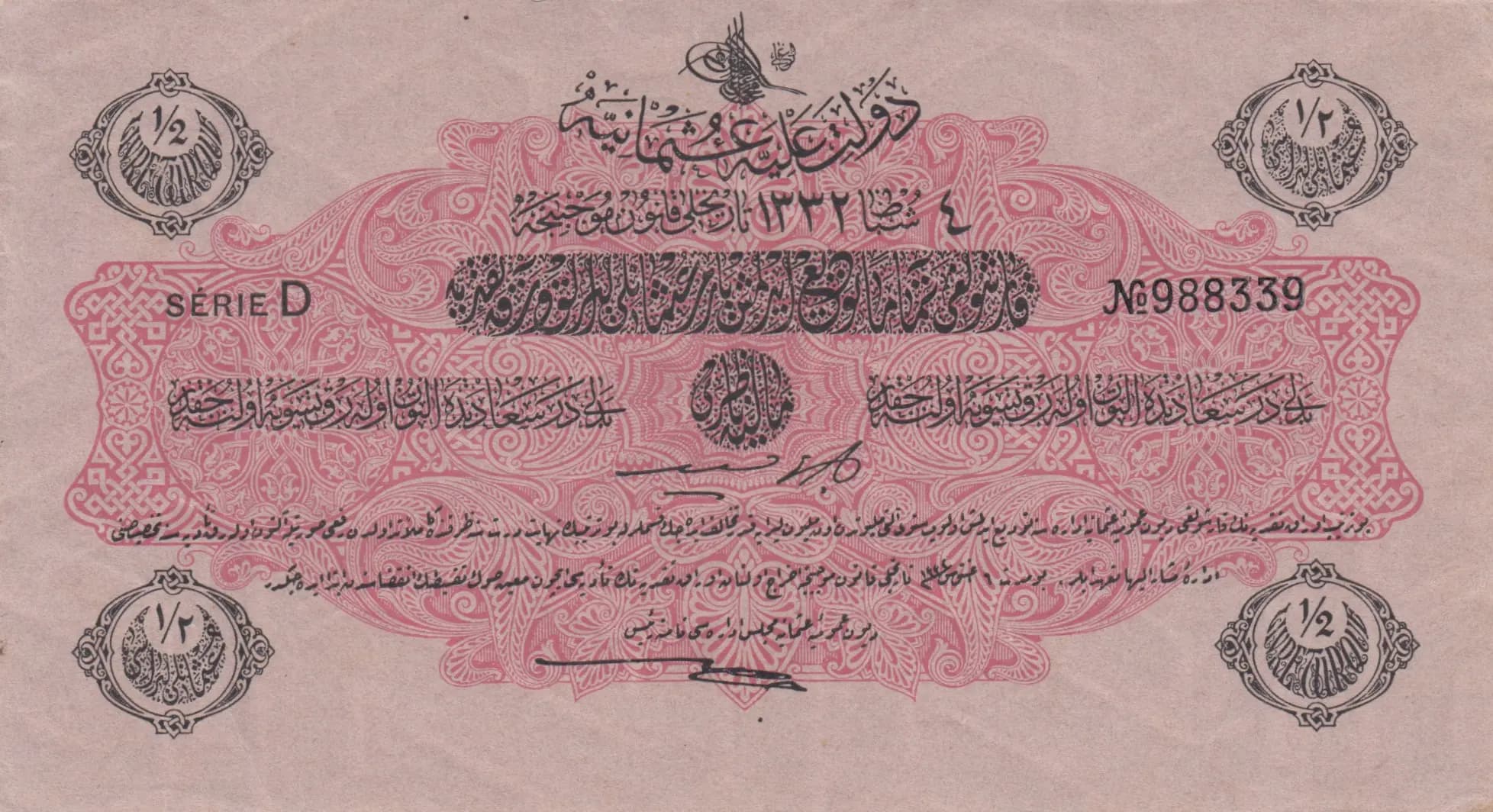
This is a beautiful example of a 1917 Ottoman half lira note issued by the Dette Publique Ottomane, presented in AU condition with virtually no signs of circulation. The note features an elegant uniface design with pink/rose and black coloring, displaying intricate Art Nouveau-influenced geometric and floral patterns in ornate decorative borders. Four circular seals containing Ottoman eagle emblems occupy the corners, and the center displays prominent Ottoman Turkish calligraphy, making this an attractive example of early 20th-century Ottoman financial instruments.
Common. Based on eBay market data provided, notes in similar condition grades consistently sell in the $25-$40 range, with even uncirculated examples achieving only $65 catalogue value as of 2016. The relatively modest auction prices across multiple sales instances from 2012-2022, combined with regular market availability, indicate this note was produced in quantities sufficient to maintain steady common circulation. The AU condition grade specimen shown here falls within typical market pricing expectations, suggesting adequate supply relative to collector demand.
Issued during the final years of the Ottoman Empire's existence (the empire would collapse in 1922), this note represents the sophisticated fiscal systems maintained by Ottoman authorities even as the empire faced declining political power. The presence of the Ottoman crescent and star symbols within the decorative seals reflects the empire's Islamic heritage and official state identity. The Dette Publique Ottomane (Ottoman Public Debt Commission) was an international financial administration established following the Ottoman financial crisis of the 1880s, and notes bearing this issuer's name represent the empire's complex relationship with European creditors and financial oversight.
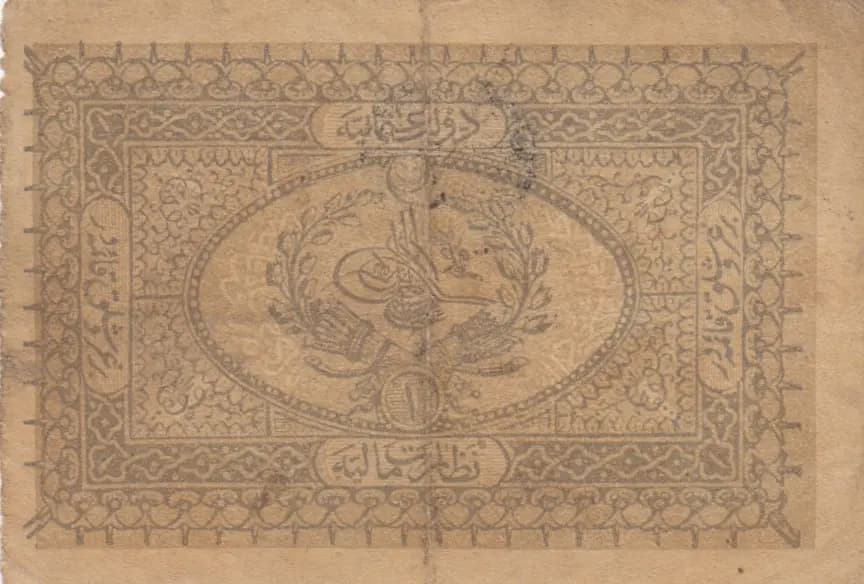
This uniface banknote features a highly symmetrical composition dominated by a cream or off-white background with a pink/rose underprint and black printed text. The design employs elaborate decorative framing elements in an Art Nouveau style, with intricate geometric patterns and floral motifs forming border elements throughout. Four circular medallions are positioned in the corners, each containing an Ottoman eagle or imperial bird emblem within ornamental frames incorporating the crescent and star symbols of the Ottoman state. The central area is reserved for Ottoman Turkish calligraphic text rendered in black ink, presenting the denomination, issuing authority, and legal text. The reverse is blank, following the common practice of Ottoman fiscal instruments of this period. The serial number 'JA988339' appears on the right side of the obverse.
Front side: 'SERIE D' (Series D - Latin inscription); 'JA988339' (Serial number); '١/٢' (One-half in Arabic numerals); 'دولت علیه عثمانیه' (Ottoman State); 'نص لیره' (Half Lira); Central text in Ottoman Turkish containing legal and administrative provisions regarding the banknote and its terms of use. Back side: No inscriptions or visible text present.
Letterpress printing with color overlay, utilizing separate applications of pink/rose underprint and black text. The fine line work visible in the decorative borders and the complexity of the calligraphic rendering suggest high-quality intaglio or relief printing techniques. The precision of the geometric patterns and the clarity of the eagle emblems in the corner seals indicate advanced printing technology for the 1917 period. The specific printer for the Dette Publique Ottomane issues of this era is not definitively documented in accessible sources, though such notes were often produced by established European security printers.
This specimen is identified as Series D (SERIE D) with serial number JA988339. The date marking follows the Ottoman RC (Rumi Takvim/Roman Calendar) system: L. 1332 corresponds to the Gregorian calendar date February 1917. The note employs a pink/rose underprint with black text, which is the standard design configuration for this Pick number. Specimens may vary by serial number series (A-D or beyond) and specific dating within the 1916-1917 issuance period. No overprints or significant design variations are apparent in this example.