5 pa'anga 1982
Market Prices
8 salesAbout This Note
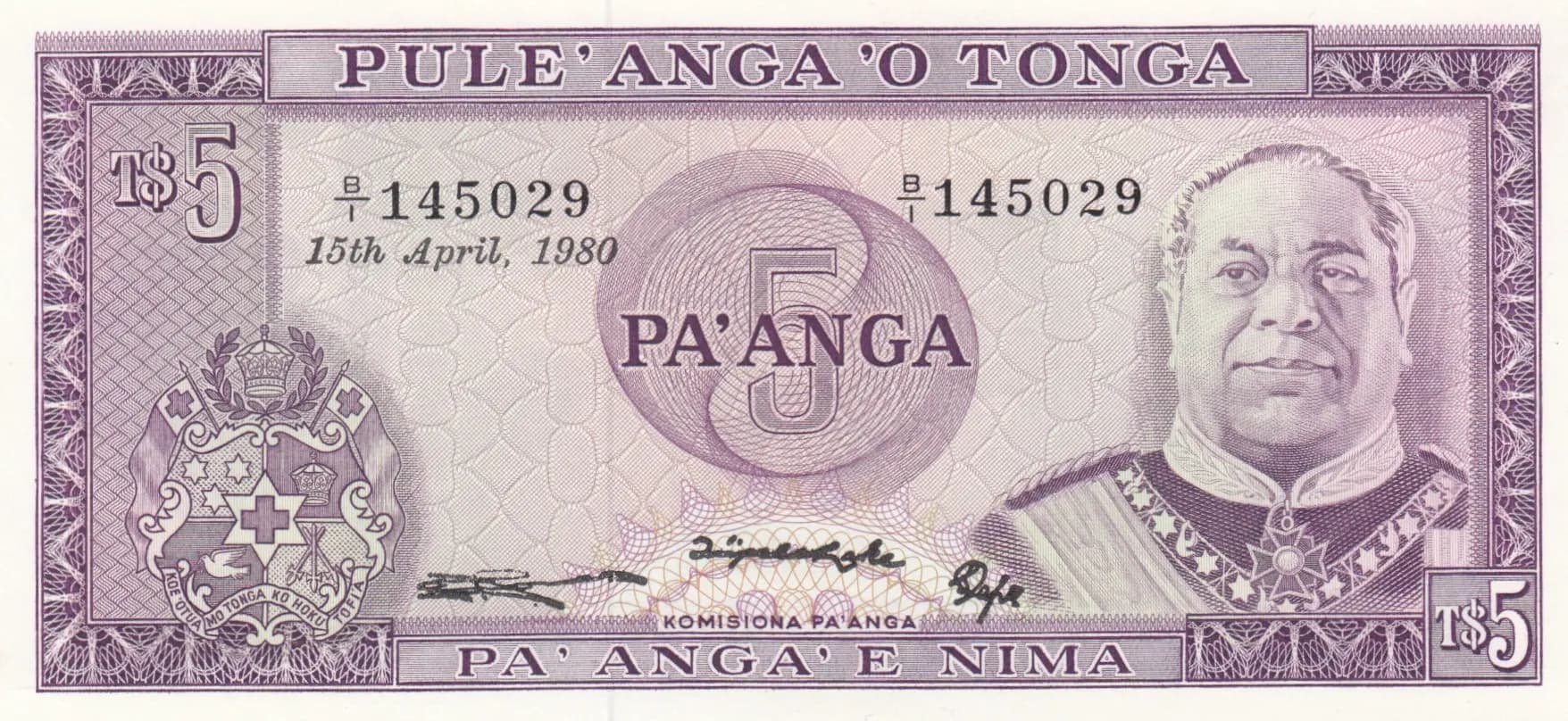
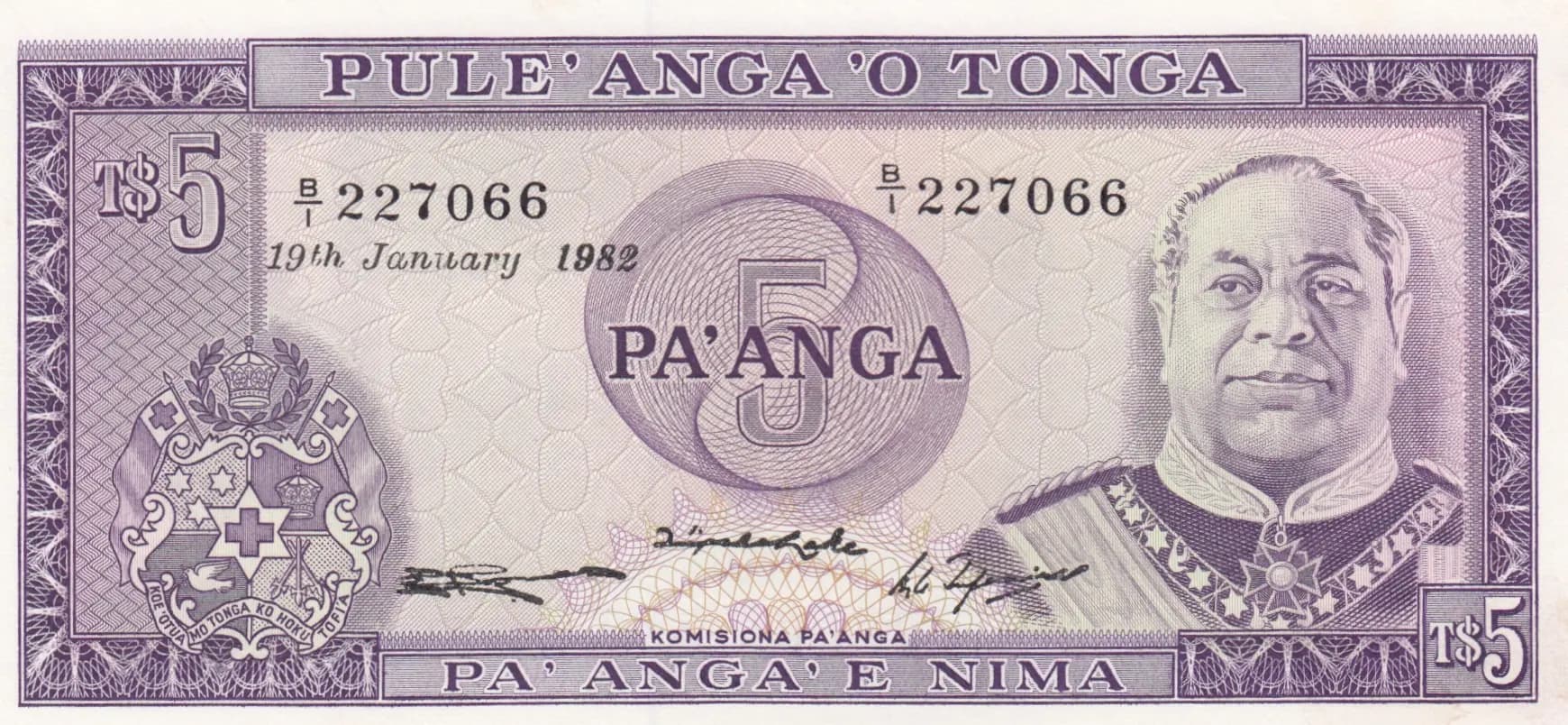
This is an exceptionally well-preserved example of the 1982 Tongan 5 pa'anga note issued by the Komisiona Pa'anga, graded UNC. The note exhibits the characteristic purple/lavender obverse and green/purple reverse, with sharp, clear printing throughout and no visible wear, folds, or damage. The serial number prefix 'B' and the specific date of 19th January 1982 place this within the early printings of this issue, making it an attractive example for Tongan currency collectors.
Common. eBay price tracking data shows UNC examples selling consistently between $21.50 and $43.00, with typical catalog values at $30 for UNC condition (2019). The note was part of a standard circulation series issued from 1981-1989 with substantial print runs. The absence of documented low print runs, special recalls, or limited-issue status, combined with regular market availability at moderate prices, confirms this as a common issue despite its attractive design and cultural significance.
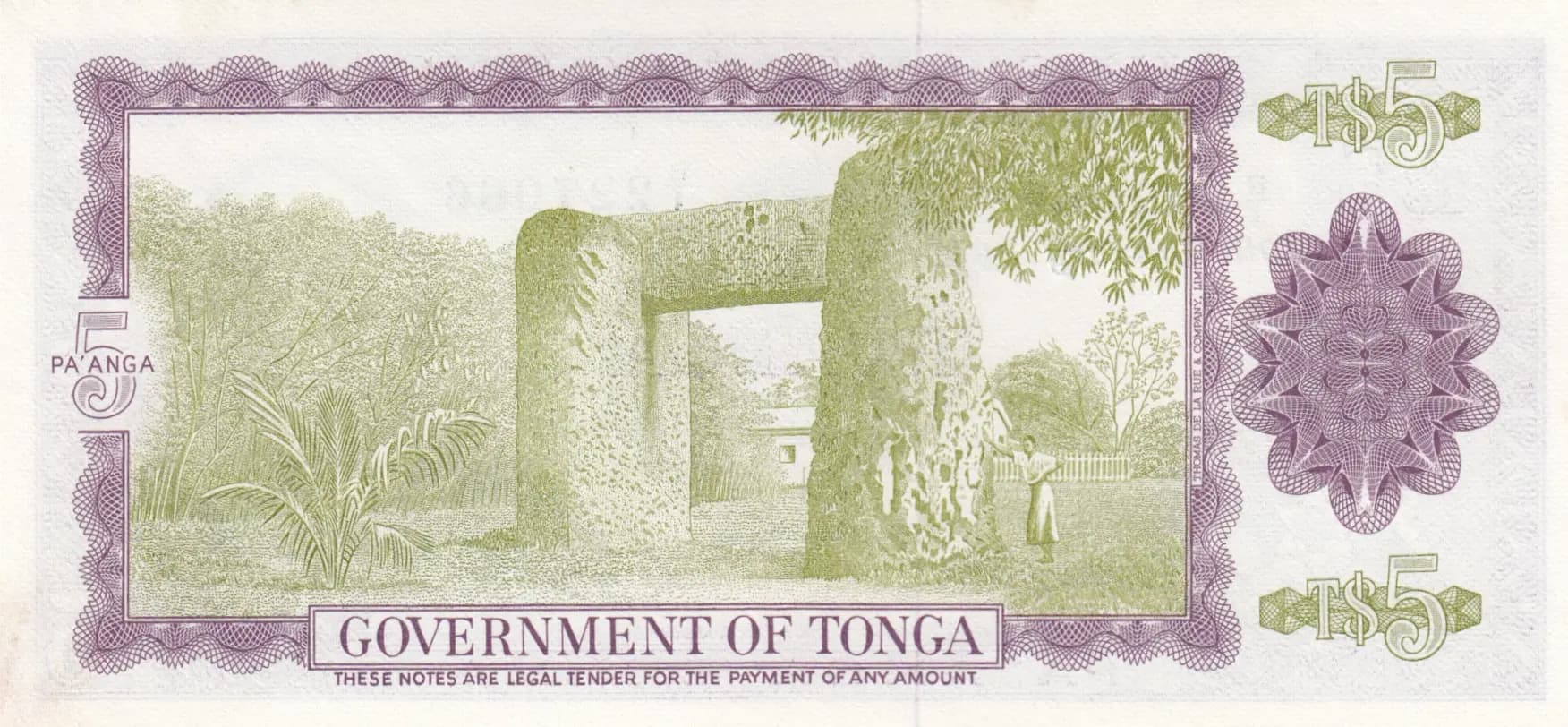
This note was issued during the reign of King Siaosi (George) Taufa'ahau IV Tupou, whose portrait appears in formal military dress on the obverse. The reverse depicts the Ha'amonga 'a Maui trilithon, an iconic stone gateway landmark in Tonga that represents the nation's cultural and historical heritage. This series, issued from 1981-1989, reflects Tonga's period of modernization while maintaining strong cultural symbolism through its architectural imagery.
The obverse features King Siaosi (George) Taufa'ahau IV Tupou in full ceremonial military dress uniform with decorative shoulder insignia and formal regalia, positioned prominently on the right side. The left side displays the coat of arms of Tonga featuring a shield with cross design and ornamental elements. A large circular denomination numeral '5' occupies the center, surrounded by intricate guilloche and decorative border work in purple and lavender tones. The reverse showcases the Ha'amonga 'a Maui trilithon, a monumental three-stone gateway situated in Ha'apai, depicted with meticulous architectural detail and surrounded by tropical vegetation including palm trees. Ornamental rosette and floral patterns frame the landscape in green and purple hues, with denomination markers in the corners.
FRONT: 'PULE'ANGA 'O TONGA' (Kingdom of Tonga), 'KOMISIONA PA'ANGA' (Currency Commission), 'PA'ANGA'E NIMA' (Five pa'anga), 'T$5' (5 pa'anga in monetary notation), '19th January 1982' (date of issue), serial numbers 'B 227066' and 'T 227066'. BACK: 'T$5' (5 pa'anga), 'PA'ANGA' (pa'anga currency), 'GOVERNMENT OF TONGA' (issuing authority), 'THESE NOTES ARE LEGAL TENDER FOR THE PAYMENT OF ANY AMOUNT' (legal tender declaration).
Intaglio (engraved) printing method, as evidenced by the fine line engraving patterns, intricate guilloche borders, and the detailed architectural and portrait work visible throughout both sides. Produced by Thomas de la Rue, London, a leading security printer known for high-quality banknote production. The sharp clarity and fine detail work confirm professional security printing standards of the period.
Pick catalog identifies this as P-21c, one of four documented variants (P-21b, P-21bCS1, P-21c, and P-21s). This specific example features serial number prefix 'B' and is dated 19th January 1982. The note shows signature varieties noted in the catalog. Replacement notes are identified by 'Z/1' prefix. The 'c' variant designation in the Pick catalog likely reflects differences in signatures or minor design elements; this example's early date and 'B' prefix suggest it is from the initial printing run of the series.