2 pa'anga 1979
Market Prices
4 salesAbout This Note
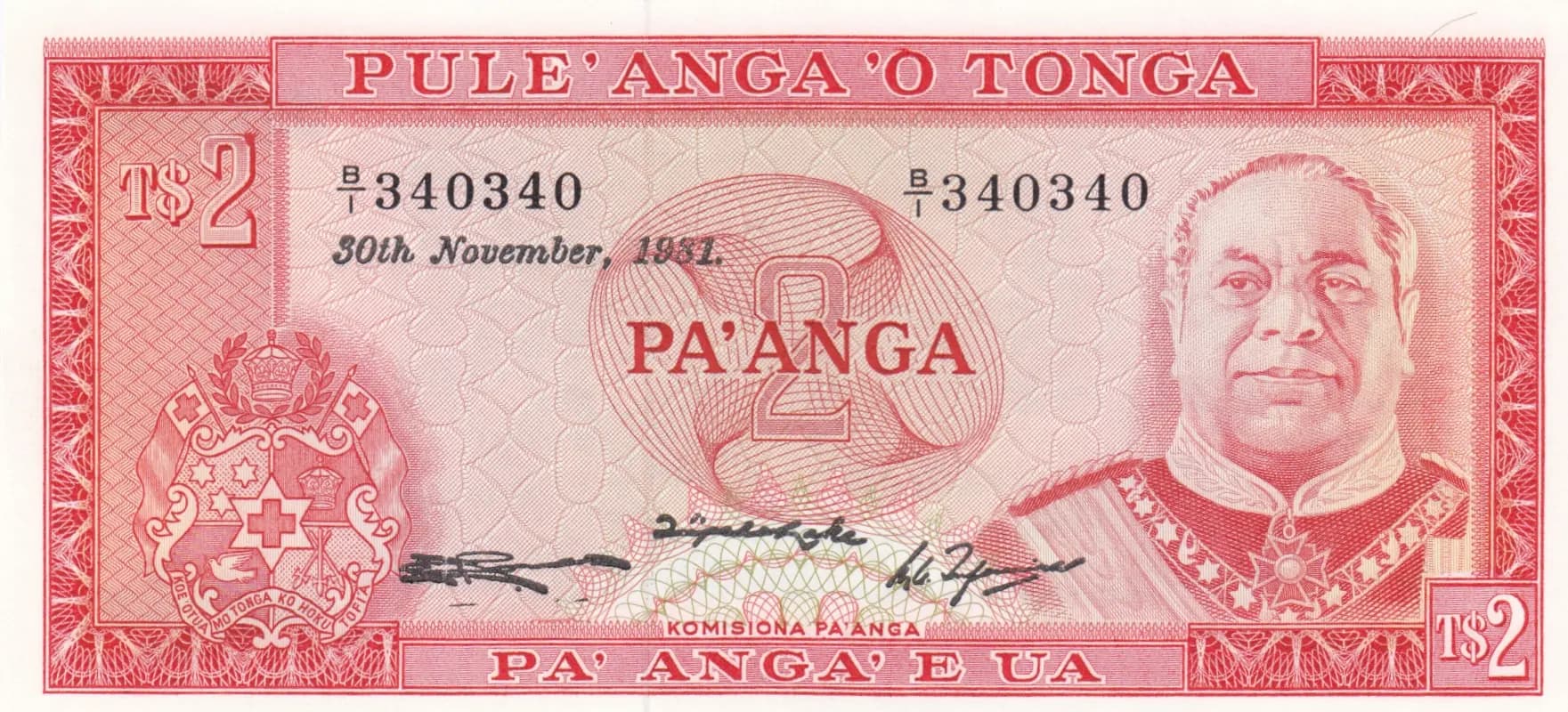
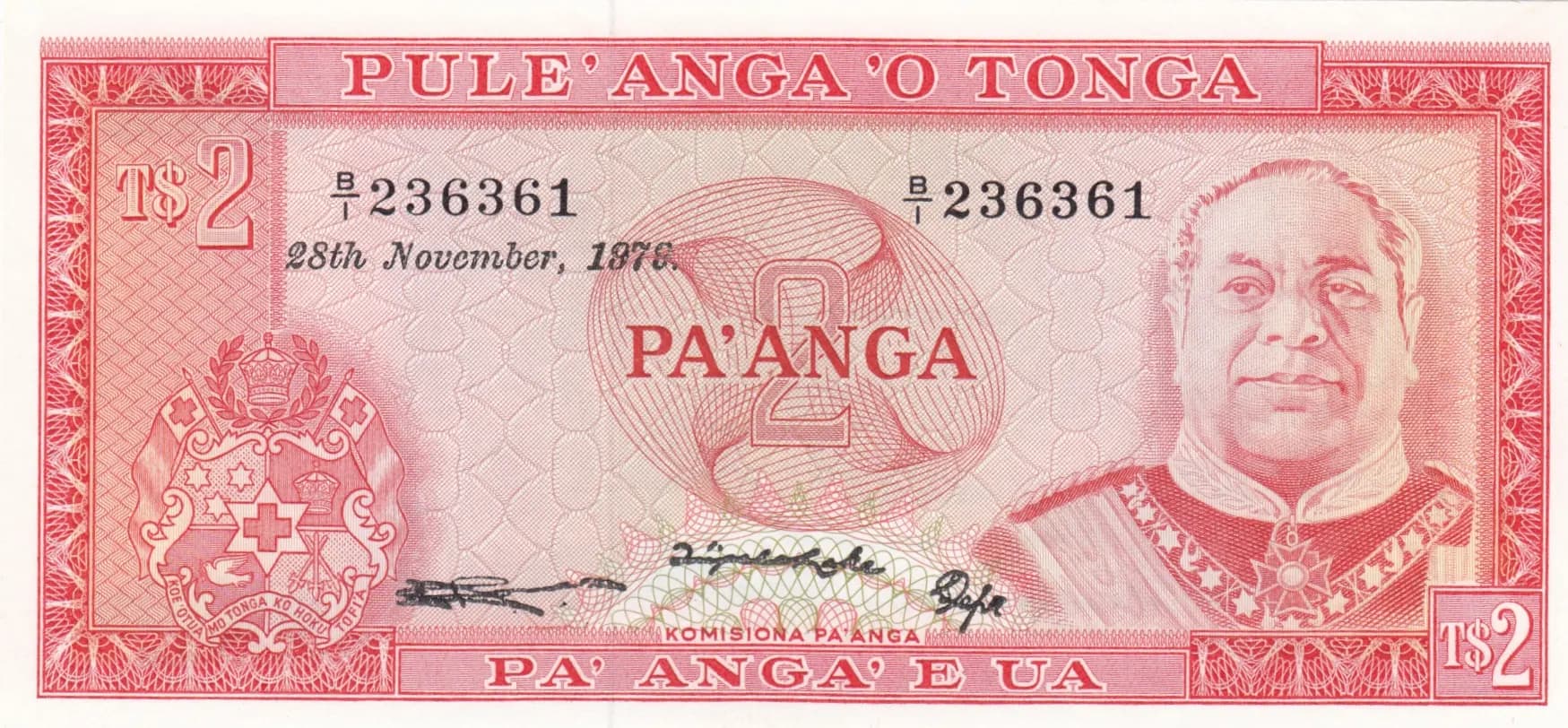
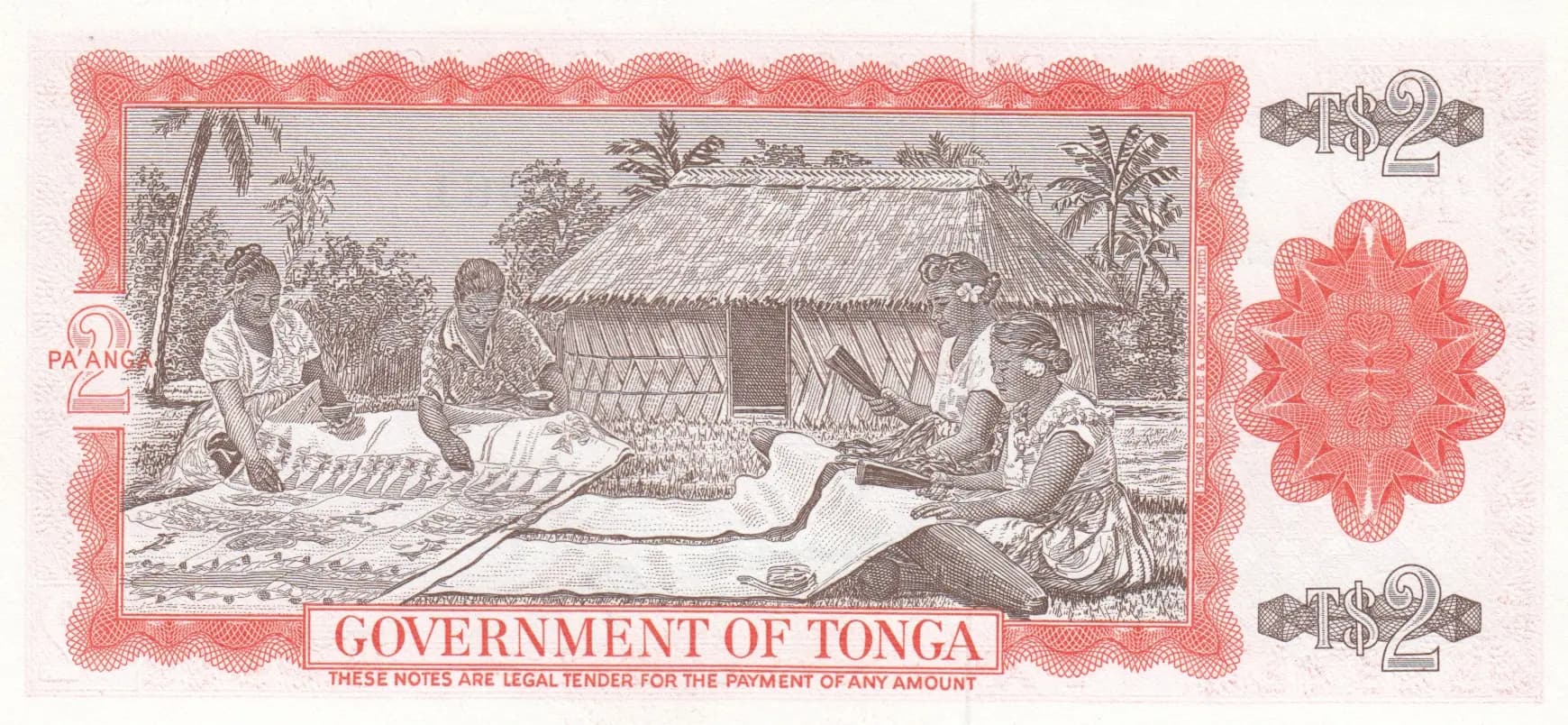
This 1979 Tongan 2 Pa'anga note (Pick P-20b) presents an excellent example of Commonwealth-style currency design from the Kingdom of Tonga's mid-period coinage. The obverse features a formal portrait of King Siaosi Taufa'ahau IV Tupou in ceremonial dress within an ornate red and pink decorative border, while the reverse depicts a culturally significant scene of women engaged in traditional tapa cloth production. The note exhibits UNC condition with vibrant coloring and sharp engraved detail throughout, though handling marks and signatures are visible on the obverse.
Common. The eBay market data shows recent sales ranging from $6.50 to $33 USD for uncirculated examples, with 2019 catalog values placing UNC specimens at $17.50. This note was part of a regular issue series (P-20 group) produced across multiple variants (P-20a through P-20c documented) by the Currency Commission during 1974-1989, indicating substantial print runs. The circulation and availability of multiple variants further confirms this as a commonly encountered note in the Tongan currency series.
This note was issued during the reign of King Taufa'ahau IV (reigned 1965-2006) by the Currency Commission (Komisiona Pa'anga), following Tonga's transition to monetary modernization in the 1970s. The reverse design celebrating traditional tapa cloth-making reflects Tonga's cultural identity and economic heritage during a period of gradual modernization. The 1976 authorization date and 1979 catalog year mark this as part of the standard currency circulation series that would remain in use through the 1980s.
The obverse features a formal right-facing portrait of King Siaosi Taufa'ahau IV Tupou in full ceremonial military dress uniform with decorative insignia and medals, positioned on the right side of the note. The Tongan coat of arms, incorporating a shield with heraldic cross and crown elements, is positioned at lower left. A prominent circular design with radiating lines occupies the center field, characteristic of classical Commonwealth banknote design. The entire design is framed by an intricate ornate border in red and pink. The reverse depicts a detailed engraved scene of traditional Tongan daily life centered on women engaged in tapa cloth production around a traditional fale (thatched-roof dwelling), with tropical vegetation and palm trees in the background. Multiple figures in traditional dress are shown engaged in various activities, reflecting the cultural significance of this traditional craft.
FRONT: 'Pule'anga 'o Tonga' (Kingdom of Tonga), 'Pa'anga' (currency denomination), 'T$2' (Two Pa'anga designation), 'B236361' (serial number), '28th November, 1976' (authorization date), 'Komisiona Pa'anga' (Currency Commission). BACK: 'Government of Tonga', 'These notes are legal tender for the payment of any amount' (legal tender declaration), 'T$2' (denomination), 'Pa'anga' (currency name in Tongan).
Intaglio (recess) engraving, characteristic of currency notes produced by Thomas De La Rue & Company, London, who served as the security printer for this series. The fine-line engraving detail visible throughout both obverse and reverse, the ornate decorative borders, security rosette patterns on the reverse margin, and the depth of the portrait work all indicate traditional high-security intaglio printing methods.
This note is cataloged as P-20b, one of four documented variants within the Pick P-20 group. The catalog reference notes replacement notes exist with serial number prefix 'Z/1'. The visual analysis indicates the observed specimen carries serial number 'B236361' and shows evidence of signatures on the obverse, consistent with P-20b characteristics. The 1976 authorization date and 1979 catalog designation place this within the standard production period for this variety. No overprints or special markings typical of replacement notes are visible on the example analyzed.