1/2 pa'anga 1980 replacement
About This Note
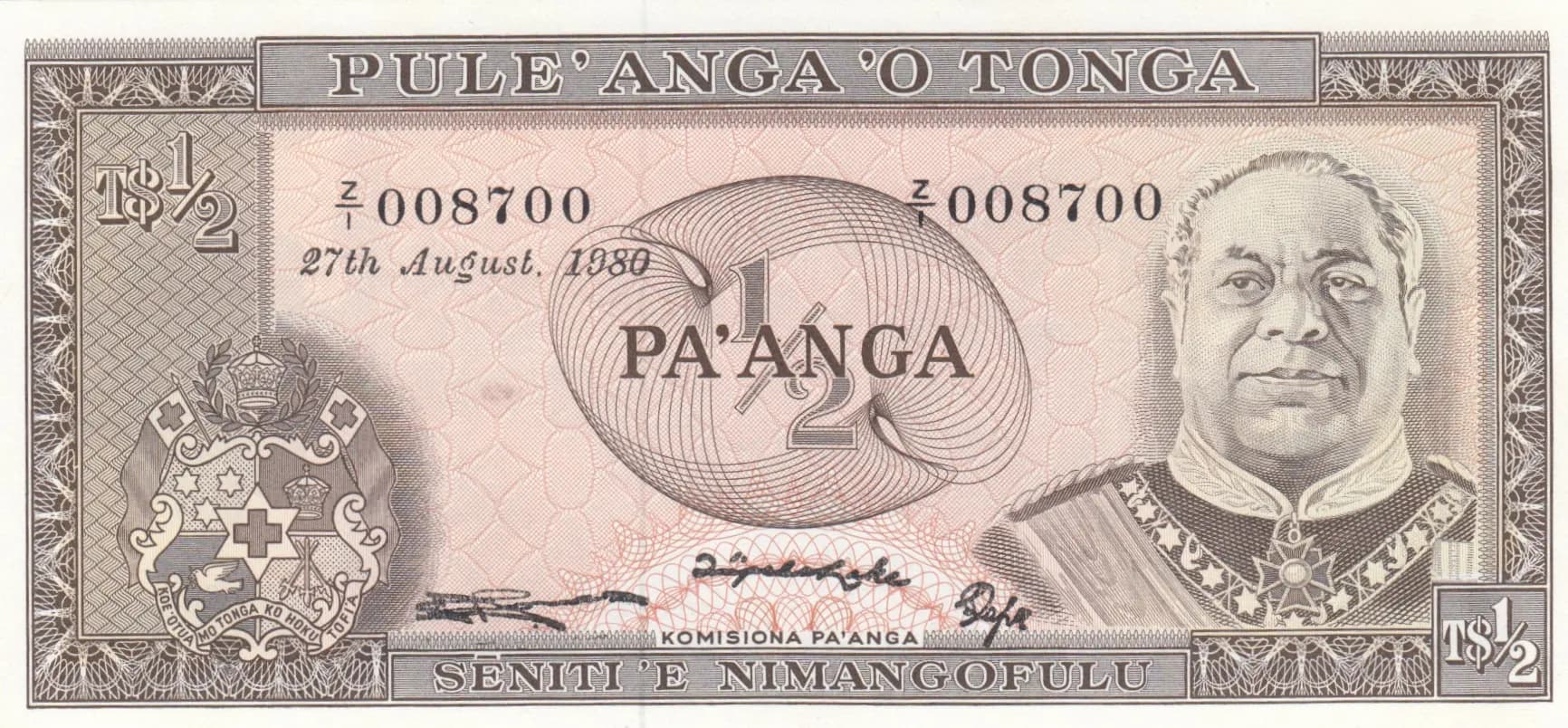
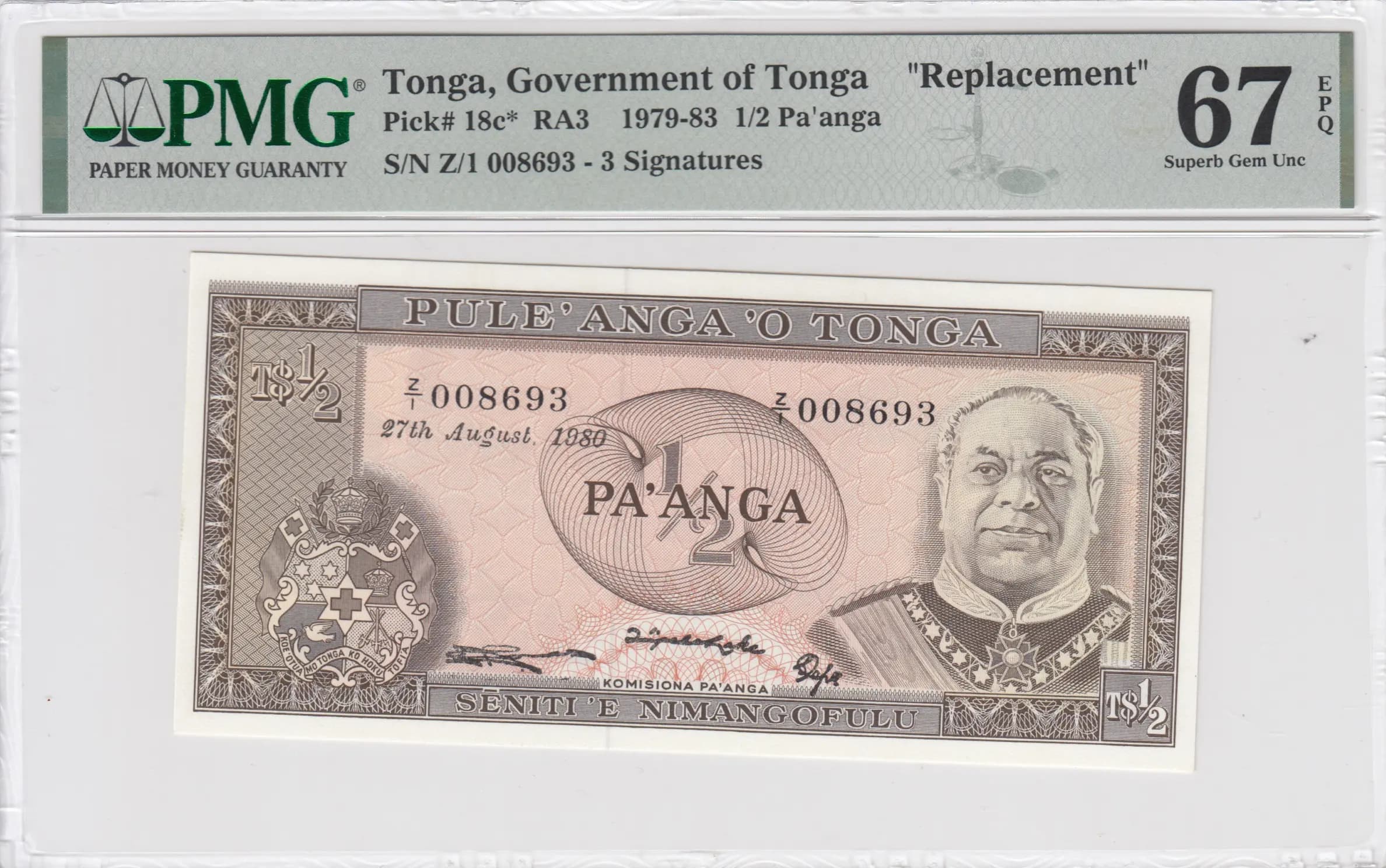
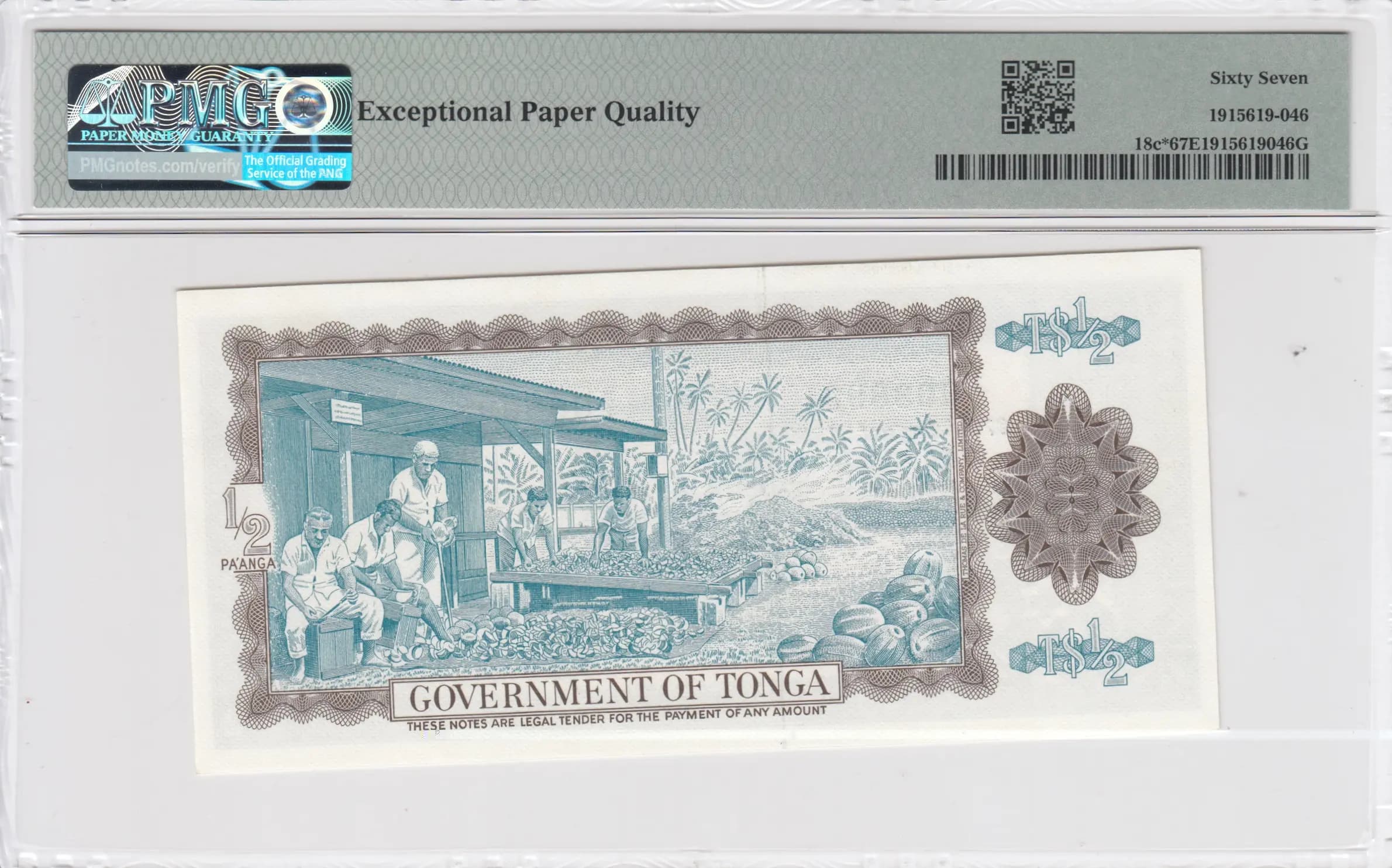
This is a PMG 67 EPQ graded 1/2 pa'anga replacement note from Tonga, dated 27 August 1980, representing a pristine example of this Currency Commission issue. The note displays exceptional preservation with sharp engraving detail throughout, particularly evident in the portrait of King George Tupou IV on the obverse and the intricate coconut workers scene on the reverse. The 'Z/1' serial number prefix definitively identifies this as a replacement note, making it a notable variant for collectors of Pacific currency.
Common. The 1/2 pa'anga denomination was part of Tonga's standard currency circulation during the 1974-1983 issue period, with substantial print runs by Thomas de la Rue. While replacement notes (identified by the 'Z/1' prefix) may represent a smaller subset of the total issue, they are not inherently scarce or rare. The existence of four catalogued Pick variants (P-18b, P-18b*, P-18c, P-18c*) in PMG records suggests reasonable availability across all varieties. Notes in PMG 67 EPQ condition are less common than circulated examples, but the base denomination remains readily available in the collector market.
Issued during the reign of King Siaosi (George) Taufa'ahau IV Tupou in the early 1980s, this note reflects Tonga's modernization period under his leadership. The deliberate choice to depict coconut workers on the reverse underscores the importance of coconut production to Tonga's economy during this era, while the regal portrait of the King on the obverse emphasizes the monarchy's central role in the nation's governance and identity.
The obverse features a formal portrait of King Siaosi (George) Taufa'ahau IV Tupou positioned on the right side, depicted as an elderly gentleman in formal attire wearing a decorated lei or ceremonial necklace. The left side displays Tonga's coat of arms with shield design and crown, accompanied by a large oval denomination medallion in the center. Ornamental palm leaf corner designs in the top corners frame the composition. The reverse depicts a detailed engraved scene of approximately five to six coconut workers engaged in harvesting or processing activities, set within a tropical landscape featuring palm trees and a peaked-roof shelter structure. Decorative rosette symbols appear in the corners, and an ornate scalloped border frames the entire design. The color palette transitions from sepia-brown tones on the obverse to light blue-cyan accents on the reverse.
FRONT: 'Pule'anga 'o Tonga' (Kingdom of Tonga), 'Komisiona Pa'anga' (Currency Commission), 'Pa'anga' (pa'anga currency unit), 'Seniti 'e Nimangofulu' (fifty cents), '1/2' (one half), 'Z/1 008693' (serial number with replacement prefix), '27th August, 1980' (issue date). BACK: 'Government of Tonga', 'These notes are legal tender for the payment of any amount' (legal tender declaration), '1/2' (denomination), 'Pa'anga' (currency unit).
Intaglio engraving (letterpress/recess printing), executed by Thomas de la Rue, London, a world-renowned security printer. The visual analysis reveals characteristic fine-line engraving work, intricate crosshatching patterns, elaborate guilloche designs in borders, and the precision security printing techniques typical of de la Rue's production standards. The sharp detail and security features evident throughout the note—particularly in the portrait rendering and the complex coconut workers scene—are hallmarks of professional intaglio production.
This note is catalogued as Pick 18c* and is definitively identified as a replacement note by the 'Z/1' prefix in the serial number (Z/1 008693). The asterisk designation in Pick 18c* denotes this replacement variety status. Known variants for this base denomination include P-18b and P-18b* (earlier issues) and P-18c and P-18c* (later issues from 1980), with the replacement varieties marked by the asterisk and the distinctive serial number prefix. The specific date of 27 August 1980 confirms this as a later-period issue within the 1974-1983 Currency Commission series.