5 baht 1946
Market Prices
15 salesAbout This Note
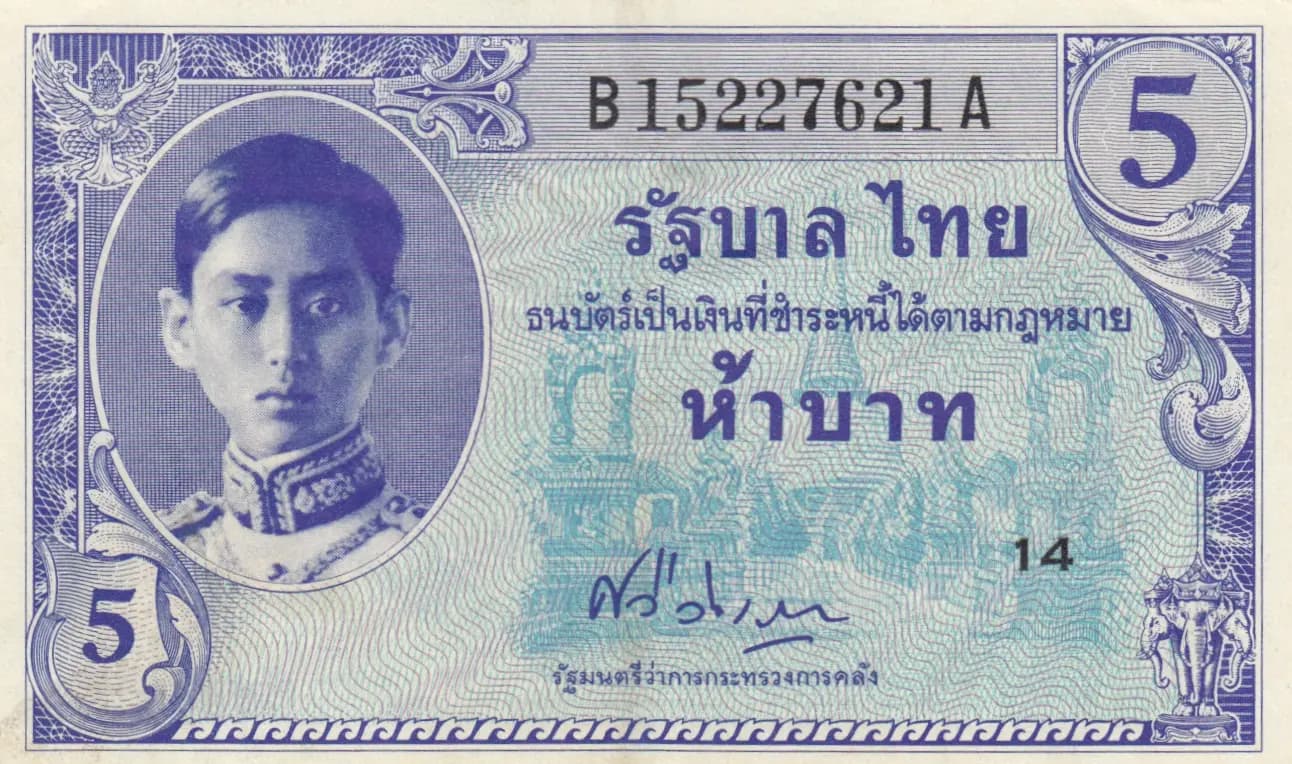
An exceptional example of the 1946 Thai 5 baht note in AU condition, featuring a striking portrait of King Rama VIII in formal military dress uniform rendered in purple and blue tones. This Government of Thailand issue displays pristine condition with no visible wear, folds, or circulation marks, making it an attractive specimen for collectors of Southeast Asian currency. The fine line engraving and intricate guilloché patterns are clearly visible and well-preserved, demonstrating the quality of the Tudor Press printing.
Common. While this is a historical note from 1946, market data from realbanknotes.com shows consistent sales ranging from $14.50 to $180.50 depending on condition and grading service, with AUNC examples typically selling between $61-$101. The catalogued 2016 value for UNC specimens is only $25, and numerous sales records over multiple years indicate regular availability in the numismatic market. Print runs from this period were substantial, and the note has not been recalled or made scarce by historical circumstances.
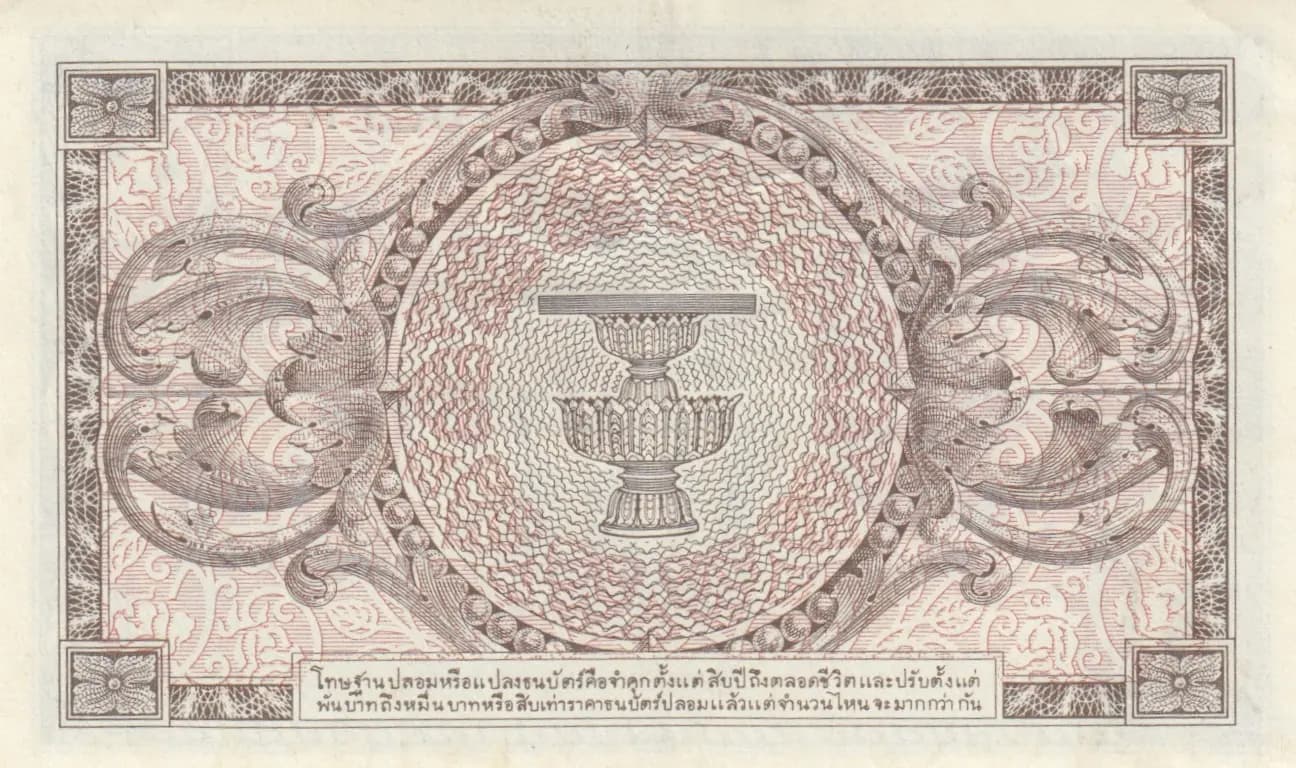
Issued in 1946 following Thailand's post-World War II period, this note commemorates King Rama VIII (Ananda Mahidol), who reigned during a period of significant constitutional and governmental transition in Thailand. The reverse features a ceremonial vessel of the Constitution, symbolizing the nation's commitment to legal and governmental frameworks during the early years of the modern Thai state. The 'MILITARY AUTHORITY' watermark repeated throughout the note reflects the military governance structures that characterized this era of Thai history.
The obverse features a formal three-quarter portrait of King Rama VIII (Ananda Mahidol) positioned on the left side, depicted in full military dress uniform with decorative collar insignia, facing slightly rightward. The design employs a purple and blue color palette with elaborate Thai decorative border elements including ornate corner flourishes, a royal crown symbol in the upper left area, and Thai heraldic eagle emblems. Denomination numerals '5' appear in circular cartouches in the upper right and lower left corners. The reverse is dominated by a large, intricately engraved central emblem—a ceremonial vessel representing the Constitution—enclosed within an ornate circular decorative frame rendered in brown and tan tones. The back features highly symmetrical architectural and ornamental design elements with Thai mythological decorative motifs and scrollwork throughout, consistent with classical Thai heraldic presentation.
Front side: 'ธนบัตรไทย' (Thai banknote); 'ธนบัตรเป็นสิ่งที่ชำระหนี้ได้ตามกฎหมาย' (Banknote is a legal tender for payment); 'ห้าบาท' (Five baht); 'ธนาคารแห่งประเทศไทย' (Bank of Thailand); Serial number: B15227621A; Plate number: 14. Back side: Thai legal/regulatory text describing the banknote's status and regulations as legal tender (specific full translation of extended Thai text on reverse would require specialized linguistic expertise but generally pertains to constitutional and legal tender announcements).
Intaglio engraving (line engraving) with extensive guilloché work, producing the fine line patterns and detailed cross-hatching visible throughout both sides. Printed by Tudor Press, Boston, a security printer renowned for high-quality banknote production. The multi-layered border designs and intricate portraiture demonstrate the sophisticated engraving techniques employed for this series.
This specimen represents the standard P-64 variety with Tudor Press (TP) printing, as confirmed by the PMG population report which notes only one catalogued variant for this Pick number. The serial number B15227621A and plate number 14 are consistent with regular production issues of this type. No overprints, significant date variations, or signature variants are evident in this example.