1 baht 1933
Market Prices
23 salesAbout This Note
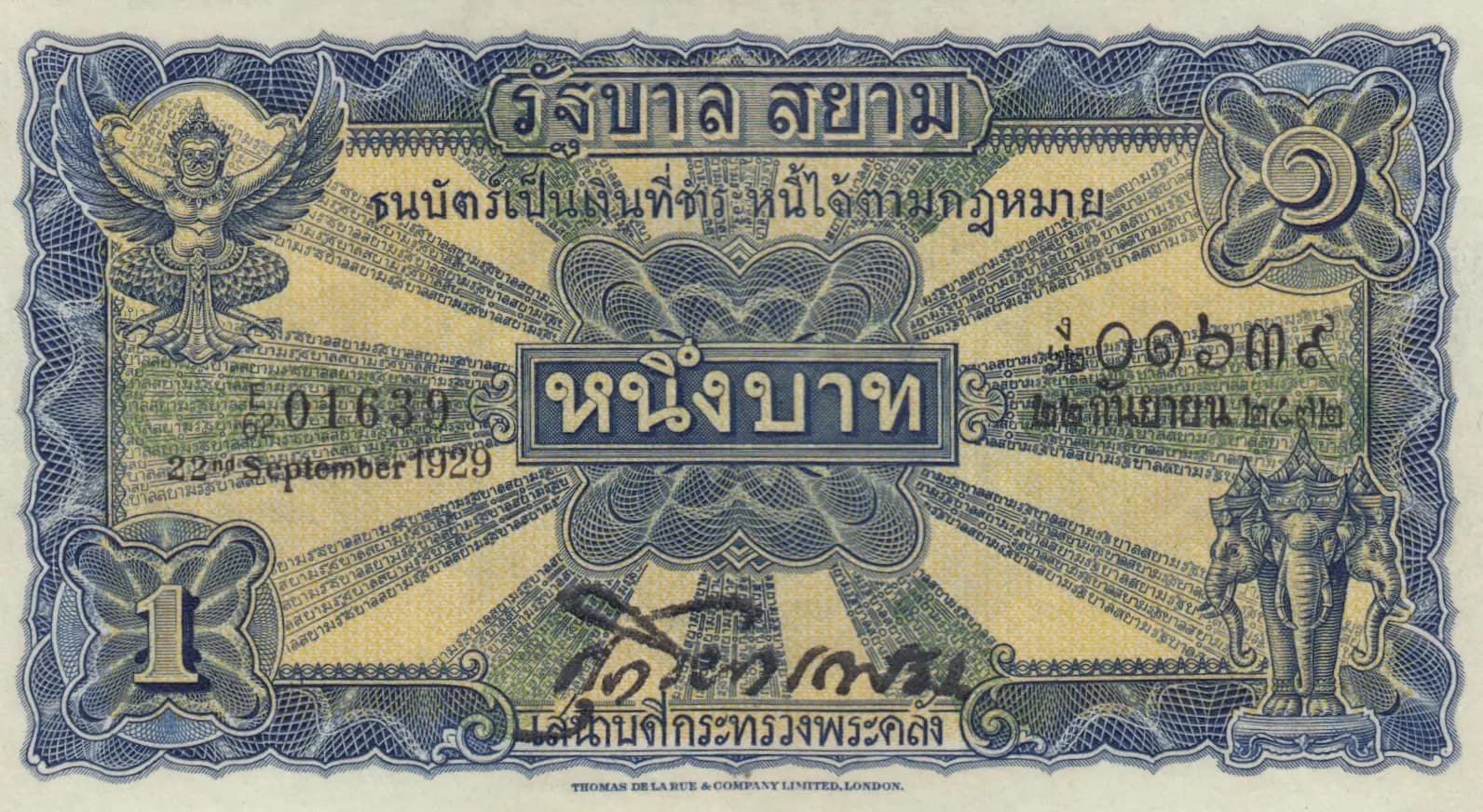
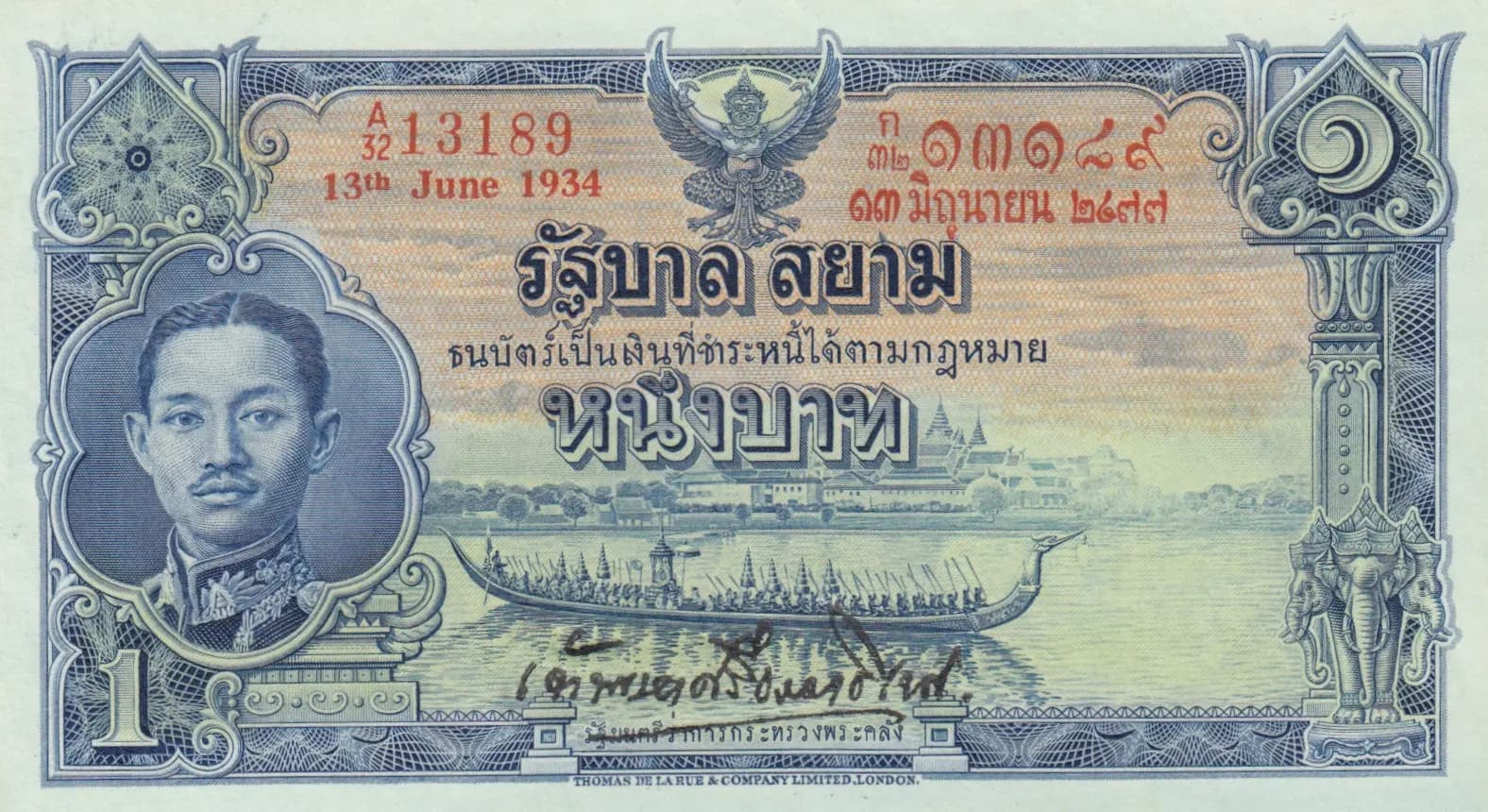
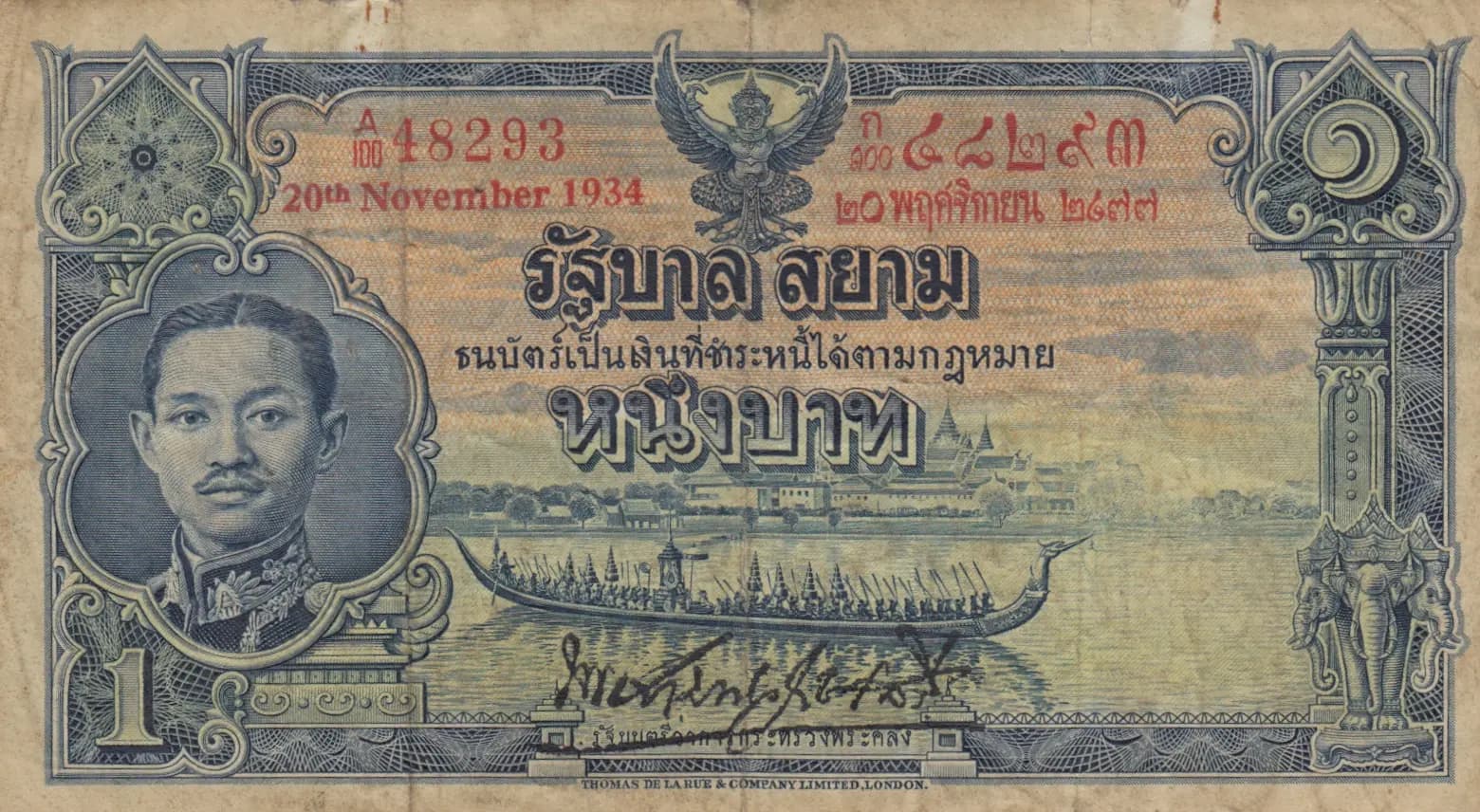
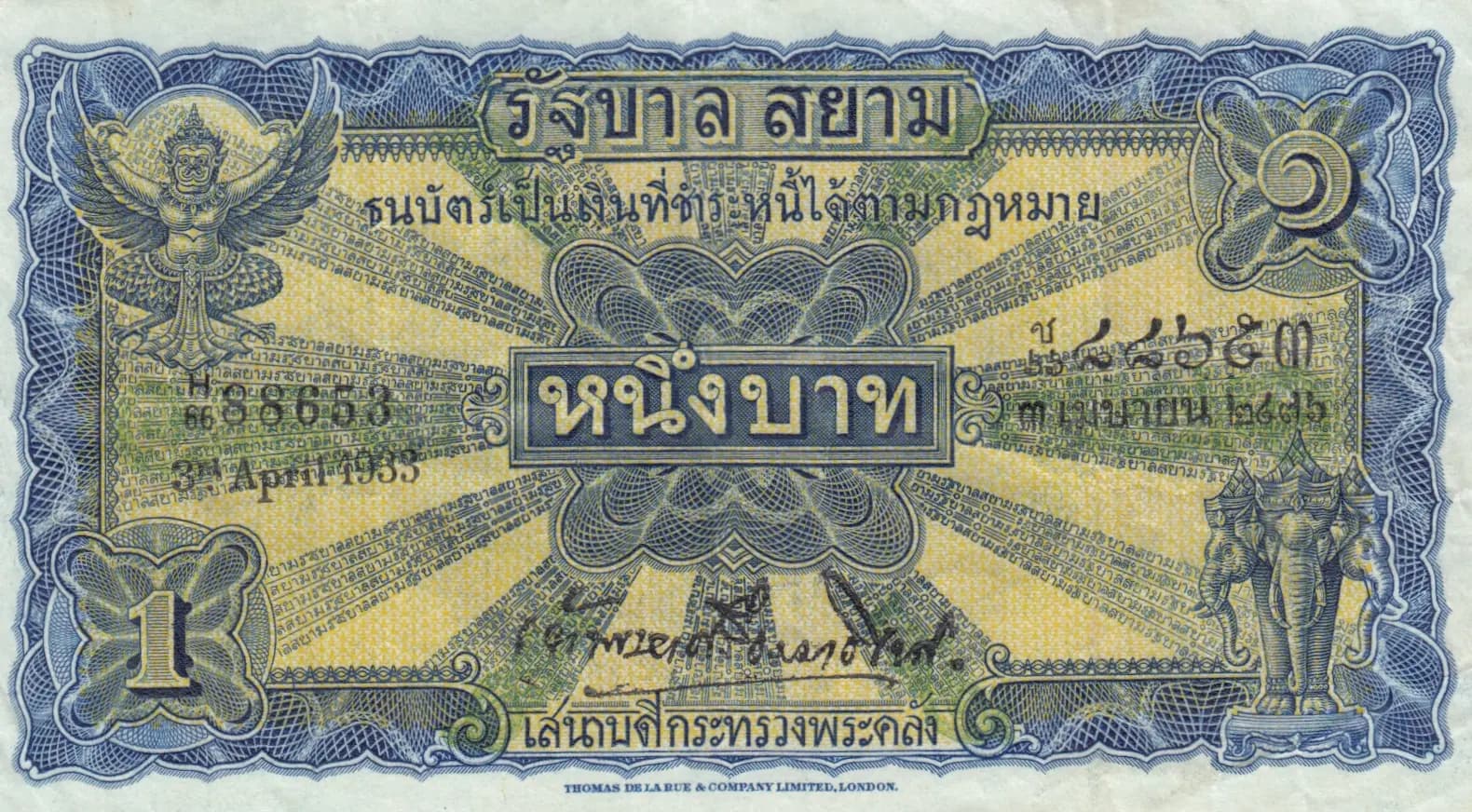
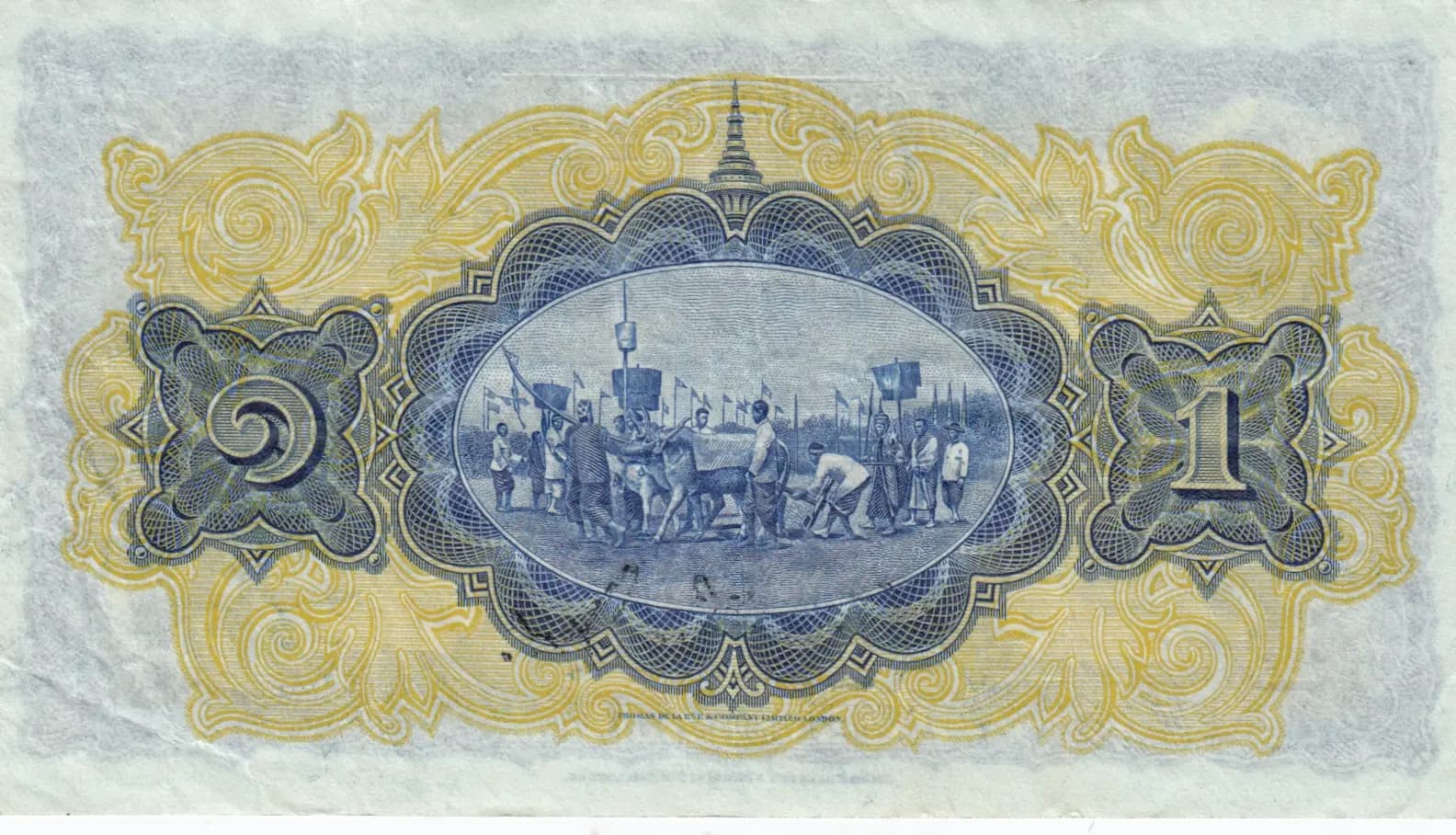
This is a well-preserved example of the Thai Government 1 Baht note from 1933 (Pick P-16b), printed by Thomas de la Rue. The note displays the characteristic blue and gold color scheme with ornate Art Deco-influenced security engraving throughout. The obverse features the mythical Garuda (Thai national symbol) and an elephant pillar, while the reverse depicts an elaborate ceremonial procession scene with mounted figures and urban architecture, all within decorative cartouches. In VF condition with light foxing consistent with age, this note represents a classic example of interwar Southeast Asian currency design.
Common. Despite its age, this note was issued in substantial quantities during the 1928-1933 period and circulated widely. eBay market data confirms common status: examples in Fine condition consistently sell for $30-60, with VF specimens around $60-65 and even high-grade PMG 64-65 examples selling for $150-260. The note has been regularly available in the numismatic market for decades, with robust trading activity indicating no scarcity premium. Pick P-16b represents standard circulation production with no recalled status or limited print run.
This 1 Baht note was issued during the reign of King Prajadhipok (Rama VII, 1925-1935) under the Government of Siam, a period of modernization and administrative reform in Thailand. The ceremonial procession depicted on the reverse likely commemorates an important royal or state occasion, reflecting the monarchy's central role in Thai governance and society during this era. The use of the Garuda symbol on the obverse reinforces Thai national identity and sovereignty during a transitional period in Southeast Asian history.
The obverse features an ornamental design with the Garuda (a winged mythical creature representing the Thai nation) prominently displayed in the upper left corner wearing a crown. To the right stands an elephant pillar, a symbol of Thai royal authority and Buddhist heritage. The note is framed by elaborate decorative borders with floral and geometric patterns in blue and gold, featuring fine guilloche work and interlocking security patterns. The center contains a rectangular cartouche with Thai text identifying the issuer and denomination. The reverse displays a large oval frame with scalloped edges encasing a detailed engraved scene of a ceremonial procession with multiple uniformed figures on horseback, flags or banners, and an urban architectural backdrop suggesting a capital city setting. Large denomination numeral '1' appears on the right side, with the entire reverse bordered by ornate scrollwork and baroque-style floral designs.
Front side: 'จุฬาบาล สยาม' (Chulalongkorn Siam / Kingdom of Siam), 'หนึ่งบาท' (One Baht), 'ธนบัตรเป็นจำนวนที่ดำเนินการตามกฎหมาย' (Banknote issued according to law), 'เสนาบดิกระทรวงพระคลัง' (Ministry of Finance). Back side: '1' (Arabic numeral for denomination).
Intaglio engraving (recess printing) by Thomas de la Rue, London. The note exhibits characteristic fine line engraving with complex guilloche patterns, intricate scrollwork, and security features typical of TDLR's high-security banknote production. Multiple passes of fine parallel lines and detailed pictorial engraving are evident throughout both sides, demonstrating advanced early 20th-century security printing technology.
This note is catalogued as Pick P-16b, one of two identified varieties for the 1 Baht denomination from this series (P-16a also exists). The visual analysis indicates 'Type II text' per community catalog references. The date range shown on the note (1928-11.6.1933) spans the later portion of King Prajadhipok's reign. Varieties within this pick number may relate to signature differences, printer's marks, or minor design modifications, though the core design (blue on yellow underprint, Thomas de la Rue printing) remains consistent.