1 baht 1934
Market Prices
18 salesAbout This Note
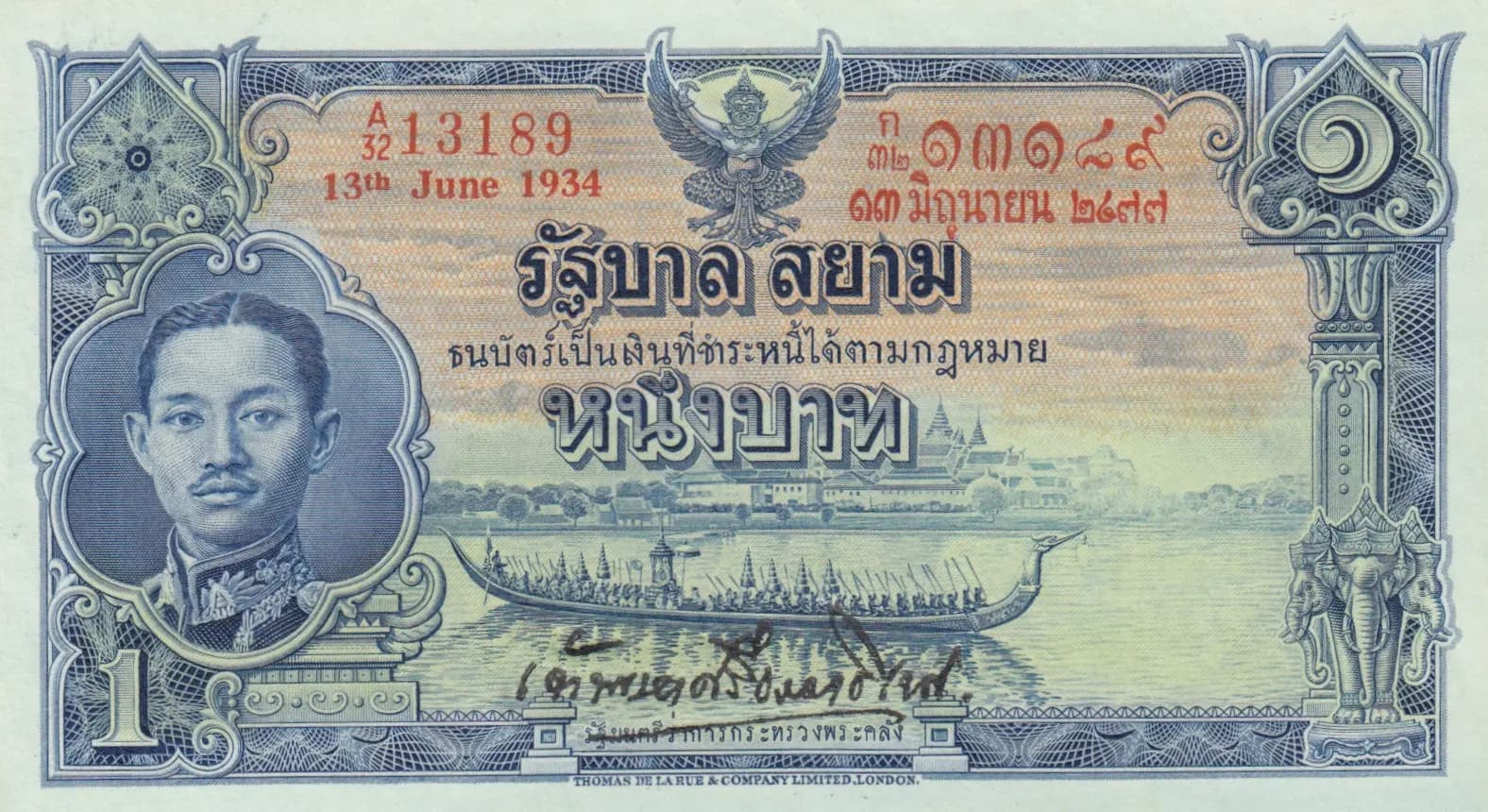
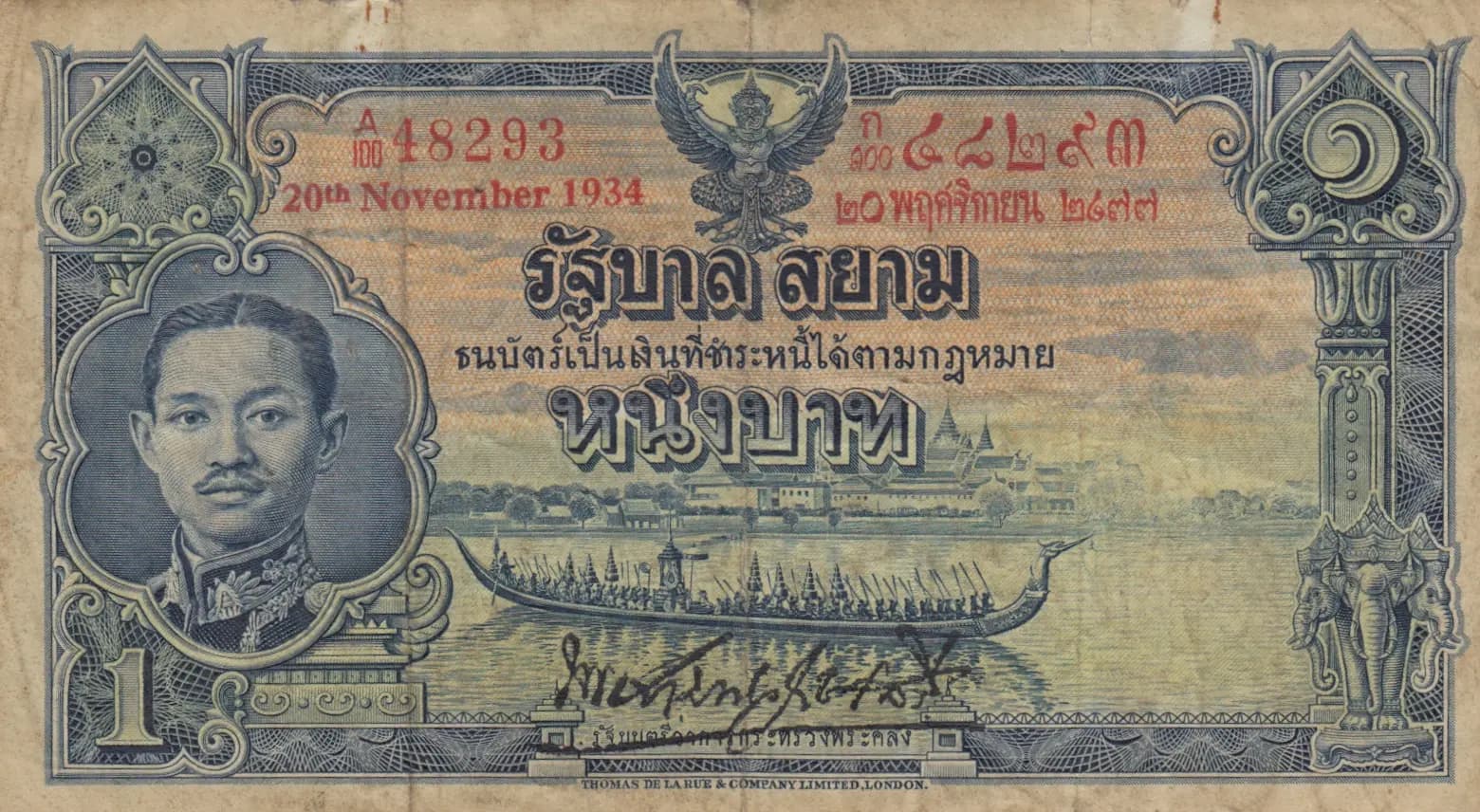
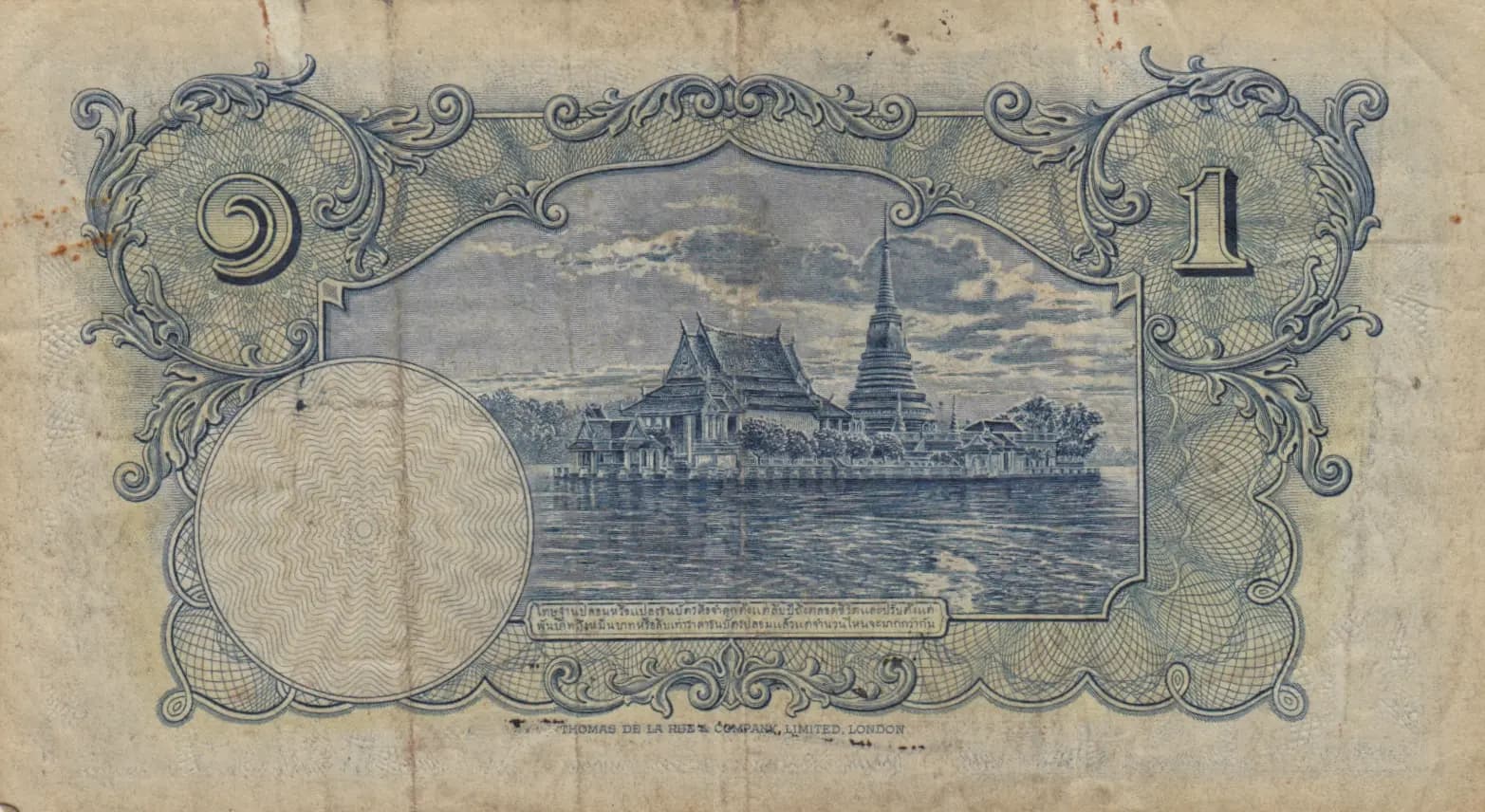
This is a Thai Government of Siam 1 Baht banknote from 1934 (Pick-22), printed by the renowned security printer Thomas de la Rue in London. The note displays the characteristic blue-gray and tan color scheme with a portrait of King Rama VII on the obverse and a Thai temple complex on the reverse. In Fair condition, the note shows expected age-related wear including creasing, foxing, and circulation stains, but remains legible and displays the fine engraving work typical of de la Rue's production.
Common. Market data from eBay sales spanning 2013-2024 shows consistent availability of this note across multiple condition grades, with Fair-condition examples regularly selling for $15-$30 USD. The 2016 catalog value for this denomination in Fair condition is approximately $2-$7.50, reflecting strong circulation and availability. Print runs from the Government of Siam during this period were substantial, and this note experienced normal circulation without subsequent recall or major loss events.
This note was issued during the reign of King Prajadhipok (Rama VII) of Siam, issued between April 1934 and February 1935. The obverse prominently features the royal portrait alongside a ceremonial royal barge, symbolizing the monarchy's connection to Thai waterways and traditional governance. The reverse depicts Phra Samut Chedi (or similar Thai temple complex), representing the nation's Buddhist heritage and spiritual authority during a period of modernization in Siam.
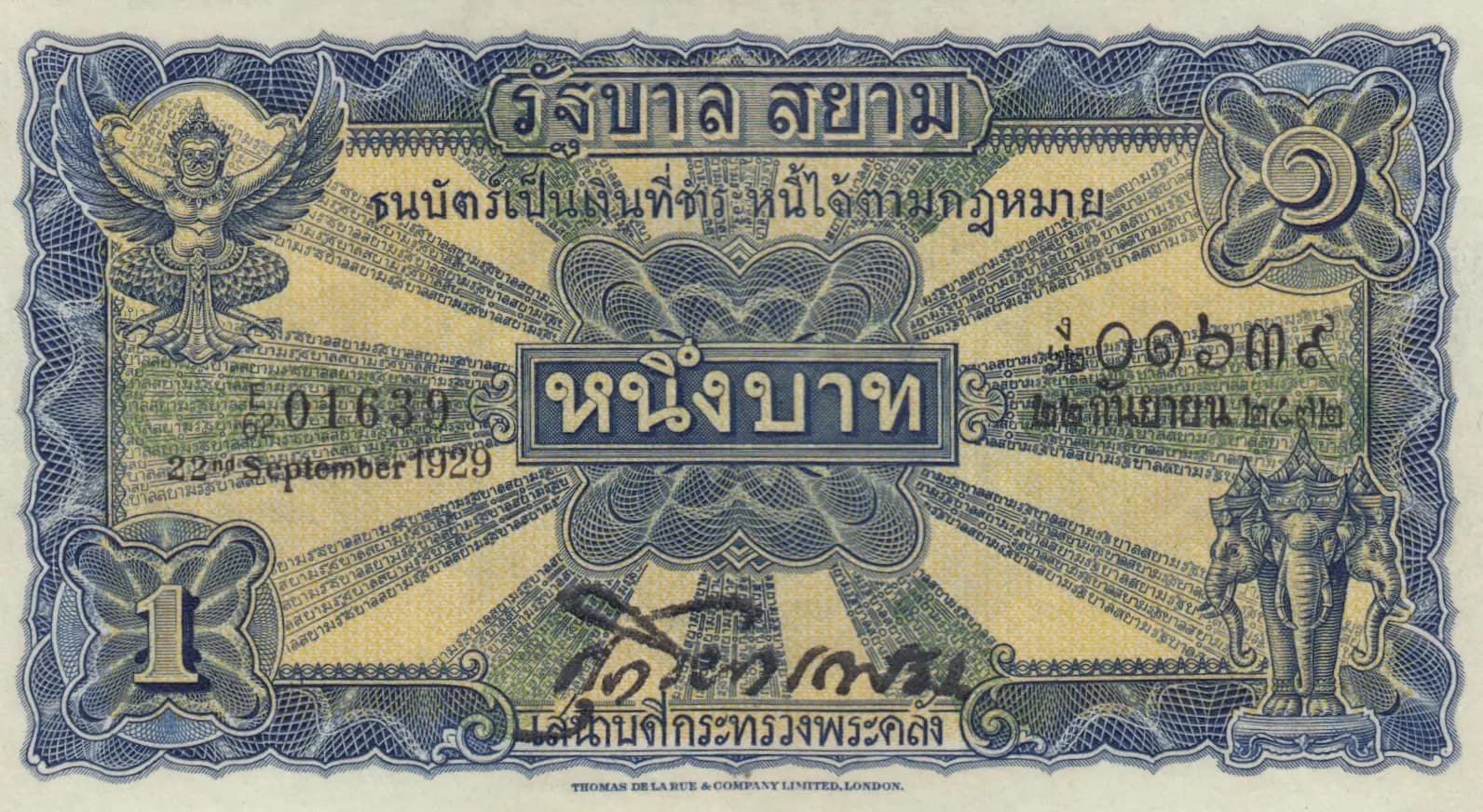
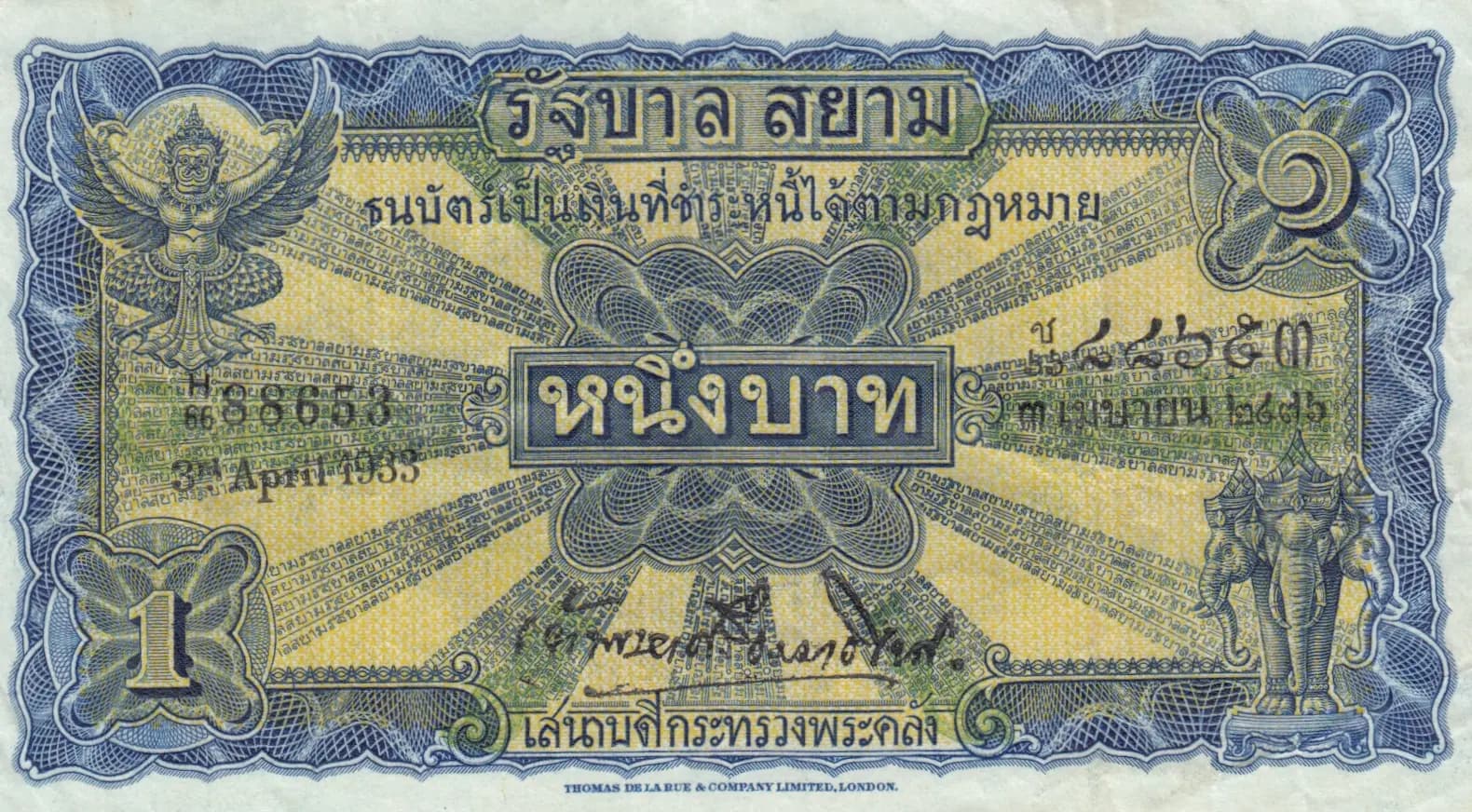
The obverse features a formal portrait of King Prajadhipok (Rama VII) in profile facing left, positioned within an ornamental oval frame on the left side. The center background depicts a ceremonial royal barge on water, representing Thai maritime traditions and royal pageantry. At the top center sits a Garuda (mythical winged figure), a sacred symbol in Thai heraldry and Buddhism. The lower right corner displays a three-headed elephant motif. The design is framed by ornate scrollwork, floral patterns, and geometric borders typical of high-security banknote design. The reverse presents a Thai temple or monastery complex (Phra Samut Chedi) situated on an island surrounded by water, with mountainous terrain in the background, emphasizing Thailand's religious and architectural heritage. Large decorative numeral '1' frames appear in the top and bottom right corners. An empty circular medallion on the left side was likely reserved for additional design elements.
Front side: Thai text includes 'หนึ่งบาท' (One Baht), 'ประเทศไทย' (Kingdom of Thailand), and 'ธนบัตรแบบสิ่งทีระหนึ่งสำมักกฎหมาย' (Banknote type one according to law). English inscription reads 'THOMAS DE LA RUE & COMPANY LIMITED, LONDON.' The note is dated '20th November 1934' with serial number 'A 48293'. Back side: English inscription 'THOMAS DE LA RUE & COMPANY, LIMITED. LONDON.' with Thai inscriptions at the base (partially legible in provided image). The denomination appears as ornamental numeral '1' in corner frames.
This note was produced using traditional intaglio engraving, executed by Thomas de la Rue & Company Limited of London, the renowned British security printer. The visual analysis confirms fine line engraving throughout, intricate geometric patterns, detailed cross-hatching, and complex linework characteristic of intaglio production. This technique provided high security against counterfeiting and was the standard for international banknote production in the 1930s.
This specific example bears serial number 'A 48293' and is dated 20th November 1934 within the official issuance window (1 April 1934 – 25 February 1935). The 'A' prefix suggests it is from the initial series. Pick catalog P-22 notes one variant cataloged by PMG (printer TDLR). No overprints or special markings are evident on this particular note.