1 baht 1924
Market Prices
23 salesAbout This Note
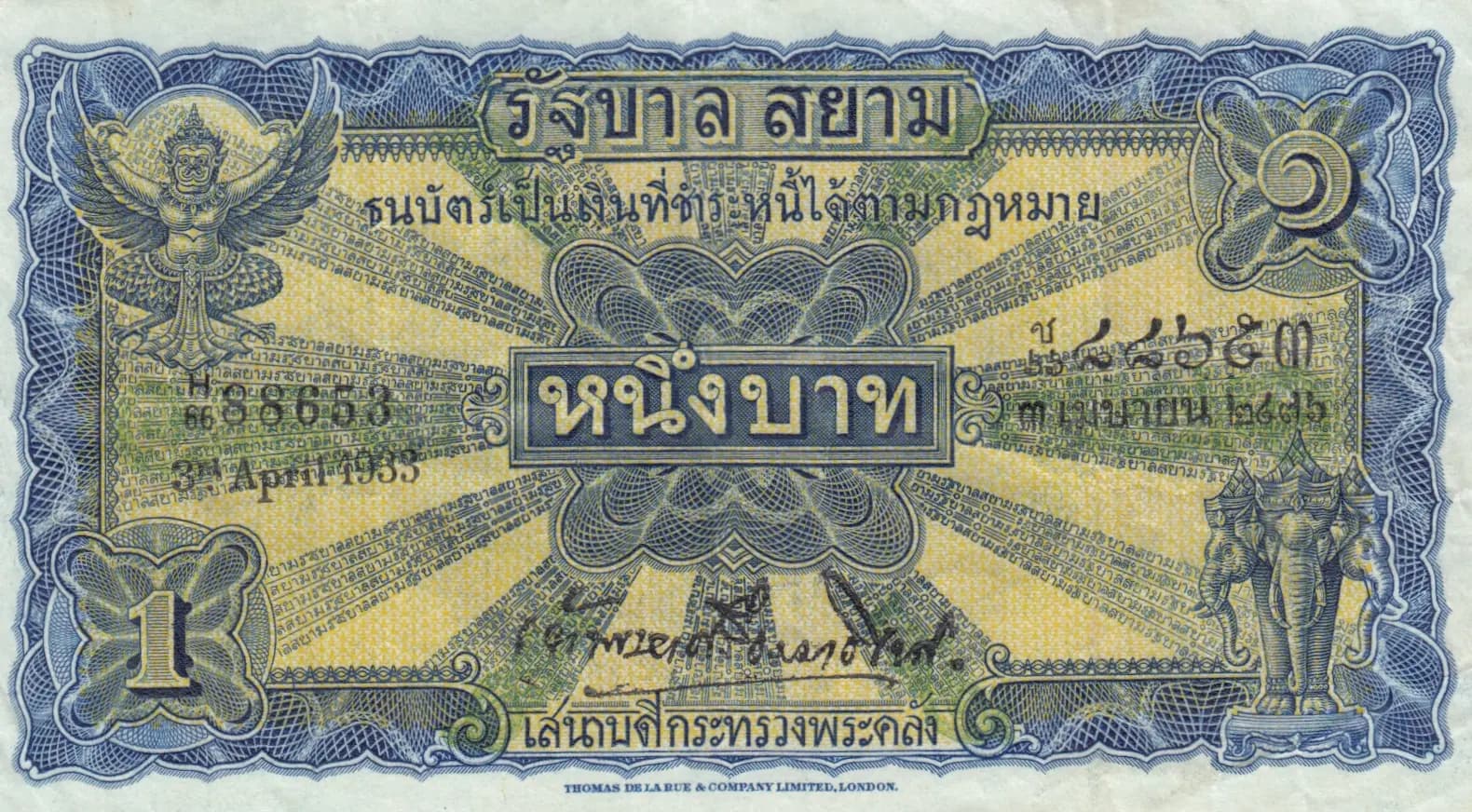
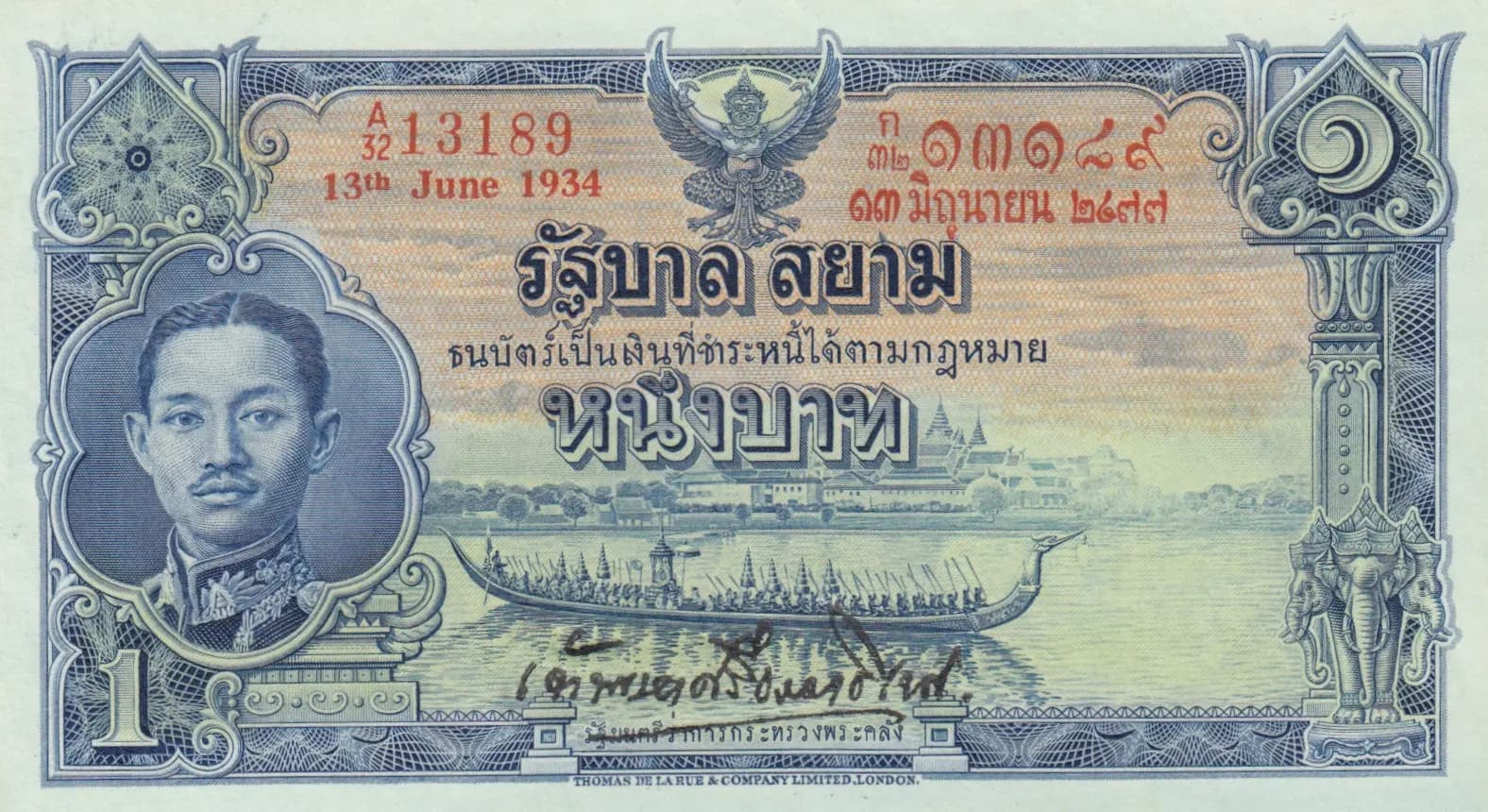
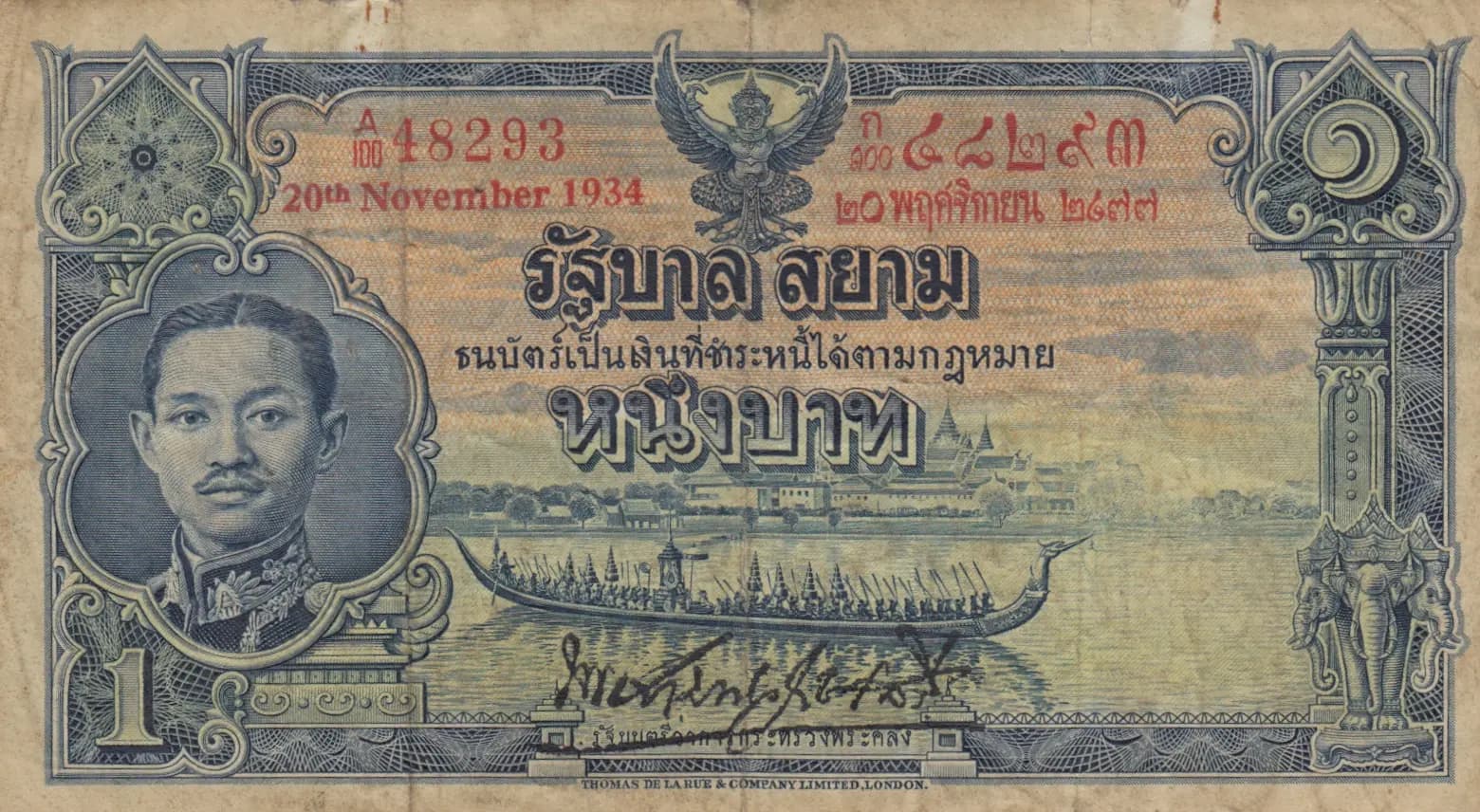
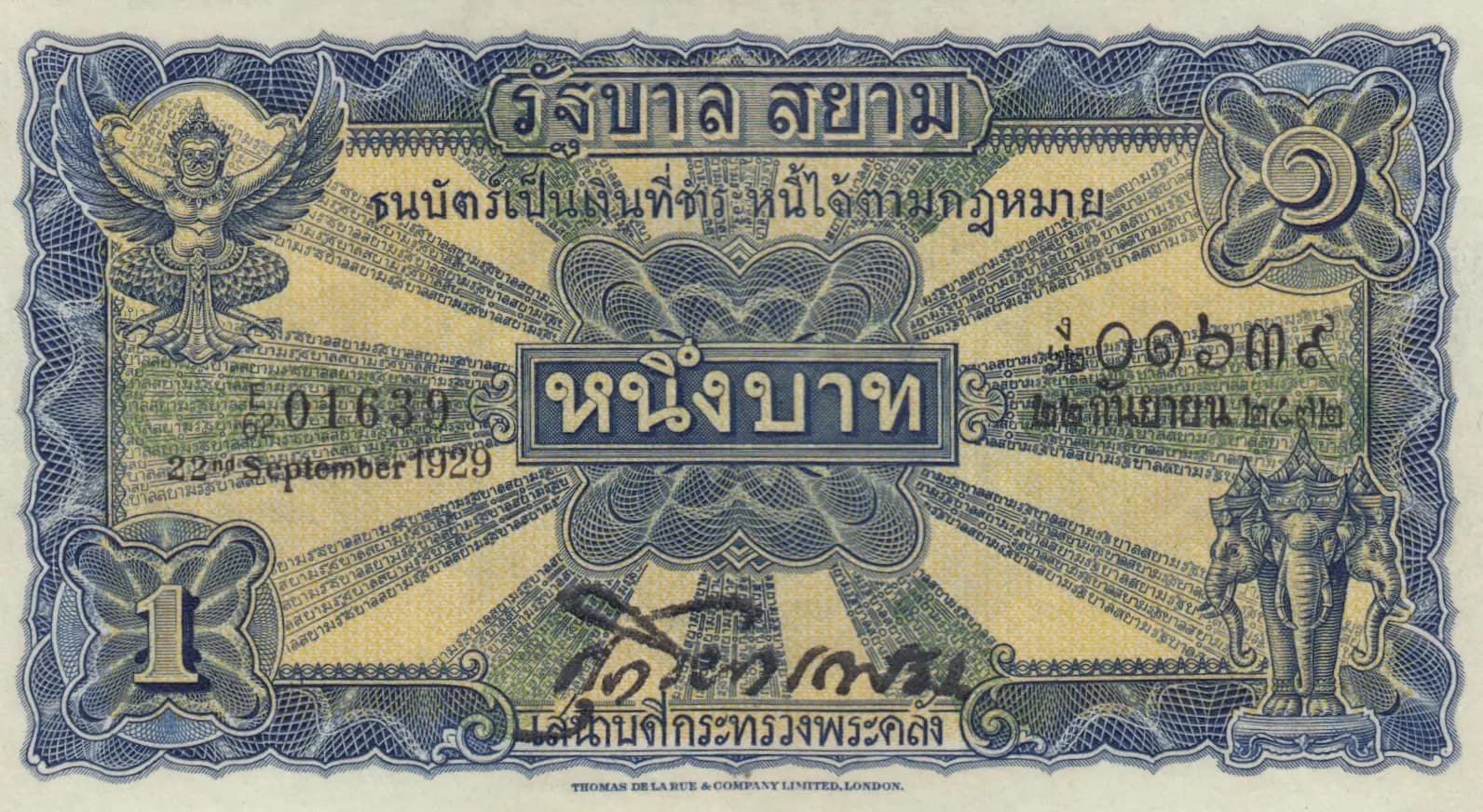
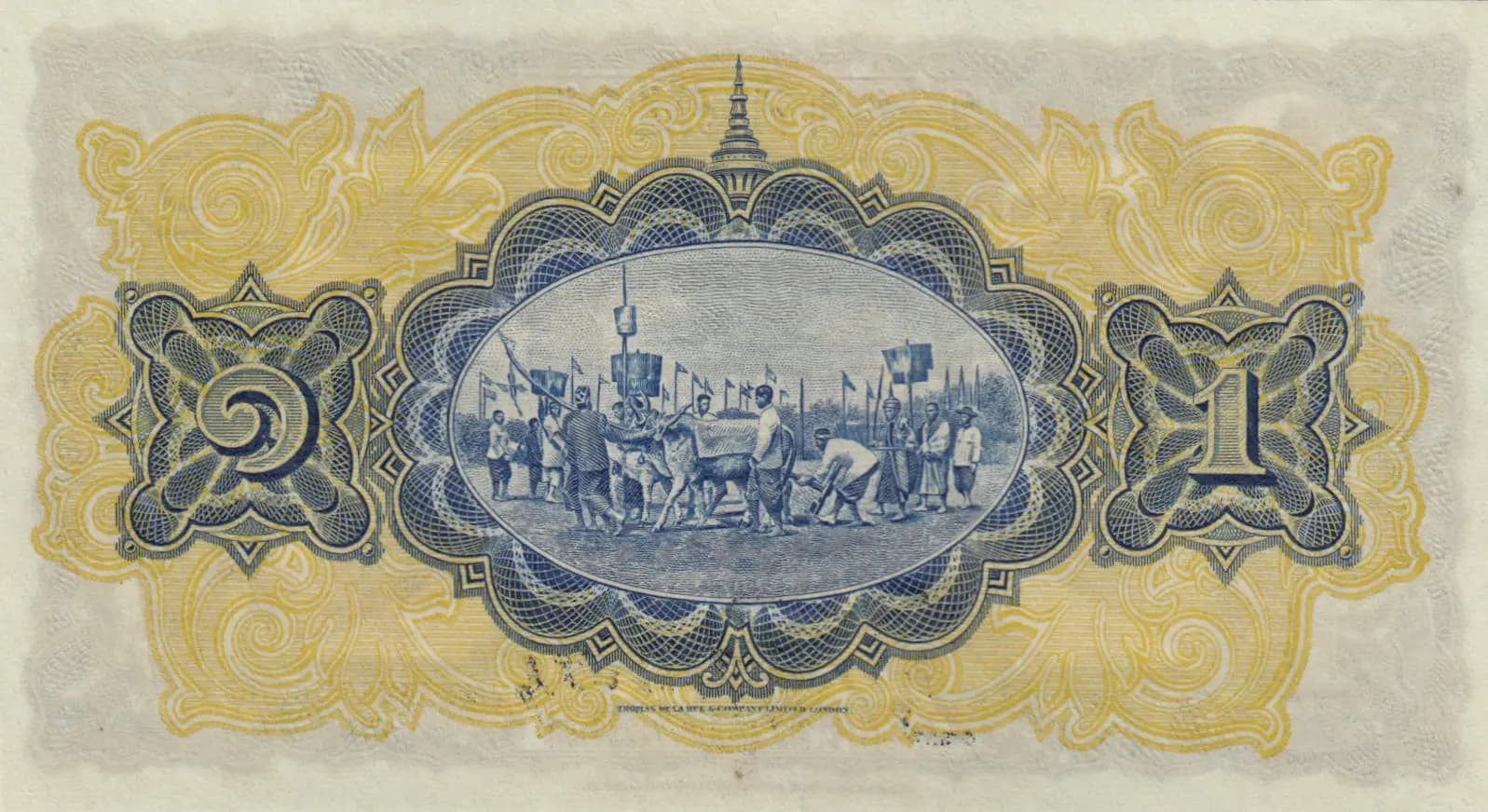
This is a Thailand 1 Baht note from the 1924-1933 Government of Siam issue, graded AU (Almost Uncirculated). The note displays excellent preservation with crisp printing of the characteristic cream/pale yellow background and navy blue decorative elements. The obverse features a mythological Garuda figure and traditional Thai imagery, while the reverse depicts an elaborate ceremonial procession scene—both hallmarks of this Thomas de la Rue engraving. Light handling marks and creasing are consistent with AU grade, making this a desirable example of early Thai currency.
Common. This note falls within the regular issue period (1925-1933) of a major government currency, indicating substantial print runs. eBay market data confirms common status: prices in Fine condition average $30-60, with AU examples selling for $155-242. These are readily available on the numismatic market at modest premiums over lower grades. No evidence of short print runs, recall, or scarcity exists for Pick 16b.
This 1924-1933 issue represents Thailand's (then Siam's) transition to modern centralized currency during a period of political and economic modernization. The Garuda (divine eagle) symbolism reinforces Thai royal authority, while the ceremonial procession depicted on the reverse reflects the importance of formal court ceremonies in Thai governance of the era. Thomas de la Rue's London production indicates Siam's reliance on established British security printers, a common practice among non-European nations seeking high-security banknotes.
The obverse features a Garuda (mythological eagle of Southeast Asian tradition) rendered in gold on the left, symbolizing divine protection and royal authority in Thai tradition. A standing figure in formal traditional Thai attire occupies the right side. The denomination cartouche reads 'One Baht' in Thai script. The entire design is framed by intricate geometric borders with four-lobed floral medallions in corners—a hallmark of Thomas de la Rue's ornamental style. The reverse presents an elaborate oval vignette depicting a formal ceremonial procession with multiple figures, flags, and architectural elements suggestive of a state occasion or royal ceremony. This scene emphasizes the note's connection to Thailand's government authority and ceremonial traditions. The palette throughout employs cream/pale yellow field stock with navy blue and gold decorative elements, creating strong visual distinction and security through color separation.
Front: 'เจษฎาบัล สยาม' (Kesatryabat Sayam / The Kingdom of Siam), 'หนึ่งบาท' (One Baht), 'September 1929' (date of issue), 'THOMAS DE LA RUE & COMPANY LIMITED, LONDON.' (printer identification), 'ธนบัตรึ่งบันทึกในมหาวิทยา' (Treasury Note of the Kingdom). Back: 'THOMAS DE LA RUE & COMPANY LIMITED, LONDON.' (printer identification). The September 1929 date places this within the stated issue range of 1925-1933.
Intaglio engraving by Thomas de la Rue & Company, London, as identified in printer credit lines. The fine line work visible in borders, the complex vignette on the reverse, and the multi-color printing (cream base with navy blue and gold overprints) are characteristic of high-security intaglio production from this period. The intricate geometric patterns and fine engraved details throughout provide both aesthetic appeal and counterfeiting resistance through technical complexity.
This is identified as Pick 16b variant (Thomas de la Rue printing). The PMG population report indicates two catalogued variants exist (P-16a and P-16b), both printed by TDLR. Based on visual inspection, this example displays 'Type II text' characteristics noted in community cataloging sources and bears the September 1929 date within the 1928-1933 documented circulation period for this variant. The Garuda and ceremonial procession designs are consistent with the standard iconography for this Pick number.