20 shillings 1966 specimen
Market Prices
7 salesAbout This Note
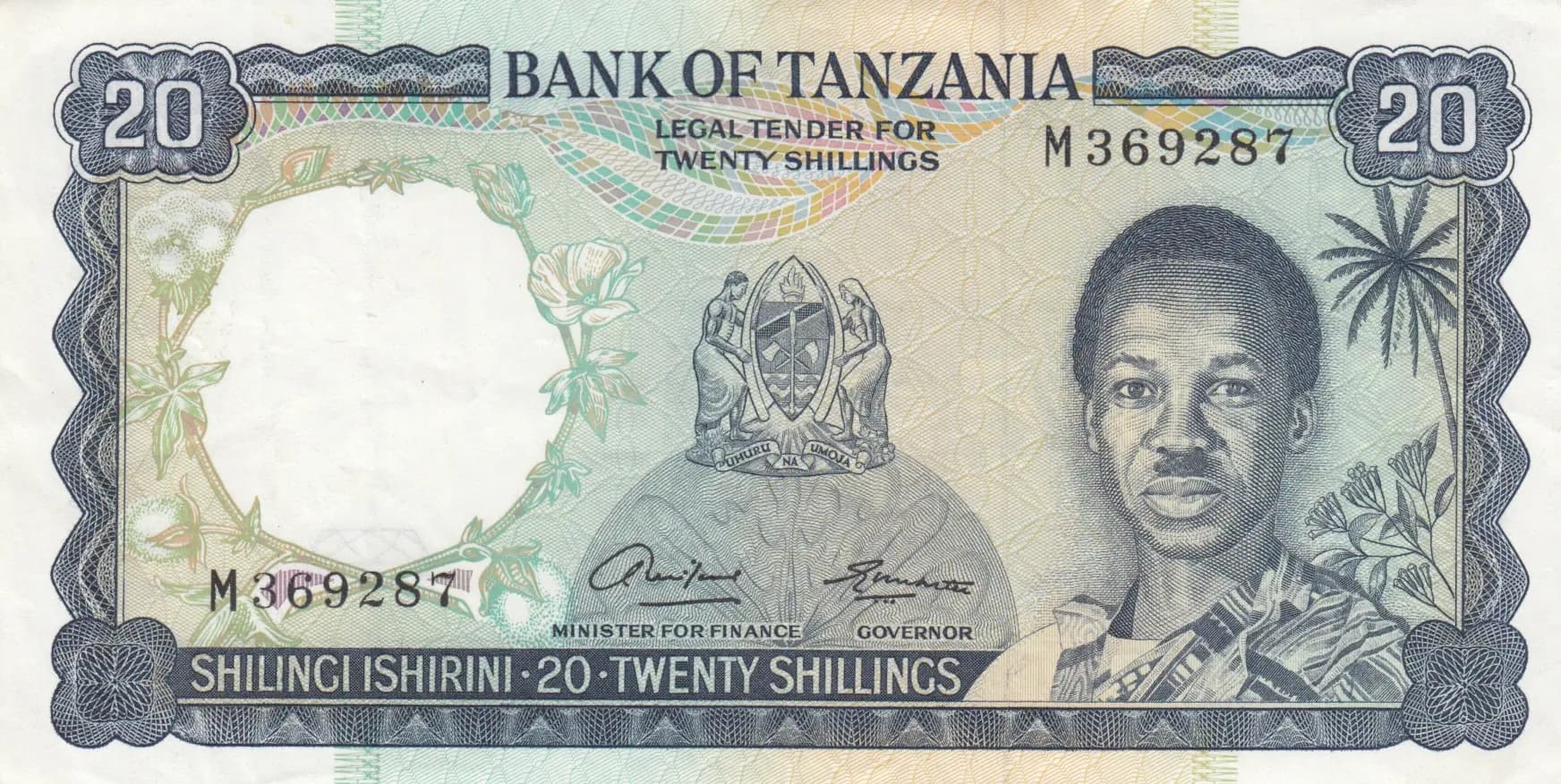
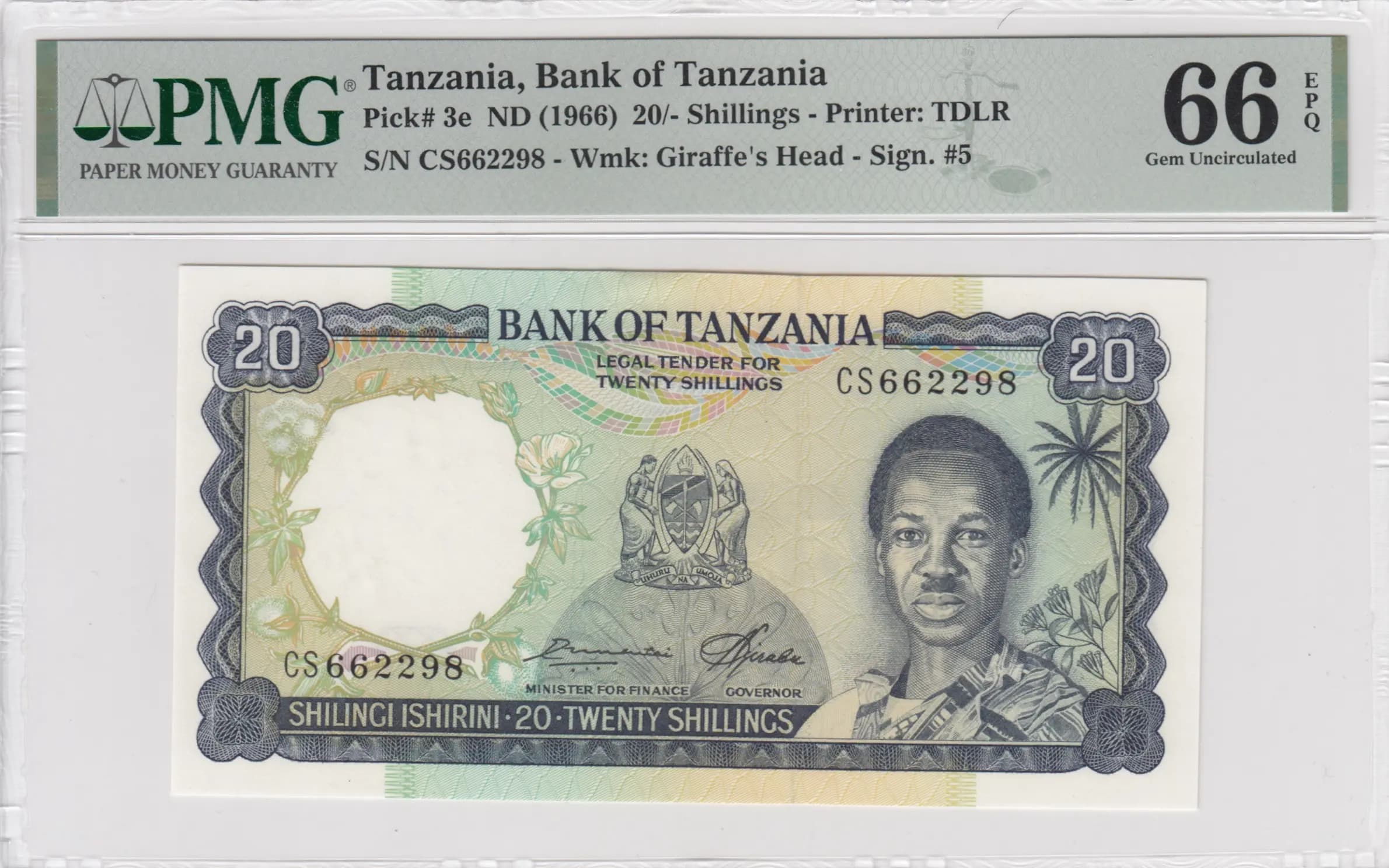
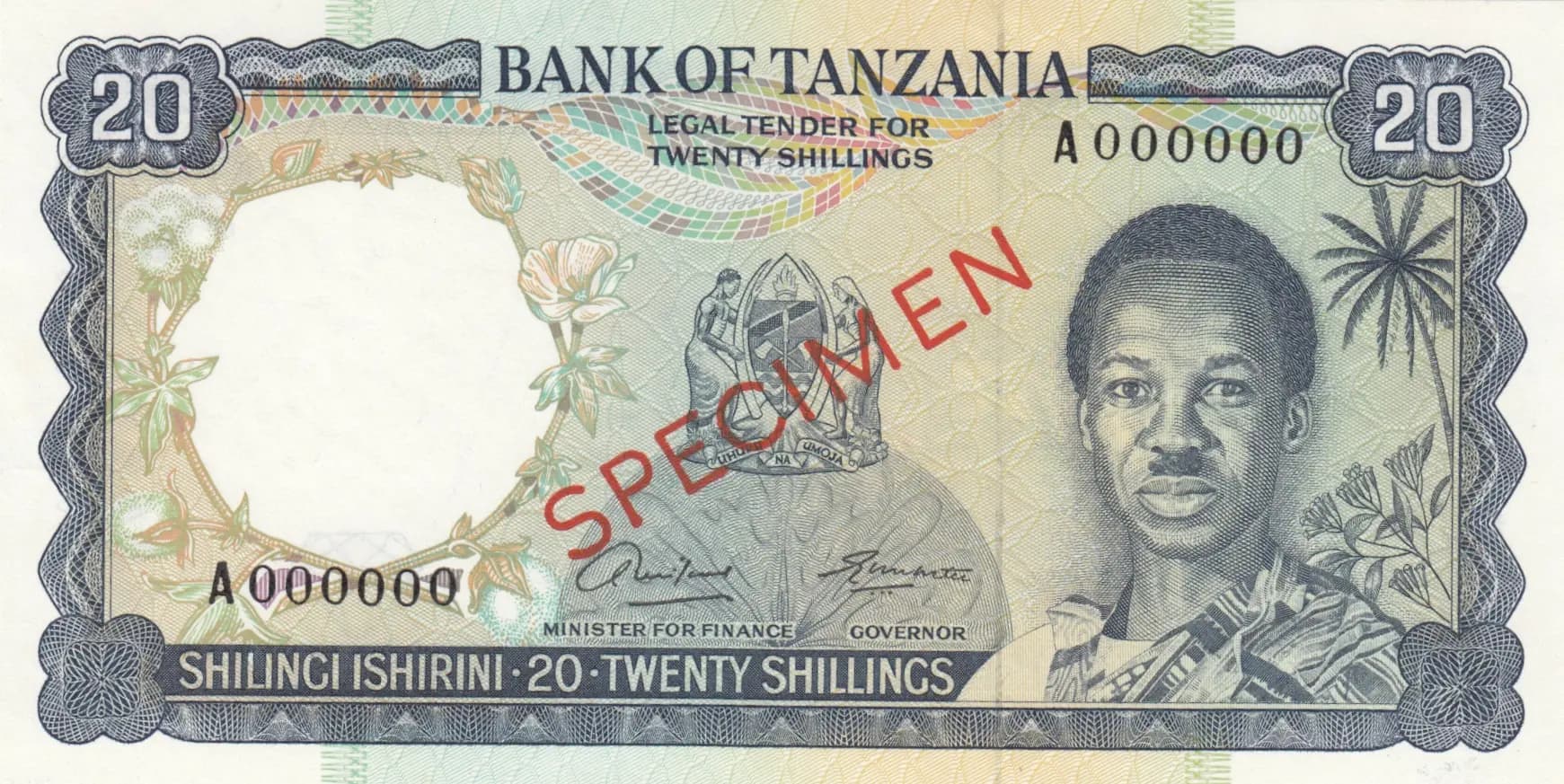
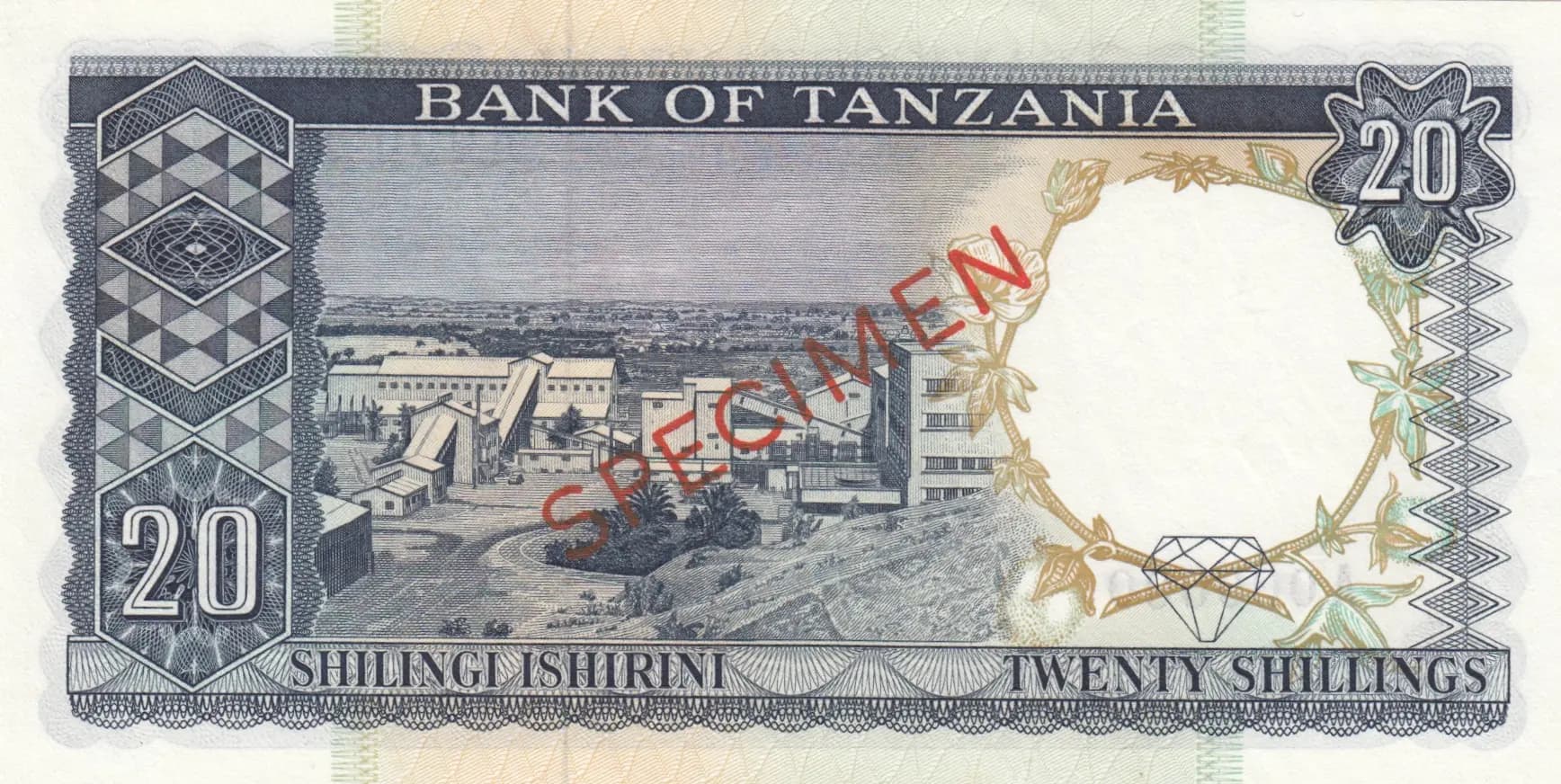
This is a Bank of Tanzania 20 Shillings specimen note from 1966, featuring President Julius Nyerere's portrait on the obverse and an architectural landmark (factory/government building complex) on the reverse. The note is in uncirculated condition with crisp, clean surfaces and displays the characteristic red diagonal 'SPECIMEN' overprint. As a specimen note with serial number A000000, this is a presentation piece rather than currency intended for circulation, making it a notable item for collectors of early African numismatics and Tanzanian banking history.
Common. While specimen notes are technically non-circulating and somewhat scarcer than regular issues, eBay market data shows UNC examples consistently selling in the $12–$21 range, indicating steady availability in the collector market. The PMG catalog lists 19 variants of the base P-3 Pick number, suggesting a substantial original print run and widespread survival. The specimen designation (P-3as) does not represent a particularly scarce variant. Most early Tanzanian banknotes are common in numismatic commerce.
Issued in 1966, the year Tanzania adopted its own currency following independence, this note represents the Bank of Tanzania's first monetary emission and marks a crucial moment in the nation's post-colonial economic sovereignty. The portrait of President Julius Kambarage Nyerere, Tanzania's founding president, anchors the note's patriotic imagery, while the industrial/architectural complex depicted on the reverse symbolizes the nation's development aspirations during the early independence period. The bilingual inscriptions (English and Swahili) reflect Tanzania's commitment to both international commerce and cultural identity in the newly independent state.
The obverse features President Julius Kambarage Nyerere positioned prominently on the right side, rendered in classical engraved portrait style facing forward. The note's central element is the Tanzanian coat of arms, displaying the national shield with heraldic figures and architectural elements. Ornamental botanical designs frame the composition—floral motifs on the left side and a stylized palm tree on the right—evoking Tanzania's natural heritage. The reverse showcases an institutional or industrial building complex, depicted as a multi-story structure with landscaped grounds, symbolizing national development and modernization. Both sides employ fine guilloche patterns and geometric security elements (diamond patterns on reverse) as decorative and protective measures.
Front side: 'BANK OF TANZANIA' (English) — issuing authority; 'LEGAL TENDER FOR TWENTY SHILLINGS' (English) — legal tender declaration; 'SPECIMEN' (English) — specimen overprint; 'A000000' — specimen serial number; 'MINISTER FOR FINANCE' and 'GOVERNOR' — signature titles; 'SHILINCI ISHIRINI · 20 · TWENTY SHILLINGS' (Swahili/English) — denomination in both official languages. Back side: 'BANK OF TANZANIA' (English); 'SPECIMEN' (English) — specimen overprint; 'SHILINCI ISHIRINI' (Swahili) — 'Twenty Shillings'; 'TWENTY SHILLINGS' (English); '20' — large denomination numeral.
Intaglio (copperplate) engraving, as evidenced by the fine line work, crisp details in the portrait and heraldic imagery, and the precision of the guilloche and geometric patterns. According to the PMG catalog reference, this note (P-3as variant) was printed by TDLR (Thomas de la Rue), a premier security printer known for intaglio production. The specimen overprint in red was applied separately using letterpress or lithographic techniques following the intaglio printing of the base design.
This note is cataloged as Pick P-3as (20 Shillings, 1966, specimen), indicating it is the specimen variant of the P-3 base note. The 'as' suffix denotes specimen status. Specimen notes typically bear zero or low serial numbers (in this case A000000, consistent with specimen practice), lack signatures or bear facsimile signatures, and carry 'SPECIMEN' overprints. The TDLR printer attribution is specific to this and related 20-shilling variants (P-3a through P-3e all show TDLR as the printer). Serial number prefix variants (ZZ, ZY) mentioned in the reference indicate replacement notes exist, though this specimen carries the baseline 'A' series identifier consistent with specimen issue protocols.