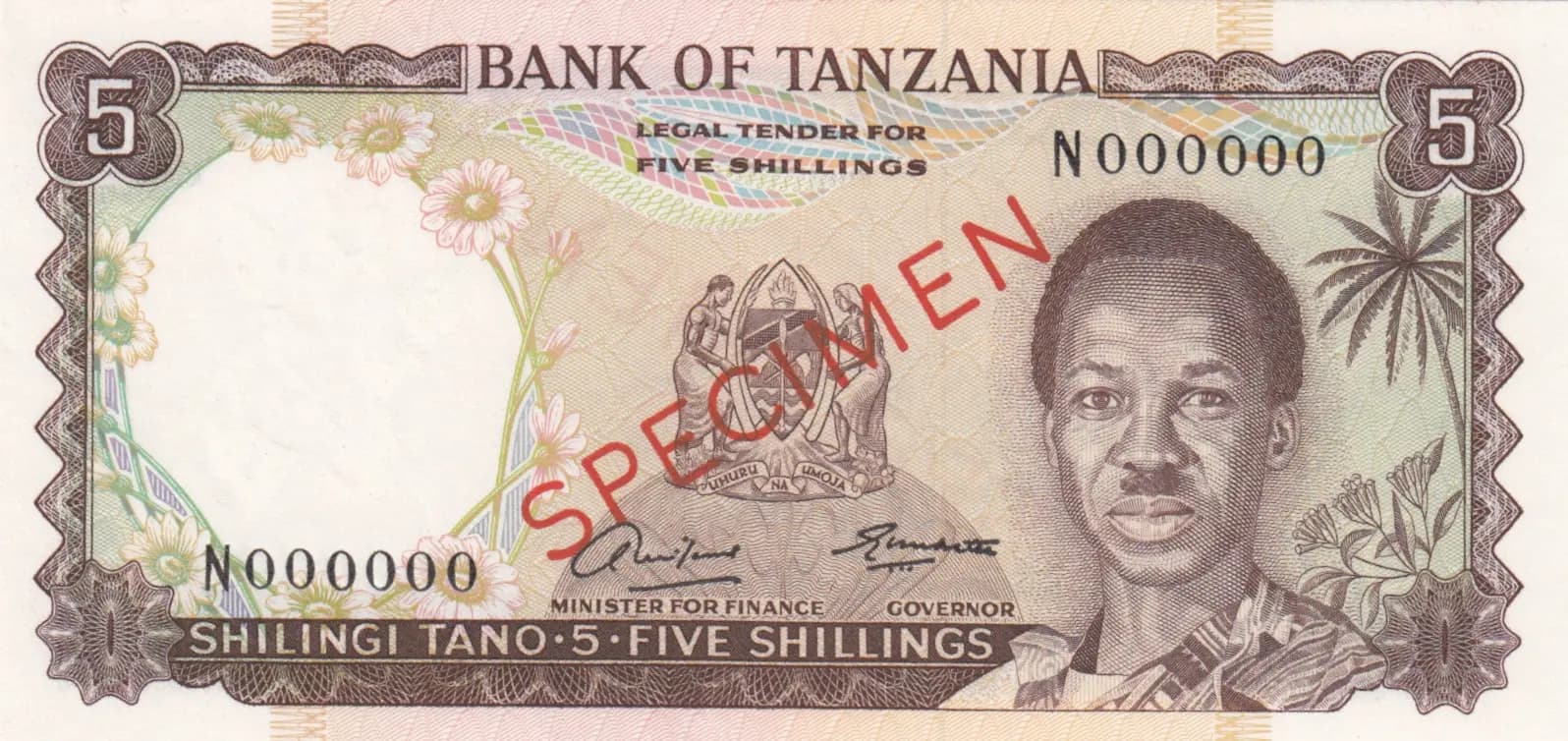
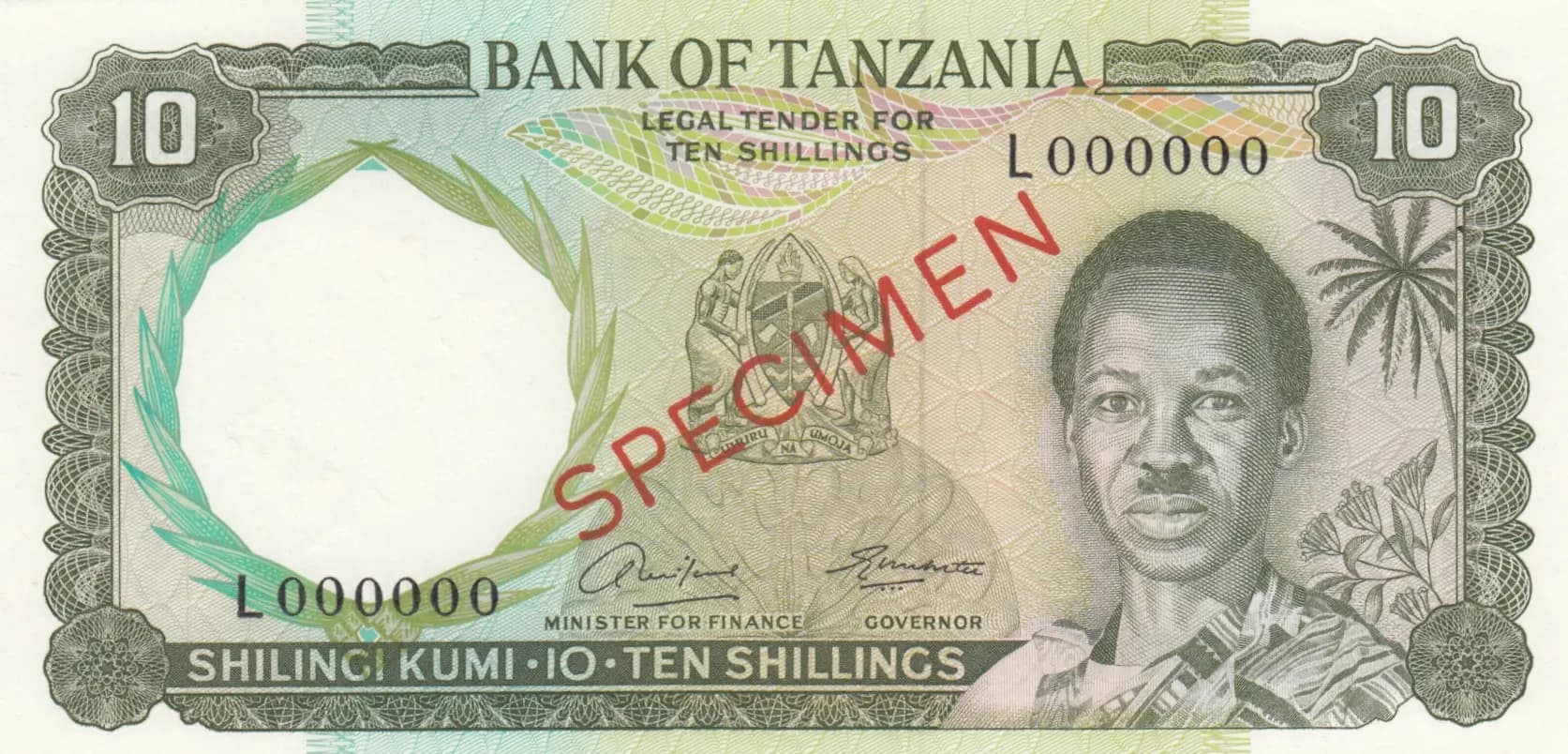
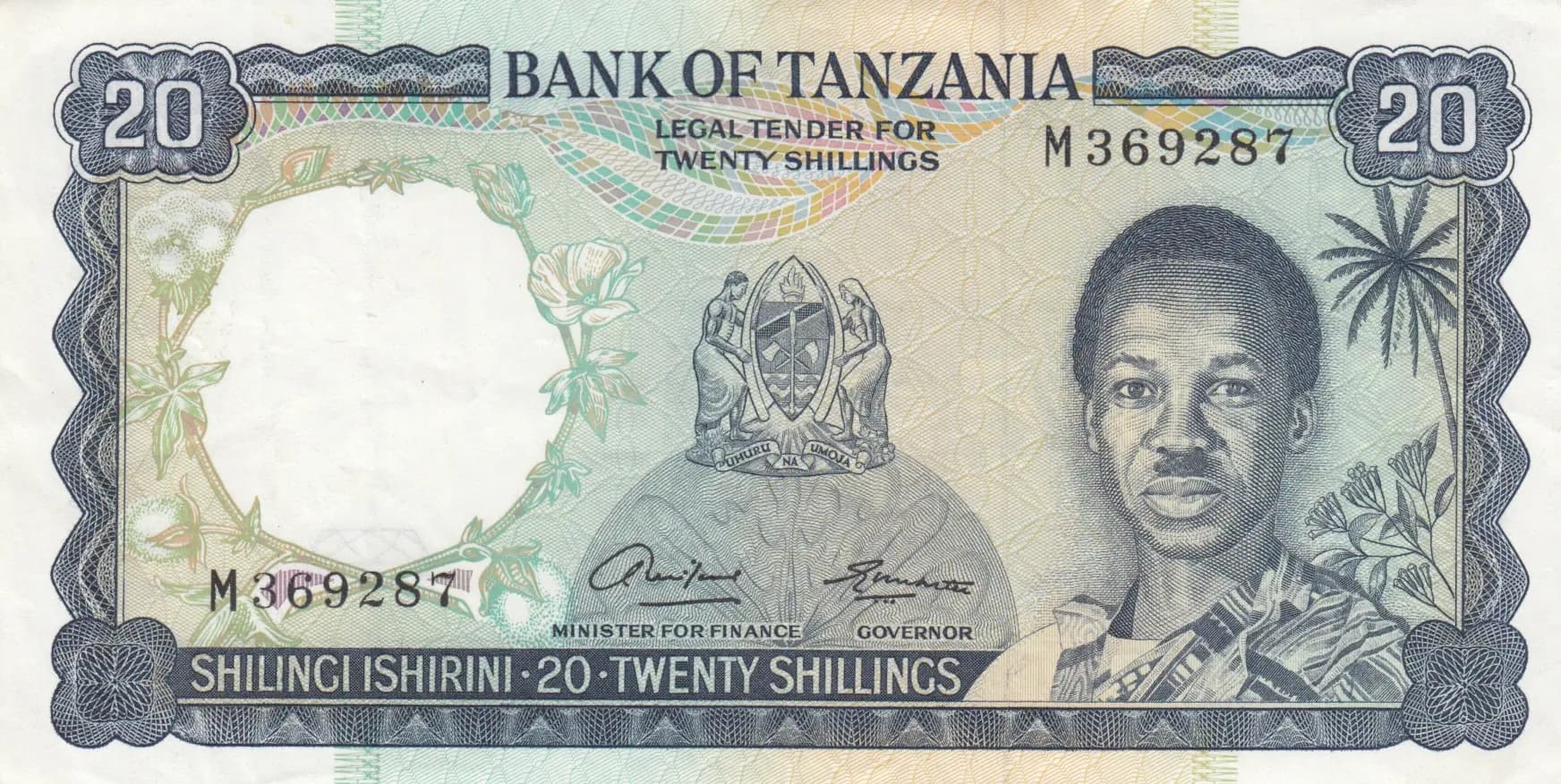
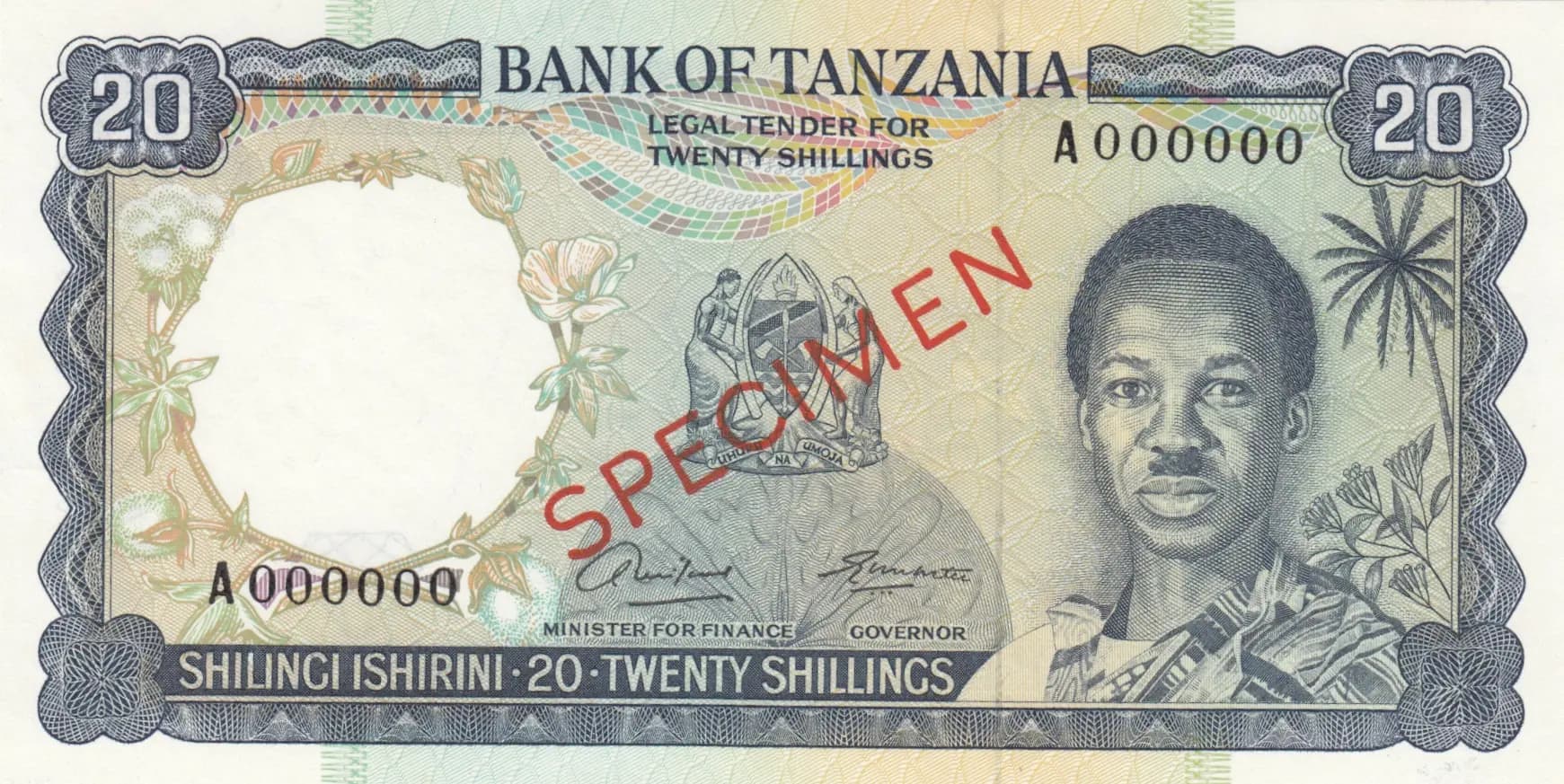
100 shillings 1966 specimen
Market Prices
1 saleAbout This Note
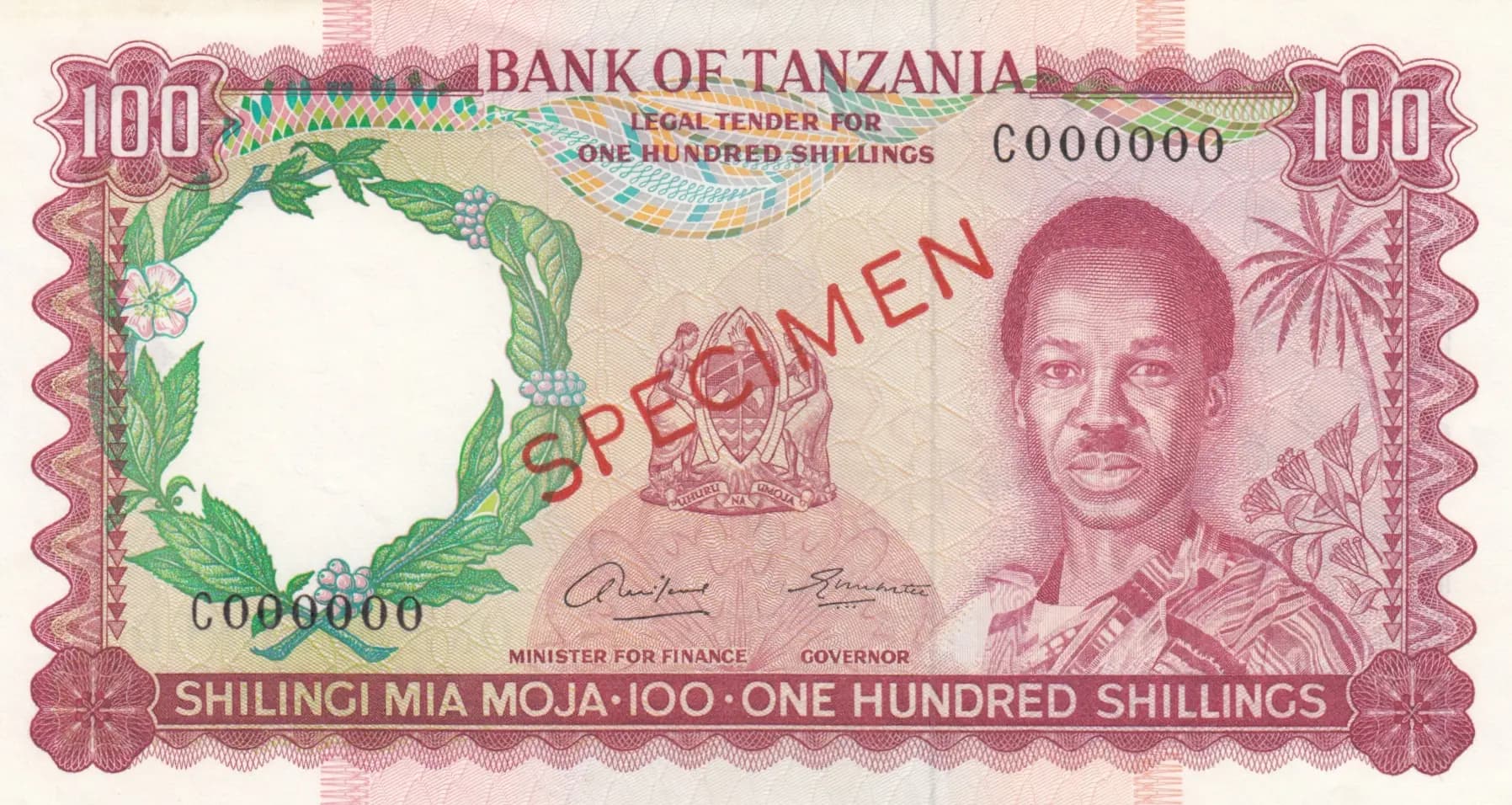
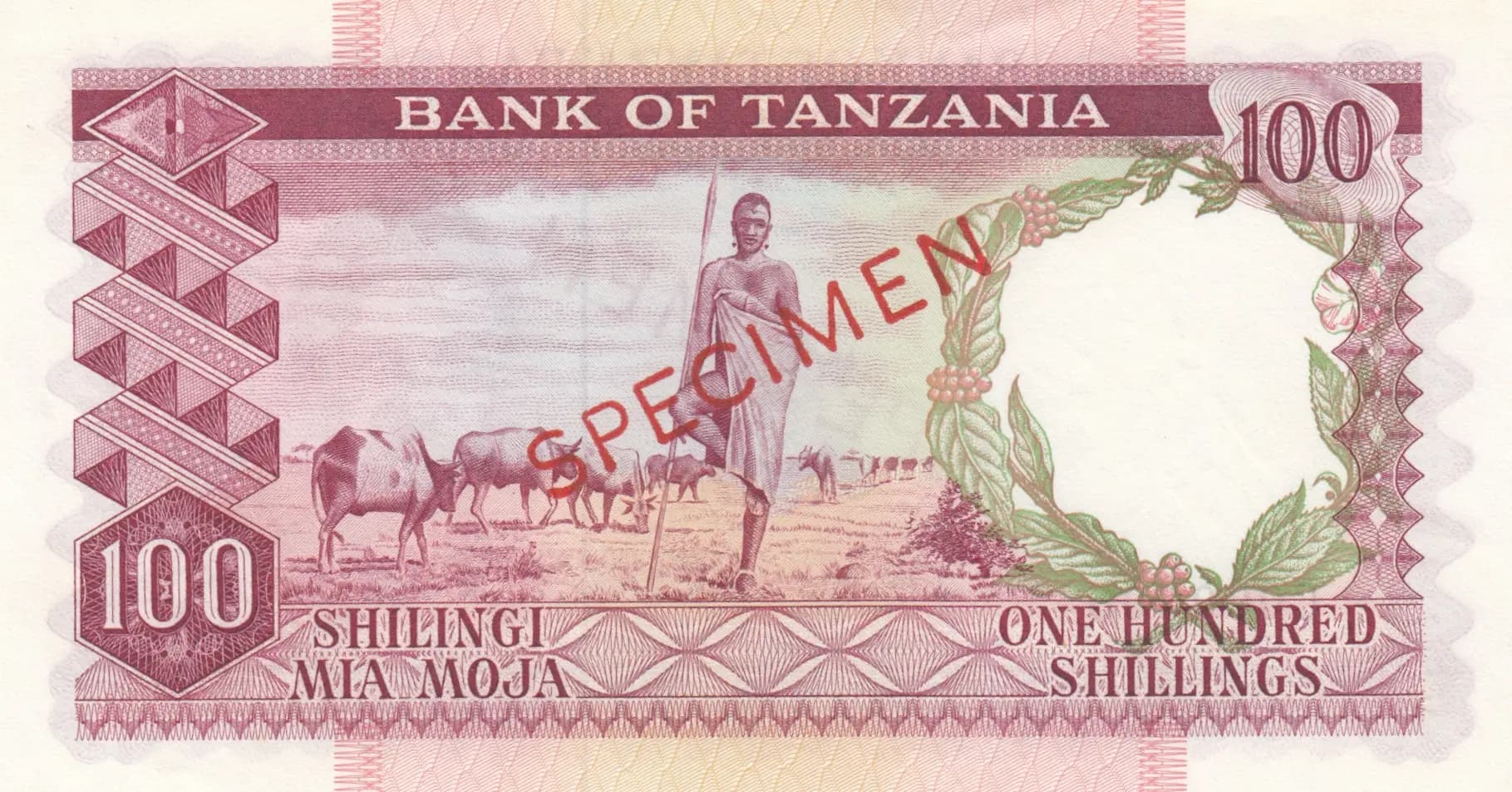
This is a stunning 1966 Bank of Tanzania 100 Shillings specimen note in uncirculated condition, featuring the portrait of President Julius Kambarage Nyerere on the obverse and a pastoral scene of a Masai herdsman with cattle on the reverse. The note displays vibrant reddish-brown, pink, and green tones with intricate security features including microprinting and fine-line engraving throughout. As a specimen note marked with red diagonal text, this represents an early issuance from Tanzania's newly independent central bank and is notable for its well-preserved condition and historically significant imagery.
Common. While this is a specimen note from 1966 with desirable uncirculated condition, specimen notes were produced in reasonable quantities for distribution to banks, collectors, and officials. The eBay price history ($242.50 in 2015) reflects strong collector demand but is not indicative of extreme rarity. The 2019 catalogue value of $85 for UNC examples is moderate. Specimen variants of early Tanzanian notes are sought by collectors but were not produced in severely limited quantities, making this uncommon rather than rare.
This note was issued in 1966, just four years after Tanzania's independence in 1962, representing the early monetary policy of the newly established Bank of Tanzania. The obverse features President Julius Nyerere, the founding father of independent Tanzania, while the reverse depicts a Masai herdsman—imagery celebrating both the nation's leadership and its pastoral heritage and indigenous cultures. The note's design reflects Tanzania's identity during the immediate post-colonial period, emphasizing national symbols (the coat of arms with crescent and star) alongside agricultural and cultural imagery central to the East African nation.
The obverse features a formal portrait of President Julius Kambarage Nyerere positioned on the right side in reddish-brown tones, rendered with fine engraving detail. The left side of the note displays an ornamental coffee plant motif with berries forming a decorative border—a reference to Tanzania's significant coffee production. The center features the Tanzanian coat of arms (a shield with crescent and star design). Geometric patterns and palm frond designs frame the note, with bilingual inscriptions in English and Swahili reflecting post-colonial linguistic policy. The reverse depicts a Masai herdsman with cattle in a pastoral savanna landscape, emphasizing the nation's pastoral heritage and indigenous cultures. Borders feature geometric lattice patterns and repeating coffee plant motifs, maintaining visual continuity with the obverse design.
Front: 'BANK OF TANZANIA' (English); 'LEGAL TENDER FOR' (English); 'ONE HUNDRED SHILLINGS' (English); 'SPECIMEN' (English, red diagonal overprint); 'SHILINGI MIA MOJA·100·ONE HUNDRED SHILLINGS' (Swahili/English, 'One Hundred Shillings'); 'MINISTER FOR FINANCE' (English); 'GOVERNOR' (English); 'C000000' (Serial number indicator). Back: 'BANK OF TANZANIA' (English); 'SPECIMEN' (English, red diagonal overprint); '100' (numeral); 'SHILINGI MIA MOJA ONE HUNDRED SHILLINGS' (Swahili/English, 'One Hundred Shillings').
Intaglio (recess engraving) printing, evidenced by the fine-line engraving visible throughout both sides of the note, complex geometric security patterns, and the clarity of microprinting details. According to PMG population data, this note (P-4s) was printed by TDLR (Thomas De La Rue), the renowned British security printer known for high-security banknote production. The specimen note shows the full detail and precision characteristic of De La Rue's engraving work from this era.
This is the specimen variant (P-4s) of the 100 Shillings 1966 note, distinguished by the red diagonal 'SPECIMEN' overprint visible on both the obverse and reverse. According to external references, specimen notes may have serial number prefixes ZZ or ZY, though the visual analysis indicates 'C000000' (typical specimen serial). The Pick catalog notes this as a distinct variety from the regular circulation issue (P-4a), both printed by TDLR. The specimen designation and overprint are the primary distinguishing features of this variety.