5000 francs 1971 specimen
About This Note
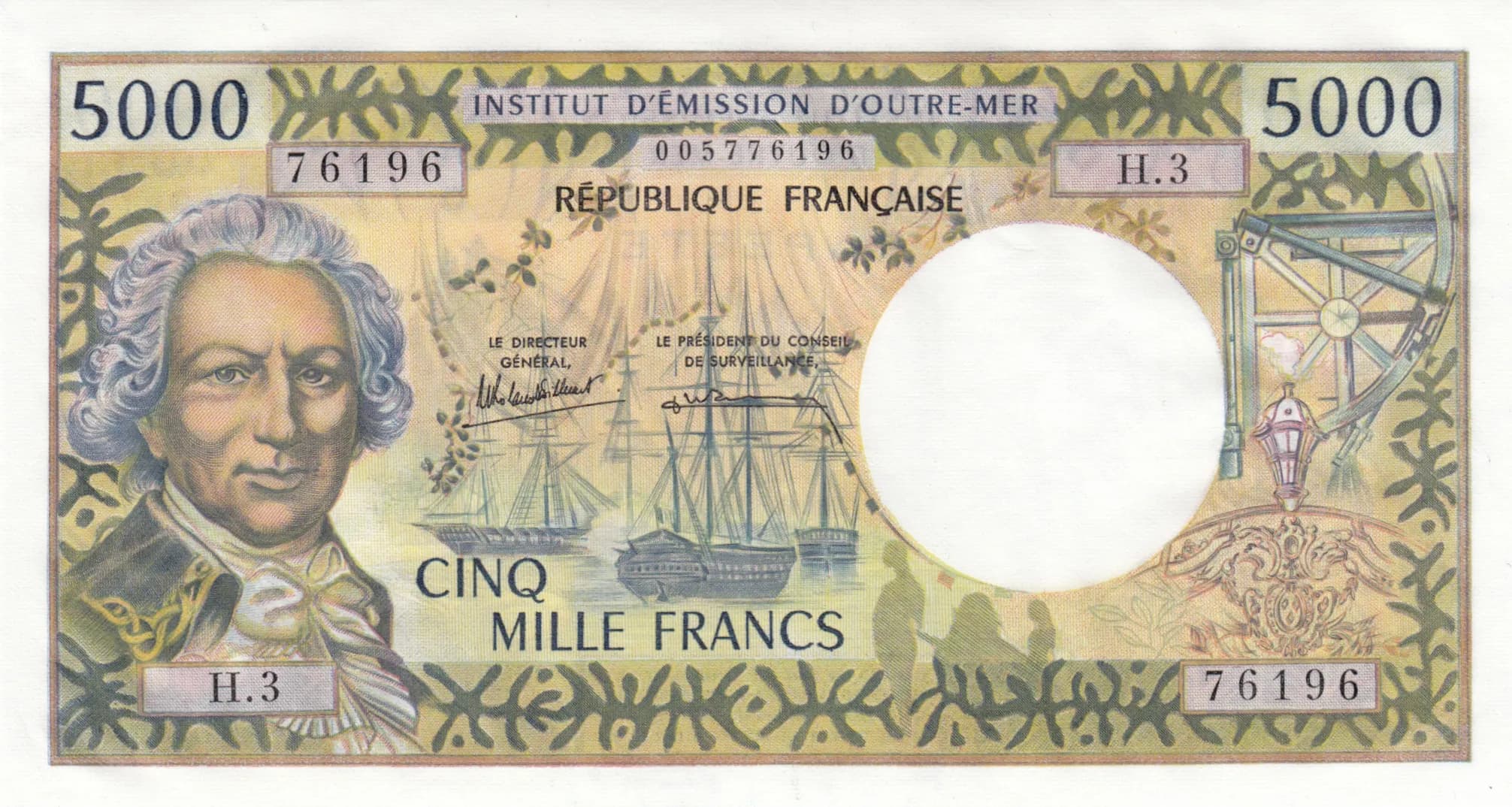
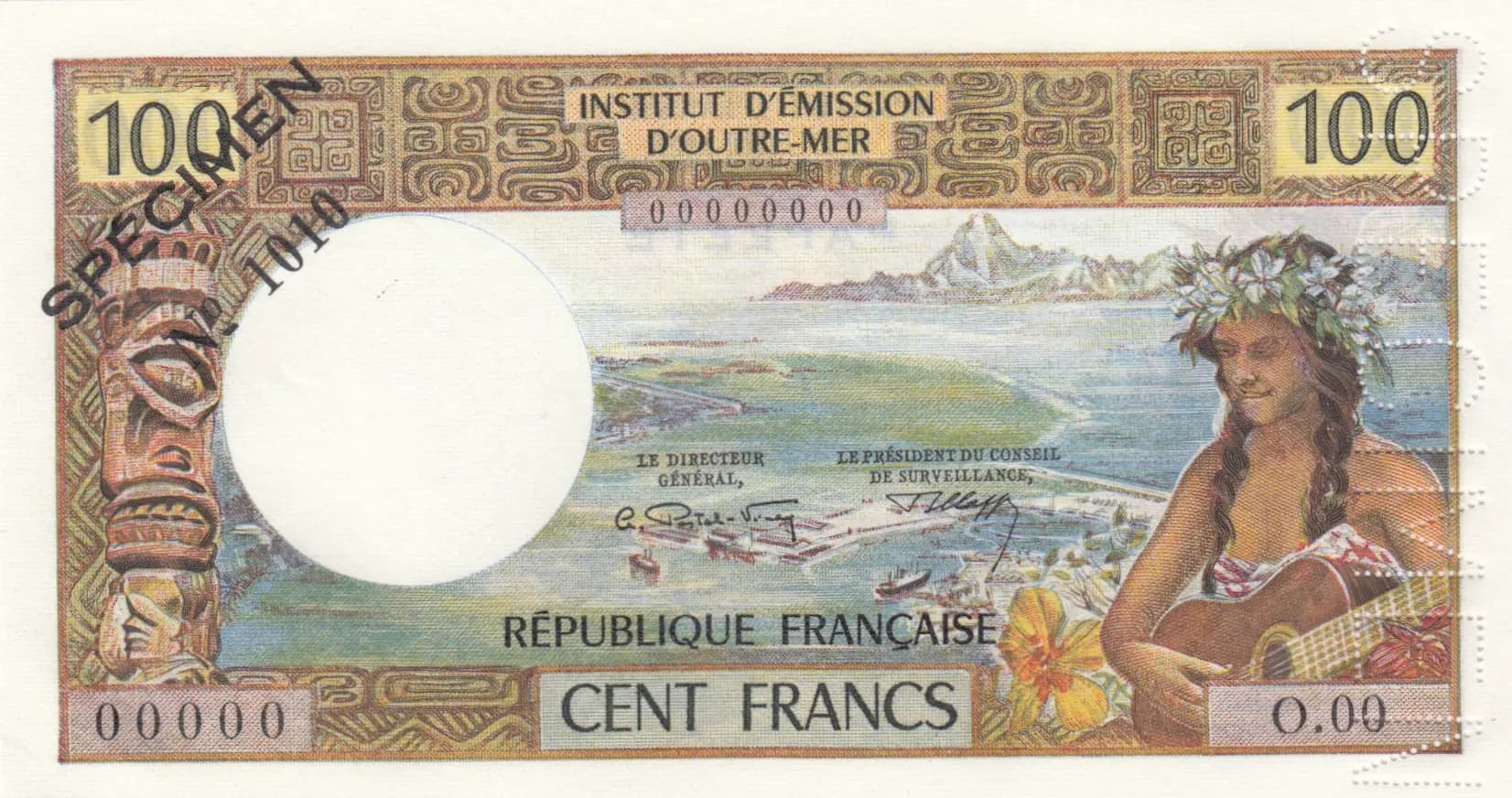
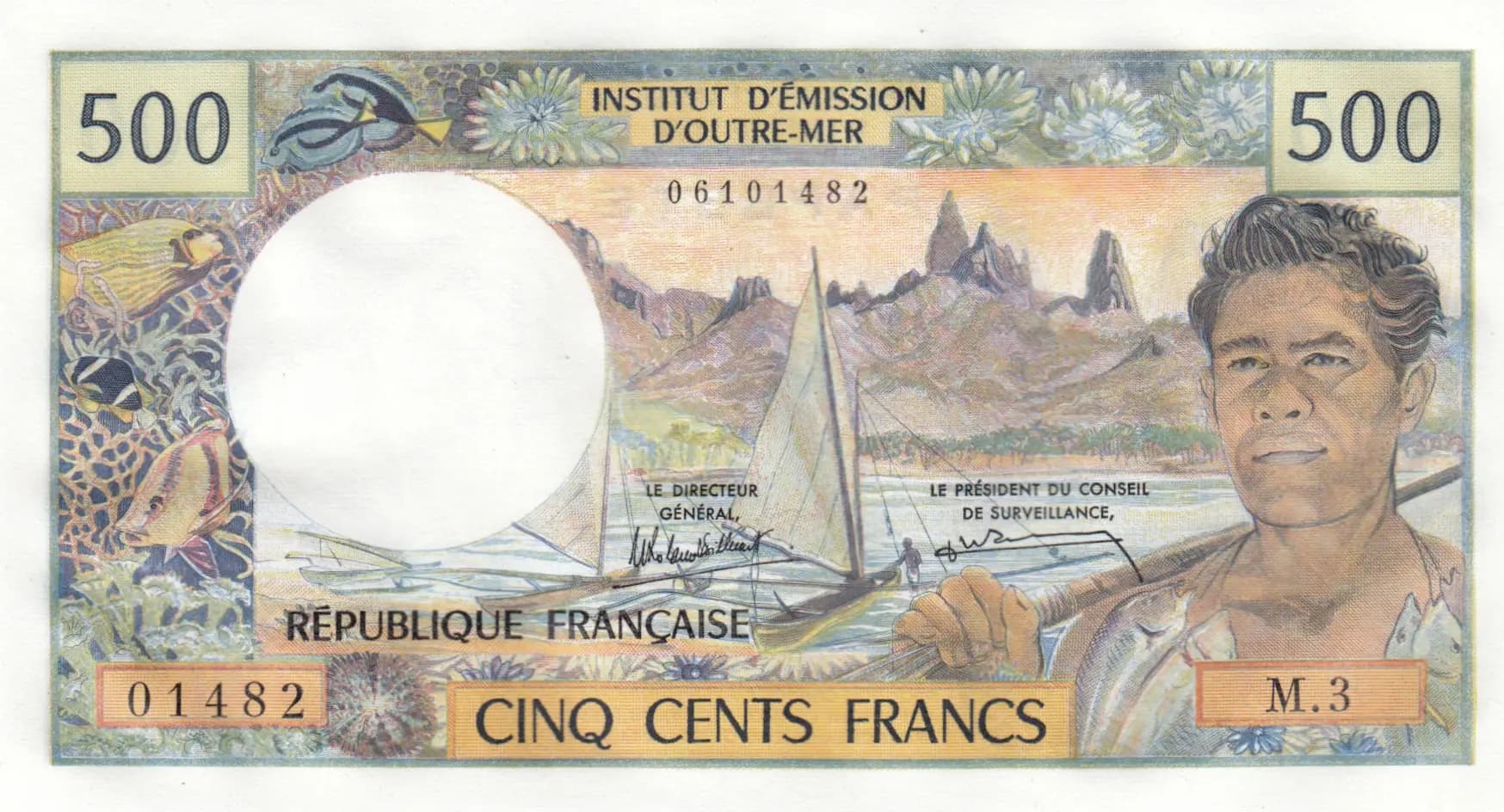
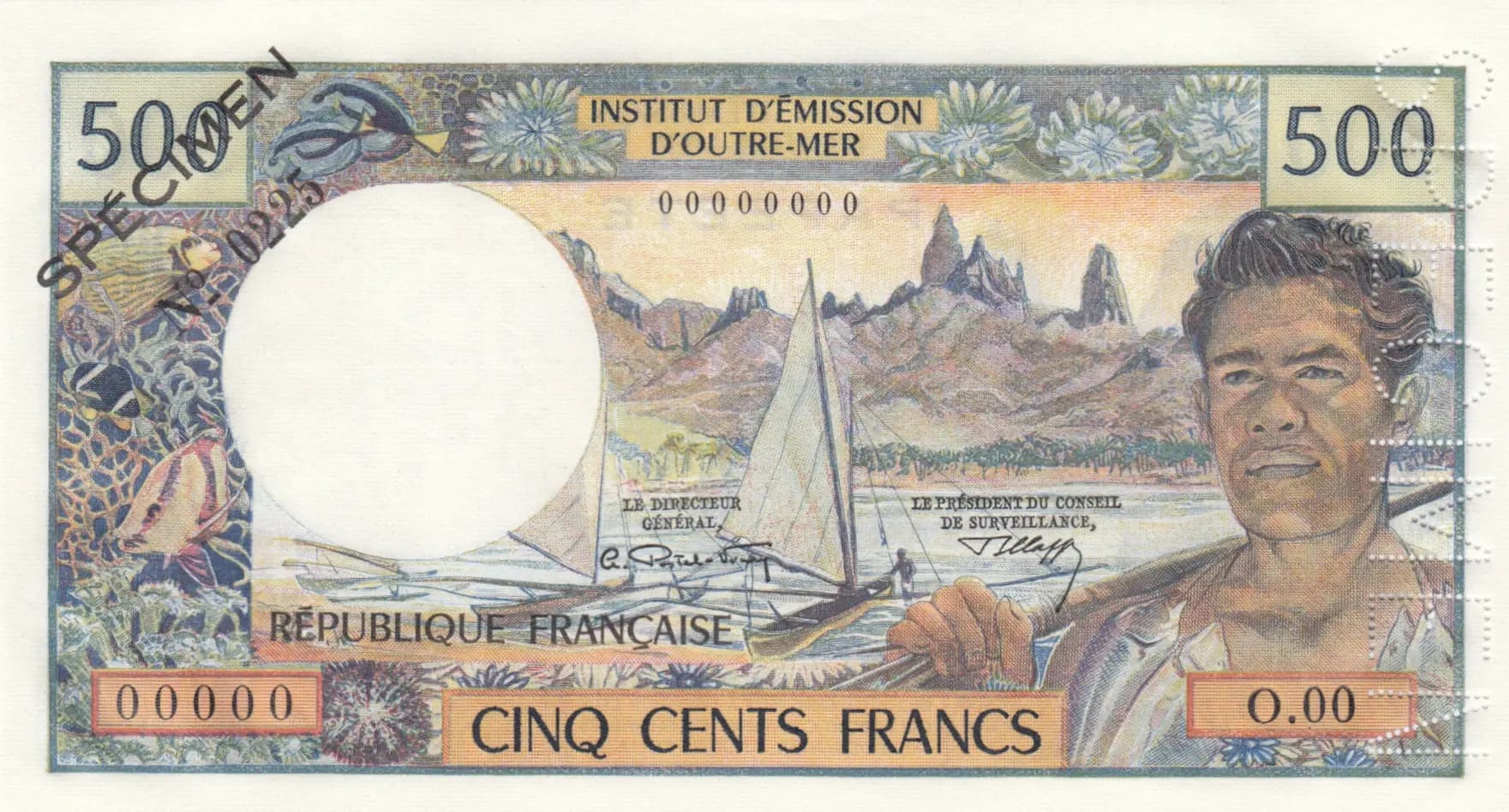
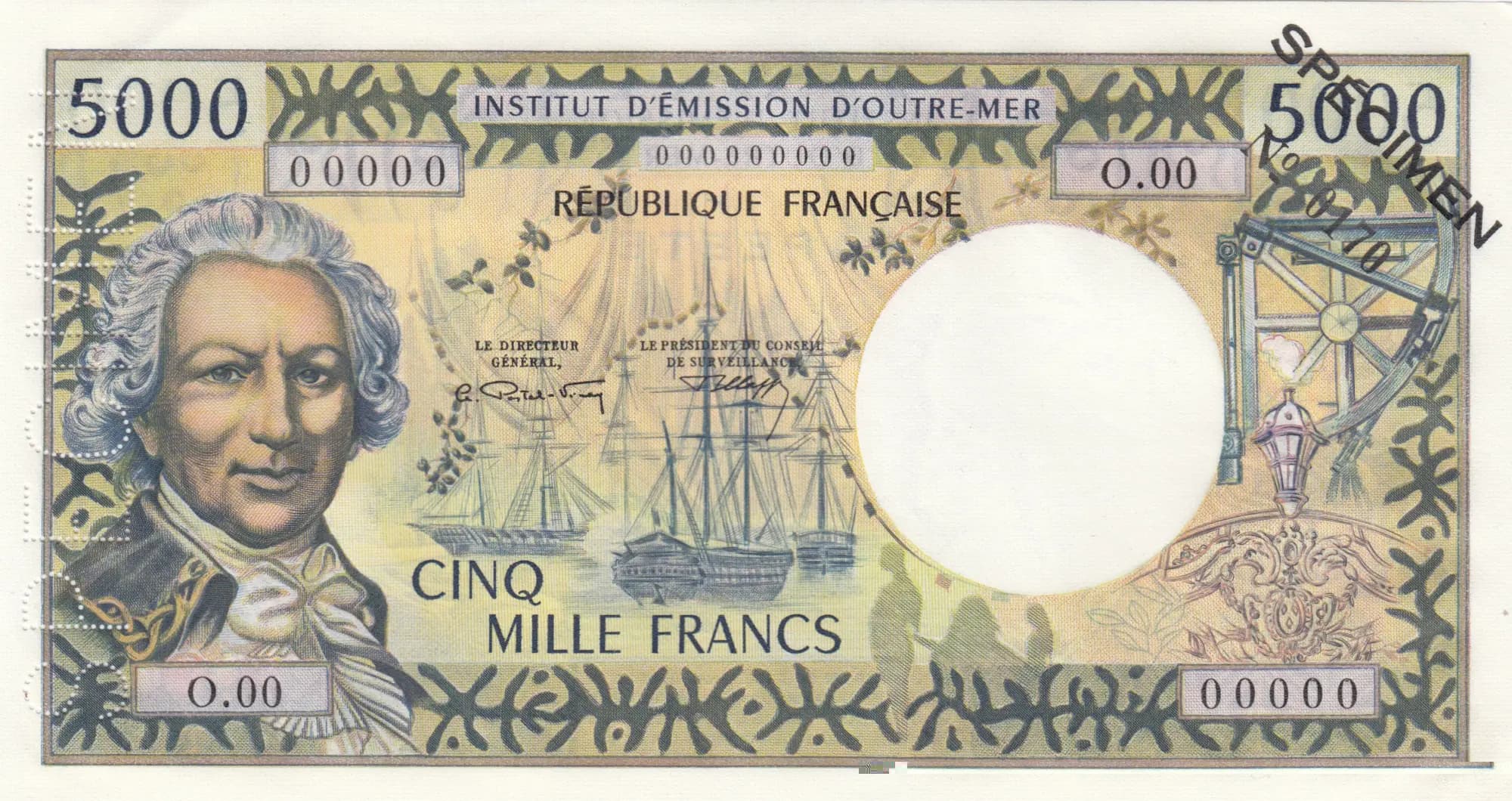
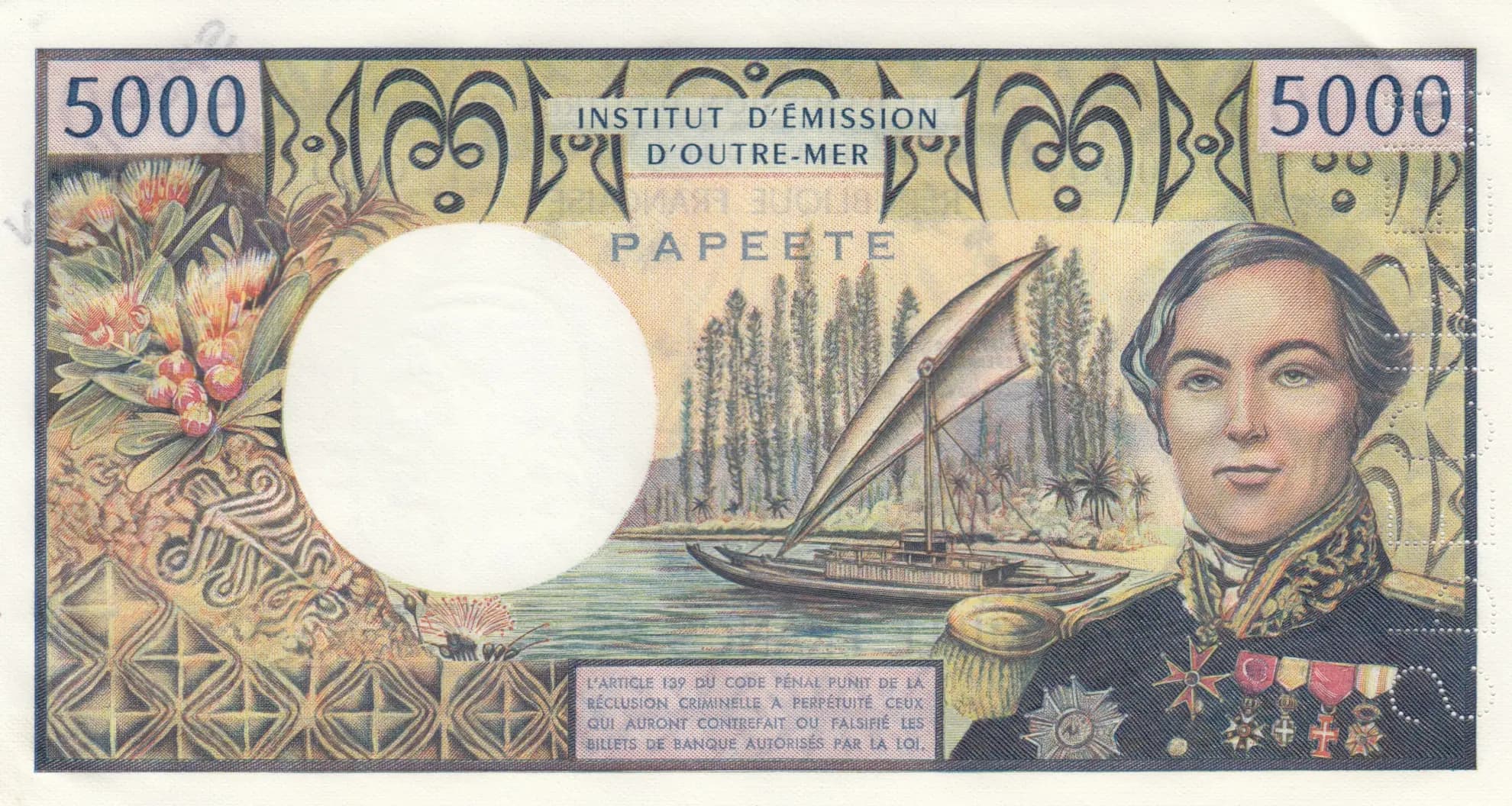
This is a pristine specimen example of the 1971 Tahitian 5000 francs (Pick P-28s), issued by the Institut d'Emission d'Outre-Mer. The note features exceptional engraving quality with a historical portrait on the obverse and a military figure on the reverse, complemented by nautical and tropical imagery that reflects French Polynesian themes. As an uncirculated specimen note with zero serial numbers, it represents an important reference example for this denomination and period.
Common. While this is a specimen note (indicated by 'SPÉCIMEN' marking and zero serial numbers), the 5000 francs denomination from this 1971 emission was part of a standard currency series for French Polynesia and did not have a restricted print run. Specimen notes, though not in circulation, were produced in quantities sufficient for distribution to banks, collectors, and official records. The denomination and date do not indicate scarcity in the numismatic market.
This 1971 emission reflects Tahiti's status as a French overseas territory during the post-colonial period, with the Institut d'Emission d'Outre-Mer serving as the central currency authority for French Polynesia. The note's iconography—featuring 18th-century maritime exploration imagery and a decorated military officer—references France's colonial heritage and naval dominance in the Pacific, while the tropical floral elements acknowledge the local environment of Tahiti and French Polynesia.
The obverse features an 18th-century gentleman with white curled hair, formal period dress, and a pearl earring, positioned on the left. The center showcases detailed maritime imagery with multiple sailing vessels at full rigging. A large circular watermark security feature dominates the right-center area. The reverse presents a military officer in dark uniform with visible medals and chest decorations on the right side, with tropical flowers in red and orange tones on the left and a landscape vignette featuring a colonial-era sailing vessel and coniferous forest. Both sides employ ornate decorative borders with floral, vine, and geometric motifs in green and gold tones. The color palette combines pale yellows, creams, greens, blues, and golds, creating a sophisticated appearance consistent with high-security currency design of the period.
Front Side: '5000' (denomination), 'INSTITUT D'ÉMISSION D'OUTRE-MER' (Overseas Emission Institute), 'RÉPUBLIQUE FRANÇAISE' (French Republic), 'CINQ MILLE FRANCS' (Five Thousand Francs), 'LE DIRECTEUR GÉNÉRAL' (The General Director), 'LE PRÉSIDENT DU CONSEIL DE SURVEILLANCE' (The President of the Supervisory Board), 'SPÉCIMEN' (Specimen). Back Side: '5000' (denomination), 'INSTITUT D'ÉMISSION D'OUTRE-MER' (Overseas Emission Institute), 'PAPETE' (Papeete, the capital), 'L'ARTICLE 139 DU CODE PÉNAL PUNIT DE LA EXCLUSION CRIMINELLE À PERPÉTUITÉ CEUX QUI AURAIENT CONTREFAIT OU FALSIFIÉ LES BILLETS DE BANQUE AUTORISÉS PAR LA LOI' (Article 139 of the Penal Code punishes with permanent criminal exclusion those who would have counterfeited or falsified banknotes authorized by law).
This note was produced using intaglio (engraved) printing, evidenced by the fine line detail, complex decorative patterns, and dimensional surface quality visible throughout both sides. The security features include multiple watermark areas (the large white circular elements observed on both obverse and reverse) and multi-color ink application. The printer for French Polynesian currency during this period was typically Banque de France's contracted security printers, likely the Imprimerie Nationale or affiliated European security printing facilities.
This is a specimen variety (Pick P-28s, where 's' denotes specimen status). Specimen notes are characterized by multiple zero serial numbers (00000 and 0000000000 observed), the 'SPÉCIMEN' overprint on the obverse, and signature blocks. Production varieties for this issue may include different signature combinations and potentially different printing dates, but the specimen designation itself is the primary variety identifier for this example.