500 francs 1971 specimen
About This Note
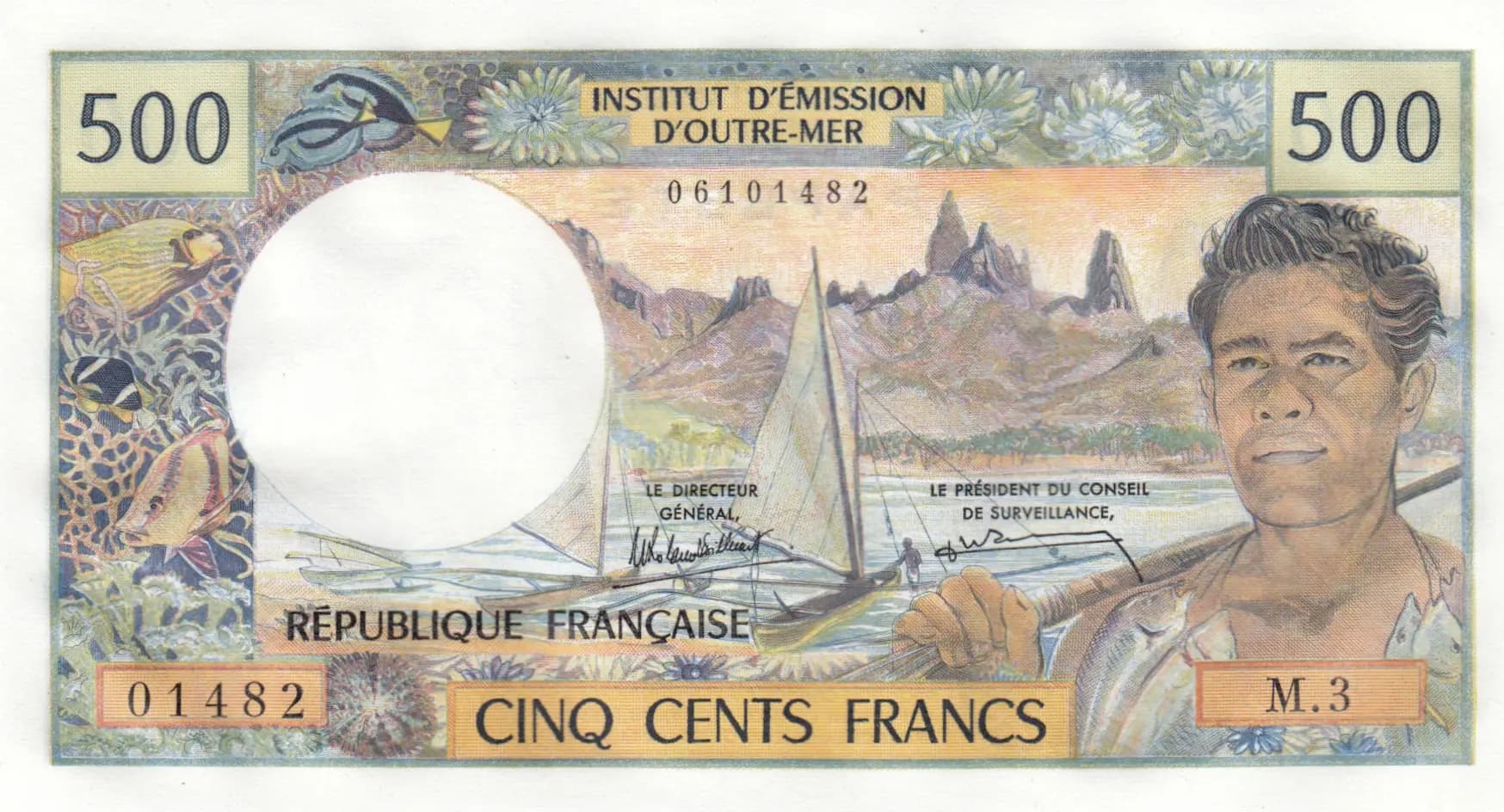
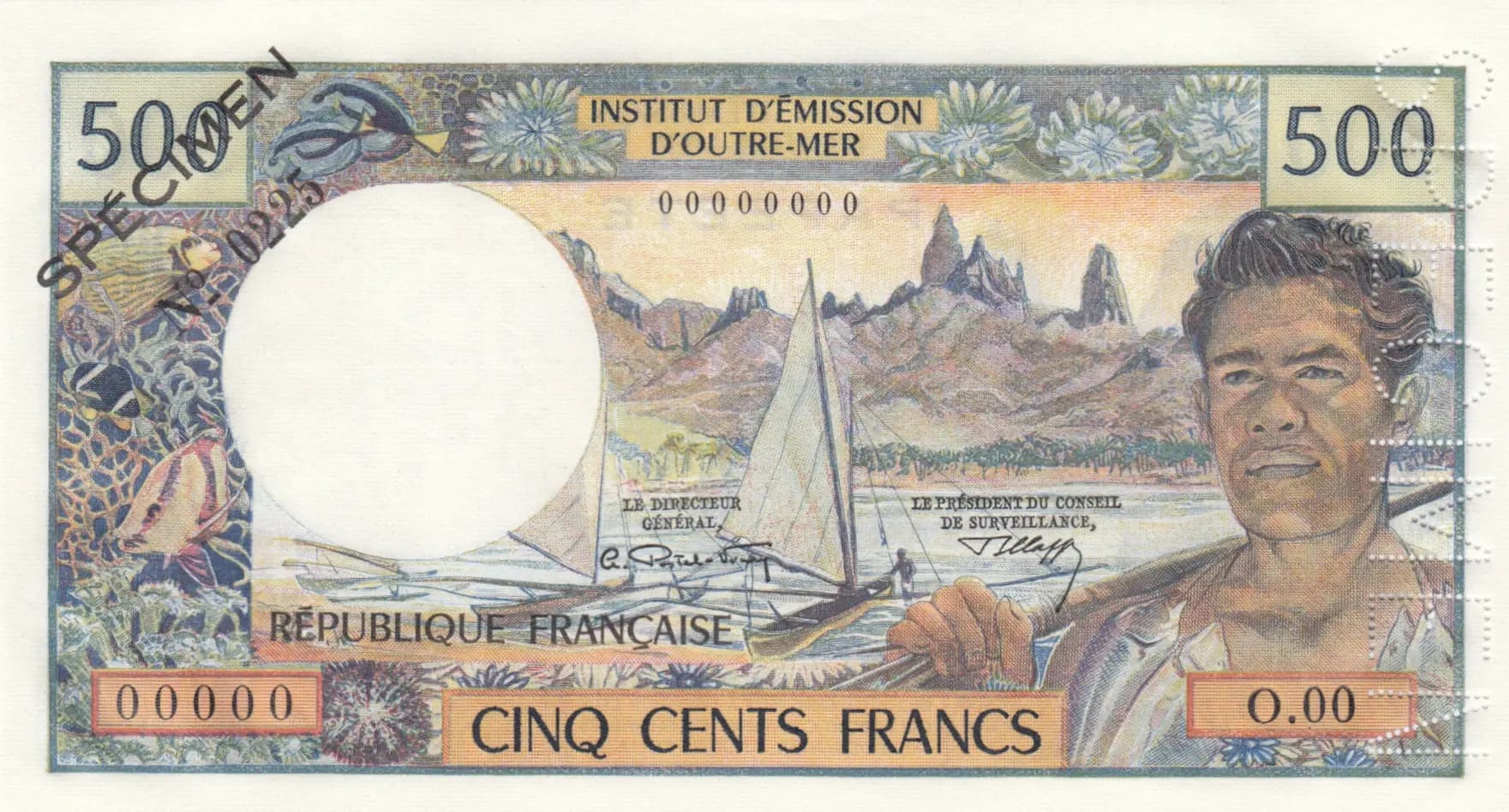
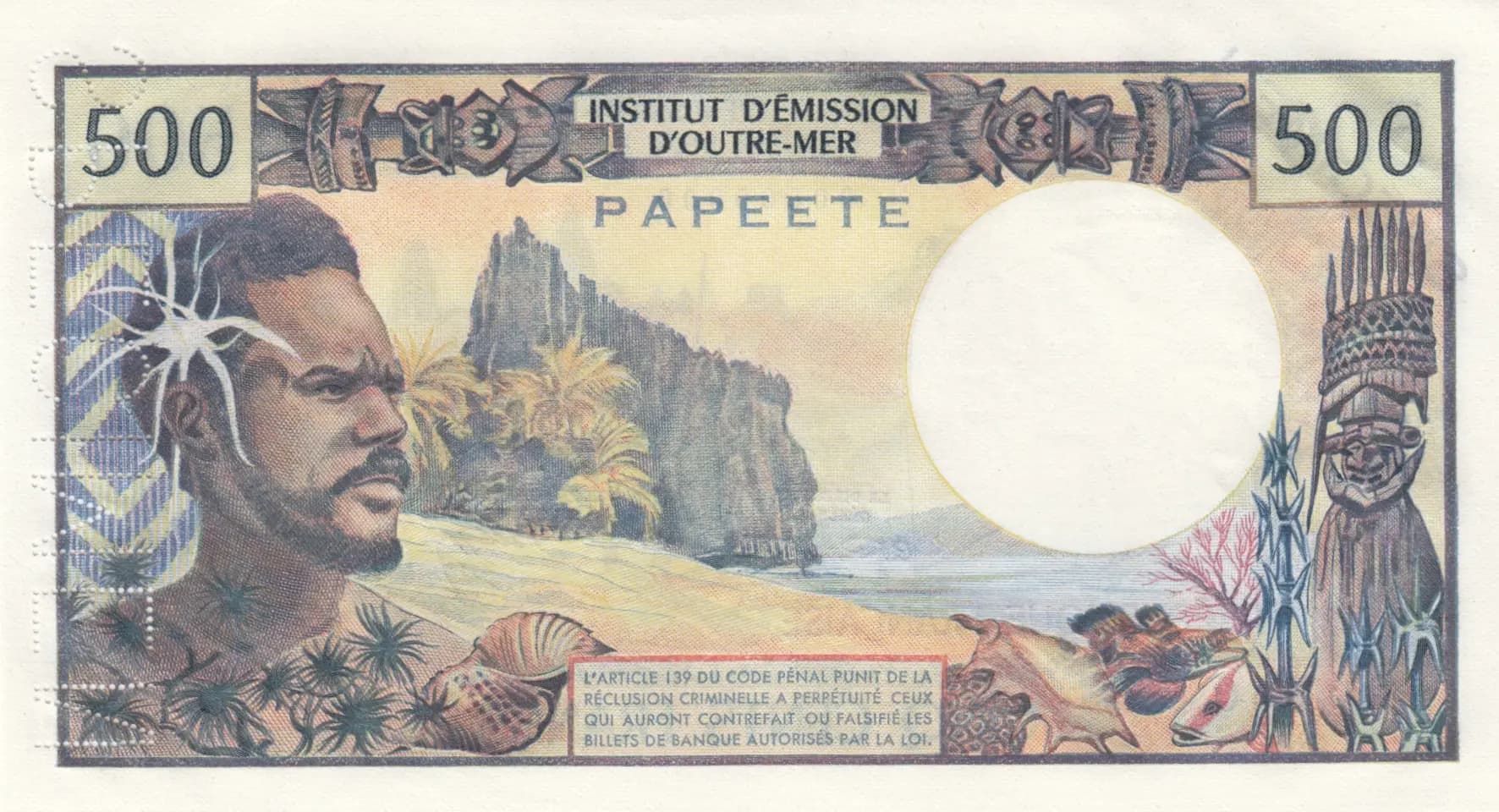
This is a spectacular 1971 Tahitian 500 francs specimen note (Pick P-25s) in pristine uncirculated condition, issued by the Institut d'Emission d'Outre-Mer. The note showcases vibrant tropical imagery on both sides, featuring dramatic coastal cliffs, sailing vessels, and lush Polynesian vegetation rendered in rich blue-green, orange, and earth tones. As a specimen note with all-zero serial numbers, this is a rarely-seen administrative printing that offers a window into the currency designs used during French Polynesia's mid-20th century financial system.
Scarce. Specimen notes (indicated by all-zero serial numbers and SPECIMEN marking) were produced in much smaller quantities than circulation notes for administrative and archival purposes. While 1971 Tahitian currency is generally available in circulation grades, specimen printings of French Polynesian banknotes are encountered less frequently in the collector market. This particular note's uncirculated condition and specimen status make it more desirable than worn circulation examples, though not exceptionally rare compared to recalled issues or short-run denominations.
Issued during 1971, this banknote reflects France's post-colonial relationship with its overseas territories, as evidenced by the République Française and Institut d'Émission d'Outre-Mer inscriptions. The design's emphasis on Tahitian natural landmarks—towering coastal cliffs, palm-fringed beaches, and traditional sailing boats—celebrates the island's distinctive geography and cultural identity while maintaining French institutional oversight through the prominent government inscriptions. The note's Papeete location marking anchors it to Tahiti's capital, a crucial commercial and administrative center in French Polynesia during this period.
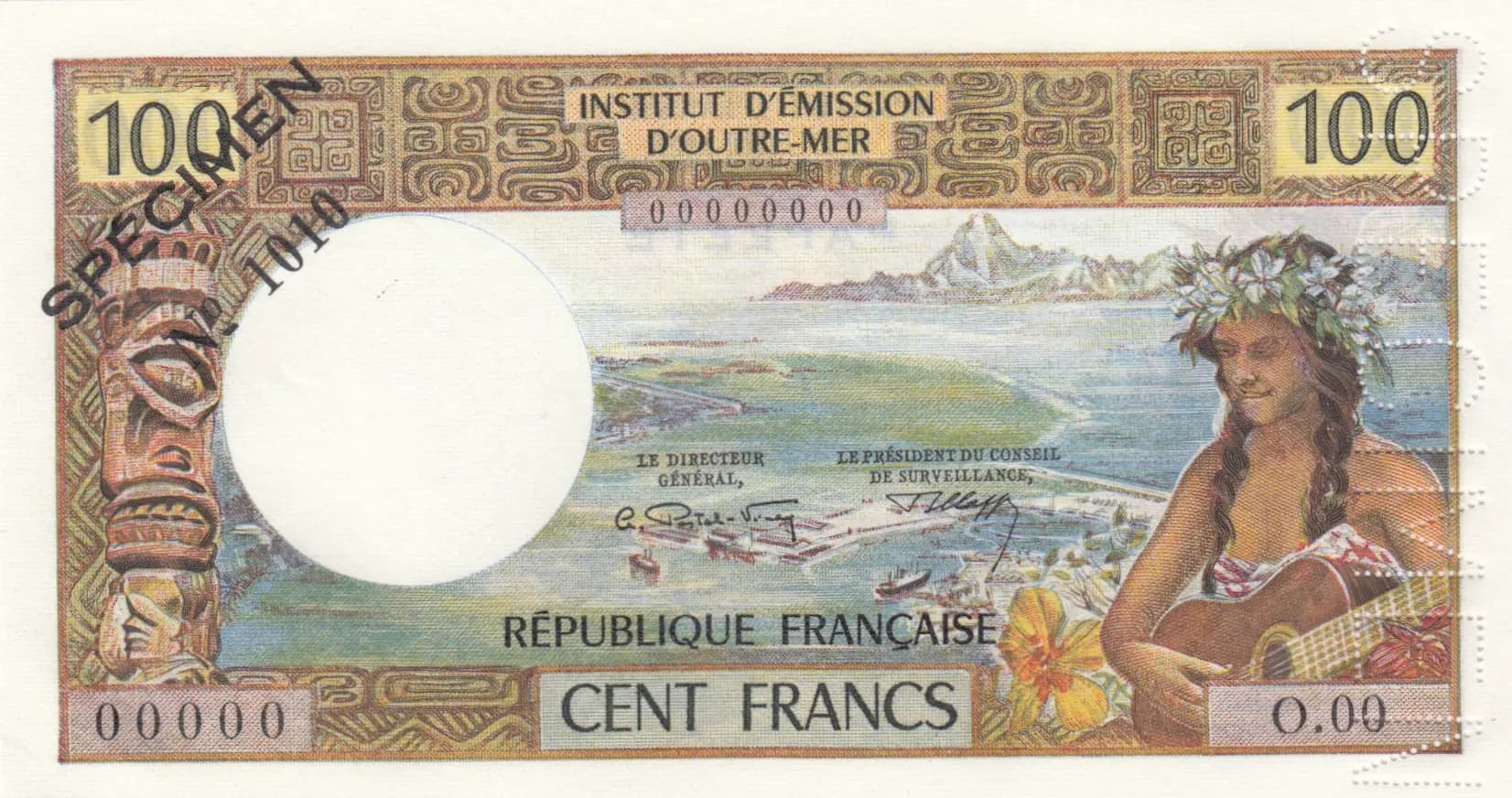
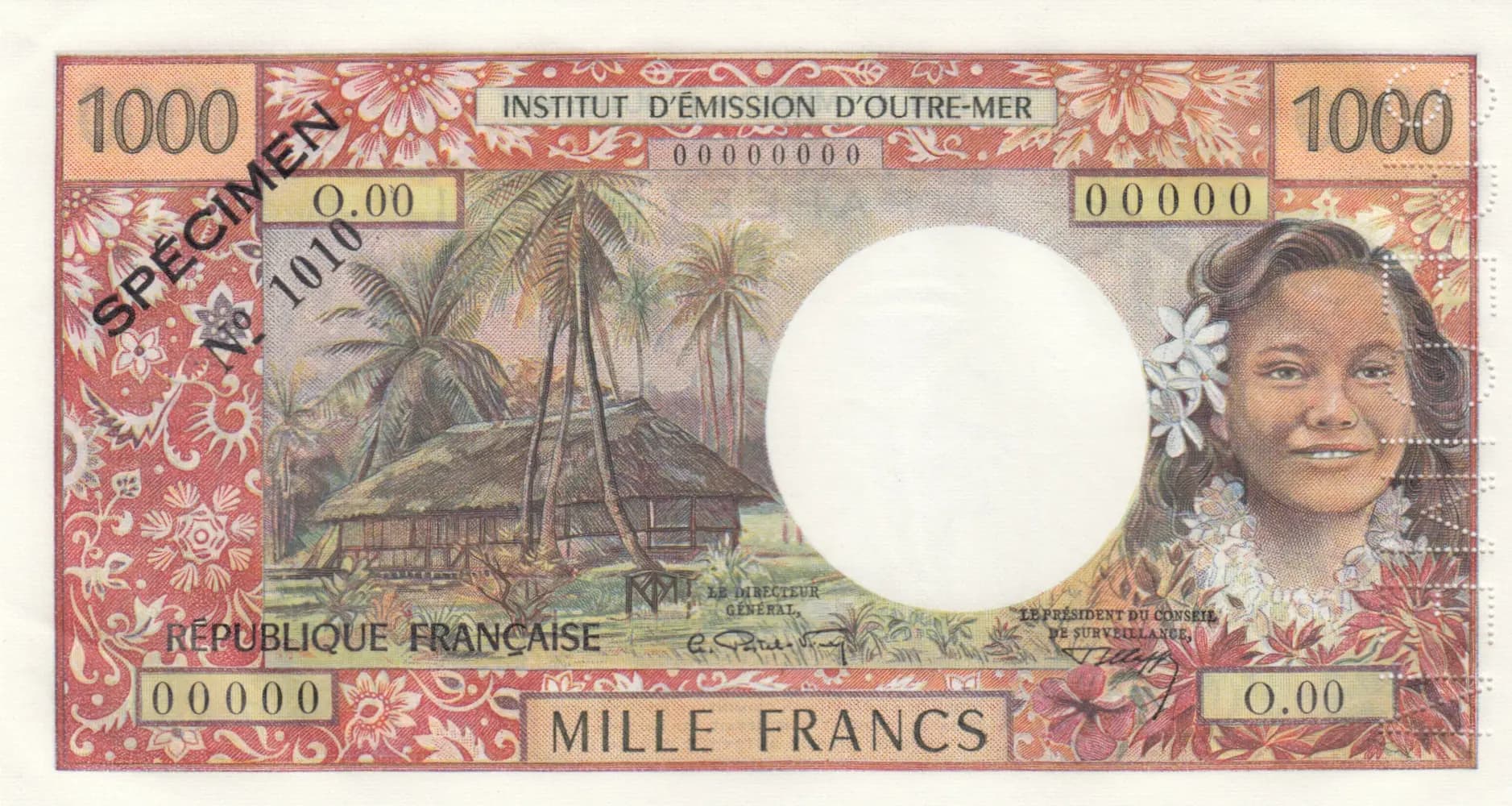
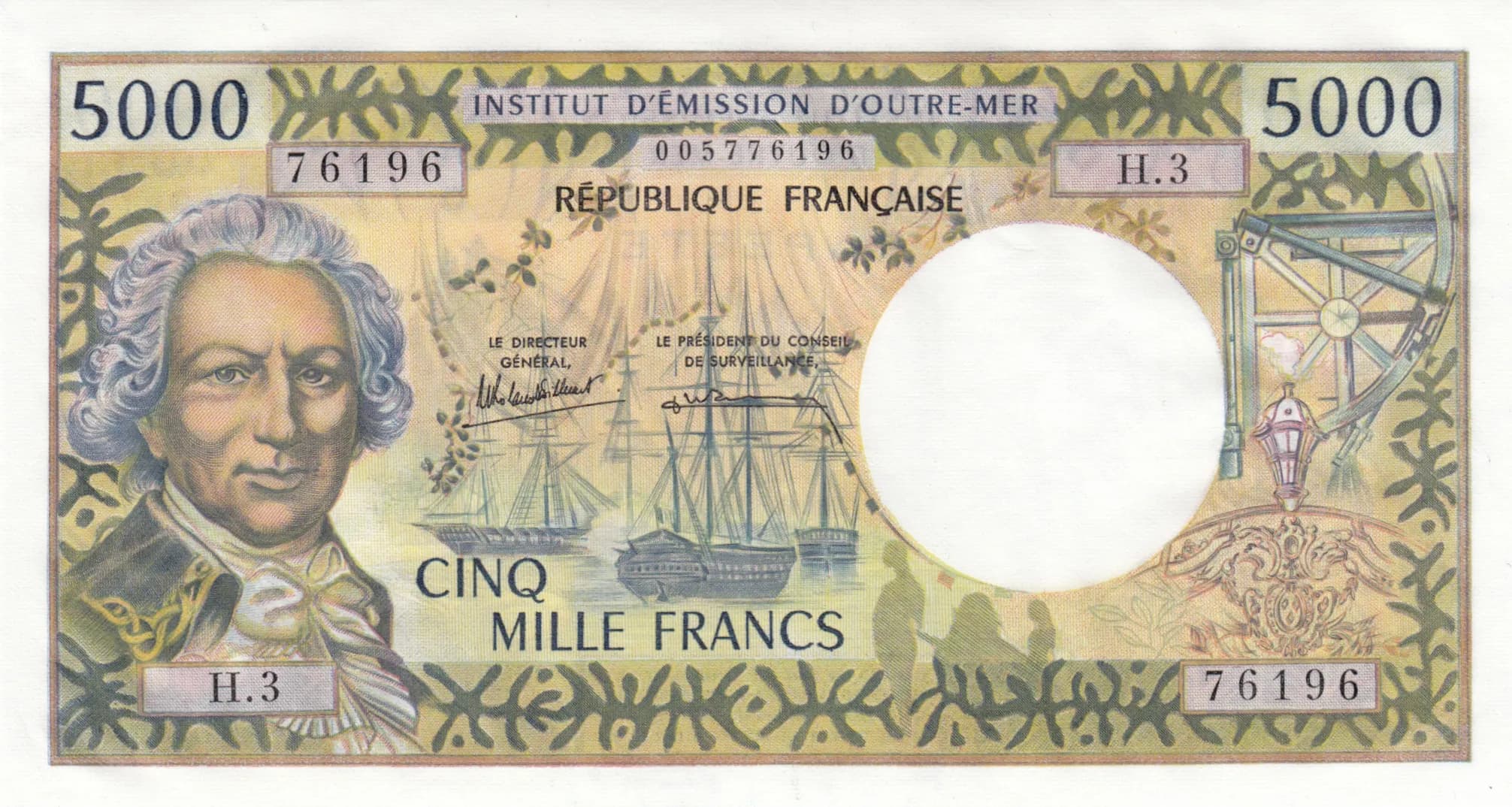
This 500 francs note presents a masterpiece of mid-20th century French Polynesian currency design. The front features a male portrait in profile on the right side (likely a French colonial administrator or notable figure of the era), positioned against a romantic seascape depicting a traditional Polynesian sailing vessel with mountainous volcanic peaks in the background. The left border displays elaborate decorative marine motifs including stylized coral, tropical fish, and flourishing floral patterns in cream, purple, orange, and brown. The reverse side shifts focus to showcase Tahiti's dramatic natural beauty: towering coastal cliffs dominate the landscape with palm trees and sandy beaches in the foreground, while a different male portrait appears in profile on the left. The right border features intricate Polynesian tribal and carved ornamental designs reflective of traditional Pacific Island art. Large circular blank areas—likely watermark windows—appear symmetrically on both sides. The overall color palette employs sophisticated blues and greens as dominant tones, complemented by warm earth tones and accent colors that evoke the tropical setting.
FRONT SIDE: '500' (denomination in numerals); 'INSTITUT D'ÉMISSION D'OUTRE-MER' (Overseas Emission Institute); 'République FRANÇAISE' (French Republic); 'CINQ CENTS FRANCS' (Five Hundred Francs); 'LE DIRECTEUR GÉNÉRAL' (The General Director); 'LE PRÉSIDENT DU CONSEIL DE SURVEILLANCE' (The President of the Supervisory Board); Serial numbers shown as '00000000' and '00000' with '0.00' (specimen indicators); 'SPECIMEN' (English marking). BACK SIDE: '500' (denomination); 'INSTITUT D'ÉMISSION D'OUTRE-MER' (Overseas Emission Institute); 'PAPEETE' (location of issue); 'L'ARTICLE 139 DU CODE PÉNAL PUNIT DE LA RÉCLUSION CRIMINELLE À PERPÉTUITÉ CEUX QUI AURAIENT CONTREFAIT OU FALSIFIÉ LES BILLETS DE BANQUE AUTORISÉS PAR LA LOI.' (Article 139 of the Penal Code punishes with life imprisonment those who would counterfeit or falsify banknotes authorized by law).
This note was produced using intaglio engraving with fine line guilloche work, evident from the intricate decorative patterns and detailed portraiture visible throughout the design. The pristine specimen condition and registration quality suggest professional security printing typical of French government banknote production. The note was likely printed by a major French security printer, possibly Banque de France's own facilities or an affiliated contractor such as Imprimerie Nationale, standard practice for overseas territory currency during this period.
This is a specimen printing variant of Pick P-25s, identifiable by: (1) all-zero serial numbers ('00000000' and '00000'); (2) explicit 'SPECIMEN' overprint or marking; (3) blank circular watermark areas visible on both sides (likely part of the specimen production process to prevent accidental circulation). No signature varieties are discernible as specimen notes typically feature uniform administrative signatures or signature blocks. The 1971 date and Papeete issue location are consistent with standard P-25s specifications.