10 kronor 1960
Market Prices
12 salesAbout This Note
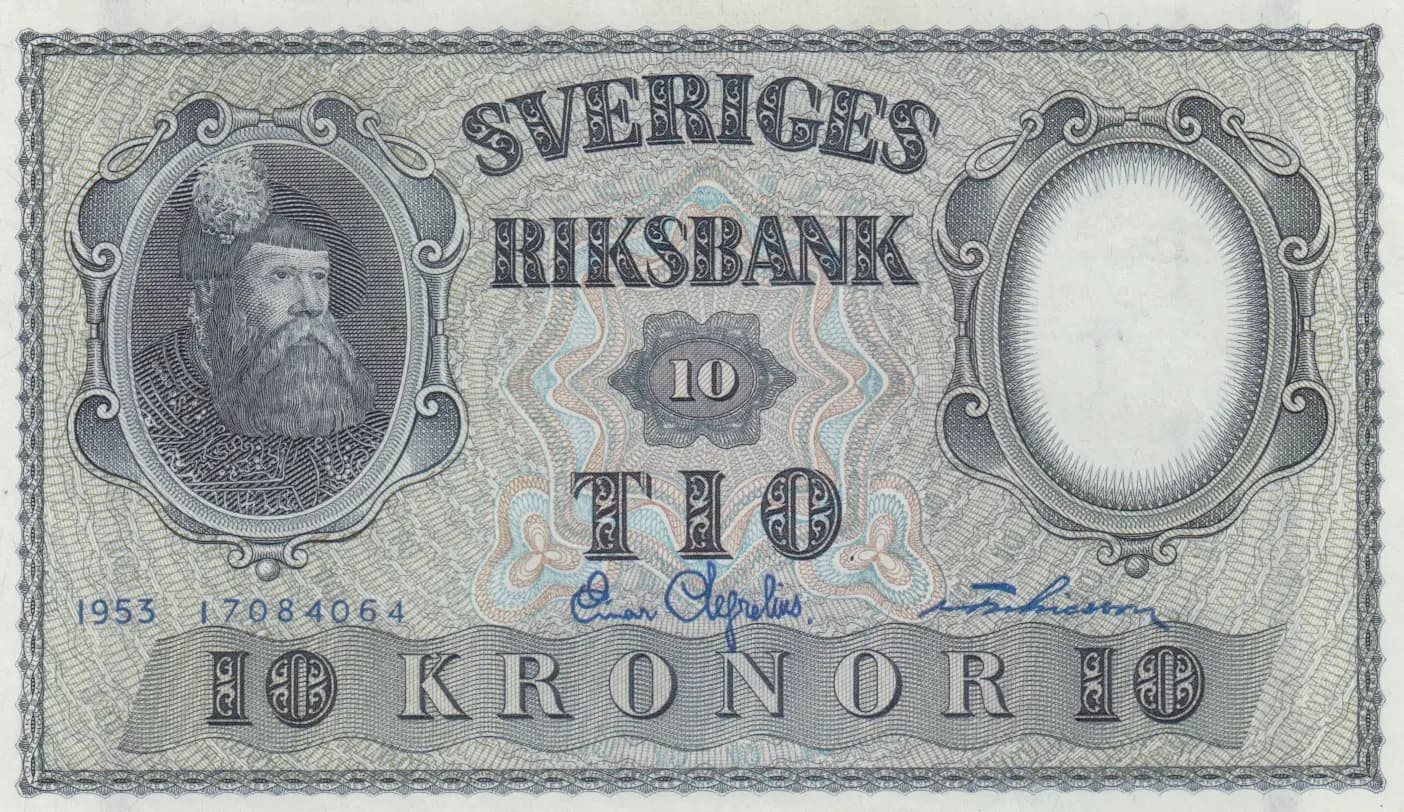
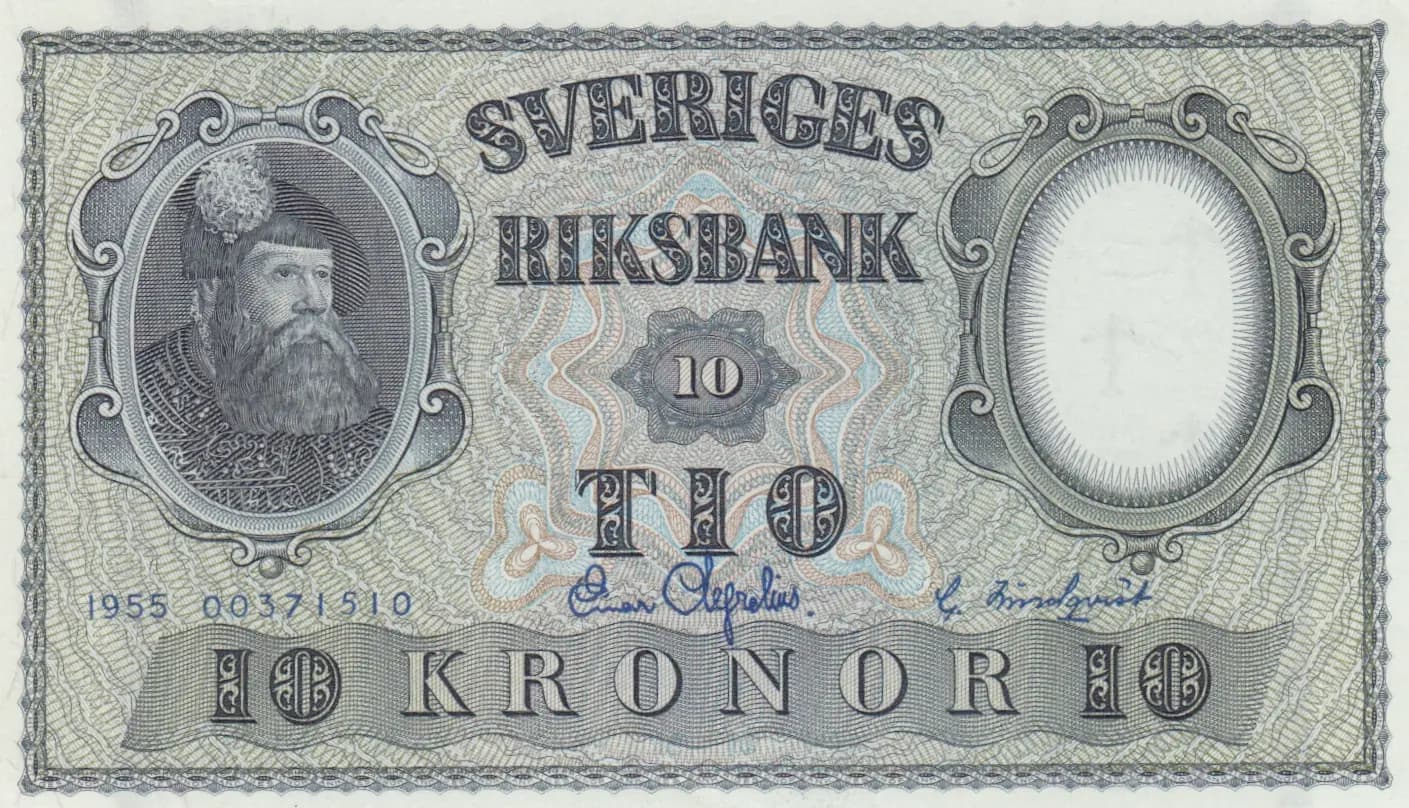
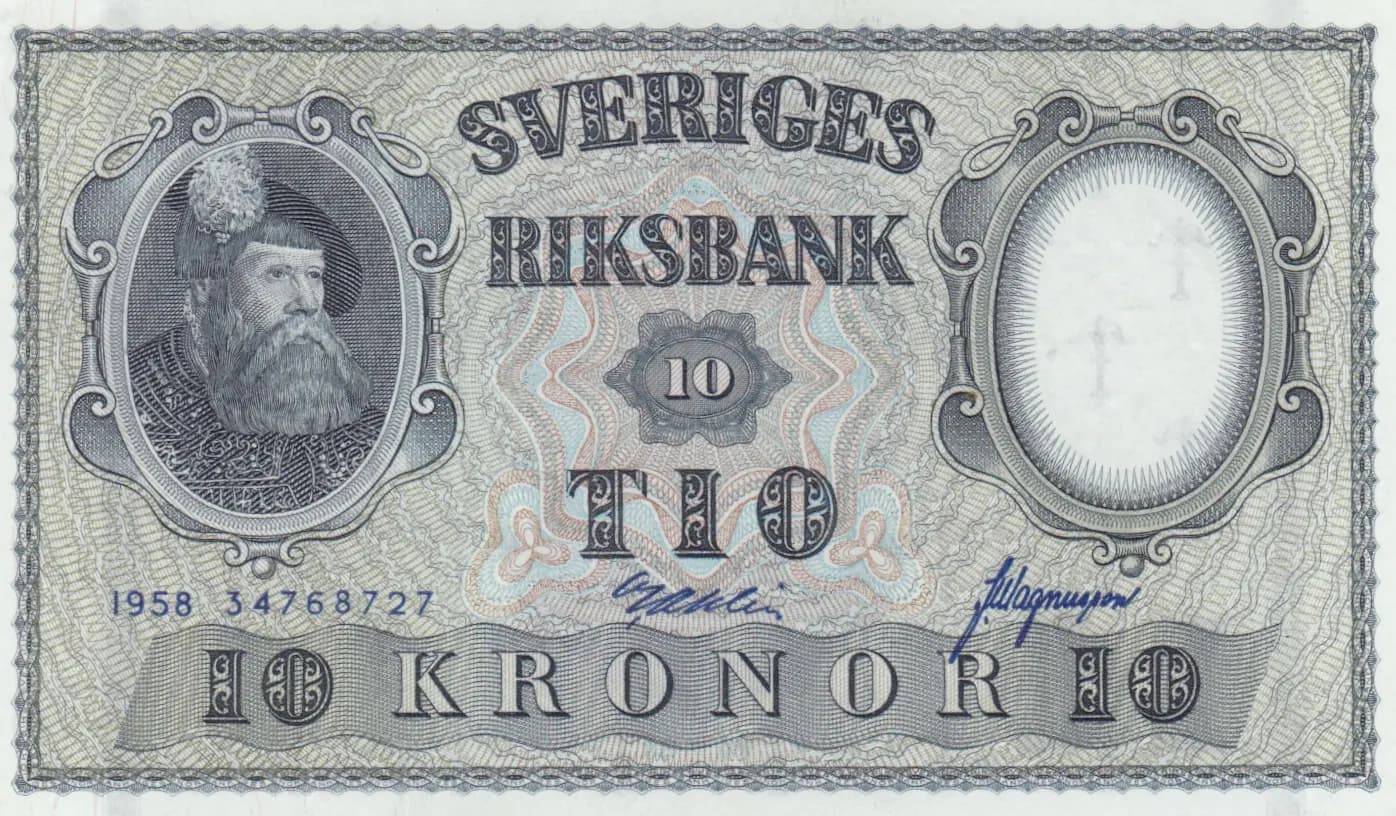
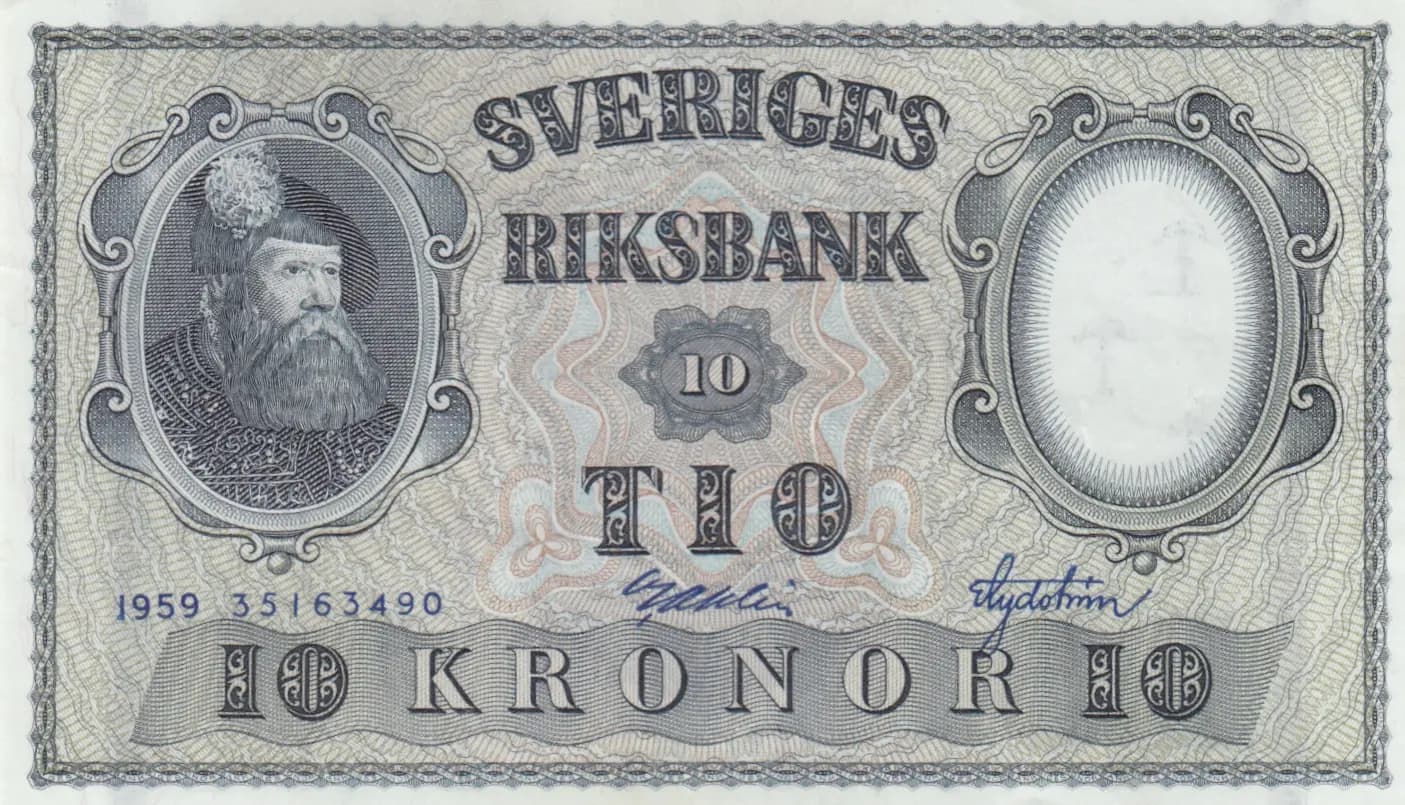
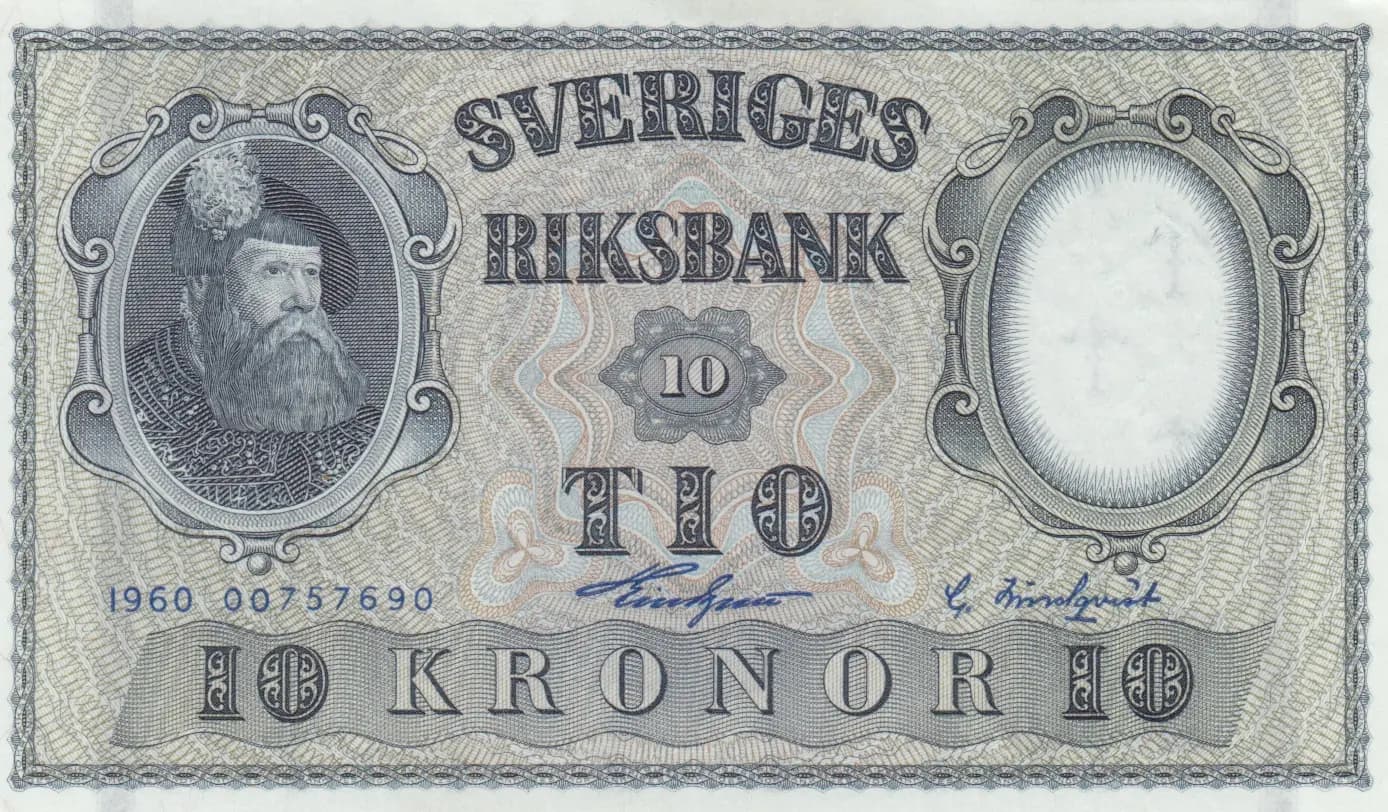
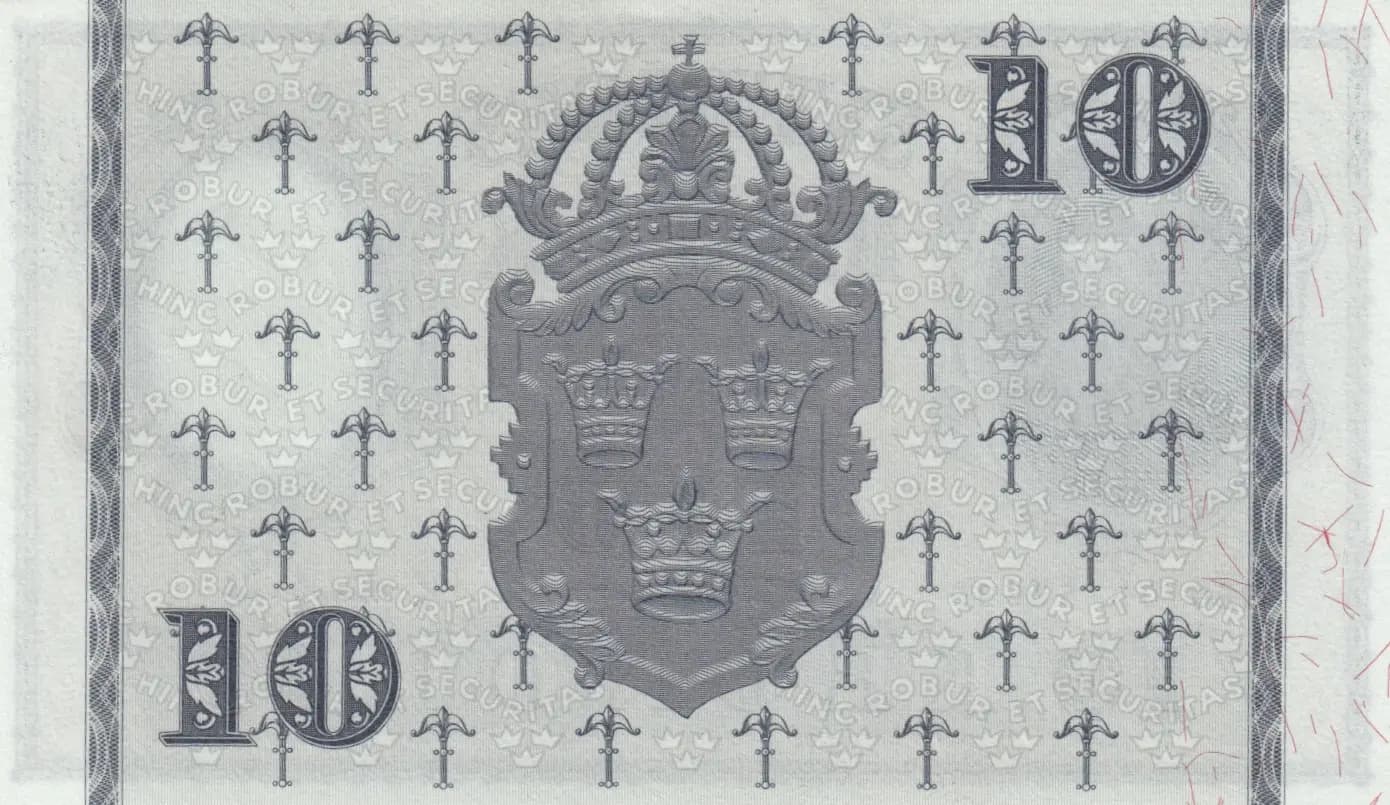
This 1960 Swedish 10 kronor note (Pick 43h) presents in UNC condition with light toning consistent with its age, displaying sharp details throughout. The obverse features a detailed portrait of King Gustav Vasa in profile within an ornate oval frame, while the reverse showcases the Swedish coat of arms with three crowns. The note exhibits fine crosshatch security patterns and excellent preservation with no significant creasing or damage.
Common. This note from the 1953-1962 series was produced in substantial quantities for regular circulation. The eBay price tracking data shows consistent sales in the $3-$87 range with multiple examples traded regularly, with UNC examples catalogued at $10 (2019 values). The PMG population report indicates multiple catalogued variants (P-43f, P-43g, P-43h), suggesting sufficient quantities entered the grading market. Regular circulation series with no reported recall or shortage history.
Issued during the reign of the Swedish monarchy, this note reflects mid-20th century Swedish banking during the stable post-WWII period when the Riksbank maintained classical engraved designs emphasizing national symbols and historical figures. The prominence of King Gustav Vasa—the 16th-century founder of the modern Swedish state—reinforces national identity, while the three-crowned coat of arms symbolizes the union of the Swedish realms. This series remained in circulation from 1953-1962, representing a period of economic confidence in Scandinavia.
The obverse depicts King Gustav Vasa (1496-1560), founder of the modern Swedish state, shown as a bearded man in profile facing left, positioned within an ornate oval decorative frame with elaborate scrollwork. A matching blank oval frame appears on the right side, creating symmetrical design balance. The center features a star-like emblem containing the denomination '10' surrounded by 'SVERIGE RIKSBANK' text and decorative corner ornaments with scrollwork throughout. The reverse displays the Swedish coat of arms centrally—a shield bearing three crowns topped with an ornate crown—surrounded by a repeating pattern of crosses and floral motifs as a background security element. Large denomination numerals appear in decorative frames at the top right and bottom left corners.
Front: 'SVERIGES RIKSBANK' (Sweden's State Bank/Swedish National Bank); '10' and 'TIO' (Ten in Swedish); '10 KRONOR' (Ten Kronor); '1960 00757690' (issue date and serial number); two signature lines representing official authorization. Back: '10' (denomination in corners); 'Sveriges RIKSBANK' repeating in background pattern as security feature and watermark text.
Intaglio engraving (copperplate/steel plate), evidenced by the fine crosshatch guilloche patterns, detailed line work, intricate portrait rendering, and the characteristic raised ink impression visible in period Swedish banknotes. This classical security printing technique was standard for Sveriges Riksbank during the 1950s-1960s series. The repeating background pattern and fine detail work are consistent with high-security engraved production methods of the era.
This specific note is catalogued as Pick 43h, representing a variant within the 1953-1962 10 kronor series. The visual analysis reveals serial number '1960 00757690' with a 1960 issue date. PMG has identified at least three varieties for this base Pick number (43f, 43g, 43h), likely distinguished by signature combinations, serial number prefixes, or minor design variations typical of multi-year production runs. The specific 'h' designation and observed signatures would require comparison with catalog reference materials to determine the exact signature variety represented.