10 kronor 1958
Market Prices
27 salesAbout This Note
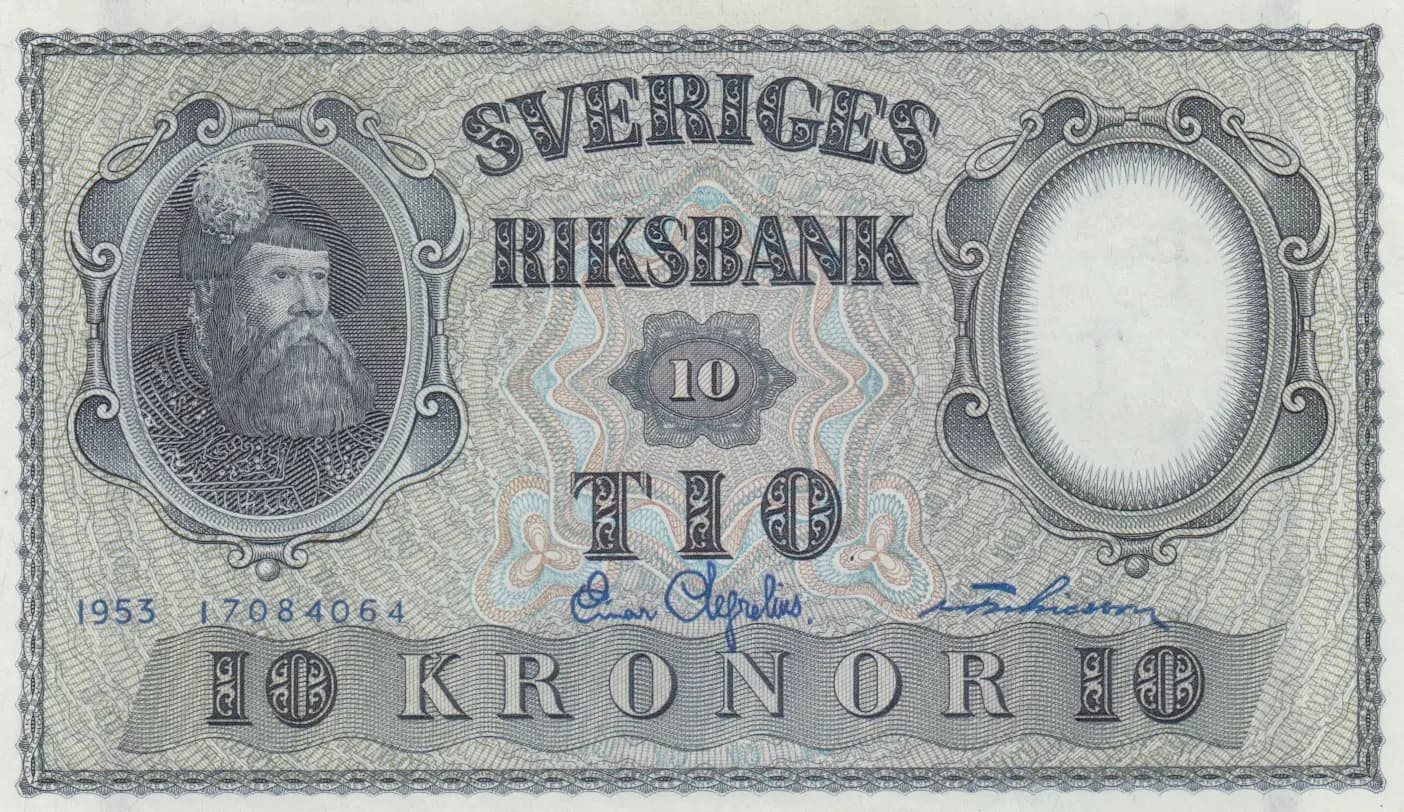
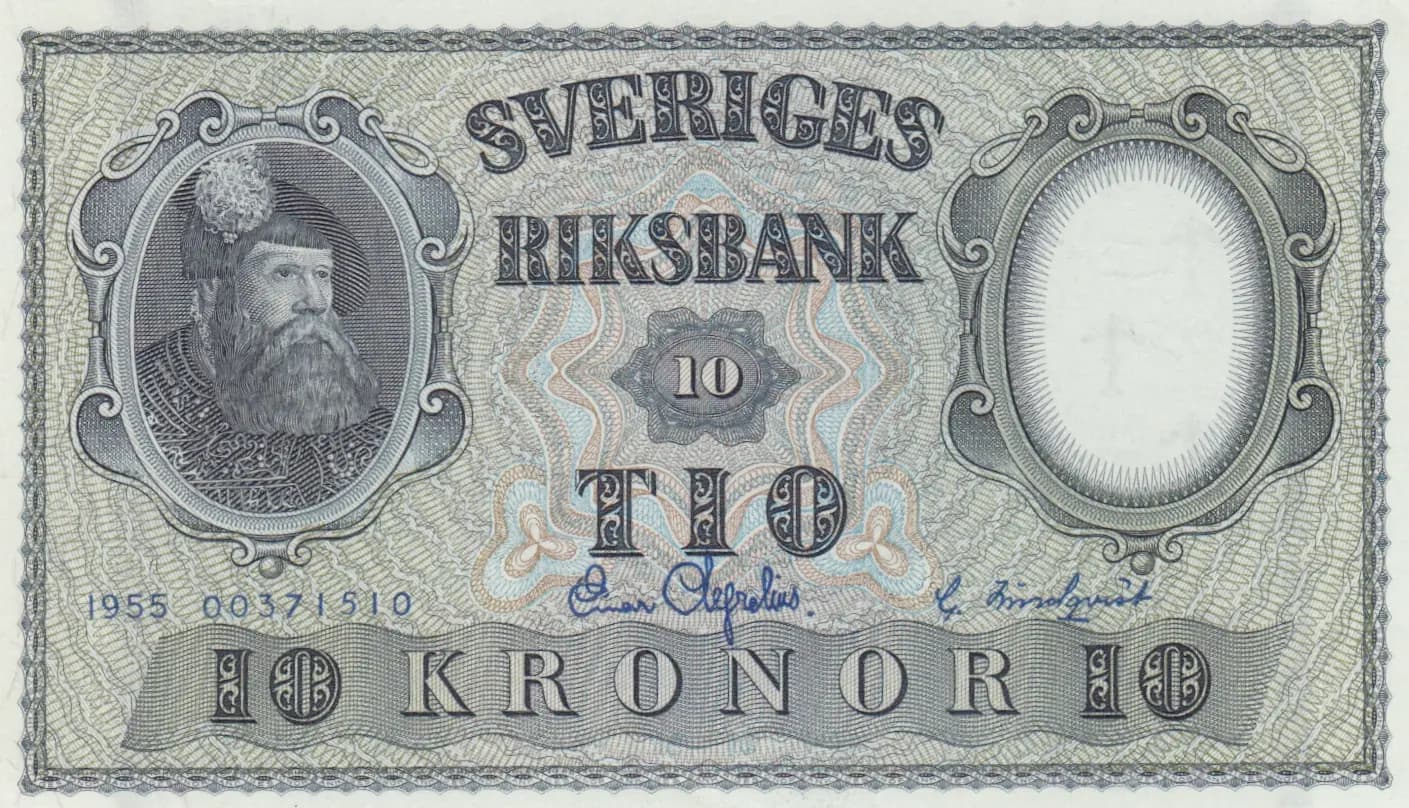
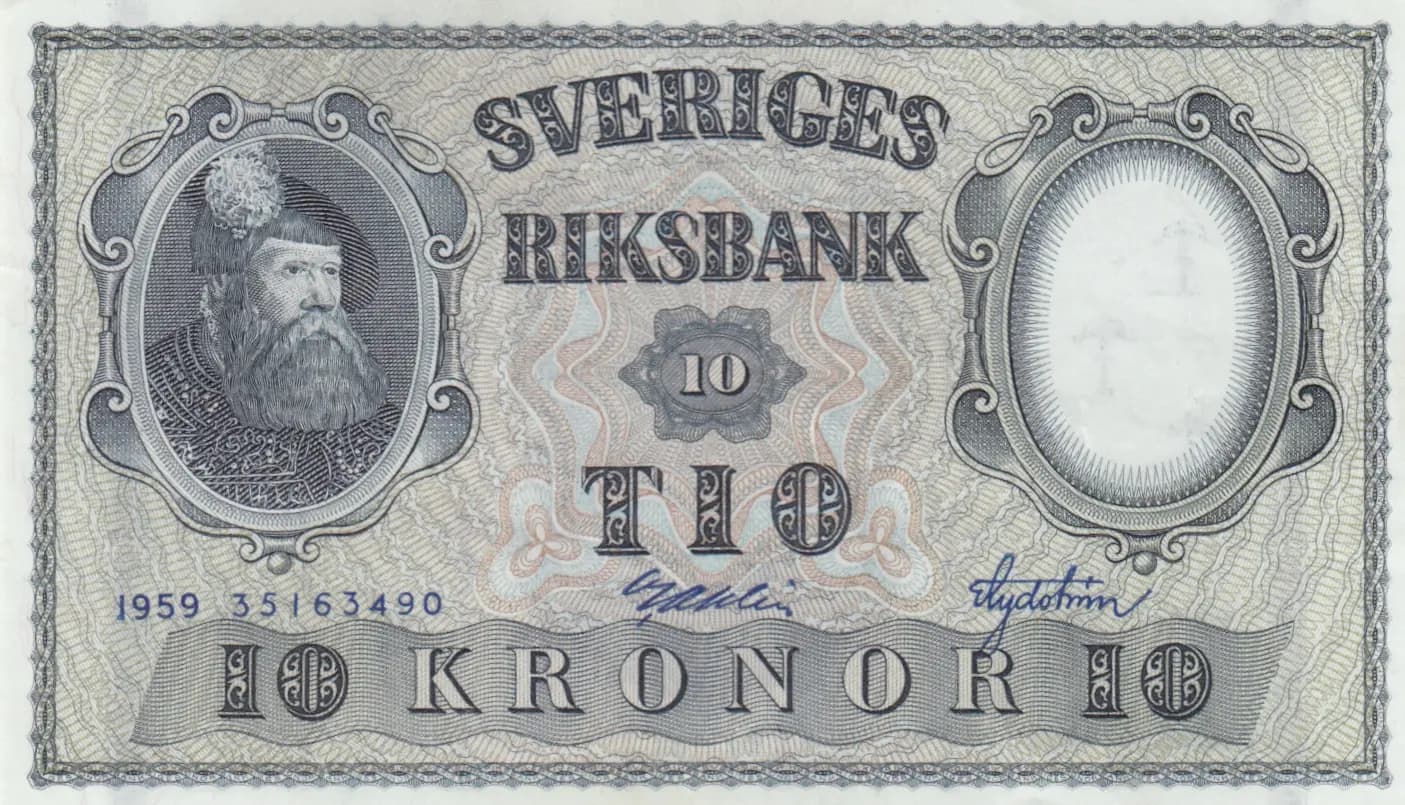
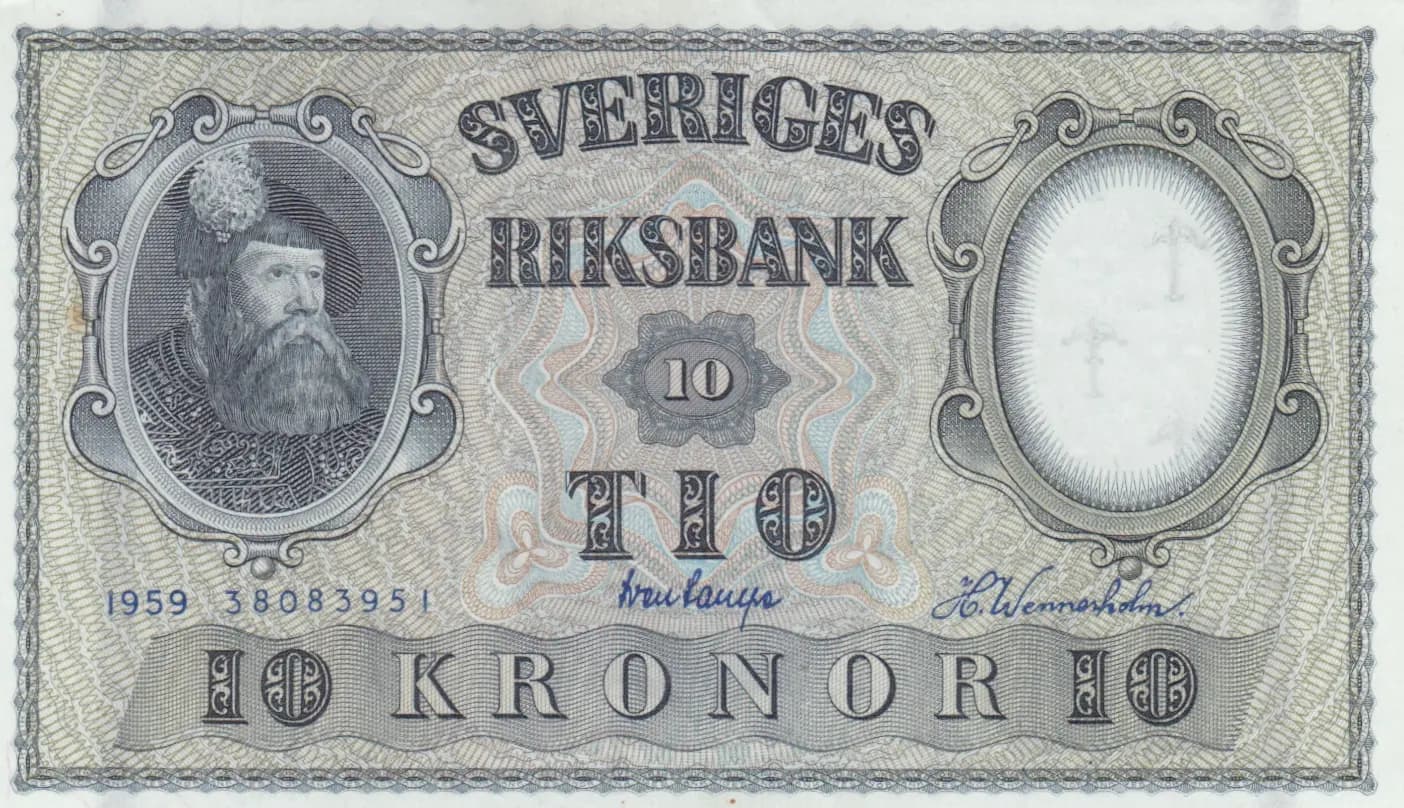
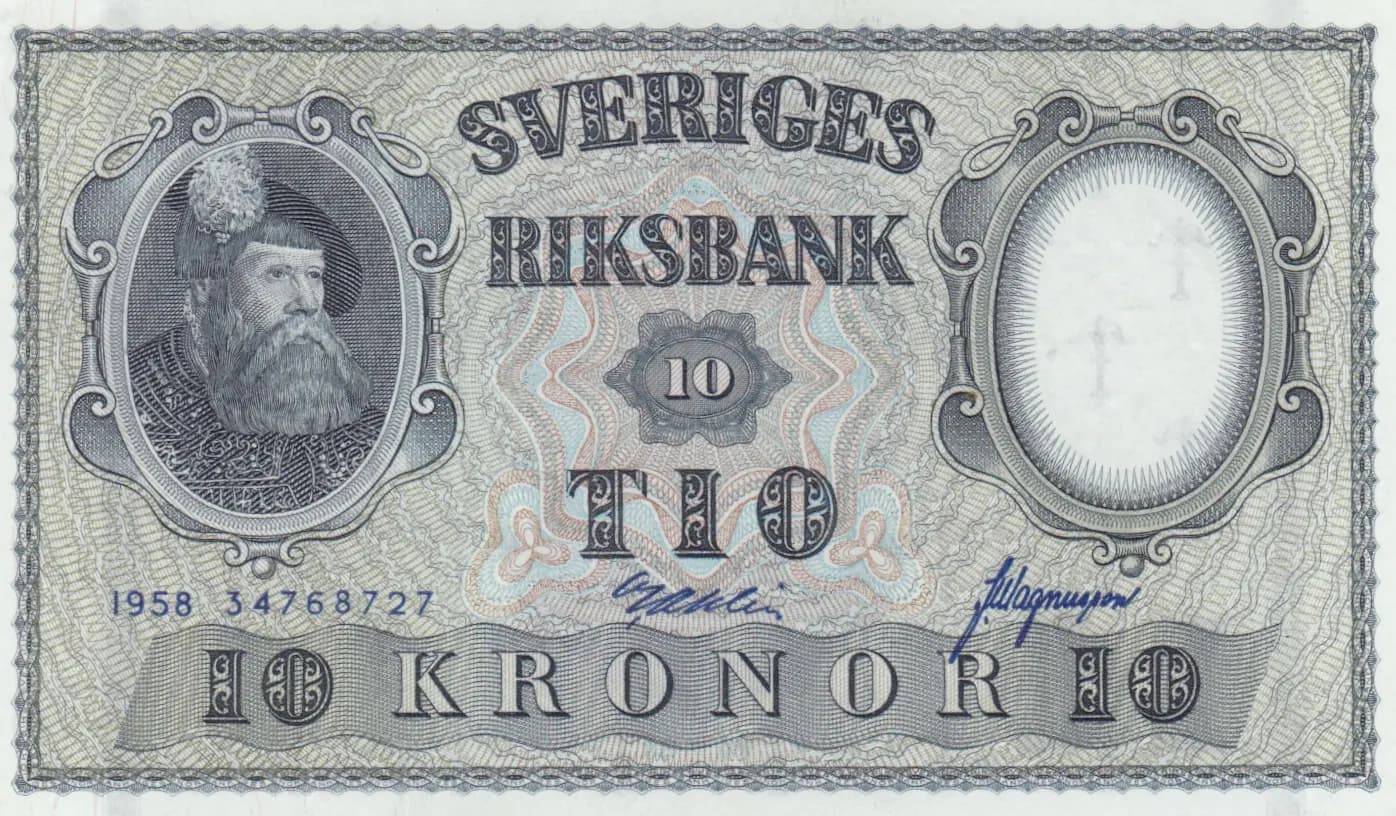
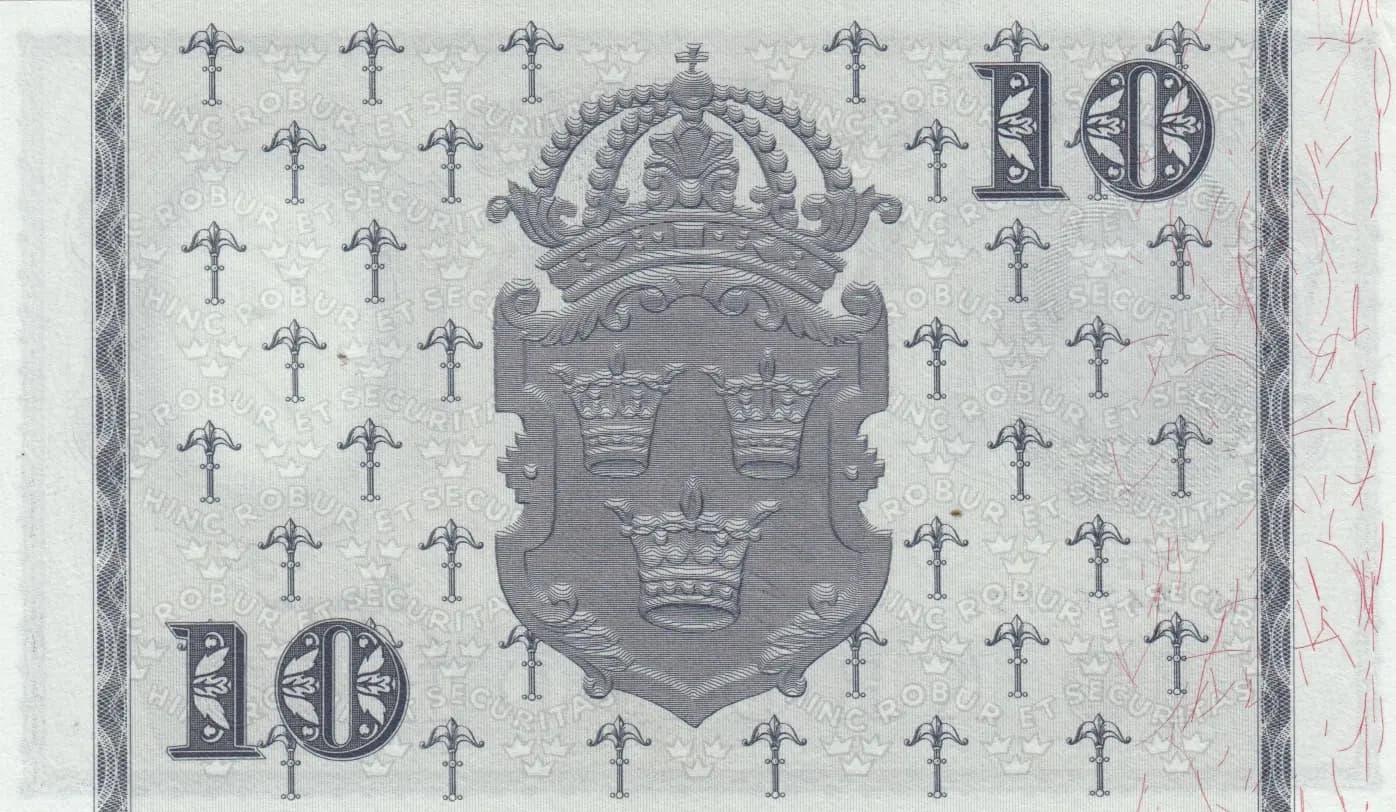
This is a Swedish 10 kronor note from 1958, issued by Sveriges Riksbank and graded as Uncirculated. The note displays exceptional preservation with crisp printing, sharp details, and no visible wear or creasing. The obverse features a classical portrait of King Gustav Vasa in an ornate medallion on the left, while the reverse displays the Swedish coat of arms with a crowned lion shield, both surrounded by intricate guilloche patterns and decorative borders characteristic of mid-20th century Swedish security printing.
Common. This note represents a regular issue of the 10 kronor denomination (P-43 series) produced between 1953–1962 with substantial print runs typical of a widely-circulated denomination. Current eBay market data shows UNC examples selling consistently in the $6–$12 range (with occasional higher prices for PMG-graded examples reaching $25–$51), indicating robust supply and stable collector demand at modest valuations. The 2019 catalogue value for UNC is listed at $5, confirming this as an affordable, commonly available note.
This note was issued during the reign of King Gustav VI Adolf, continuing the tradition of honoring King Gustav Vasa (1496–1560), the legendary founder of the modern Swedish state and national symbol of Swedish independence. The Swedish coat of arms on the reverse, featuring the Three Crowns crowned lion, represents the unified Kalmar Union heritage and Sweden's heraldic identity. This 10 kronor denomination remained in circulation during Sweden's post-war economic period and reflects the Riksbank's commitment to producing high-security banknotes using advanced engraving techniques.
The obverse features a formal portrait medallion of King Gustav Vasa (1496–1560), the revered founder of modern Sweden, depicted as a bearded historical figure in period dress, positioned in an ornamental oval frame with elaborate scrollwork on the left side. The denomination '10' is prominently displayed with a decorative star-burst pattern in the center. The reverse displays Sweden's heraldic coat of arms—specifically the Three Crowns symbol topped with a royal crown and featuring a crowned lion shield—centered on the note and surrounded by a repetitive pattern of small fleur-de-lis or cross symbols creating a secure background. Both sides employ fine-line guilloche patterns and intricate decorative borders throughout.
Front: SVERIGES RIKSBANK (Sweden's National Bank); 10 KRONOR (10 kronor); 1958 (issue year); 34768727 (serial number); Myhrman and Blomqvvist (authorized signatures). Back: 10 (denomination numerals in upper right and lower left corners). All text is in Swedish, the official language of currency issuance.
Intaglio (steel engraving) printing, the standard security printing method for Sveriges Riksbank during this period. The fine guilloche work, detailed portrait engraving, intricate background patterns, and sharp line definition visible throughout both sides are characteristic of high-quality intaglio production. The complexity of the security features—including the layered ornamental frames, mesh patterns, and fine line work—indicate production by a specialized security printer, likely Bradbury Wilkinson or a comparable European security printing house contracted by the Riksbank.
This specific note is catalogued as Pick P-43f, one of two known variants in the PMG population report (P-43f and P-43g). The variety designation likely relates to signature combinations, printing dates within the 1953–1962 issuance window, or serial number prefixes. The signatures visible on this note (Myhrman and Blomqvvist) should be noted as distinguishing characteristics. The serial number 34768727 and the 1958 date are specific to this individual note and may help identify the exact sub-variety within the P-43 series.