10 kronor 1955
Market Prices
14 salesAbout This Note
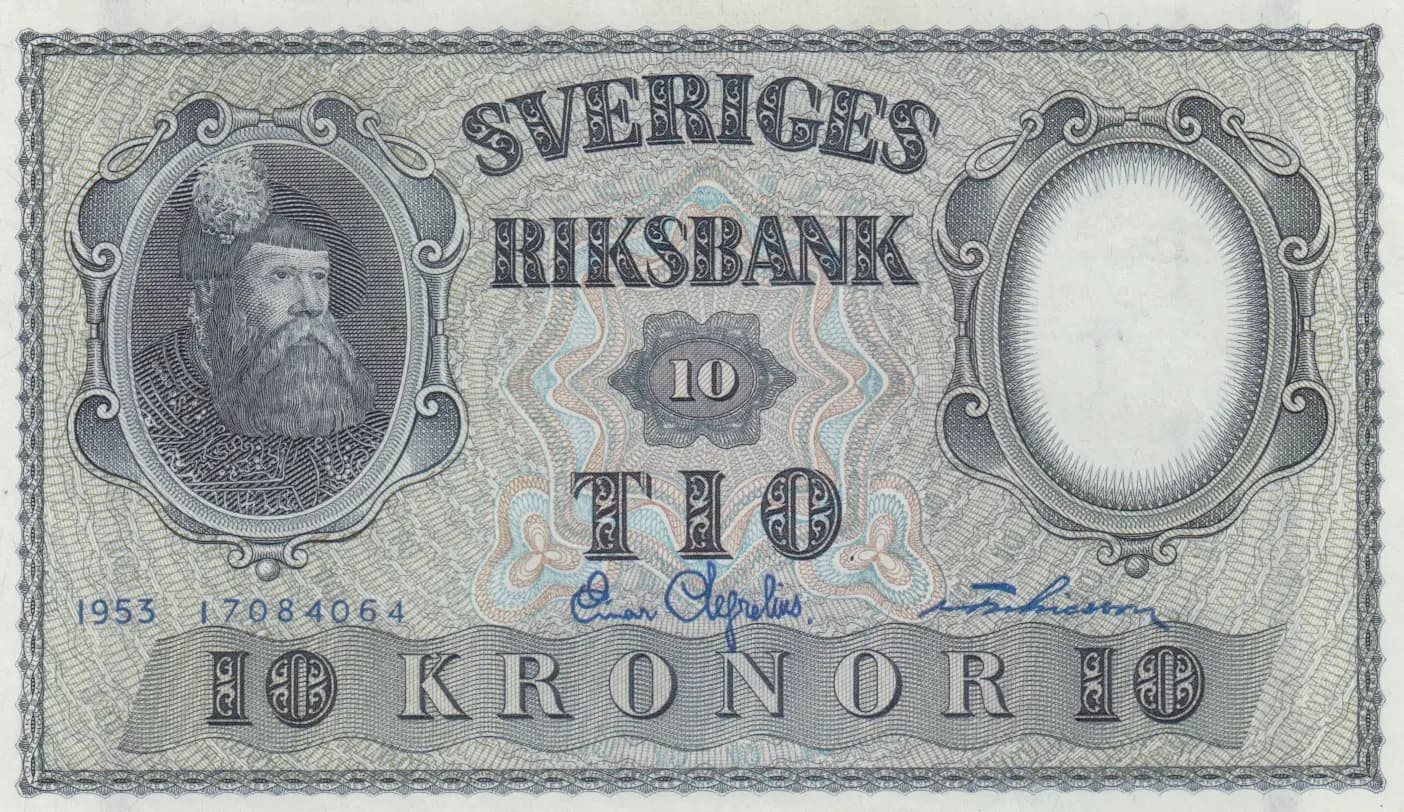
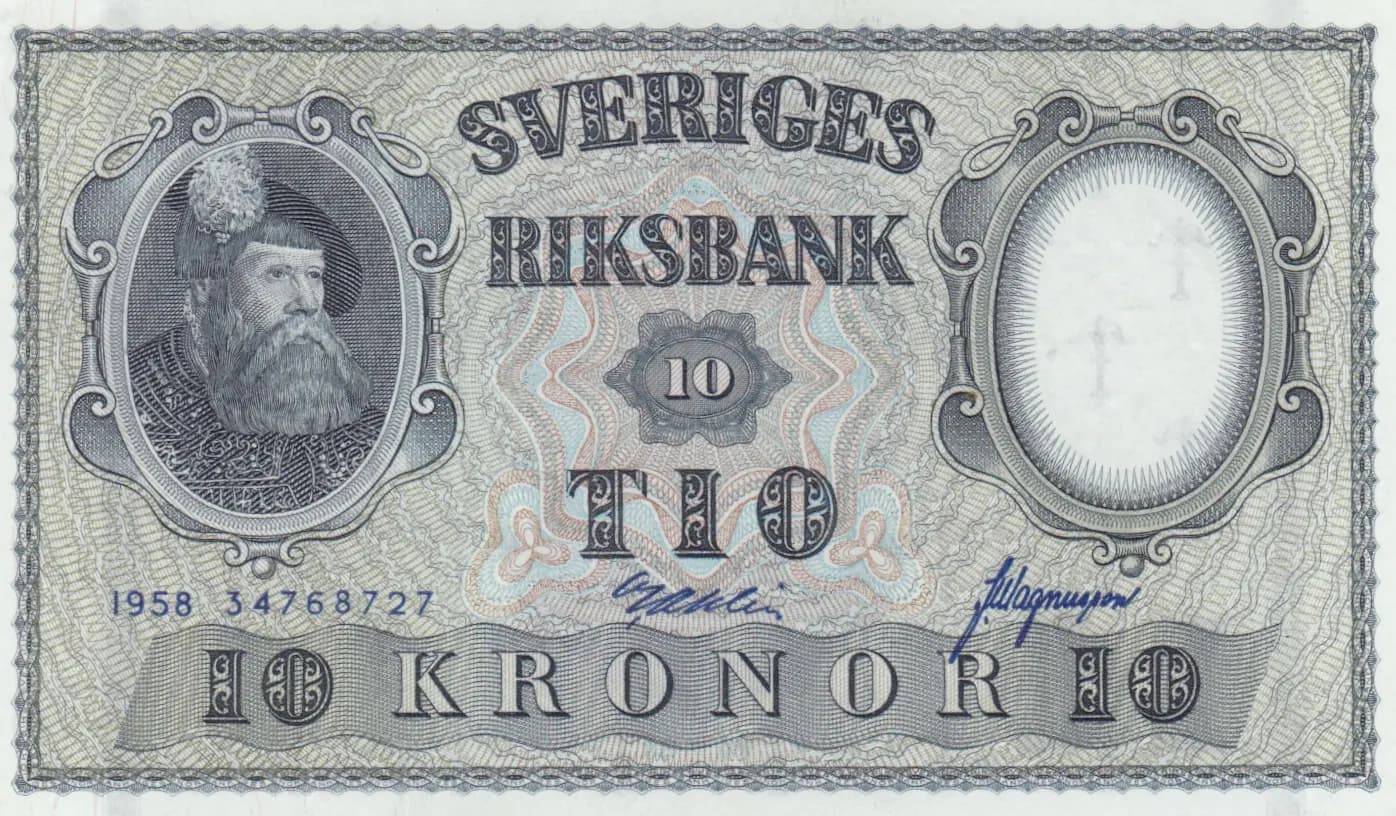
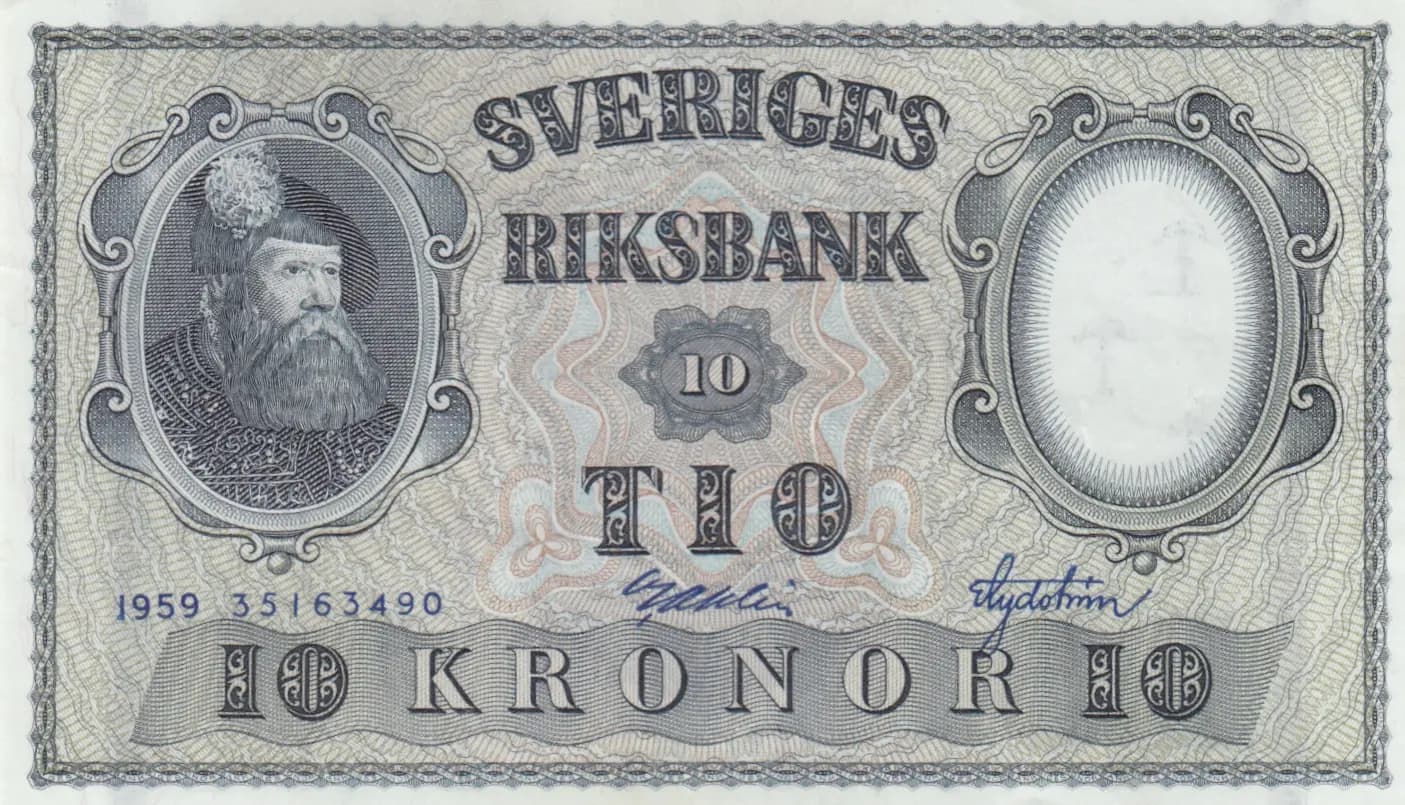
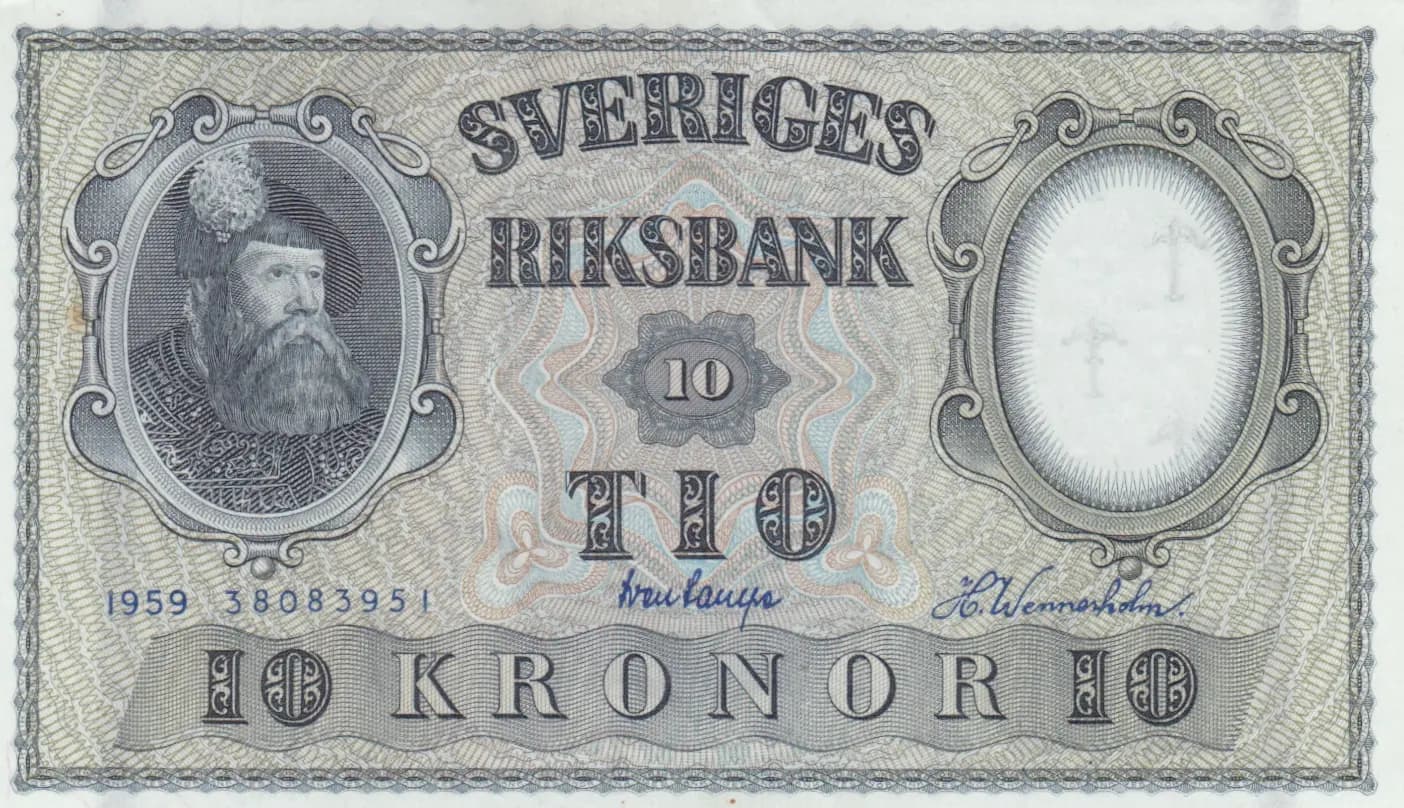
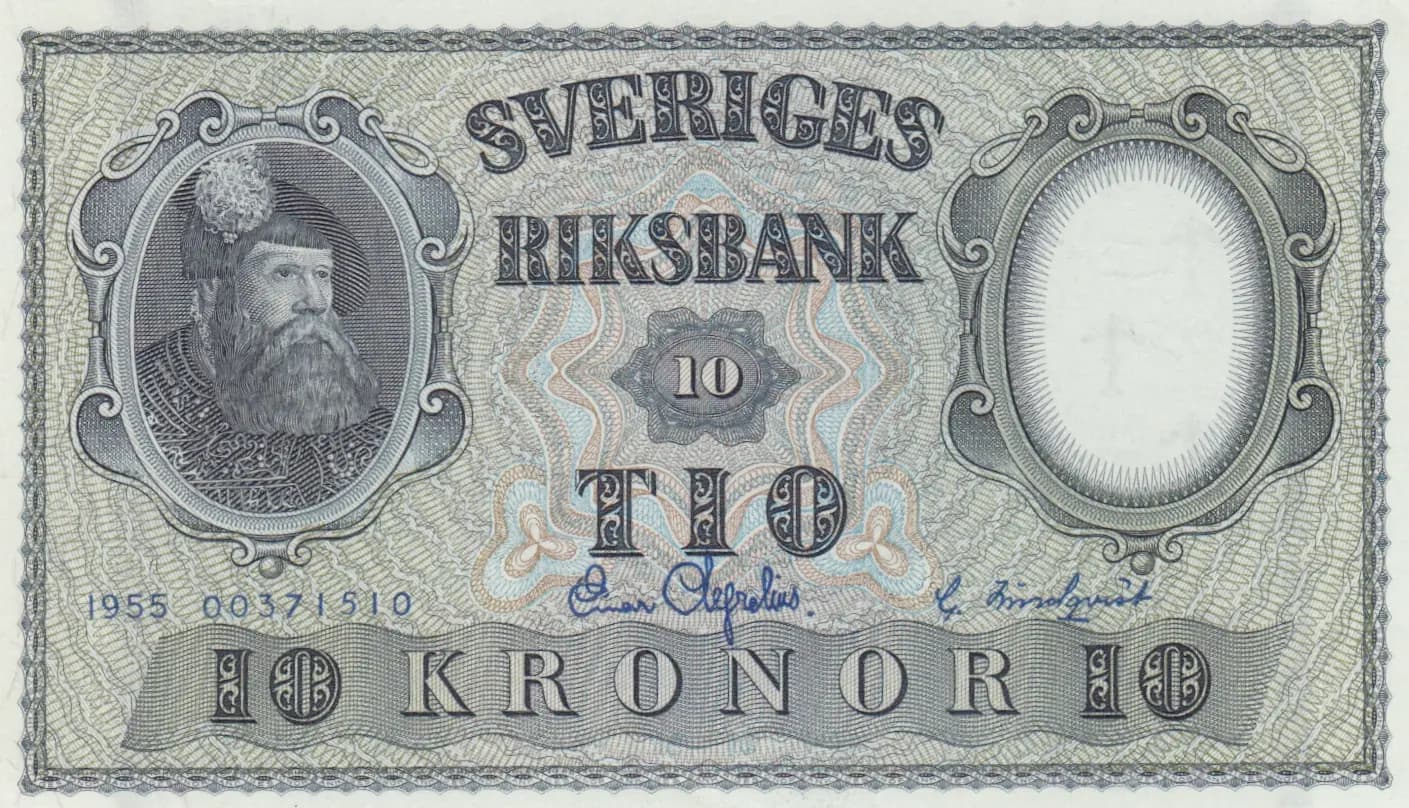
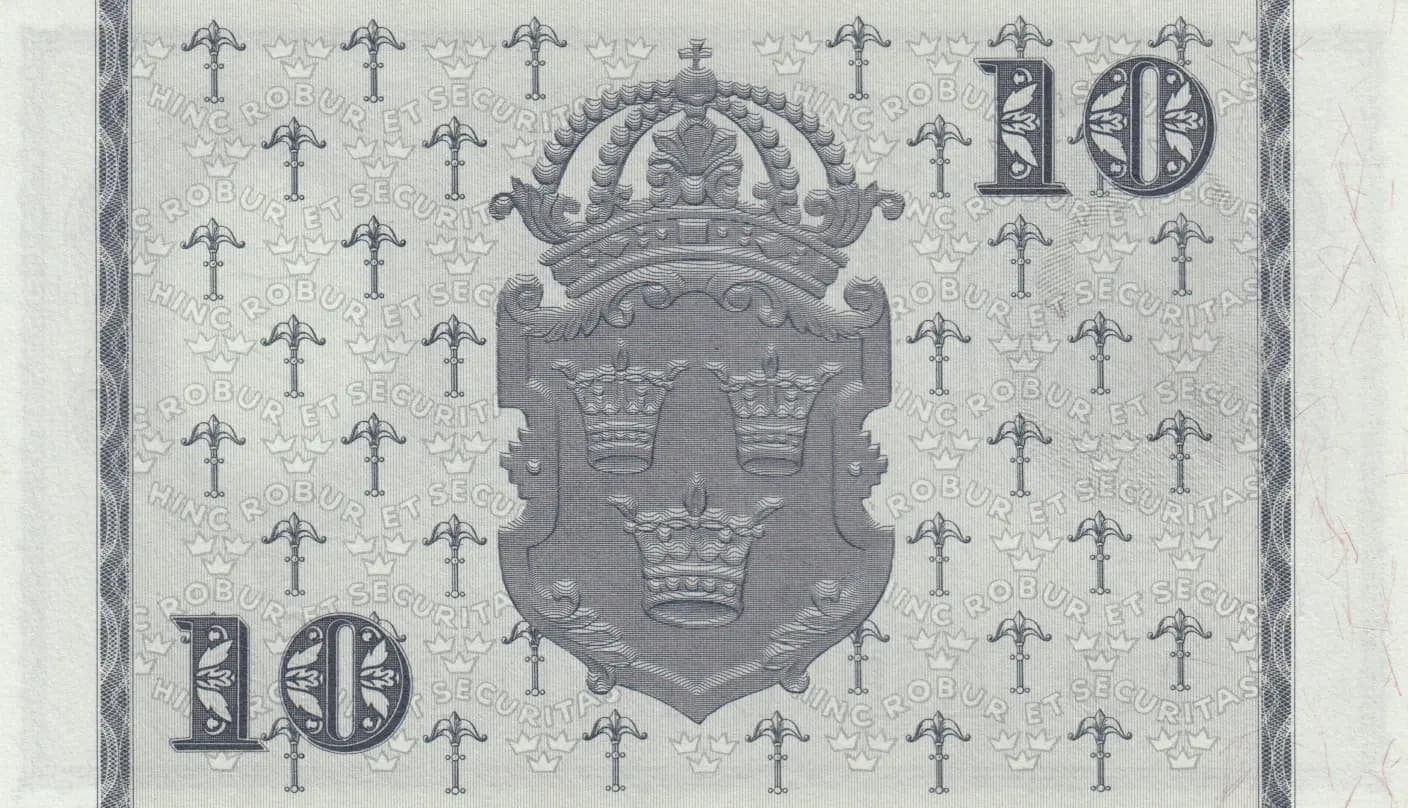
A beautiful example of Sweden's 1955 10 Kronor note in uncirculated condition, featuring a striking portrait of King Gustav Vasa on the obverse and the Swedish coat of arms on the reverse. The note displays the characteristic gray-blue coloring and intricate cross-hatch security patterns of this issue, with sharp, crisp engraving throughout and no signs of wear, folds, or creases. This Pick-43c variant represents the classic mid-20th century design period of Swedish currency, making it an appealing addition to Scandinavian banknote collections.
Common. This 10 Kronor note from the 1953-1962 series was produced in substantial quantities as a regular circulation issue. Market data confirms common status: UNC examples have sold consistently in the $5.50-$11.70 range on eBay, with 2019 catalog values listing UNC at $5.50. The note's availability in multiple grade levels and regular auction appearance indicates a robust circulation print run with no documented scarcity factors.
Issued by Sveriges Riksbank during the post-WWII economic stabilization period (1953-1962 series), this note honors King Gustav Vasa (1496-1560), the founder of the Vasa dynasty who unified and modernized Sweden in the 16th century. The obverse portrait of Vasa in his distinctive 16th-century attire with long beard reflects Swedish national identity and historical pride, while the reverse coat of arms with its two-faced head and crown symbols reinforces the note's connection to Sweden's royal heritage and governmental authority.
The obverse features a formal portrait of King Gustav Vasa positioned at the left within an ornamental frame, rendered in fine line engraving showing his characteristic long beard and 16th-century royal clothing. The portrait serves as both the primary design element and the watermark. The center and right portions contain the denomination and issuer information in decorative serif typography. Ornamental scroll designs and elaborate crosshatch security patterns frame the entire note. The reverse displays the Swedish coat of arms at center, featuring a crowned shield with a Janus-like (two-faced) head and crown symbols representing royal authority. The background is filled with a repeating pattern of ornamental crosses and the security text 'ROBUR SECURITAS,' reinforcing the banknote's protective features. All elements employ fine line engraving with exceptional detail and precision.
Front: 'SVERIGES RIKSBANK' (Sweden's National Bank); '10' and 'TIO KRONOR' (Ten Kronor); Serial number and date '1955 0037 510'; Two official signatures. Back: '10' (denomination); 'ROBUR SECURITAS' (Latin: 'Strength and Security' — visible as security watermark/background pattern throughout the reverse).
Intaglio (line engraving) on banknote-grade paper, a traditional security printing method employed by Swedish banknote printers for this period. The intricate cross-hatch backgrounds, fine detail in portraiture, and complex heraldic design showcase the high-security capabilities of intaglio printing, with particular emphasis on the repeating geometric and floral patterns as anti-counterfeiting measures. This note was produced during Sweden's use of traditional European security printing standards.
This note is identified as Pick-43c, indicating it is a variant within the broader P-43 series. Visual inspection shows serial number '0037 510' dated 1955. PMG population data indicates variants P-43f and P-43g also exist within this base Pick number, suggesting this series has multiple cataloged subtypes, possibly differentiated by signature combinations, date ranges, or serial number prefixes. The specific variant designation (43c) should be verified against detailed signature and date characteristics compared to other known varieties.