10 emalgeni 1974 specimen
Market Prices
1 saleAbout This Note
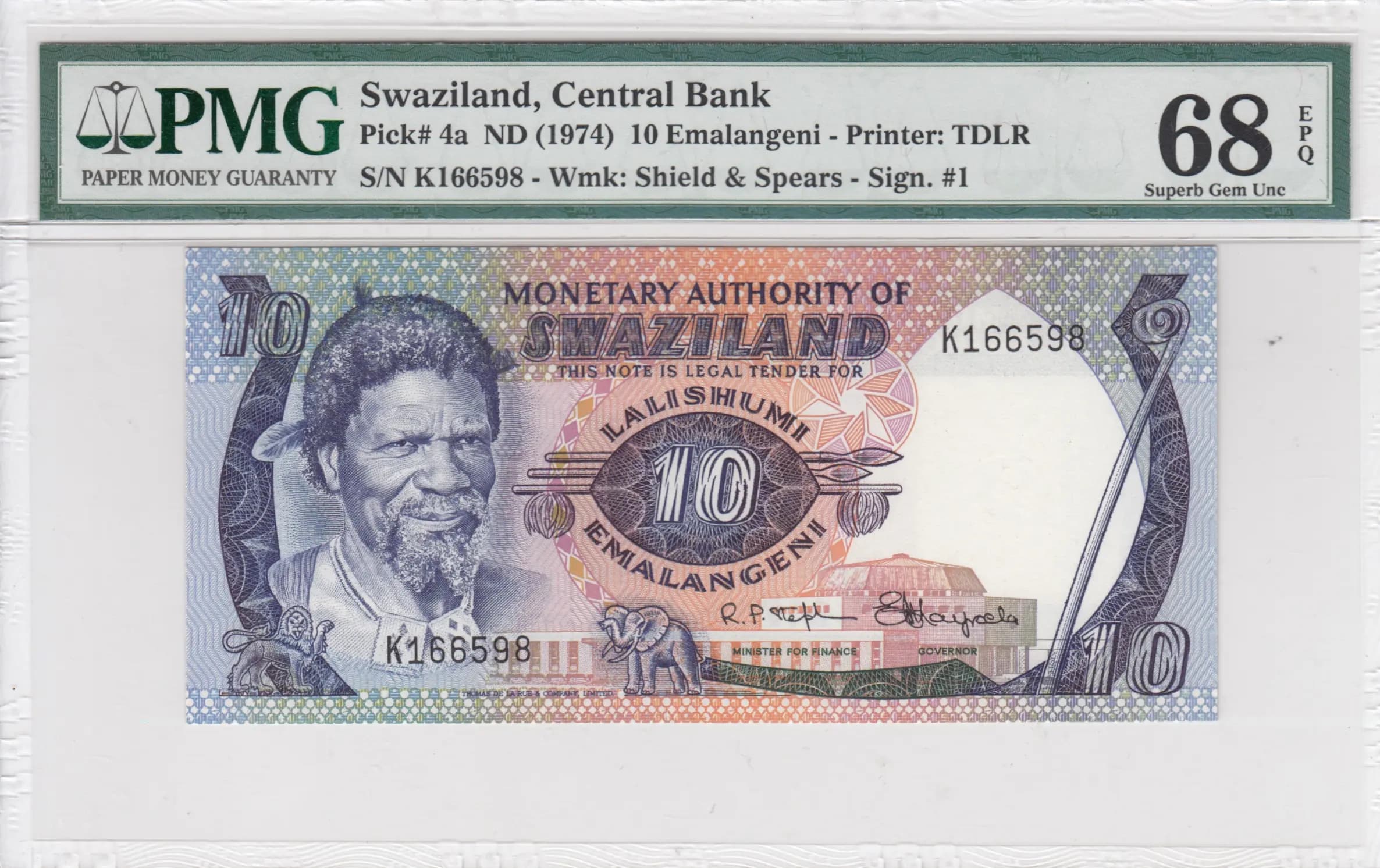
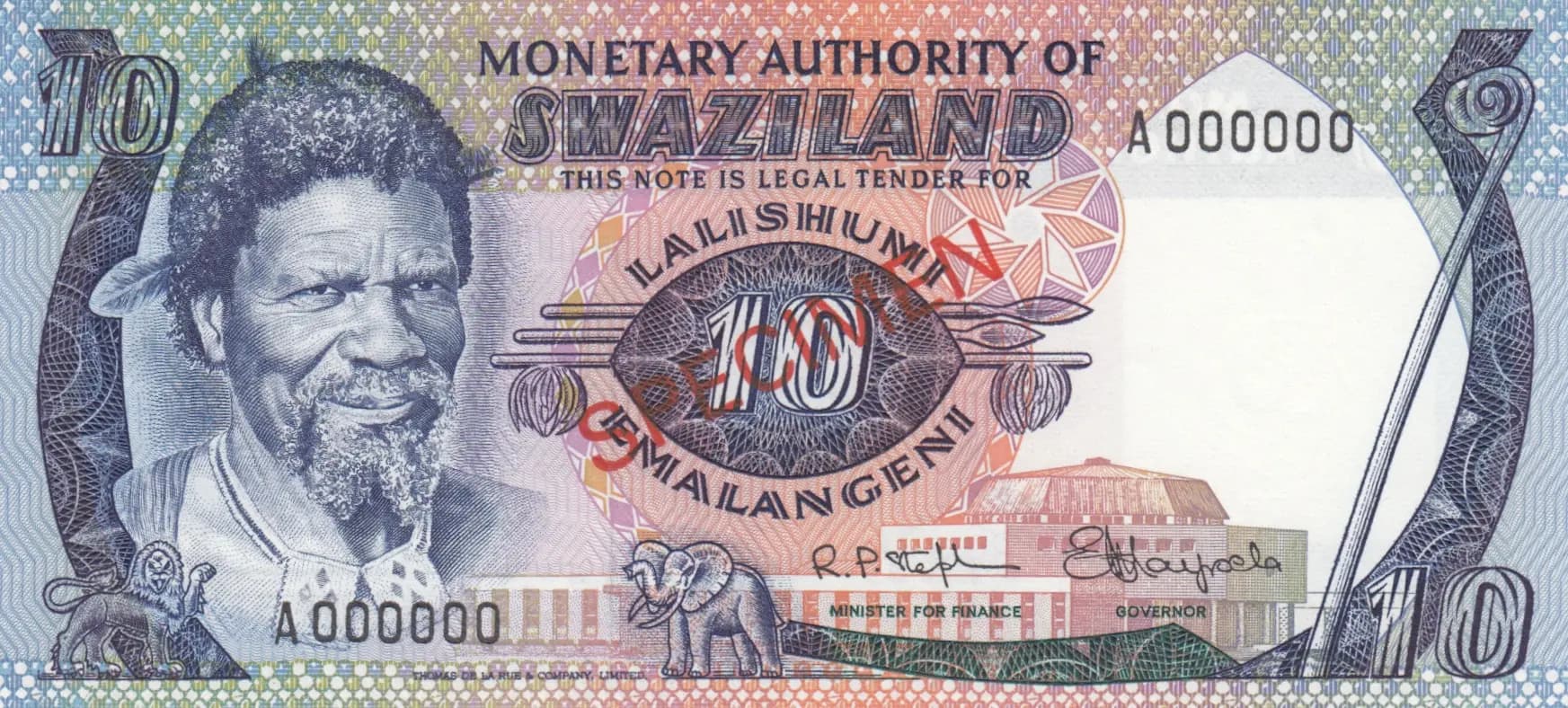
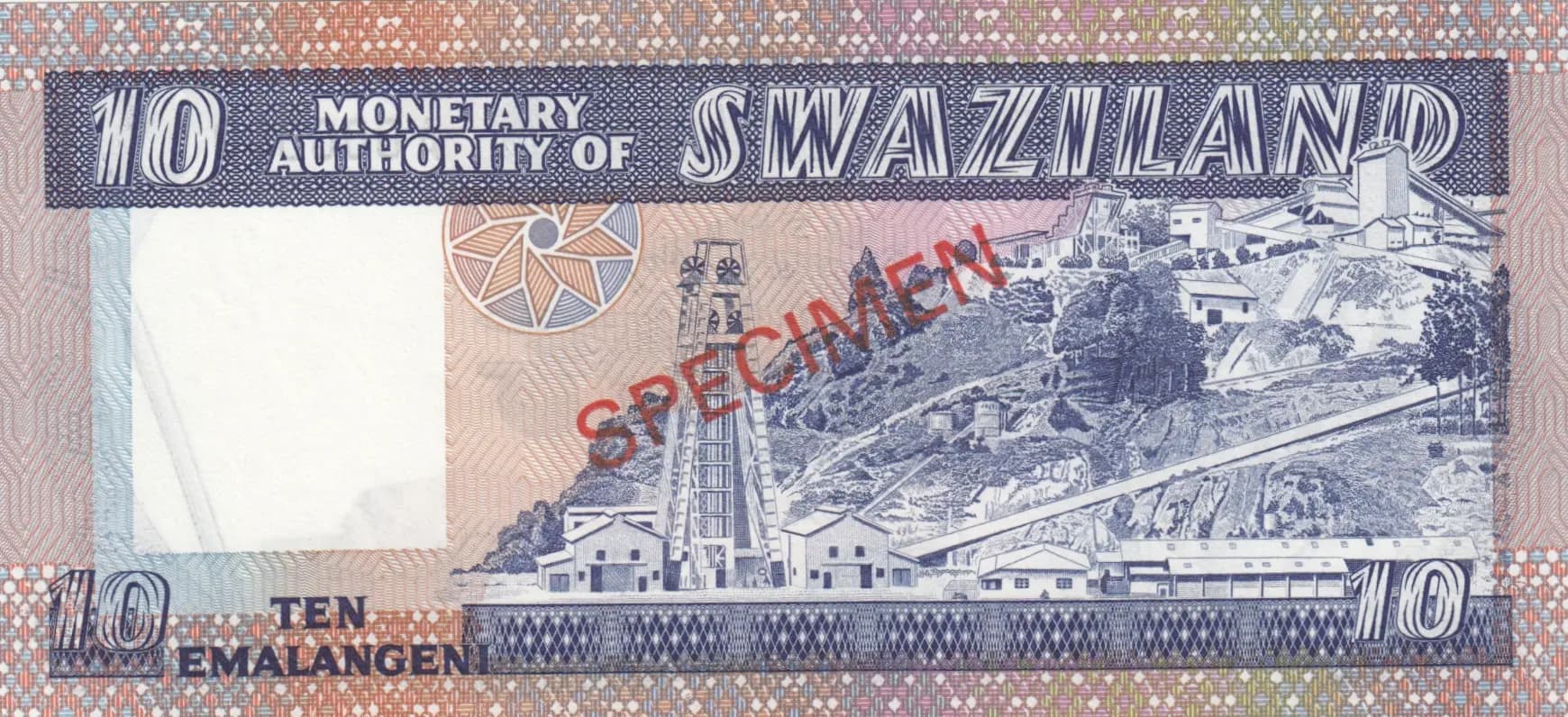
This is a 1974 specimen note of the 10 Emalangeni from Swaziland's Monetary Authority, printed by Thomas de la Rue in London. The front features a portrait of King Sobhuza II in formal attire with the Parliament House building at bottom center, while the reverse depicts an asbestos mining operation with industrial structures and terraced landscape. In uncirculated condition with a prominent red 'SPECIMEN' overprint, this note represents an important early specimen from Swaziland's first independent currency issue.
Common. Specimen notes from this series are widely available in the numismatic market. eBay price tracking data shows UNC examples trading in a range of $1.79 to $27.00, with most transactions clustered under $20, and a 2019 catalog value of $65. The wide price variance reflects typical specimen note market fluctuations rather than rarity. As a specimen issue from Swaziland's first currency series, these notes were produced in sufficient quantities for distribution to banks, collectors, and institutions, making them commonly encountered today despite their historical significance.
This 1974 note was issued during Swaziland's first year as an independent nation following its 1968 independence from British rule. The imagery celebrates national identity and economic foundations: King Sobhuza II's portrait honored the reigning monarch, while the Parliament House in Mbabane symbolized democratic governance, and the asbestos mining operation reflected one of the country's major industries and sources of revenue during this period. The bilingual inscriptions in English and Siswati reflect the country's post-colonial linguistic policy.
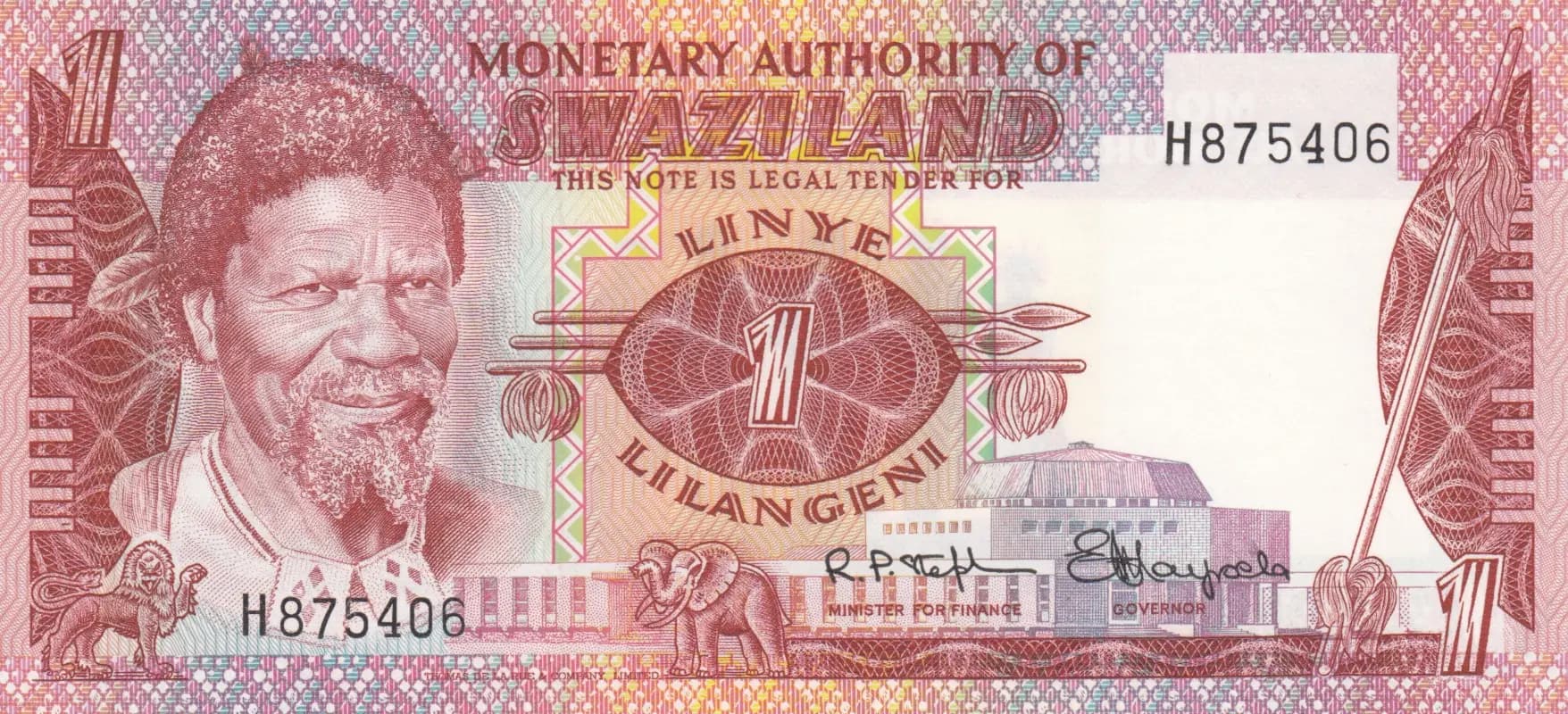
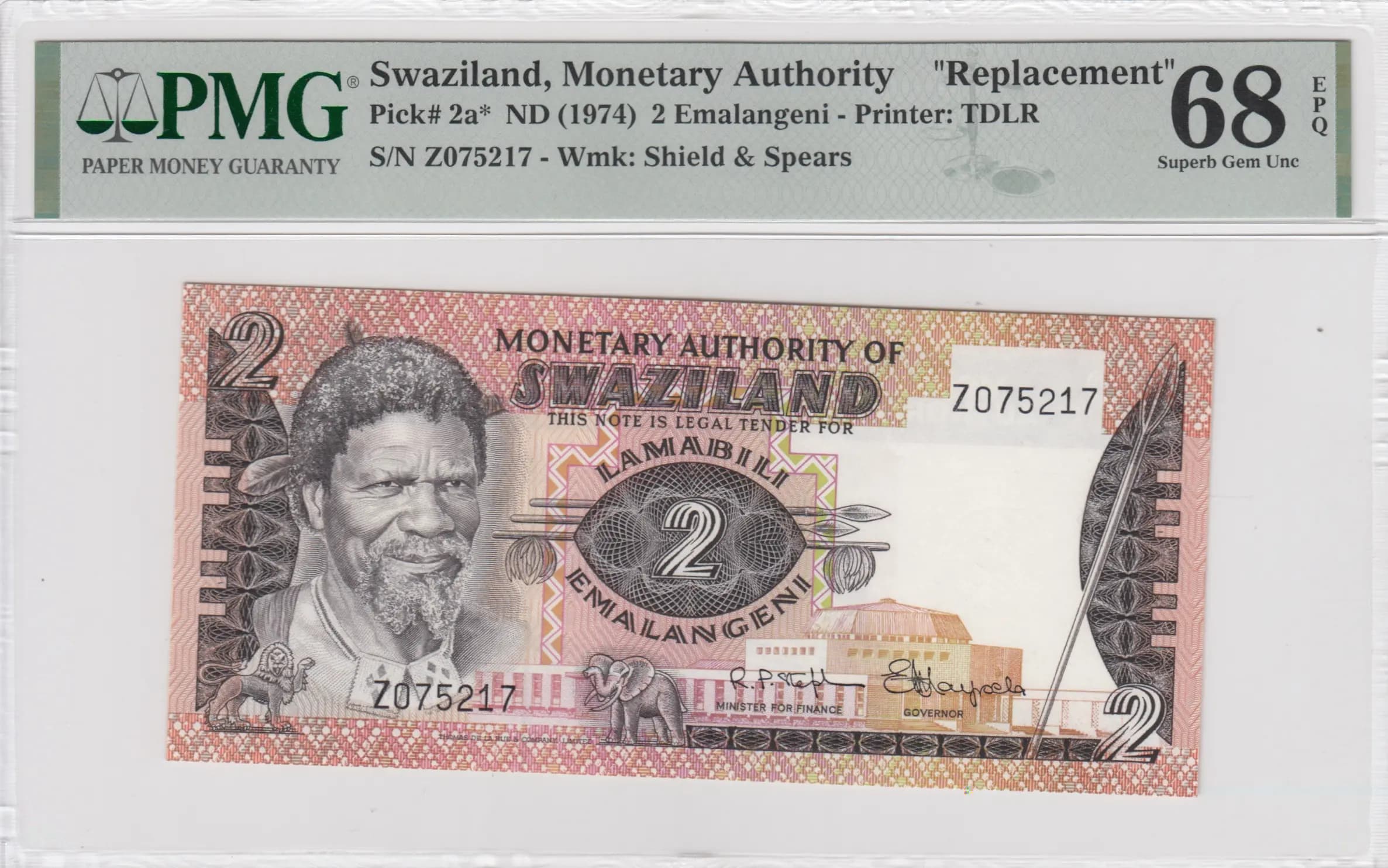
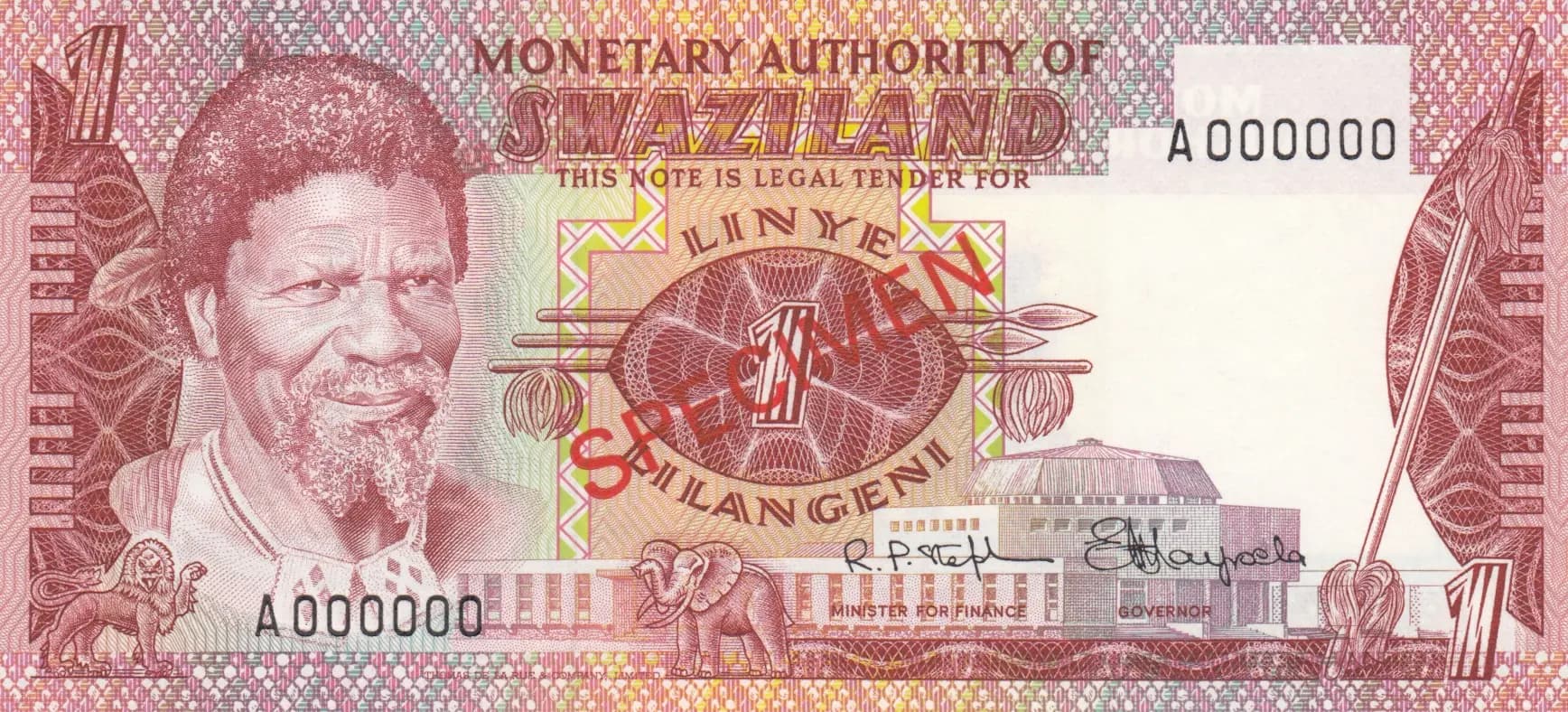
The obverse features a formal portrait of King Sobhuza II positioned at the left side in three-quarter profile, depicted as a bearded man in formal attire. The Parliament House of Mbabane is illustrated at the bottom center-right as a distinctive white building with a pitched roof and compound structure, symbolizing the seat of government. Ornamental geometric patterns and decorative medallions frame the design, with the denomination '10' prominently displayed in an ornamental circle. The reverse depicts an active asbestos mining operation with a tall mining tower or hoisting structure dominating the left side, surrounding mining buildings and facilities in the center, and distinctive terraced or stepped mining landscape characteristic of open-pit extraction. Both sides feature intricate engraved background patterns with geometric borders and security elements throughout.
Front side: 'MONETARY AUTHORITY OF SWAZILAND' (issuing authority); 'THIS NOTE IS LEGAL TENDER FOR' (English); 'ILALISHUNI' (Siswati: 'Legal Tender'); '10 EMALANGENI' (denomination in both English 'TEN' and Siswati plural form); 'MINISTER FOR FINANCE' and 'GOVERNOR' (officer titles); Serial number 'A000000' (specimen marking). Back side: '10 EMALANGENI' (denomination); 'MONETARY AUTHORITY OF SWAZILAND' (issuing authority); 'SPECIMEN' (large red diagonal overprint indicating non-circulation specimen); 'TEN EMALANGENI' (denomination repeated).
Intaglio engraving (line engraving) combined with multi-color offset lithography for background and security underprints. The note exhibits detailed engraved portraiture and landscape work typical of Thomas de la Rue's security printing standards. Color separation techniques created the blue-gray, pink, white, green, and yellow gradient effects observed throughout. Security features include watermark areas (shield and spears design), intricate background patterns, and color gradients. The specimen overprint was applied as a secondary printing step in red.
This is identified as Pick number P-4s, the specimen variant of the 1974 10 Emalangeni note. Key variety identifiers include: the 's' designation indicating specimen status; the red 'SPECIMEN' overprint visible diagonally across the reverse; serial number prefix 'A' (or 'B' for some examples) with '000000' zeros typical of specimens; and printing by Thomas de la Rue (TDLR) as opposed to other printers used for later varieties (such as G&D for subsequent issues P-41a through P-43). PMG records confirm P-4s as a distinct cataloged variety with the TDLR printer attribution.