10 emalgeni 1974
Market Prices
3 salesAbout This Note
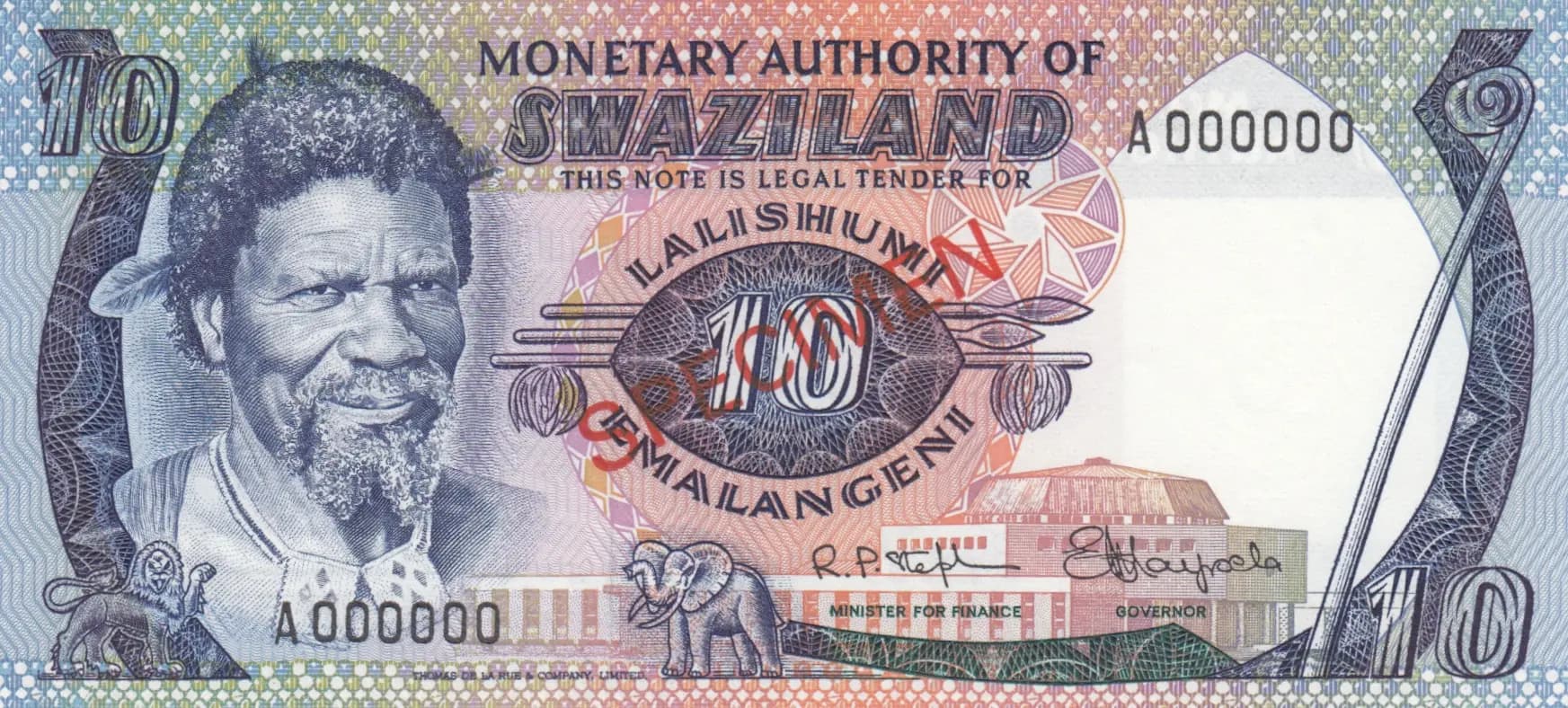
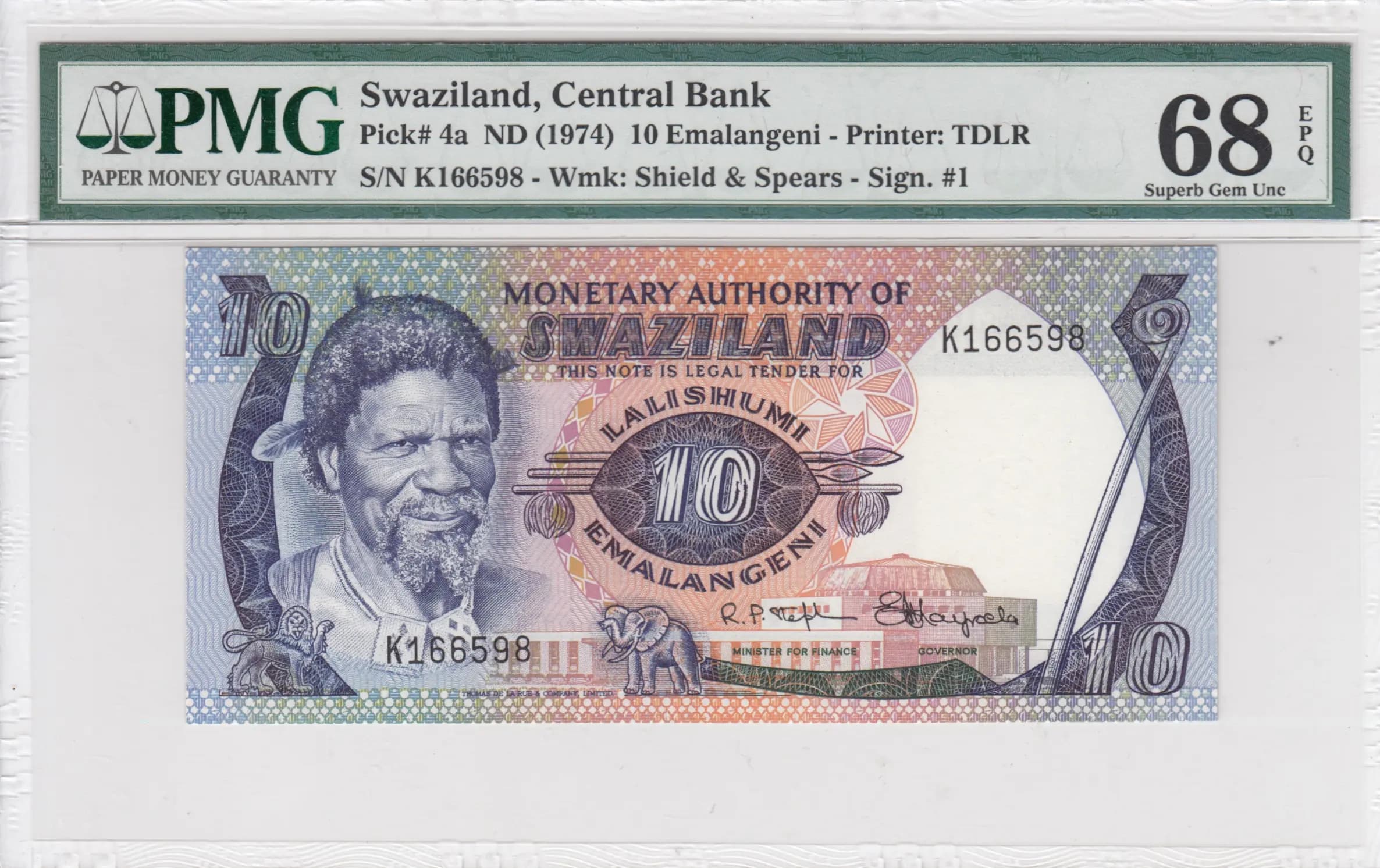
This PMG 68 Superb Gem Uncirculated example of Swaziland's 1974 10 Emalangeni note represents an exceptionally well-preserved specimen from the Monetary Authority of Swaziland's first decimal currency issue. The note displays pristine paper quality with no visible wear, creases, or circulation marks, and features the vibrant multicolor printing (blues, pinks, greens, and purples) characteristic of Thomas de la Rue's security printing. The combination of King Sobhuza II's portrait, Parliament House imagery, and the reverse's architectural landmark make this a significant piece of Swaziland's numismatic history from a period of post-independence nation-building.
Common. While this is the first decimal issue from a small nation, the PMG price tracking data indicates this denomination has appeared regularly on secondary markets with UNC specimens selling for $65-80 and lower grades (PMG 55) achieving only $14.50, suggesting adequate supply. The Monetary Authority of Swaziland likely produced sufficient quantities for circulation and long-term availability. The note is neither scarce nor rare, though the PMG 68 grade represents exceptional quality that commands a premium over typical specimens.
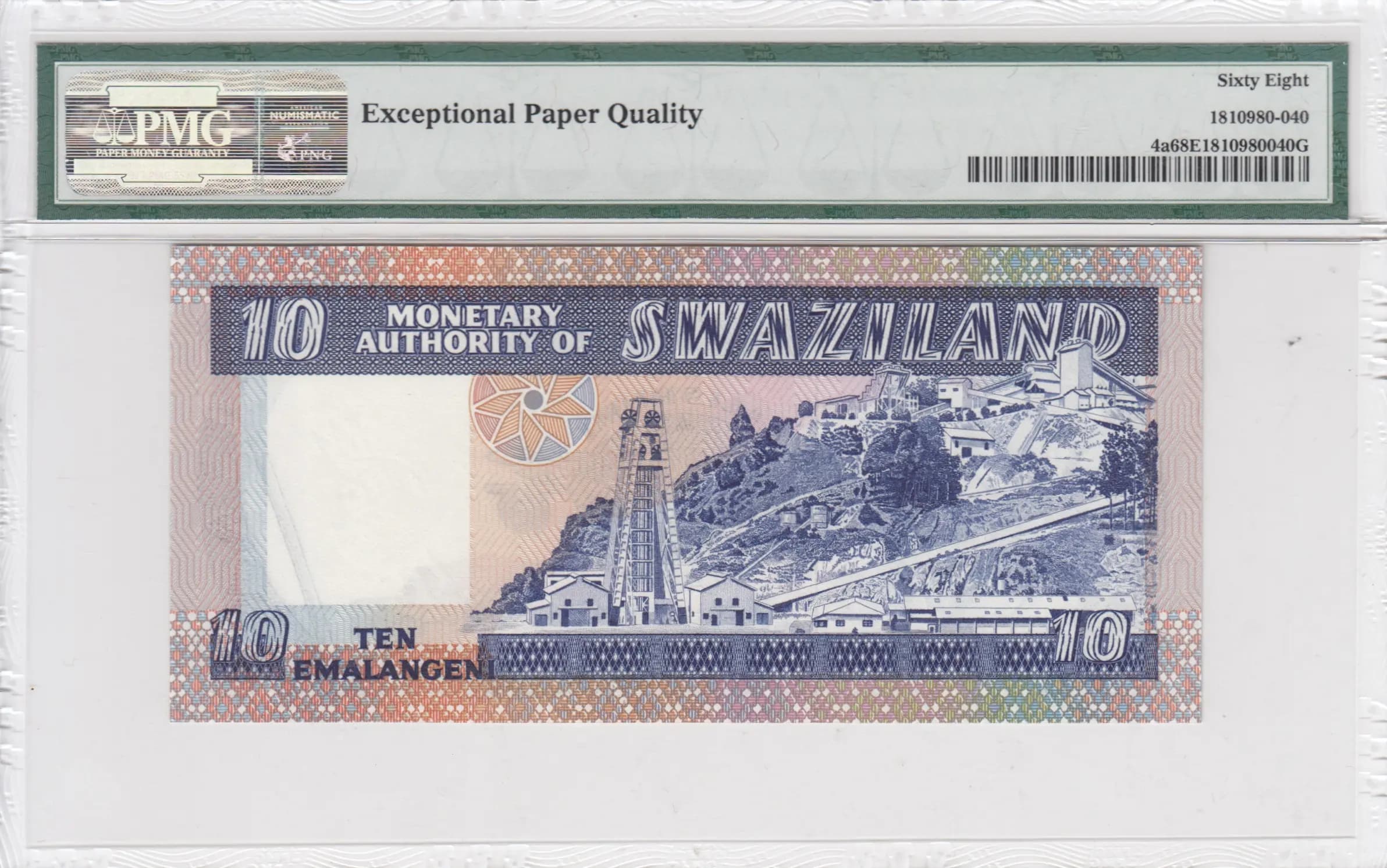
Issued in 1974 by Swaziland's Monetary Authority during the early years of the nation's independence (1968), this banknote commemorates the country's sovereignty through the prominent portrait of King Sobhuza II, the reigning monarch who led Swaziland through its transition to independence. The depiction of Parliament House in Mbabane on the obverse and the asbestos mine on the reverse reflect the country's governmental and economic foundations during this period, as mining was central to Swaziland's economy. This note represents the monetary framework established to support the newly independent nation's economic identity.
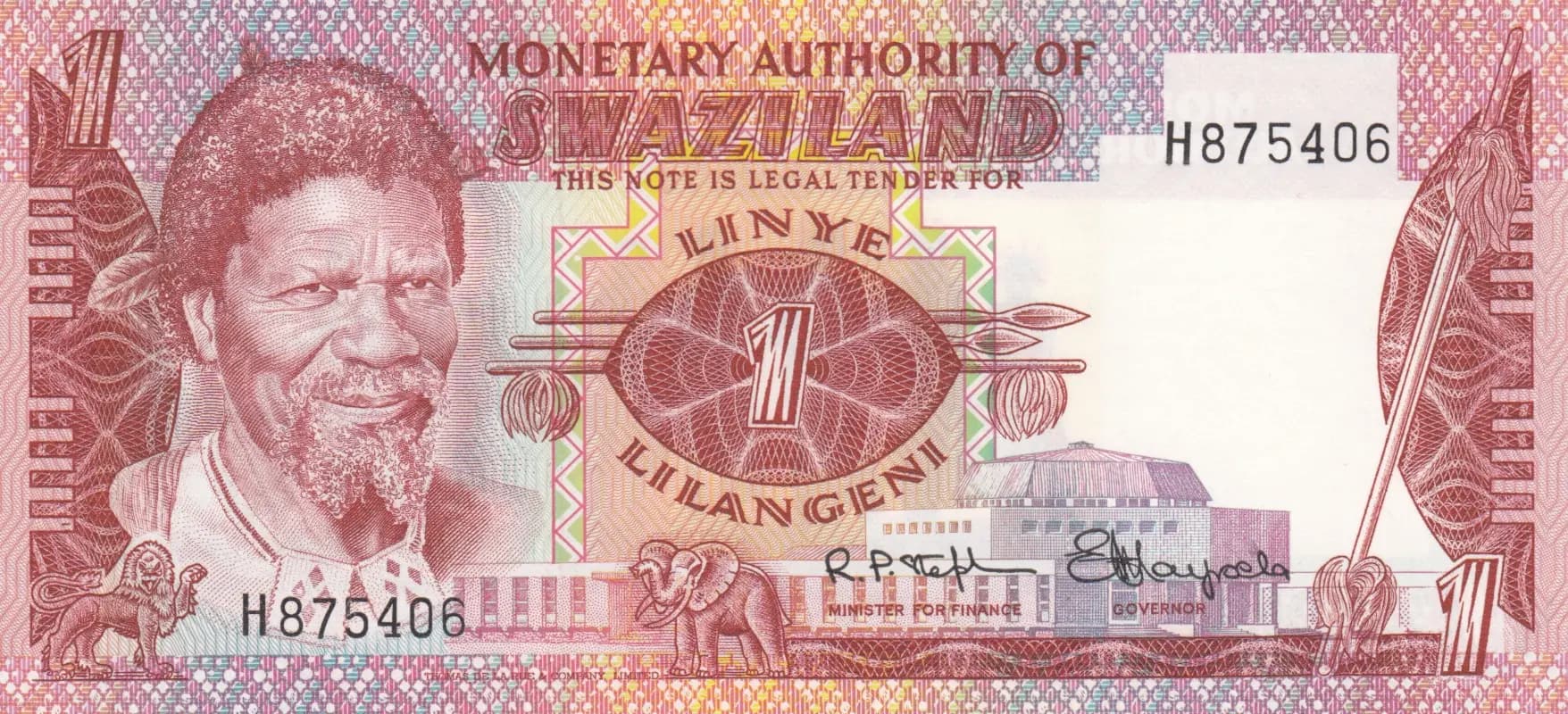
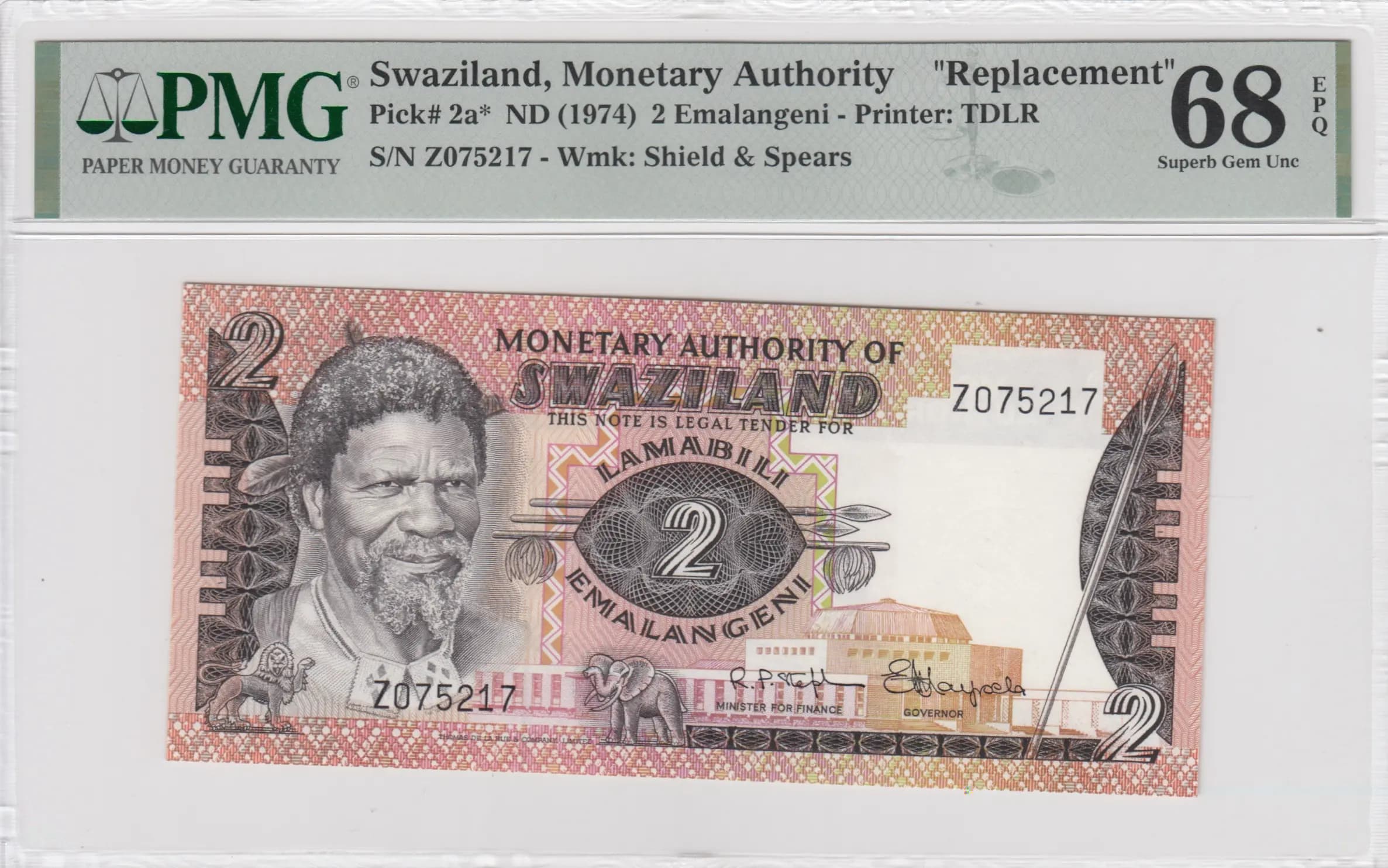
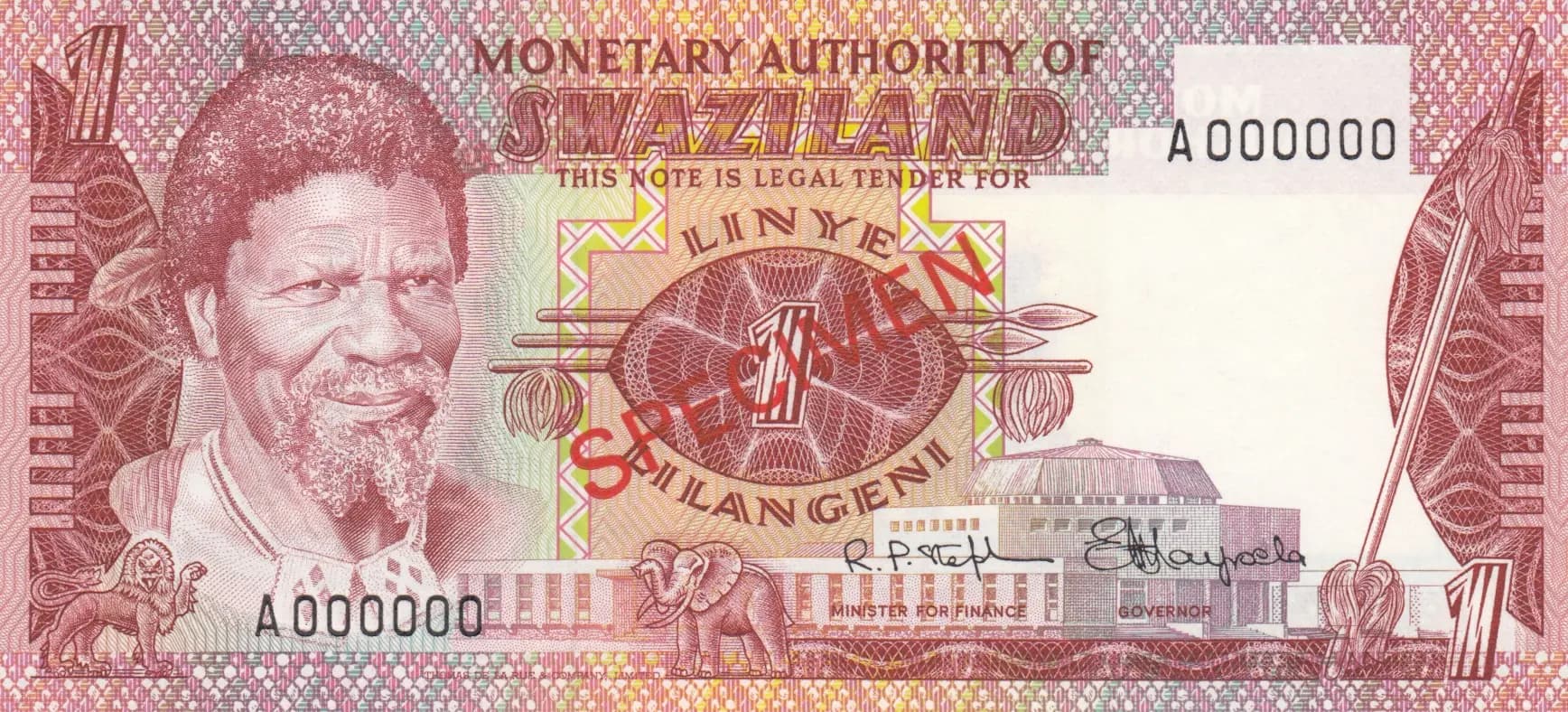
The obverse features King Sobhuza II in formal portrait style positioned at the left side of the note, rendered with distinctive facial features and traditional styling befitting his royal status as Swaziland's paramount chief and later king. The center-right displays Parliament House in Mbabane, the seat of government, depicted as an important institutional landmark establishing governmental authority. An elephant motif appears in the lower center portion, symbolizing the nation's wildlife heritage and connection to southern African identity. The design incorporates elaborate geometric patterns, decorative heraldic elements flanking an oval frame containing the denomination, and intricate microprint patterns throughout. The reverse depicts an asbestos mine facility with prominent tower/processing structures and surrounding landscape with buildings and terraced land, reflecting the mining sector's economic importance. The entire design employs a sophisticated color palette with geometric lattice patterns and ornamental medallions serving security functions.
Front side: 'MONETARY AUTHORITY OF SWAZILAND' (English) — issuing authority; 'THIS NOTE IS LEGAL TENDER FOR' (English) — legal tender declaration; 'LILISHUMI 10 EMALANGENI' (Siswati/English) — denomination in both official languages meaning 'Ten Emalangeni'; 'MINISTER FOR FINANCE' and 'GOVERNOR' (English) — official titles; serial number 'K166598' (Alphanumeric); signature lines for authorized officials. Back side: '10 MONETARY AUTHORITY OF SWAZILAND' (English) — repeated issuing authority and denomination; 'TEN EMALANGENI' (English) — denomination repeated in English; '10' (Numeric) — denomination indicator in all four corners for security purposes.
Intaglio printing by Thomas de la Rue, London (TDLR), featuring complex multicolor overprinting with blue-black primary color on blue and multicolor underprint. The note displays sophisticated security elements including fine-line intaglio work, complex geometric microprint patterns in the background, multiple serial number positions, and intricate decorative borders. The high resolution detail visible in both the portrait work and architectural elements, combined with the color-shifting background patterns, indicates advanced security printing techniques typical of Thomas de la Rue's currency production standards for Commonwealth nations during the 1970s.
This note is catalogued as Pick P-4a, the standard 1974 issue by Thomas de la Rue (indicated by 'TDLR' printer mark). The PMG population data identifies three known varieties of the 10 Emalangeni from this series: P-4a (TDLR), P-4s (TDLR), and P-4CS1 (TDLR). The observed specimen with serial number K166598 appears to be the P-4a variant. No visible overprints, serial number prefixes indicating special issues, or date variations are present on this note, confirming it as a standard regular issue from the initial 1974 printing by the Monetary Authority of Swaziland.