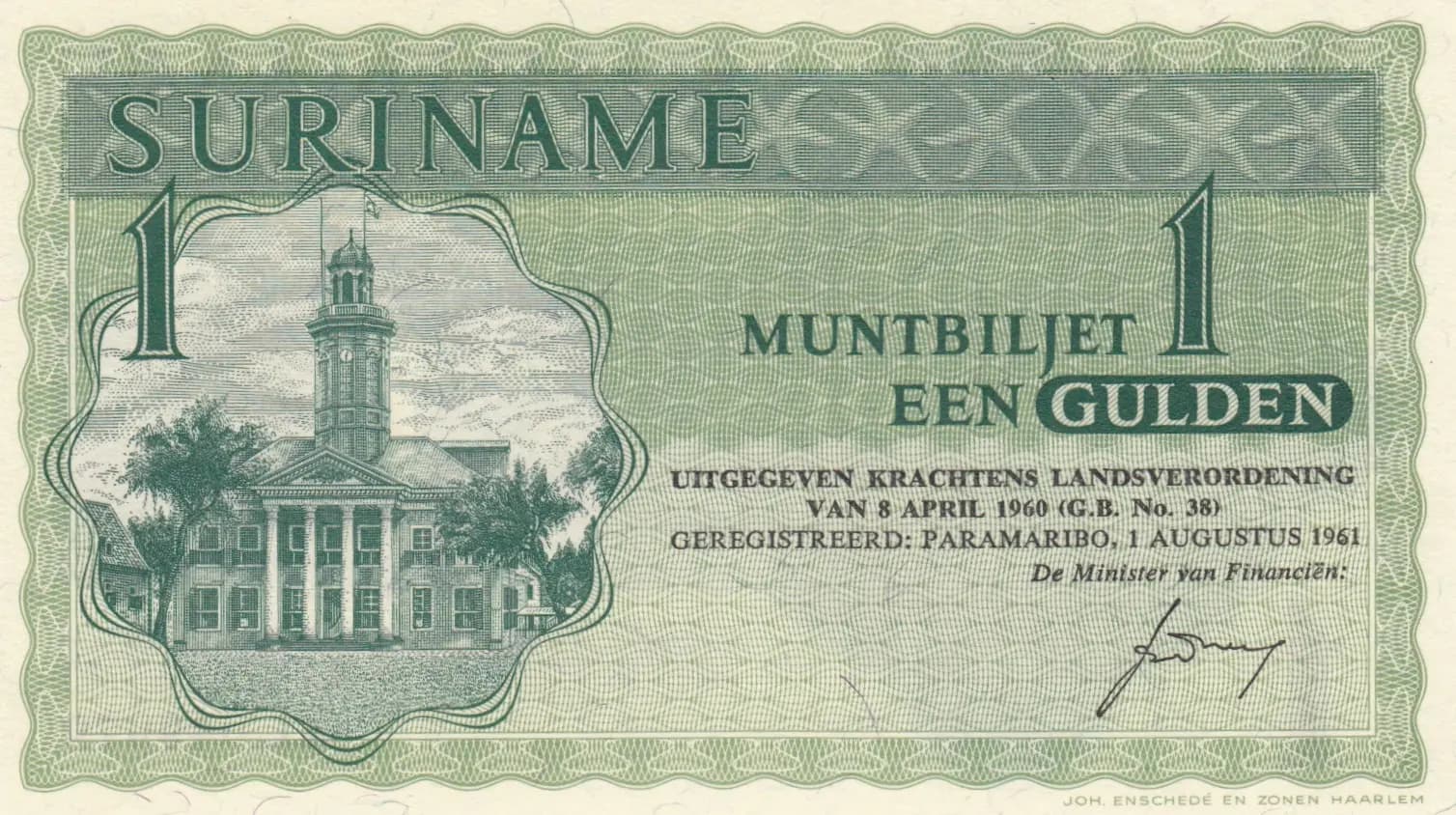
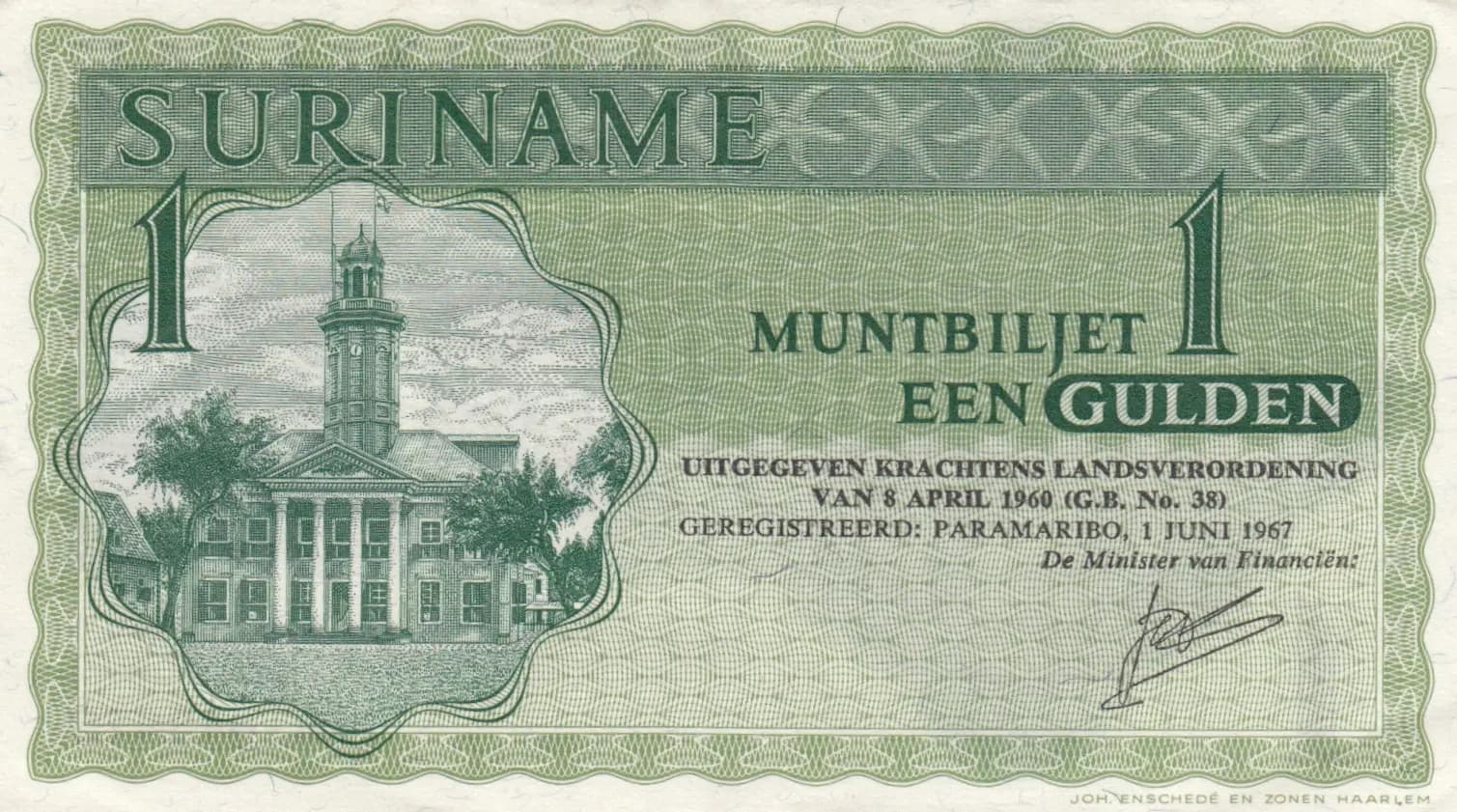
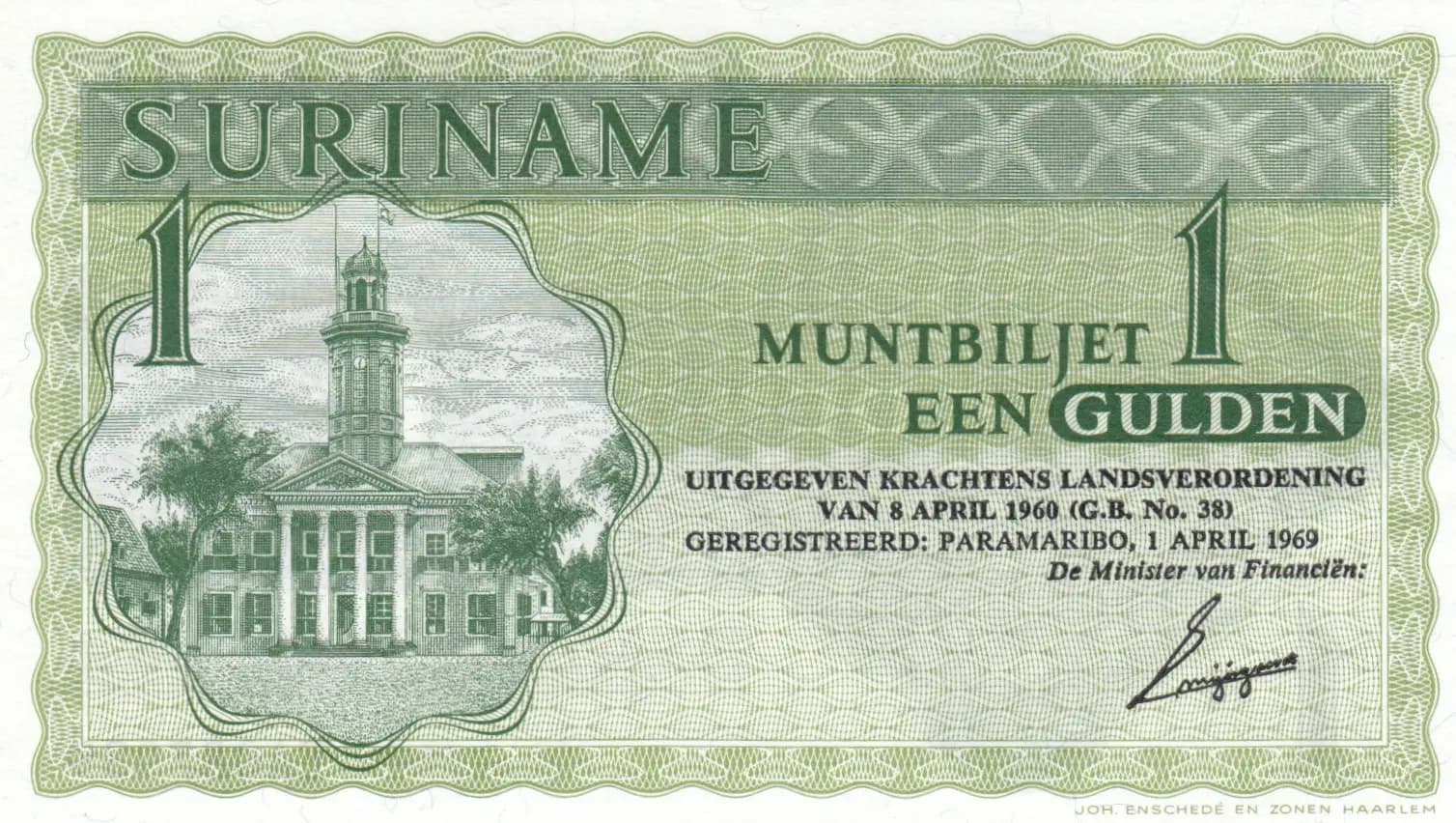
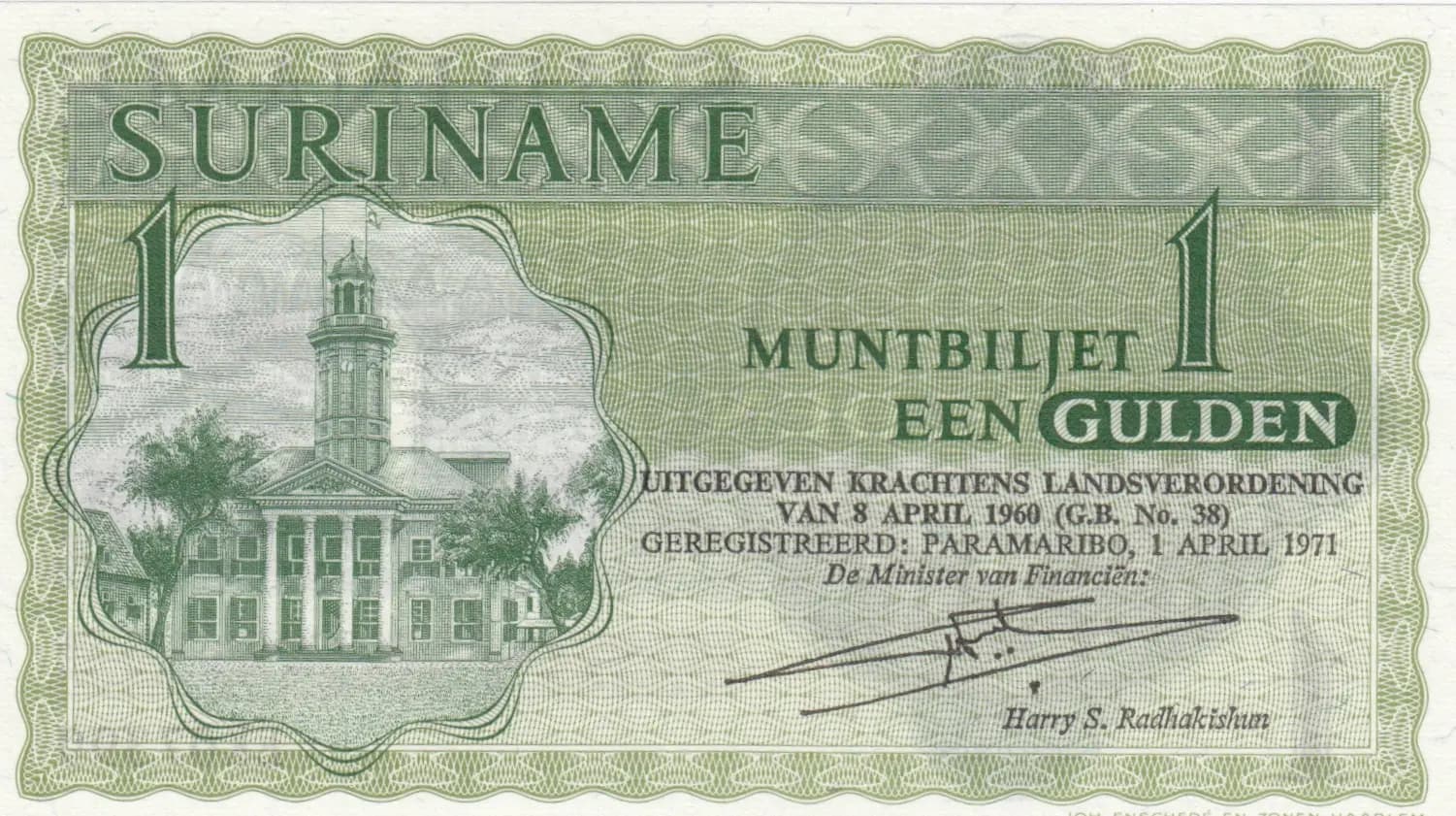
1 gulden 1979
Market Prices
8 salesAbout This Note
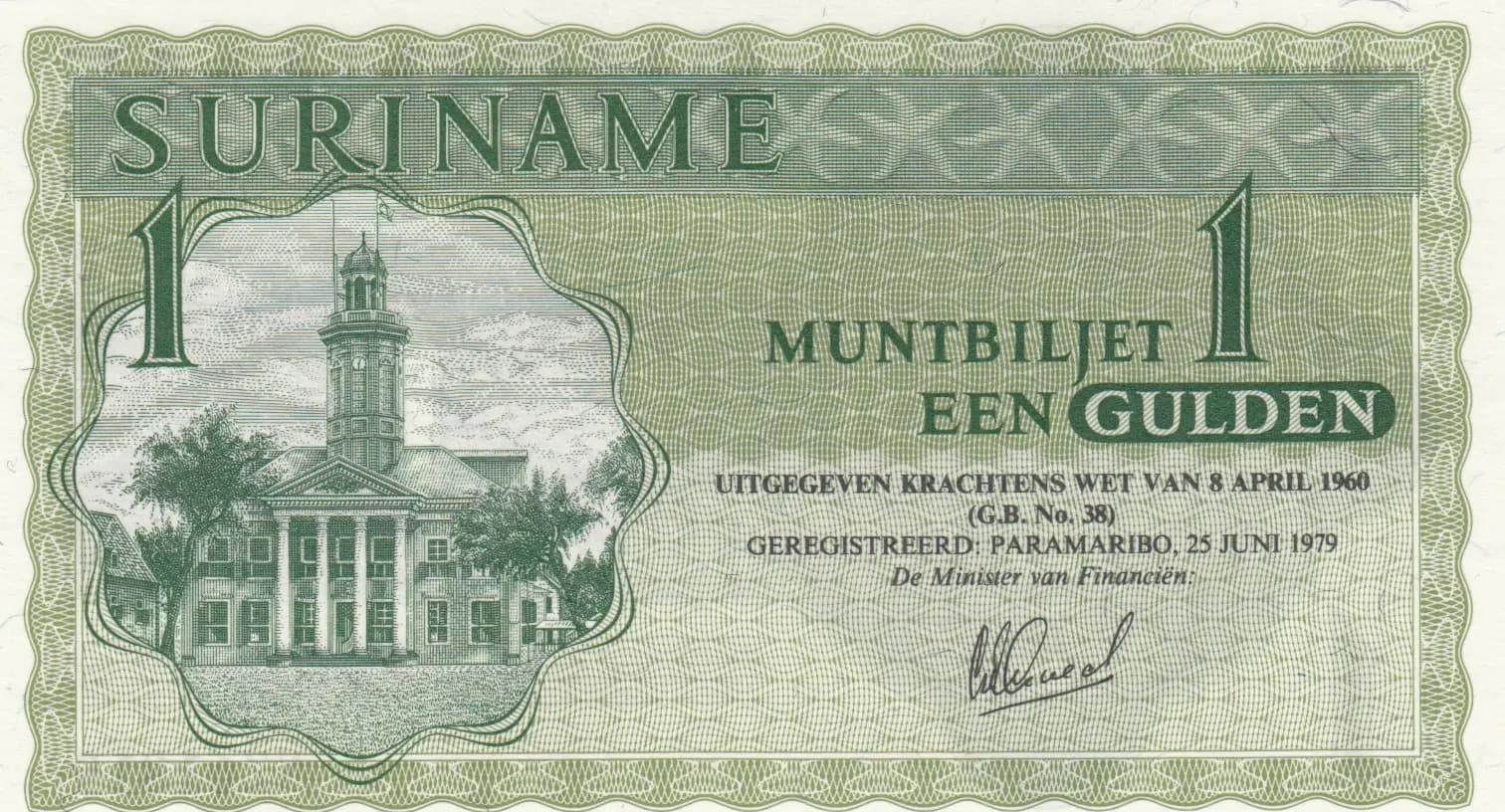
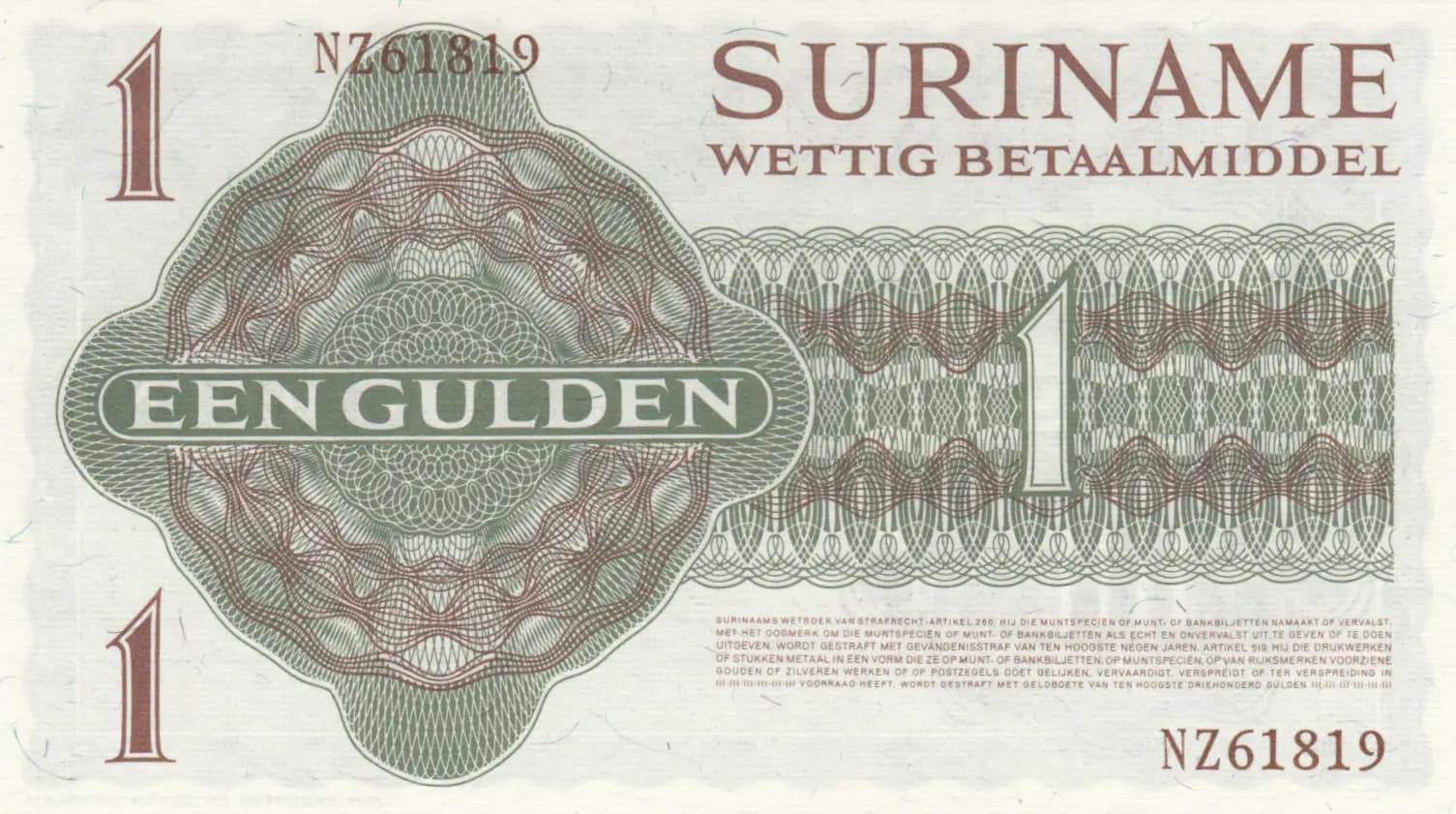
This is an uncirculated 1 Gulden banknote from Suriname dated 25 June 1979, issued under the Muntbiljet authority per the law of 8 April 1960. The note features a distinctive colonial-era architectural vignette of a bell-towered building on the obverse with elegant green and black printing on a pale olive-green and brown underprint, while the reverse displays an ornate circular medallion with intricate guilloché patterns in brown and green. As a UNC specimen with crisp detail and no visible wear, this note represents a well-preserved example of Surinamese mid-period currency design.
Common. This is a regular-issue banknote from an active circulation period (1974-1986 per catalog data) with documented eBay sales ranging from $2.25 to $8.83 across various grades, and UNC specimens consistently selling in the $3-7 range. The catalog values (2019) list UNC at $7, which aligns with typical circulation figures and indicates substantial print runs. No evidence of rarity or limited issue status exists in the available data.
The 1 Gulden was issued during Suriname's post-independence period, following the nation's independence from the Netherlands in 1975. The legislative authorization dated 8 April 1960 reflects Suriname's earlier autonomy as a constituent country within the Kingdom of the Netherlands. The depicted colonial building with its prominent bell tower likely represents the High Court of Paramaribo, a significant governmental landmark symbolizing the nation's judicial and administrative authority during this transitional period of national identity formation.
The obverse features the High Court building of Paramaribo positioned at the left side, rendered as an ornate colonial-style structure with a prominent bell tower and steeple, surrounded by landscaped grounds with trees. The composition is framed by an elaborate decorative border with wavy patterns creating an ornamental frame around the vignette. The right side contains denomination and issuer text with fine guilloché background patterns in green ink. The reverse displays a symmetrical design dominated by a large ornate circular medallion featuring intricate geometric and floral guilloché patterns in the center, with large denomination numerals '1' positioned on both left and right sides. Serial numbers appear prominently, and regulatory text occupies the lower portion.
OBVERSE: 'SURINAME' (Suriname); 'MUNTBILLET' (Banknote); 'EEN GULDEN' (One Gulden); 'UITGEGEVEN KRACHTENS WET VAN 8 APRIL 1960' (Issued under the law of 8 April 1960); '(G.B. No. 38)' (Government Bulletin No. 38); 'GEREGISTREERD: PARAMARIBO, 25 JUNI 1979' (Registered: Paramaribo, 25 June 1979); 'De Minister van Financiën:' (The Minister of Finance:). REVERSE: '1' (denomination); 'SURINAME' (Suriname); 'WETTIG BETAALMIDDEL' (Legal tender); 'EEN GULDEN' (One Gulden); Serial numbers 'NZ618149' and 'NZ761819'; Legal text citing Surinamese Criminal Code Articles 265-266 regarding counterfeiting penalties of up to nine years imprisonment and fines for forging currency or banknotes.
Intaglio engraving (copper-plate) printing, the standard method for banknote production. Printed by Johan Enschede's printing works (marked as 'JEZ' on the note), the renowned Dutch security printer. The fine line guilloché patterns, detailed architectural vignette, and precise text rendering are characteristic of high-security intaglio printing. Multiple colors were applied using separate intaglio plates for the dark green/black obverse and brown/green reverse.
This specimen is cataloged as Pick P-116e. The catalog data indicates multiple variants exist (P-116c, P-116d, P-116h, P-116i documented by PMG), primarily distinguished by printer identification and signature variations. This particular note shows 'JEZ' printer marks (Johan Enschede, Netherlands) and the centered 'De Minister van Financiën' signature title without a printed individual name, consistent with the P-116e variety designation. The registration date of 25 June 1979 and serial number prefix 'NZ' are typical for this late-1970s issue.