1 gulden 1969
Market Prices
8 salesAbout This Note
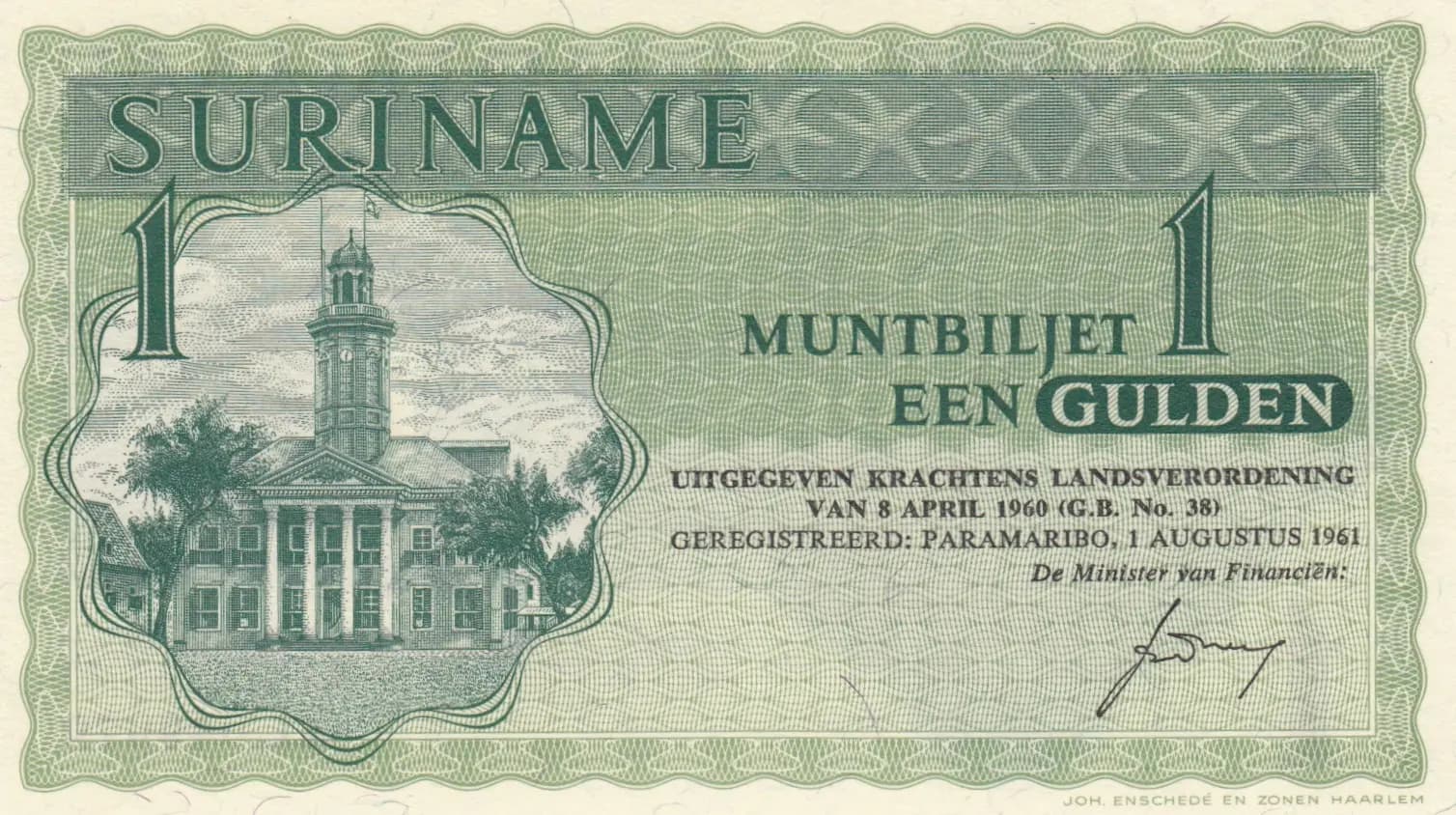
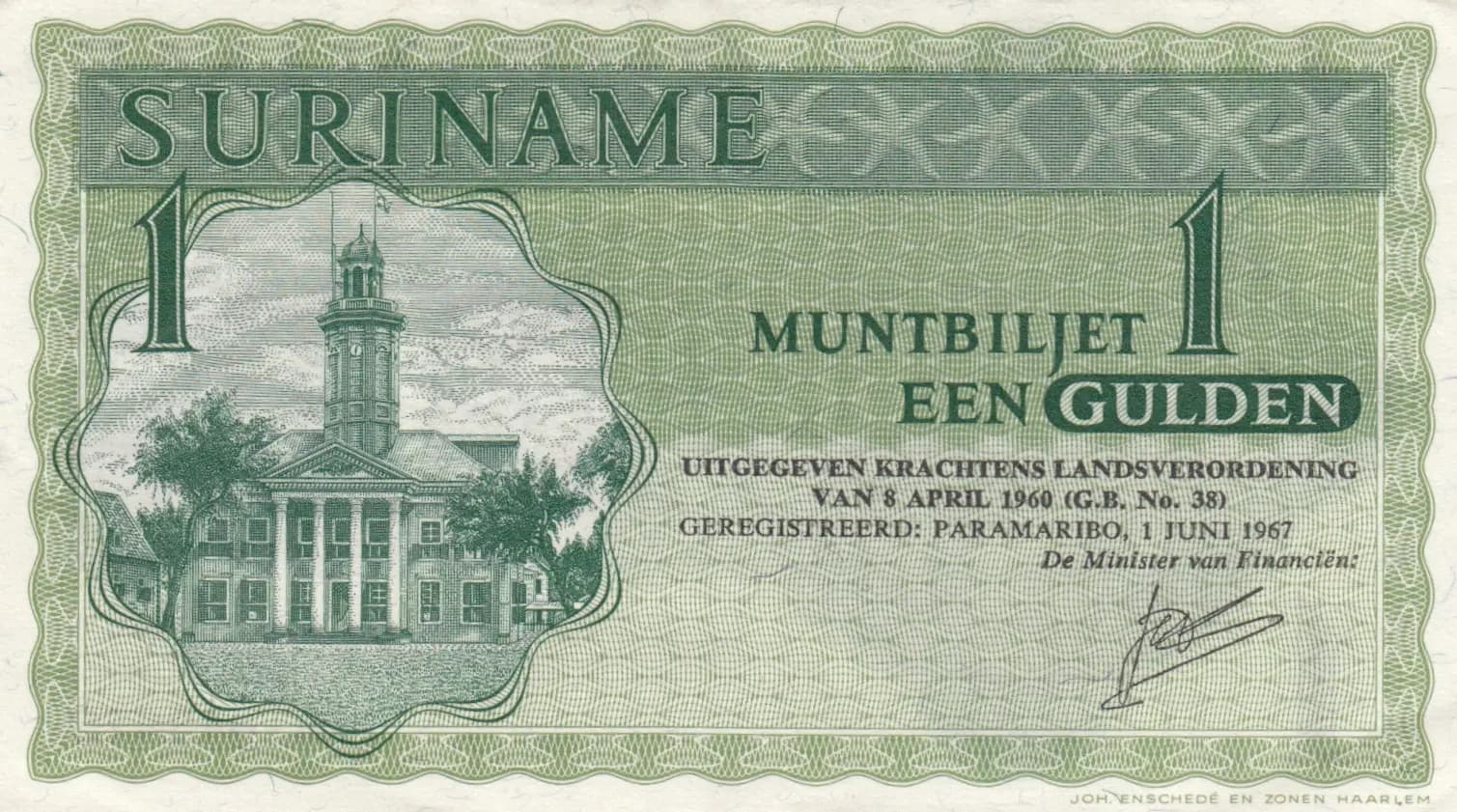
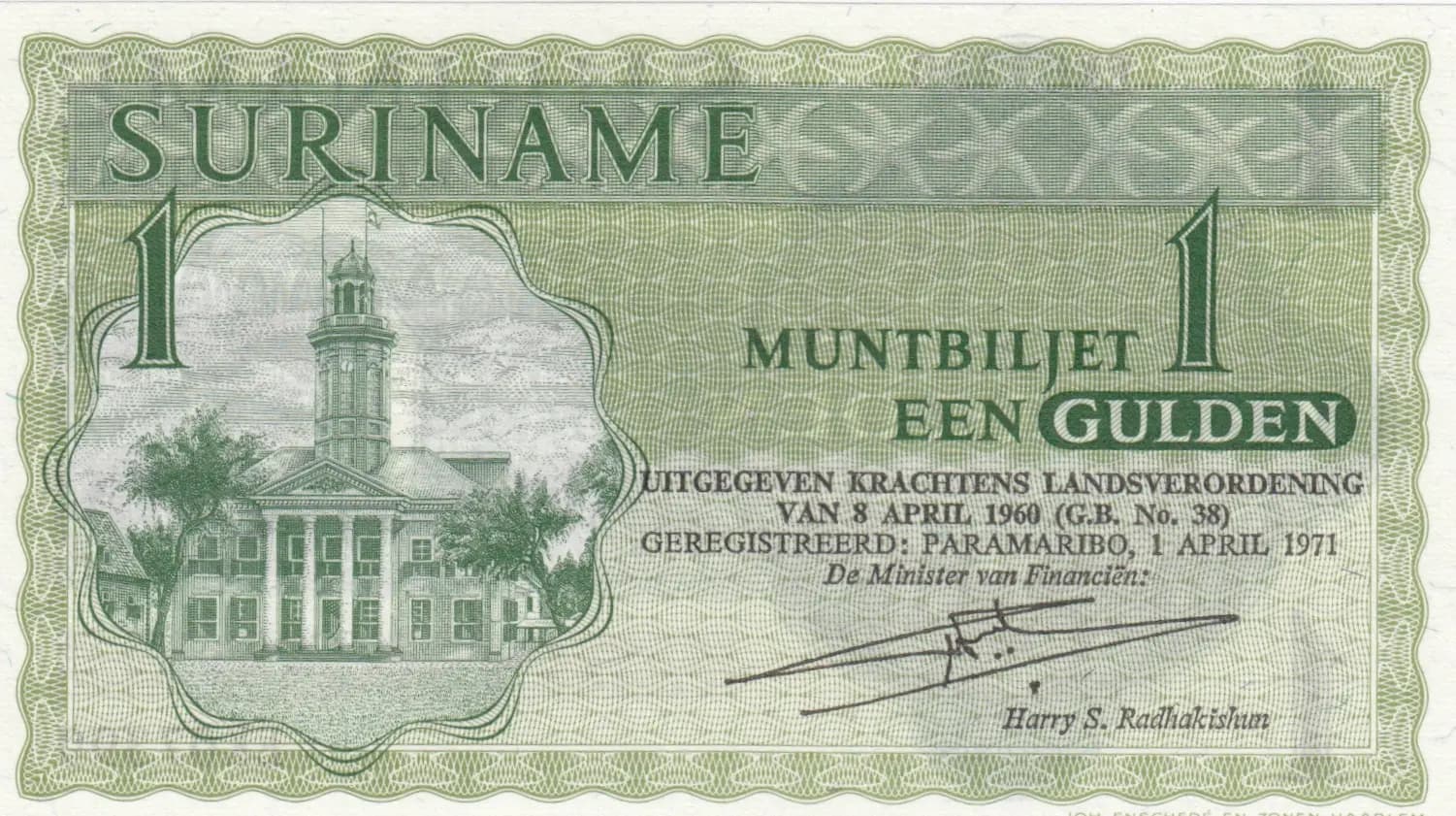
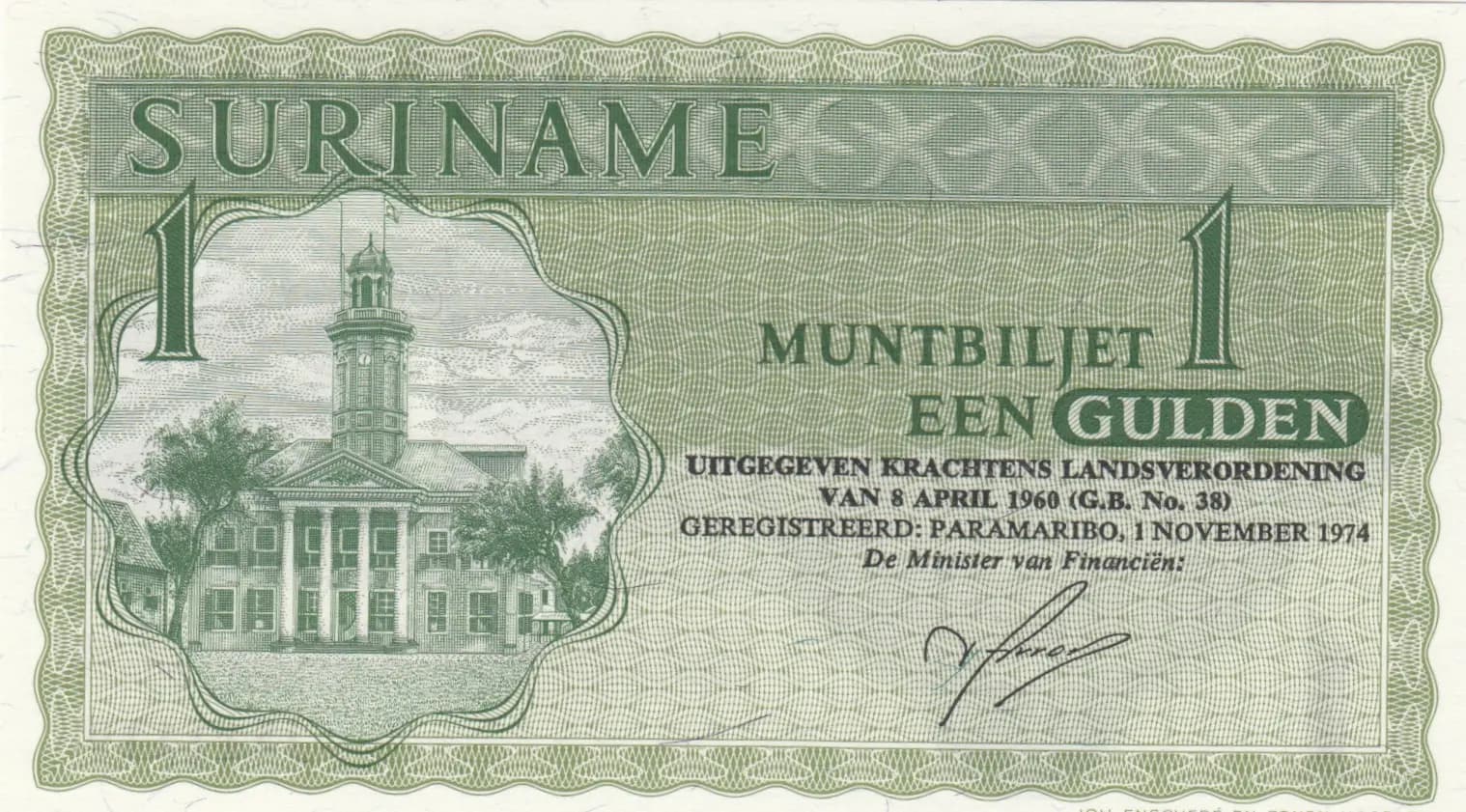
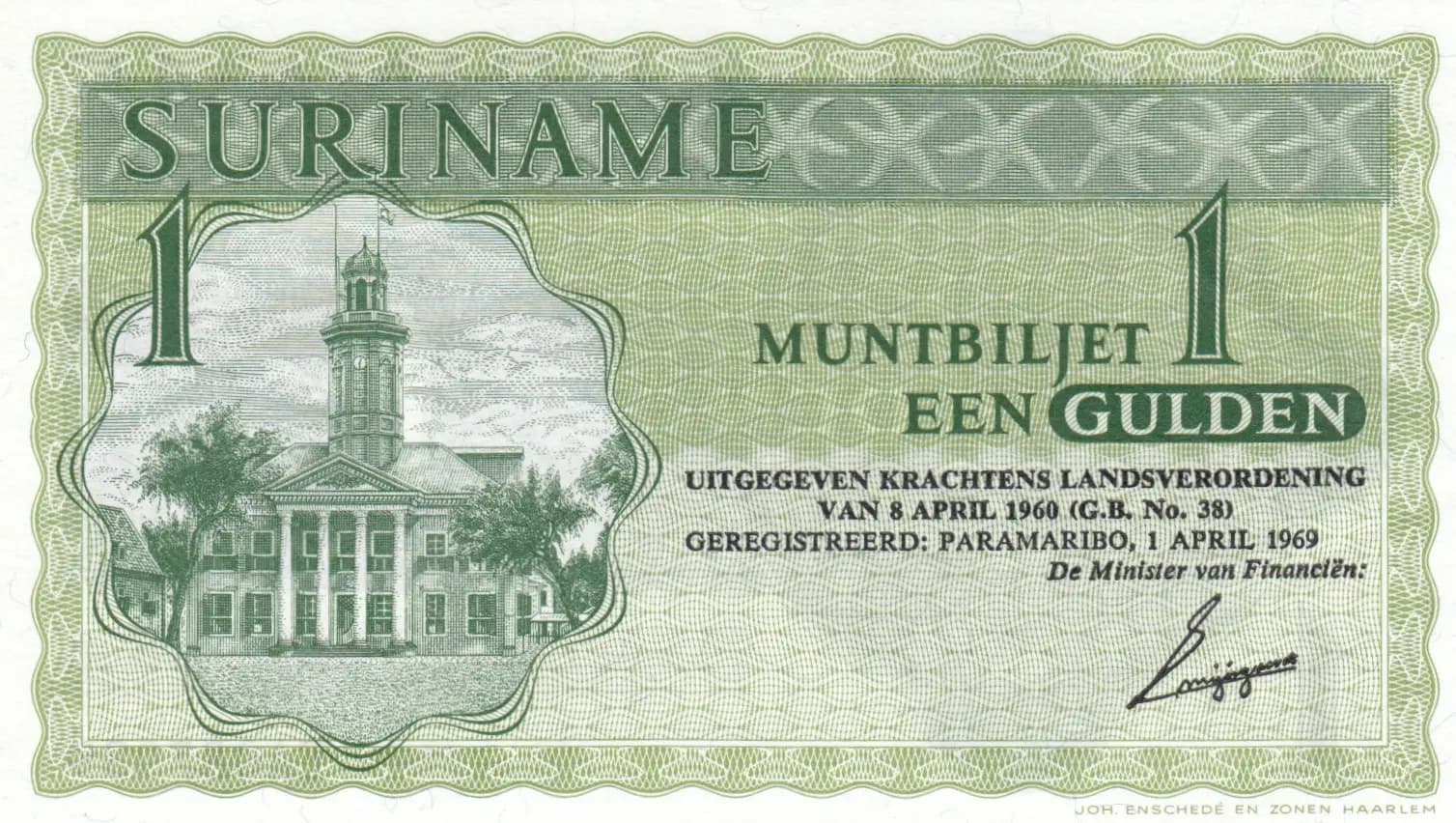
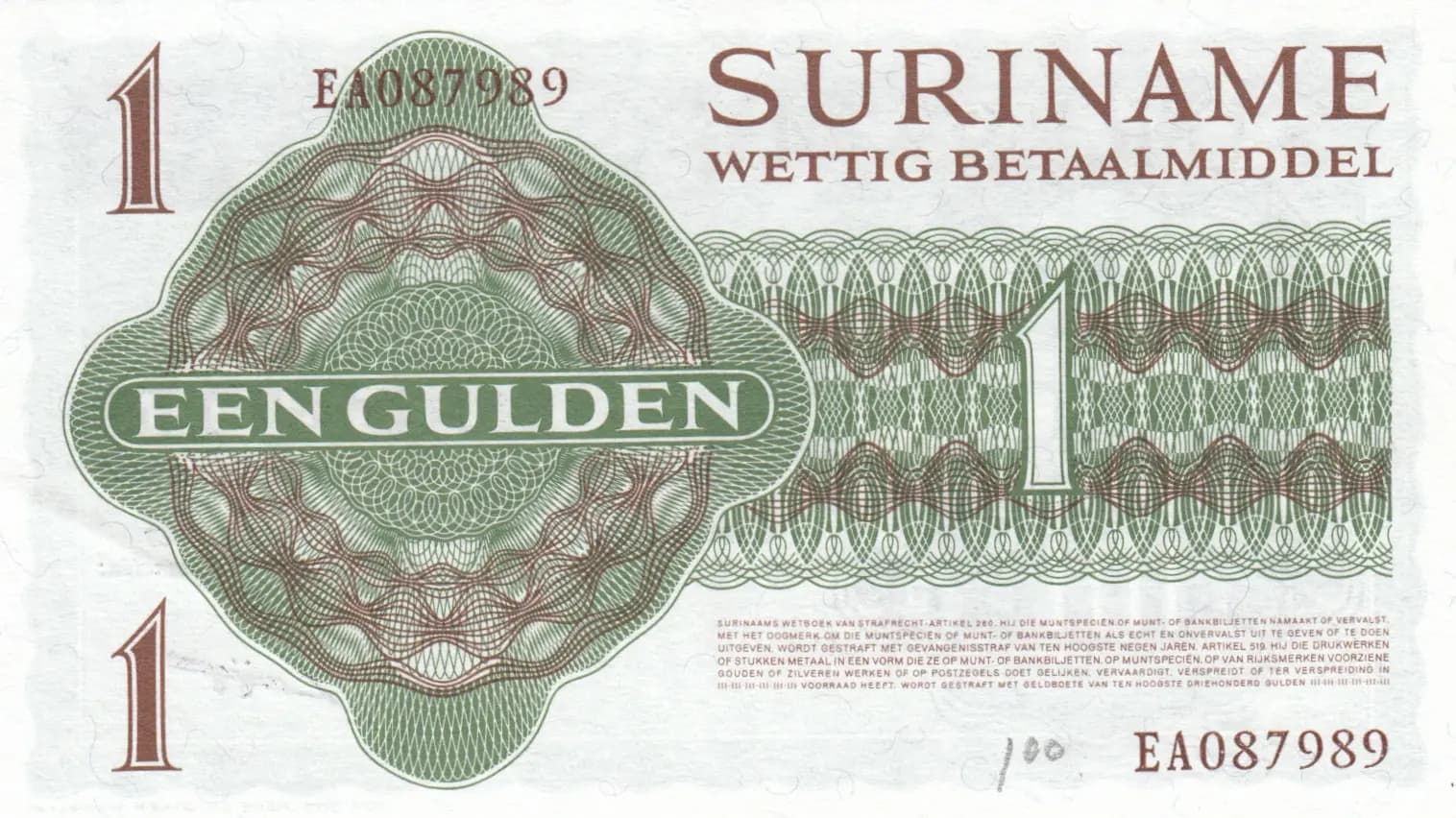
This 1969 Suriname 1 Gulden (Pick-116a) presents in UNC condition with vibrant green and brown coloring characteristic of this colonial-era currency. The note features a distinctive colonial building with tower vignette on the obverse and an ornate oval medallion on the reverse, displaying the exceptional clarity and fine engraving expected of notes printed by Johan Enschede. This registration date variant (April 1, 1969) represents a key issue in Suriname's currency history during the pre-independence period.
Common. Despite the historical significance of the 1969 registration date within the 1961-1986 issue period, this Pick-116a represents a standard regular-issue note from a major government printing contract. eBay sales data shows consistent availability with typical VF specimens selling for $4.77–$21.50 and UNC examples valued at approximately $10 (2019 catalog), indicating robust collector supply. The large print run required for circulation currency and the lack of any recalled or short-lived status confirm common classification.
Issued under the National Ordinance of April 8, 1960, this note reflects Suriname's transitional period toward independence (achieved in 1975). The colonial-style building depicted—identified as the High Court in Paramaribo—symbolizes the Dutch colonial administrative heritage still present in the territory's governance structure. The note's design and legal text in Dutch underscore Suriname's status as a Dutch colony during this era, with the currency printed by the prestigious Dutch security printer Johan Enschede.
The obverse features a portrait-free composition centered on the High Court of Paramaribo, a colonial administrative building with a distinctive cupola/tower, rendered in detailed engraving within an ornamental frame. The building is flanked by vegetation, emphasizing the tropical context. The obverse employs a dark green with black text on a pale olive-green and brown underprint, with the denomination '1' prominently displayed in large numerals at upper left and lower right. The reverse showcases a large ornate oval medallion with intricate geometric guilloche patterns in the center-left, containing a banner inscribed 'EEN GULDEN' in brown and green coloring on a cream/off-white background. Both sides feature fine line work borders with scalloped decorative edges and corner elements, typical of high-security currency design of the period.
FRONT SIDE: 'SURINAME' (Suriname); 'MUNTBILLET' (Banknote); 'EEN GULDEN' (One Guilder); 'UITGEGEVEN KRACHTENS LANDSVERORDENING VAN 8 APRIL 1960 (G.B. No. 38)' (Issued under the National Ordinance of April 8, 1960, Government Bulletin No. 38); 'GEREGISTREERD: PARAMARIBO, 1 APRIL 1969' (Registered: Paramaribo, April 1, 1969); 'De Minister van Financiën:' (The Minister of Finance:); 'JOH. ENSCHEDE EN ZONEN HAARLEM' (Joh. Enschede and Sons, Haarlem—printer). REVERSE SIDE: 'SURINAME' (Suriname); 'WETTIG BETAALMIDDEL' (Legal Tender); 'EEN GULDEN' (One Guilder); Serial number 'EA087989'; Surinamese Penal Code Articles 280 and 515 regarding counterfeiting penalties (up to 9 years imprisonment and fines up to 3,000 guilders for counterfeiting currency or creating metal objects resembling coins).
Intaglio (engraved) printing by Johan Enschede en Zonen (J.E.Z.), Haarlem, Netherlands. The note displays characteristic hallmarks of this technique: fine line engraving throughout, complex guilloche patterns, precise decorative borders with scalloped edges, and micro-text rendering in the legal sections. The multi-color printing (green, brown, black, and cream base) was achieved through successive plate impressions, typical of security printers of this era.
This note is identified as Pick-116a based on the 1969 registration date ('GEREGISTREERD: PARAMARIBO, 1 APRIL 1969') and the printed Minister of Finance signature block without an individual name signature. Serial number prefix 'EA' is consistent with documented ranges. The PMG population report indicates variants P-116c, P-116d, P-116h, and P-116i exist for this base Pick number, likely representing different signature combinations, date ranges, or serial number prefixes across the 1961-1986 issuance period. The presence of the 'JEZ' (Johan Enschede Zonen) printer marking is characteristic of this specific variety.