1 gulden 1967
Market Prices
8 salesAbout This Note
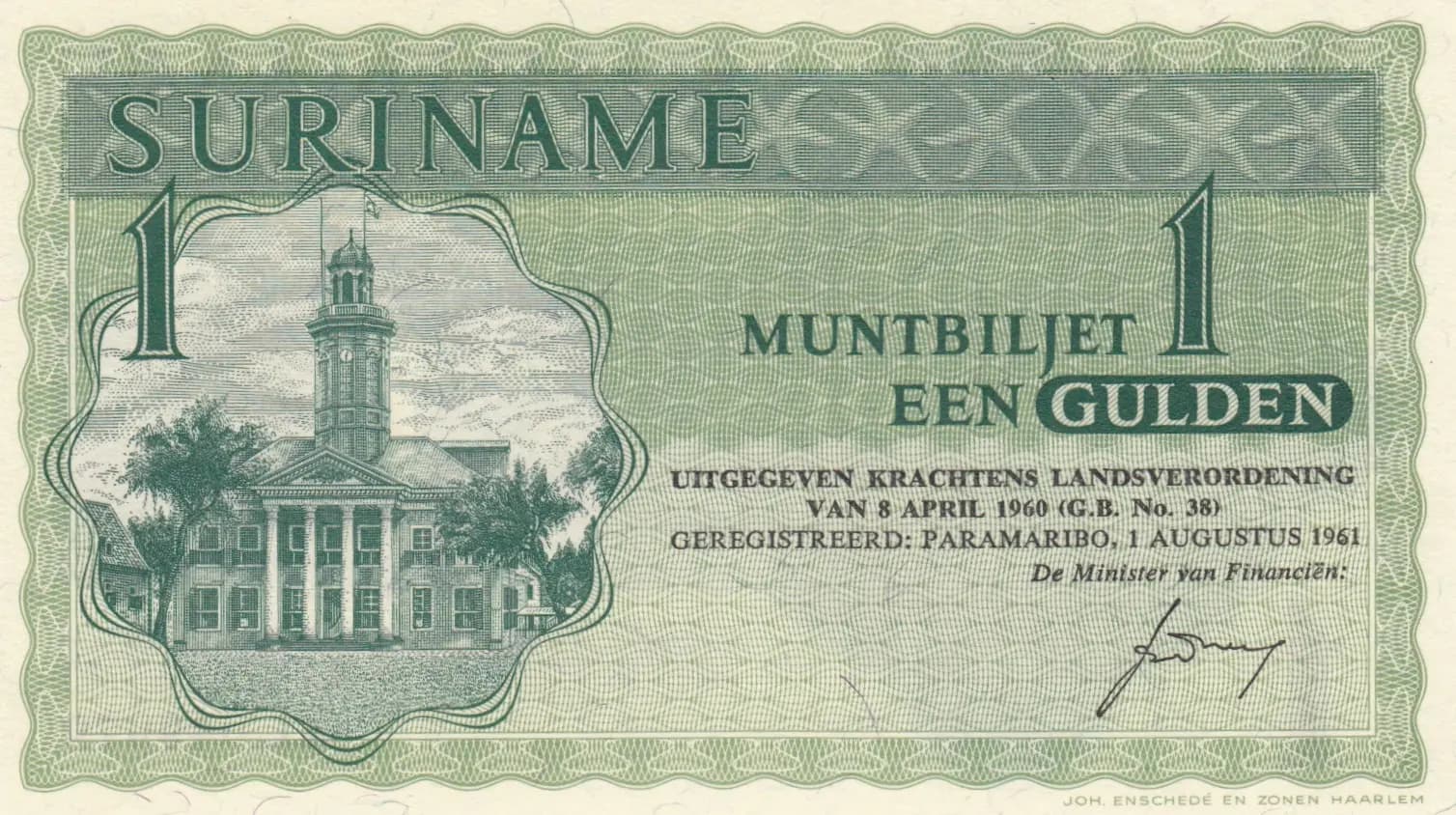
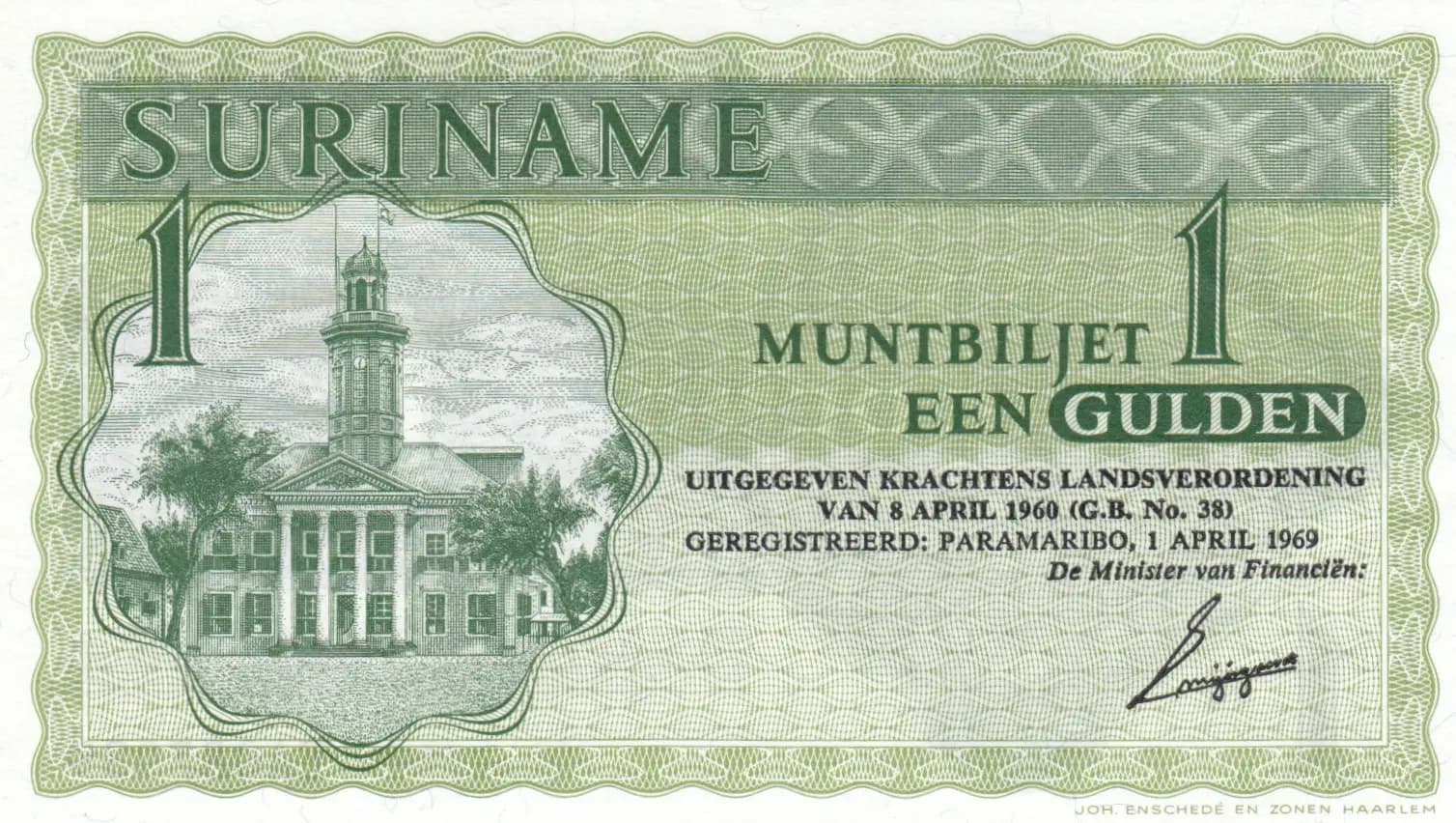
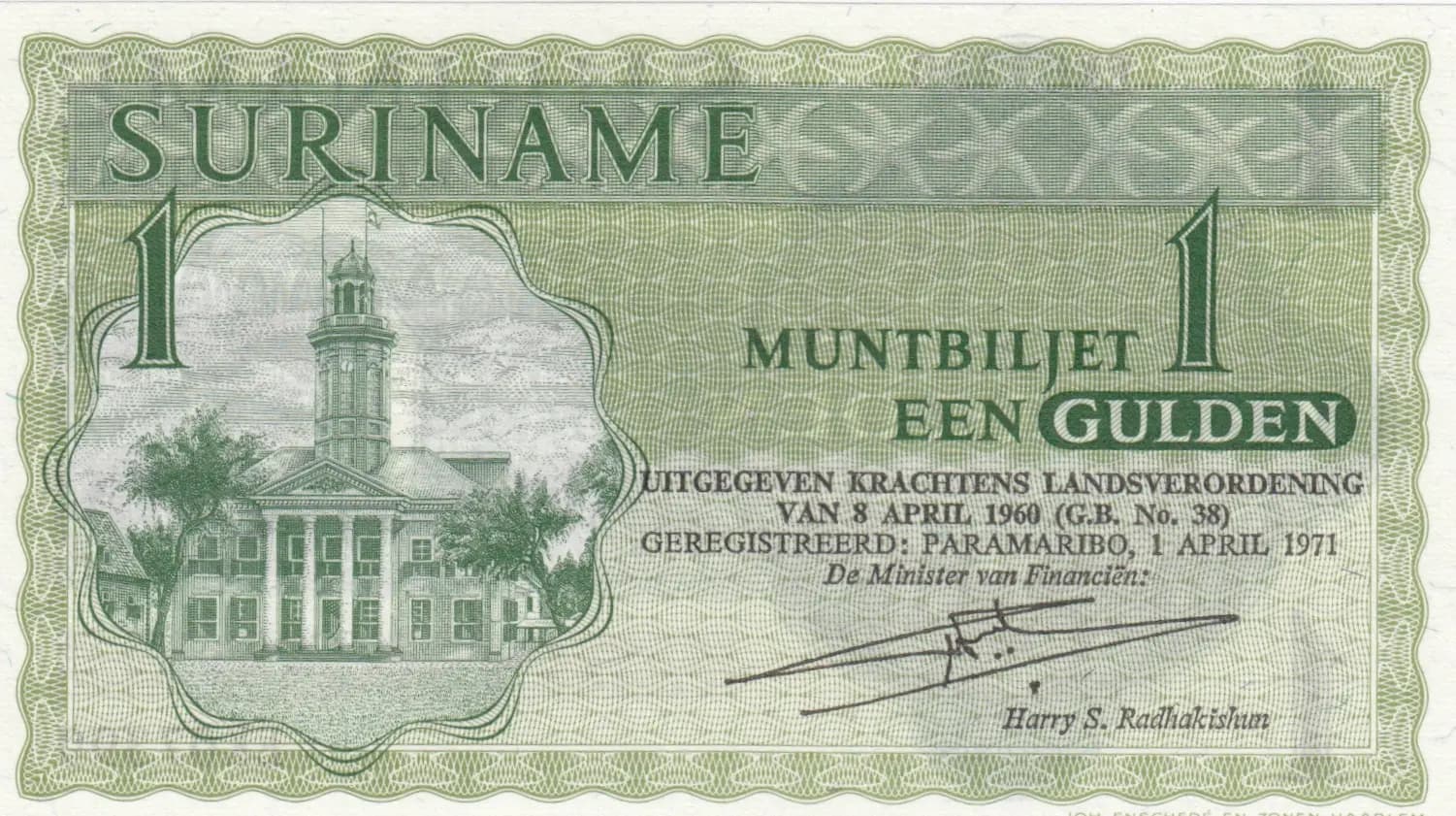
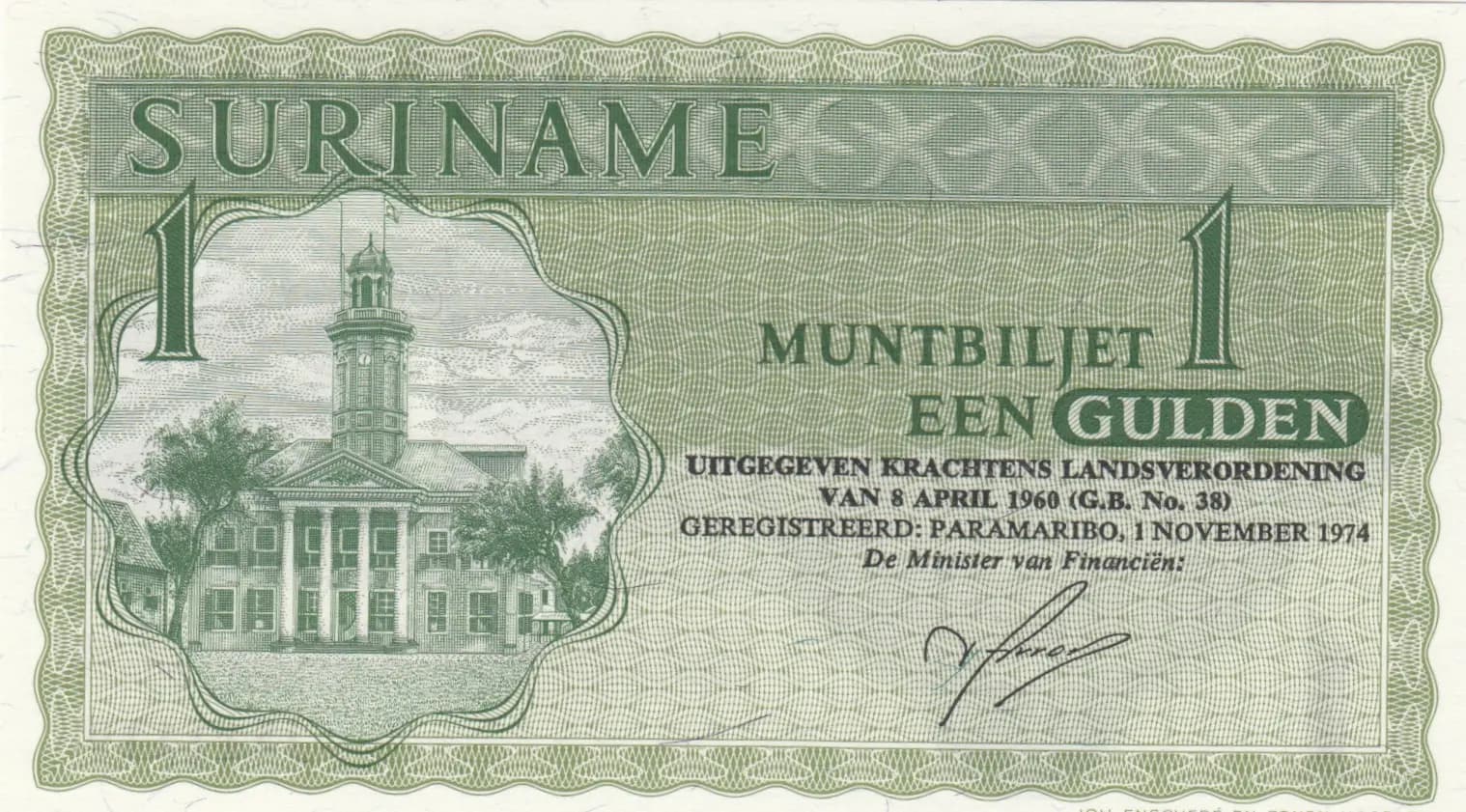
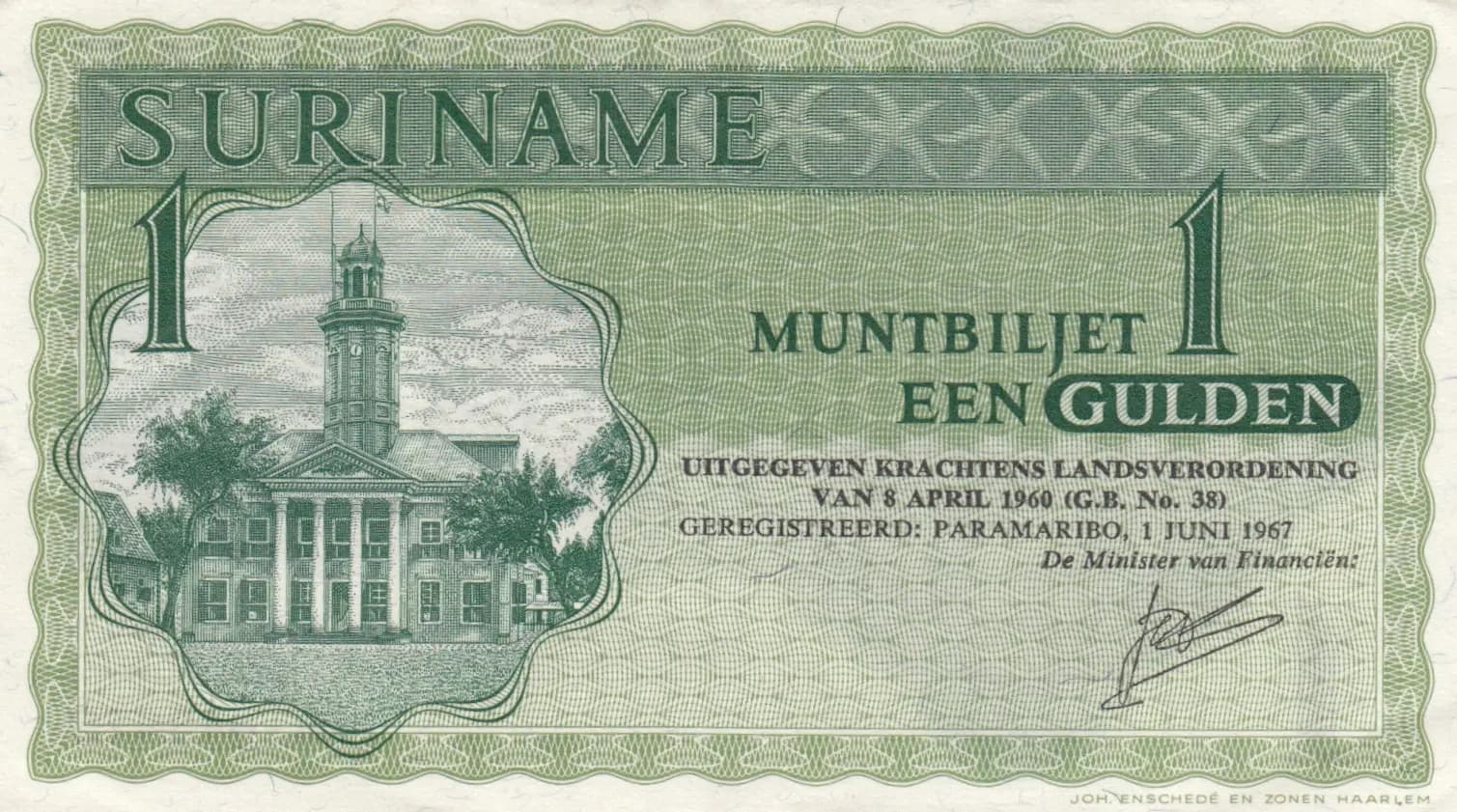
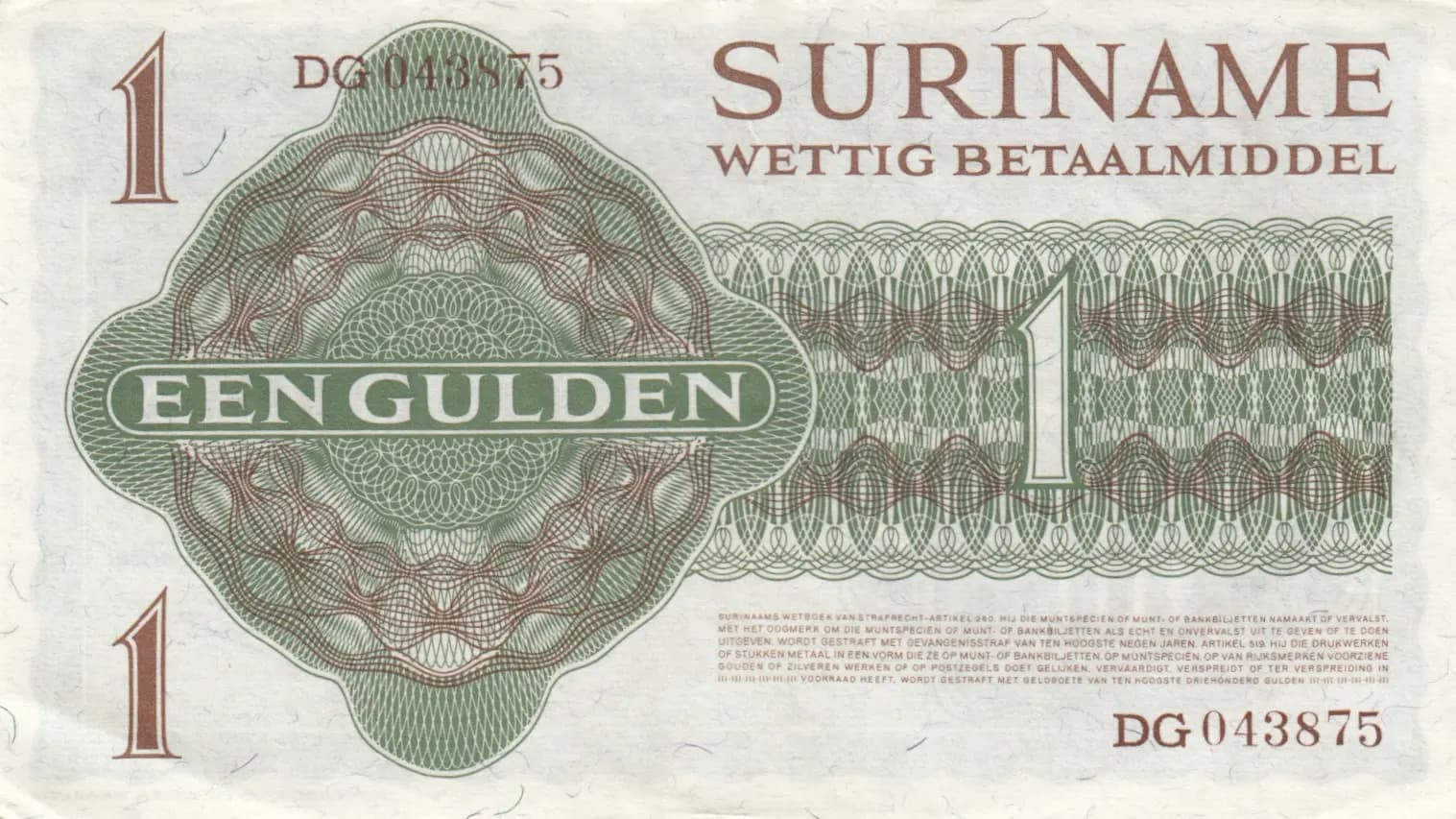
This is a striking 1 Gulden banknote from Suriname issued in 1967, graded AU, featuring exemplary engraved security work throughout. The note showcases a classical colonial-style church or tower building on the obverse within an ornamental frame, set against green and cream tones, while the reverse displays intricate geometric and floral security patterns in green and brown. The exceptional preservation and detailed craftsmanship typical of Johan Enschedé's printing make this a fine example of mid-20th century Caribbean currency design.
Common. This note has a recorded circulation span from 1961-1986, indicating a sustained printing run over 25 years. eBay auction data shows consistent sales activity with prices ranging from $3.25 to $21.50 depending on condition (with most sales in the $4-$14 range), and 2019 catalog values list VF examples at $2 and UNC at $10. The presence of multiple documented varieties (P-116a through P-116i in the Pick catalog) further indicates substantial quantities were produced. No evidence of recall, short printing runs, or collector scarcity exists for this Pick number.
This note was issued under the authority of the Land Ordinance of April 8, 1960, during a pivotal period in Suriname's development toward greater autonomy within the Dutch colonial framework. The registration date of June 1, 1967, reflects the formal adoption of this design during Suriname's transition toward independence (achieved in 1975). The depicted colonial-era tower building in classical architectural style symbolizes Suriname's European heritage and the administrative continuity of the colonial government during this period of political transition.
The obverse features the High Court building of Paramaribo as its central architectural vignette—a colonial-style structure with a prominent tower, tall steeple, columned portico, and classical architectural proportions, rendered in fine engraved detail and surrounded by decorative foliage. The vignette is enclosed within an ornamental rectangular frame with classical borders. Large denomination numerals '1' are positioned prominently on both left and right margins. The note employs a scalloped decorative border pattern framing the entire design. The reverse displays an elaborate security design featuring interlocking geometric patterns and intricate floral engravings typical of high-security currency, with the denomination presented within an ornamental oval frame. Both sides employ green and cream base colors with brown/maroon secondary tones. All imagery and text are rendered in classical currency engraving style with fine-line security patterns.
FRONT SIDE: 'SURINAME' (Suriname) | 'MUNTBILLET' (Banknote) | 'BEN GULDEN' (One Gulden) | '1' (denomination numeral) | 'UITGEGEVEN KRACHTENS LANDSVERORDENING VAN 8 APRIL 1960 (G.B. No. 38)' (Issued pursuant to the Land Ordinance of April 8, 1960, Government Bulletin No. 38) | 'GEREGISTREERD: PARAMARIBO, 1 JUNI 1967' (Registered: Paramaribo, June 1, 1967) | 'De Minister van Financiën' (The Minister of Finance) | 'JOH'ENSCHEDÉ EN ZONEN HAARLEM' (Jo'h Enschedé and Sons, Haarlem - printer) | REVERSE SIDE: 'SURINAME' (Suriname) | 'WETTIG BETAALMIDDEL' (Legal Tender) | 'EEN GULDEN' (One Gulden) | '1' (denomination numeral) | Serial number 'DG043875' | Extended legal text from Articles 281-282 of the Surinamese Penal Code regarding penalties for counterfeiting and illegal currency reproduction (containing maximum penalties of ten years imprisonment and fines).
Intaglio engraving (copperplate) combined with letterpress, executed by Johan Enschedé en Zonen (Jo'h Enschedé and Sons) of Haarlem, Netherlands—the renowned currency printer. The note exhibits characteristic deep-bite intaglio work evident in the fine line patterns, ornamental borders, intricate geometric security work, and detailed building vignette. The registration mark 'JEZ' (referring to the Johan Enschedé Zonen printer mark) appears on the note. This printing method provided the anti-counterfeiting security features standard for this era of Caribbean currency design.
This note is cataloged as Pick number P-116a for the 1967 issue date. Visual analysis confirms it is from the standard printing by Johan Enschedé (JEZ printer mark), with a printed signature title 'De Minister van Financiën' without printed individual name, characteristic of the 1961-1969 issue period. The serial number prefix 'DG' places this within the documented numbering sequences for this variety. Multiple catalog variants exist (P-116c, P-116d, P-116h, P-116i) representing different printer versions and signature variations across the 1961-1986 production period, but this example represents the standard P-116a type.