1 gulden 1974
“binary #”
Market Prices
10 salesAbout This Note
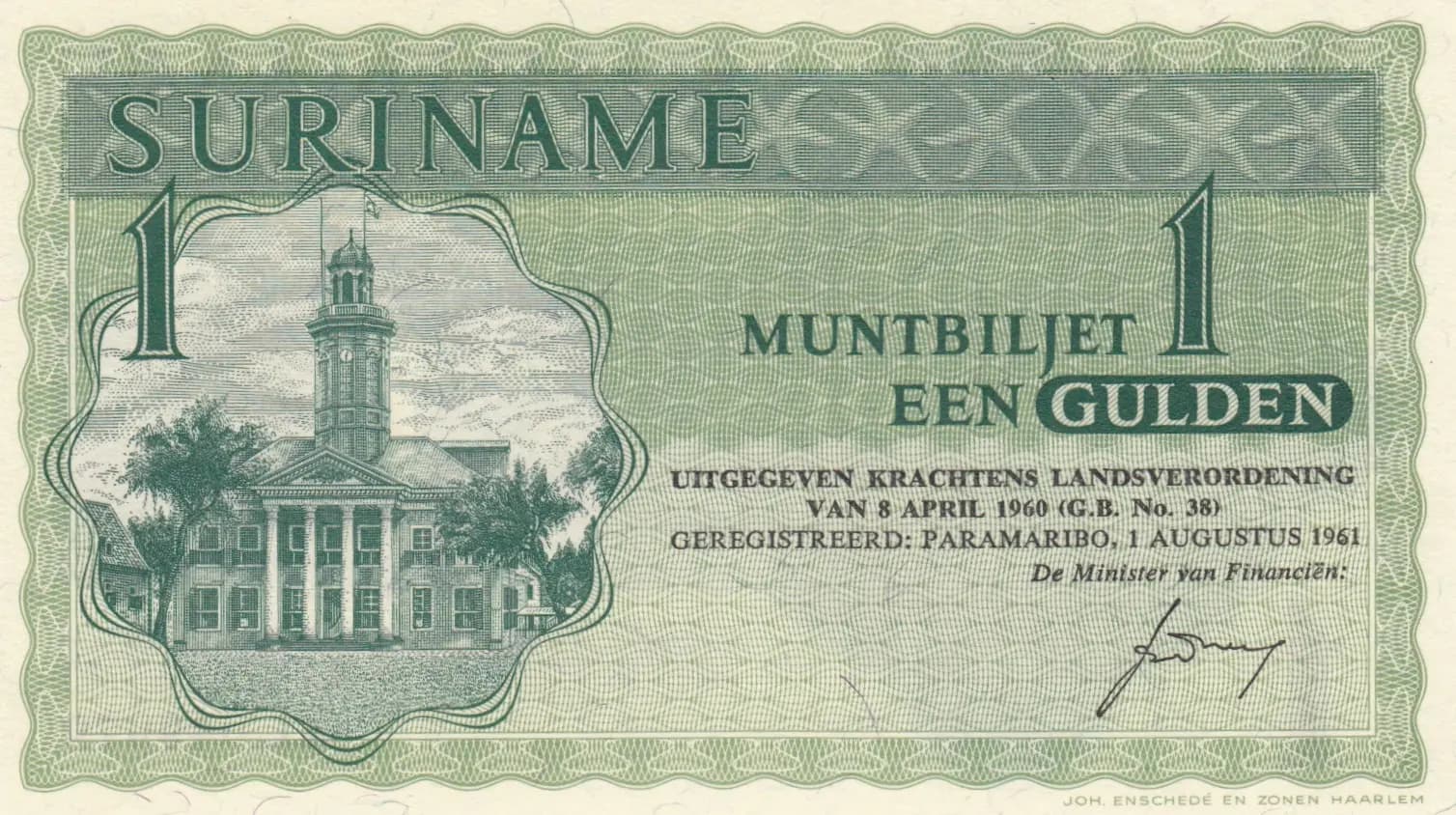
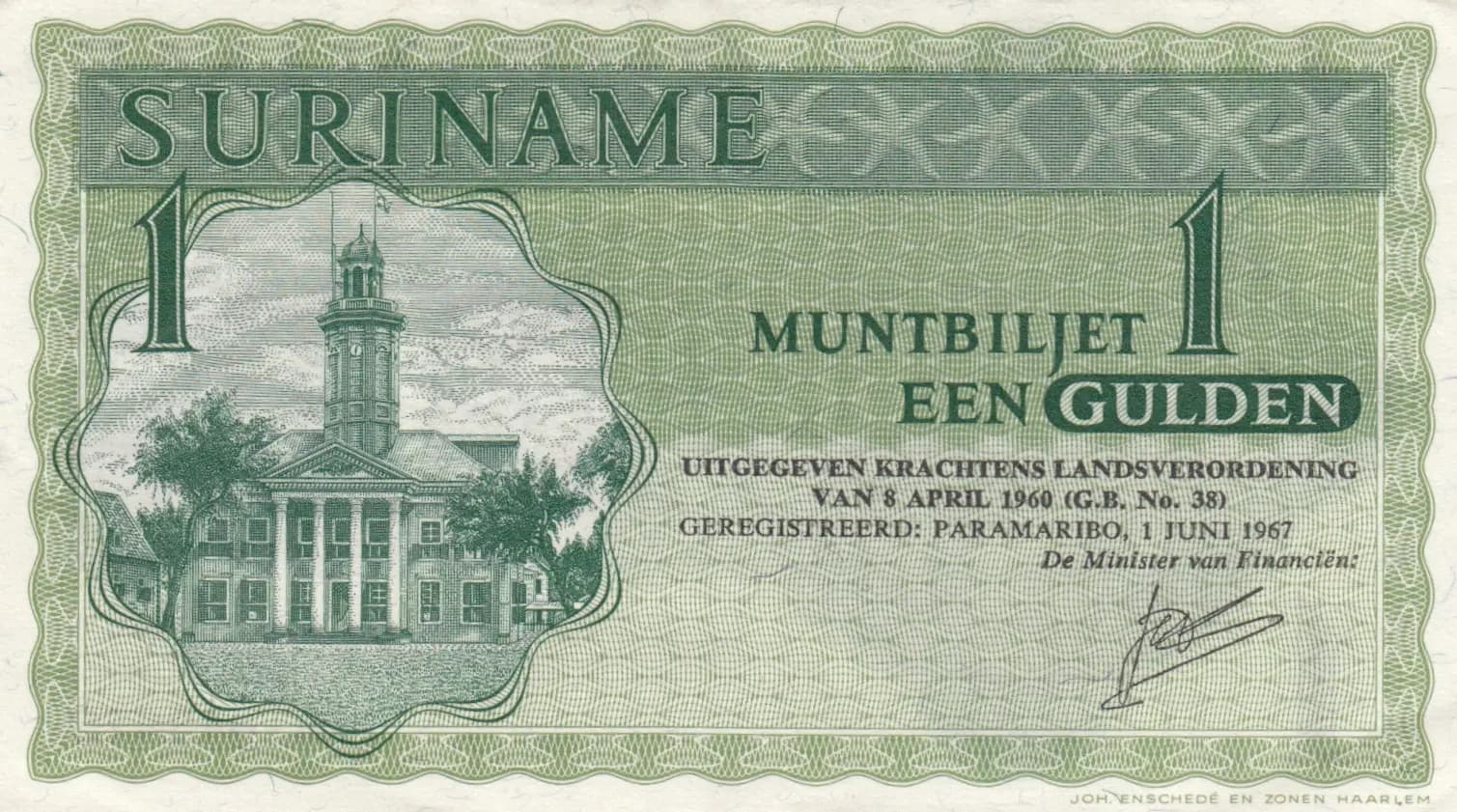
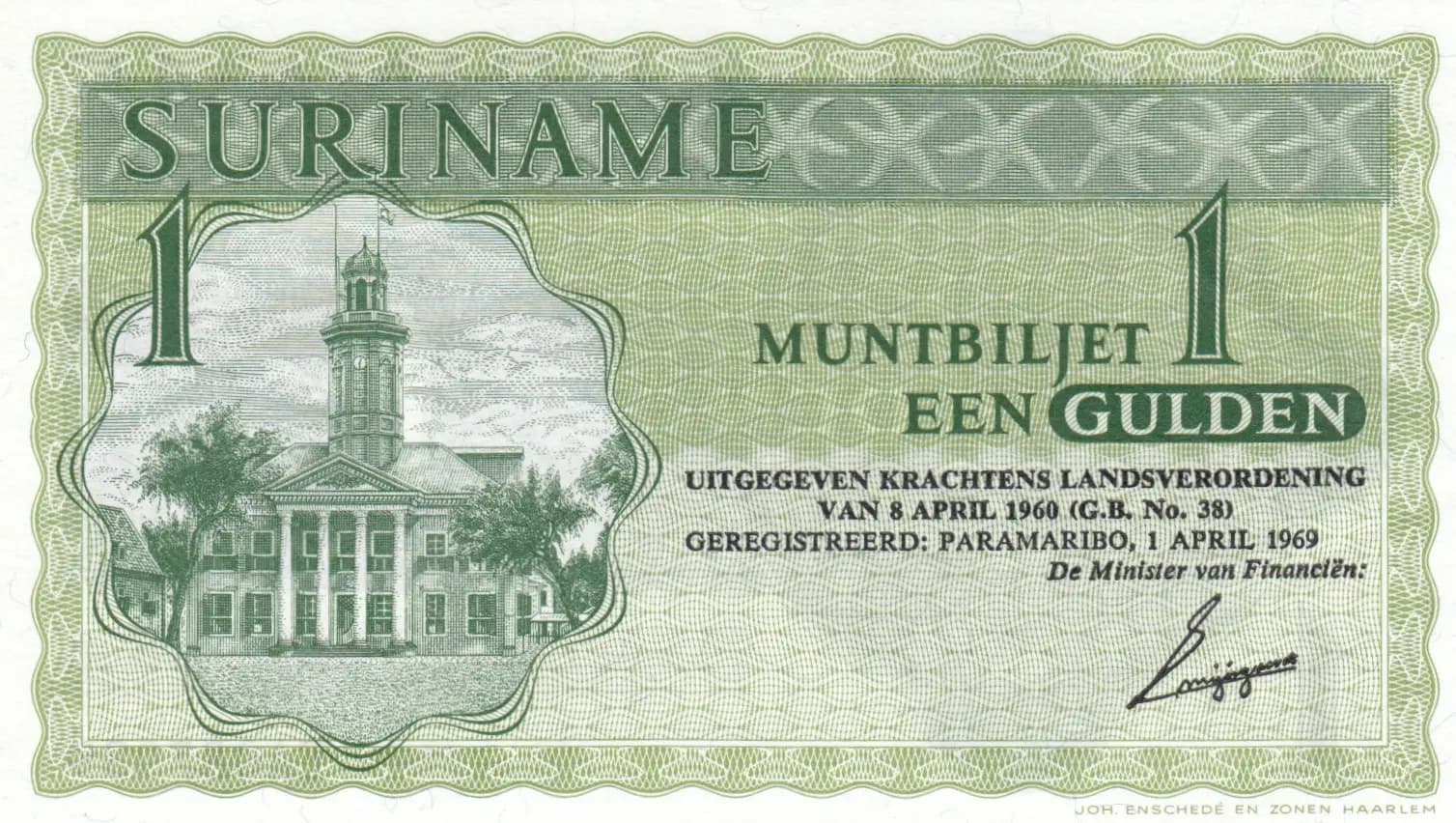
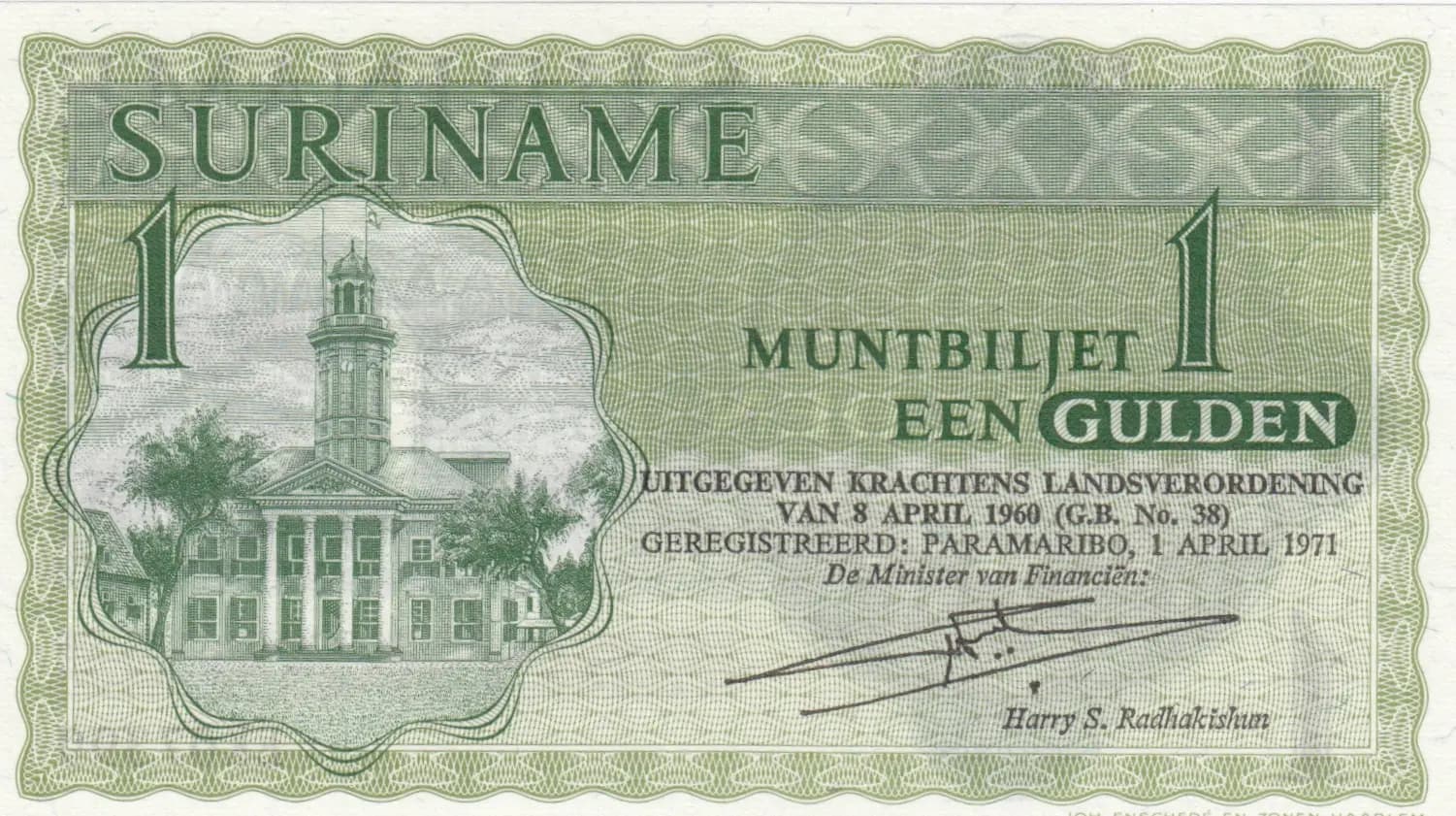
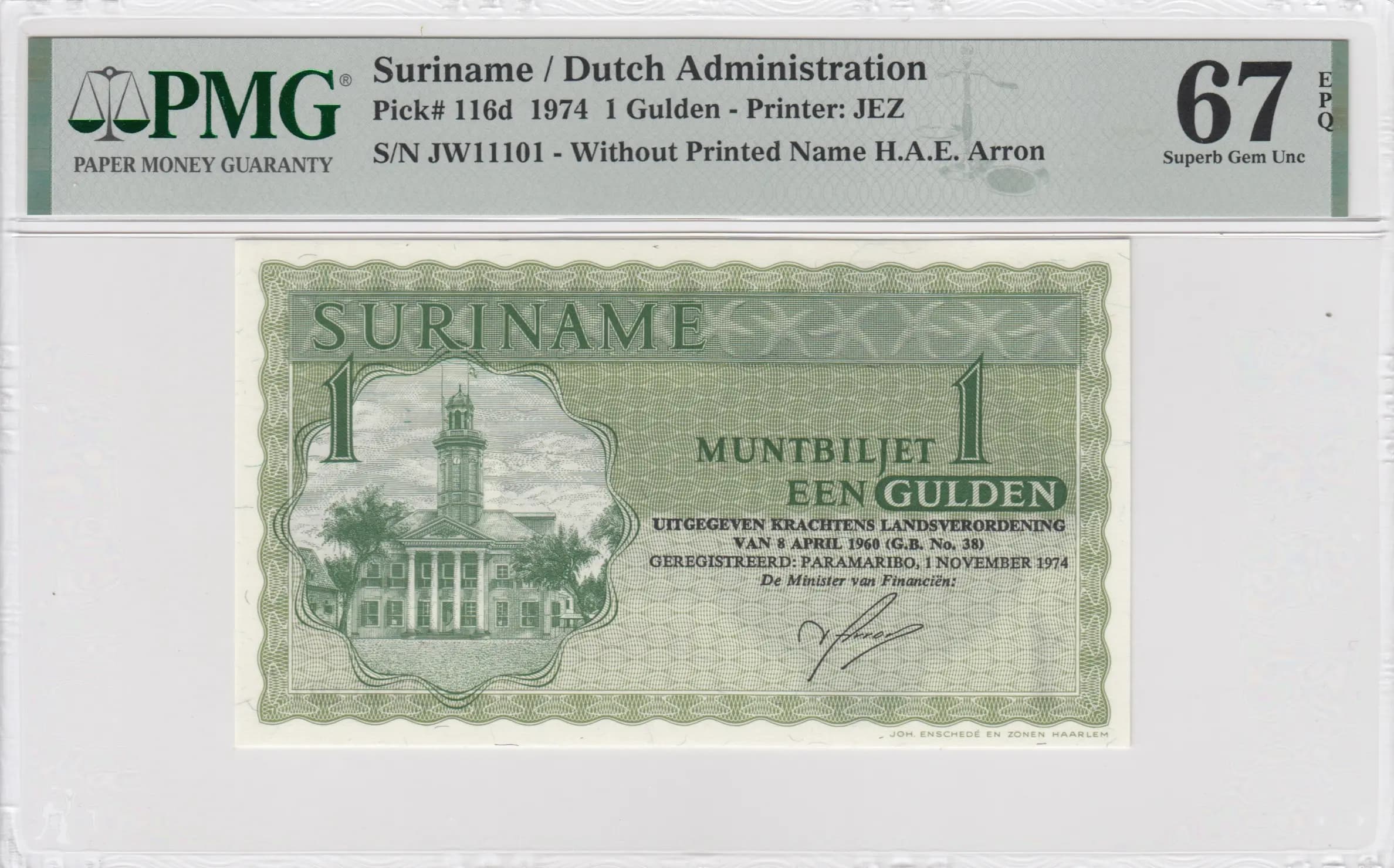
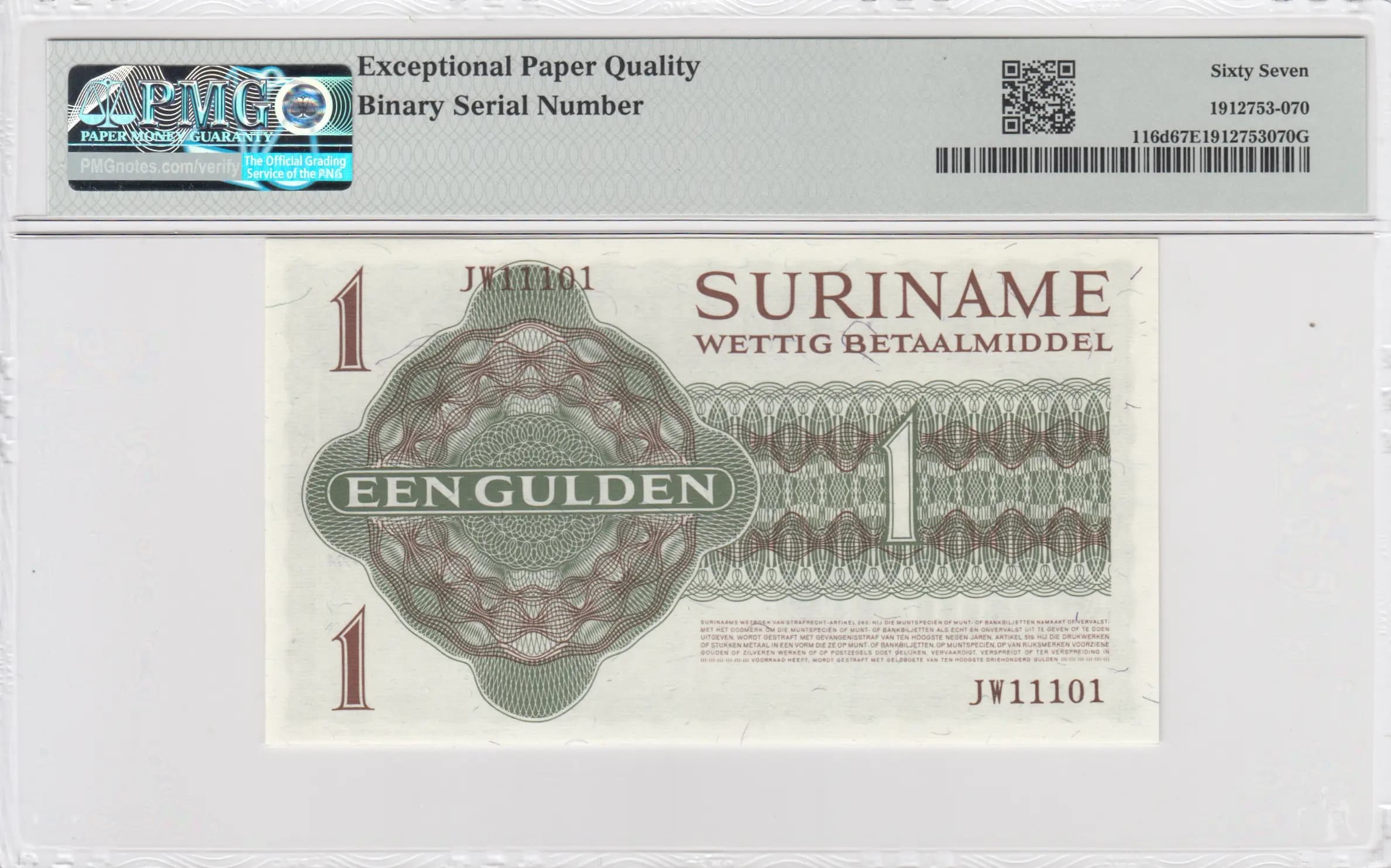
This is a stunning example of Suriname's 1 Gulden from 1974, graded PMG 67 EPQ, representing an early post-independence currency issue. The note exhibits pristine uncirculated condition with exceptional paper quality, no visible wear, folds, or creases. The vibrant green obverse features an ornate colonial-style building vignette with intricate engraving work, while the reverse displays an elaborate circular medallion design, making this a visually appealing example of mid-20th century Dutch Caribbean currency.
Common. The 1974 Suriname 1 Gulden (P-116d) is a regular-issue banknote from a standard print run. eBay market data consistently shows sales in the $2-$15.50 range across all condition grades over the past decade, with most uncirculated examples selling for $2.25-$5.50. Even the PMG 66 example sold for only $15.50 in 2018. This indicates robust supply in the collector market. Notes selling below $20 regardless of grade are definitionally common in numismatic terms. No historical evidence suggests limited print runs, recall orders, or special circumstances that would elevate rarity.
Issued under the National Ordinance of April 8, 1969, this 1974 Gulden represents Suriname's monetary authority during the early years following the nation's shift toward greater autonomy (independence came in 1975, one year after this note's registration). The depicted colonial-era government building with its bell tower reflects Suriname's architectural heritage from the Dutch colonial period, while the ornamental medallion on the reverse embodies the geometric design aesthetic characteristic of 1970s currency production. The registration in Paramaribo on November 1, 1974, documents this as part of Suriname's transitional currency phase.
The obverse features a colonial-era government building (likely the High Court of Paramaribo based on catalog references) positioned within an ornate scalloped quatrefoil frame on the left side, rendered in detailed line engraving with fine parallel hatching throughout. The building is depicted with a prominent bell tower and flanking palm trees, symbols of Suriname's tropical colonial heritage. The denomination and issuer information are positioned on the right side in green text on a pale olive-green and brown underprint. The reverse displays a commanding circular ornamental medallion with intricate geometric patterns in the center-left area, surrounded by cream/white space with brown and green tonal elements. Large numeral '1' appears in each corner, and 'SURINAME' and 'EEN GULDEN' text with 'WETTIG BETAALMIDDEL' (Legal Tender) appear on the right. The serial number JW11101 is printed in black alphanumeric characters.
FRONT: 'SURINAME' — Suriname; 'MUNTBILJET 1 EEN GULDEN' — Banknote 1 One Gulden; 'UITGEGEVEN KRACHTENS LANDSVERDORDENING VAN 8 APRIL 1969 (G.B. No. 38)' — Issued under National Ordinance of April 8, 1969 (G.B. No. 38); 'GEREGISTREERD: PARAMARIBO, 1 NOVEMBER 1974' — Registered: Paramaribo, November 1, 1974; 'De Minister van Financiën' — The Minister of Finance; 'JOH ENSCHEDE EN ZONEN HAARLEM' — Joh Enschedé and Sons, Haarlem (printer). BACK: 'SURINAME' — Suriname; 'WETTIG BETAALMIDDEL' — Legal Tender; 'EEN GULDEN' — One Gulden; '1' — One; Serial number: JW11101.
Intaglio engraving, the traditional banknote production method. Printed by Johan Enschedé (JEZ) of Haarlem, Netherlands, one of Europe's premier currency printers. The fine line work, detailed background patterns, ornate decorative borders, and intricate circular medallion design are characteristic of high-security intaglio printing. The parallel line engraving visible throughout and the dimensional quality of the imagery confirm this professional security printing technique. Multicolor printing utilizing green, brown, red/burgundy, and black inks on cream/white paper.
This note is identified as Pick catalog P-116d, one of four known variants for the base Pick number 116. The variants (P-116c, P-116d, P-116h, P-116i) represent different printer or signature combinations. This specific example is P-116d with printer JEZ (Johan Enschedé). The serial number JW11101 indicates this is part of the standard circulation series. The signature block shows facsimile signatures with printed names characteristic of this issue period. No overprints, special markings, or commemorative elements are present—this is a standard regular-issue variant.