1 rupee 1963
About This Note
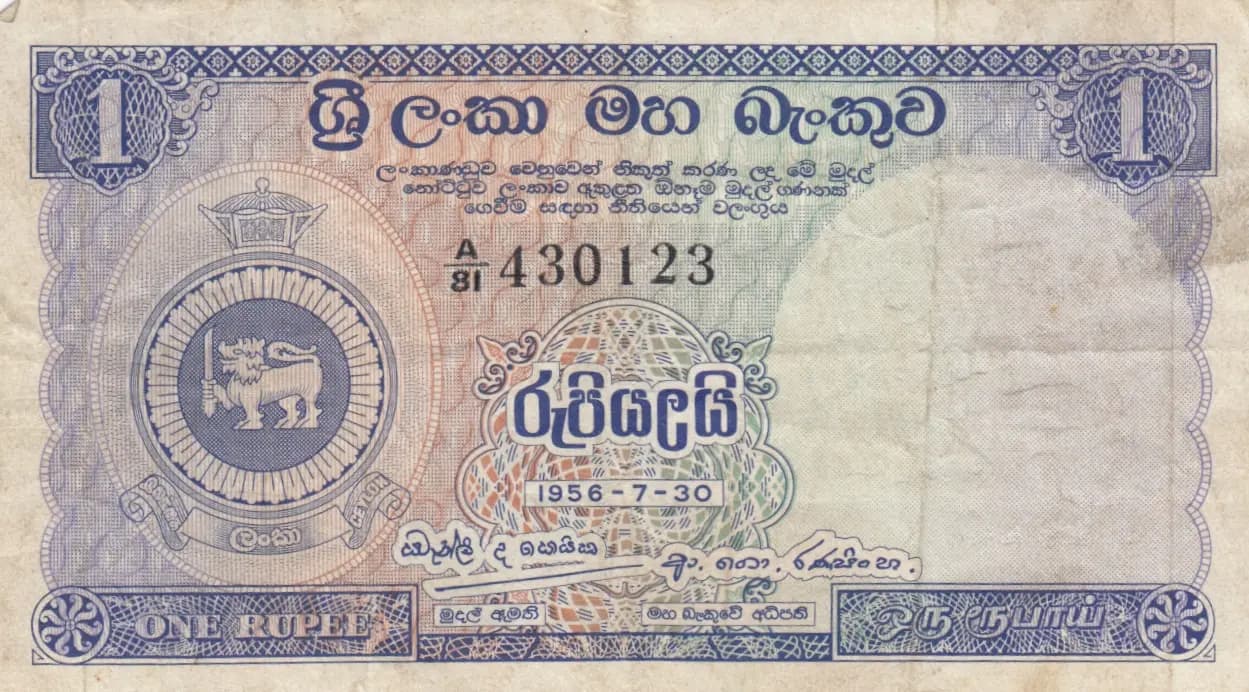
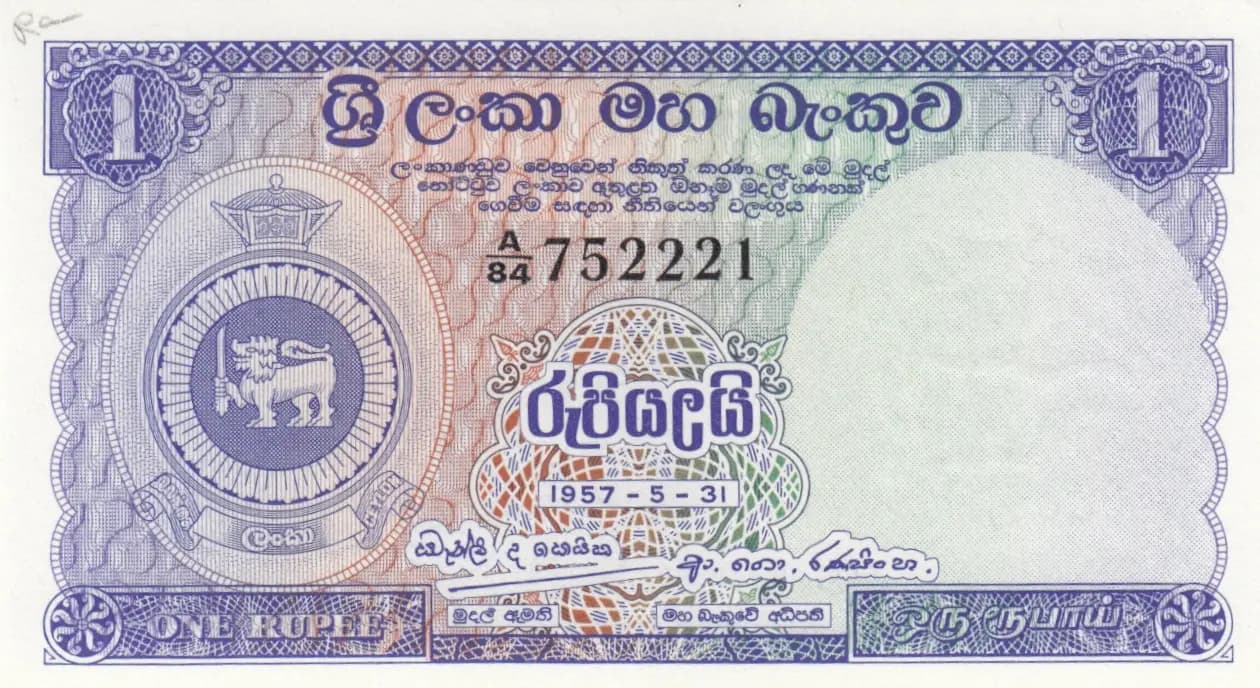
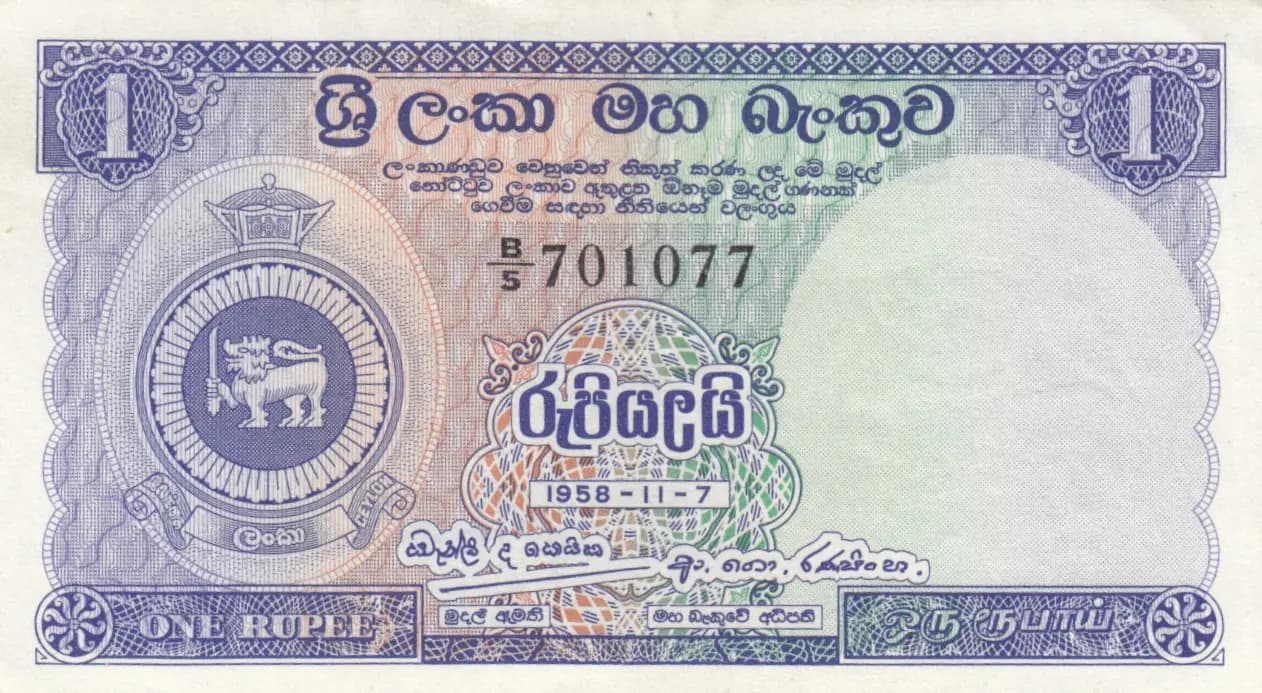
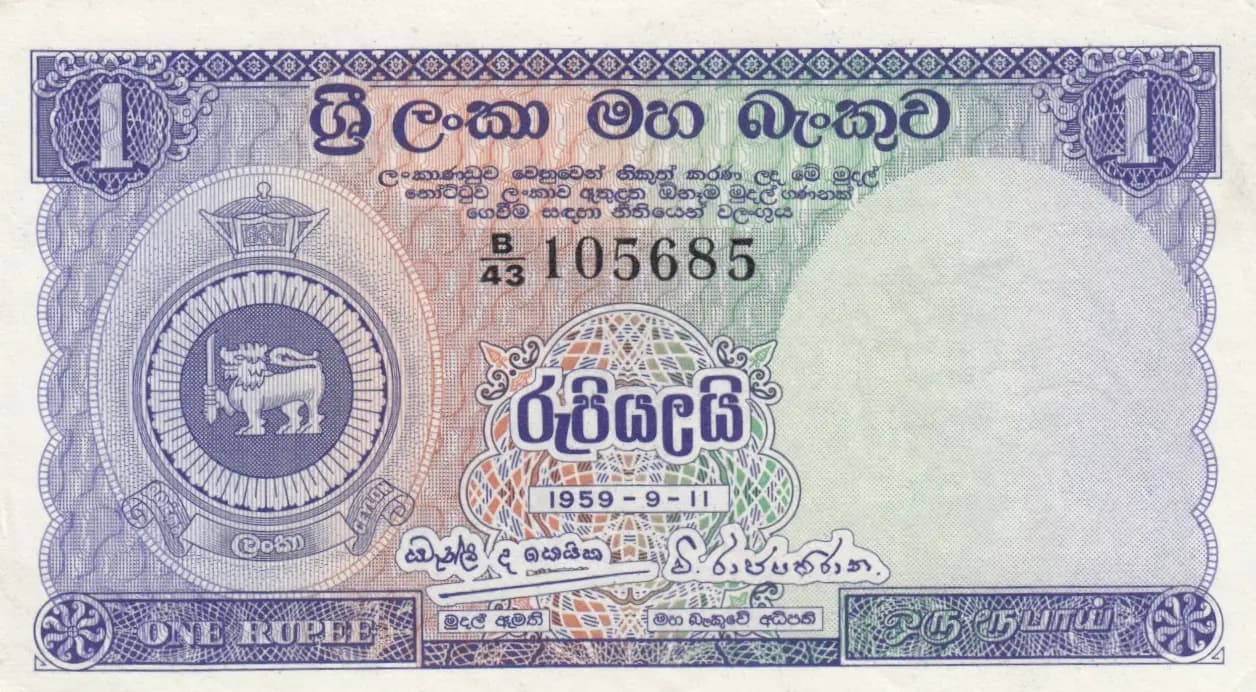
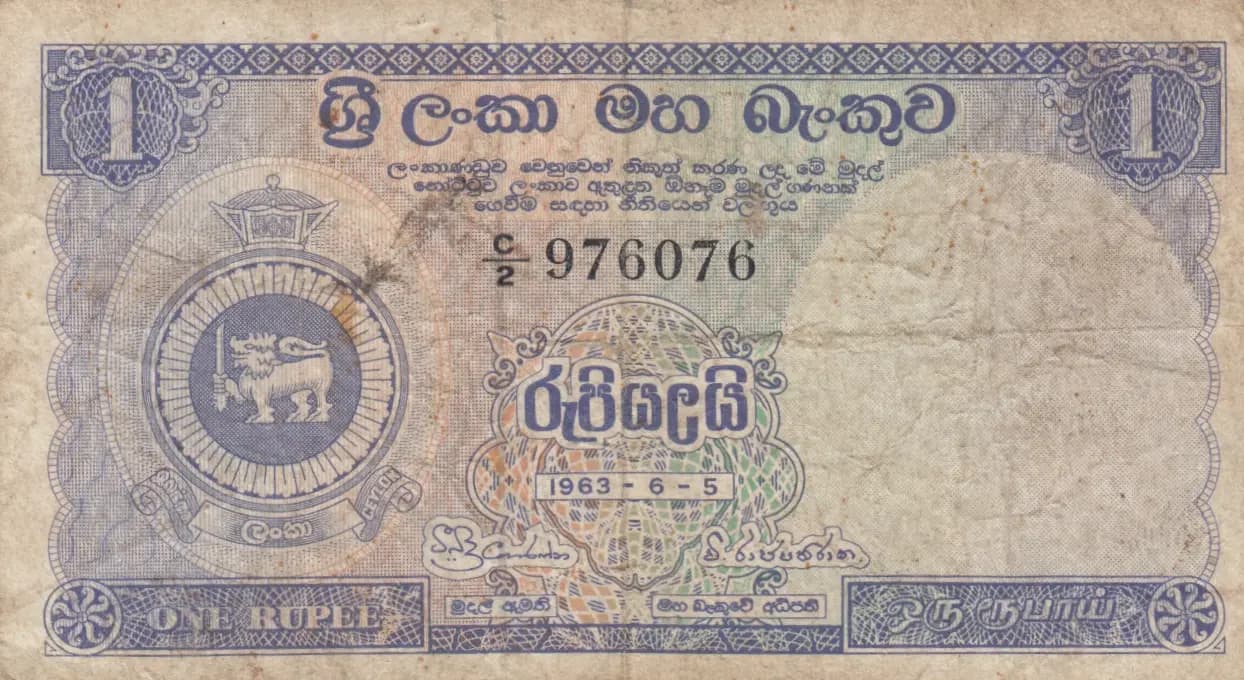
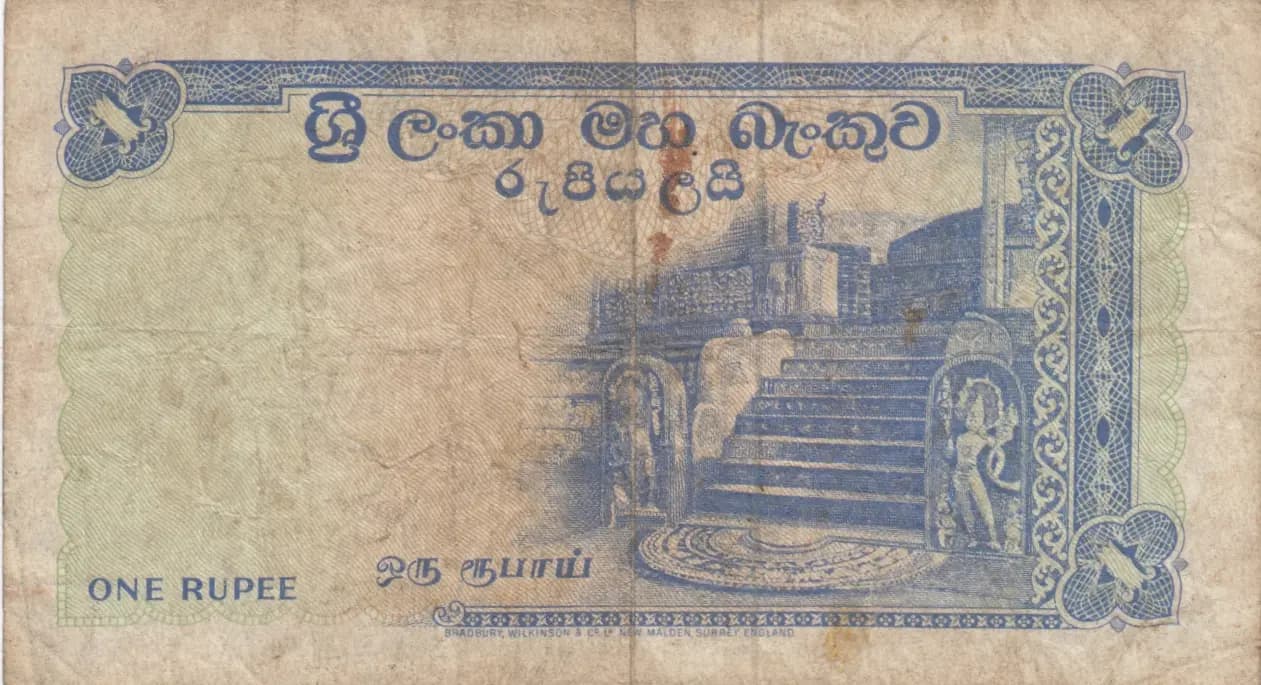
This is a Central Bank of Ceylon 1 Rupee note from 1963 (Pick P-56e), featuring the characteristic purple and blue color scheme typical of this issue. The front displays a prominent circular lion emblem in a decorative seal on the left side, with ornate geometric borders and Sinhala script inscriptions throughout. The reverse showcases an architectural vignette of what appears to be a stepped temple or religious building, framed by traditional quatrefoil corner ornaments. In Fair (F) condition, the note shows significant signs of circulation with visible foxing, multiple creases, center folds, and surface staining, consistent with active use during the mid-20th century.
Common. The 1 Rupee note from this series (1956-1963) was issued in substantial quantities by the Central Bank of Ceylon to meet circulation demands in the post-independence period. The specific Pick P-56e variant represents a standard printing from this extended date range. No evidence of limited print runs, recall orders, or short-lived issuing circumstances that would elevate rarity. Notes from this series and denomination remain readily available in the collector market, even in Fair condition.
This note was issued during Ceylon's early years as an independent nation, reflecting the country's post-colonial monetary sovereignty under the Central Bank of Ceylon. The lion emblem on the obverse represents the national arms of Ceylon (Sri Lanka), while the architectural vignette on the reverse depicts a significant temple structure, likely referencing the island's rich Buddhist or Hindu heritage and cultural identity. The bilingual inscriptions in both Sinhala and English reflect Ceylon's position during this transitional period in its post-independence development.
The obverse features the national arms of Ceylon—a rampant lion figure—displayed prominently within a circular seal with radiating decorative lines on the left side of the note. The lion emblem represents the sovereign heraldic symbol of the nation. A decorative quatrefoil design with ornamental detailing appears in the center-right area, serving both aesthetic and security purposes. The reverse presents an architectural vignette of a stepped temple or religious building with classical proportions and ornamental details, framed by an ornate border. The building's architecture suggests a significant religious or ceremonial structure, possibly representing a Buddhist temple or similar landmark important to Ceylonese cultural identity. All four corners feature matching quatrefoil corner ornaments with geometric patterning. The overall design employs fine line engraving work throughout, typical of high-security currency production of the era.
FRONT: ශ්රී ලංකා මහ බැංකුව (Central Bank of Sri Lanka); රුපියල් (Rupee); ONE RUPEE (English); Serial number 9760076; Date: June 5, 1963 (1963-6-5). BACK: ශ්රී ලංකා මහ බැංකුව (Central Bank of Sri Lanka); එක රුපියල් (One Rupee in Sinhala); ONE RUPEE (English).
Intaglio engraving (line engraving) on a multi-color steel plate, produced by Bradbury Wilkinson & Co., Ltd., New Malden, Surrey—one of the world's premier security printers. The fine line work visible throughout both sides, the intricate geometric borders, and the detailed architectural vignette on the reverse are characteristic of the intaglio process. The multiple color application (purple, blue, cream, and beige) was achieved through multi-plate color printing, a standard technique for this printer during the 1950s-1960s period.
This specific note is dated June 5, 1963, placing it near the end of the 1956-1963 issuing period for this design. The serial number 9760076 represents a standard mechanical numbering sequence. The Pick P-56e designation indicates this is from the later printing period of this design type. No overprints or special varieties are observed. The note exhibits characteristics consistent with standard production runs of this series, with no notable deviations from the established design or security features.