1 rupee 1959
About This Note
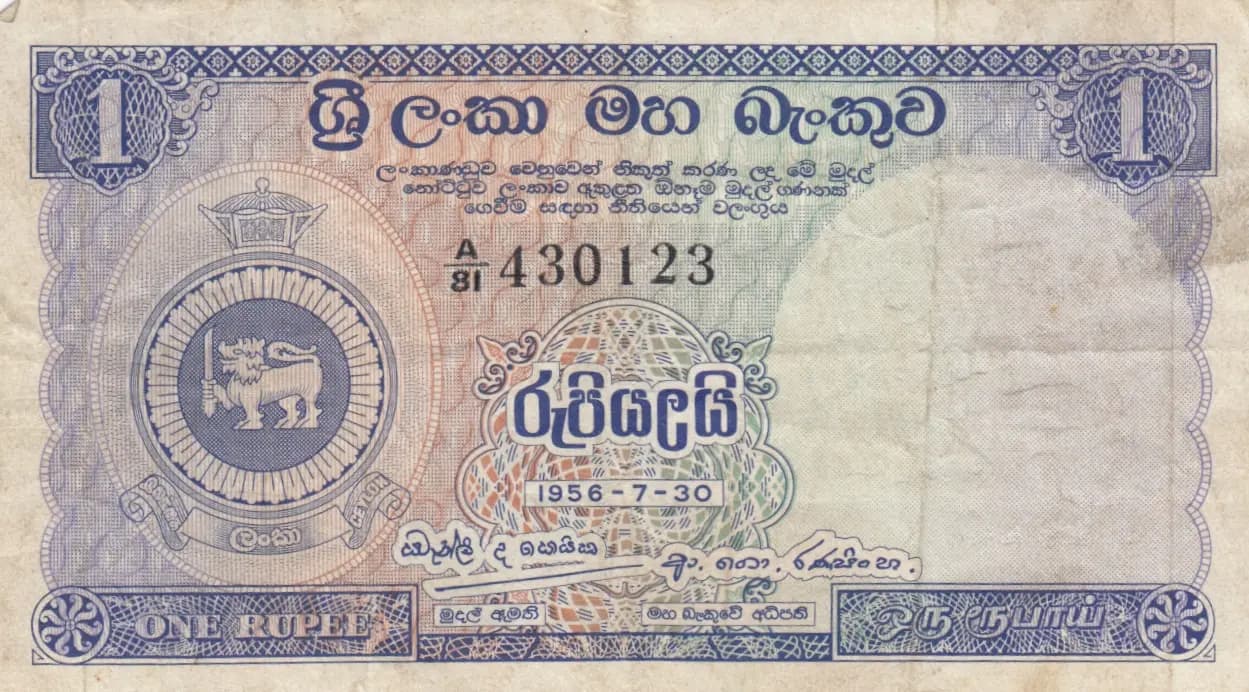
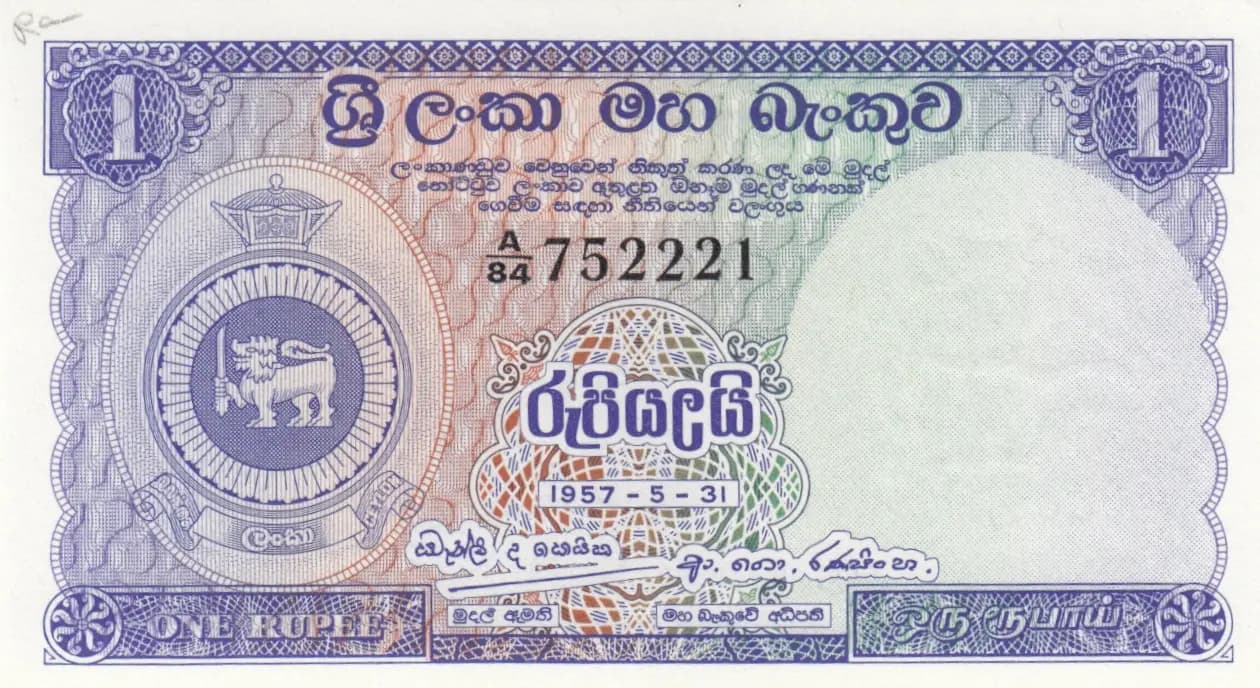
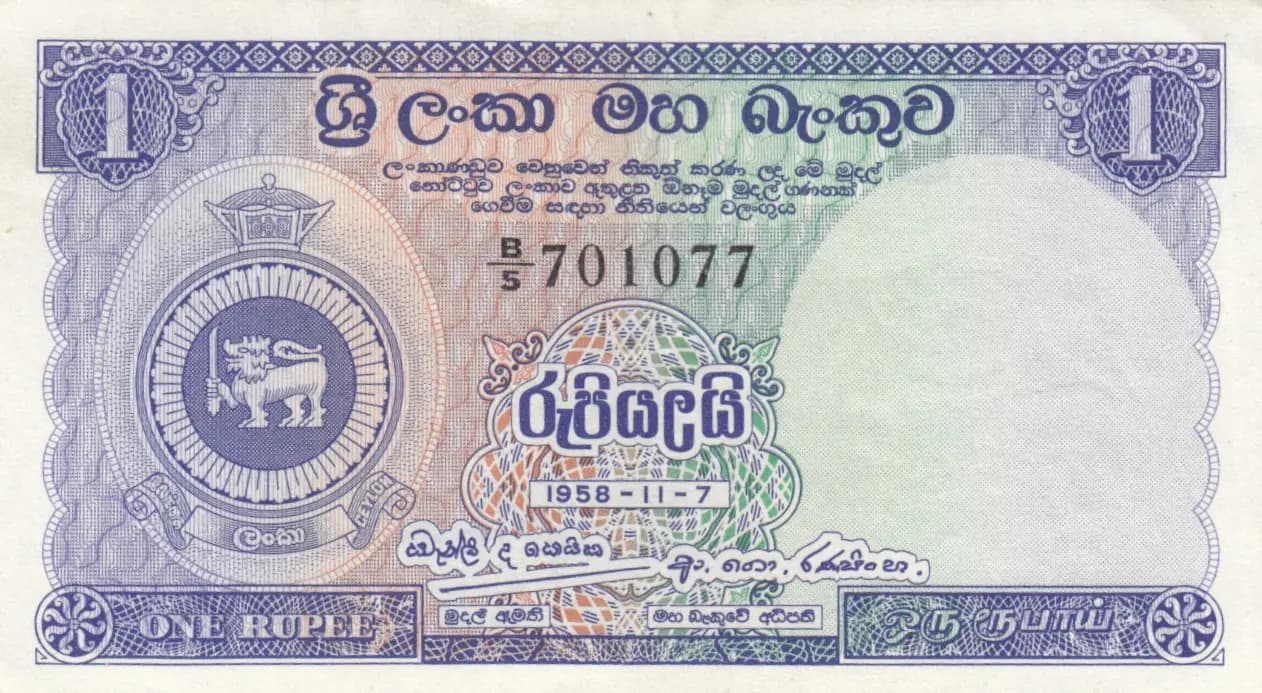
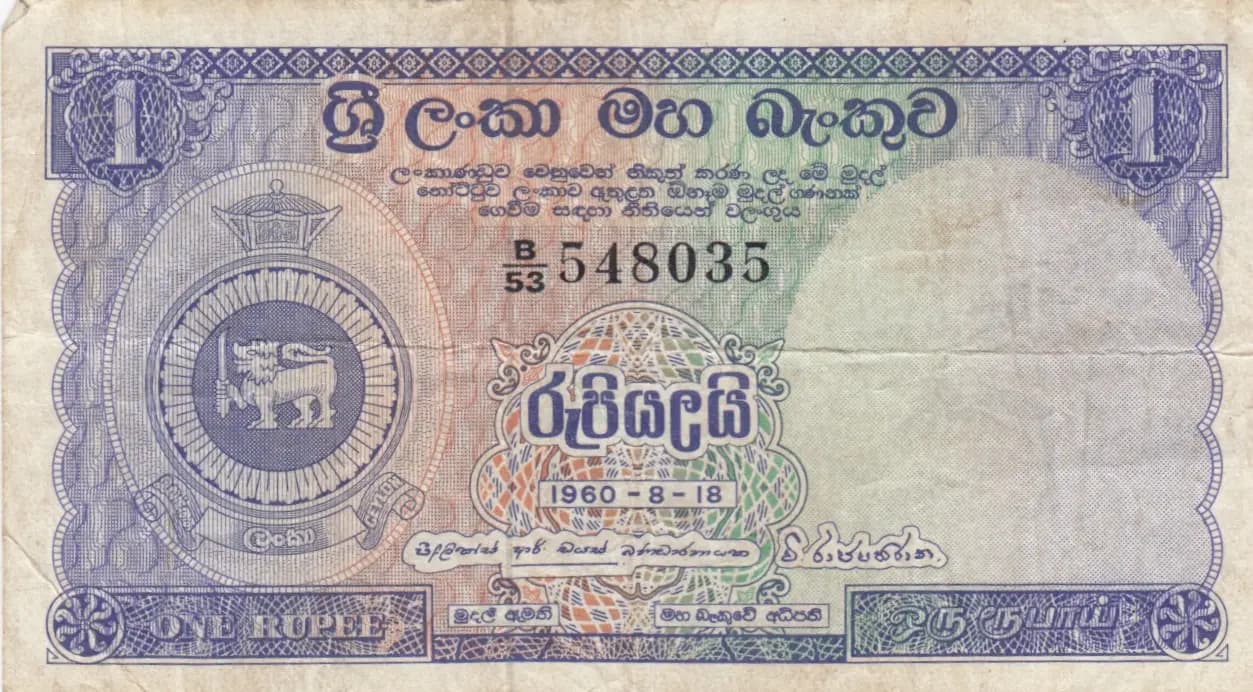
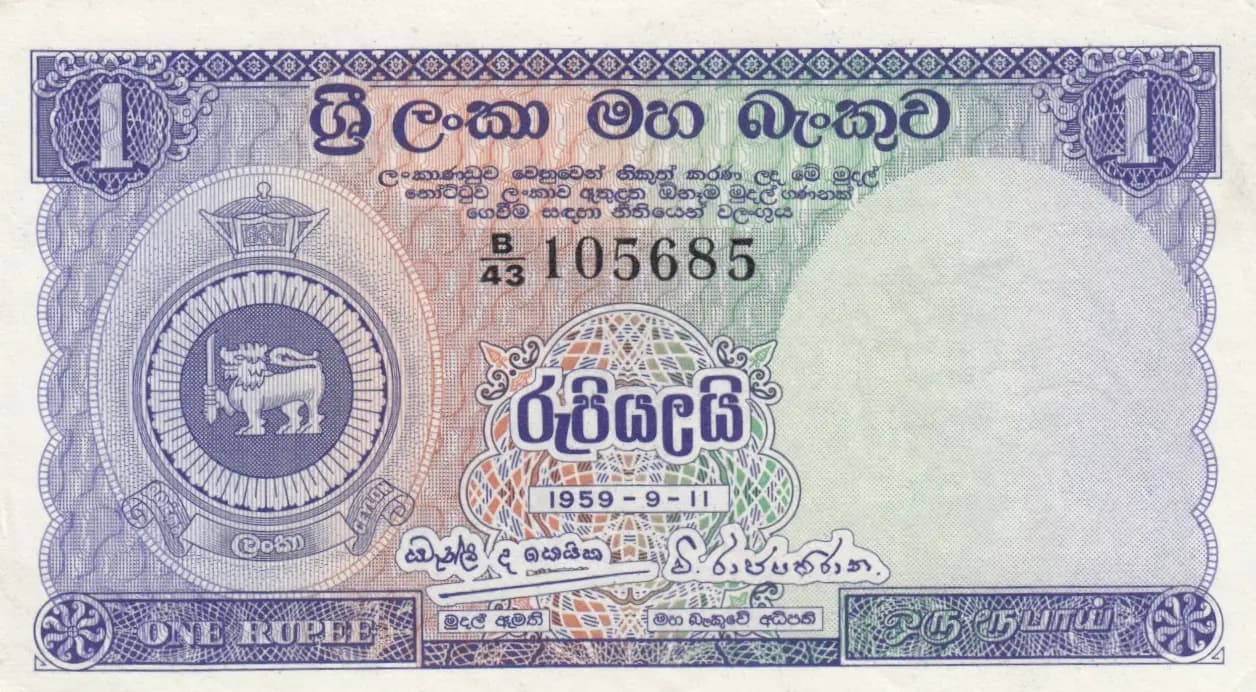
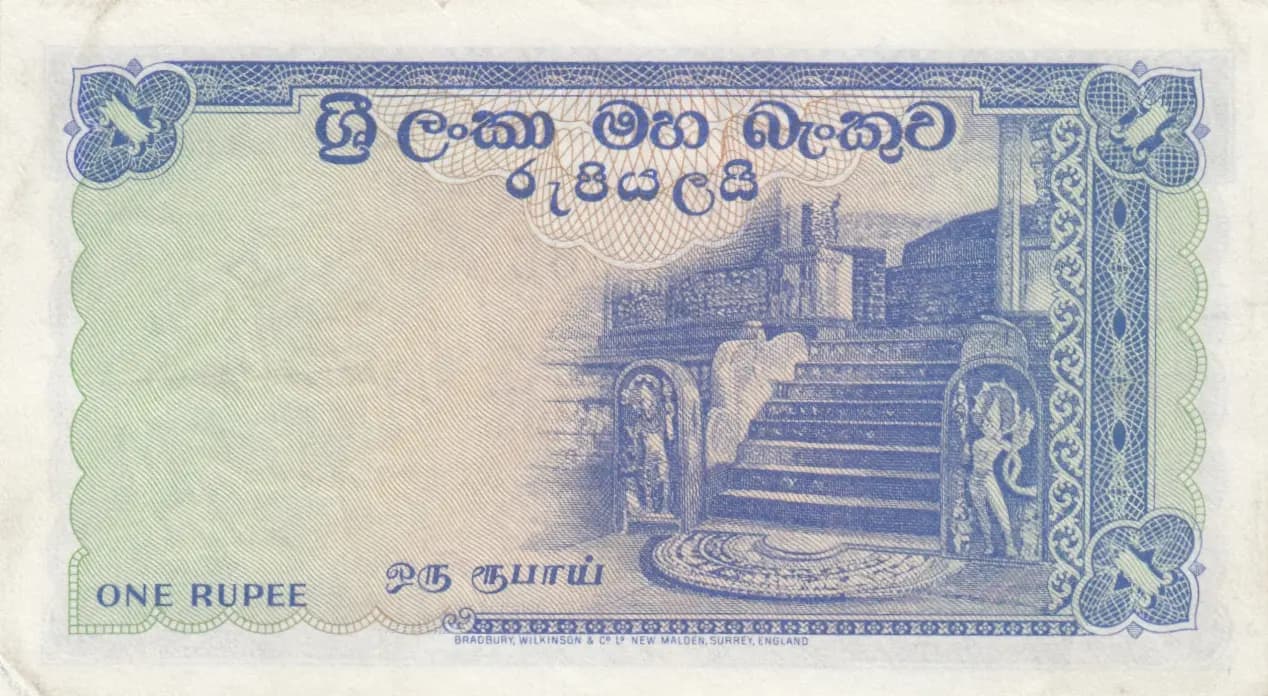
This is an excellent example of Ceylon's early post-independence currency, a 1 Rupee note from 1959 issued by the Central Bank of Ceylon and printed by Bradbury Wilkinson. The note displays the characteristic purple-blue front featuring the Sri Lankan lion emblem and ornate seal, paired with a reverse showcasing detailed architectural engraving of temple steps in blue ink. In EF condition, this note exhibits minimal wear with only light age-related foxing, preserving the fine line engraving and complex security patterns that define this series.
Common. This is a standard circulation issue from the 1956-1963 series with typical print runs for post-independence Ceylon currency. The note bears no special overprints, unusual serial number characteristics, or identifying marks indicating limited production. The EF condition grade is desirable but not exceptional for the series. Such notes remain widely available in the collector market at modest prices, consistent with ordinary circulation issues from this period.
This 1959 note was issued during an important transitional period for Ceylon, just seven years after independence in 1948. The inclusion of the Sri Lankan lion coat of arms on the front and the prominent ornate stairway architecture on the reverse reflect the nation's effort to establish distinct national identity through currency design. The trilingual inscriptions in Sinhala, Tamil, and English on the reverse underscore the country's multicultural character during this early post-colonial era.
The front features the coat of arms of Sri Lanka—a prominent lion figure within a circular emblem on the left side, symbolizing the nation's sovereignty and independence. The center-right displays an ornate oval seal with elaborate decorative borders, representing governmental authority. The reverse showcases an ornamental stairway with detailed architectural carvings, likely representing a significant Buddhist or cultural landmark such as a temple entrance, flanked by decorative pillars and relief sculptures. The background suggests a landscape setting with buildings. Both sides feature elaborate geometric guilloche patterns in the borders and corner ornaments typical of security engraving. The color scheme combines purple-blue tones on the front with blue on the reverse, offset by cream and green tints.
FRONT: 'ශ්රී ලංකා මහ බැංකුව' (Sinhala: Central Bank of Ceylon); 'ONE RUPEE' (English: denomination); 'බැංකුව' (Sinhala: Bank); '1959-9-11' (Date of issue: September 11, 1959); 'B 105685' (Serial number); 'ඉතා සුරැකි' (Sinhala: highly secure/protected). BACK: 'ශ්රී ලංකා මහ බැංකුව' (Sinhala: Central Bank of Ceylon); 'එක රුපියල' (Sinhala: One Rupee); 'ONE RUPEE' (English: One Rupee); 'ஒரு ரூபாய்' (Tamil: One Rupee); 'BRADBURY, WILKINSON & CO LTD, NEW MALDEN, SURREY, ENGLAND' (Printer attribution).
Intaglio engraving (line engraving), executed by Bradbury Wilkinson & Co Ltd, the renowned British security printer based in New Malden, Surrey. The fine line work visible throughout—particularly in the circular lion emblem, ornate seal, and architectural details on the reverse—is characteristic of high-security intaglio printing. The complex guilloche patterns and geometric borders demonstrate the multi-plate engraving process typical of this printer's work during the 1950s-1960s period.
Specific variety identified by Pick catalog number P-56c, indicating this is variant 'c' of the 1 Rupee note within the 1956-1963 series. The dated example shown is from September 11, 1959, placing it chronologically within the series' middle period. Serial number B 105685 indicates a standard prefix; no rare or short-run serial characteristics are evident. The date inscription '1959-9-11' is consistent with notes from this specific year of issue.