1 rupee 1960
About This Note
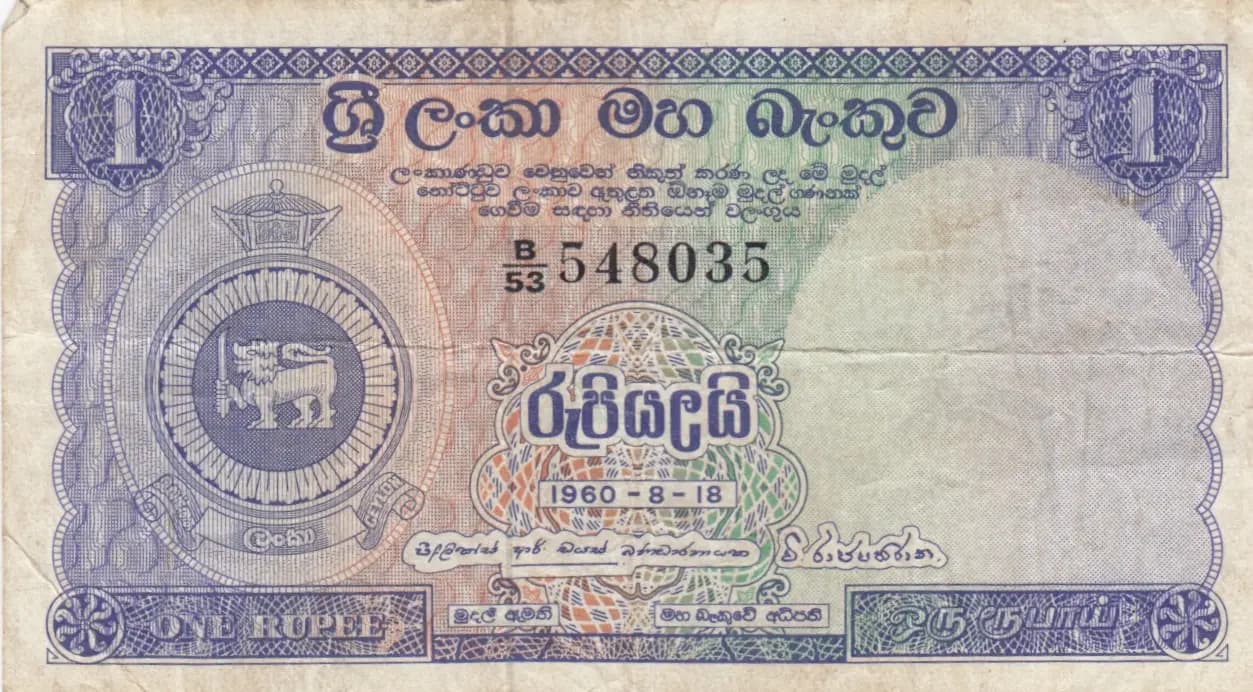
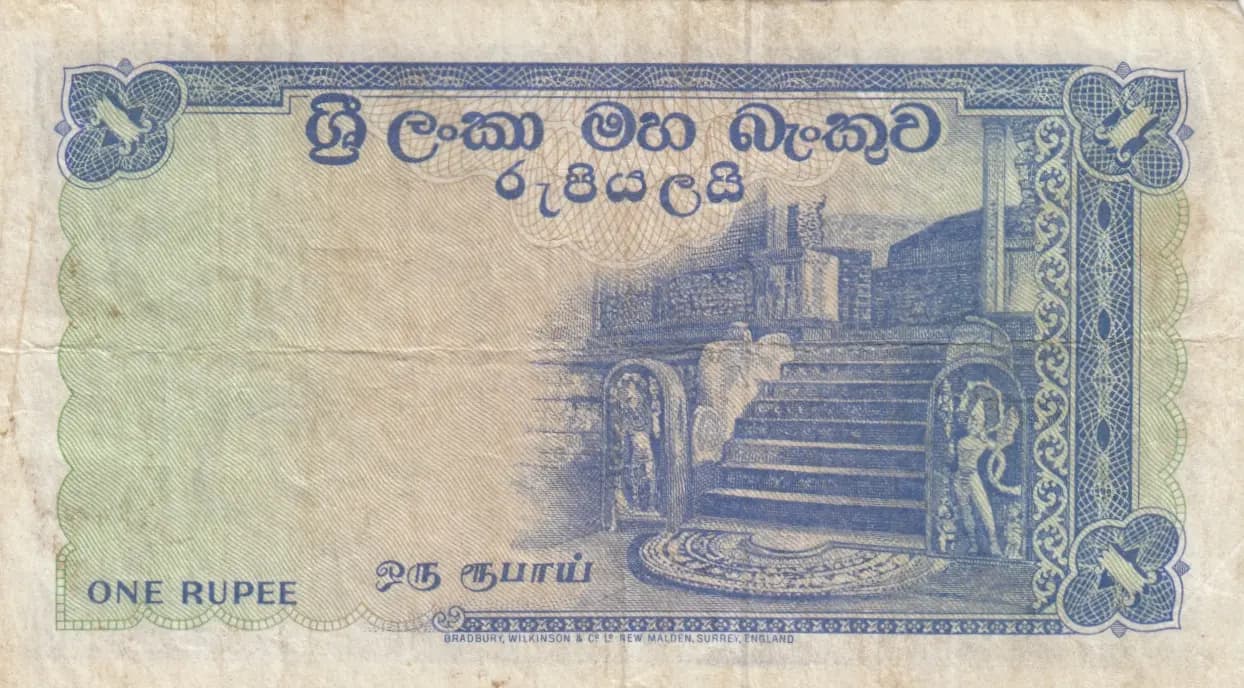
This is a Central Bank of Ceylon 1 Rupee note from 1960 (Pick P-56d), printed by Bradbury Wilkinson in England. The note displays the characteristic design of Ceylon's early independence-era currency, featuring a prominent lion emblem on the obverse and an ornate temple structure on the reverse. In Fair condition, the note shows expected aging with cream-beige oxidation, creasing, and general circulation wear consistent with a note that has been in use for over 60 years, yet remains legible with all design elements clearly visible.
Common. The 1 Rupee notes from the 1956-1963 issuance period (Pick P-56 series) were produced in large quantities as the primary circulation currency of Ceylon during this period. The serial number range visible (B/53 548035) indicates a standard production run. No evidence suggests limited print runs, recall status, or short-lived issuance. These notes remain readily available in the collector market and are not considered scarce.
This note was issued during a significant period in Ceylon's post-independence history, just four years after the country gained independence in 1948. The lion emblem on the obverse represents the national symbol of Ceylon (now Sri Lanka), while the temple structure depicted on the reverse reflects the island nation's rich Buddhist and Hindu heritage. The use of Sinhala script alongside English reflects the linguistic and cultural identity of the newly independent nation, emphasizing the Central Bank of Ceylon's role in establishing national monetary sovereignty.
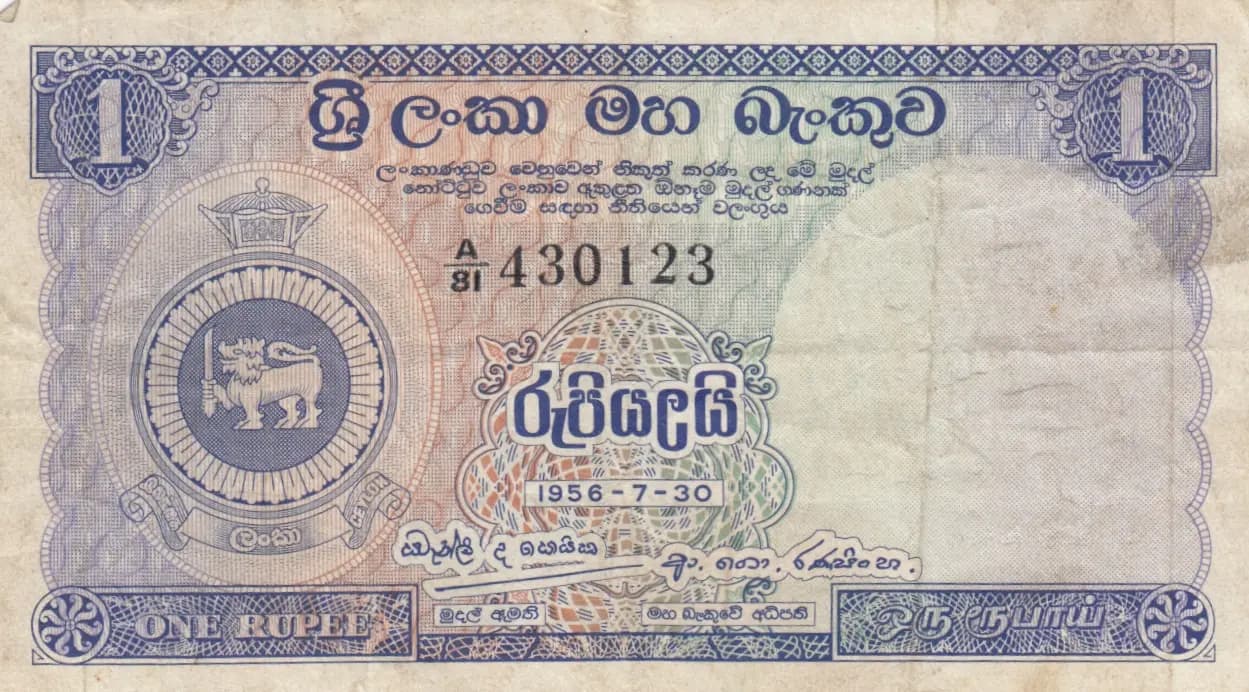
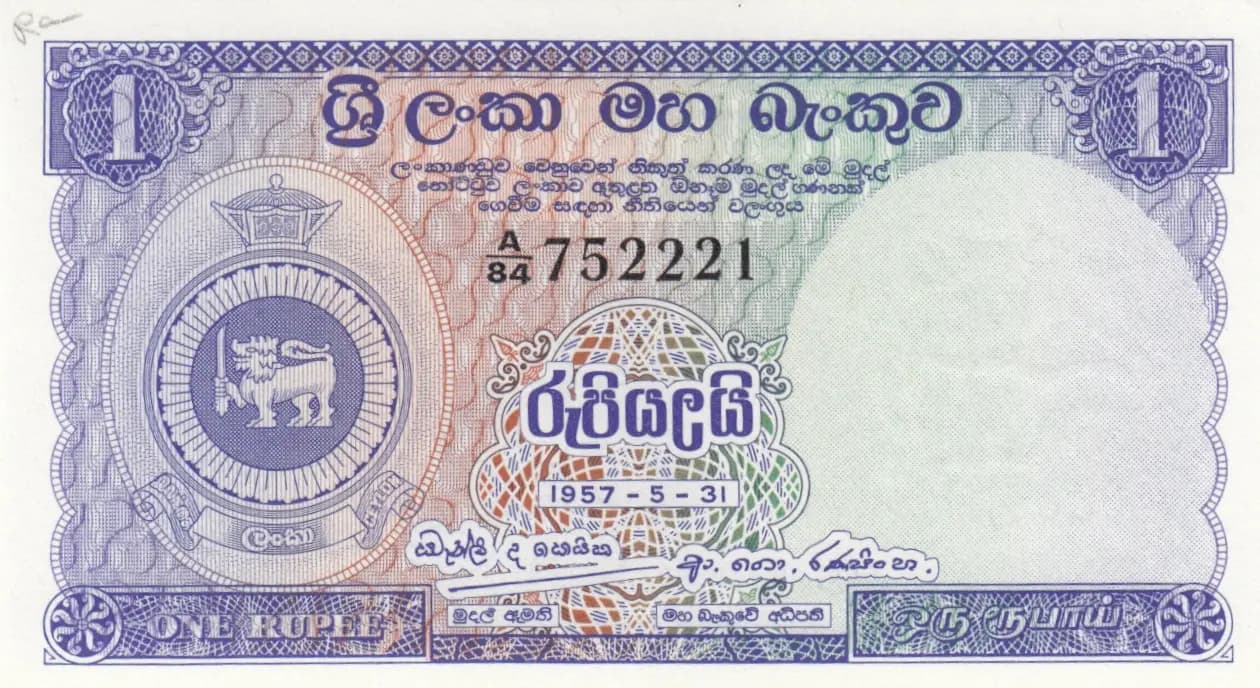
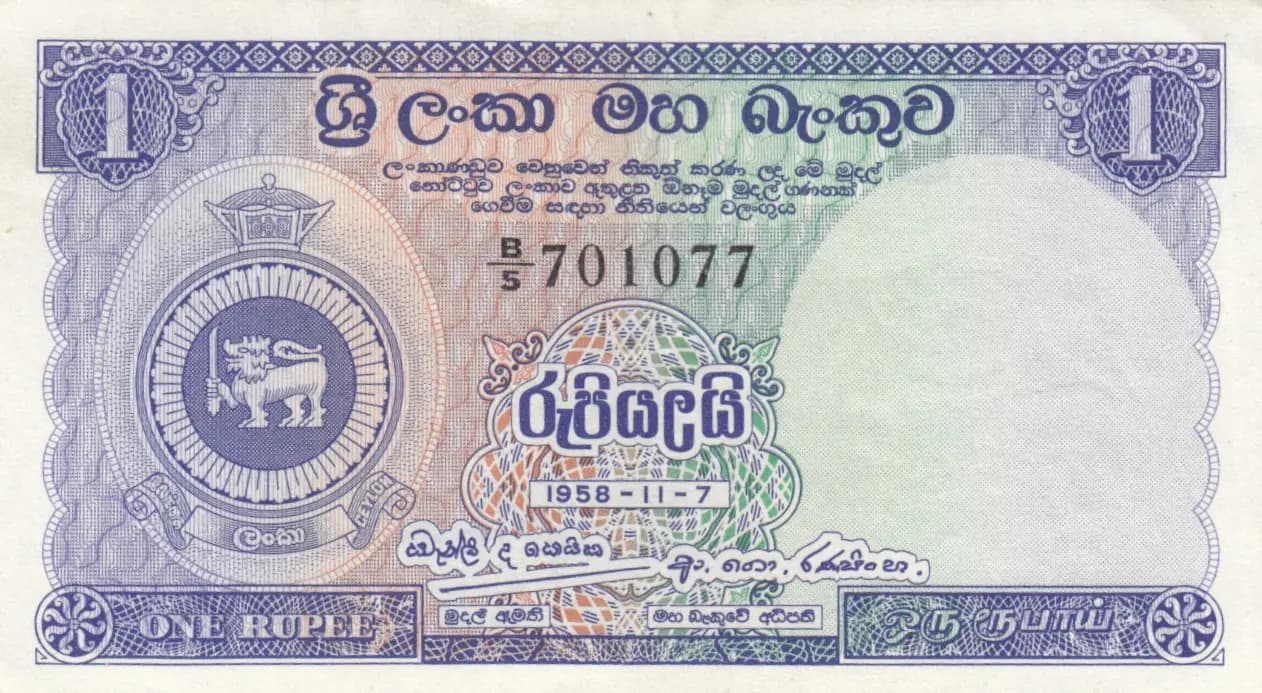
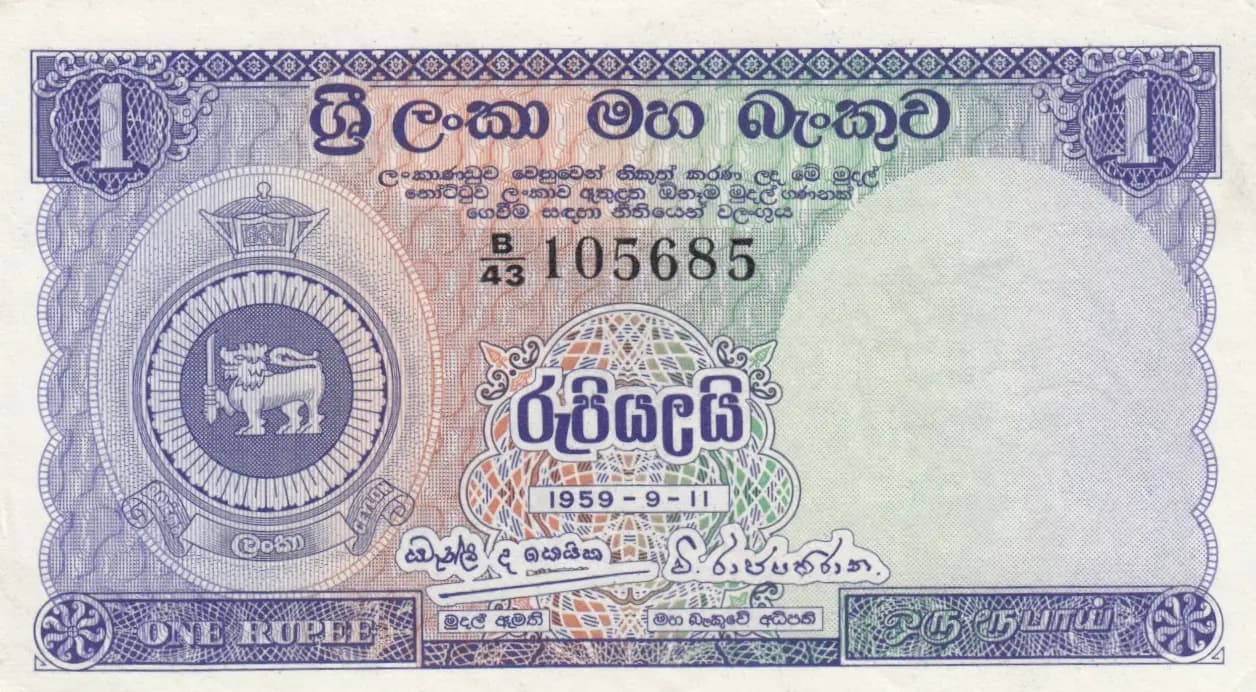
The obverse features the coat of arms of Ceylon, depicted as a lion figure within a prominent circular medallion with concentric decorative circles and ornate borders in blue and purple. The design incorporates elaborate corner ornaments and a cartouche containing the denomination. The reverse displays the Sigiri (or similar temple) stairway—a iconic architectural landmark representing Ceylon's historical and cultural heritage. The structure is rendered in fine blue engraving showing multiple tiers and ornate architectural detailing, surrounded by ornamental borders with geometric and floral patterns in all four corners. Both sides employ intricate engraved patterns typical of Bradbury Wilkinson's security printing standards of the era.
FRONT SIDE: 'ශ්රී ලංකා මහ බැංකුව' (Sinhala) = 'Central Bank of Sri Lanka'; 'ONE RUPEE' (English) = 'One rupee'; 'B/53 548035' (Serial number); '1960-8-18' (Date: August 18, 1960). BACK SIDE: 'ශ්රී ලංකා මහ බැංකුව' (Sinhala) = 'Central Bank of Sri Lanka'; 'ONE RUPEE' (English) = 'One rupee'; 'BRADBURY WILKINSON & CO LTD NEW MALDEN SURREY ENGLAND' (English) = Printer's identification mark.
Intaglio engraving, specifically steel plate engraving executed by Bradbury Wilkinson & Co Ltd, a leading British security printer of the period. The fine line work visible in the circular lion emblem, the temple architecture, and the decorative borders are characteristic of high-security intaglio printing. The precision of the geometric patterns and the depth of the engraved lines demonstrate the advanced security printing techniques employed to prevent counterfeiting.
This note is catalogued as Pick P-56d, indicating it is a specific variety within the 1 Rupee series issued between 1956-1963. The serial number prefix 'B/53' may indicate a specific printing batch or series designation. The date '1960-8-18' visible on the obverse represents the actual issue date of this particular note (August 18, 1960). No overprints or significant varieties are apparent from the visual analysis. Collectors should note that different prefixes and date variations exist within the P-56 series.