2 pesetas 1936
Market Prices
About This Note
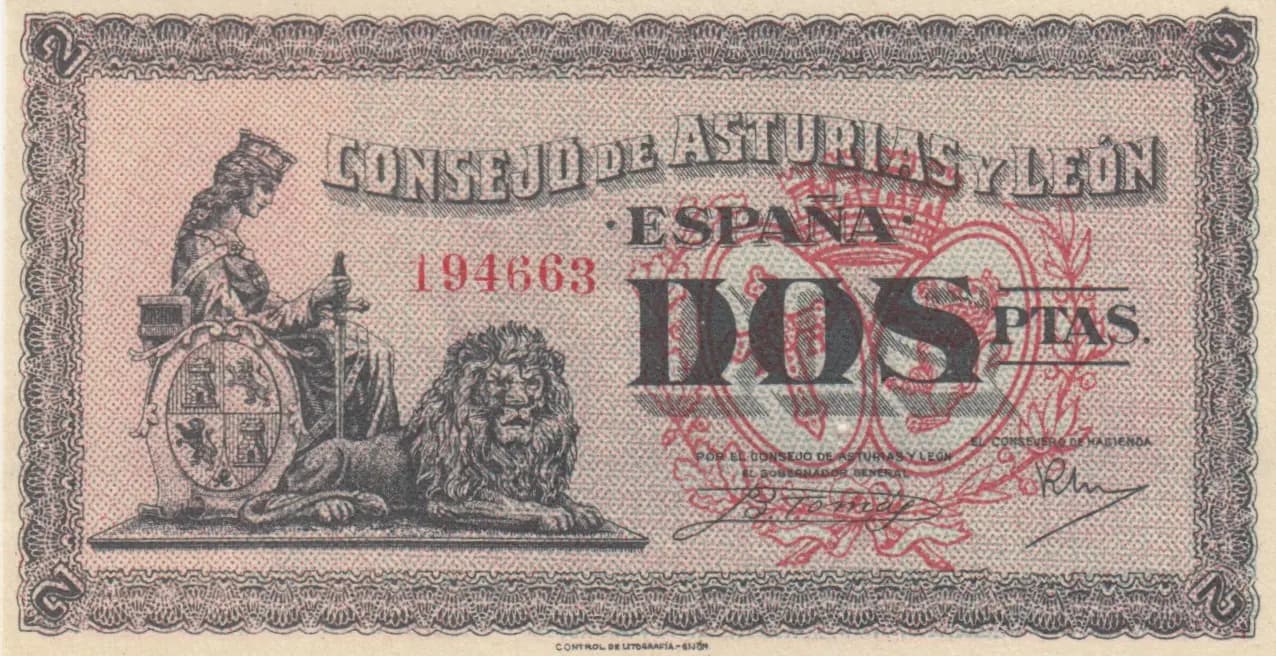
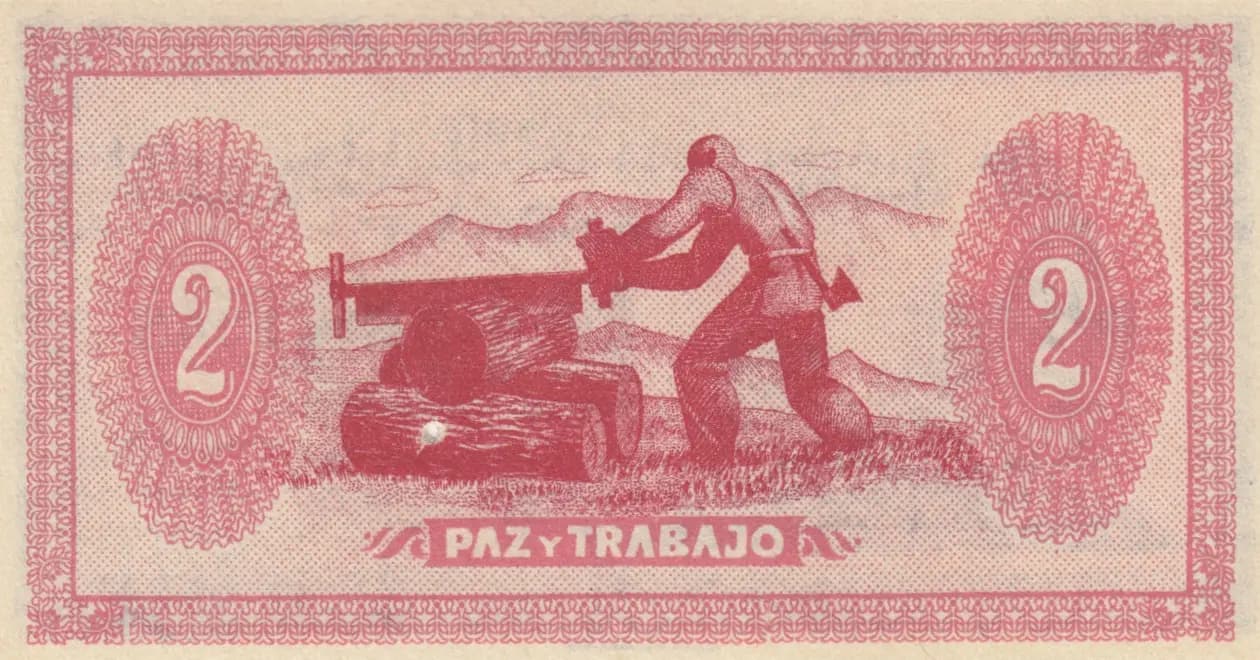
This 1936 2 pesetas note from the Consejo de Asturias y Leon is presented in AU condition with exceptional eye appeal. The note displays crisp printing throughout with no visible wear, creases, or stains, featuring a striking heraldic composition on the obverse with a crowned female figure and lion, while the reverse depicts an allegorical labor scene emphasizing the regional council's themes of 'Paz y Trabajo' (Peace and Labor). The fine crosshatch background pattern and ornate decorative borders demonstrate skilled engraving work typical of Spanish Civil War-era regional currency.
Common. Based on eBay market data showing prices ranging from $9.69 to $225.00 USD across multiple sales and condition grades, with multiple listings in both UNC and VF categories, this note clearly trades regularly at modest prices. The presence of numerous auction records and varied pricing indicates adequate supply in the collector market. Most pesetas from this period remain common unless from very limited printings or with exceptional provenance.
Issued during the Spanish Civil War by the Consejo de Asturias y Leon, a regional authority in northwestern Spain, this note represents the fragmented monetary system that emerged as different regions asserted autonomy during the conflict (1936-1939). The allegorical imagery of labor on the reverse reflects the leftist political orientation of the Asturian council, which controlled this industrialized region known for mining and timber production. The heraldic symbolism on the obverse emphasizes regional identity distinct from the nationalist forces, making these notes historically significant artifacts of the Republican side's resistance.
The obverse features Britannia-like allegorical female figure (representing the Asturian region) wearing a crown and holding a heraldic shield and staff, accompanied by a heraldic lion as supporter—classical symbols of regional sovereignty and protection. The reverse depicts an allegorical male worker in the act of sawing or splitting timber, symbolizing the region's lumber and mining industries. The ornamental numeral '2' appears prominently framed on both sides of the reverse. The overall design employs a light pink-mauve color scheme with fine crosshatch background patterning and intricate decorative borders, characteristic of early 20th-century Spanish banknote design.
Front: 'CONSEJO DE ASTURIAS Y LEON' (Council of Asturias and Leon), 'ESPAÑA' (Spain), 'DOS PTAS' (Two Pesetas), 'POR EL CONSEJO DE ASTURIAS Y LEON' (By the Council of Asturias and Leon), 'COMRCL DE LITOGRAFIA GIJON' (Commercial Printing House of Gijon), serial number '194663'. Back: '2' (denomination marker, repeated on both sides), 'PAZ Y TRABAJO' (Peace and Labor).
Intaglio engraving (copperplate printing), as evidenced by the fine crosshatch patterns, crisp line details, ornate borders, and the clear three-dimensional quality of the heraldic figures. The note was produced by 'Comercial de Litografía Gijón' (Commercial Printing House of Gijon), which is credited in the imprint. The precision of the security features—including the detailed background pattern and serial numbering—indicates professional engraving work rather than lithography despite the printer's name.
Serial number observed: 194663. This particular specimen may represent a specific printing batch from the Gijon facility. Regional council notes from 1936 may exist in multiple printings; serial number ranges could indicate different emission periods or printing runs. No distinctive overprints or signature varieties are apparent in the visual analysis. The consistent quality and AU condition suggest this may be from a particular production batch, though without comprehensive catalog data on serial numbering, specific variety classification cannot be definitively established.