1000 pesetas 1936
About This Note
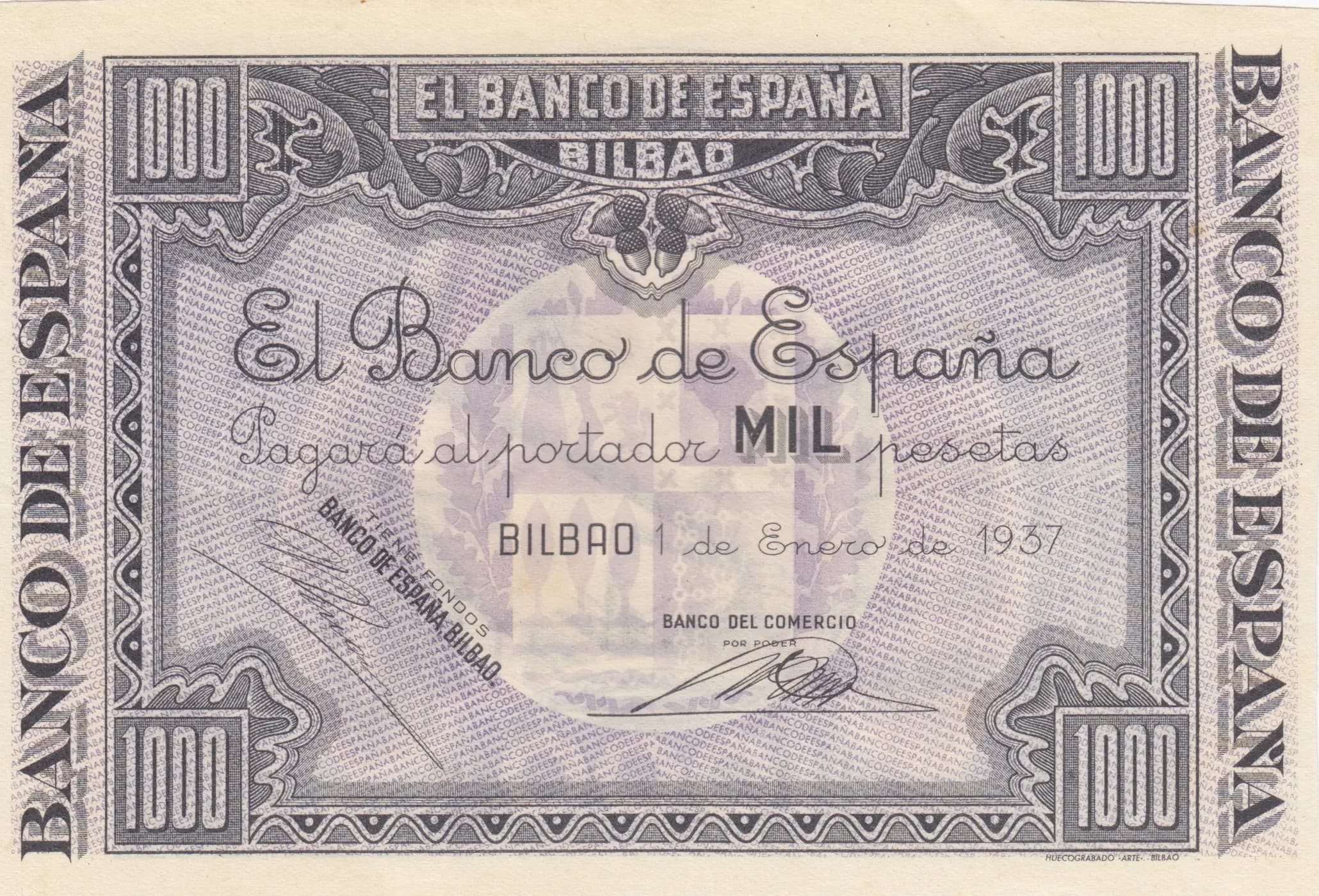
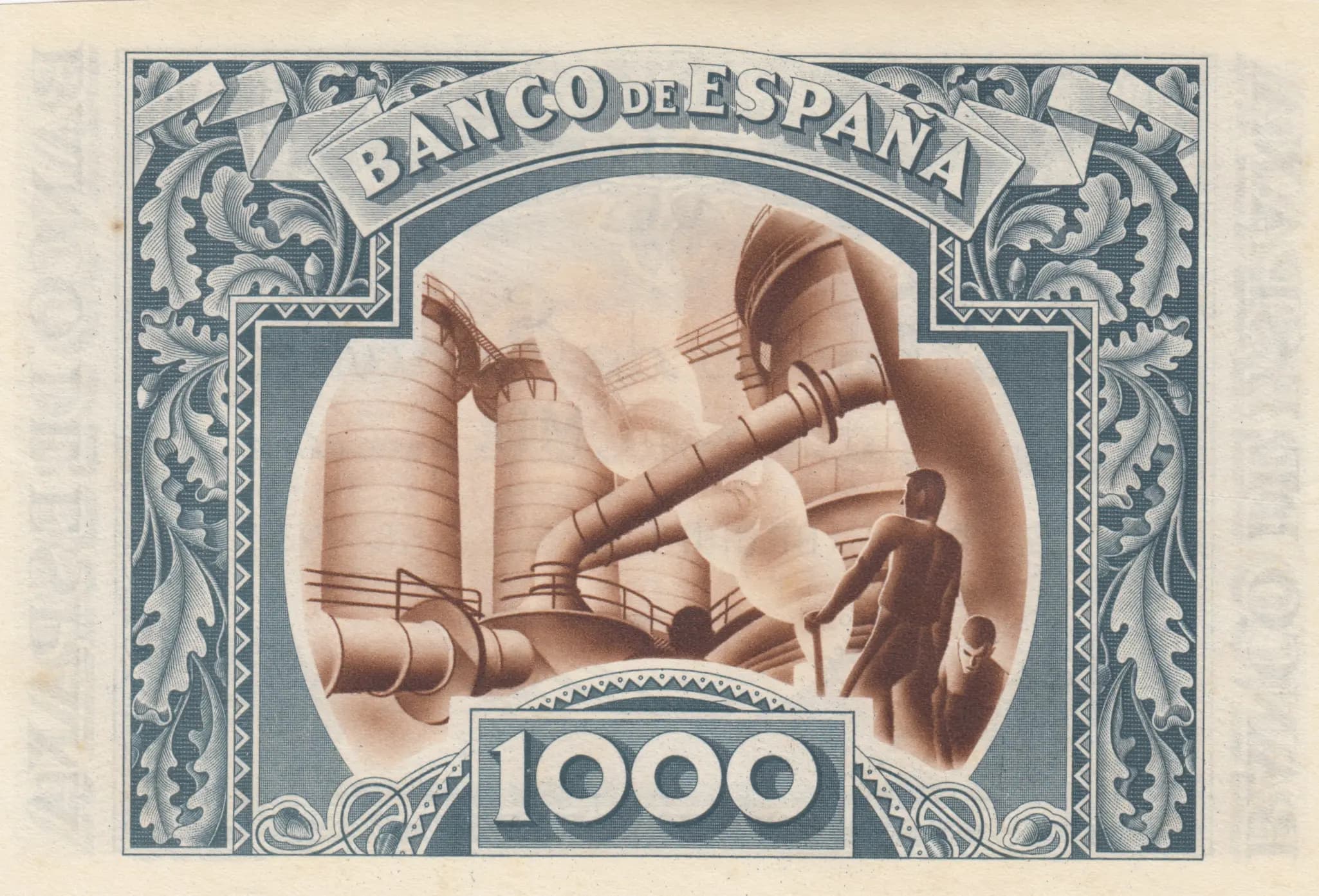
This 1000 pesetas banknote from 1936 is an exceptional example of Spanish monetary history, representing the tumultuous period of the Spanish Civil War. The AU condition grade is remarkable for a note of this age, with crisp printing visible on both sides despite some expected aging and minor foxing. The front features a striking industrial/maritime vignette in sepia tones depicting workers with a large vessel and smokestacks, while the back displays an architectural watermark and ornate geometric borders—together creating a visually compelling portrait of Spain's industrial aspirations during a period of profound political upheaval.
Common. The 1000 pesetas denomination from the 1936 series was issued in substantial quantities by the Banco de España and circulated widely despite the civil war turmoil. No evidence of restricted print runs, short-lived issuance, or significant recalls affects this Pick number. The AU condition grade is noteworthy and more desirable than lower grades, but the note itself remains relatively accessible to collectors of Spanish currency.
Issued by the Banco de España in 1936, this note was produced during the opening months of the Spanish Civil War, a conflict that would define the nation for decades to come. The industrial and maritime imagery on the front reflects the economic priorities of the pre-war Spanish state, emphasizing commerce, labor, and industrial progress. The date of January 1, 1937 printed on the back, combined with the reference to Bilbao (a major industrial and maritime center in the Basque region), underscores the note's connection to a nation engaged in internal conflict while still attempting to maintain economic function.
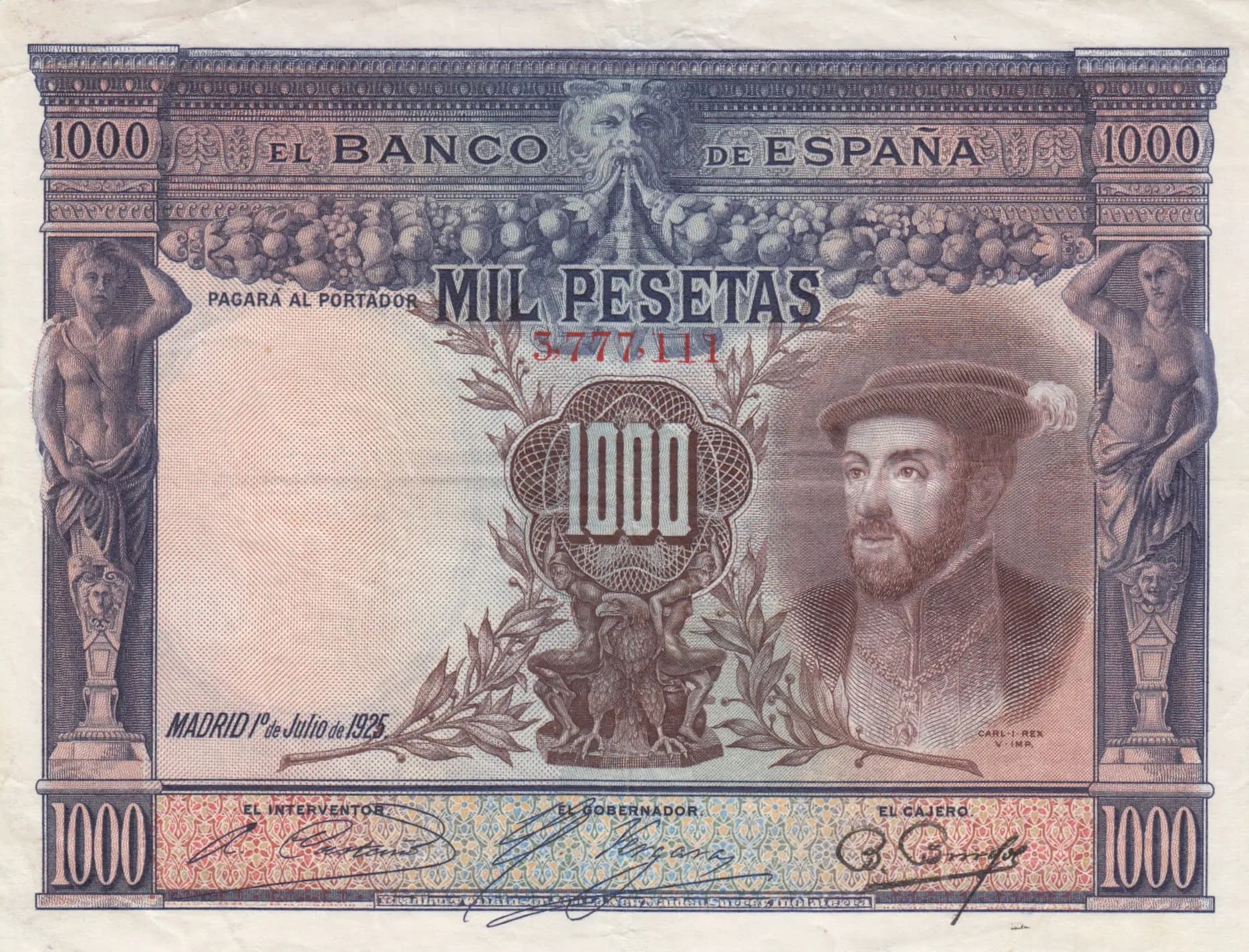
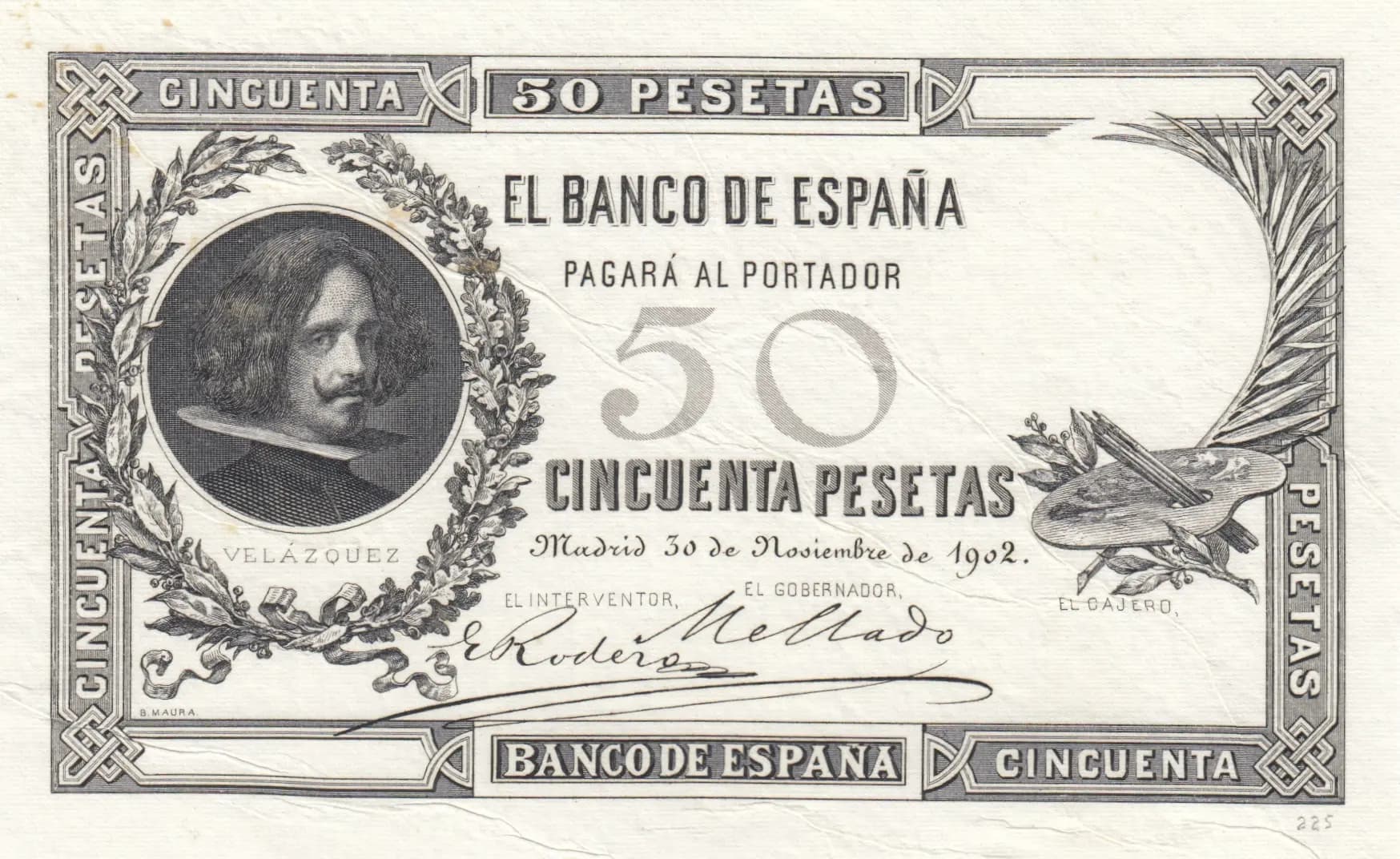
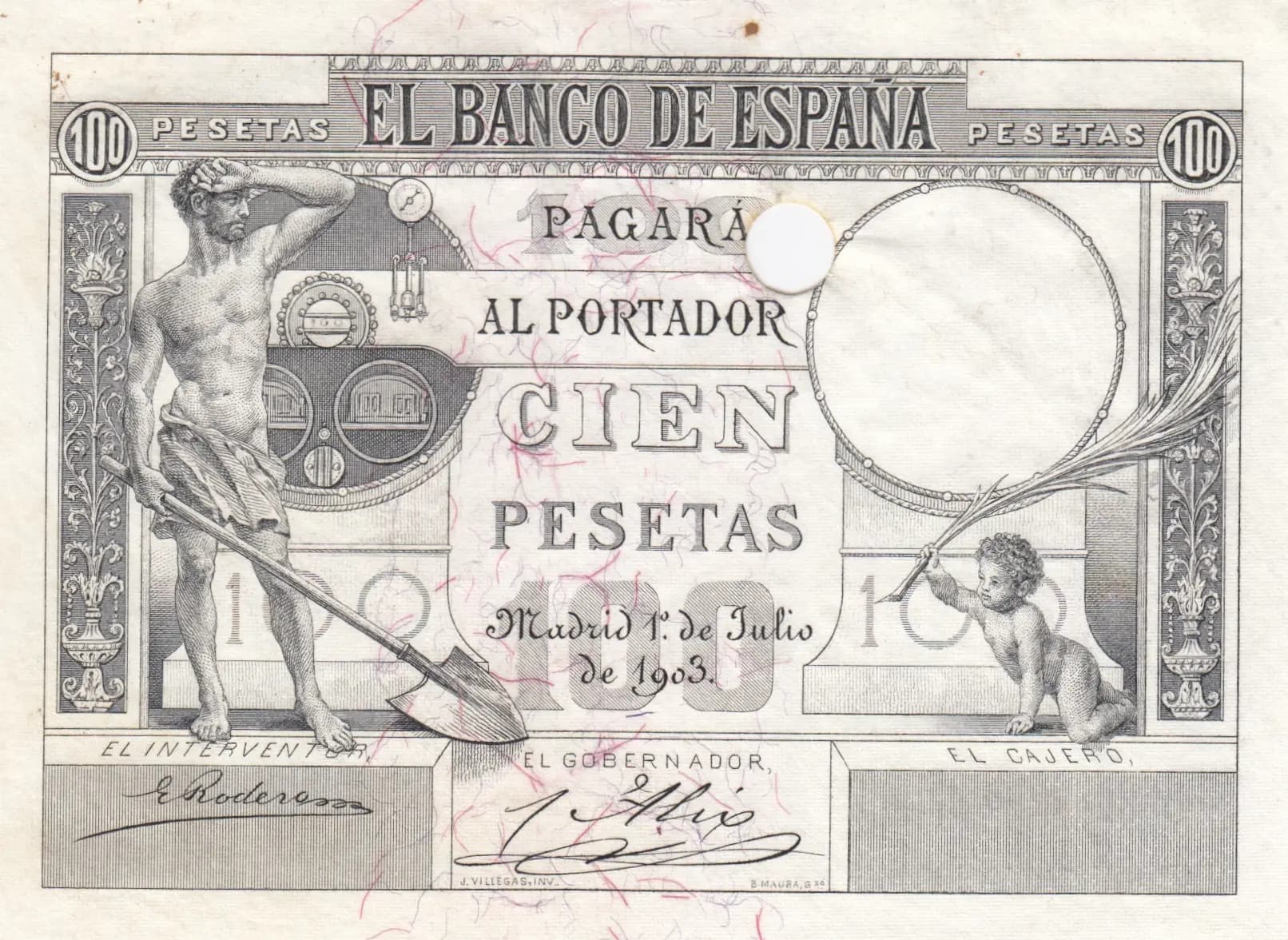
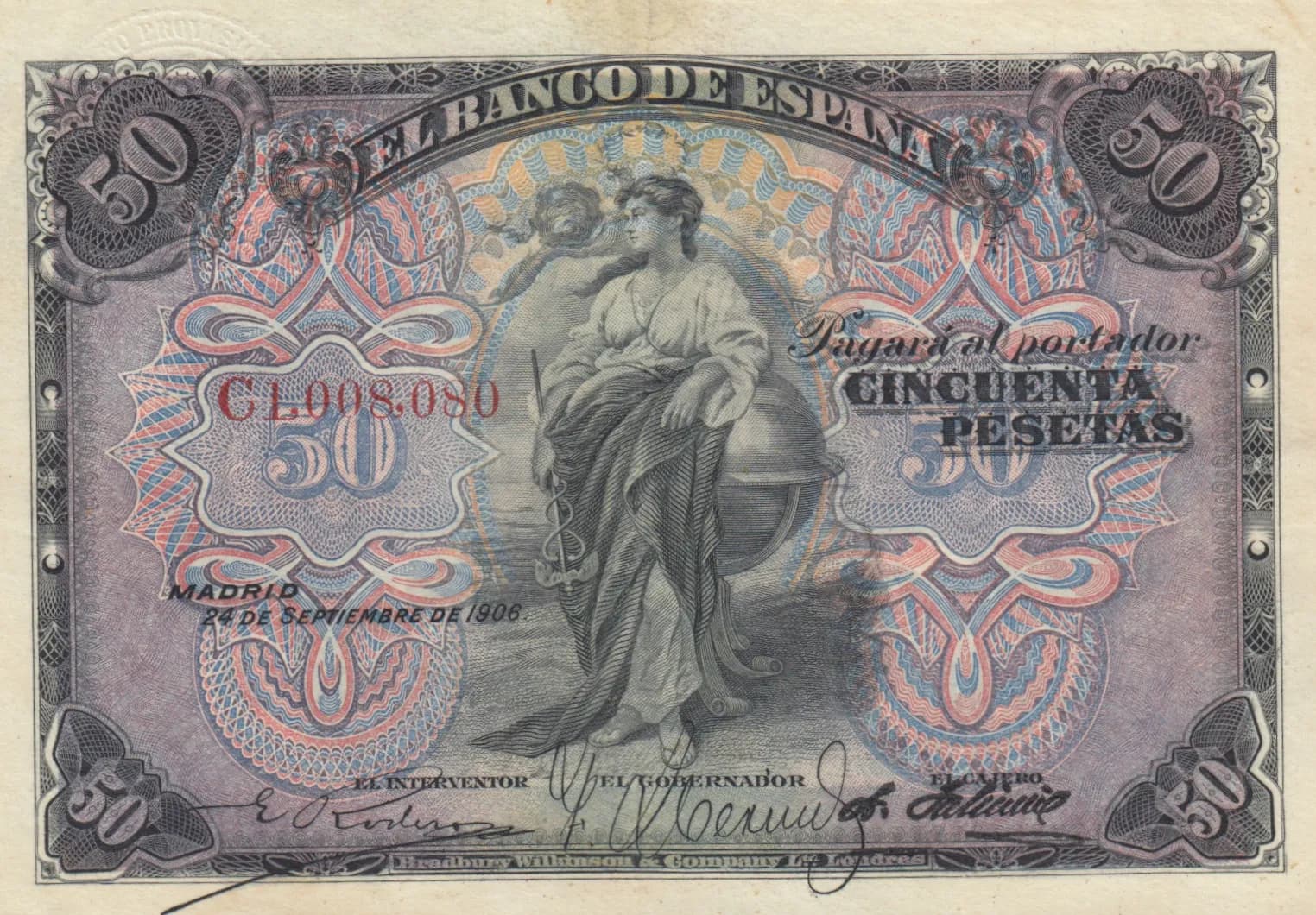
The obverse features a detailed allegorical vignette representing industrial and maritime labor, rendered in sepia and brown tones. Two worker figures in silhouette are depicted operating or standing beside a large industrial vessel equipped with prominent smokestacks and mechanical apparatus, symbolizing Spain's industrial sector and commercial maritime activity. The reverse displays an architectural landscape or cityscape rendered as a watermark in the center, surrounded by ornate borders featuring geometric and floral scrollwork in gray, black, and purple-gray tones. Denomination numerals '1000' appear prominently in the corners of both sides. The note exhibits fine line engraving throughout, characteristic of high-quality currency production of the period. The overall design emphasizes Spain's economic and industrial identity, typical of central bank notes from this era.
Front: 'BANCO DE ESPAÑA' (Bank of Spain), '1000' (denomination). Back: 'EL BANCO DE ESPAÑA' (The Bank of Spain), 'BILBAO' (city of issue), 'El Banco de España' (The Bank of Spain), 'Pagadera al portador' (Payable to bearer), 'MIL pesetas' (One thousand pesetas), 'BILBAO 1 de Enero de 1937' (Bilbao, January 1, 1937), 'BANCO DEL COMERCIO' (Bank of Commerce), 'POR PODER' (By proxy/authority), 'BANCO DE ESPAÑA' (Bank of Spain), '1000' (denomination).
Intaglio engraving (steel plate engraving) with multicolor printing. The fine line work visible throughout the note, the crisp detail in the industrial vignette, and the intricate border patterns are characteristic of intaglio printing. The use of multiple color passes (blue-gray, brown, sepia, and black) indicates coordinated multicolor printing techniques standard for Spanish banknote production of the 1930s. The Banco de España employed Spain's premier security printers for this denomination during this period.
This note is identified as Pick S567a-br, indicating it is a Republican-era emission from Bilbao (the '-br' designation likely indicating 'Bilbao Republican'). The specific date of January 1, 1937 on the back and the Bilbao location mark this as part of the regional Republican emissions during the civil war period. The reference to 'BANCO DEL COMERCIO' 'POR PODER' suggests this may have been issued through the Bank of Commerce operating under authority of the Banco de España, reflecting the administrative complexities of maintaining financial systems during wartime.