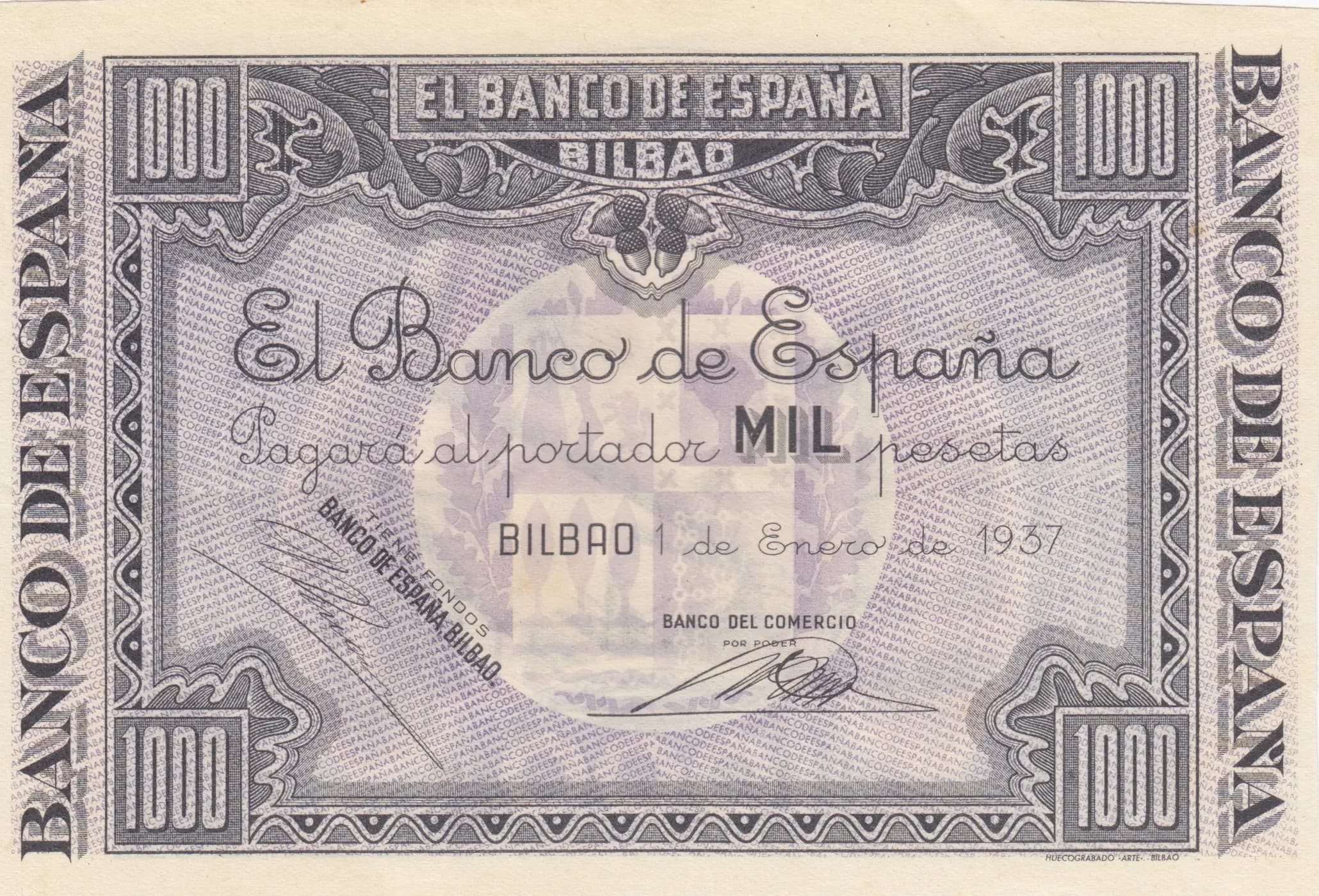
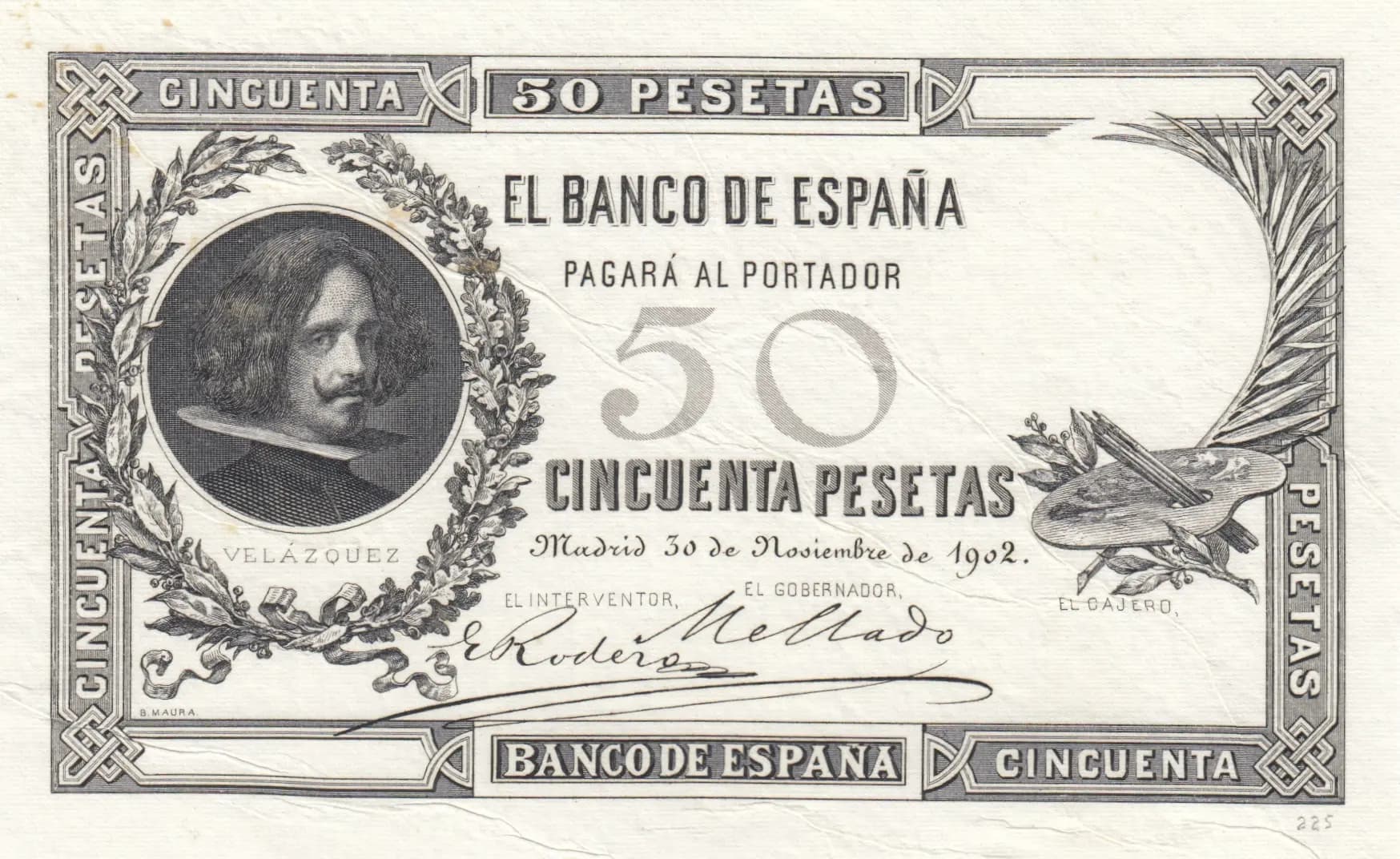
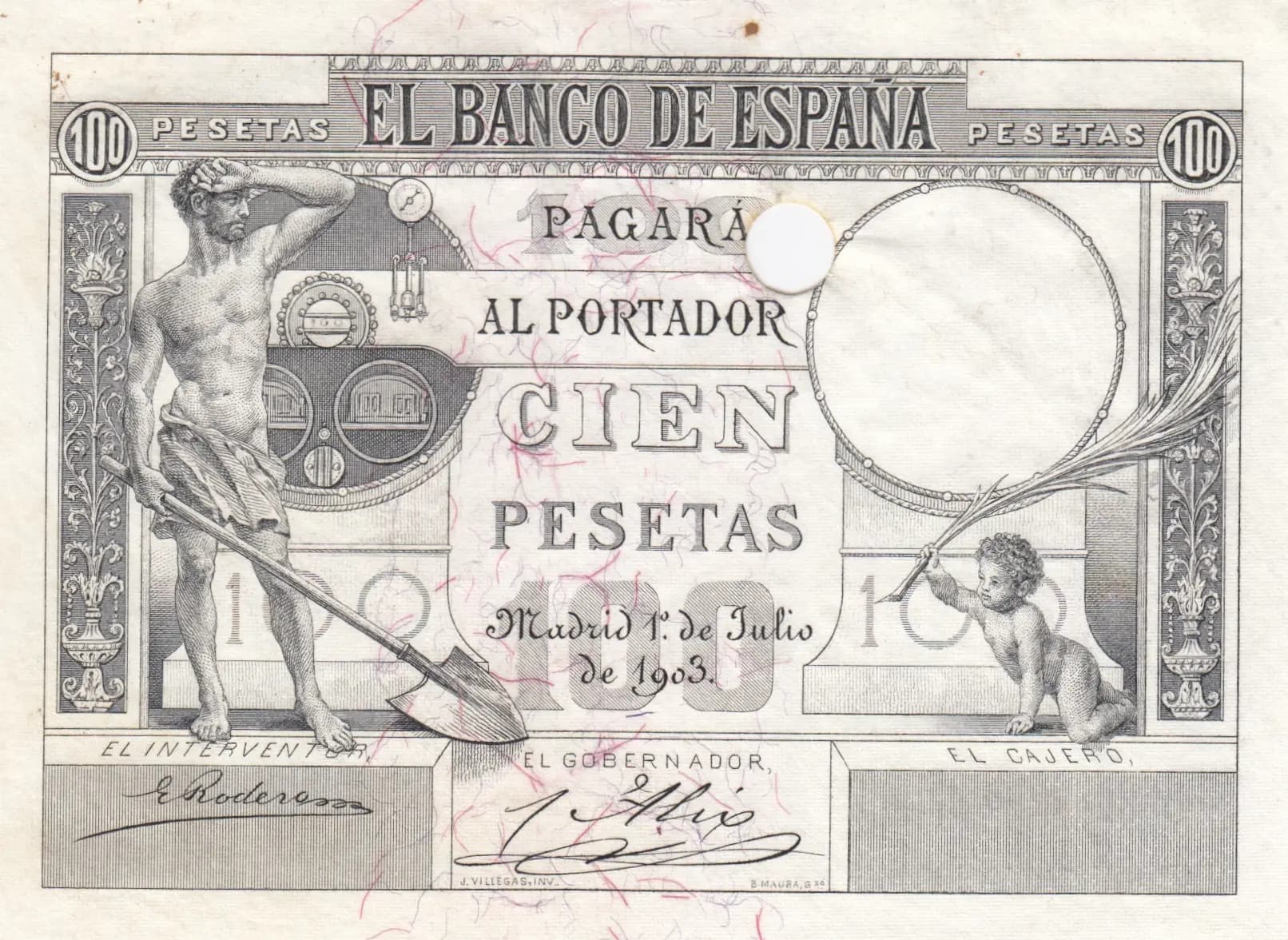
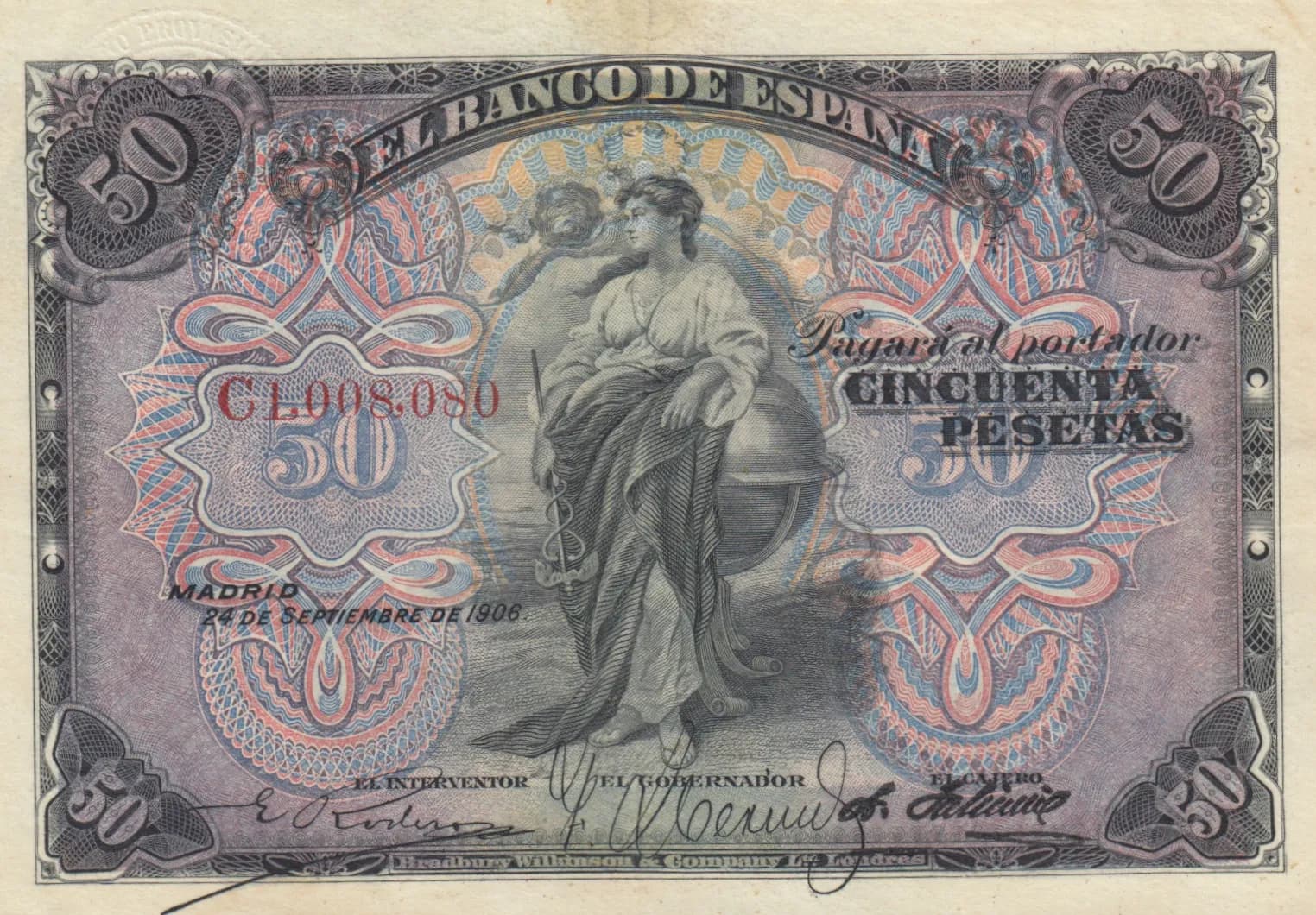
1000 pesetas 1936
Market Prices
27 salesAbout This Note
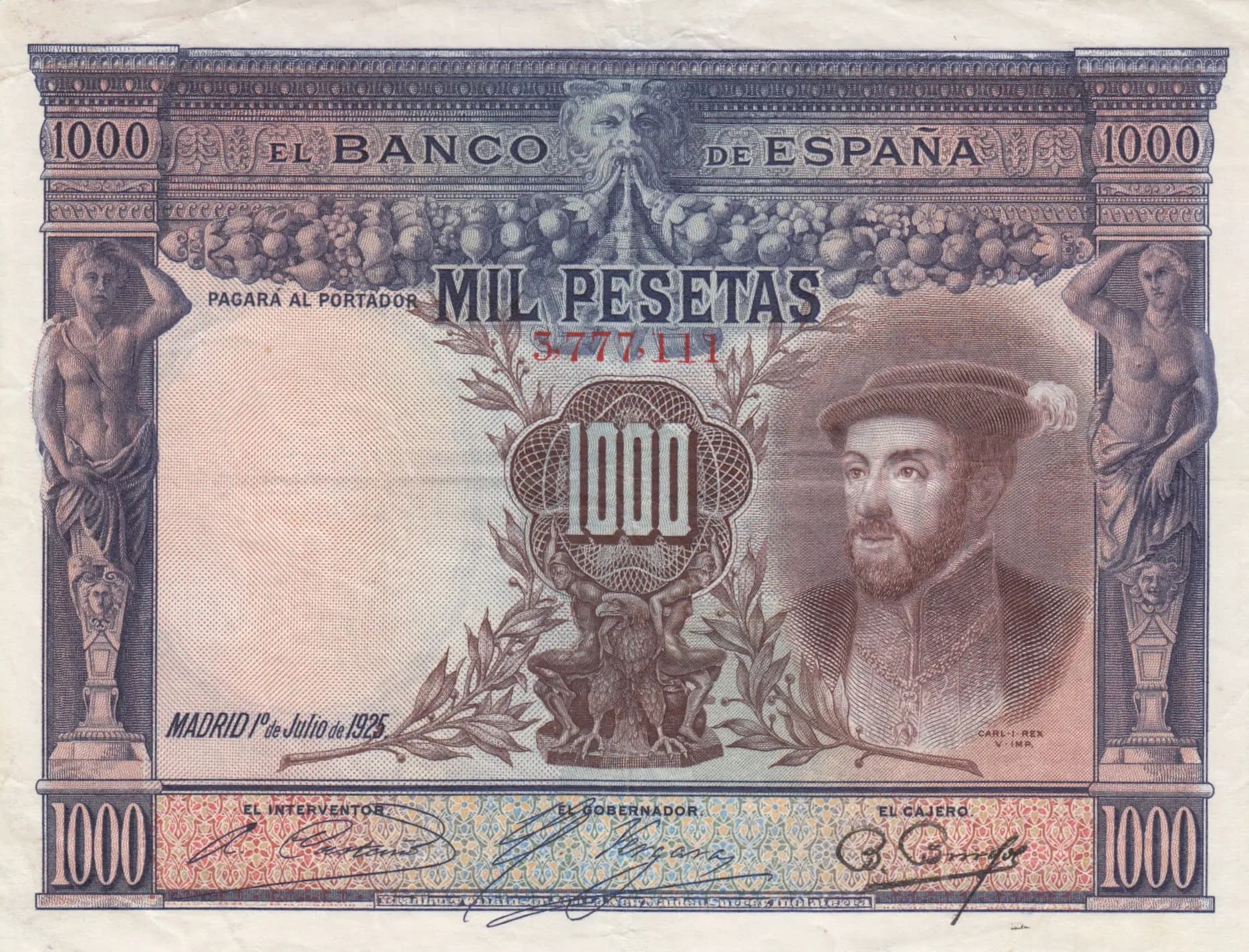
This 1000 pesetas note from 1936 represents a significant piece of Spanish monetary history from the pre-Civil War period. The VF-graded specimen displays the characteristic ornate design work of Bradbury Wilkinson's fine line engraving, featuring portraits of allegorical figures flanking a bearded gentleman in period dress, with visible wear consistent with active circulation including creases, folds, and age-related discoloration. The note's secondary market values ($18-23 range for VF examples in recent years) and strong eBay transaction history demonstrate steady collector interest in this denomination.
Common. This denomination and issue (P-70c) demonstrates consistent availability in the secondary market, with numerous VF-graded examples selling at modest prices ($13-26 range over the past decade). The eBay transaction data shows regular sales activity with competitive bidding, indicating adequate supply in collector hands. While not mass-produced, the 1936 date and large denomination suggest a respectable print run typical of regular issues from this period.
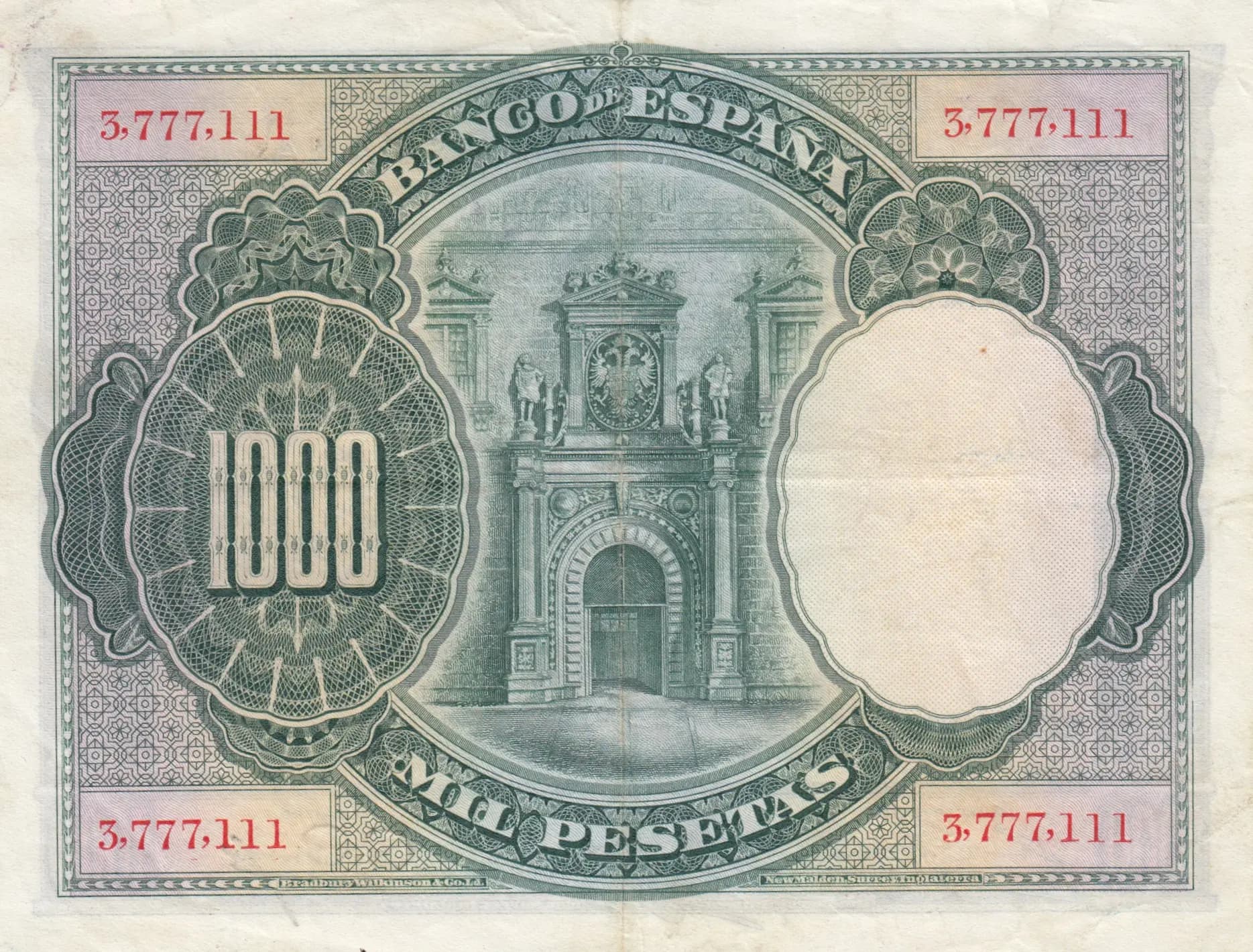
Issued by the Banco de España on July 1, 1925, this banknote predates the Spanish Civil War by a decade and represents the final years of the Spanish monarchy under the reign of King Alfonso XIII (referenced through the inscriptions). The architectural imagery on the reverse—depicting the neoclassical Alcázar of Toledo—reflects Spain's pride in its cultural heritage during a period of relative economic stability before the turbulent 1930s transformed the nation's political landscape.
The front features three principal figures: a bearded man wearing a Renaissance-style cap positioned in the center-right (representing King Charles I/Carlos I, as identified by the Latin inscription), flanked by allegorical female figures personifying virtues or national concepts. The composition is framed by ornate geometric borders and architectural motifs typical of Bradbury Wilkinson's security printing style. The central heraldic shield displays the denomination '1000' within an intricately crosshatched geometric pattern with flanking laurel wreaths. The reverse showcases a prominent neoclassical architectural medallion depicting the Alcázar of Toledo—one of Spain's most iconic fortifications—rendered in precise fine-line engraving and contained within an ornate scalloped frame. Additional decorative ovals and geometric patterned borders complete the symmetrical composition.
Front side: 'EL BANCO DE ESPAÑA' (The Bank of Spain), 'MIL PESETAS' (One Thousand Pesetas), 'PAGARÁ AL PORTADOR' (Will pay to bearer), 'MADRID 1º de Julio de 1925' (Madrid 1st of July 1925), 'CARL-I REX V.I.M.R.' (Charles I King), 'EL INTERVENTOR' (The Inspector), 'EL GOBERNADOR' (The Governor), 'EL CAJERO' (The Cashier), Serial number '3,777,111'. Back side: 'BANCO DE ESPAÑA' (Bank of Spain), 'MIL PESETAS' (One Thousand Pesetas), Serial number '3,777,111'.
Intaglio (line engraving) printed by Bradbury Wilkinson & Co., Ltd. of New Malden, England, one of the premier security printers of the era. The note demonstrates sophisticated line engraving techniques with extensive geometric crosshatch patterns, fine portraiture work, and detailed architectural rendering characteristic of high-security currency production of the 1920s-1930s period.
The specific variety P-70c designates this as a 1936-dated issue printed by Bradbury Wilkinson & Co. (BWC suffix). The visual analysis confirms handwritten signatures of three bank officials ('El Interventor,' 'El Gobernador,' 'El Cajero'), which would vary by individual note. Serial number observed: 3,777,111. The July 1, 1925 date printed on the note represents the original authorization date of this design series, which remained in circulation and was reissued through 1936.