5 rand 1966
Market Prices
8 salesAbout This Note
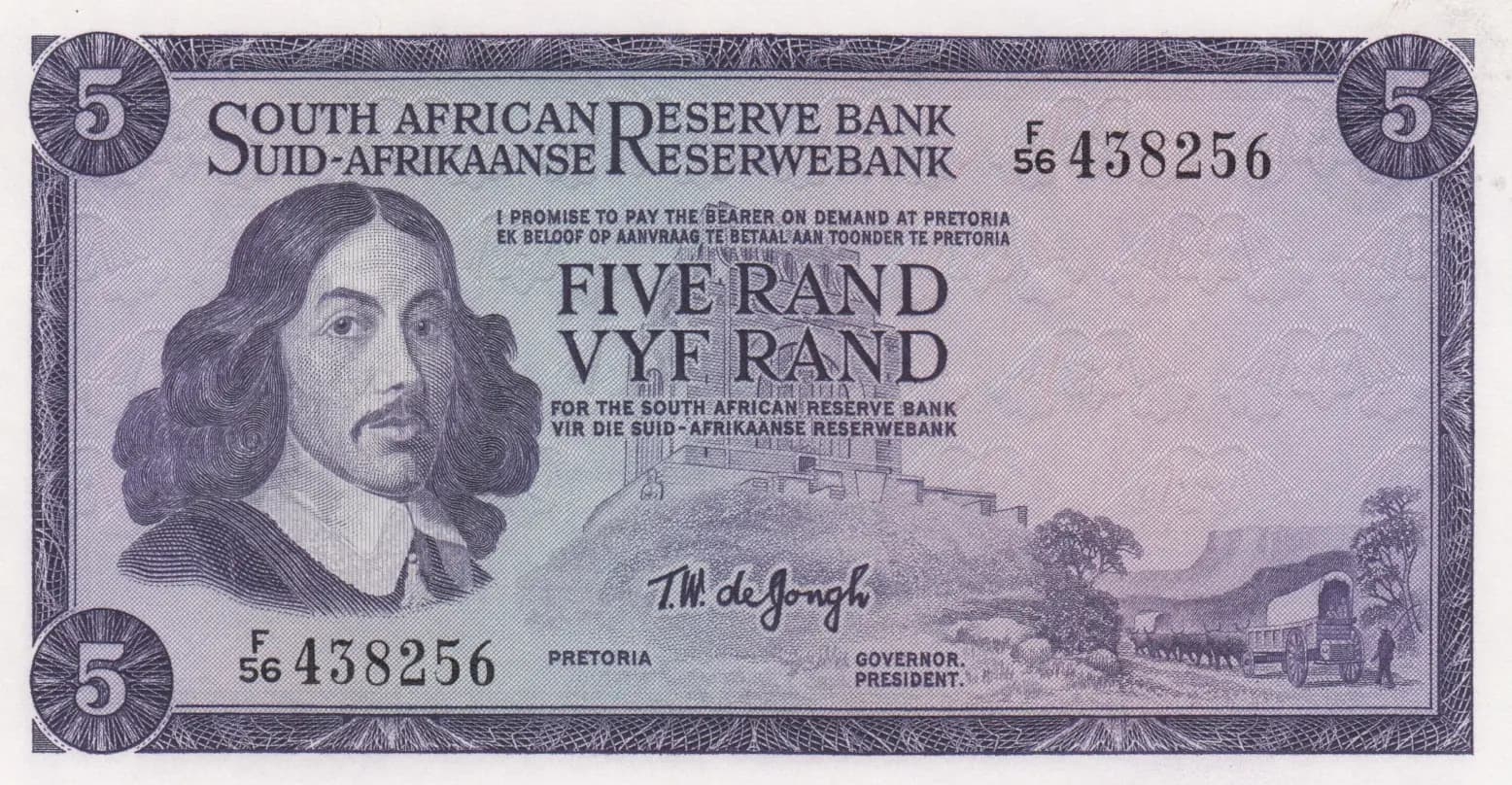
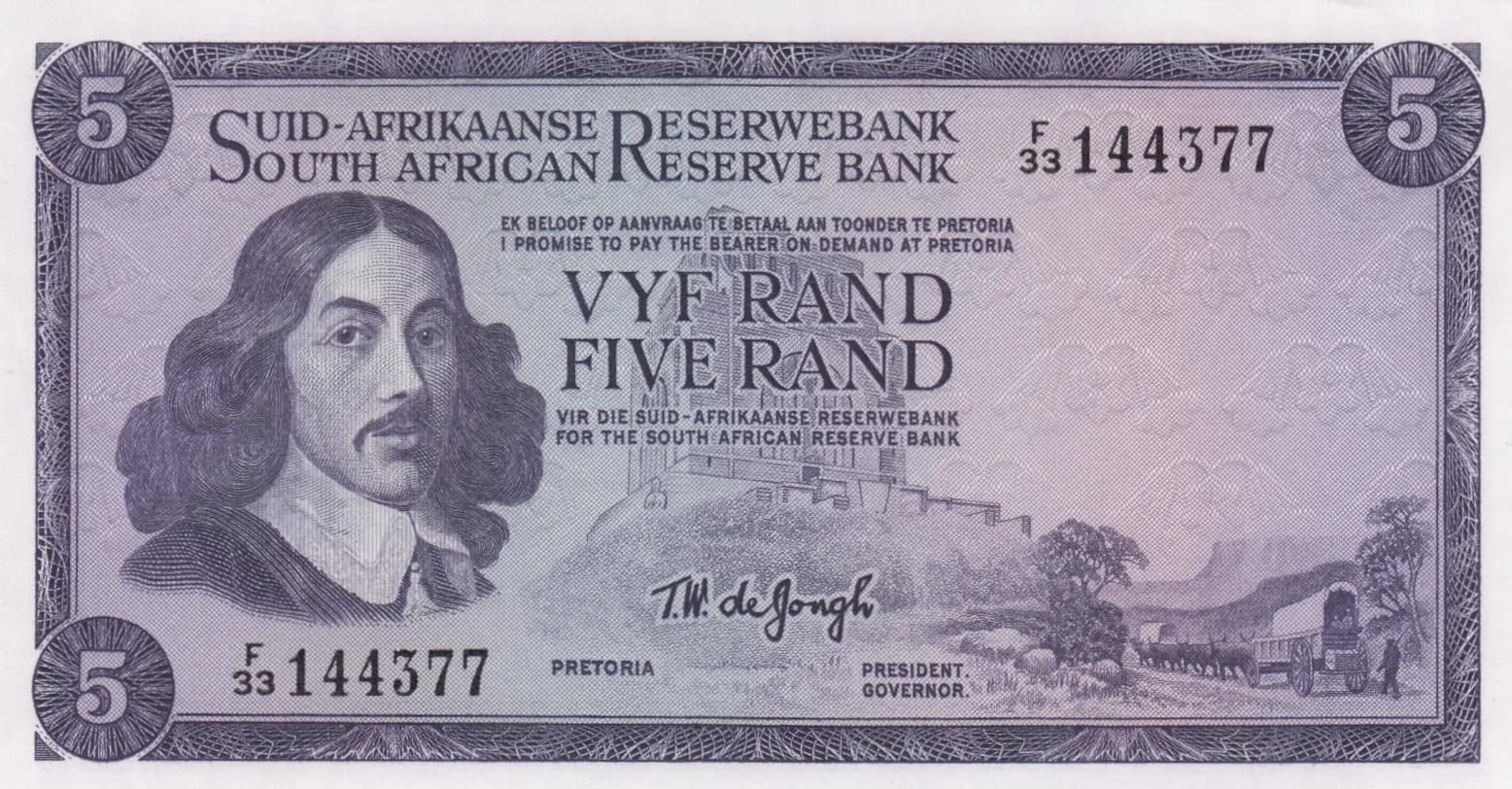
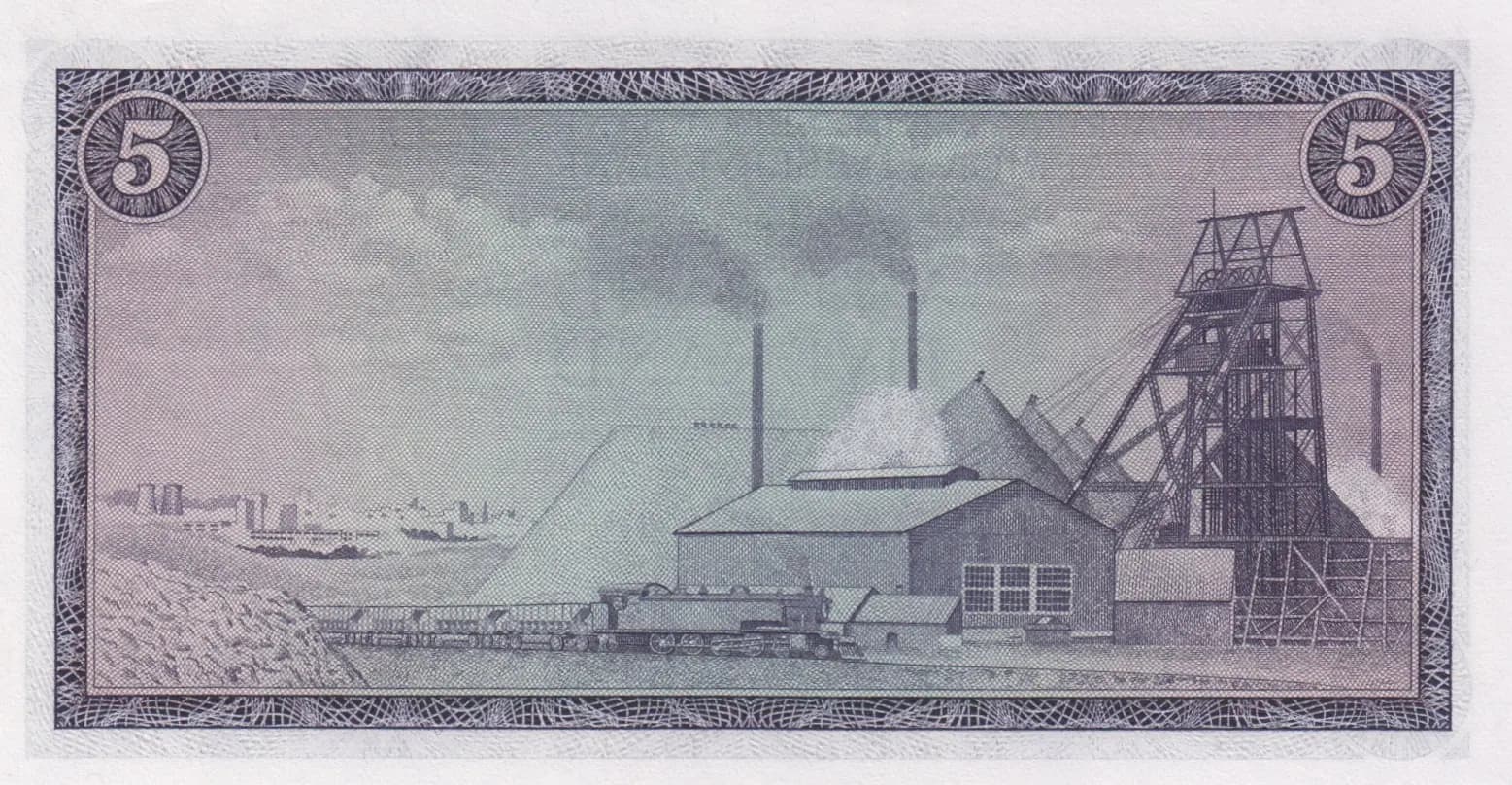
This is a South African 5 Rand banknote from 1966 (Pick P-112b), displaying the characteristic purple-on-multicolor design of the first series of Reserve Bank issues. The note is in uncirculated condition with sharp, crisp printing throughout, showing no creases, folds, or circulation wear. The obverse features a portrait of a historical figure with period clothing set against a fortified colonial settlement, while the reverse depicts South Africa's industrial mining heritage with detailed engraving of mining infrastructure, making it an excellent representative example of this common but historically significant denomination.
Common. This denomination and design is one of the most regularly encountered South African banknotes from the 1960s-1970s series. Market data shows consistent sales in the $4-$20 range for VF to UNC examples, with UNC examples typically valued at $12 according to 2019 catalog data. The large print runs of this standard issue, combined with its relative recency and the absence of any recorded recalls or production anomalies, confirm common status. Even in uncirculated condition, this note remains readily available to collectors.
This note was issued during the early years of the South African Reserve Bank's independence, following the country's transition to a republic in 1961. The obverse portrait represents a key figure in South African colonial history, depicted against the backdrop of an early European settlement, while the reverse's mining imagery reflects the economic foundation of post-colonial South Africa, which relied heavily on its vast mineral resources. The bilingual inscriptions in English and Afrikaans reflect the official language policy of the apartheid-era government.
The obverse features a classical engraved portrait of what historical records identify as Bartholomeus Vermuyden (historically misidentified as Jan van Riebeeck), rendered with long wavy shoulder-length hair and period 17th-century dress in a formal engraving style positioned prominently on the left side. The background landscape depicts Castle of Good Hope and the early colonial settlement at the Cape, rendered with atmospheric perspective showing rolling hills and fortified structures. The reverse showcases South Africa's mining industry dominance, featuring an industrial landscape with a prominent mine headgear (winding tower), railway infrastructure including tracks and mining equipment, smoking chimneys, and processing facilities—symbolic of the nation's economic foundation. Both sides employ an ornate decorative border pattern with radiating circular medallions displaying the denomination '5' in all four corners, typical of the formal design aesthetic of 1960s central bank currency.
FRONT: 'SUID-AFRIKAANSE RESERWEBANK' (South African Reserve Bank) / 'VYF RAND' (Five Rand) / 'EK BELOOF OP AANVRAAG TE BETAAL AAN TOONDER TE PRETORIA' (I promise to pay the bearer on demand at Pretoria) / 'VIR DIE SUID-AFRIKAANSE RESERWEBANK' (For the South African Reserve Bank) / English equivalents: 'SOUTH AFRICAN RESERVE BANK' / 'FIVE RAND' / 'I PROMISE TO PAY THE BEARER ON-DEMAND AT PRETORIA' / 'FOR THE SOUTH AFRICAN RESERVE BANK' / Signature: 'T.M. de Jongh' (President/Governor) / Serial number: 331443577 / City: 'PRETORIA'. BACK: Denomination '5' with decorative border elements only.
Intaglio engraving (line engraving), the traditional method for banknote production. The detailed fine line work, complex cross-hatching, and intricate parallel line patterns throughout both obverse and reverse are characteristic of steel plate engraving. The sharp definition and crisp impression visible in this uncirculated specimen indicate professional security printing standards. While specific printer attribution requires archival documentation, South African notes of this era were typically produced by established security printers such as the South African Mint or international partners like De La Rue or Bradbury Wilkinson.
This specimen carries the designator P-112b, which specifically indicates Afrikaans text appearing in the first line of the bank name and denomination ('SUID-AFRIKAANSE' and 'VYF RAND'), distinguishing it from P-112a which features English-first text. The Pick catalog notes this distinction as a primary variety. Serial number 331443577 with standard letter prefix does not appear to be a replacement note (replacement notes are identified by prefixes Z/1, Y/1, X/1, or W/1). No overprints or additional security markings are visible, confirming this as a regular issue from the standard print run period of 1966-1976.