5 rand 1966
Market Prices
15 salesAbout This Note
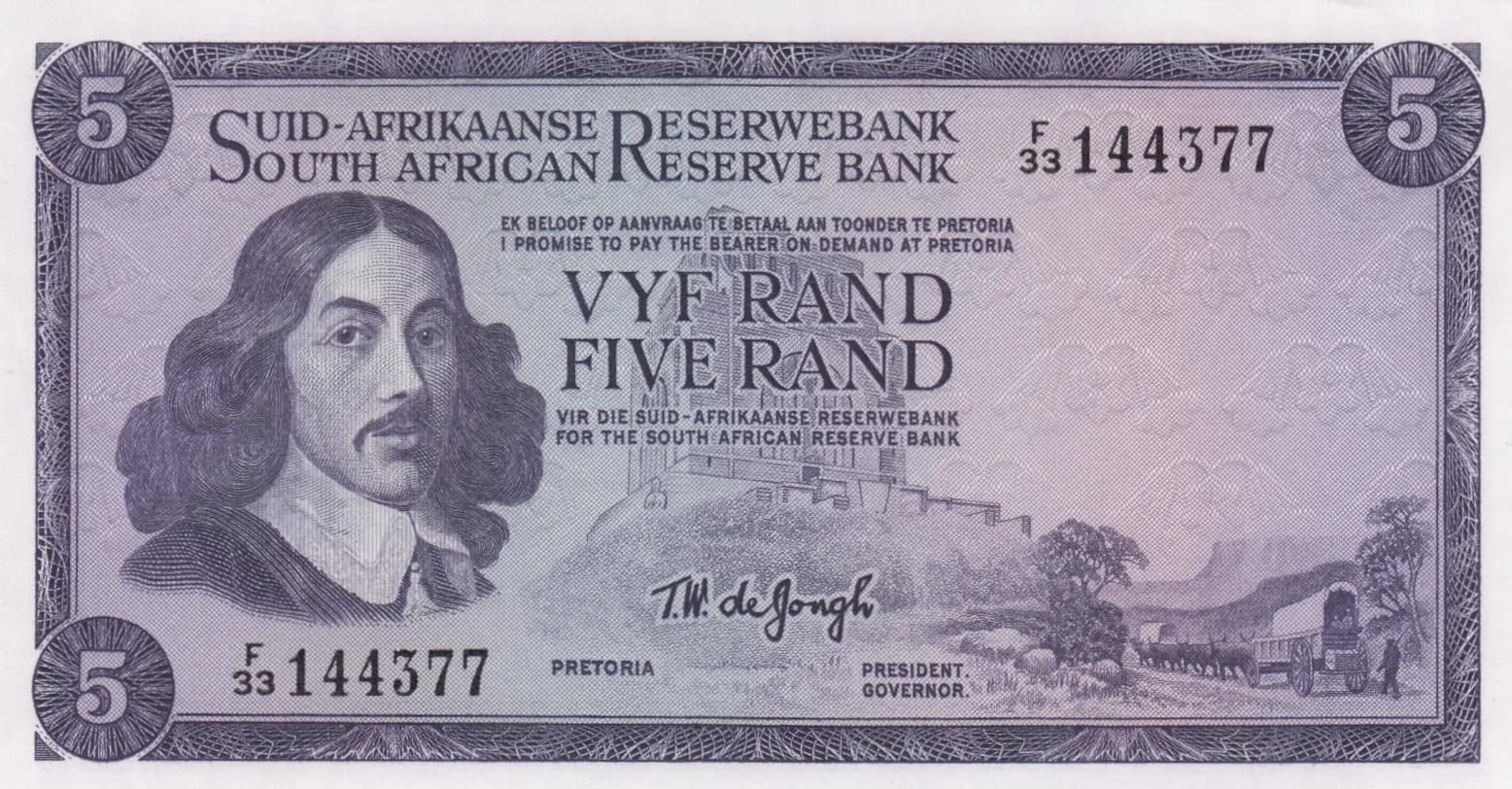
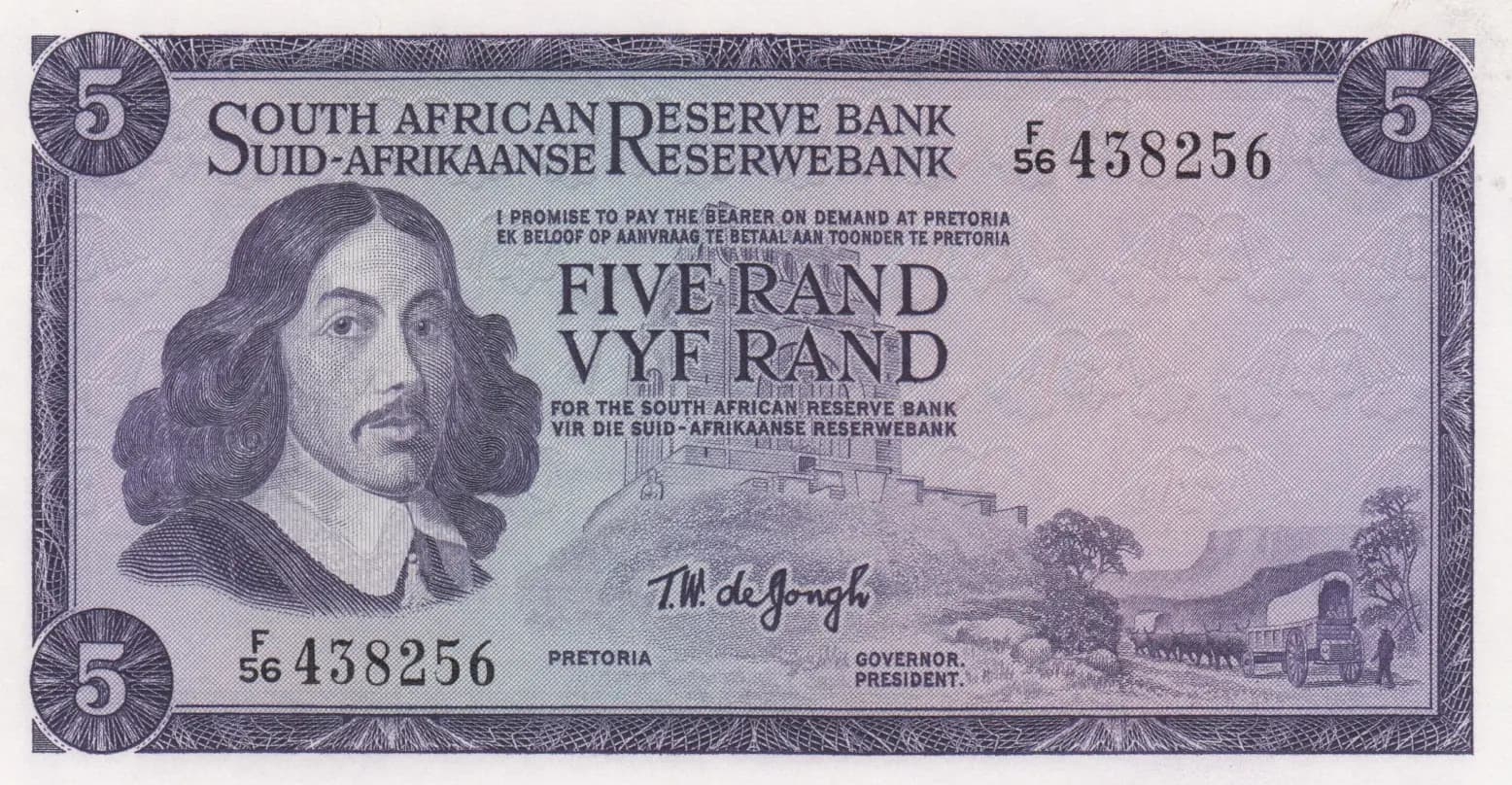
An exceptional uncirculated example of the South African Reserve Bank 5 Rand note from 1966 (Pick P-111b), featuring a striking purple and multicolor design with pristine condition throughout. The note displays the English-language first line identifying it as the standard issue type, with sharp engraving detail visible on both the portrait side and the industrial reverse. This particular specimen exhibits no wear, creases, or stains, making it an excellent collector example of this classic mid-20th century South African currency.
Common. eBay market data shows regular sales activity with UNC examples selling in the $12-20.50 range (2016-2022), and the 2019 catalog value for UNC condition is listed as $12. The note was issued during an extended period (1966-1976 according to catalog data) in what appears to have been substantial quantities, as evidenced by consistent market availability and relatively affordable pricing for uncirculated examples. No evidence of restricted print runs or recall status.
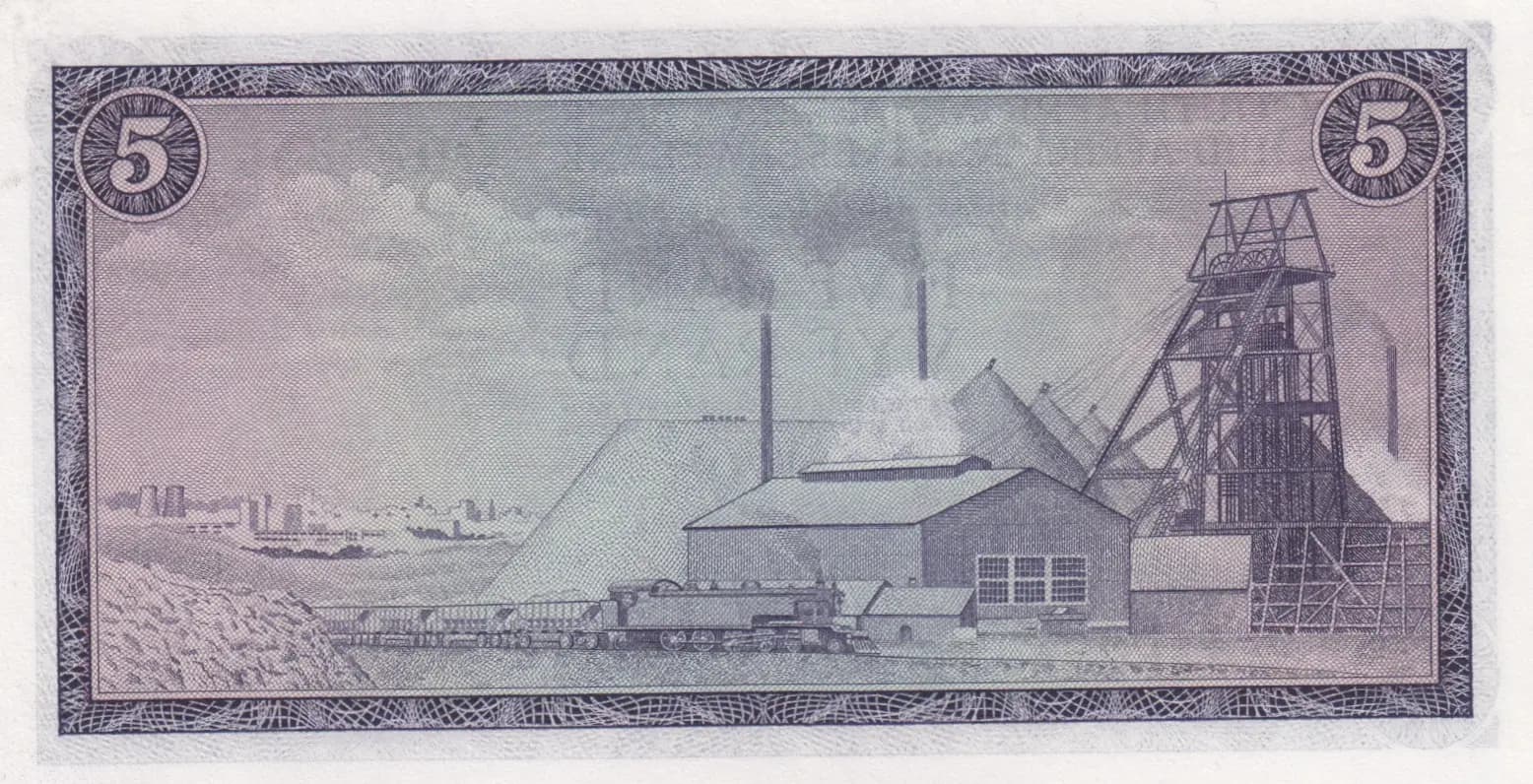
This 1966 note was issued during South Africa's transition period following the establishment of the Republic of South Africa in 1961. The industrial imagery on the reverse—featuring a prominent mine headframe and steam locomotive—reflects the nation's economic foundation in mining and heavy industry during the apartheid era. The bilingual English-Afrikaans inscriptions represent the official language policy of the period, with the note's design emphasizing industrial development and economic progress.
The obverse features a portrait of Bartholomeus Vermuyden (long identified as Jan van Riebeeck in popular circulation) positioned at the left in three-quarter profile with distinctive long, wavy shoulder-length hair. The right side of the note displays architectural landscape elements including covered wagons on a trail, representing South African colonial settlement imagery. Four large circular ornamental badges with radiating lines contain the numeral 5 in all corners. The reverse presents an industrial mining scene typical of South Africa's Witwatersrand region, dominated by a prominent mine headframe (shaft tower), mining buildings, a steam locomotive on railroad tracks, and industrial chimneys—all rendered in the same purple and violet color scheme as the obverse. A decorative geometric border frame surrounds both sides of the note.
FRONT SIDE: 'SOUTH AFRICAN RESERVE BANK' (English) / 'SUID-AFRIKAANSE RESERWEBANK' (Afrikaans); 'FIVE RAND' (English) / 'VYF RAND' (Afrikaans); 'I PROMISE TO PAY THE BEARER ON DEMAND AT PRETORIA' (English) / 'EK BELOOF AAN VRAAG TE BETAAL AAN TOONDER TE PRETORIA' (Afrikaans); 'FOR THE SOUTH AFRICAN RESERVE BANK' (English) / 'VIR DIE SUID-AFRIKAANSE RESERWEBANK' (Afrikaans); Signature: T.W. de Jongh; Title: 'GOVERNOR, PRESIDENT'; Issuing location: 'PRETORIA'; Serial number: 56 438256. BACK SIDE: Numeral '5' in corner ornaments only.
The note was produced using intaglio (engraved) printing, evident from the sharp, detailed fine-line engraving visible throughout both sides of the note and the exceptional clarity of the ornamental borders, portraits, and industrial landscape details. The multicolor printing was achieved through multiple intaglio passes, a standard security printing technique for the South African Reserve Bank during this period. The printer for this issue was likely De La Rue or Bradbury Wilkinson, the primary security printers for South African banknotes in this era.
This specimen displays the English-language first line of the bank name and denomination value, which identifies it as Pick P-111b rather than P-112 (which features the Afrikaans-language first line). The serial number format visible (56 438256) is consistent with standard issue notes; replacement notes are identified by prefixes Z/1, Y/1, X/1, or W/1. The watermark on this note would be a Springbok, typical of South African Reserve Bank notes of this series. No overprints, date variations, or signature variations are apparent on this example.